The Case for a Quiet Room: How a Home Sauna Fits Into Slow Living Design

When was the last time a room in your house asked nothing of you? Not the living room, which wants a show on and a phone in hand. Not the kitchen, which is mid-task more often than not. Most homes are full of rooms built for doing, and almost none built for the opposite.
Slow living design has spent the last few years pushing back against that imbalance, and it shows up in small, deliberate choices: a reading nook with no television in sight, a window seat kept clear of clutter, a bathroom corner reserved for nothing but a soaking tub. The common thread across all of it is a room, or even just a corner, whose entire purpose is to slow a person down rather than move them along to the next task.
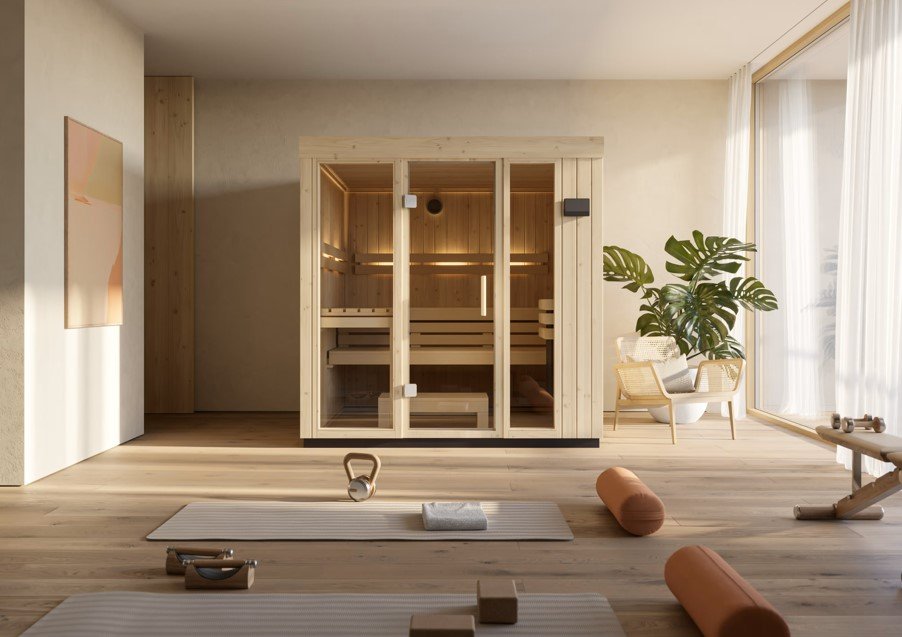
A home sauna is the fullest expression of that idea, and it’s worth considering as its own category of quiet room rather than filing it under backyard equipment. Built well, often from cedar barrel saunas that lean into natural wood grain and simple curved lines, a sauna brings the same restraint that defines a well-designed reading nook, just scaled up into its own small structure.
The materials matter more here than in almost any other room-design decision. Cedar’s warm tone and visible grain do a lot of the restorative work before anyone even steps inside, since a space built from a single honest material reads as calmer than one layered with competing textures and finishes. That’s the same design principle behind a minimalist reading corner or a stripped-back meditation space, just applied to something you heat up.
There’s a physiological reason the heat itself contributes to that sense of calm, beyond the aesthetic. Heat exposure during a sauna session raises skin and core temperature, which increases blood flow to muscle tissue and triggers a mild stress response that activates heat shock proteins involved in cellular repair. That’s a different mechanism than a cold plunge or a massage chair, both of which work through pressure or vasoconstriction rather than sustained warmth, and it’s part of why a sauna session tends to leave people in a noticeably different state than when they walked in.
The research on how people actually experience that shift backs up the slow living framing more than any marketing language could. A 2019 survey published in Complementary Therapies in Medicine collected responses from more than 470 regular sauna users across 29 countries and found that relaxation and stress reduction were the most commonly cited reasons for sauna use, ranked above every other motivation including fitness or social habit. Roughly 84 percent of respondents also reported improved sleep quality lasting one to two nights after a session. For a room explicitly designed to slow someone down, that’s a meaningfully different outcome than most home additions can claim.
Placement inside a home’s overall design matters as much as the structure itself. A sauna tucked into a far corner of the yard, away from the noise of a patio or play area, does more design work than one squeezed next to a loud pool pump or a well-trafficked side gate. The same logic that puts a reading nook in the quietest corner of a house applies outdoors: proximity to calm, not just proximity to convenience, decides whether the space actually gets used the way it’s intended.
Lighting inside the structure deserves more thought than it usually gets. A single warm bulb, or no electric light at all beyond what filters through a small window, does more for the room’s atmosphere than bright overhead fixtures ever could. This is the same instinct that leads slow living spaces elsewhere in the home toward dimmer switches, candles, and natural light over anything harsh or clinical.
Scale is worth getting right from the start, since a sauna sized for the wrong number of people undermines the whole point. A two or three person structure keeps the room feeling intimate and contained, which matters for a space meant to feel like a retreat rather than an entertainment feature. Oversizing a sauna to accommodate guests more often turns it into a novelty that gets used a handful of times a year instead of a room woven into a regular routine.
Quality of construction is where a lot of the slow living intention can quietly fall apart if it’s skipped over. Mass-produced kits cut corners on wood grade and joinery that aren’t obvious in a product photo but become obvious within a season or two of regular use. Peak Primal Wellness has written an honest look at where budget sauna kits fall short, which is worth a read before choosing a structure meant to anchor a calm space for years rather than one season.
Sound, or the deliberate absence of it, is another detail slow living design pays attention to that a sauna build often skips. A structure sited close enough to hear street traffic, a neighbor’s television, or a busy kitchen window loses a meaningful part of its purpose before anyone even sits down inside. Even a modest buffer of distance or a row of dense planting between the sauna and the rest of the yard’s activity changes how quickly a person settles into the space once they’re inside it.
Ritual matters too, in the non-religious sense of a repeated, deliberate sequence that signals to the body it’s time to slow down. Lighting the same lamp, hanging a towel on the same hook, taking the same few minutes to walk out to the structure rather than rushing, these small repeated actions do more to make a sauna feel like a retreat than any single design choice inside the room itself. A space can be built beautifully and still feel like an appliance if it’s approached the same way as turning on a dishwasher.
Seasonal use is worth planning for as well, since a sauna that only gets opened in winter is only doing half its job. In warmer months, the same structure works as an evening wind-down space, especially when sited to catch a breeze through a cracked door rather than trapping stagnant summer heat. Designing for year-round use, rather than treating it as a cold weather feature, is what turns a sauna from a seasonal novelty into the kind of room that earns its place in the yard.
None of this requires a full backyard renovation or a five figure budget to get right. What it requires is treating the sauna the way you’d treat any other deliberate room in the house: choosing materials that age well, placing it somewhere quiet actually lives, and sizing it for the life you want to use it for rather than the one you imagine hosting.
A home full of rooms built for doing eventually needs at least one built for the opposite. A well-placed, well-built sauna, cedar grain visible, light kept low, tucked somewhere the rest of the house can’t reach, does that job as well as any reading nook or soaking tub, and for a lot of households it ends up being the room that gets used the most consistently of all.
Rameen Zara is the founder of Clarity Nooks, bringing over five years of experience in home décor and interior styling. She shares simple yet practical design ideas that suit real homes and everyday living. Her approach focuses on cozy aesthetics, soft color palettes, and natural textures that create warm, inviting spaces.