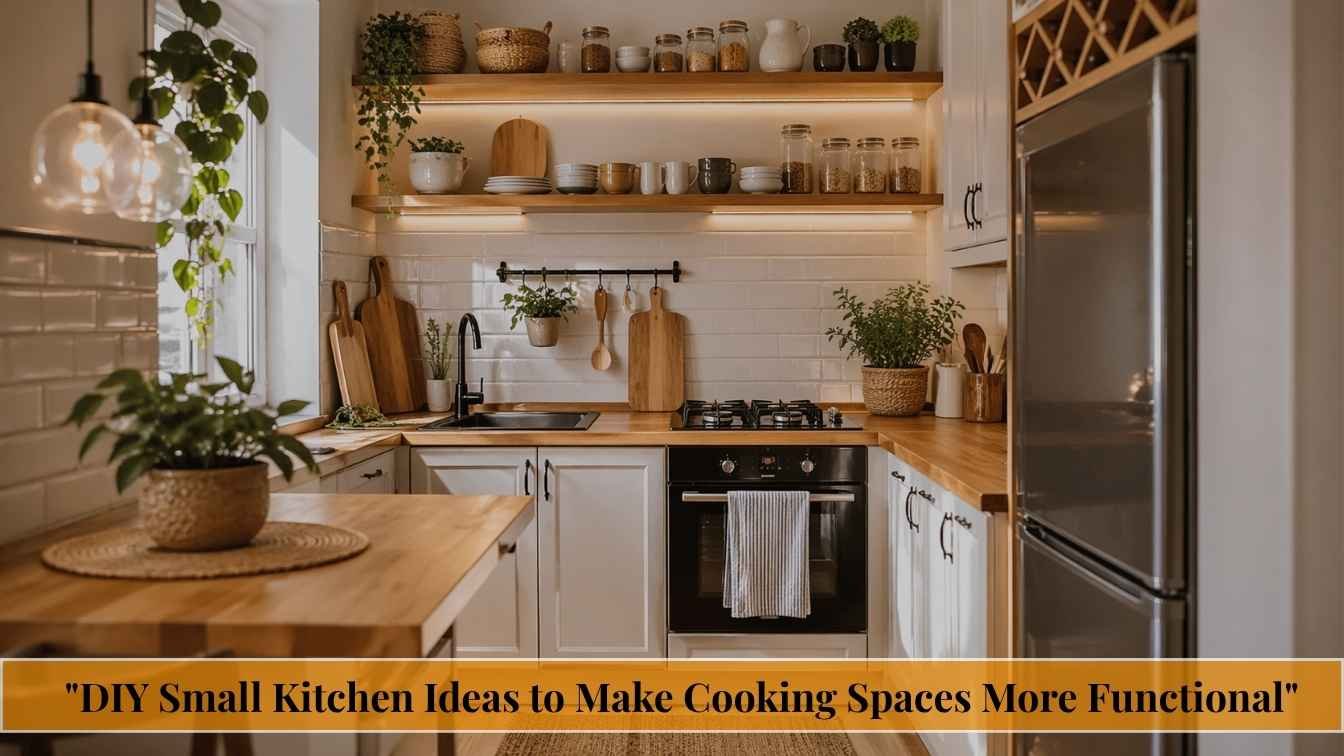
DIY Small Kitchen Ideas to Make Cooking Spaces More Functional

Your kitchen is the most used room in your home and if it’s small, it can also be the most frustrating. Limited counter space, overflowing cabinets, and a layout that makes cooking feel like a puzzle are problems millions of homeowners face every single day.
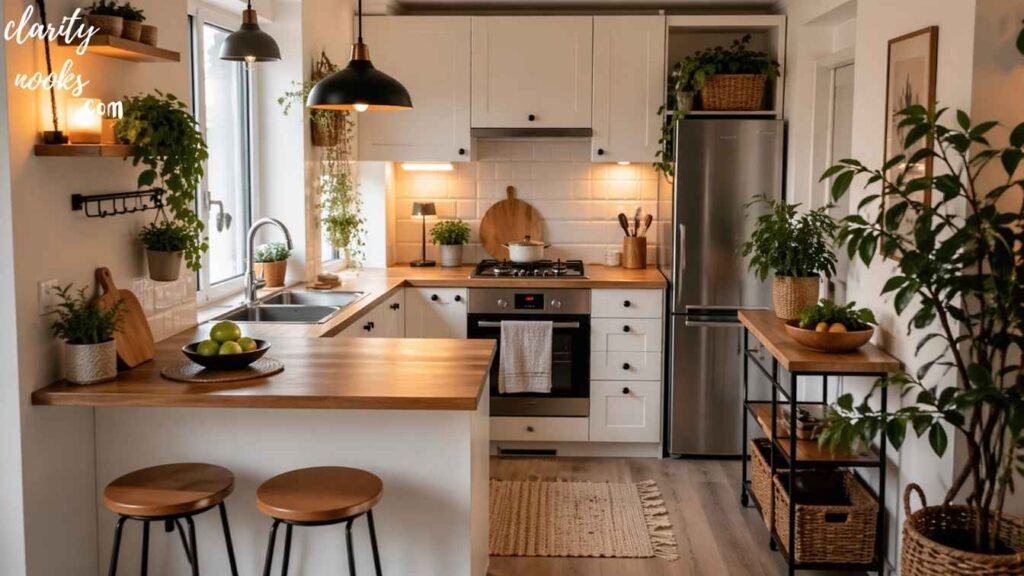
But here’s the truth most renovation blogs won’t tell you: you don’t need a gut renovation to fix a small kitchen. You need smarter design choices. The difference between a cramped kitchen and a highly functional one is rarely square footage it’s strategy.
This guide walks you through 11 DIY small kitchen ideas that go well beyond “add a pegboard.” Each idea is explained in full, with real-life examples, practical execution tips, and honest insight about what works and what doesn’t. Whether you’re renting, on a tight budget, or just want to squeeze more life out of your current kitchen, there’s something here for you.
What are the best DIY small kitchen ideas?
The most effective small kitchen upgrades include installing vertical open shelving, using magnetic knife strips and wall-mounted organizers, adding a fold-down breakfast bar, painting cabinets a light reflective color, using tension rod dividers inside drawers, installing under-cabinet lighting, and maximizing corner space with lazy Susans or pull-out trays. These changes cost $20–$400 total and can dramatically improve both function and the perceived size of your kitchen.
Go Vertical With Open Shelving
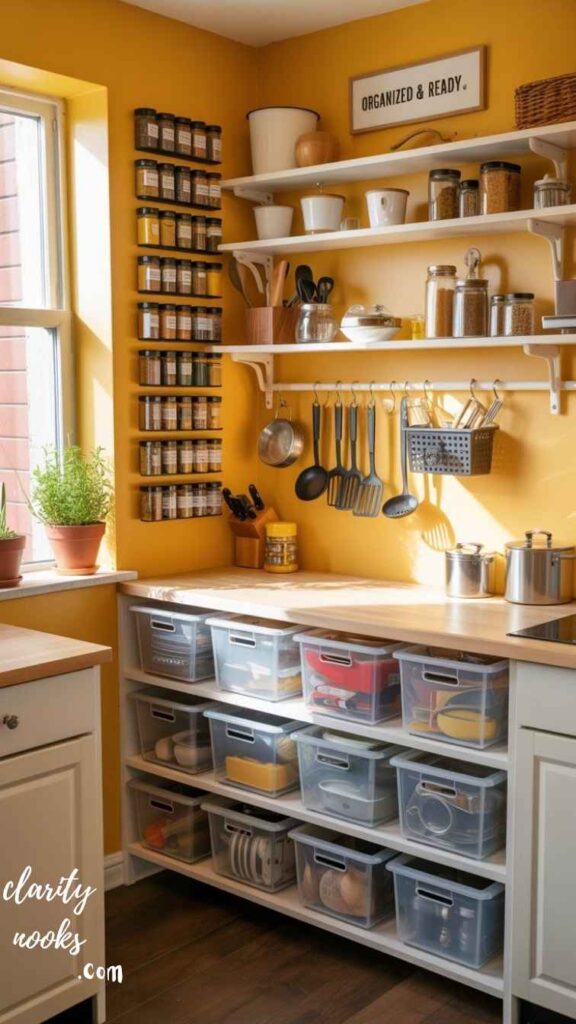
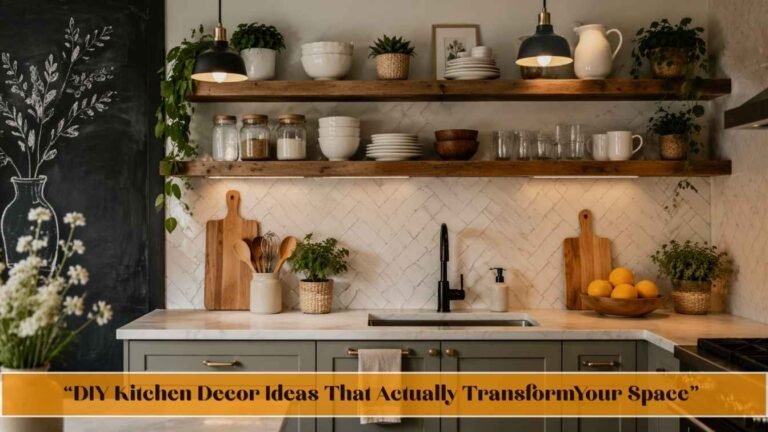
When floor space runs out, the answer is always up. Installing open shelving on your walls is one of the highest-impact, lowest-cost changes you can make in a small kitchen. It removes the visual bulk of upper cabinet doors, makes items easier to grab, and forces a kind of intentional organization that closed cabinets never demand.
Floating wood shelves cost between $30–$90 per shelf depending on material. Pine is affordable and paintable; reclaimed oak adds warmth and character. Mount them at staggered heights: lower shelves for daily dishes, upper shelves for less-used items or decorative jars. Keep two-thirds of the shelf functional, one-third visual this balance prevents the “cluttered café” look.
Real-Life Scenario
A 78 sq. ft. apartment kitchen in Brooklyn replaced three upper cabinets with two sets of floating walnut shelves. The homeowner gained the same storage, halved the visual weight of the room, and added $1,200 in perceived property value all for $160 in materials and one Saturday afternoon.
Styling Tip
Use consistent dishware colors and group items by use. Displaying one or two plants adds life without clutter. Avoid storing greasy or dusty items on open shelves near the stove keep those behind closed doors
Must Read: DIY Small Bathroom Ideas to Make Your Bathroom Feel Spacious
Paint Your Cabinets The Right Way
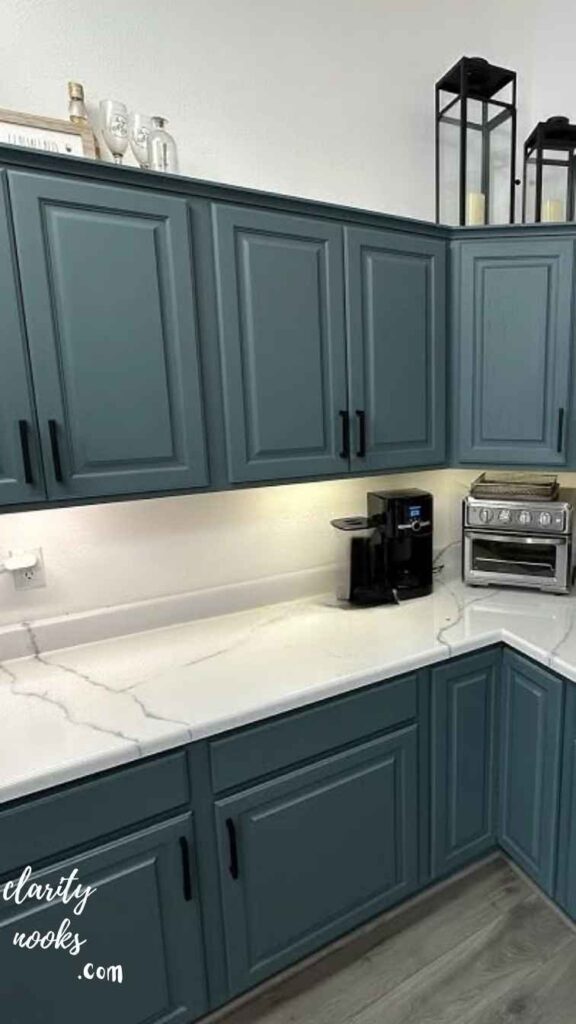
Cabinet painting is the single highest-ROI DIY project in a small kitchen. A $60–$120 paint job can make a kitchen feel 30% larger when you choose the right color and finish. Light, matte, or satin finishes reflect ambient light softly and make surfaces recede visually. Dark-painted cabinets work in large kitchens; in small ones, they can feel like walls closing in.
The best colors for small kitchens in 2026 lean toward warm whites (Sherwin-Williams “Alabaster”), soft sage greens, and warm greige tones. These colors pair naturally with wood countertops and brass fixtures two of the most popular kitchen design trends right now. Avoid cool grays, which photograph beautifully but often feel cold and clinical in person.
How to Do It Right
Remove doors entirely. Clean with TSP substitute, sand lightly with 220-grit, apply a bonding primer, then two coats of cabinet-specific paint (Benjamin Moore Advance or Rust-Oleum Cabinet Transformations). Reattach new brushed brass or matte black hardware as your final flourish. The hardware swap alone roughly $3–$8 per knob can change the entire personality of the space.
Mini Case Study
A rental kitchen in Austin, TX went from builder-grade oak cabinets to warm sage green using $85 in paint and $70 in new pulls. The landlord approved the change and the tenant’s Airbnb listing photos showed measurable increases in booking rates after the update.
Read More: Trendy DIY Living Room Curtain Ideas for a Fresh and Elegant Look
Install a Magnetic Knife Strip to Free Counter Space
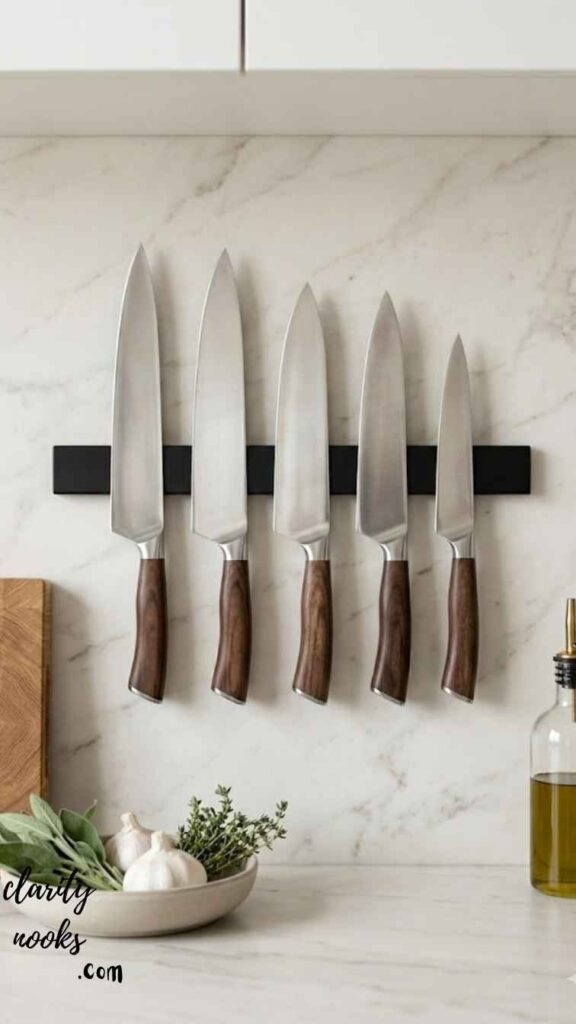
A knife block sitting on the counter in a small kitchen is prime real estate wasted. A wall-mounted magnetic knife strip costs $15–$35, takes 10 minutes to install with two screws, and immediately liberates 6–10 inches of counter space. More importantly, it puts your most-used tools at eye level and within arm’s reach which is how a professional kitchen thinks.
Place it on the wall adjacent to your prep area, about 18 inches above the counter. Stainless steel strips have a utilitarian look; bamboo or walnut wood strips feel more homey and organic. Most magnetic strips hold 8–12 knives and many also hold scissors, a vegetable peeler, or a bottle opener.
Don’t stop at knives. The same logic applies to your spice rack. A magnetic spice rack mounted on the side of your refrigerator or on a wall tile uses zero cabinet or counter space. Small magnetic tins with clear lids are available for under $25 for a set of 20 and they make your kitchen look like it belongs in a cooking show.
Don’t Skip: DIY Baby Nursery Ideas on a Budget: Affordable & Adorable Room Makeovers
Add a Fold-Down Breakfast Bar or Wall Table
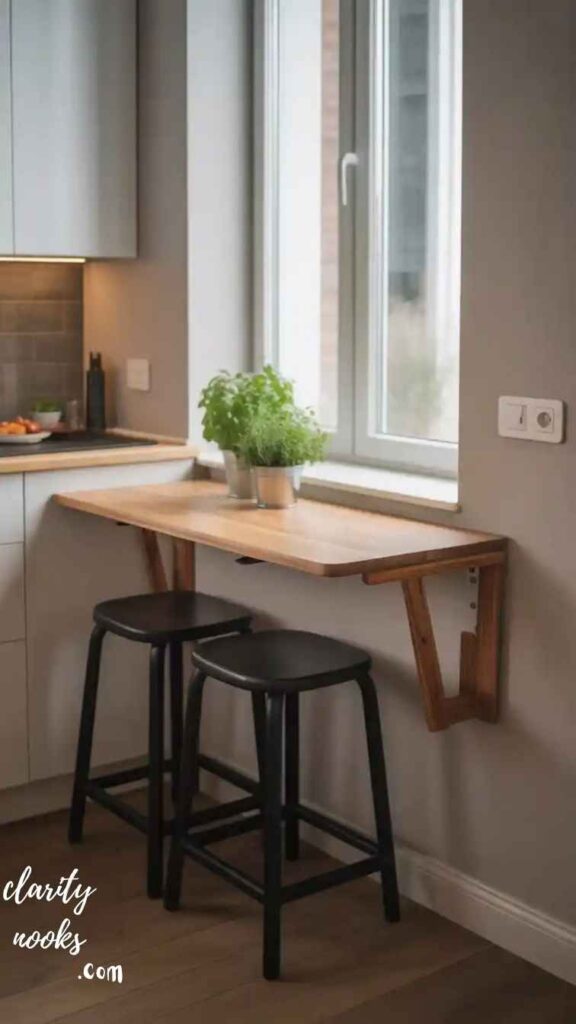
No room for a kitchen table? A fold-down wall-mounted table is the most space-efficient dining solution available to small kitchen owners. When folded up, it sits flush against the wall and takes up roughly 3 inches of depth. Folded down, it becomes a 24×36-inch dining surface that seats two people comfortably or a generous extra prep counter during cooking.
IKEA’s NORBERG wall shelf ($35) is the go-to DIY choice, mountable at counter height for prep or slightly higher as a standing breakfast bar. For a more polished custom look, buy a pre-cut butcher block countertop piece ($40–$80 at any hardware store) and mount it with heavy-duty folding brackets rated for 75–100 lbs. Finish it with food-safe mineral oil and you have a custom wall table for under $100.
Rental-Friendly Variation
If wall mounting isn’t an option, a slim bar cart with fold-out sides ($60–$150) gives you the same versatility on wheels. Roll it out for meals, roll it back under a counter or into a corner when you’re done. It also doubles as a drink station when entertaining.
Also Read: DIY Baby Room Ideas: Creative Ways to Build a Nursery Your Baby Will Love
Maximize Inside Cabinet Space With Organizers
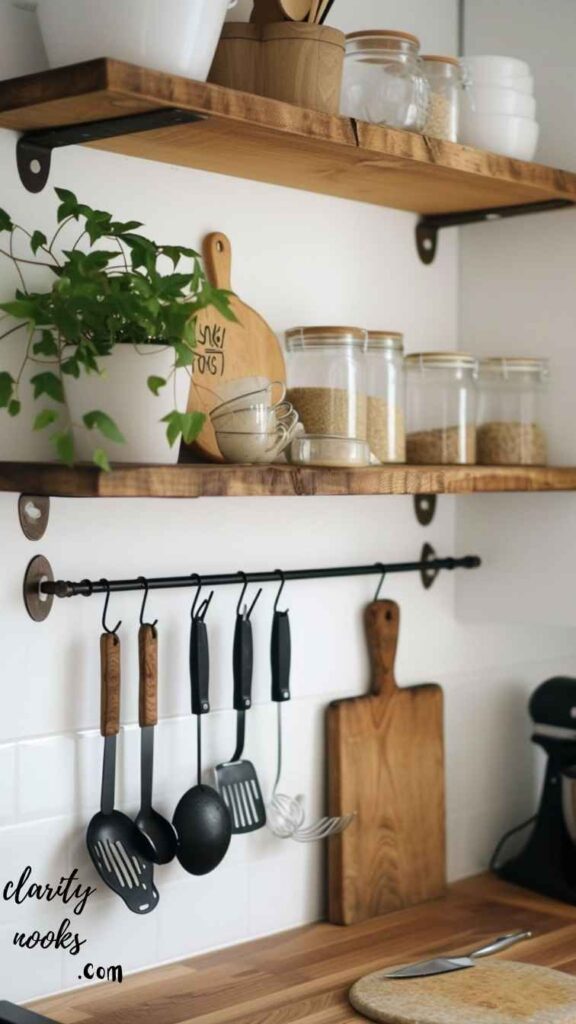
Most small kitchen owners assume they need more cabinets. In reality, the cabinets they already have are being used at about 40–50% efficiency. Cabinet organizers specifically tension rod dividers, stackable shelf risers, and pull-out tray inserts can double your usable storage without touching a single wall.
Use tension rods vertically inside a deep cabinet to store baking sheets, cutting boards, and pan lids upright instead of stacking them. Add a two-tier shelf riser ($12–$20) to your cabinets so you can see items in the back row. Line your cabinet shelf edges with small binder clips or hooks to hang measuring cups and small tools inside the door.
“A well-organized small kitchen outperforms a poorly organized large one, every single time.”
The Drawer Hack Most People Miss
Bamboo drawer dividers ($15–$25 for a set) are the single most underused kitchen organizer. Customizable to any drawer width, they separate utensils, gadgets, and tools into logical zones. Paired with a utensil rail on the wall above your stove, you eliminate the jumbled utensil drawer entirely a frustration that affects daily cooking flow more than any aesthetic issue.
Install Under-Cabinet Lighting to Create Depth
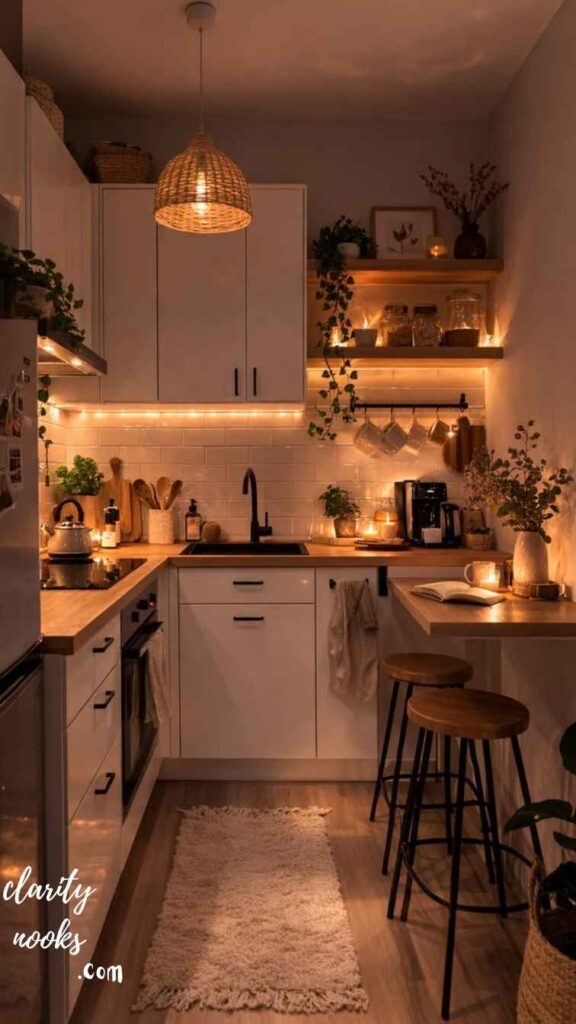
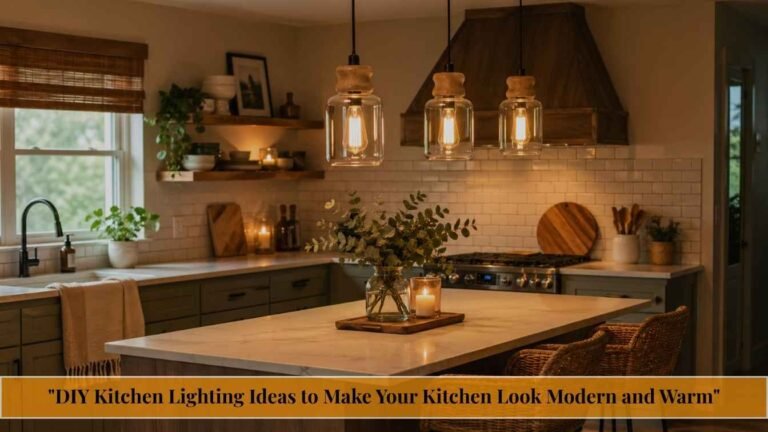
Under-cabinet lighting is one of those upgrades that costs $30–$80 but looks like it cost $500. It illuminates your countertop workspace directly, reduces shadows from overhead lighting, and critically makes the kitchen feel larger by creating visual layers of light at different heights. A single overhead light flattens a room. Layered lighting adds dimension.
LED puck lights require no wiring and press into place with adhesive; motion-activated versions are especially useful. Plug-in LED strip lights (brands like Govee or Brilliant Evolution) are renter-friendly, fully removable, and available in warm white (2700K–3000K), which is the ideal tone for a kitchen. Avoid cool blue-white LEDs they make food look unappetizing and the room feel like a laboratory.
For a more permanent solution, hardwired under-cabinet lighting ($15–$25 per fixture) connected to a dimmer switch creates a fully adjustable ambiance layer. This is a slightly advanced DIY project but entirely manageable for anyone comfortable with basic electrical work and the result is seamless and professional.
Use a Rolling Kitchen Island or Cart
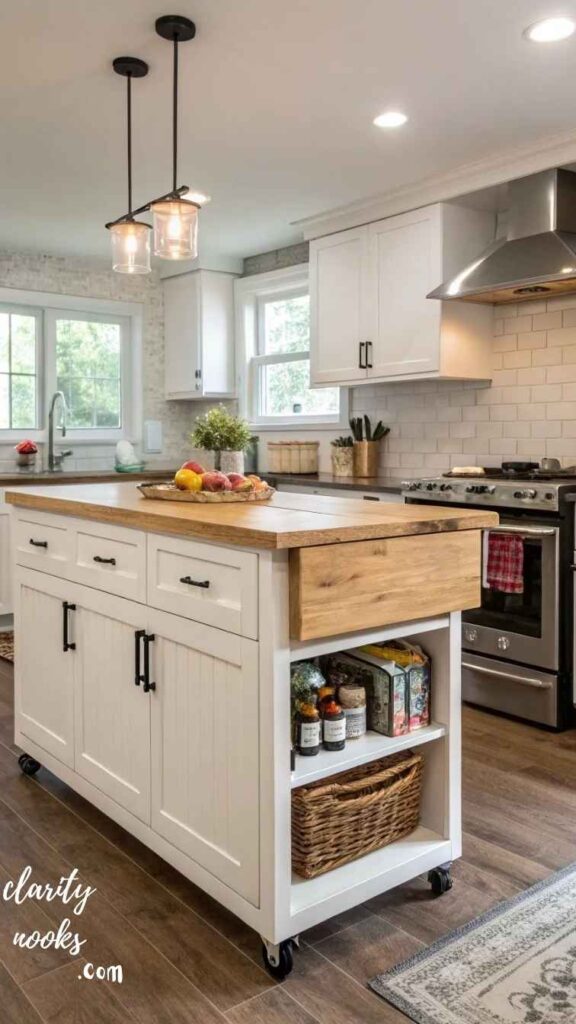
A fixed kitchen island is a luxury. A rolling kitchen cart is better because it’s flexible. Lock it in place during prep, roll it out of the way for a dinner party, position it as a serving station for brunches. In a small kitchen, furniture that does multiple jobs earns its floor space. Static furniture that serves one purpose rarely does.
The classic IKEA RÅSKOG cart ($20) is compact and perfect for produce or pantry overflow. Step up to the IKEA VADHOLMA island ($249–$329) for a butcher-block surface and hanging rail. For a more custom look, buy a freestanding wooden workbench from a hardware store, add locking caster wheels ($12 for a set of 4), and you have a bespoke kitchen island for under $150.
Real-Life Scenario
A 95 sq. ft. galley kitchen in Chicago added a custom-wheeled island (old dresser top + casters) to the open end of the galley. It tripled the prep surface, added drawer storage, and was moved during family gatherings for extra dining space. Total cost: $40.
Rethink Your Backsplash for Light & Perception
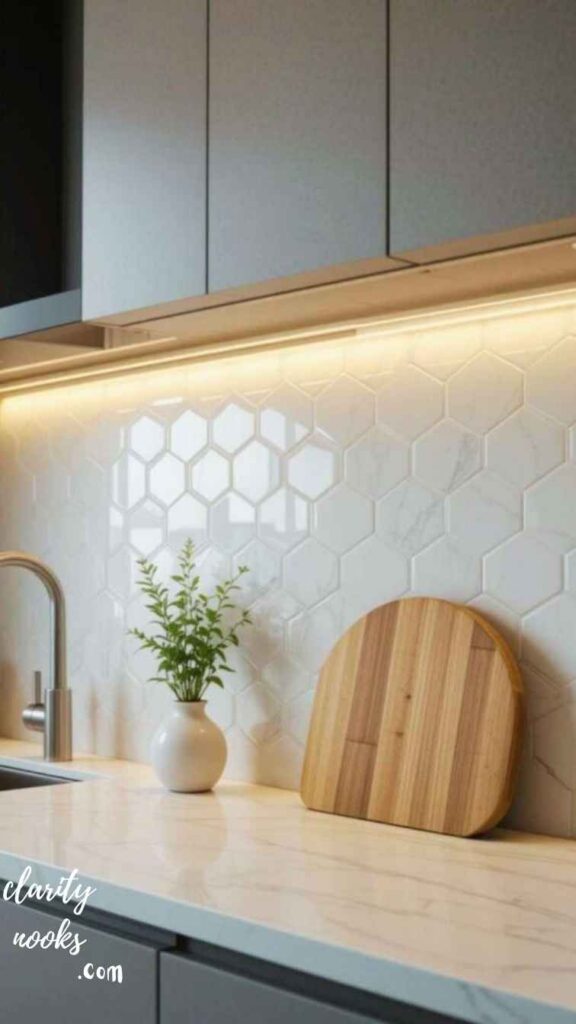
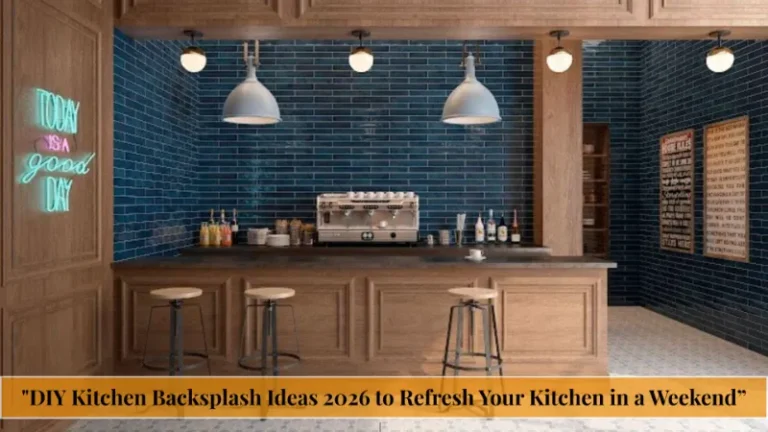
A small kitchen backsplash does two jobs: it protects your walls and it frames your eye’s experience of the room. The wrong backsplash choice makes a small kitchen feel heavy and closed in. The right one bounces light, draws the eye upward, and creates an illusion of depth. Peel-and-stick backsplash tiles make this a fully renter-friendly DIY project.
For small kitchens, subway tiles laid in a vertical stacked pattern (rather than the classic horizontal brick pattern) draw the eye upward and make ceilings feel higher. Light-reflective options white glass tile, pale marble-look peel-and-stick, or glossy ceramic amplify natural light rather than absorbing it. For a bold but functional choice, mirror tile or metallic mosaic tiles create genuine depth in a way no paint color can.
Budget Option That Works
Peel-and-stick backsplash panels from brands like Art3d or Aspect run $25–$60 for enough to cover a standard backsplash area. They install in under two hours with no special tools, peel off cleanly at lease end, and are now convincingly realistic a far cry from the cheap vinyl options available a decade ago.
Tackle the Corner Problem With Smart Inserts
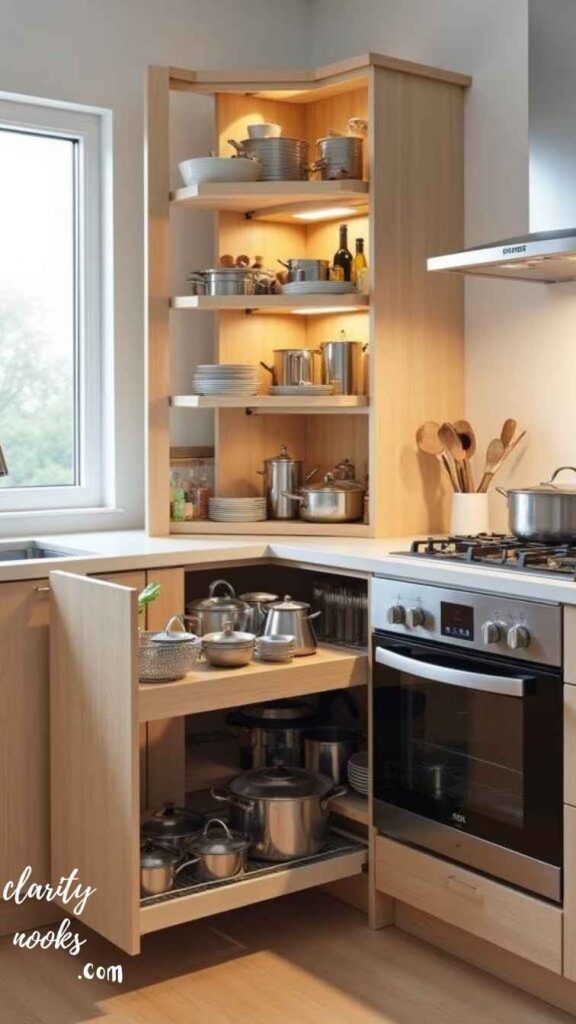
Corner cabinets are small kitchen enemies. They’re notoriously awkward to access, so items get shoved in and forgotten which means valuable storage space goes completely unused. A lazy Susan turntable ($15–$40) is the fastest fix: it rotates to bring everything within reach with a single spin. However, it’s not the only solution and often not the best one.
For deep corner cabinets, pull-out “magic corner” inserts available at kitchen supply stores for $80–$200 are the gold standard. Items sit on two linked wire shelves that swing out and forward together, giving full access to every square inch of the corner. Installing one yourself requires basic measuring, drilling, and following the manufacturer’s guide achievable in a half-day without professional help.
A DIY alternative for upper corner shelves: install a small lazy Susan on the existing shelf surface (no permanent modification required) and arrange your items by frequency of use. Keep daily items at the front of the rotation; seasonal tools at the back. This alone can recover 8–12 inches of genuinely usable depth that was previously dead space.
Replace or Resurface Countertops on a Budget
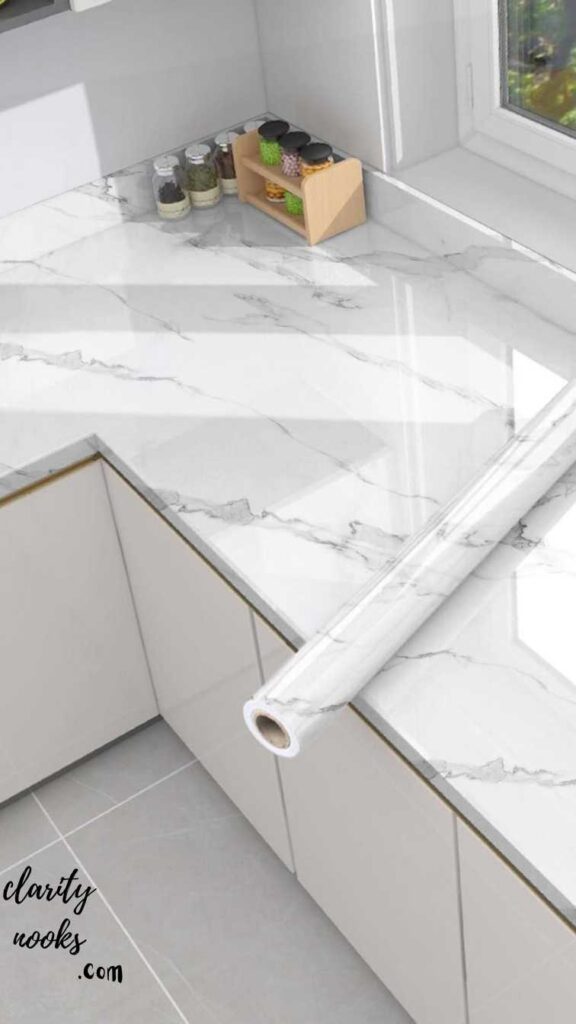
Countertops set the visual tone of your kitchen more than almost any other surface. If yours are outdated, stained, or simply ugly, they drag down the entire room even if everything else is clean and functional. Full replacement is expensive ($60–$200 per square foot installed). But DIY countertop resurfacing is a legitimate, durable alternative that costs a fraction of the price.
Contact paper for countertops
(brands like d-c-fix) has evolved significantly. Modern versions convincingly replicate marble, slate, and wood grain, adhere with heat resistance up to 140°F, and last 3–5 years with proper care. Application requires patience and a credit card to smooth out bubbles, but the result is genuinely impressive for $25–$60 in materials.
More Permanent Budget Option
Ardex feather finish (a concrete-overlay compound) applied over existing laminate countertops creates a matte, concrete-look surface for about $40 in materials. Sealed with a food-safe epoxy, it’s heat-resistant, easy to clean, and extremely durable. This is an intermediate DIY project but one of the highest-impact budget transformations available for small kitchens.
Use Color, Mirrors & Glass to Expand Visual Space
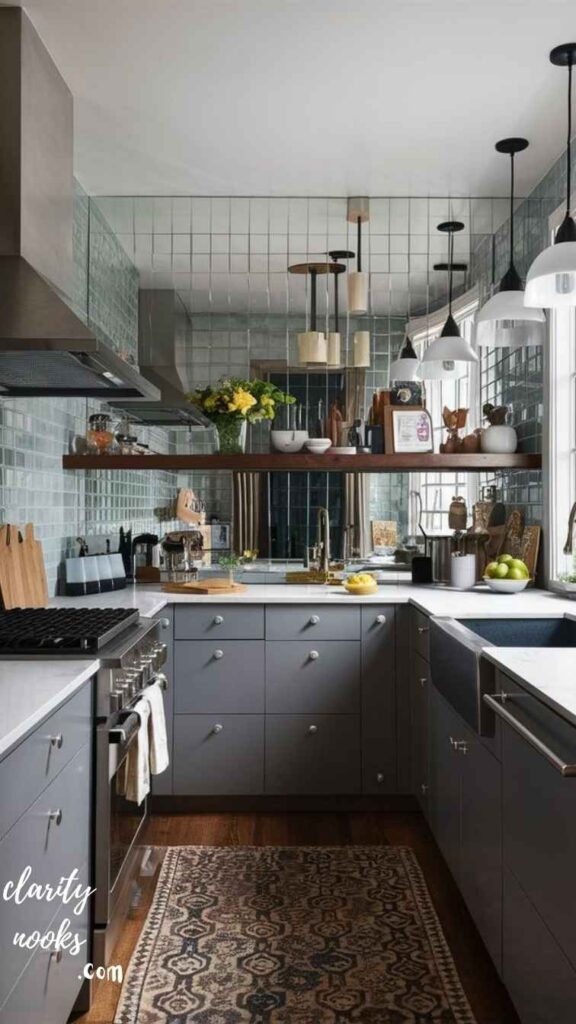
Visual expansion techniques cost almost nothing but change how the brain perceives a space. A small kitchen doesn’t have to feel small it just needs to be designed with spatial psychology in mind. The key principles: light reflects and expands; dark absorbs and contracts. Continuity confuses the eye about where a room ends.
Paint your walls and ceiling the same light color to eliminate the hard line where they meet this makes ceilings feel higher. Install a mirror on the wall opposite your window to double the perceived natural light. Replace solid cabinet doors on a few uppers with glass-front doors or remove them entirely this creates a visual pass-through that makes the room feel deeper. Add a few streamlined glass jars for pantry staples on your open shelf; transparent containers contribute to openness in a way that opaque ones don’t.
Expert Insight
Interior designers routinely cite the wall-ceiling color continuity trick as the lowest-cost, highest-impact intervention in small rooms. The human eye naturally tracks contrast lines; eliminating them removes the subconscious signal that the room has ended. One quart of ceiling paint ($12) can change how a kitchen feels in a single afternoon.
Conclusion
DIY Small Kitchen Ideas can make a big difference in a small space. Simple changes like smart storage, better lighting, and easy decor can improve both style and use. You do not need a big budget or full renovation. Small steps can give your kitchen a fresh and clean look. With the right ideas, even a tiny kitchen can feel open and comfortable.
Keep things simple and focus on what works best for your space. DIY Small Kitchen Ideas help you stay organized and save money at the same time. Try new ideas step by step and see what fits your needs. A little effort can turn your kitchen into a place you enjoy every day.
Trend Analysis:
Small Kitchen Design in 2026 & Beyond
The small kitchen space is being reshaped by three converging forces: rising housing costs pushing more people into compact living situations, a post-pandemic shift toward home cooking, and a growing sophistication among DIYers who demand professional results without professional budgets.
Now · 2026
Warm Minimalism
Cold gray gives way to warm, organic tones. Sage green, clay, warm white, and natural wood are dominating small kitchen palettes.
2027
Modular Everything
Furniture and storage systems designed to reconfigure as needs change. IKEA’s SEKTION system and competitors will see modular add-ons expand dramatically.
2027–2028
Smart-Compact Appliances
Induction cooktops with built-in downdraft ventilation, combination microwave-steam ovens, and 18-inch dishwashers will become mainstream rather than specialty items.
2028+
AI-Assisted Kitchen Design
AI tools that analyze your kitchen photos and output a prioritized renovation plan based on budget, usage patterns, and spatial efficiency will become standard consumer tools.
Voice search and AI search engines are also shifting how people discover home design ideas. Queries like “best ideas for a tiny kitchen with no counter space” and “how do I make my galley kitchen feel bigger” are increasingly answered by AI assistants before users ever visit a website. Content that answers specific, practical questions in clear language is now as important for AI discoverability as it is for traditional SEO.
Practical Expert Insights for Small Kitchen DIY
After studying dozens of real small kitchen transformations from studio apartments to compact bungalows certain patterns emerge. The most successful DIY renovations share a set of non-obvious principles that the average guide doesn’t cover.
- Shop your home before buying anything: Most kitchens have redundant tools and appliances. Remove everything from your kitchen entirely before deciding what storage you need. You’ll find you use 30–40% less space than you thought.
- Tackle function before aesthetics: New hardware is pretty; a functional workflow is transformative. Optimize the prep-cook-clean triangle first. Aesthetic updates get you compliments; functional updates get you back minutes of your day, every day.
- Lighting is cheap; its impact is not: Most kitchens are dramatically underlit. Before buying a single organizer, upgrade your lighting. Brightness alone changes how large and how usable a space feels and it’s the first thing photographers and real estate agents fix.
- Rental-friendly doesn’t mean low quality: Command strips, tension rods, and removable adhesives have advanced enormously. Don’t accept a worse solution just because you’re renting. Document the before state, use quality temporary products, and restore it on departure.
- One bold element outperforms ten subtle ones: A distinctive backsplash, a painted island in a contrasting color, or a single statement light fixture gives a small kitchen personality. Diffused changes across the whole space read as “updated” rather than “designed.” Pick one thing to make remarkable.
Long-Term Strategy: Building a Kitchen That Scales With You
The best small kitchen DIY investments aren’t the ones that look good on day one they’re the ones that continue paying dividends for years. Think of your kitchen in three horizons: immediate wins (weekend projects under $100), medium-term investments (months 3–12, $100–$500), and structural improvements that add lasting property value.
- Immediate wins are the ideas in this guide: lighting, organizers, open shelving, hardware.
- Medium-term investments include cabinet painting, countertop resurfacing, a rolling island, and backsplash upgrades.
- Structural improvements: adding an outlet, converting to a deeper sink, or installing a proper ventilation hood require more commitment but add genuine value to the property.
If you own your home, document every upgrade with photos, receipts, and before/after measurements. Kitchen improvements have among the highest ROI of any home improvement category. A well-executed small kitchen renovation can add $8,000–$15,000 to a home’s appraised value for $500–$1,500 in materials. That’s a return ratio that most financial investments can’t match.
Sustainability is also worth considering. Choose low-VOC paints, sustainably sourced wood for shelving, and energy-efficient LED lighting not just for environmental reasons but because these products now outperform their conventional alternatives in quality and durability. The long-term cost of LED lighting is 80% lower than incandescent, and low-VOC cabinet paint actually cures harder and adheres better than older formulas.
Future Predictions & Innovations in Small Kitchen Design
The next five years will bring significant change to how small kitchens are designed, equipped, and experienced. Several emerging technologies and behavioral shifts are converging in ways that will make today’s “smart” kitchen solutions look primitive.
Compact induction and modular appliances: are already disrupting the traditional kitchen layout. The assumption that a kitchen needs a 30-inch range and a full-size refrigerator is being dismantled by column refrigerators, modular induction zones, and steam ovens that do the job of three appliances in the footprint of one. For small kitchen DIYers, this means that major appliance replacements will increasingly become space-positive rather than space-neutral decisions.
AI-driven design tools: will soon allow homeowners to photograph their kitchen, describe their goals and budget, and receive a prioritized action plan with shopping lists, installation guides, and realistic 3D visualizations all in minutes. Apps like Planner 5D and Ikea’s AR tools are early iterations of this. By 2027–2028, these tools will be specific enough to recommend exact products, predict results, and even flag structural concerns before you begin.
Material innovation: continues to lower the cost of premium aesthetics. Sintered stone panels (a luxury countertop and backsplash material) are beginning to appear in peel-and-stick format. Bio-based cabinet finishes that harden like ceramics but apply like paint are in commercial development. The gap between a $30,000 kitchen renovation and a $1,500 DIY renovation will continue to narrow as materials democratize.
Common Mistakes & Hidden Gaps in Small Kitchen DIY
Most small kitchen mistakes aren’t about choosing the wrong color or buying the wrong shelf. They’re about sequencing, scale, and overcomplicating errors that happen at the planning stage, not the execution stage. Here are the most common, and the ones that intermediate DIYers are most likely to overlook.
Beginner
Choosing cool lighting in warm room: Cool-temperature LEDs (5000K+) in a kitchen with warm wood tones, terracotta accents, or sage-painted cabinets create a jarring visual disconnect. Always match your light temperature (2700K–3000K for warm kitchens, 3500K for more neutral ones) to your surface palette.
Beginner
Buying organizers before decluttering: Storage can’t fix too much stuff. Before spending a dollar on any organizer, remove everything from your kitchen and purge ruthlessly. Duplicate tools, expired pantry items, and appliances you use twice a year belong elsewhere. Organize the kitchen you actually use, not the one you currently have.
Intermediate
Skipping the primer on cabinet paint:
Paint without a bonding primer will chip within months on cabinet surfaces, especially around handles. This is the single most common reason “cabinet paint jobs gone wrong” appear on home improvement forums. Sand, prime with a dedicated bonding primer, then paint. No shortcuts here.
Intermediate
Over-decorating open shelves:
Open shelving shows everything. The rule is simple: if you wouldn’t put it in a magazine photo, reconsider whether it belongs on the shelf. Visible clutter on open shelves makes a small kitchen look smaller and messier than closed cabinets ever would. Edit aggressively and resist the urge to fill every inch.
Advanced
Ignoring ventilation when reconfiguring the layout:
Moving prep areas, adding a portable induction station, or installing a range in a new position creates ventilation considerations that are easy to overlook. Cooking generates moisture, grease vapor, and odors. Ensure any reconfiguration keeps you within reach of either your existing ventilation hood range or a viable window for a portable unit.
✦ Content Gap Most small kitchen guides focus exclusively on storage. What they rarely address: workflow optimization. The most frustrating small kitchens aren’t short on storage they have prep, cooking, and cleaning zones that fight each other. Map your actual cooking movements before making any physical changes. Even a single reorganization of where you store things (putting pots next to the stove, cutting boards next to the prep zone, cleaning supplies under the sink) can be more impactful than $500 in new shelving.
FAQ’S About DIY Small Kitchen Ideas
How much does it cost to DIY a small kitchen renovation?
A meaningful small kitchen transformation new paint, hardware, lighting, open shelving, and organizers typically costs $200–$800 when done as DIY. A more extensive update including countertop resurfacing and a rolling island can reach $1,200–$1,800. Professional renovation of the same scope would run $8,000–$25,000 or more.
What are the best DIY ideas for a rental kitchen?
Rental-friendly options include removable peel-and-stick backsplash tiles, tension rod organizers, command hook wall rails, rolling carts, plug-in LED lighting, and contact paper countertop updates. All of these are fully reversible at lease end and require no permanent modifications.
How do I make a small kitchen look bigger without renovating?
Paint walls and ceiling the same light color, add under-cabinet lighting, replace solid upper cabinet doors with glass fronts or remove them entirely, use a mirror on the wall opposite the window, and keep countertops clear of all items that don’t belong there permanently. These changes cost under $200 and can make a dramatic visual difference.
What’s the fastest single upgrade for a small kitchen?
New cabinet hardware. Replacing knobs and pulls takes 30–60 minutes, costs $30–$80, and immediately updates the look of your entire kitchen. It’s the change with the highest visual-impact-to-effort ratio of any small kitchen upgrade.
Rameen Zara is the founder of Clarity Nooks, bringing over five years of experience in home décor and interior styling. She shares simple yet practical design ideas that suit real homes and everyday living. Her approach focuses on cozy aesthetics, soft color palettes, and natural textures that create warm, inviting spaces.