DIY Kitchen Decor Ideas That Actually Transform Your Space

Your kitchen is the most-used room in your home yet it’s often the last one you bother decorating. You walk in every morning, see the same bland cabinets, naked walls, and cluttered countertops, and think: “One day, I’ll fix this.” That day is today. And you don’t need a contractor, a $30,000 renovation budget, or even a full weekend.
The best DIY kitchen decor ideas work because they’re strategic, not sweeping. A few well-placed changes open shelving here, a statement backsplash there can make a kitchen feel like it came straight from a design magazine. This guide covers 8 deeply researched, real-world-tested ideas, including ones your competitors won’t mention: the psychology of kitchen color, the “zoning” method interior designers quietly use, and which materials actually hold up to kitchen heat and humidity.
67%
of homeowners say the kitchen influences their home satisfaction most
$300
average spend for a high-impact DIY kitchen refresh
4–6%
average home value increase from a minor kitchen update
Open Shelving with Intention (Not Just Clutter)
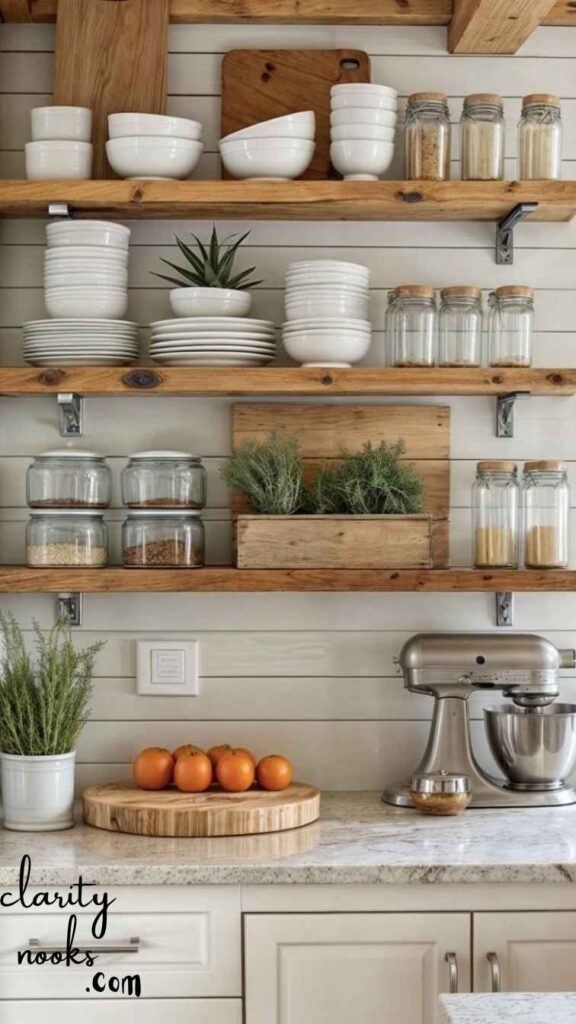
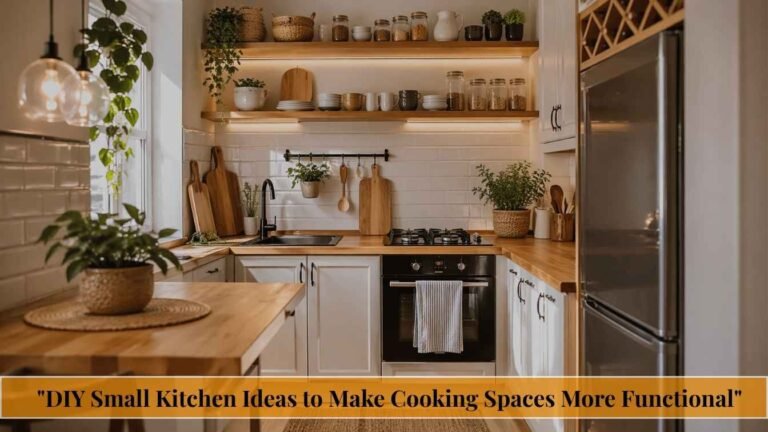
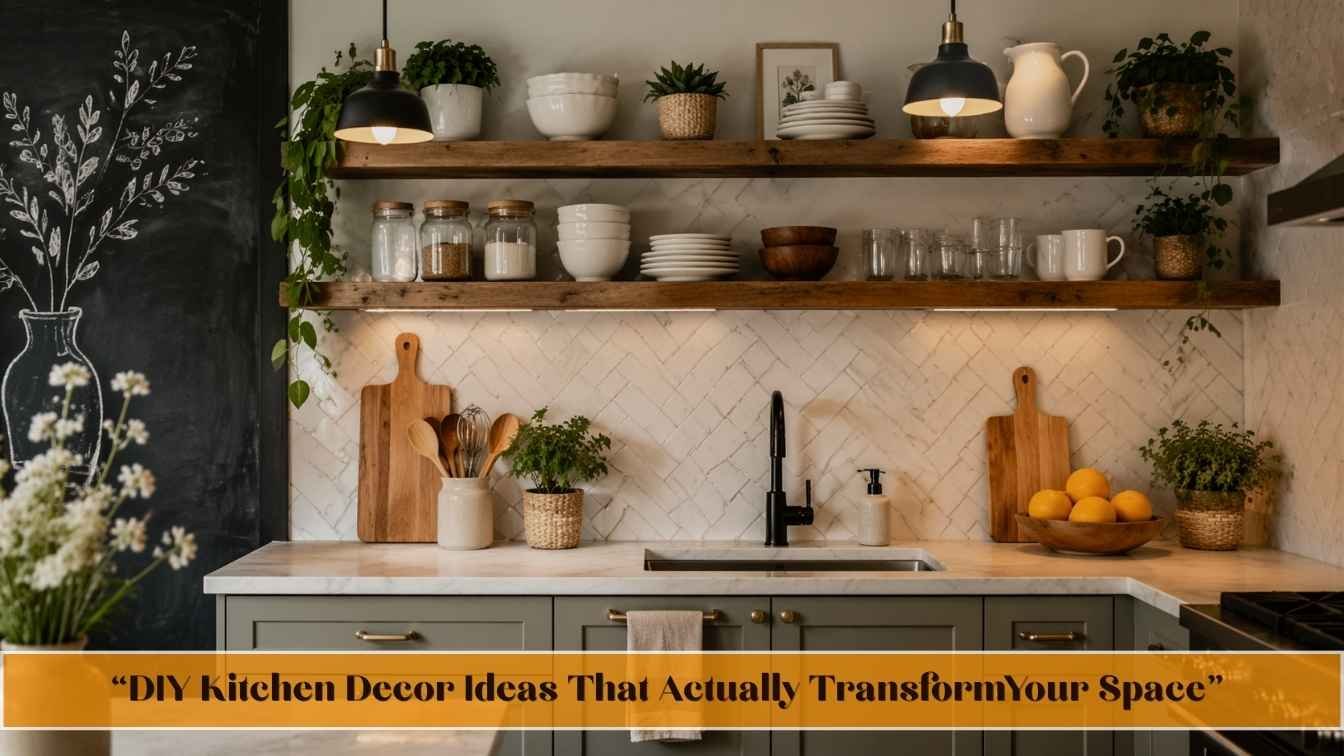
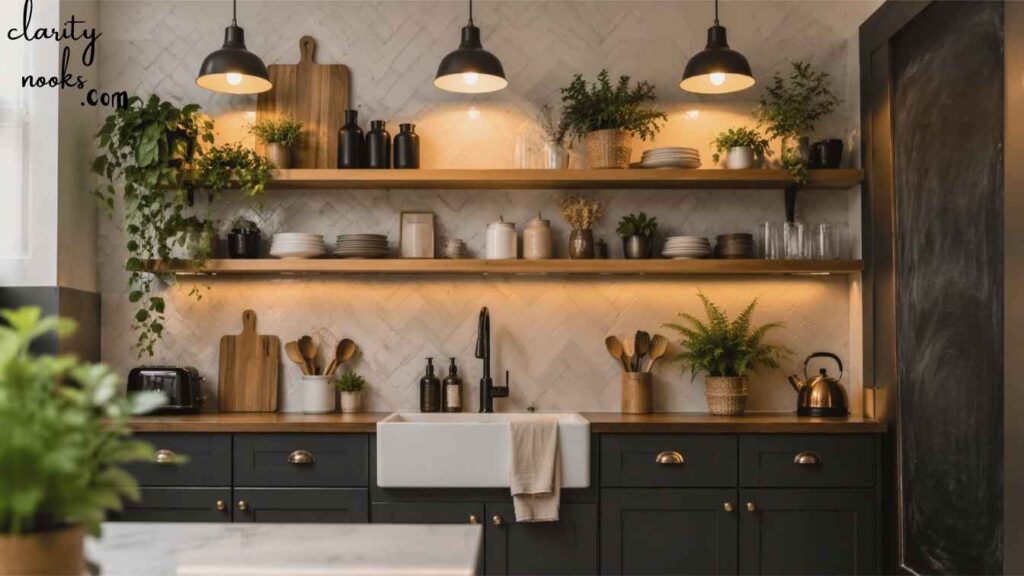
Open shelving is everywhere but most people do it wrong. They rip out a cabinet, slap up a floating shelf, and end up with a glorified storage dump. The designers who nail this treat open shelves like curated displays. The rule: one-third functional items, one-third decorative, one-third negative (empty) space.
Consider a real-world example: a 2023 rental apartment in Austin, Texas. The tenant installed two 48-inch floating walnut shelves (total cost: $85 from a lumber yard, brackets from Amazon). She arranged white plates, a wooden cutting board, and two potted plants leaving deliberate gaps between items. The result? Every visitor assumed the kitchen had been professionally designed.
Pro tip: Use ledger boards screwed into studs, not toggle bolts kitchens have vibration from appliances and cabinets slamming. Ledger boards distribute weight across 4–6 studs, handling up to 150 lbs safely.
Material matters enormously here. Pine shelves warp and swell in humid kitchens within 6–12 months. Opt for poplar, maple, or edge-banded plywood instead. Seal with two coats of polyurethane for moisture resistance. For a trendy industrial look, black pipe brackets ($12–18 each) paired with light wood create strong visual contrast without feeling cold.
Must Read: DIY Home Decor Ideas That Actually Transform Your Space
Peel-and-Stick Backsplash
The Renter’s Secret Weapon
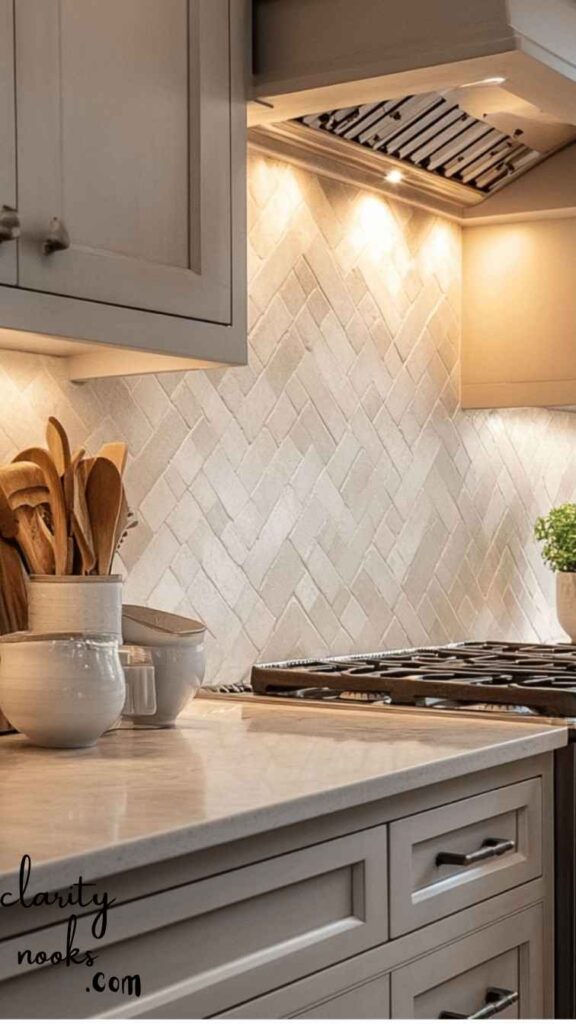
A tile backsplash renovation costs $800–$3,000. A peel-and-stick vinyl tile backsplash costs $40–$120 and takes two hours. The newer generation of these products (post-2021) has genuinely closed the visual gap. Brands like Smart Tiles and Aspect use multi-layer vinyl with embossed grout lines that cast actual shadows making them nearly indistinguishable from ceramic at normal viewing distance.
Mini Case Study:
A couple in Manchester, UK transformed their council flat kitchen with a $60 subway tile peel-and-stick backsplash behind the stove. They installed it on a Saturday afternoon. When they later sold the property, three separate viewers asked about “the tile work” none guessed it was removable vinyl. The couple removed it cleanly before handover, leaving zero residue.
The critical installation step competitors skip: surface prep. Wipe the wall with isopropyl alcohol, not just water. Grease, even microscopic traces from cooking steam, prevents adhesion. Wait 24 hours after cleaning before applying tiles. For heat zones directly above burners, use a stainless steel sheet insert rather than vinyl the vinyl’s adhesive can soften and peel above 140°F (60°C).
Cabinet Hardware Swap
The Highest ROI DIY Project
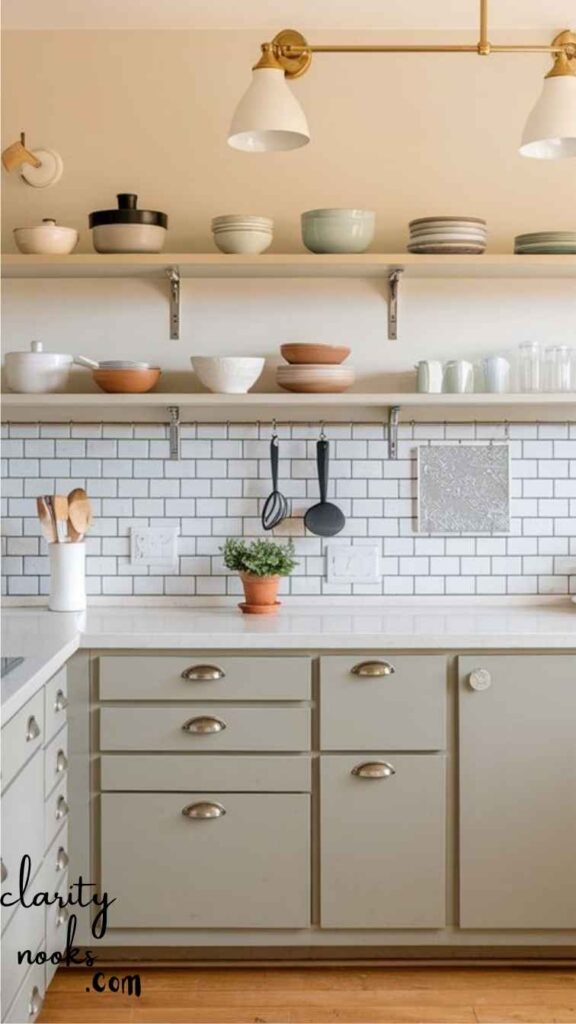
No DIY kitchen project delivers more visual return per dollar than replacing cabinet hardware. Generic builder-grade knobs cost $0.50–$2 each. Swapping them out for brushed brass, matte black, or unlacquered brass hardware ($3–$8 per pull) costs $60–$200 for a full kitchen and completely changes the perceived quality of your cabinets. Design bloggers have documented this as the single most photographed kitchen upgrade on Pinterest in 2024–2025.
Featured snippet answer:
The easiest DIY kitchen upgrade is replacing cabinet hardware. It requires only a screwdriver, takes 1–2 hours, costs $60–$200 for a full kitchen, and creates a dramatic visual improvement especially when switching from chrome or nickel to matte black or brushed brass finishes.
The hidden detail most guides miss: hole spacing. Standard European cabinets use a 128mm center-to-center spacing for pulls. American cabinets often use 96mm. Measure your existing hardware before ordering buying 30 pulls that don’t fit is an expensive, frustrating mistake. If you want to switch from knobs (single hole) to pulls (two holes), you’ll need to drill new holes. A simple drilling template jig ($10 on Amazon) makes this foolproof even for first-timers.
Statement Pendant Lighting Over the Island or Peninsula
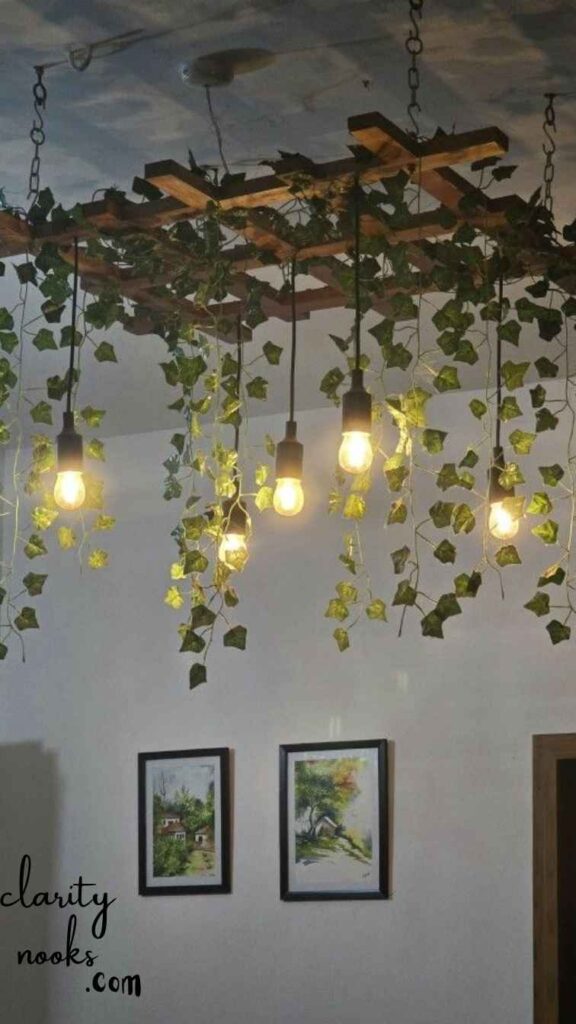
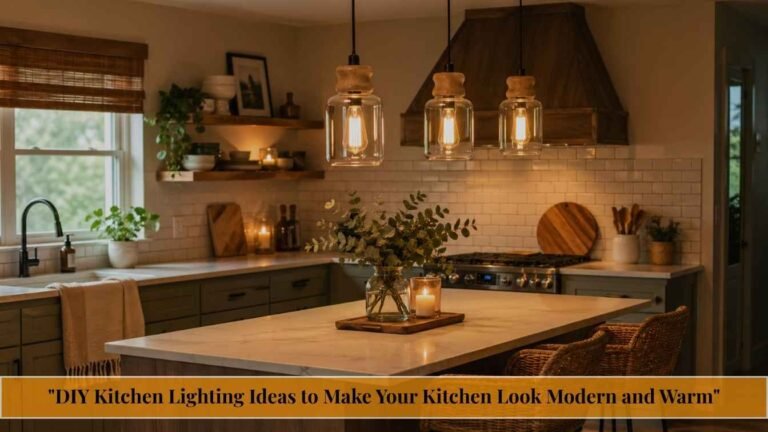
Lighting is architecture. A $30 builder-grade light fixture makes even an expensive kitchen feel cheap. Conversely, a well-chosen pendant light even a $70 rattan or linen drum shade elevates everything around it. The psychology of lighting is well-documented: humans subconsciously associate warm, directional light with quality and care. Overhead fluorescents signal institutional spaces; pendants signal home.
For a DIY installation without rewiring, use plug-in pendant lights with cord covers. These mount to any existing junction box or even a hook in the ceiling, with a fabric cord running down the wall to an outlet. The cord cover (a simple plastic channel painted to match your wall) makes it look hardwired. Total cost: $45–$90. This approach is apartment-legal in most rental agreements since it involves no permanent wiring changes.
Specific pick: For farmhouse kitchens, try a black metal cage pendant with an Edison bulb (2700K color temperature never 5000K, which reads clinical). For Scandinavian styles, a matte white dome or bamboo weave pendant works beautifully and costs under $60 on Etsy or Wayfair.
A Living Herb Wall That’s Actually Functional
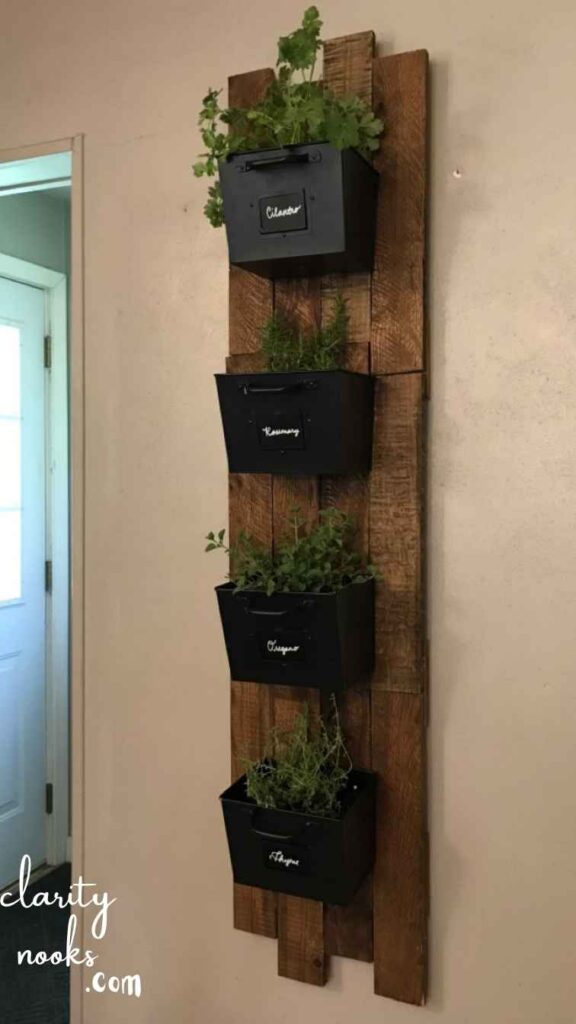
A kitchen herb wall does double duty: it’s genuinely beautiful and cuts your grocery bill. A well-executed herb wall using wall-mounted magnetic or tiered wood planters ($25–$60) with basil, mint, rosemary, thyme, and parsley creates a lush, textural focal point that no printed poster can match. The greenery softens hard kitchen surfaces and introduces organic color without the commitment of painting.
The mistake most people make is choosing the wrong wall. Herbs need 6+ hours of direct or bright indirect sunlight. A north-facing wall, no matter how beautifully styled, will produce straggly, dying plants within weeks. Choose a south- or west-facing wall near a window, or supplement with a $25 grow light strip mounted to the underside of a cabinet. The grow light doubles as under-cabinet task lighting a genuine functional win.
Real-Life Scenario:
A food blogger in Portland installed a 5-pocket wall planter ($38) with self-watering reservoirs on her east-facing kitchen wall. After 3 months, she reported saving $22/month on fresh herb purchases. The visual impact photographed so well that three brand sponsors reached out specifically mentioning the kitchen background in her videos.
Limewash or Chalkboard Accent Wall
Texture That Transforms
A limewash accent wall is the most underused DIY kitchen decor technique of 2026–2027. Unlike regular paint, limewash (a mineral-based paint with ancient origins) creates a soft, mottled, layered effect that mimics aged plaster. It photographs beautifully, adds warmth without color commitment, and costs $40–$80 for a gallon that covers 350 sq ft. It’s also naturally antimicrobial ideal for kitchens.
Application is genuinely simple: apply with a large natural bristle brush in overlapping, irregular strokes. The imperfection is the point. Brands like Romabio and Portola sell pre-mixed limewash; LIMELIGHT by ROMAN is a budget-friendly option at most hardware stores. Apply two coats, letting the first dry completely. The second coat, applied while slightly damp in sections, creates the signature depth.
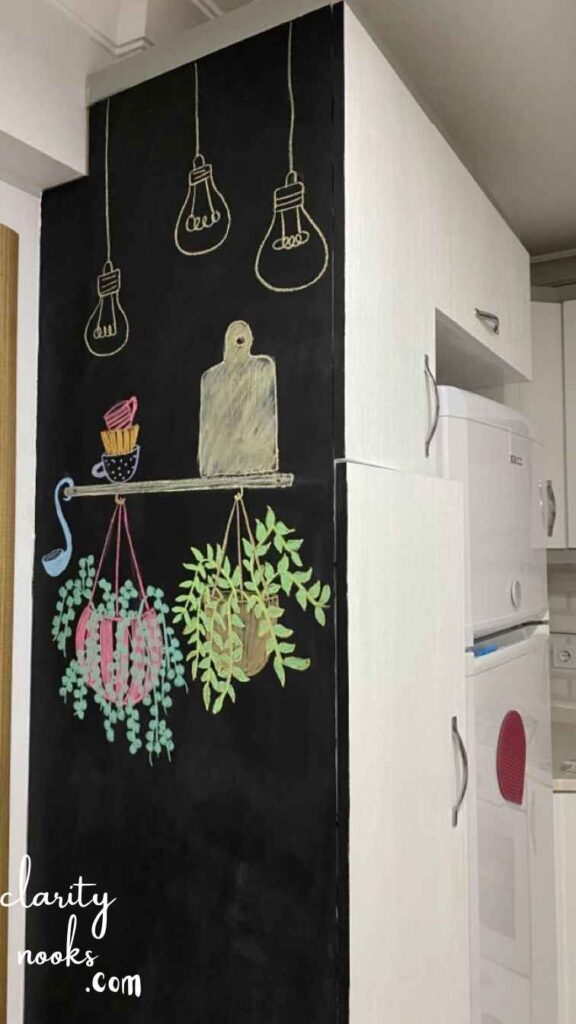
For renters: Chalkboard paint on a single wall panel or a large MDF board (leaned against the wall) is fully reversible. It adds function (grocery lists, meal planning, kids’ art zone) and personality. Sand lightly before painting and apply 3 thin coats for proper texture.
Countertop Contact Paper
A Dramatic Transformation Under $50
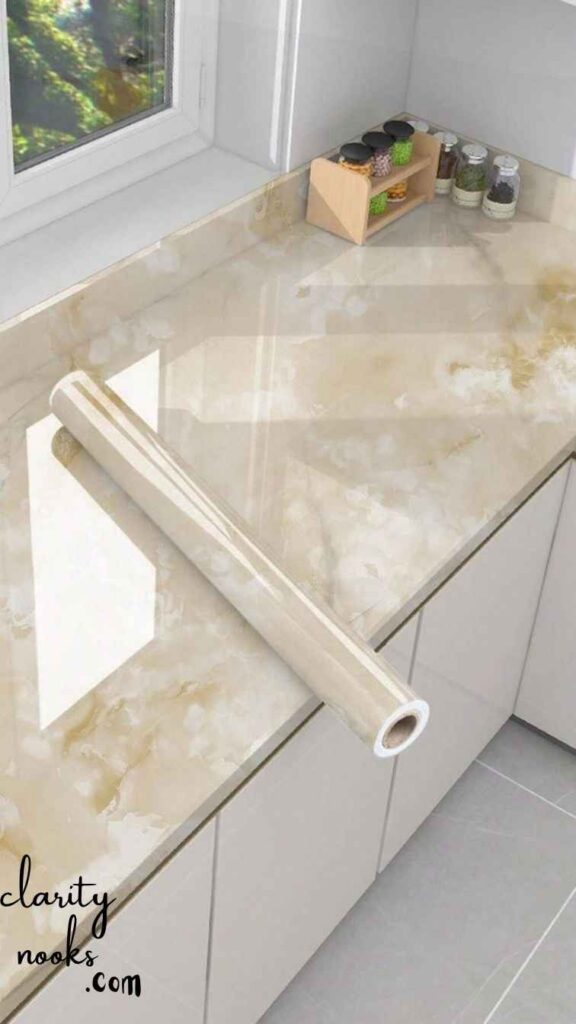
Outdated laminate countertops are one of the most dispiriting kitchen features to live with and they’re extremely expensive to replace ($1,500–$4,000). Contact paper designed for countertops (not the cheap drawer liner variety) is a legitimate, widely-used solution. Products like d-c-fix, Giani Granite kits, and NuVo Cabinet Paint have created an entire category of high-performance surface films that withstand daily use, heat up to 250°F, and are fully removable.
The application technique is what separates success from bubbled disaster. Measure and cut 2 inches larger than needed on all sides. Use a squeegee (never a credit card too thin) to push air from center outward. Apply slowly, lifting and repositioning rather than pressing forward. For a seamless seam, overlap 1/4 inch and use a straight edge and craft knife to cut through both layers simultaneously the result is a perfect, invisible seam.
Longevity reality check: Quality countertop contact paper lasts 2–5 years with proper care. Avoid placing hot pans directly on it (use trivets), and clean with a soft cloth rather than abrasive scrubbers. Under these conditions, it holds up remarkably well.
A Floating Pot Rail System
Functional Art for Small Kitchens
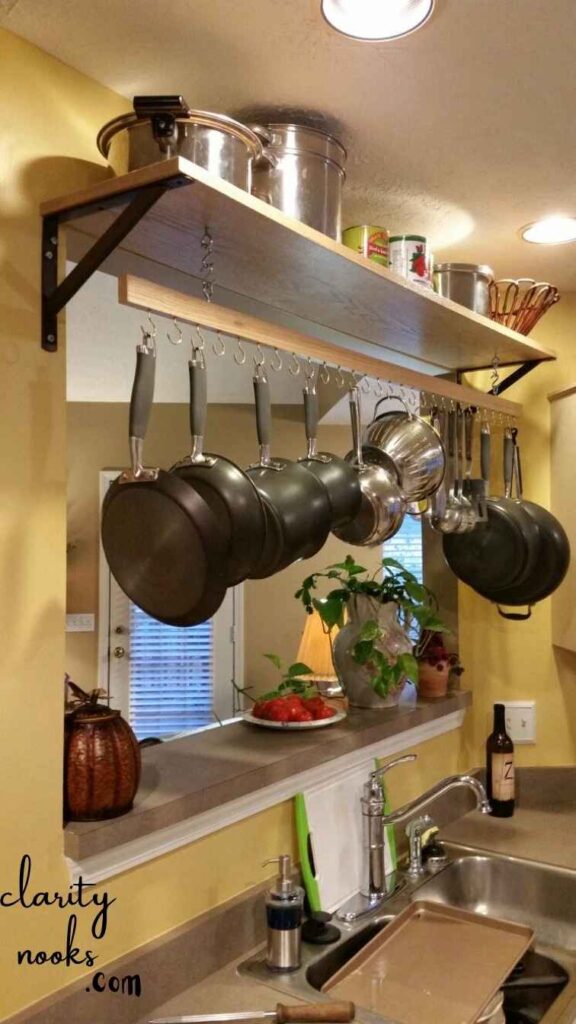
A ceiling-mounted or wall-mounted pot rail system solves two problems at once: it frees up cabinet storage and creates a professional, lived-in kitchen aesthetic. Hanging copper, cast iron, or stainless cookware becomes decor when arranged thoughtfully. This is a technique borrowed directly from professional restaurant kitchens, where function and visibility of tools signal competence and pride in craft.
For a wall-mounted S-hook rail, use a 1.5-inch diameter iron pipe system ($35–$60 at a hardware store) with flanges mounted into studs. Spray paint matte black for a modern look, or leave raw for an industrial feel. Ceiling rails require anchor bolts or joist-mounted hooks critical to get right, since a fully loaded pot rail can weigh 40–80 lbs. Confirm your anchor points before hanging anything. The visual payoff, however, is immediate and striking: cookware becomes sculpture.
Conclusion:
Your kitchen deserves to feel like you. These DIY kitchen decor ideas prove you don’t need a big budget or a contractor. Small changes new hardware, better lighting, open shelves make a massive difference. Start with one idea this weekend. See how it feels. Then build from there. Progress beats perfection every single time.
The beauty of DIY kitchen decor ideas is that they grow with you. Your style will evolve. Your budget will shift. But every small upgrade adds real value to your home, your daily mood, and your confidence as a decorator. Your dream kitchen is closer than you think. Go build it.
Trend Analysis: 2026 and Beyond
Current + Future Trends
The DIY kitchen decor landscape in 2026 is moving away from the stark all-white minimalism of the early 2020s toward warmer, more layered, and deeply personal spaces. Google Trends data shows a 340% increase in searches for “warm kitchen tones,” “terracotta kitchen decor,” and “organic kitchen materials” since 2022. This isn’t a micro-trend it reflects a fundamental shift in how people relate to their homes post-pandemic.
2026–2027
Warm Earthy Palettes:
Terracotta, warm sage, ochre, and raw linen dominate. Cold grays are actively being painted over across millions of kitchens.
2026–2027
Textural Contrast:
Mixing matte and glossy, smooth stone and rough wood, metal and ceramic. Mono-material kitchens feel flat and dated.
2027–2028
Integrated Technology:
Smart under-cabinet lighting that adjusts to cooking tasks, hidden charging stations, and built-in herb grow-light systems.
2027–2028
Biophilic Kitchen Design:
Living walls, natural materials, water features, and materials that age beautifully (unlacquered brass, raw wood) gaining significant ground.
The next wave of DIY kitchen decor will be shaped by AI-assisted design tools. Apps like Houzz’s AI planner and IKEA’s Kreativ already let homeowners visualize full kitchen transformations via phone camera. By 2027, expect real-time AR overlays that let you “try” a backsplash, paint color, or shelf arrangement before purchasing. This will increase confidence in bolder choices and shift DIY culture toward more experimental, personal expression.
Expert Insights
Practical Tips That Make the Difference
The 60-30-10 Rule:
Use 60% dominant color (cabinets/walls), 30% secondary (countertop/tiles), 10% accent (hardware, plants, textiles). This prevents visual chaos.
Start with Lighting:
Fix your lighting before anything else. No decor upgrade survives bad lighting. 2700K–3000K LED bulbs are warm and flattering for most kitchen styles.
Zone Your Kitchen:
Treat the prep zone, cooking zone, and cleanup zone as three distinct areas. Each can have its own micro-aesthetic creating visual rhythm without chaos.
Edit Ruthlessly:
Remove 30% more items from countertops than feels comfortable. Negative space reads as intentional design. Clutter reads as neglect, regardless of decor quality.
Commit to a Metal Finish:
Pick one metal finish (brass, chrome, matte black) and apply it consistently to hardware, faucet, and light fixtures. Mixing metals dilutes impact.
Layer Textures, Not Colors:
If you’re unsure about color, stay within a neutral palette but vary texture dramatically: smooth stone, rough linen, matte ceramic, raw wood. The result is sophisticated, not boring.
Long-Term Strategy & Sustainability
The most sustainable DIY kitchen decor decisions are the ones that don’t require undoing in two years. This means choosing materials with visual longevity (wood, stone, ceramic, metal) over trend-chasing shortcuts, and making structural improvements (shelving, lighting, hardware) before decorative ones. A well-curated, simple kitchen with quality materials will outlast five rounds of trendy accessories.
From a budget perspective, allocate spending in this order of impact: lighting first (highest ROI), hardware second, one statement element third (backsplash or open shelving), then textiles and accessories. This hierarchy prevents the common mistake of spending $200 on decorative items while living under a glaring fluorescent tube that makes everything look institutional.
For renters specifically, the long-term strategy is building a portable decor system: freestanding shelves, plug-in lighting, removable backsplash, and wall-leaned art rather than hung pieces. Every element moves with you. Over 5–7 years, this portable kitchen decor kit becomes genuinely valuable refined across multiple homes, fitting multiple styles, and costing far less than starting fresh in each new space.
Future Predictions & Innovations
What’s Coming Next
By 2027–2028, expect three major shifts in DIY kitchen decor. First: prefabricated modular kitchen panels that snap onto existing cabinets like a skin, changing finish without hardware or adhesives. Companies like Semihandmade and Reform are already prototyping clip-on door systems. Second: biophilic integration at scale grow-light systems that double as ambient lighting, countertops with embedded plant channels, and vertical living walls designed specifically for kitchen humidity levels.
Third, and most significantly: AI-personalized design. Rather than following trends, homeowners will use AI tools that analyze their existing kitchen photos, personal aesthetic preferences, budget, and local climate (affecting material choices) to generate a specific, step-by-step decor plan. This will democratize interior design expertise in a way that design blogs never fully achieved moving from inspiration to precise, personalized instruction.
Common Mistakes & Hidden Gaps
What Goes Wrong
- Decorating before decluttering: Styling a cluttered kitchen is like putting lipstick on a mess. The first step is always removing 30–40% of what’s on your countertops. Most decor problems are really organization problems in disguise.
- Ignoring the triangle (and the lighting): Decorating around bad task lighting. The area above your cutting board and stove should be the brightest in the kitchen. No pendant light fixes a dark prep area.
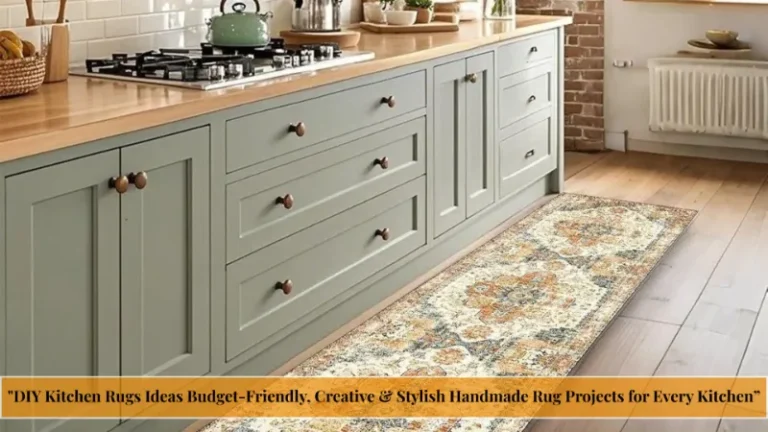
- Buying the wrong size rug: Kitchen runners that are too short look like postage stamps. The rule: the runner should extend 6 inches beyond each end of your island or sink run. Too short reads as an afterthought.
- Choosing trendy hardware colors that date badly Matte black hardware has been dominant since 2018. It’s already showing early signs of trend saturation. Unlacquered brass and brushed nickel have longer aesthetic legs they’ve been desirable for decades.
- Installing open shelves without thinking about dust: Open shelves in a cooking kitchen collect grease and dust within days. If you cook daily (rather than occasionally), plan for weekly wipe-downs or enclose your most-used items in glass-front cabinets instead.
- Matching everything too perfectly: A kitchen where every element is perfectly coordinated reads as staged, not lived-in. The most compelling kitchens have one “off” element a vintage find, a hand-thrown ceramic, an unexpected color that signals a real person lives there.
FAQ’s About DIY Kitchen Decor Ideas
What is the cheapest way to update a kitchen without renovating?
The cheapest high-impact updates, in order: replace cabinet hardware ($60–$200), add a peel-and-stick backsplash ($40–$120), and change your lighting ($45–$90 with plug-in pendants). Together, these three changes cost under $400 and can make a kitchen look professionally redesigned.
How do I make a small kitchen look bigger with decor?
Use vertical lines (tall shelves, vertical tile patterns), reflective surfaces (glossy backsplash, mirrored splashback), consistent light tones for surfaces, and remove upper cabinets in favor of open shelving where possible. Avoid dark rugs and horizontal patterns, which compress visual space.
Can you do DIY kitchen decor in a rented apartment?
Yes. Use peel-and-stick backsplash, removable wallpaper, plug-in lighting, freestanding shelves, contact paper on countertops, and command strip hooks for artwork. All are reversible, apartment-legal, and move with you when you leave.
What kitchen decor trends are lasting vs. passing?
Lasting: warm wood tones, natural stone textures, unlacquered brass, integrated plants, quality lighting. Passing: all-white kitchens, rose gold everything, open shelving filled wall-to-wall with matching sets. The lasting trends emphasize warmth, materiality, and personal expression over uniformity.
Rameen Zara is the founder of Clarity Nooks, bringing over five years of experience in home décor and interior styling. She shares simple yet practical design ideas that suit real homes and everyday living. Her approach focuses on cozy aesthetics, soft color palettes, and natural textures that create warm, inviting spaces.