DIY Baby Nursery Ideas on a Budget: Affordable & Adorable Room Makeovers

You’ve just found out a baby is on the way. The excitement is overwhelming and so is the pressure to create the perfect nursery. You scroll through Pinterest, see curated rooms that look like they belong in a magazine, and immediately wonder: Can I actually pull this off?
Here’s the truth: you absolutely can. Some of the most beautiful, functional, and meaningful nurseries are entirely DIY. Parents who skip the $500 custom crib mobiles and $300 accent walls often end up with rooms that feel more personal, more intentional, and more loved. This guide isn’t just about making things look pretty it’s about building a space that works for your baby, reflects your style, and doesn’t drain your savings account before your little one even arrives.
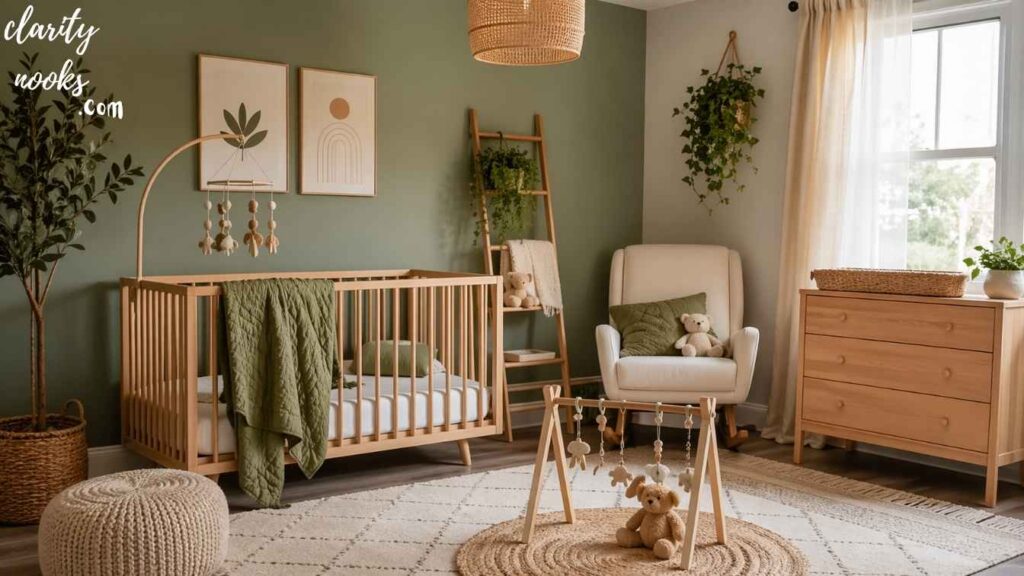
Whether you’re starting with a blank room or reimagining a spare bedroom, these DIY baby nursery ideas will give you practical inspiration backed by real design principles, safety considerations, and the kind of advice that only comes from actually doing the work.
Why DIY Nursery Design Actually Works Better
There’s a persistent myth that professional baby nurseries require a designer and a five-figure budget. In reality, the constraints of DIY working with a specific room, specific budget, and deep personal investment produce nurseries far more cohesive and personal than anything a showroom offers.
The design principle at play is called “intentional limitation.” When you can’t buy everything, you choose more carefully. Parents who DIY their nurseries report, consistently, that the room becomes one of the most meaningful spaces in their home because every element has a story.
Must Read: DIY Baby Room Ideas: Creative Ways to Build a Nursery Your Baby Will Love
Cohesive Palette Strategy
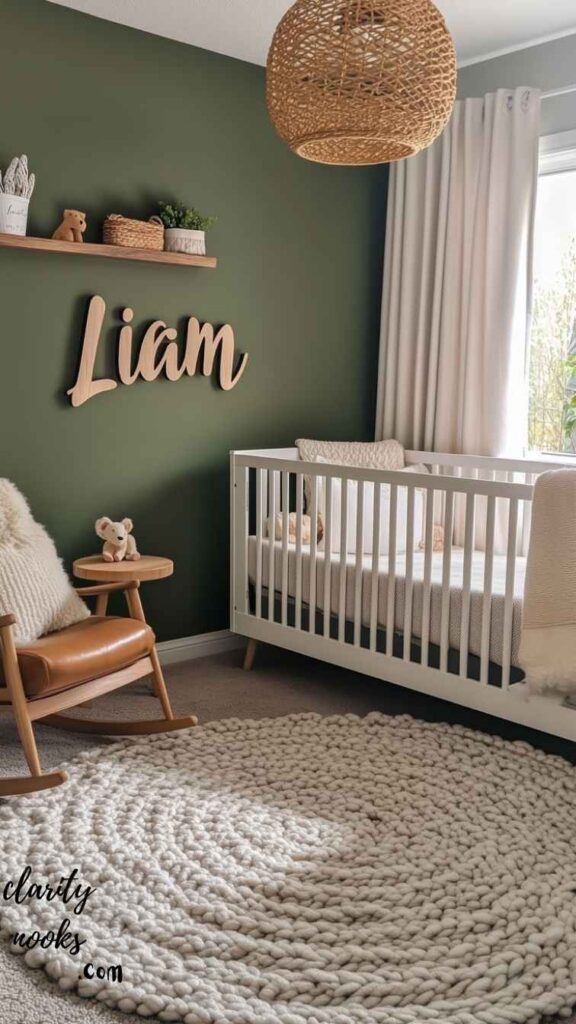
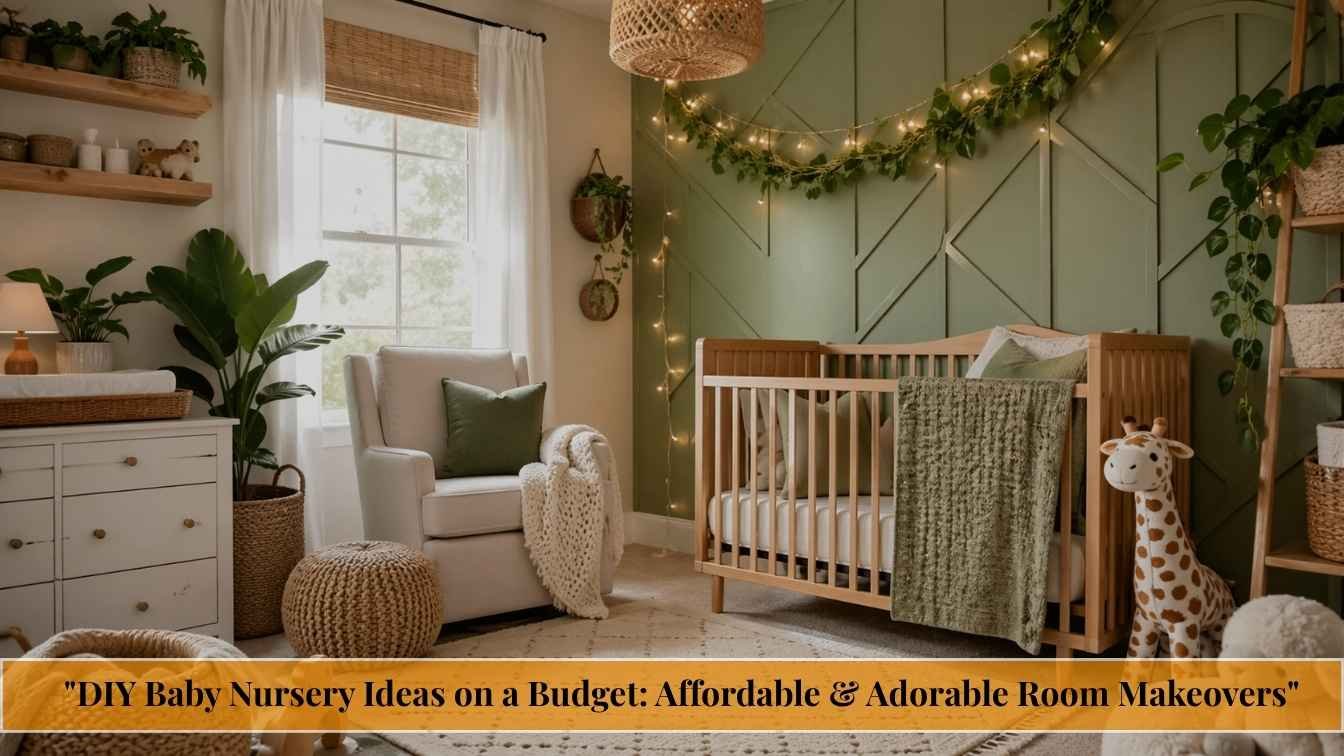
Before buying a single piece of furniture, commit to a 3-color palette. Most nurseries fail because they mix four competing shades with no anchor. Choose one warm neutral (off-white, oat, pale sage), one mid-tone (dusty rose, muted blue, warm terracotta), and one accent (mustard, forest green, rust). Stick to these ruthlessly.
Avoid “nursery pink” and “nursery blue” as your primary tones they date quickly. Instead, reach for botanical greens, earthy sages, and muted blush tones that will still look beautiful in toddlerhood. Many design-forward parents are now treating the nursery as a scaled-down version of their living room aesthetic rather than a separate baby-world.
Real scenario
A first-time mum in Bristol painted her nursery walls in Farrow & Ball’s “Mizzle” (a green-gray) using a £12 sample pot rolled up to waist height, with builder’s white above. Total paint cost: £18. The room was featured in three parenting blogs.
Featured Snippet Answer
What colors are best for a DIY baby nursery?
Soft neutrals like sage green, warm white, and muted dusty rose work best they’re calming for infants, versatile for toddlers, and cohesive with modern home interiors without requiring a full repaint within two years.
Click Here👈 for more info
DIY Tip: Accent Wall vs. Full Room
If you're renting or unsure about committing, paint only one wall behind the crib. This single gesture adds drama and focus without requiring full coverage. Use peel-and-stick wallpaper for pattern brands like Chasing Paper and Tempaper offer nursery-appropriate prints that install in under an hour and leave zero residue.
IKEA Hack Ecosystem
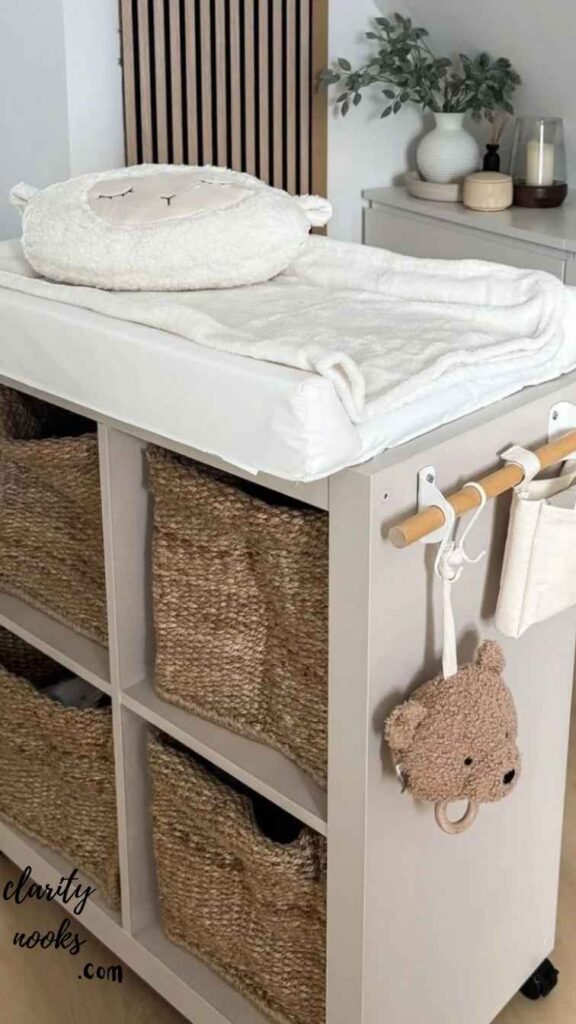
The IKEA KALLAX, HEMNES dresser, and KURA bed frame have become the unofficial infrastructure of DIY nurseries worldwide and for good reason. They’re affordable, modular, and hackable. A KALLAX unit fitted with fabric bins and painted in your nursery accent color becomes a built-in-looking storage wall for under £80.
The HEMNES dresser with a changing topper transforms into a changing table that converts directly into a standard dresser an investment piece that follows the child into their teens. Add new hardware from Etsy sellers (ceramic mushroom knobs, brass semicircles) for £15–25 and it looks entirely custom.
Mini case study
A couple in Melbourne spent AUD $340 total on their nursery IKEA dresser + crib + Kmart storage baskets but added a DIY rattan canopy above the crib (bamboo hoop + sheer fabric, $8) and hand-painted a simple sun mural. The result was indistinguishable from a $3,000 curated nursery in photographs.
Floating Shelves as Nursery Architecture
Floating shelves at different heights create visual rhythm without taking floor space critical in small nurseries. Install three or five shelves (always odd numbers they’re more visually dynamic) in a stepped or cluster arrangement. Mix practical storage with emotional objects: a small framed photo, a single plant, a beloved stuffed animal on display.
IKEA LACK shelves at £6 each, painted to match your accent color and fitted with simple rail-and-bracket mounting, look architecturally significant for around £30 total. The trick is in the arrangement, not the shelf itself.
Don’t Skip: Trendy DIY Home Bar Ideas for a Cool and Relaxing Vibe
DIY Murals Anyone Can Paint
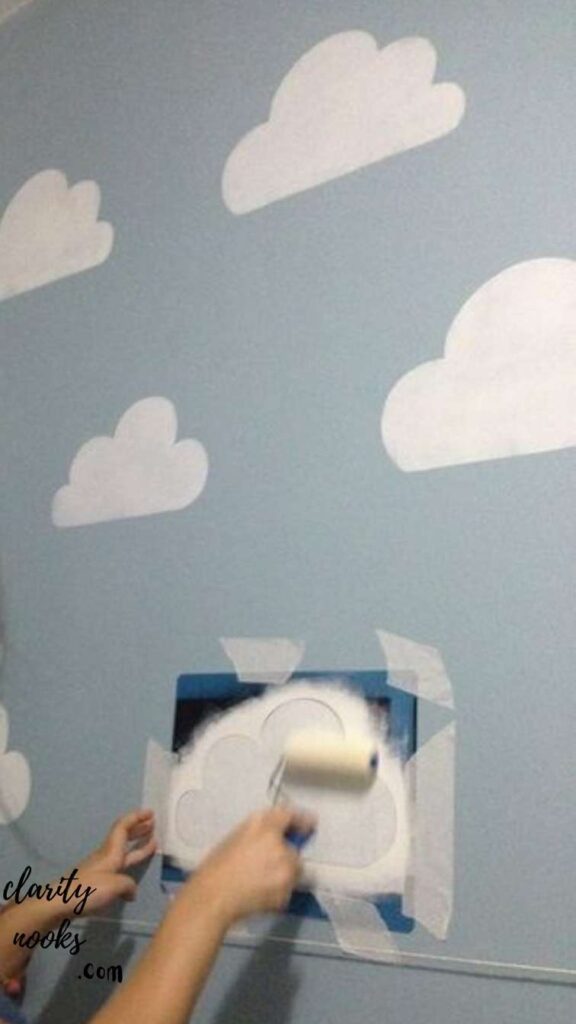
The number one thing parents avoid and the single element that transforms a nursery most dramatically is a painted wall mural. The hesitation is understandable. But here’s what professional nursery designers know that most parents don’t: abstract and nature-inspired murals require almost zero skill.
A simple forest scene using three shades of green and a sponge takes two hours. A large-scale abstract sun using a compass-drawn circle and a sponge roller takes 45 minutes. A mountain silhouette using painter’s tape takes an afternoon and produces a result that looks designed, not crafted. None of these require artistic talent.
Real example
A dad in Toronto who “can’t draw at all” followed a projector-tracing method he projected a simple whale outline onto the wall, traced it with pencil, and filled it in with two tones of blue. His 18-month-old still asks to say goodnight to “the big fish.”
Gallery Walls on a Budget
Instead of expensive framed art, build a gallery wall using a consistent frame style (all black, all natural wood, or all white) from charity shops and Poundland. Fill them with free downloadable prints from sites like Canva, Creative Fabrica, or Etsy (search “nursery printable”). A 9-frame gallery wall with premium-feeling prints can cost under £25.
How do I paint a nursery mural with no artistic skills?
Use painter’s tape for geometric shapes, a projector to trace outlines, or a sponge to create soft organic shapes. Stick to two or three colors and simple nature themes mountains, trees, moons. No freehand drawing required.
Also Read: Modern DIY Walk In Closet Ideas for Organized and Elegant Storage
The “Visible Storage is Decor” System
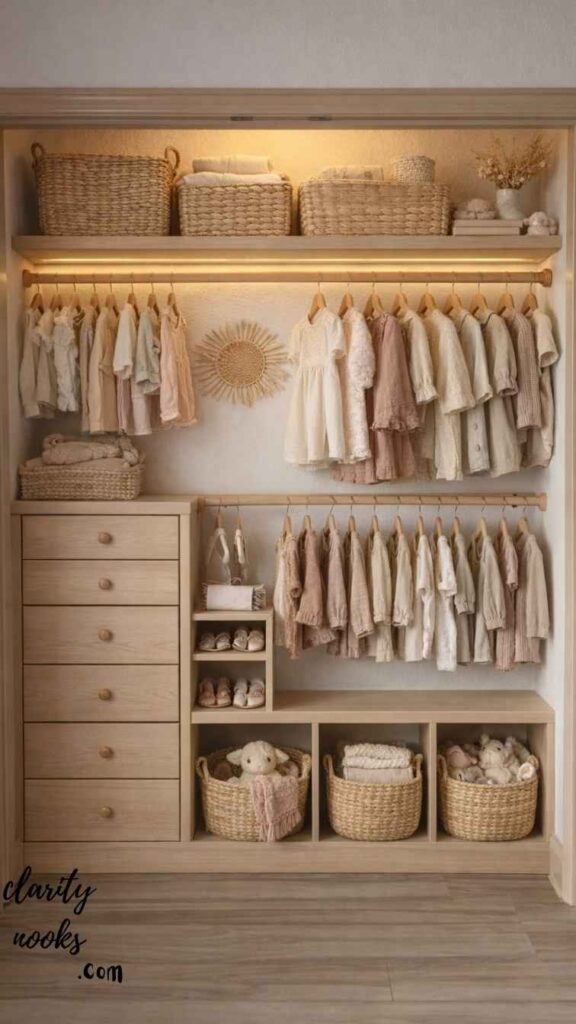
The most beautiful nurseries treat storage as a design element, not a problem to hide. Wicker baskets, linen bin inserts, and rattan organizers in your palette’s neutral tones become visual texture. Place them at eye level (on open shelves) and they look intentional; hide them in closed drawers and you lose the warmth.
Build a simple pegboard station above a changing area using a sheet of pegboard, spray-painted in your accent color, with matching wooden pegs. This becomes a flexible organizer for nappy supplies, wipes, creams, and small baskets all visible, all accessible, all beautiful. Total cost: £15–20.
- Label everything in a consistent handwritten or printed style for visual cohesion
- Use vertical space hooks, hanging organizers, and wall-mounted pouches free floor space
- Choose natural materials (rattan, seagrass, linen) over plastic bins for warmer aesthetics
- Rotate seasonal items only display what you’re using monthly to prevent visual clutter
- Match container colors to your palette even Amazon basics bins in the right color read as designed
Read More: DIY Laundry Room Ideas: Easy Makeovers for a Clean, Functional Space
Conclusion:
DIY Baby Nursery Ideas help you create a warm and beautiful space for your baby without spending too much money. With simple tools and a little creativity, you can design a room that feels cozy, safe, and full of love. From handmade décor to smart storage, every small detail adds comfort. These ideas are easy to follow and perfect for beginners.
In the end, DIY Baby Nursery Ideas are all about making a space that feels special and personal. You can mix style and function in a simple way. Take your time and enjoy the process. Your baby’s room will become a happy place filled with care and joy.
Trend Analysis:
DIY Nursery Design 2026–2028
Biophilic nurseries
Real plants, botanical prints, and natural wood are replacing cartoon characters
Earthy minimalism
Unpainted wood, raw linen, and stone textures replacing pastels and primary colors
Second-hand first
Parents buying vintage and upcycling as sustainability becomes a design value
Smart lighting layers
Dimmer strips, star projectors, and circadian lighting for infant sleep science
By 2027, AI-assisted nursery design tools (already emerging from brands like IKEA and Wayfair) will let parents upload a room photo and receive a full furniture and paint plan with a £/$ figure attached. The DIY advantage will shift from discovery toward execution knowing how to actually implement the vision the AI helps you build.
Gender-neutral design will continue accelerating, with botanical, cosmos, and animal themes replacing binary pink/blue conventions at a significant rate. Parents are also increasingly designing nurseries that function as parent-friendly sitting rooms during the early months dual-purpose spaces that serve both the infant and the exhausted adult reading in the nursing chair at 3am.
Practical Tips & Expert Insights
Safety First What Designers Don’t Always Say
No nursery tip matters more than this: low-VOC or zero-VOC paint is non-negotiable. Standard paints off-gas for weeks and newborn respiratory systems are particularly vulnerable. Brands like Dulux EasyCare, Little Greene, and Farrow & Ball all offer low-VOC ranges. Paint the room at least 3–4 weeks before the baby arrives and ventilate thoroughly.
- Anchor every piece of furniture to the wall using anti-tip straps even seemingly stable items
- Keep the crib clear of all loose textiles, pillows, and stuffed animals until 12 months
- Cord management all blind cords and power cables must be secured or concealed above reach height
- Non-toxic materials check that DIY projects use baby-safe paints (look for EN 71-3 certification)
The Budget Framework That Works
Professional nursery designers typically recommend allocating roughly 40% of your budget to the crib and mattress (the safety-critical item), 25% to storage furniture, 20% to textiles (curtains, rug, bedding), and 15% to decorative elements. DIY reclaims most of that 15% and often the furniture budget too through hacking and upcycling.
The smartest DIY nursery decision you can make is designing for conversion. Every piece should have a clear second life. The crib that converts to a toddler bed. The changing topper that removes to reveal a standard dresser. The wall mural that works as well with a 5-year-old’s dinosaur collection as with a newborn’s mobile.
Avoid purchasing “themed” furniture sets rocket ships, fairy castles that will be outgrown aesthetically by age two. Invest instead in simple, quality pieces in natural tones that adapt with accessories. The mural, not the wardrobe, is where you express the theme. Murals can be repainted; wardrobes are harder to replace.
Future Predictions & Innovations
The next wave in DIY nursery design will be driven by programmable LED technology becoming genuinely affordable (under £40 for full-room setups), allowing parents to create dynamic environments that shift color temperature throughout the day to support infant circadian rhythm development. This is no longer specialty equipment it’s a Saturday project.
3D printing is entering the nursery space in a meaningful way. Custom wooden-effect wall hooks, name letters, and shelf brackets are now printable at home or orderable from Etsy sellers for £2–8 per piece. The market for hyper-personalized, mass-affordable nursery hardware will expand significantly through 2027–2028.
Common Mistakes & Hidden Gaps
- Buying everything new. The nursery is the room most likely to be completely redesigned within 24 months. Secondhand furniture, lightly resanded and repainted, is indistinguishable from new and costs 70–80% less.
- Centering the design on the crib. Beginners place the crib, then try to decorate around it. Professionals design the wall arrangement first, then position furniture to complement it.
- Ignoring acoustics. Hard floors, bare walls, and uncovered windows create echo chambers. A rug, blackout curtain, and upholstered nursing chair collectively reduce noise significantly and the rug is also the largest “design” element in the room.
- Too much theme, too little atmosphere. Five safari-animal prints, a giraffe lamp, and a jungle mobile creates visual chaos. One strong theme element (the mural) supported by neutral furniture and a single accent color creates atmosphere.
- Forgetting the parent’s experience. The nursery isn’t only for the baby you’ll spend thousands of hours there. Ensure the nursing chair is actually comfortable, the lighting has a genuine dim setting, and there’s somewhere to set a cup of tea.
FAQ’S About DIY Baby Nursery Ideas
How much does a DIY baby nursery typically cost?
A fully functional and beautifully designed DIY nursery can be built for £200–£600 depending on your starting point. The key is prioritising the crib/mattress on safety grounds, then DIY-ing or second-handing everything else.
What paint is safe for a baby nursery?
Always use low-VOC or zero-VOC paint. In the UK, look for EN 71-3 certification for any paint applied to furniture the baby may contact. Apply paint at least 3–4 weeks before the birth date and ventilate the room thoroughly.
Can I DIY a nursery in a small room?
Yes and small nurseries often look better when designed with intention. Use vertical space aggressively (floating shelves, wall-mounted storage), choose furniture with dual purpose (convertible crib, dresser-changing table combo), and keep your palette light to maximise the sense of space.
Should a nursery be gender-neutral?
This is entirely a personal choice, but from a practical design standpoint, gender-neutral palettes (sage, warm white, terracotta, mustard) offer far more longevity, photograph beautifully, and work just as well for a second child of any gender.
How early should I start decorating the nursery?
Aim to have painting and major furniture in place by week 32–34 of pregnancy. This allows sufficient off-gassing time and means you’re not doing physical work in late pregnancy. Final decorative touches can happen later but the bones should be done early.
Rameen Zara is the founder of Clarity Nooks, bringing over five years of experience in home décor and interior styling. She shares simple yet practical design ideas that suit real homes and everyday living. Her approach focuses on cozy aesthetics, soft color palettes, and natural textures that create warm, inviting spaces.