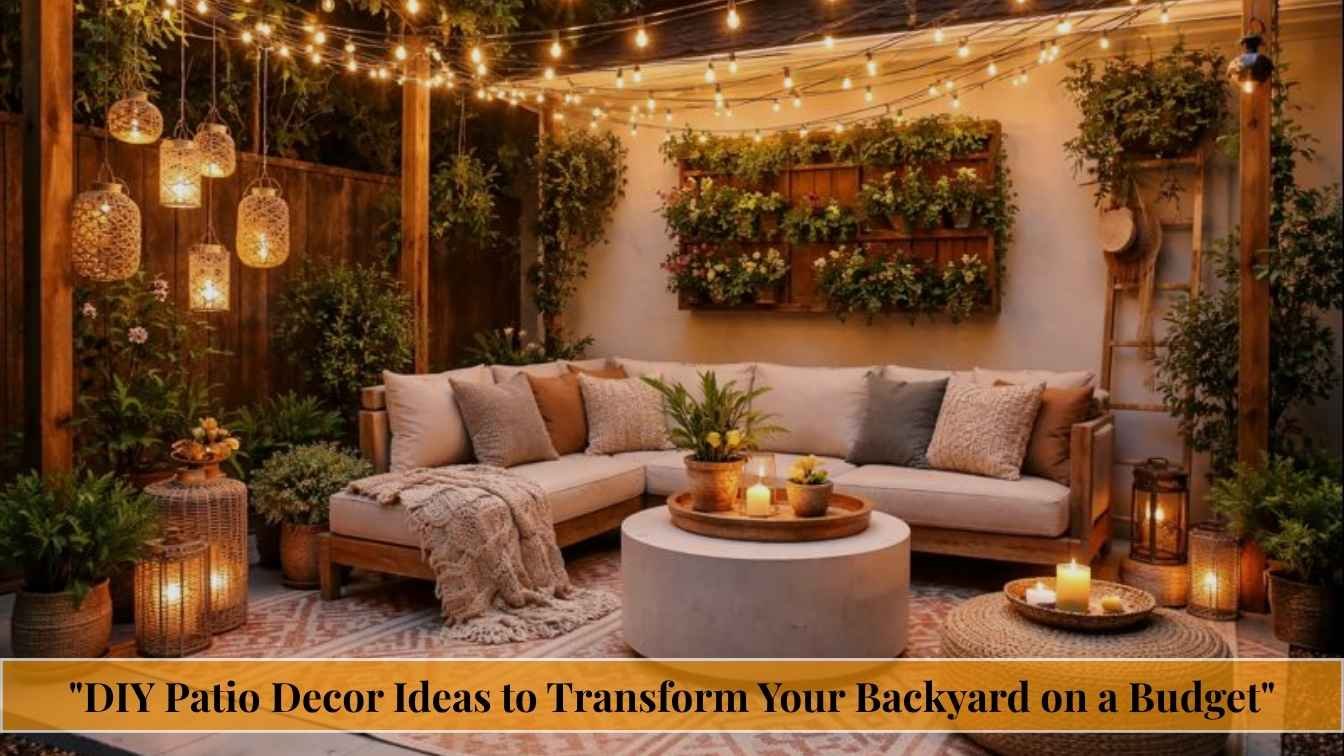
DIY Patio Decor Ideas to Transform Your Backyard on a Budget

Your patio is not a storage area. It is or it could be an outdoor living room, a dinner party venue, a morning coffee sanctuary, and the most-used square footage you own.
Most patios look exactly like everyone else’s: a patio chair that came in a box, a faded umbrella from three summers ago, and a pot with a half-dead plant in the corner. It feels like a placeholder, not a place.
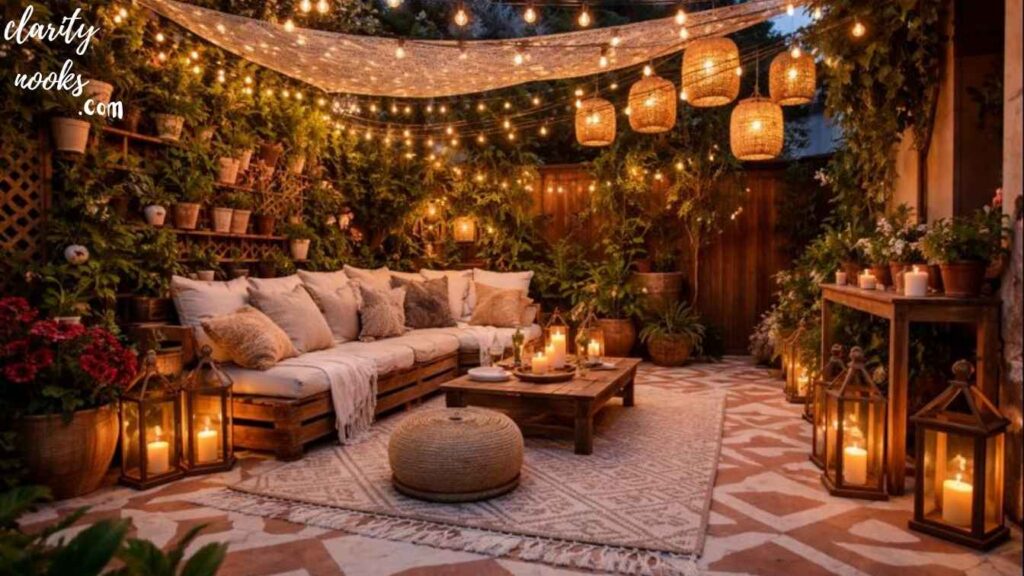
The good news is that creating a beautiful, personalised patio doesn’t require a landscaper, a big budget, or a weekend of hard labour. With the right DIY patio decor ideas ones that are genuinely clever, not just “put fairy lights everywhere” you can build an outdoor space that feels intentional, cozy, and completely yours. This guide covers 11 deeply explained ideas, backed by current design trends, real-world examples, and the kind of practical advice that prevents expensive mistakes.
What are the best DIY patio decor ideas?
The most impactful patio decor upgrades include layered outdoor rugs, DIY string light canopies, painted concrete floors, raised herb gardens, repurposed pallet furniture, fire pit seating arrangements, weather-resistant gallery walls, vertical gardens, personalised stepping stones, outdoor curtain privacy screens, and DIY lantern clusters. Each can be completed in a single weekend and costs between $15 and $250.
Layered Outdoor Rugs for Instant Warmth
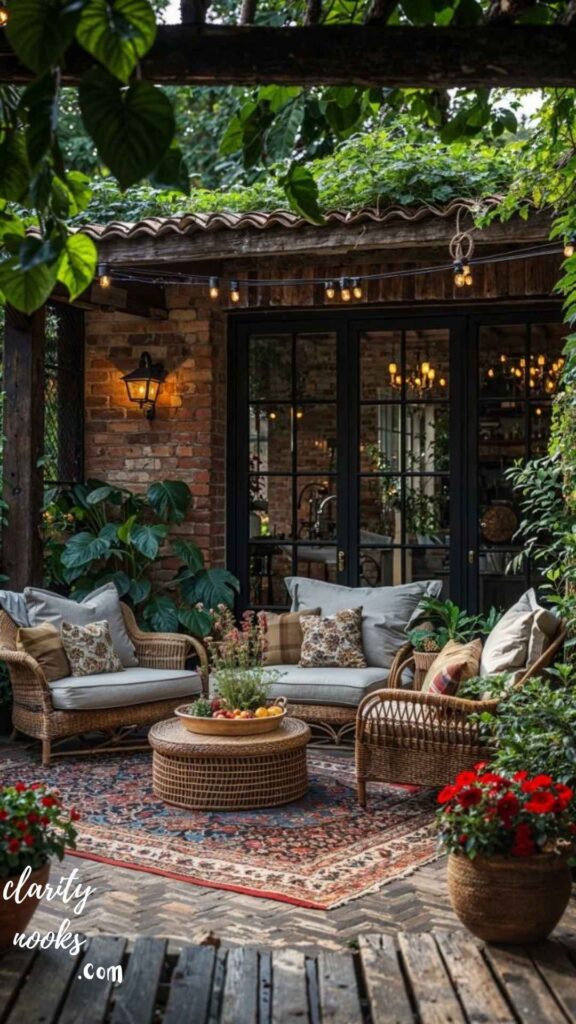
Nothing transforms a bare concrete or wood patio faster than a well-chosen rug. But a single flat rug can look unfinished. Layering placing a smaller, patterned rug atop a larger neutral base adds texture, depth, and a designer look for a fraction of the cost. Use a jute or sisal base rug and layer a Moroccan-print or geometric flatweave on top.
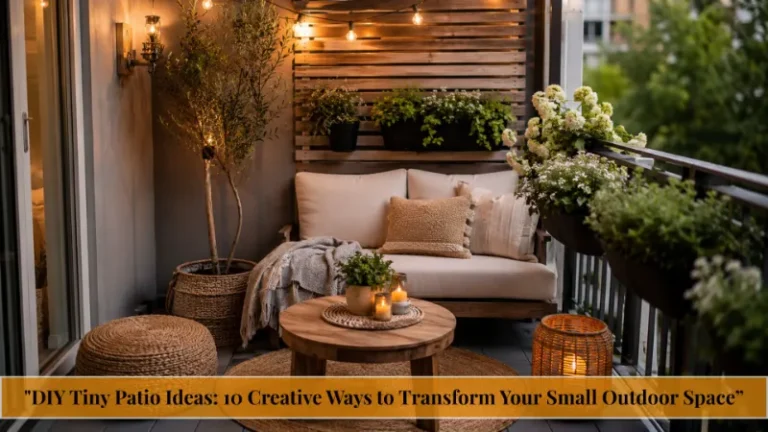
For a small city balcony, designer Sarah M. from Chicago layered a 5×7 grey flatweave under a vintage-look kilim runner she found at a discount homeware store for $28. The transformation, she says, was the single biggest change that made her balcony feel like a room. The key is choosing outdoor-rated, UV-resistant materials that won’t fade or grow mildew by August.
Pro tip:
Anchor your rug under heavy furniture legs so it doesn’t lift in the wind. Avoid rugs with excessive fringe they trap dirt and deteriorate quickly outdoors.
Must Read: DIY Wall Painting Ideas for Stylish and Cozy Home Walls
DIY String Light Canopy That Sets the Mood
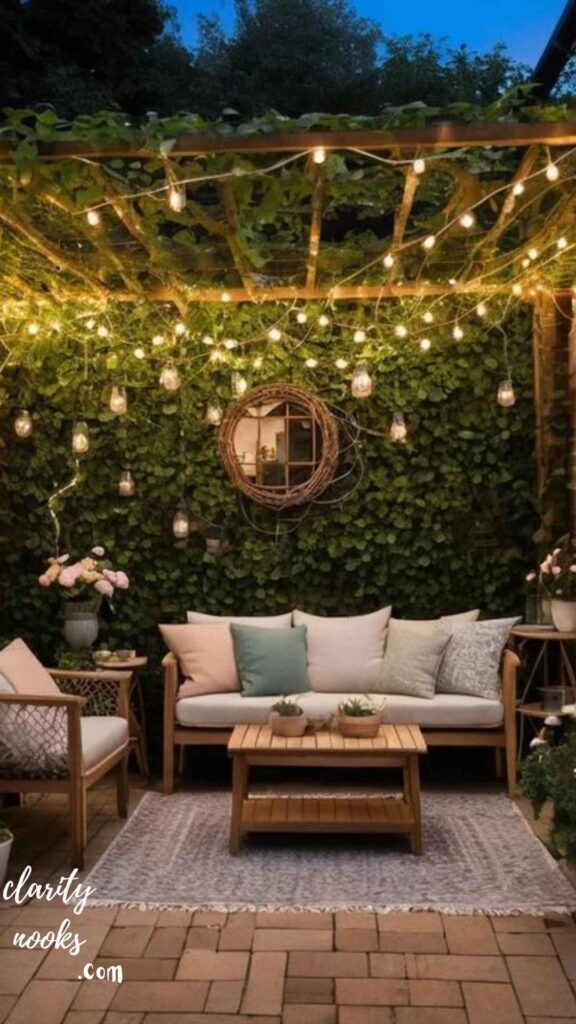
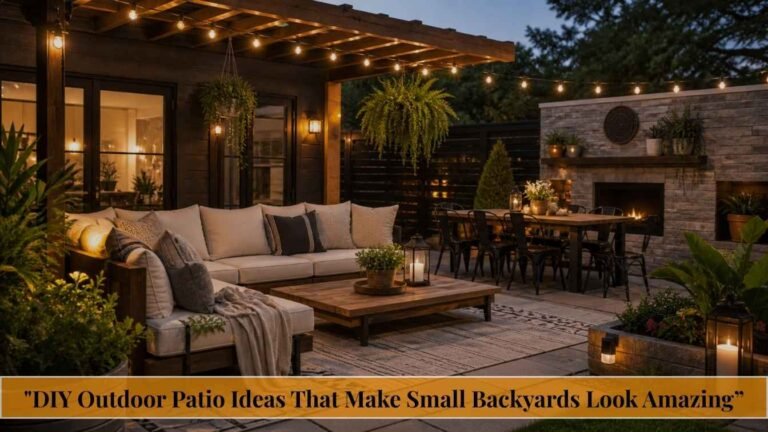
String lights are the most searched patio decor item for good reason they work. What elevates them from generic to breathtaking is the canopy format. Instead of draping them along a fence, you create a ceiling of light by running lines of Edison-bulb or warm white LED strings back and forth above your seating area, anchored to wooden posts or pergola beams.
A family in Austin, Texas used four wooden 4×4 posts set in concrete buckets (no digging required) and ran seven strands of 25-foot LED string lights between them. Total cost: $74. The result was an outdoor dining space they now use nearly every evening from April through October. The trick is using weatherproof lights rated for outdoor use and keeping string tension consistent for a clean, polished look.
“How do I hang string lights on a patio?”
Use screw-in eye hooks on wooden posts or existing structures. Run lights at 8–9 feet height, spaced about 18 inches apart, using a zigzag pattern for even coverage.
Don’t Skip: DIY Garden Decor Ideas for a Cozy Backyard Vibe
Painted Concrete Floors: A Weekend Makeover
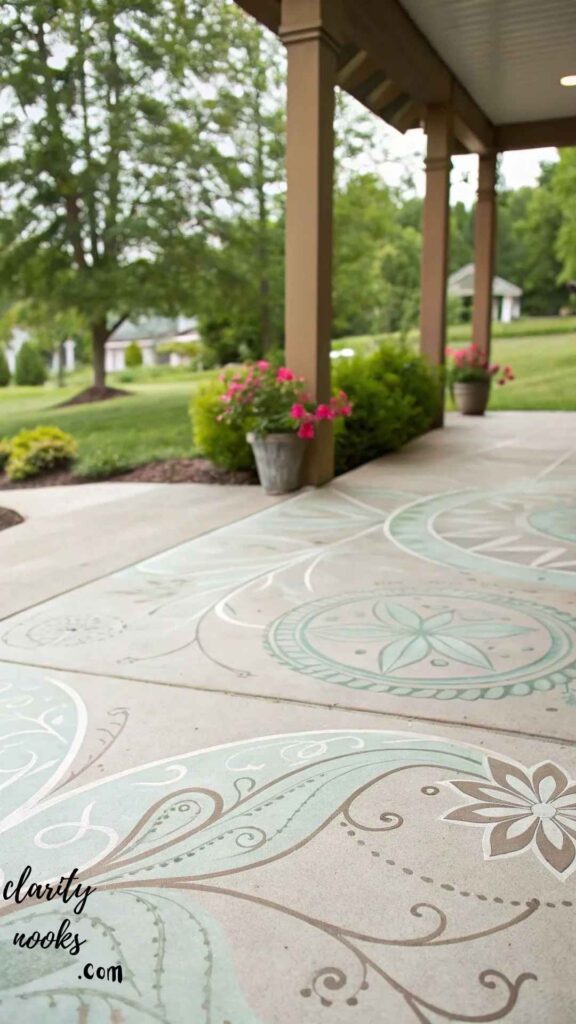
If your patio is plain grey concrete, you’re sitting on a blank canvas. Concrete floor paint particularly porch and patio formulas is incredibly durable, water-resistant, and available in dozens of colours. A warm terracotta, dusty sage, or classic white can completely redefine the mood of your space for under $60 in materials.
The process involves cleaning and etching the concrete (a $10 step most DIYers skip, causing premature peeling), applying a primer coat, then two to three coats of floor paint. For extra character, use tape to create a geometric tile pattern or bordered design. One homeowner in Arizona painted a classic black and white checkerboard pattern on her 12×14 patio it now regularly gets mistaken for actual tile. Budget around 2–3 days for full cure time before placing furniture.
Read More: DIY Bedroom Decor Ideas That Actually Transform Your Space
Raised Herb Garden That’s Beautiful and Functional
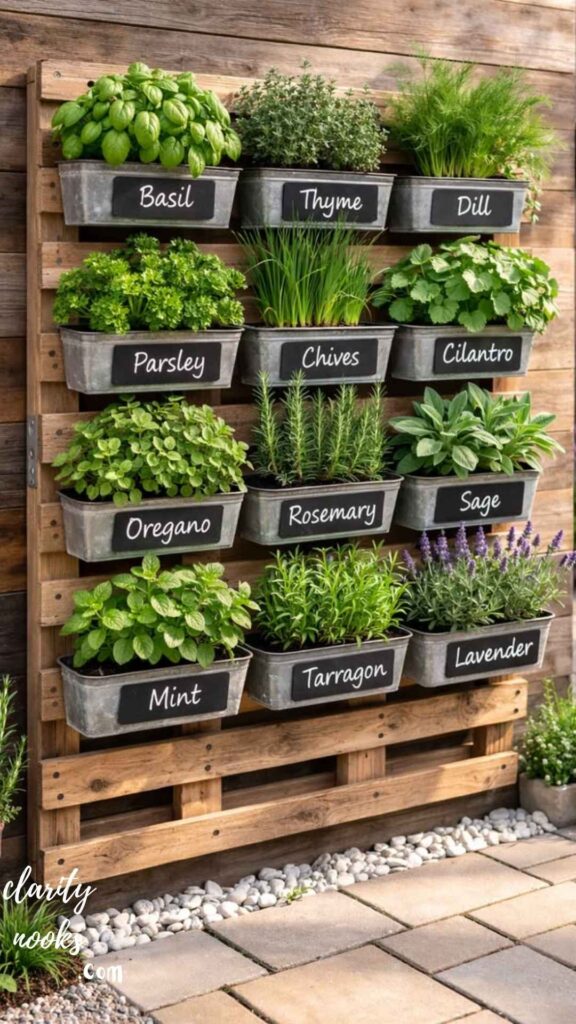
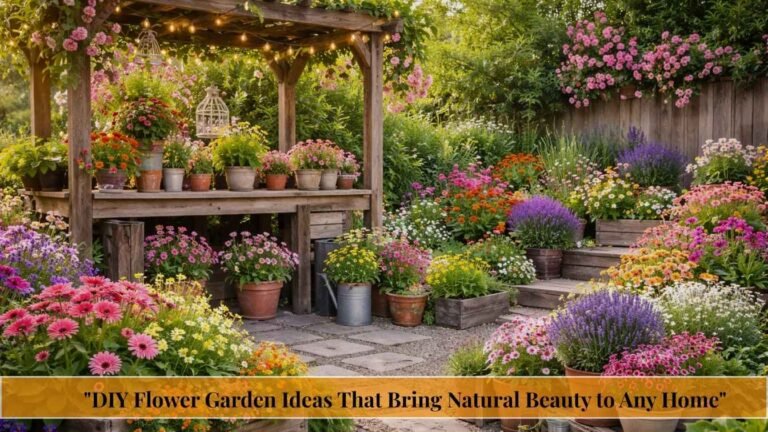
A raised herb garden does double duty: it’s visually lush and practically useful. Grouping herbs like rosemary, basil, mint, and lavender in tiered wooden planters, galvanised metal troughs, or repurposed wine crates creates a living decor element that smells incredible and adds genuine greenery without requiring a full garden bed.
The key design principle here is height variation. Use a tall pot, a medium crate, and a low terracotta pot in a cluster. Mix trailing herbs like thyme with upright ones like basil to create visual interest. Lavender, in particular, serves as a borderline-decorative plant it blooms purple, deters mosquitoes, and doubles as a cut flower for indoor arrangements. This idea works beautifully for small patios and apartment balconies alike.
Real-Life Scenario
Jamie, a renter in Seattle with a 6×8-foot balcony, created a complete herb-and-flower display using three mismatched thrift-store pots and $18 worth of nursery starts. By mid-June, the balcony had become her primary relaxation space something she attributed entirely to the presence of living plants.
Don’t Miss: DIY Living Room Decor Ideas That Actually Transform Your Space
Repurposed Pallet Furniture: Budget Outdoor Seating
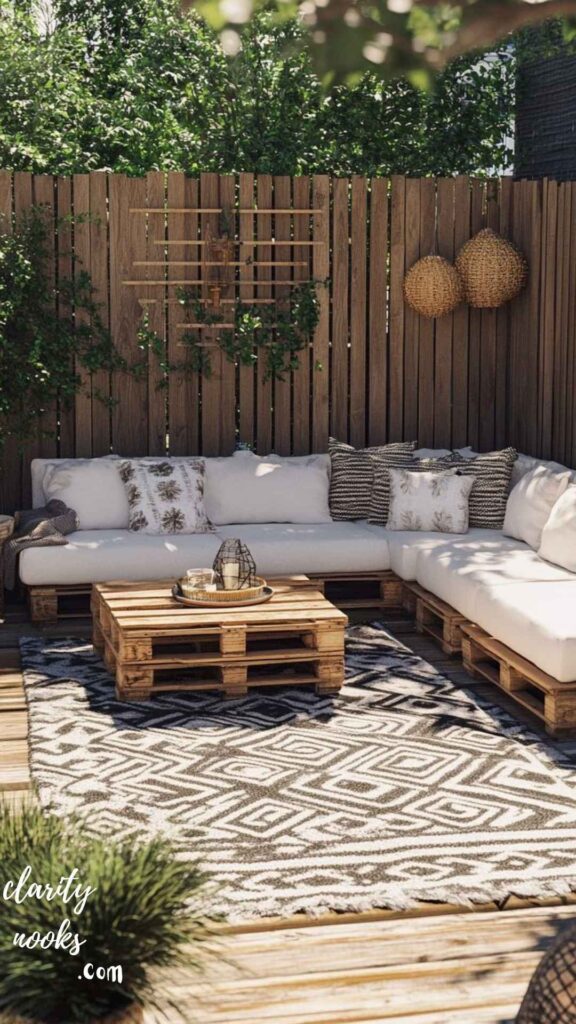
Wooden shipping pallets are free or nearly free from hardware stores, garden centres, and warehouses. Stack two pallets horizontally as a sofa base, add outdoor cushions, and you have a sectional that would cost $400–$800 if purchased new. Sand the pallets thoroughly, paint or stain them in a consistent colour, and treat with an outdoor sealant to prevent splinters and rot.
The most common mistake here is skipping the finishing steps. Unsanded, unstained pallets look rough and invite splinters. But a pallet sofa painted in a deep charcoal or warm white, fitted with Sunbrella fabric cushions and a few throw pillows, can genuinely rival store-bought furniture. Add hairpin-leg side tables (available on Etsy for $20–$35) and you’ve created a complete seating set for well under $100.
Fire Pit Seating Area: The Gathering Focal Point
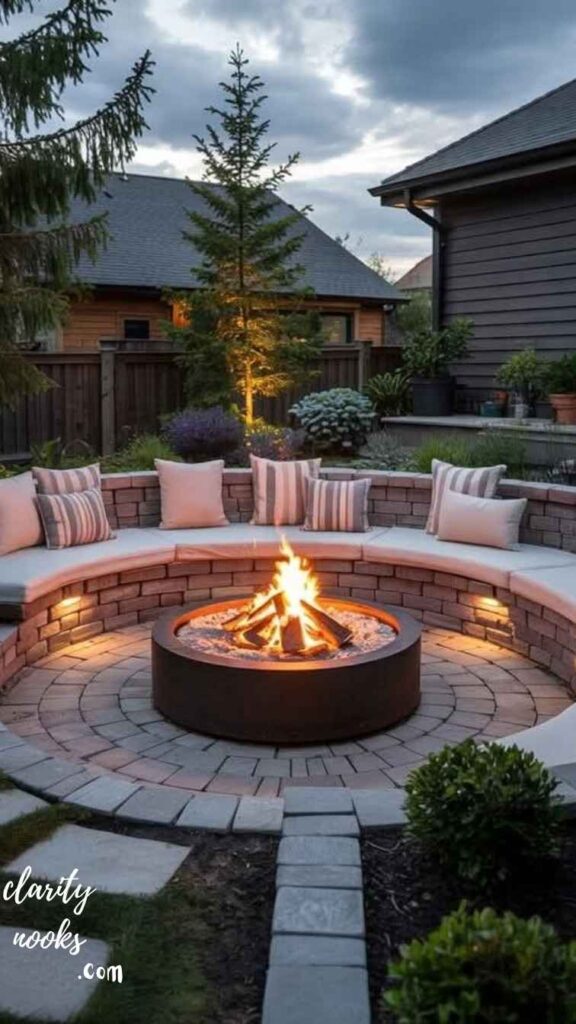
A fire pit whether a $40 steel bowl from a hardware store or a $150 propane table-top unit creates an immediate focal point and extends your patio season by months. The real design work is in the seating arrangement around it. Low-profile Adirondack chairs, curved benches, or even large outdoor floor cushions arranged in a circle create a sense of intentional gathering space.
Ground rules matter here: keep the fire pit at least 10 feet from any structure, use a fire-resistant ring of stones or pavers to define the zone, and invest in a spark screen for safety. For decor, surround the area with tall outdoor lanterns and drought-resistant plants in weathered pots. The layered approach fire pit + seating + lighting + greenery transforms a corner of your yard into what landscape designers call a “destination zone.”
Weather-Resistant Outdoor Gallery Wall
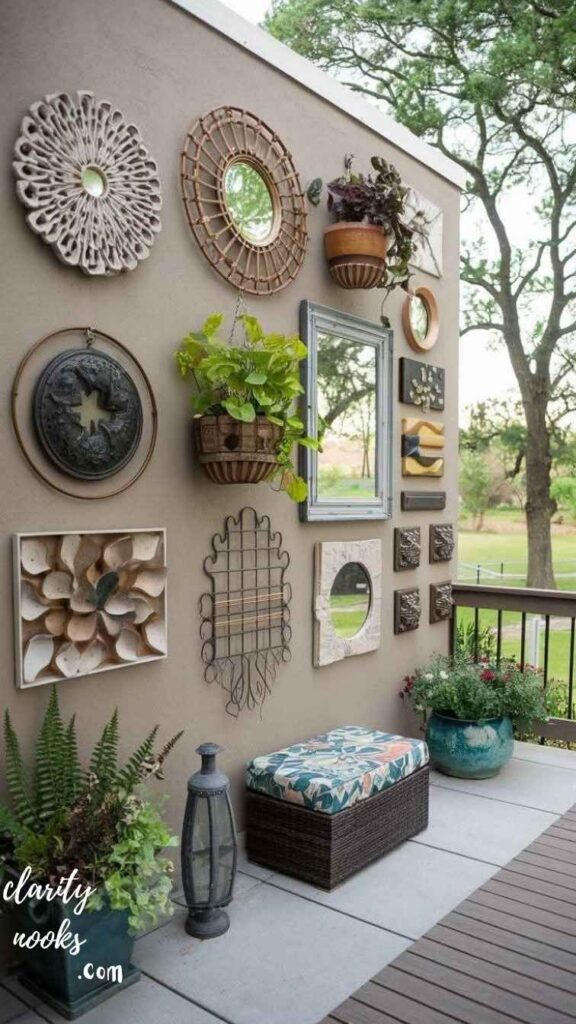
Gallery walls aren’t just for living rooms. A covered patio or pergola wall is an ideal canvas for an outdoor art display, provided you choose the right materials. Metal prints, ceramic tiles, weather-treated wooden signs, macramé wall hangings, and succulent wall planters all thrive outdoors and can be arranged just like an indoor gallery wall.
Use a combination of textures a macramé piece, a painted metal sign, a small shelf with a succulent pot to create depth. The arrangement should follow standard gallery wall rules: start with the largest piece in the centre, then work outward. Use outdoor-rated adhesive strips or rust-resistant screws. Rotate seasonal pieces (a harvest wreath in autumn, tropical art in summer) to keep the display feeling fresh year-round.
Vertical Garden: Maximising Small Spaces
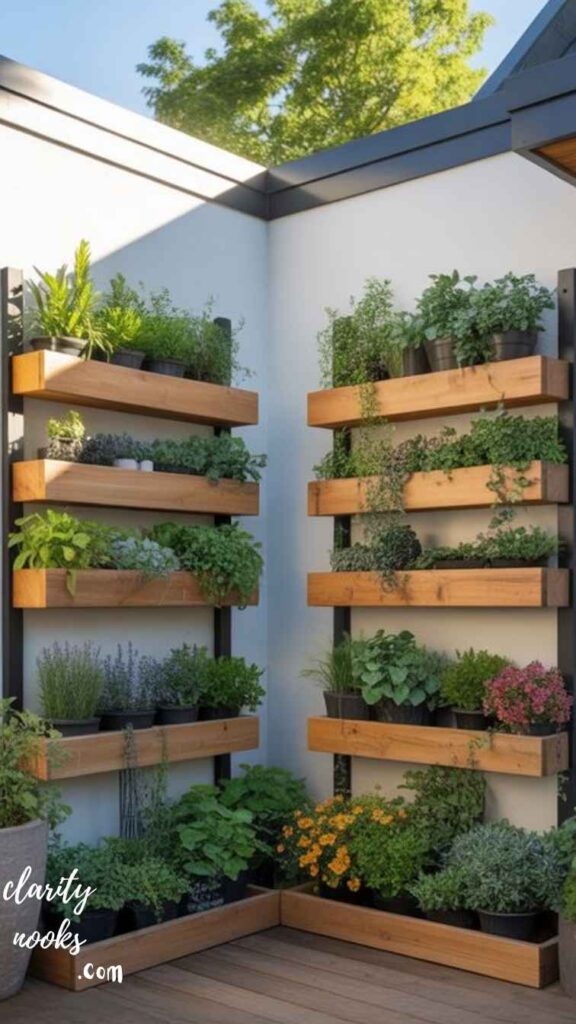
If your patio is small, think vertically. A vertical garden created using a wooden pallet, a mounted planter grid, or a tiered pocket organiser takes plants off the ground and onto the walls, freeing floor space while dramatically increasing the sense of lush greenery. This approach is especially transformative for urban balconies and narrow side patios.
Succulents, ferns, trailing pothos, and herbs all work well in vertical garden formats. For a low-maintenance version, create a wall-mounted succulent frame: fill a shadow box with mesh, pack it with succulent soil, plant small succulents, and hang it like a picture. It requires watering only once a week and looks architectural year-round. For a more dramatic effect, a 6-foot pallet herb wall with LED strip lighting underneath creates a feature that genuinely stops visitors in their tracks.
DIY Stepping Stones: Personalised Pathways
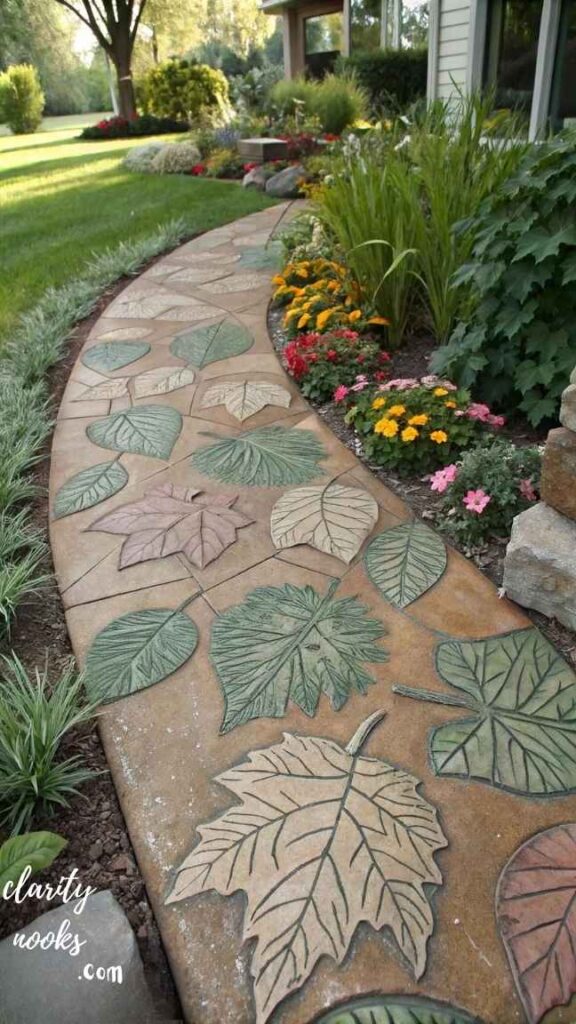
Stepping stones serve a practical purpose they guide movement and protect grass but they’re also an opportunity for genuine personalisation. You can cast your own concrete stones using a mould (a simple plastic tub works), embed glass mosaic tiles, smooth pebbles, handprints, or decorative stamps into the wet surface. The result is a pathway that is entirely unique to your home.
Quick-set concrete mix is the key material: it’s inexpensive ($6–$10 per bag), easy to use, and cures in 24 hours. Pour into a circular or rectangular mould, smooth the top, then press in your decorative elements within the first 20 minutes before the surface sets. Space stones 18–24 inches apart for a comfortable stride length. A curved path of five to seven personalised stones can completely reframe the approach to your patio space.
Outdoor Curtain Privacy Screens
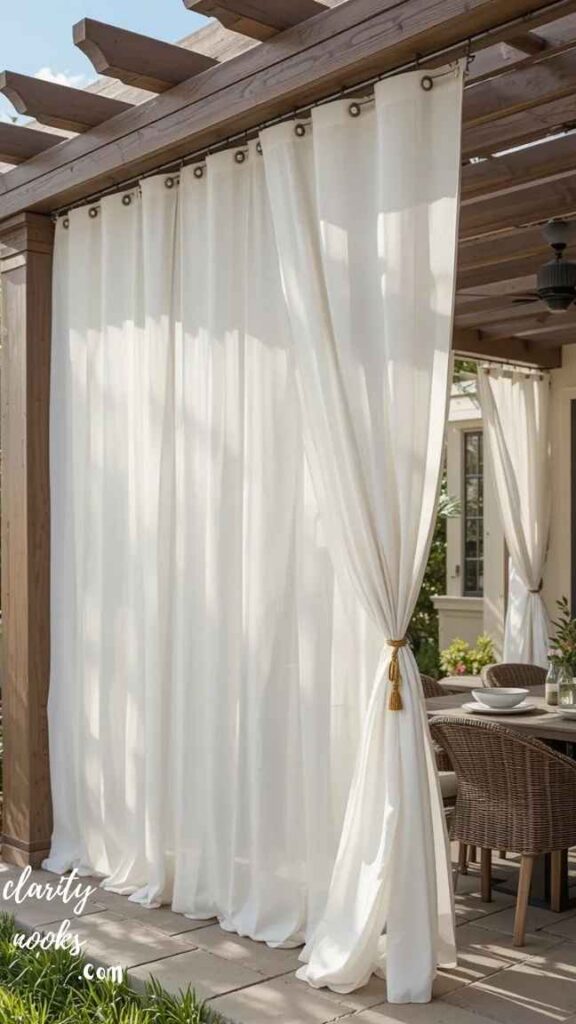
Few things make a patio feel more like a true outdoor room than curtains. Outdoor curtain panels made from Sunbrella, canvas, or outdoor polyester can be hung from a pergola, tension cable, or simple curtain rod mounted between posts. They provide privacy, filter harsh afternoon sun, soften the space visually, and add an unmistakable touch of elegance.
White or linen-toned curtains are the classic choice for a breezy, Mediterranean feel. Striped navy-and-white or earthy terracotta shades work beautifully in more casual or bohemian setups. The trick is to hang them high (at least 7 feet up) and let them pool slightly at the floor this trick, borrowed from interior designers, makes the space feel taller and more luxurious. Use tiebacks to keep them open during the day and let them flow freely on calm evenings.
DIY Lantern Clusters for Atmospheric Night Lighting
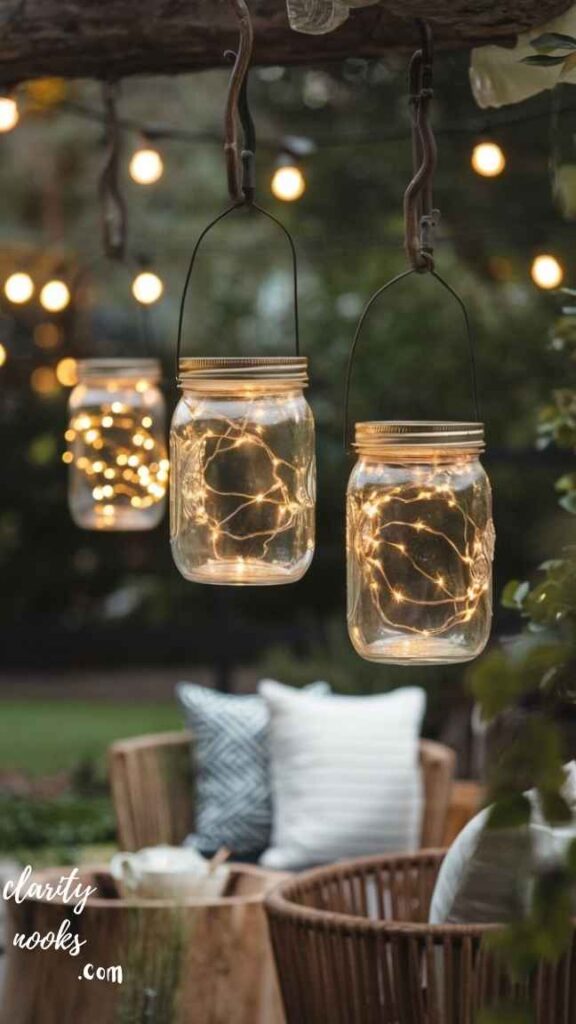
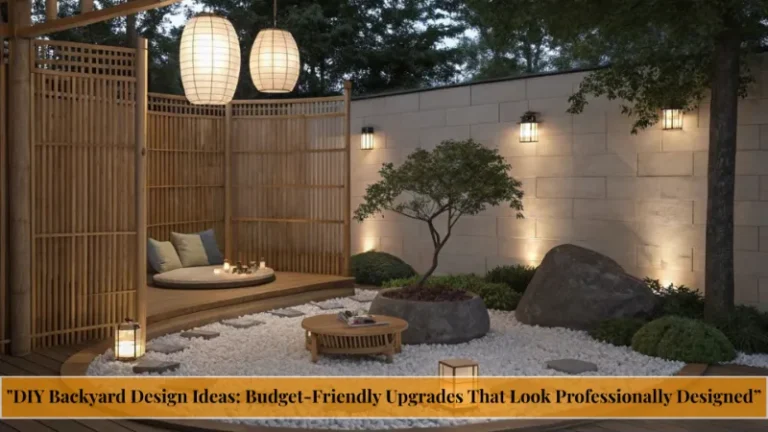
Outdoor lanterns particularly when grouped in clusters at varying heights create a warm, intimate atmosphere that no overhead light can match. You can buy inexpensive metal or wood lanterns from craft stores and customise them with spray paint, or make your own from mason jars, terracotta pots, or repurposed tin cans punched with patterns to cast light designs on surrounding surfaces.
The cluster technique is key: group three to five lanterns of different sizes and heights together on the ground or a low table. Use pillar candles for a warm amber glow, or for safety and longevity LED flameless candles that flicker realistically. Solar-powered lanterns eliminate the need for wiring entirely, making this one of the easiest high-impact DIY patio decor upgrades available. Placed at the corners of your patio, they also define the space’s edges beautifully after dark.
Conclusion:
A beautiful patio doesn’t require a big budget or professional help it requires intention. The DIY patio decor ideas in this guide are designed to be genuinely transformative, not just decorative: they address scale, cohesion, weather practicality, and long-term durability in ways that most surface-level guides overlook. Whether you start with a $28 outdoor rug or a weekend-long concrete painting project, every improvement compounds into a space that genuinely improves your daily life.
The best outdoor spaces aren’t finished they evolve with you. Start with one or two ideas from this list, see how the space responds, and build from there. Your patio is waiting to become your favourite room in the house. Go make it happen.
Trend Analysis
Current Patio Decor Trends in 2026 (and What’s Coming Next)
The biggest shift in outdoor decor right now is the move toward “indoor/outdoor blur” the deliberate design choice to make a patio feel like a true room extension rather than a separate outdoor area. This means full-size outdoor sofas with indoor-quality cushions, outdoor pendant lighting on dimmable circuits, and even outdoor rugs that mimic Persian patterns or plush interior styles. Searches for “outdoor living room ideas” are up over 62% year-on-year, reflecting this cultural shift toward treating outdoor space as essential living space.
Sustainability is the second major driver. Searches for “upcycled patio furniture,” “recycled plastic outdoor decor,” and “natural material patio ideas” have all risen sharply. Homeowners are moving away from mass-produced plastic furniture and toward reclaimed wood, galvanised steel, and natural materials like rattan and linen. The appeal is both aesthetic (these materials age beautifully) and ethical.
What’s Coming in 2027–2028
Smart outdoor lighting programmable LED systems that change colour temperature based on time of day or weather is entering the mainstream consumer market rapidly. Expect to see more integration of smart plugs and app-controlled lights in DIY patio setups. Biophilic design (using natural patterns, textures, and plants to evoke nature) is also expanding from interior design into outdoor spaces, driving demand for moss walls, living plant walls, and natural stone surfaces at every budget level.
Expert Insights
Practical Tips From Designers Who’ve Done This 100 Times
Start with a “Mood Board,” Not a Shopping List
Before buying a single item, collect 10–15 images of patios you love from Pinterest, Instagram, or design magazines. Look for the common elements: Are they mostly white with pops of green? Earthy terracotta and wood? Minimalist with statement lighting? This process reveals your actual taste and prevents the mismatched, “collected over time” look that plagues most DIY patios.
Solve for Weather First, Aesthetics Second
Every beautiful outdoor space starts with a weather solution. A pergola, market umbrella, or retractable awning defines how usable your patio actually is. Without shade and rain protection, even the most beautifully decorated patio sits empty eight months of the year. Determine your climate challenges first intense sun, frequent rain, high humidity and address them structurally before spending anything on decor.
The Rule of Odd Numbers
When grouping decorative items lanterns, pots, cushions odd numbers (three, five, seven) look more natural and visually dynamic than even groupings. This is a professional interior design principle that translates directly to outdoor spaces. Three plants of different heights always looks better than two. Five lanterns in a cluster are more compelling than four in a row.
Invest in Cushion Covers, Not Cushions
Outdoor cushion covers are removable, washable, and interchangeable and they update the entire look of your patio seating without replacing furniture. Buying quality cushion inserts once and rotating covers seasonally is a significantly cheaper, more flexible strategy than replacing complete cushion sets every time you want a refresh.
Long-Term Strategy
Building a Patio You’ll Love for 10+ Years
The most sustainable approach to patio decor is the “bones and layers” framework. Your bones are the permanent, high-quality, durable elements: the furniture frames, the flooring treatment, the lighting infrastructure (posts, conduit, sockets), and any structural additions like pergolas or raised beds. These should be quality investments spend here. Your layers are the seasonal, swappable, low-cost elements: cushion covers, rugs, plants, candles, and textiles. Change these often. Spend less here.
This framework prevents two of the most common long-term mistakes: either buying cheap furniture that must be replaced annually, or spending so much on decor that you’re too attached to change anything and the space stagnates visually. A teak or powder-coated aluminium furniture frame can last 20 years. The cushion covers can reflect your evolving taste every season.
From a sustainability standpoint, choose materials that improve with age rather than deteriorate. Teak develops a silver patina. Galvanised steel weathers to a beautiful matte. Concrete gets characterful. These materials also have significantly lower replacement frequency, reducing long-term waste and cost. Solar lighting eliminates ongoing electricity costs and can be repositioned freely as your layout evolves.
Future Predictions
The Future of DIY Patio Decor: What’s Coming
AI-powered design tools are beginning to genuinely democratise outdoor space planning. Apps like Planner 5D and dedicated garden design platforms now allow homeowners to photograph their patio, input dimensions, and receive AI-generated layout suggestions complete with furniture placement and plant recommendations. This is already reducing one of the biggest DIY barriers: the fear of making the wrong design choices before spending money.
Modular outdoor furniture systems where individual components click together and reconfigure as needed are growing rapidly. IKEA’s outdoor ranges and newer direct-to-consumer brands are leading this shift. This approach aligns perfectly with DIY decor culture: you start small, add pieces as budget allows, and reconfigure for different uses (morning yoga space vs evening dinner party layout) without buying new furniture.
Expect biopolymer outdoor decor furniture and accessories made from plant-based plastics and composite materials to reach mainstream price points by 2027–2028. These materials offer the durability of synthetic materials without petroleum dependence, and they’re entering the market at a pace that will make them standard rather than premium within a few years.
Common Mistakes
Mistakes That Undermine Even Well-Intentioned Patio Makeovers
Beginner Mistakes
Buying indoor furniture for outdoor use. This is the number one mistake and it’s surprisingly common. Indoor furniture even “sturdy” items warps, rusts, fades, and grows mildew when exposed to outdoor moisture cycles. Always verify a piece is rated for outdoor use before purchasing.
Ignoring scale. A tiny bistro set on a large patio, or a massive umbrella on a small balcony, looks disproportionate and uncomfortable. Measure your space first and choose furniture with matching scale. A 10×12 patio needs at least a 7×9 rug to feel grounded.
Intermediate Mistakes
Over-decorating. Adding too many items multiple rugs, mixed patterns, dozens of plants, numerous lanterns, and a gallery wall all in the same 12×14 space creates visual chaos rather than character. Edit ruthlessly. Fewer, better-chosen pieces always outperform a crowded look.
Skipping the prep work. Painting concrete without etching it first. Staining pallets without sanding. Hanging string lights without measuring. The preparation steps in DIY patio projects take roughly 40% of the total time but deliver 80% of the quality difference. Never skip them.
The Content Gap Competitors Miss
Most DIY patio articles skip the conversation about transitions and cohesion. A patio doesn’t exist in isolation it visually connects to your home’s exterior, your garden or lawn, and your interior spaces visible through glass doors. The most beautiful patios thoughtfully echo the colours and materials of the home’s exterior, creating a sense of continuity. If your home has warm brick tones, terracotta and wood-toned patio decor will feel natural. If it’s a painted white cottage, soft blues and naturals will harmonise. This single consideration elevates a “decorated” patio to a genuinely designed one.
FAQ’s About DIY Patio Decor
What is the cheapest way to decorate a patio?
The cheapest high-impact patio decor upgrades are: repainting or power-washing your furniture ($0–$20), adding an outdoor rug ($25–$40), grouping potted plants from a garden centre ($15–$30), and stringing solar-powered lights ($20–$35). Total potential transformation for under $100.
How do I make a small patio feel bigger?
Use vertical space with tall plants or a vertical garden, choose furniture with exposed legs rather than blocky bases, use a large single rug rather than multiple small ones, and keep a consistent, light colour palette. Mirrors rated for outdoor use can also create an illusion of depth on covered patios.
What outdoor decor lasts the longest?
Teak wood, powder-coated aluminium, stainless steel, and all-weather resin wicker are the most durable outdoor materials. For soft furnishings, fabrics with a Sunbrella or olefin construction resist UV fading and mildew better than standard outdoor polyester.
Can I use indoor plants on a covered patio?
Yes a covered patio provides protection that allows many indoor plants to thrive, particularly in summer. Pothos, fiddle leaf figs, ferns, and peace lilies all do well in covered, bright outdoor areas. Avoid direct sunlight exposure and bring them in when temperatures drop below 50°F (10°C).
How do I create privacy on a patio without a fence?
The most effective privacy solutions without permanent structures include: tall potted bamboo or ornamental grasses (fast-growing and mobile), outdoor curtain panels hung from a tension cable, lattice panels with climbing vines, and privacy screens made from woven natural material. Each can be installed in a single afternoon
Rameen Zara is the founder of Clarity Nooks, bringing over five years of experience in home décor and interior styling. She shares simple yet practical design ideas that suit real homes and everyday living. Her approach focuses on cozy aesthetics, soft color palettes, and natural textures that create warm, inviting spaces.