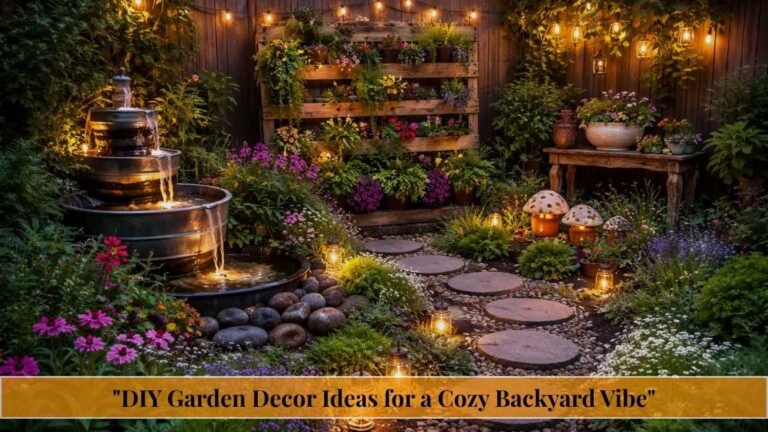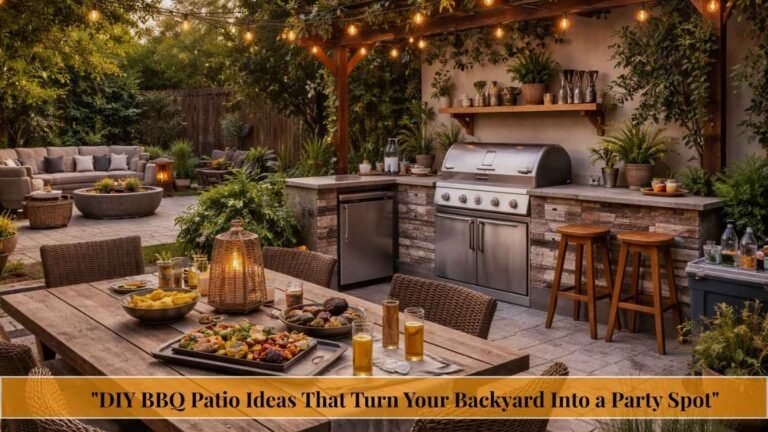
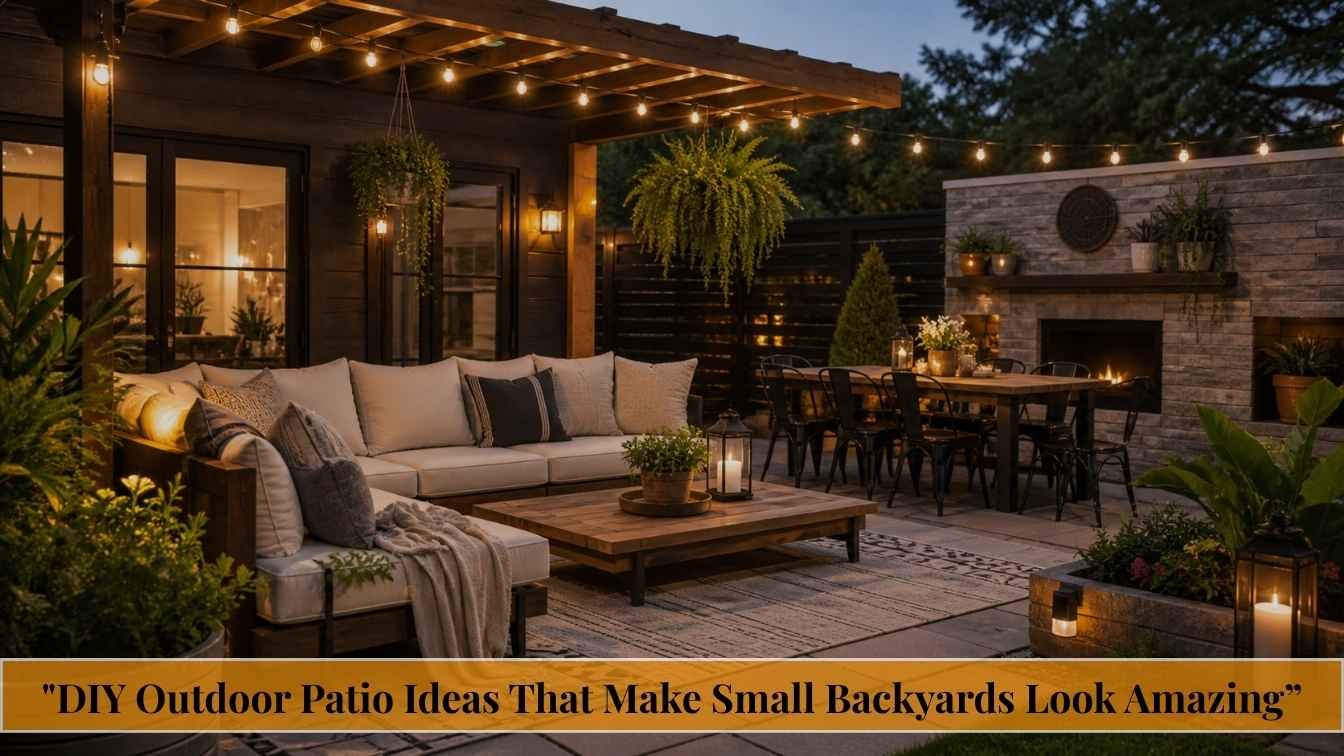
DIY Outdoor Patio Ideas That Make Small Backyards Look Amazing

You glance at your backyard and see potential but the bare concrete slab or patchy grass feels miles away from the cozy outdoor retreat you’ve been picturing. Here’s the truth: you don’t need a professional landscaper or a five-figure budget to create a stunning outdoor patio. With the right DIY outdoor patio ideas, a little planning, and a weekend or two, you can completely transform your outdoor space.
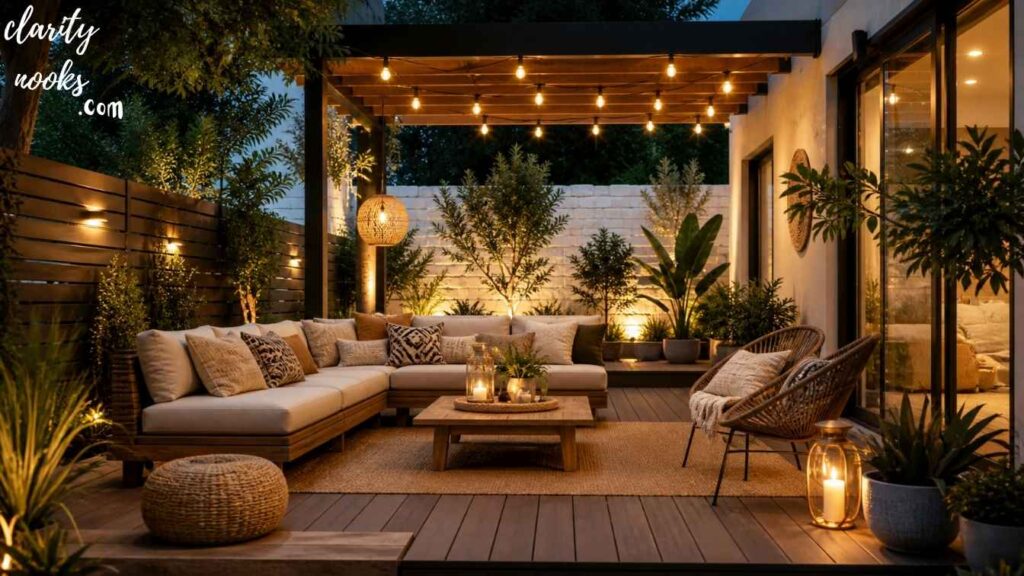
This guide covers 9 proven, budget-friendly patio ideas, each explained with real examples, design tips, and the practical know-how to get them done. Whether you have 100 square feet or 1,000, there’s an idea here that fits your space, skill level, and lifestyle.
Lay a Gravel and Stepping Stone Patio
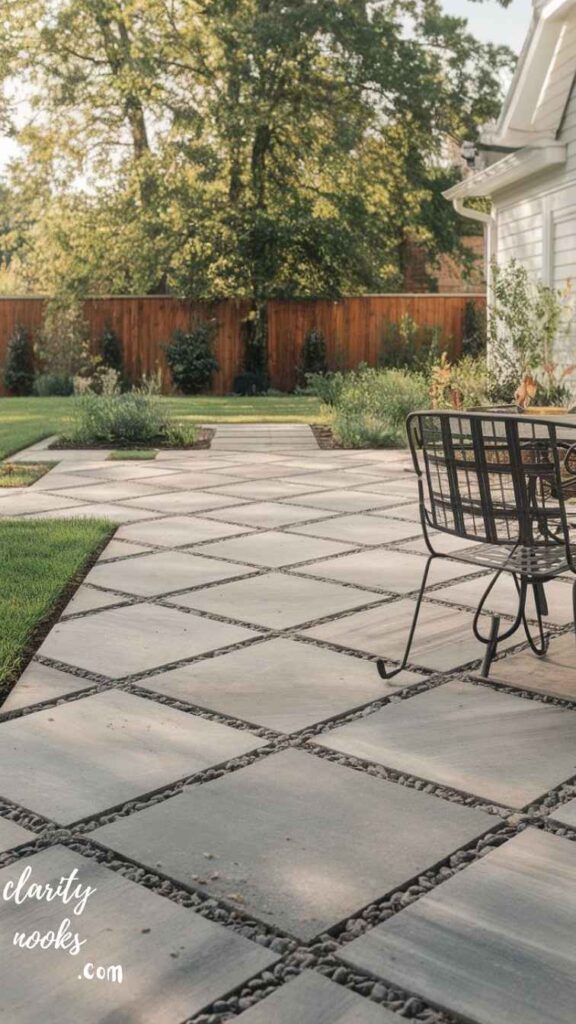
One of the most accessible DIY outdoor patio ideas for beginners is combining gravel with stepping stones. It requires no concrete mixing, minimal tools, and can be completed in a single weekend. The result is a rustic, garden-style surface that drains naturally and works beautifully in irregular or sloped spaces.
Start by outlining your patio area with stakes and string, then excavate 4–6 inches of soil. Lay landscape fabric to suppress weeds, add a 3-inch base of compacted gravel, then place your stepping stones (natural flagstone, pavers, or even reclaimed wood slices) in your desired pattern. Fill gaps with pea gravel or decorative stones.
Real-World Example:
A homeowner in Austin, Texas converted a weedy side yard into a walking patio using $180 worth of river rock and reclaimed flagstones salvaged from a demolition site. Total build time: one Saturday.
Pro Tip
Use polymeric sand between stepping stones to prevent shifting and weed growth it hardens when wet and lasts for years.
Must Read: DIY Camper Interior Ideas: Creative Storage and Space-Saving Hacks
Build a Floating Deck With Pre-Cut Lumber
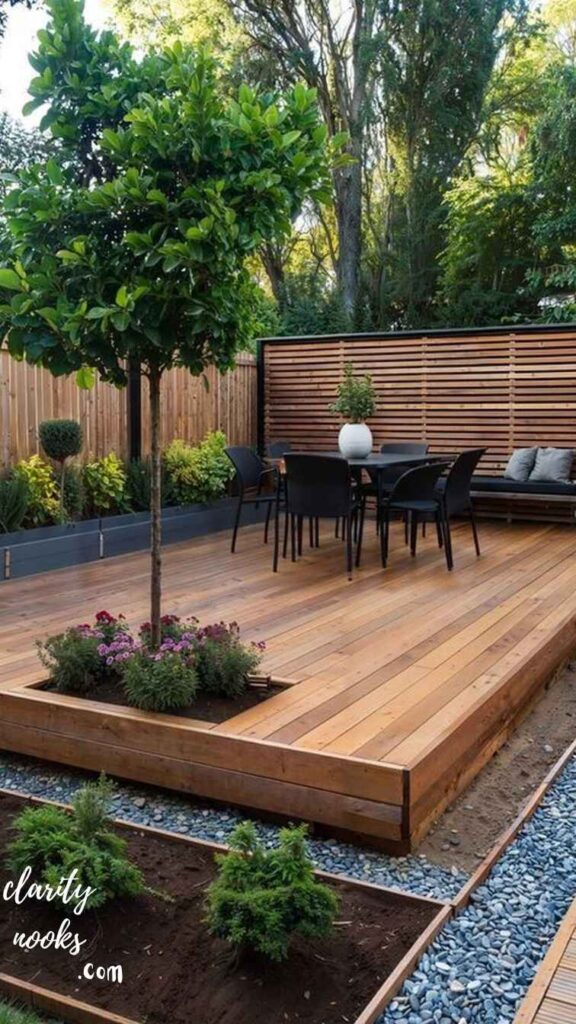
A floating deck one that sits above the ground without being attached to the house is among the most satisfying DIY outdoor patio ideas for intermediate builders. Because it’s freestanding, it typically doesn’t require a building permit (check your local codes), which saves significant time and money.
Use pressure-treated 4×4 posts as footings and frame the deck with 2×8 or 2×10 joists. For the decking surface, composite lumber (like Trex) costs more upfront but requires almost zero maintenance. Natural cedar or redwood is cheaper and gorgeous, though it needs annual sealing. A 12×16 floating deck can be built for $900–$2,200 in materials.
Mini Case Study: A family in Oregon built a 10×12 floating cedar deck in a shaded corner of their yard for $1,100. Three years later, after one coat of sealant per year, it still looks new and serves as their primary outdoor dining space.
Read Also: DIY Dining Room Ideas to Create a Warm and Inviting Family Dining Space
Create a Paver Patio With a Herringbone Pattern
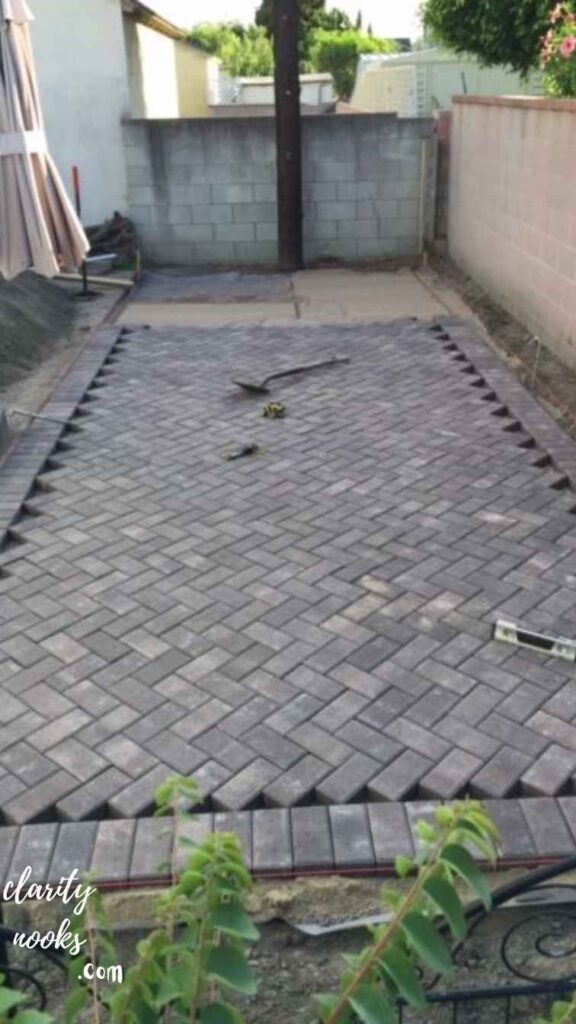
Concrete or brick pavers are a classic choice for DIY outdoor patio ideas because they’re durable, low-maintenance, and endlessly customizable. The herringbone pattern where rectangular pavers interlock at 45-degree angles is one of the strongest and most visually striking arrangements you can install.
Excavate 6 inches, lay 4 inches of compacted base material, then 1 inch of sand, then your pavers. Edge restraints keep everything locked in place. A standard 200 sq. ft. paver patio costs roughly $600–$1,500 in materials, depending on paver type. Tumbled brick gives an old-world feel; smooth concrete pavers look modern and clean.
Featured Snippet Answer
What is the easiest DIY patio surface to install?
Paver patios are considered one of the easiest DIY patio surfaces because they require no mixing, set immediately, and individual pieces can be replaced if damaged. No curing time needed.
Read More: DIY Party Decor Ideas That Add Color and Style to Any Celebration
Design a Pergola-Covered Outdoor Living Room
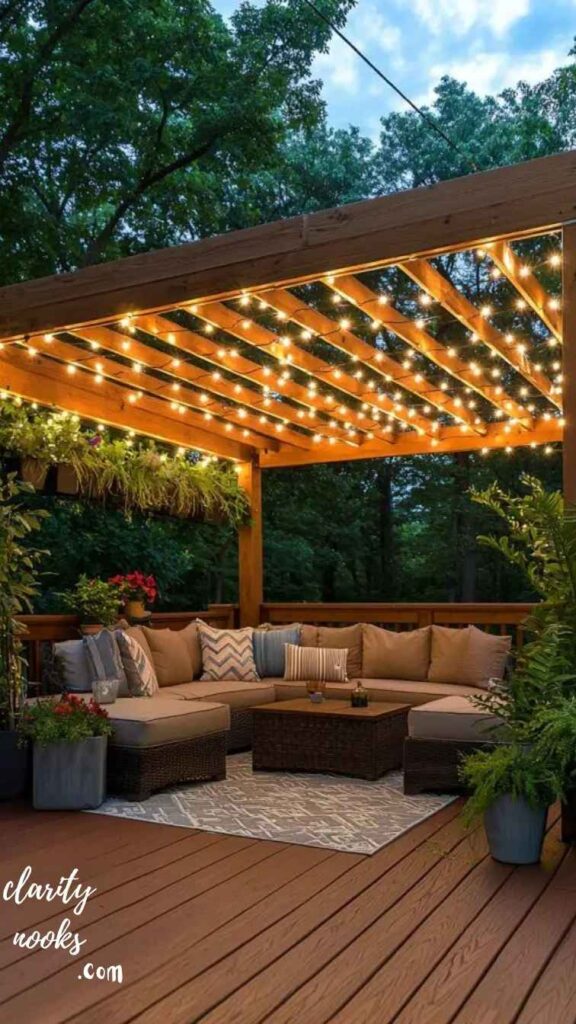
Adding a pergola instantly elevates any patio from a basic outdoor surface to a defined living space. This is one of the most popular DIY outdoor patio ideas because the impact-to-effort ratio is exceptional even a simple pergola creates shade, defines the space, and provides a structure for string lights, climbing plants, or outdoor curtains.
You can purchase a pergola kit from retailers like Home Depot or Costco (starting around $500) or build one from scratch with 6×6 posts and 2×8 beams. For added shade, weave shade cloth between the rafters, train wisteria or grapevines over the structure, or hang outdoor fabric panels. A 10×10 pergola with string lights dramatically changes how your patio feels after dark.
Real-Life Scenario:
A couple in Nashville, Tennessee installed a $700 pergola kit over their existing concrete patio, added $80 worth of string lights and $120 in outdoor curtains. Neighbors regularly ask if they hired a designer.
Don’t Miss: DIY Gaming Room Ideas for Small Spaces: Maximize Comfort & Style in Your Setup
Build a DIY Fire Pit Patio Area
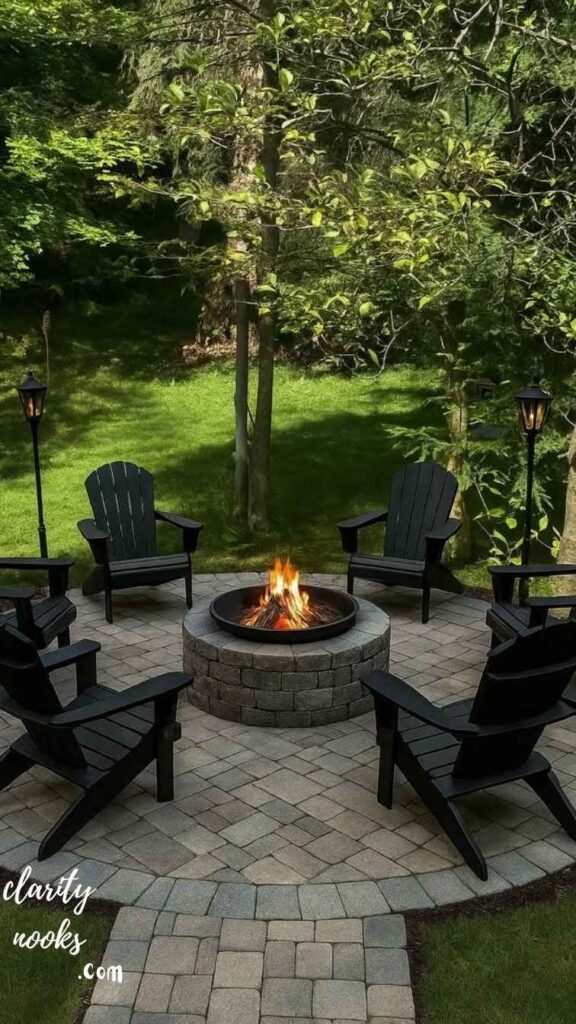
A fire pit creates the social anchor that makes outdoor patios feel like true gathering spaces. It’s one of the most universally loved DIY outdoor patio ideas, and it doesn’t have to be complicated or expensive. A simple ring of retaining wall blocks around a metal fire bowl costs under $100 and takes about two hours to install.
For a more permanent solution, build a circular fire pit from concrete blocks or natural stone with a gravel base for drainage. Surround it with a patio surface stamped concrete, pavers, or a gravel ring and arrange weather-resistant seating in a conversational circle. Always leave at least 10 feet of clearance from structures and check local fire ordinances before building.
Safety First
✔ Never build a wood-burning fire pit under a pergola or low-hanging tree branches. Keep a garden hose or fire extinguisher nearby during use.
✔ Gas fire pit inserts are a cleaner, smokeless alternative ideal for covered patios or urban areas with burn restrictions.
Transform a Small Space With a Container Garden Patio
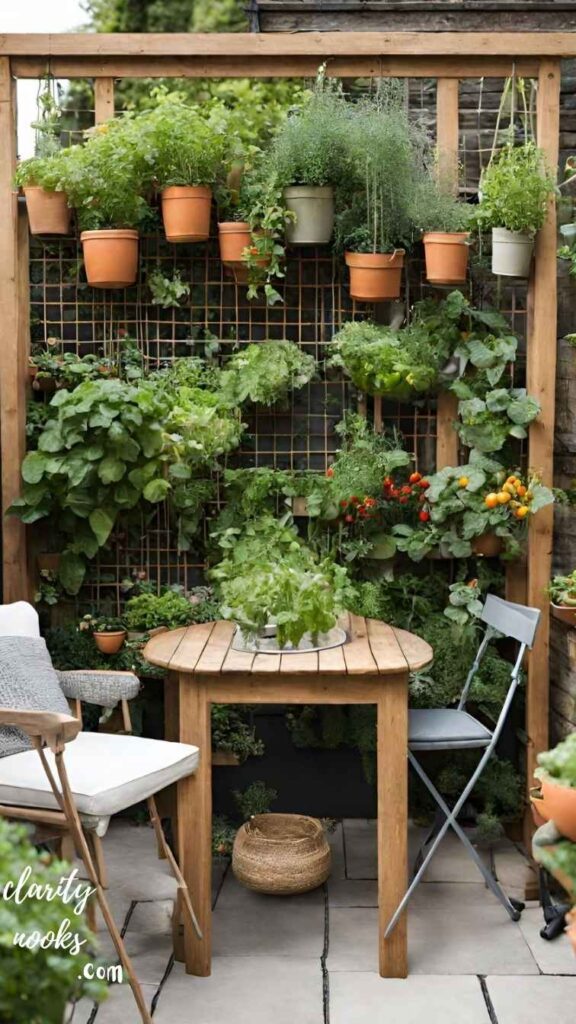
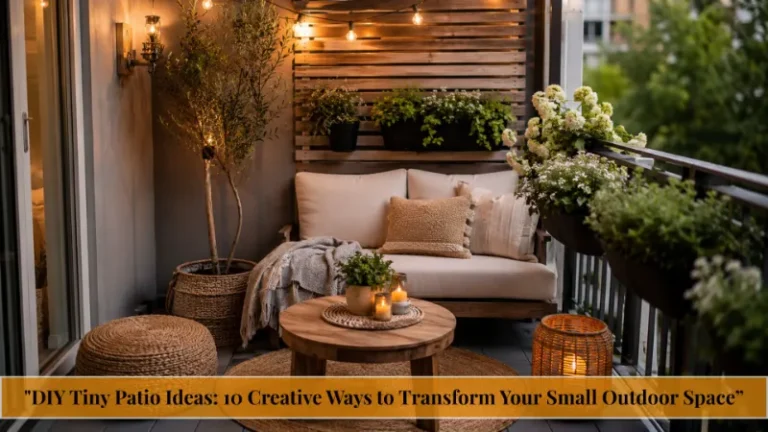
Not every patio is large. Balconies, small courtyard spaces, or narrow side yards can still be transformed into inviting outdoor retreats with the right approach. This is where container gardening becomes one of the smartest DIY outdoor patio ideas for urban and small-space dwellers.
Use large containers half whiskey barrels, galvanized metal troughs, or large ceramic pots to create vertical interest and greenery without permanent planting beds. Mix ornamental grasses, trailing plants, and dwarf shrubs for year-round texture. A tight 8×8 balcony can become a lush green escape with 6–8 strategically placed containers and a small bistro table.
Design Tip:
Use odd-numbered groupings of containers (3, 5, or 7) at varying heights for a professional, layered look. Add one tall statement plant (like a columnar evergreen) as the focal point.
Install Outdoor Porcelain Tile Over Existing Concrete
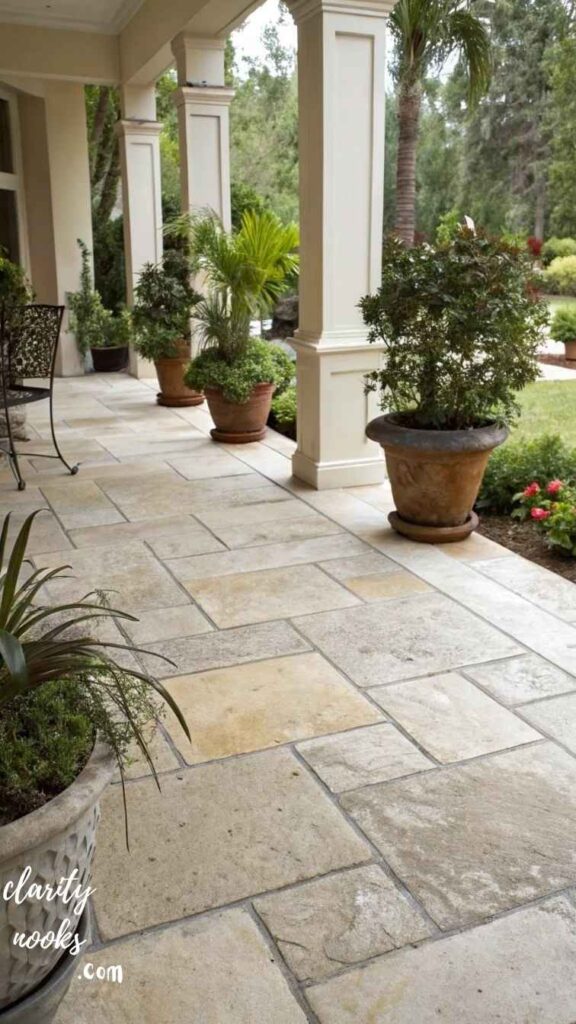
If you already have a concrete slab patio that’s structurally sound but aesthetically tired, you don’t have to tear it out. Tiling over existing concrete is a cost-effective and beautiful DIY outdoor patio idea that delivers a high-end look without the labor of full demolition.
Use outdoor-rated porcelain or natural stone tiles with a slip-resistant finish. Apply a concrete bonding primer, then use exterior-grade tile adhesive mortar. Large-format tiles (24×24 or larger) look especially dramatic on patios and reduce the number of grout lines. The result is a sleek, modern surface that’s easy to clean and extremely durable. Budget: $3–$8 per square foot in materials.
What You’ll Need
- Outdoor-rated porcelain tiles (R11 slip resistance or higher)
- Flexible exterior tile adhesive mortar
- Grout suitable for freeze-thaw climates
- Tile saw or wet saw for cutting
- Rubber mallet and tile spacers
Create a Low-Budget Pallet Wood Patio Deck
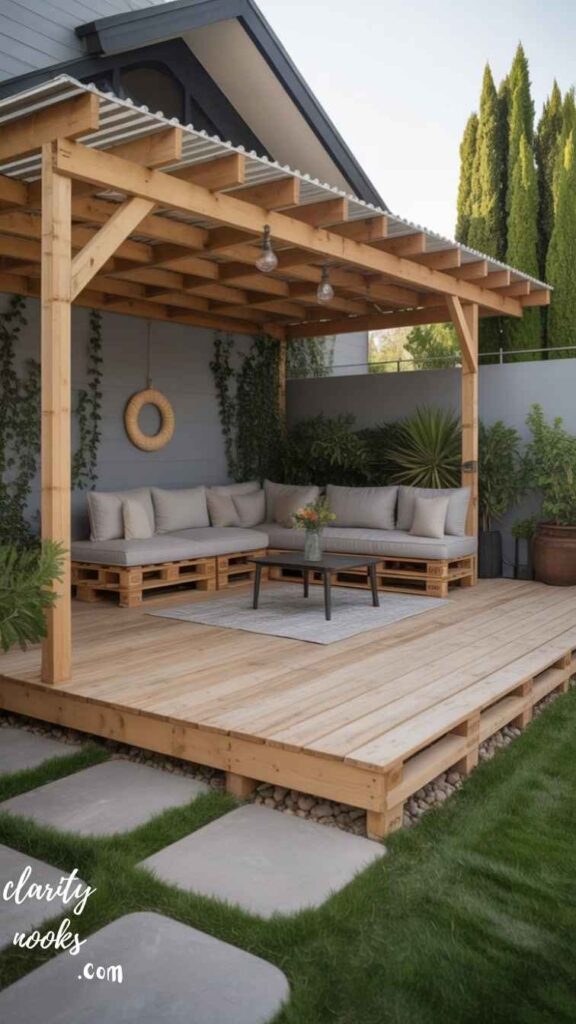
Reclaimed wooden pallets are one of the most creative and budget-conscious DIY outdoor patio ideas available. When sourced from heat-treated (HT-stamped) suppliers and sealed properly, pallet wood can create a surprisingly attractive and functional deck surface for free or very low cost.
Sand each pallet thoroughly, treat with a wood preservative, then lay them flat over a level gravel or concrete base. Screw them together for stability and apply two coats of outdoor sealant or deck stain. Add outdoor rugs, string lights, and a few potted plants to complete the look. This approach works best for covered patios or mild climates where wood won’t be exposed to heavy rain year-round.
Budget Reality:
Many manufacturing facilities, garden centers, and furniture stores give away HT pallets for free. A 150 sq. ft. pallet deck can cost as little as $50–$120 for sealant and hardware.
Click Here 👈
Important Warning
Only use pallets stamped HT (heat treated), never MB (methyl bromide treated)   MB pallets were treated with a toxic pesticide.
Design a Multi-Zone Patio With Distinct Areas
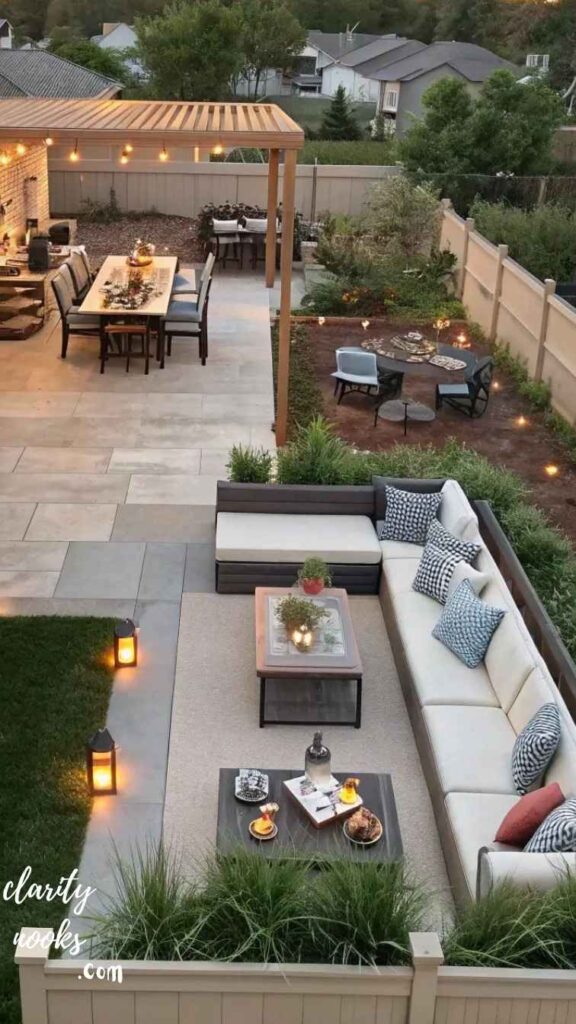
The most sophisticated DIY outdoor patio idea isn’t about a single surface or feature it’s about designing a patio with intentional zones. A well-designed multi-zone patio has a dining area, a lounge area, and perhaps a garden or cooking zone, all connected by a cohesive design language.
Define zones using different materials (e.g., pavers for dining, composite decking for lounge), level changes (a raised platform for the seating area), or visual anchors like a pergola or fire pit. Even on a modest 400 sq. ft. patio, two defined zones make the space feel purposeful and designed rather than accidental. This concept is what separates truly impressive DIY patios from basic ones.
Mini Case Study:
A Phoenix homeowner split their 500 sq. ft. back patio into three zones a gravel dining area with a pergola, a concrete seating zone around a fire pit, and a container herb garden border. Total DIY cost: $2,800. Professional quote for the same work: $11,000.
Conclusion
Building a beautiful outdoor patio doesn’t require a contractor, a designer, or an unlimited budget. These DIY outdoor patio ideas prove that with some planning, the right materials, and a willingness to get your hands dirty, you can create an outdoor space that genuinely improves your home and your daily life.
Start small if you need to even a simple gravel and stepping stone path or a few well-placed containers makes a real difference. Pick the idea that matches your budget and skill level today, and build from there. Your backyard transformation is closer than you think.
Trend Analysis: 2026 and Beyond
Outdoor living spaces are no longer seasonal luxuries they’ve become year-round extensions of the home. In 2026, the most significant shift in DIY outdoor patio design is the move toward multi-functional spaces that serve as offices, dining rooms, and entertainment hubs simultaneously.
Biophilic design integrating living plants, natural materials, and water features into patio spaces is accelerating. Homeowners are increasingly opting for permeable paving materials like gravel and open-jointed pavers to address stormwater runoff concerns. Outdoor kitchens are becoming more attainable, with modular systems making DIY installation viable for non-professionals.
Key Trends to Watch (2026–2028)
- Smart outdoor lighting: Solar-powered, app-controlled string lights and pathway lights are replacing hardwired systems
- Modular furniture: Interlocking sectional systems allow homeowners to reconfigure outdoor spaces without new purchases
- Low-water landscaping: Drought-tolerant plants surrounding patios are replacing traditional lawns in water-stressed regions
- Outdoor privacy solutions: Living walls, bamboo screens, and slatted fencing panels are trending as urban density increases
- Composite decking dominance: By 2028, composite decking is projected to outsell natural wood decking in DIY applications
Practical Tips & Expert Insights
Drawing from landscape design principles and real DIY project data, here are high-impact insights that most online guides overlook:
On Materials
✔ Always overbuy base gravel or sand by 15% compaction reduces volume significantly and mid-project supply runs waste time.
✔ Seal natural stone within 30 days of installation. Waiting longer allows moisture and organic matter to penetrate, making staining harder to remove.
✔ Measure your drainage slope before pouring or laying anything. All hardscaping surfaces should slope 1/8 inch per foot away from your house foundation.
On Design
✔ The 60-30-10 rule works outdoors too: 60% primary surface, 30% secondary surface or greenery, 10% accent (fire pit, water feature, or art).
✔ Scale outdoor furniture to your patio size. Oversized sectionals on small patios make the space feel cramped; undersized furniture on large patios looks lost.
✔ Night-test your lighting before finalizing installation. What looks adequate during the day is often insufficient after dark.
Long-Term Strategy & Sustainability
The smartest DIY outdoor patio investments are those that increase home value, require minimal ongoing maintenance, and age gracefully. Choosing the right materials upfront dramatically reduces your total cost of ownership over 10–20 years.
Composite decking, porcelain tile, and natural stone consistently outperform pressure-treated wood and concrete in long-term durability assessments. While the initial cost is 20–40% higher, maintenance costs are 60–80% lower over a decade. Pavers also add an estimated 5–15% return on investment to your property value according to landscaping industry data.
Sustainability Considerations
✔ Choose permeable paving wherever possible to reduce storm water runoff a growing regulatory requirement in many municipalities.
✔ Source reclaimed or locally quarried stone to reduce the embodied carbon in your patio project.
✔ Plant native species in container gardens and border plantings they require less water, no fertilizer, and support local pollinators.
✔ Design for expansion. Build your patio foundation larger than your immediate needs so future additions don’t require tearing out existing work.
Future Predictions & Innovations
The DIY outdoor patio space is evolving rapidly, driven by advances in materials science, prefabrication, and smart home integration. Here’s what’s coming in the next 3–5 years that forward-thinking homeowners should know about.
Self-healing concrete infused with bacteria that produce calcium carbonate to fill cracks will become commercially available to consumers within the next few years, dramatically extending the lifespan of concrete patio surfaces. AI-powered landscape design tools already allow homeowners to upload a photo of their yard and receive a detailed 3D patio design with a materials list in minutes.
Innovations to Watch
- Solar-integrated paver tiles: Pavers with embedded micro-solar cells that charge outdoor devices and power landscape lighting
- Pre-built modular deck systems: Snap-together deck panels requiring no cutting or special tools already emerging in the market
- Recycled plastic lumber: Performance now rivals composite, with 100% post-consumer recycled content and no off-gassing
- Smart irrigation integration: Patio-adjacent garden zones increasingly controlled by AI systems that adjust watering based on weather forecasts
- AR design apps: Augmented reality apps (like those from IKEA and Home Depot) will allow real-time visualization of patio ideas overlaid on your actual yard
Common Mistakes & Hidden Gaps
Both beginners and intermediate DIYers make predictable mistakes that cost time, money, and satisfaction. Understanding these pitfalls before you start is one of the highest-value things you can do.
Beginner Mistakes
- Skipping the base: Laying pavers or tiles directly on soil guarantees settling, cracking, and weeds within 12–18 months. Always excavate and compact a proper base.
- Ignoring drainage: A flat patio that pools water after rain will be unusable, damage your home’s foundation, and degrade materials rapidly.
- Underestimating materials: Always calculate your square footage, then add 10% for cuts and breakage. Running short mid-project is a common and frustrating mistake.
- Buying cheap outdoor furniture: Patio furniture that isn’t rated for outdoor use will rust, fade, or deteriorate within a single season.
Intermediate Mistakes
- Over-designing small spaces: Adding too many features (pergola + fire pit + water feature + planters) on a small patio creates visual chaos, not beauty.
- Not checking HOA or permit requirements: Some municipalities require permits for decks over 30 inches high, and some HOAs restrict certain materials or colors.
- Choosing the wrong tile: Indoor-rated tile is dangerously slippery when wet. Always use outdoor-rated tile with a minimum R10 slip resistance rating.
- Neglecting electrical planning: Adding outdoor outlets, lighting circuits, or a hot tub after the patio is complete requires expensive retrofitting. Plan electrical needs first.
Hidden Gap Most Guides Miss
Most DIY patio guides focus on the surface and ignore the perimeter. How your patio edges meet the lawn, garden beds, or fence line dramatically affects the finished appearance and long-term maintenance. Invest in proper edge restraints, steel edging, or planted borders to give your patio a professionally finished look and prevent surface creep.
Rameen Zara is the founder of Clarity Nooks, bringing over five years of experience in home décor and interior styling. She shares simple yet practical design ideas that suit real homes and everyday living. Her approach focuses on cozy aesthetics, soft color palettes, and natural textures that create warm, inviting spaces.