

Creative DIY Beach Bedroom Ideas for a Cozy Nautical Style Bedroom

Most “coastal bedroom” guides give you the same recycled list: buy some blue pillows, hang a wooden starfish, done. But real beach-inspired bedrooms go deeper than décor shopping. They capture a feeling the calm of an overcast morning, the warmth of driftwood after sunset, the way salt air makes everything feel just a little softer.
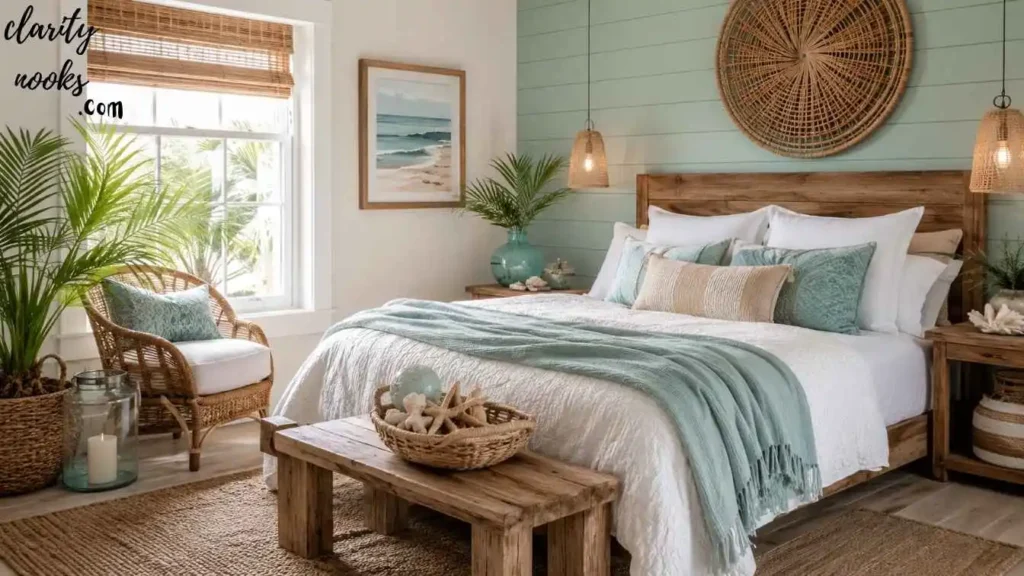
The good news? You can create that feeling with your own hands, without expensive renovations or a designer’s budget. Whether you’re starting from scratch or refreshing an existing room, these DIY beach bedroom ideas are grounded in real design principles, not Pinterest clichés. Let’s dive in.
Quick Answer
DIY beach bedroom ideas focus on natural textures (driftwood, rope, linen), a muted coastal color palette (sandy whites, ocean blues, seafoam greens), and found-object décor like sea glass and shells all of which can be sourced affordably and assembled without professional help.
Build a Coastal Color Palette from Scratch
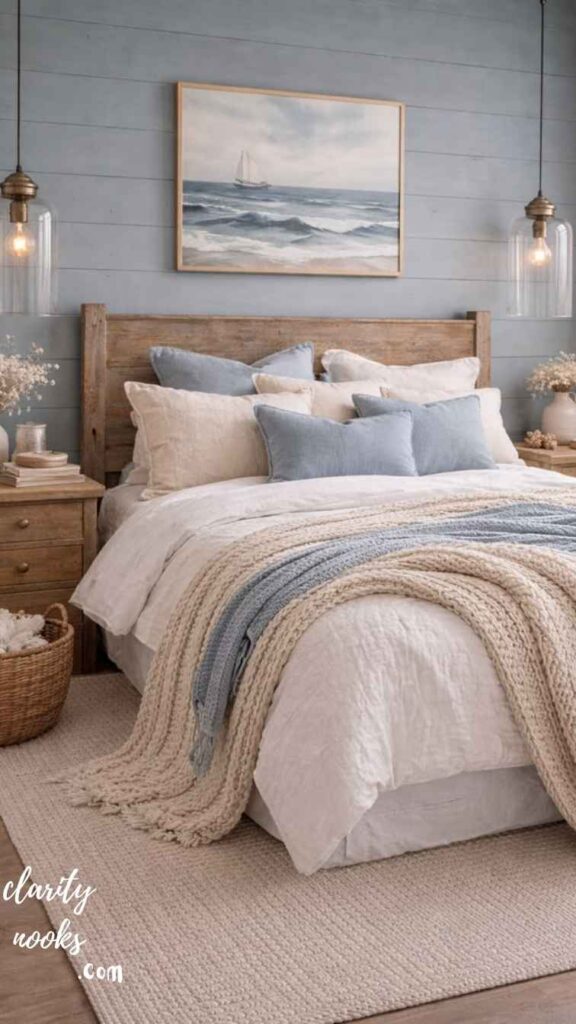
Before buying a single piece of furniture, get your colors right. The coastal palette isn’t just “navy blue and white” it’s a nuanced conversation between warm sand tones, cool ocean blues, weathered grays, and soft greens. Think of it as the light spectrum at 6am on a clear beach morning.
Start with an off-white or warm linen base for your walls avoid bright white, which reads clinical rather than coastal. Layer in a muted teal or dusty blue for your largest textiles (bedding, curtains). Then accent with driftwood browns, seafoam greens, and the occasional coral or terracotta pop.
A real-life application:
Sarah, a DIY designer in Oregon, repainted her spare bedroom in Benjamin Moore’s “White Dove” and added secondhand teal curtains. Total cost: under $80. The result looked like a $3,000 designer makeover because the color story was cohesive.
Must Read: Smart DIY Bathroom Tile Ideas to Make Any Bathroom Look Bigger
Build a Driftwood Headboard
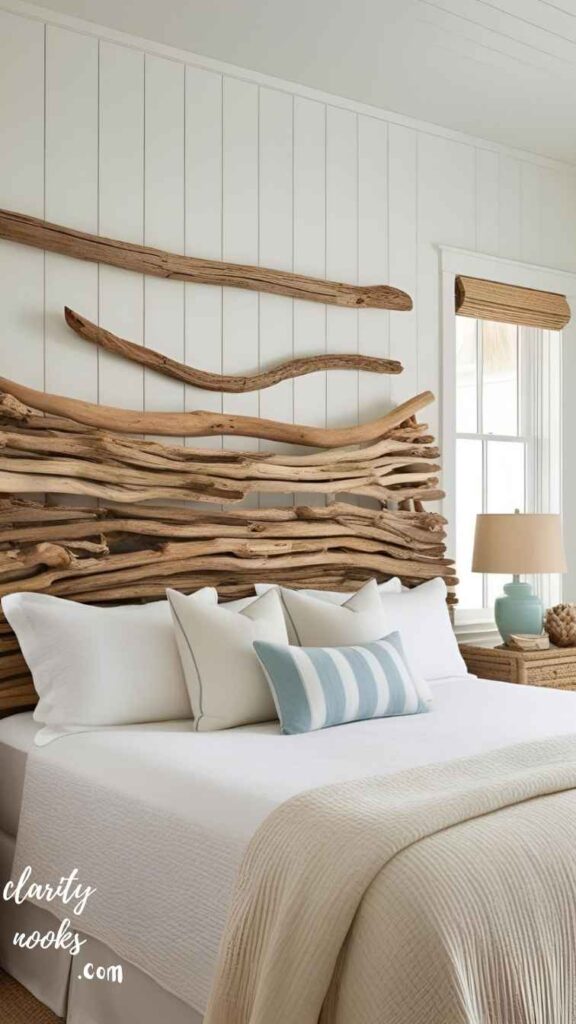
A driftwood headboard is the single most impactful DIY you can do for a beach bedroom. It anchors the entire room, creates an immediate coastal focal point, and costs almost nothing if you collect the wood yourself. Beaches, riverbanks, and even landscape supply stores are reliable sources for weathered wood pieces.
The technique is simpler than it looks: cut a plywood base to your mattress width, sand the edges smooth, then arrange driftwood pieces in a horizontal pattern varying thickness adds visual rhythm. Use a heavy-duty construction adhesive and let it cure for 48 hours before mounting. You can also drill through the plywood and wire pieces together for added stability.
Real Project
A couple in coastal Maine spent one afternoon collecting driftwood from a local beach. Using a $20 plywood base, $8 of adhesive, and free wood, they built a king-sized headboard. It became the most-commented feature every time guests visited proof that natural materials carry intrinsic visual weight no store-bought piece can replicate.
Read More: Modern DIY Backyard Bar Ideas to Transform Your Outdoor Living Space
Add Rope and Nautical Accents Strategically
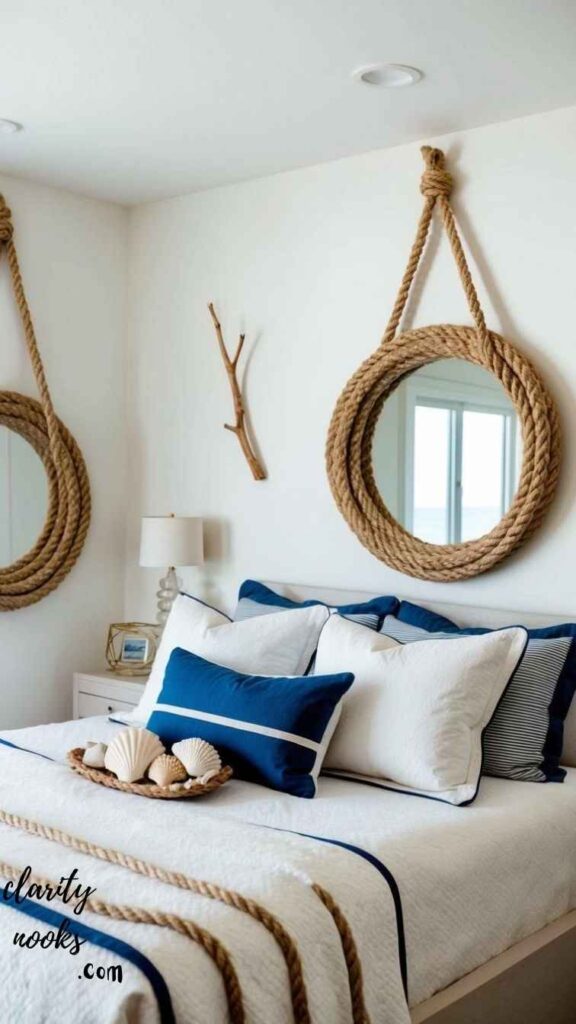
Rope is a coastal design powerhouse, but it’s easy to overdo. Used strategically wrapped around a lamp base, knotted as curtain tiebacks, or framing a mirror it adds authentic seaside texture without tipping into theme-park territory. Natural jute or manila rope from hardware stores is far more authentic than synthetic alternatives.
One underrated technique: macramé-style rope shelving. Mount a slim wooden dowel near a window, knot three lengths of thick rope at equal intervals, and thread a reclaimed wood plank through them. You’ve created a floating shelf that looks custom-made and costs under $15. Display sea glass, small plants, or worn paperbacks on it.
Avoid wrapping rope around every possible surface. Pick two or three points of integration: a headboard detail, a pendant light, and a mirror frame is a complete story. Any more, and the room starts to look like a ship’s rigging warehouse.
Read Also: DIY Baby Nursery Ideas for Boys: Budget Decor That Looks Expensive
Install a Shiplap or Beadboard Accent Wall
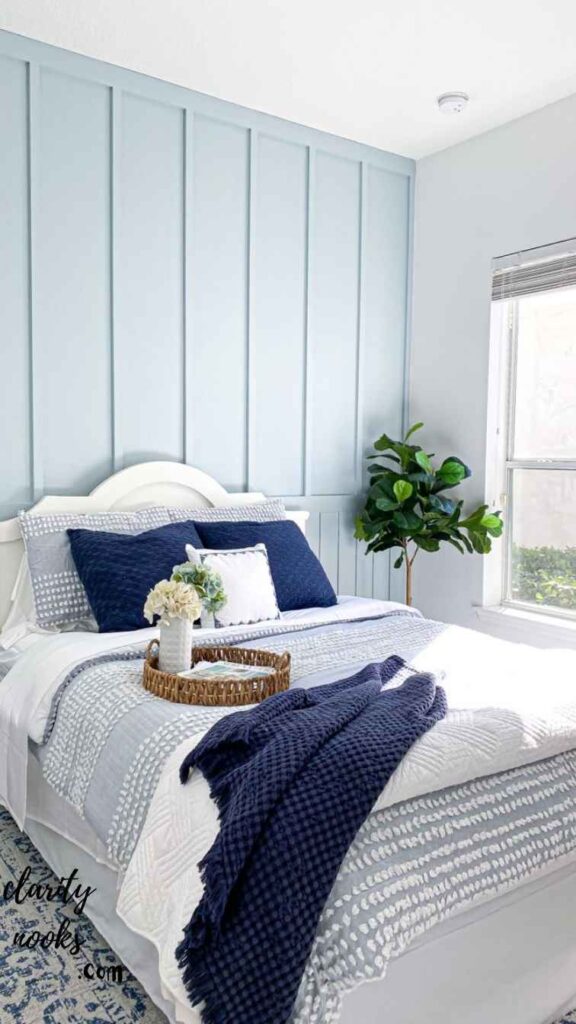
Nothing reads “coastal cottage” quite like horizontal shiplap paneling behind the bed. The horizontal lines visually widen the room and reference the layering of ocean waves and shorelines. This is a commitment project but it’s entirely DIY-able over a weekend with basic tools and $150–$300 in materials depending on wall size.
For renters or budget-constrained decorators, peel-and-stick shiplap wallpaper has improved dramatically in quality. Brands like RoomMates and NuWallpaper now offer convincingly textured options. A more permanent alternative: 1×4 pine boards with a 1/8″ gap between each, painted in a soft weathered white or gray. The slight shadow from each gap creates that signature depth.
Pro tip: Instead of painting shiplap bright white, mix a small amount of raw umber artist’s acrylic into white paint to create a “sun-bleached” tone. This single step makes the difference between a bathroom renovation look and a genuine beach cottage feel.
Don’t Miss: Easy DIY Dining Table Decor Ideas for Everyday Elegance at Home
Create Sea Glass Decor Displays
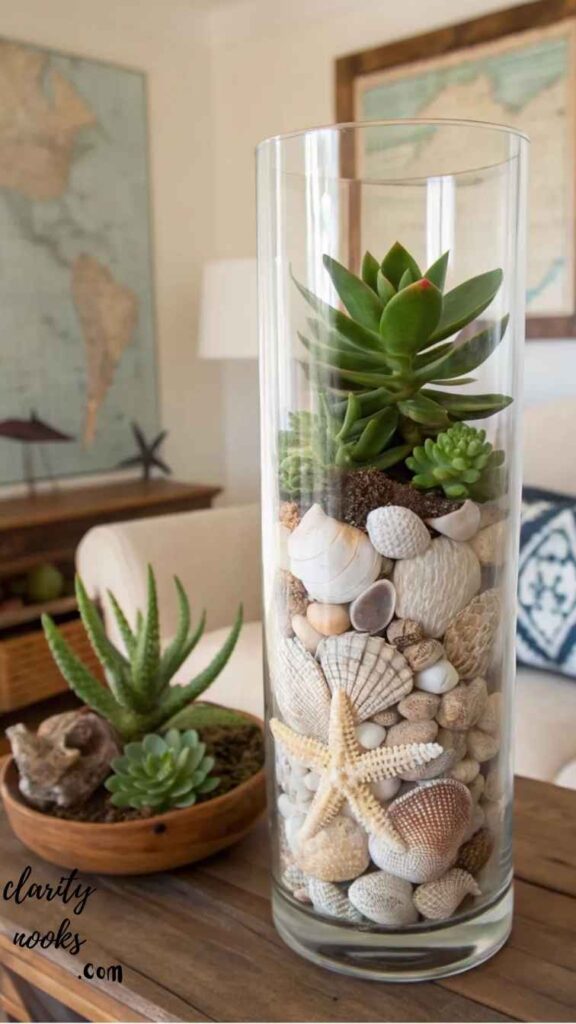
Sea glass carries authentic coastal energy that no manufactured décor item can fake. Whether you collect it yourself or buy it in bulk (available on Etsy for around $10–20 per pound), it translates beautifully into DIY décor. The frosted, weathered texture catches light in a way that’s uniquely meditative the visual equivalent of white noise.
Fill a tall apothecary jar with mixed sea glass and tuck in a small battery-operated LED string light. The light refracts through each piece, creating a glowing centerpiece that works as both art and ambient lighting. Alternatively, use sea glass to create mosaic picture frames, candle surrounds, or even a framed piece of “beach art” by arranging pieces on canvas.
For something more architectural, commission your own sea glass “window” by hot-gluing pieces to a salvaged frame with clear glass removed, then mounting it where light passes through. The effect is genuine stained glass at a fraction of the cost.
Layer Natural Linen and Textured Textiles
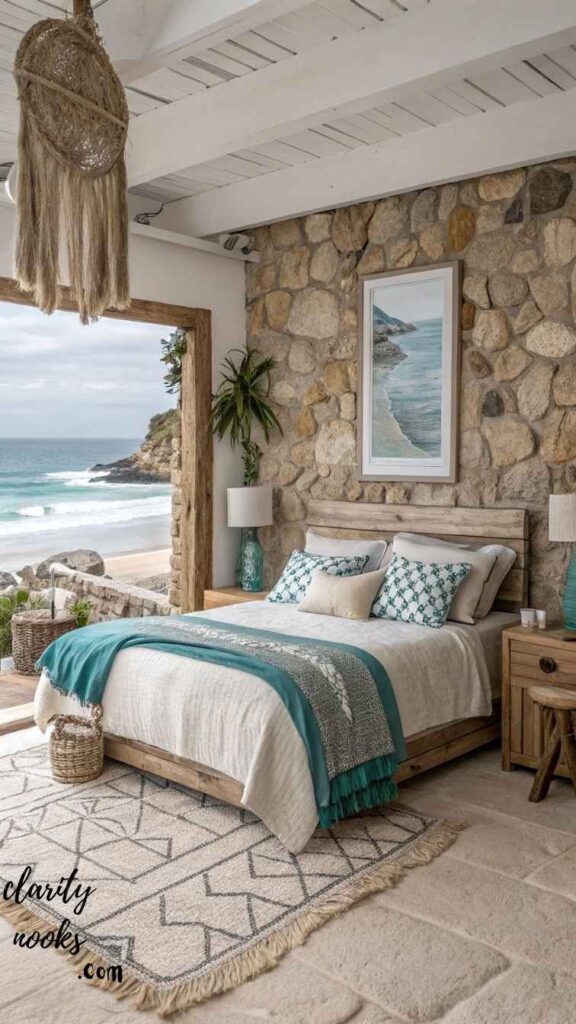
The bed is the emotional center of any bedroom, and in a coastal room, it should feel like collapsing into warm sand. Natural linen washed and slightly rumpled is the definitive coastal textile. Its texture, natural wrinkles, and muted coloring all feel lived-in and organic, which is exactly the vibe a beach bedroom should project.
Layer a stone-washed linen duvet in a bleached cream or muted sage with a chunky cotton knit throw at the foot. Add two or three textured cushions in complementary tones waffle weave, slubby cotton, or bouclé. The key is that nothing should look too pristine. Beach living is relaxed, and your bedding should feel the same way.
IKEA’s PUDERVIVA
linen duvet cover (around $50) has become a cult favorite among coastal interior designers for exactly this reason. Its natural, unfinished texture rivals designs that cost five times more.
Source and Style Rattan and Wicker Pieces
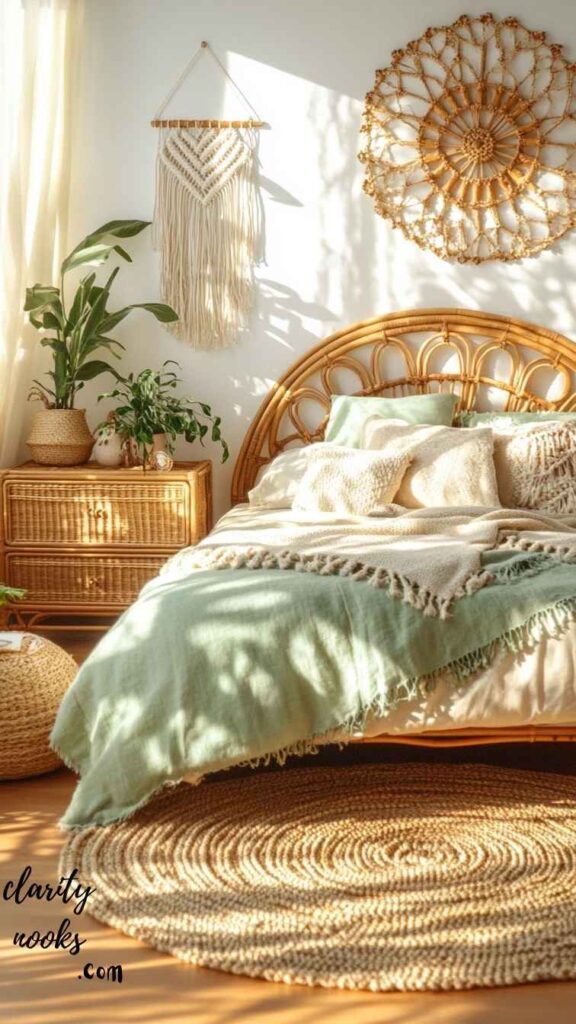
Rattan furniture is having a genuine design renaissance and for good reason. Its woven, natural texture brings organic warmth that complements coastal color palettes perfectly. More importantly for the DIY aesthetic, it’s one of the most thrift-store-friendly categories: older rattan pieces are abundant in secondhand shops and often need only a coat of paint or light repair.
A thrifted rattan chair in the corner of your bedroom, resprayed in a soft white or left in its natural honey tone, instantly reads as intentional coastal styling. Add a linen cushion and you’ve created a reading nook that looks magazine-worthy. Rattan pendant lights widely available from brands like H&M Home or Anthropologie are also highly effective at adding organic texture overhead.
Thrift Store Win
Interior blogger Mia T. found a 1970s rattan peacock chair at a Goodwill for $12. She spray-painted it in Rust-Oleum “Chalked White,” added a $25 linen cushion, and styled it beneath a woven wall hanging. The photo earned over 14,000 saves on Pinterest demonstrating that age and origin matter far less than execution.
Create Coastal Wall Art Without Buying Prints
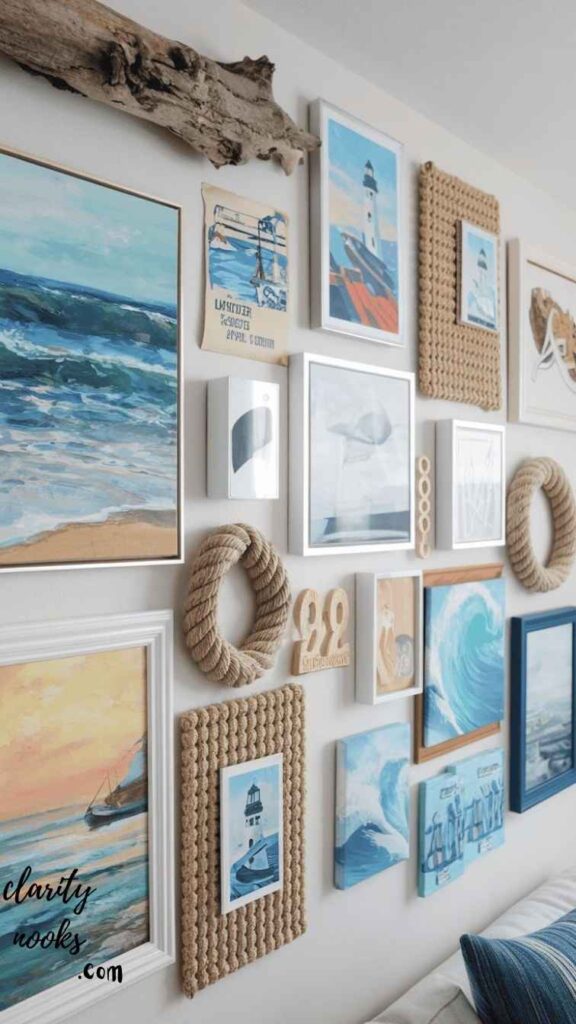
Framed mass-produced beach prints are the fastest way to make a coastal bedroom look generic. Instead, create your own wall art using materials that carry actual connection to the sea. A simple canvas painted in the color gradient of a beach sunset sandy base, watercolor blue sky, coral horizon can be completed by a complete non-artist in under an hour using a sea sponge and three colors of craft paint.
Alternatively, build a gallery wall from found objects: a weathered piece of wood with a painted quote, a framed map of a meaningful coastline, a pressed seaweed arrangement in a glass frame, and a mounted vintage compass. This kind of curated assemblage tells a personal story and feels far more authentic than any matching print set.
Oversized woven wall hangings macramé, woven fiber, or even vintage fishing nets mounted on a dowel also work beautifully and can be DIY projects in their own right. Basic macramé techniques can be learned in an afternoon and a completed piece takes a weekend.
Bring Sandy Warmth to Your Floor
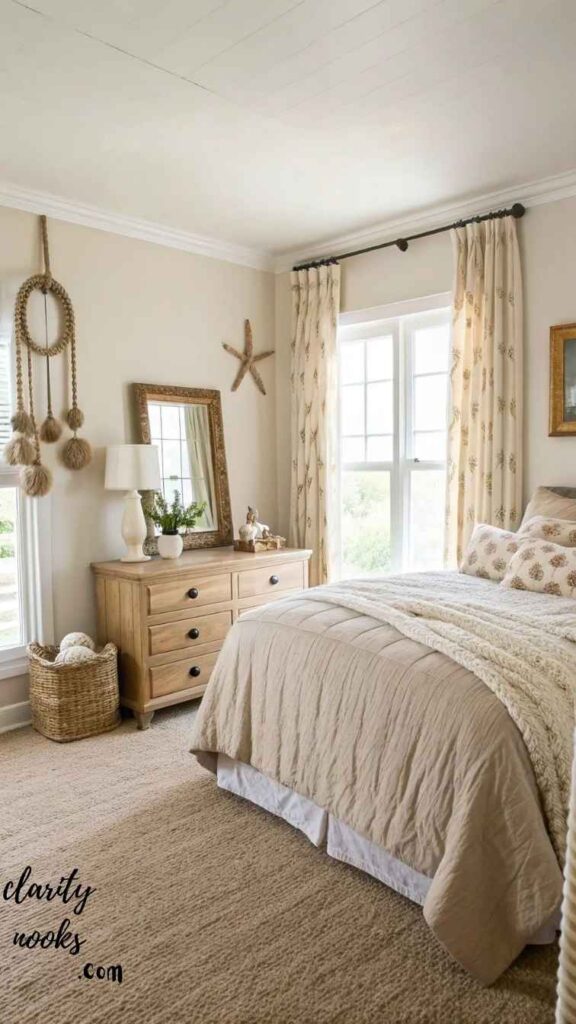
Hard floors wood, tile, or vinyl work best in coastal bedrooms because they reflect light and feel clean underfoot the way beach homes do. If you have carpeting, consider a large natural fiber rug (jute, sisal, or seagrass) to lay over it. These materials are surprisingly affordable a 5×8 seagrass rug from IKEA runs around $80 and they instantly ground the coastal palette.
For those with existing hardwood, a whitewash treatment is a transformative DIY. Dilute white paint 50:50 with water, apply with a brush along the grain, and wipe back with a rag. The result is the sun-bleached, driftwood tone that defines classic coastal interiors. It’s reversible with sanding, making it a low-risk experiment for renters working with their own floors.
Style Shell and Coral Collections Like a Designer
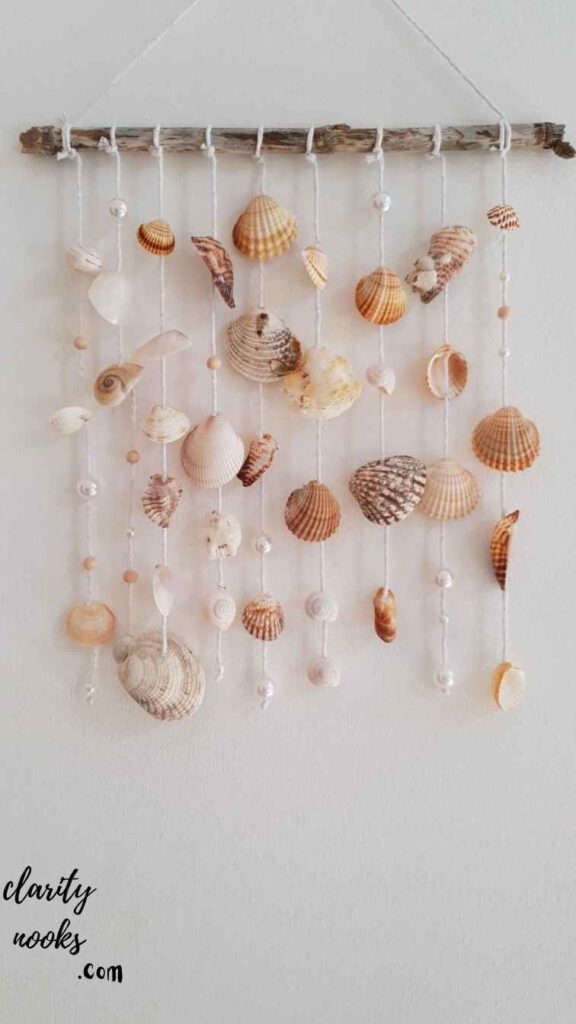
Shells scattered randomly on a nightstand look like hotel bathroom décor. Shells grouped thoughtfully arranged by size in a shallow tray, displayed in a bell jar, or clustered within a framed shadow box look like intentional art. The difference is curation, not cost. The same $5 bag of mixed shells from a craft store becomes clutter or a centerpiece depending entirely on how you display them.
Designer rule: always group in odd numbers, vary the scale, and use a neutral container. A trio of white coral fragments in a shallow white bowl creates a quiet, gallery-like vignette. Add a single tapered candle and a worn paperback and you have a complete nightstand styling moment.
Note on ethics:
Always purchase shells and coral from responsible suppliers rather than collecting live specimens. Many beach ecosystems are fragile, and some species are protected. Vintage and secondhand collections also carry a beautiful sense of history.
Design Coastal Lighting on a Budget
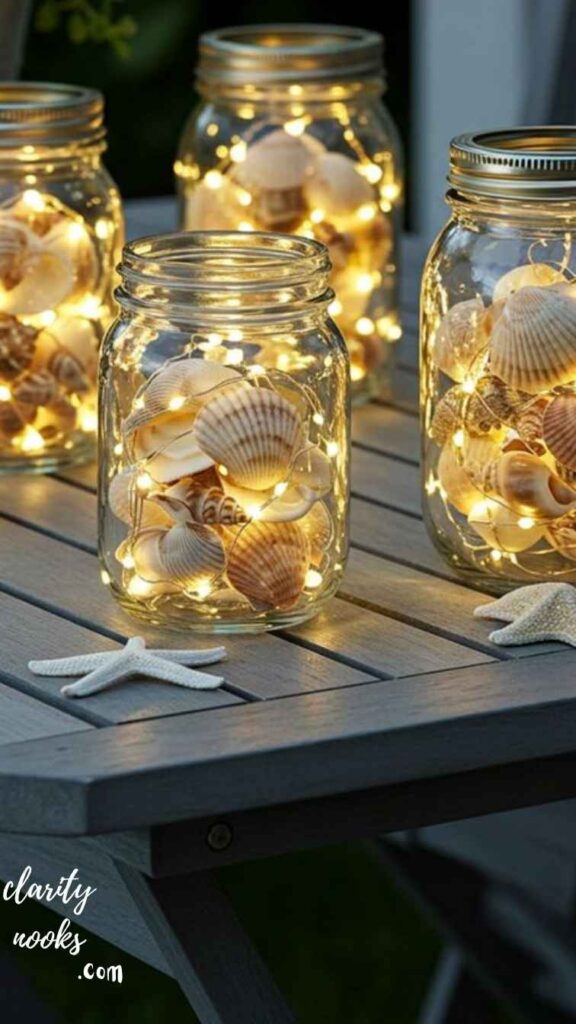
Lighting defines mood more than any other element in a bedroom. Coastal lighting should feel warm, soft, and slightly diffused the visual equivalent of late afternoon golden hour at the beach. Avoid cool white LEDs, which read as clinical. Instead, opt for warm-toned bulbs (2700K or lower) in fixtures that filter light through natural materials.
DIY options abound: mason jars filled with sand and tea lights, rope-wrapped lamp bases, a driftwood slab mounted horizontally with pendant Edison bulbs hanging at varied lengths, or a woven rattan lamp shade that throws intricate geometric shadows. For the bedside, salt lamps emit a warm amber glow that genuinely transforms the atmosphere of a room after dark.
String lights
yes, the cliché ones actually work when used correctly. Strung along a ceiling perimeter rather than draped awkwardly over a headboard, they create a canopy effect that’s quietly dreamy without feeling juvenile.
Incorporate Indoor Plants for Coastal Energy
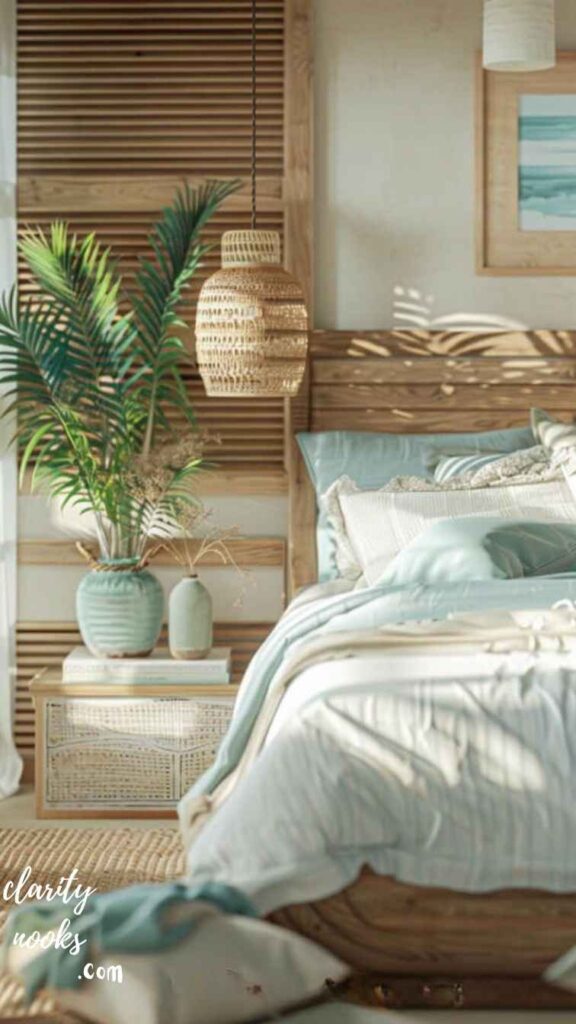
Coastal environments are alive humid, green, growing. A beach bedroom without plants feels like a set design rather than a living space. The good news: many plants thrive in the bright, indirect light typical of beach-style rooms with white walls and sheer curtains. Snake plants, pothos, string of pearls, and the iconic bird of paradise all complement the coastal aesthetic beautifully.
For an especially coastal-feeling arrangement, group three plants at different heights: a trailing pothos in a hanging macramé planter, a mid-height peace lily in a textured ceramic pot, and a low dish of succulents on the windowsill. The layered green softens hard surfaces and brings a sense of organic movement that no decorative object can replicate.
Consider also dried botanicals pampas grass, dried lavender, or preserved palm fronds which add height and texture without maintenance. These work especially well in rattan vases and look at home in any coastal-themed space.
Conclusion
DIY Beach Bedroom Ideas can easily change your room into a calm and fresh space. Simple colors like white, blue, and sandy tones help create a beach feel. Soft lights, natural textures, and small sea decorations make the room peaceful. You do not need a big budget. Small changes can bring a big difference. This style works well for anyone who loves a relaxing and clean look at home.
In the end, DIY Beach Bedroom Ideas are all about comfort and simplicity. You can mix your own style with coastal elements to make it unique. Add personal touches like shells, linen, or wooden items. Keep the space light and airy. This helps create a calm place where you can rest and feel close to the beach every day.
Trend Analysis: 2026 and the Next 2–3 Years
The coastal interior trend has matured well beyond “nautical-themed” into something far more nuanced. Here’s where the design world is heading, and what that means for your DIY projects.
2026
“Quiet Coastal” Rises
Following the quiet luxury movement in fashion, interiors are moving toward restrained coastal aesthetics fewer decorative shells, more carefully selected natural materials and muted tones.
2026–27
Mediterranean Over New England
Greek island and Italian coastal aesthetics are displacing the classic Cape Cod look. Terracotta, washed plaster walls, and warm sand tones replace navy and white stripes.
2027
Biophilic Integration
Coastal design and biophilic principles are converging. Living walls, natural ventilation strategies, and organic material palettes are becoming central, not supplementary.
2027–28
Sustainable Sourcing Mandatory
Consumer awareness around coral reef destruction and coastal ecosystem harm is reshaping what materials are considered desirable. Reclaimed and secondhand will be the premium tier.
User behavior data from Pinterest and Google shows a 38% year-on-year increase in searches for “coastal minimalist bedroom” compared to a 12% decline in “nautical bedroom decor.” The market is self-correcting away from the anchor-and-stripe cliché and toward something more sophisticated.
Expert Tips and Practical Insights
Layer Textures, Not Colors
Professional coastal designers rarely use more than 3–4 colors, but they layer 6–8 different textures. Smooth linen beside rough jute beside polished sea glass beside matte driftwood the contrast does the decorating work.
Use the “Squint Test”
Squint at your room until colors blur. If you can still sense warmth and harmony, your palette is working. If it reads chaotic, the undertones of your chosen colors are likely conflicting.
Scent Completes the Room
Many designers include scent as a design element. A coastal bedroom can include diffusers with sea salt, driftwood, or eucalyptus notes to complete the sensory environment something no photo shows but every visitor notices.
Edit Ruthlessly
The biggest mistake in coastal decor is overcrowding. Real beach spaces are airy and uncrowded. Remove items until the room feels sparse, then add back just one or two. That final state is usually correct.
Shop Vintage First
Weathered, aged objects carry authentic coastal character that new items struggle to fake. Thrift stores, estate sales, and eBay are your best sources for driftwood frames, vintage maps, worn wicker, and genuine sea glass collections.
Light at Multiple Heights
Layer your lighting sources: overhead ambient, a mid-level lamp, and low-level candles or accent lights. This creates the kind of dimensional warmth found in actual beach cottages where single overhead lighting is rare.
Long-Term Strategy and Sustainability
A well-designed coastal bedroom shouldn’t feel dated in three years or require expensive overhauls to update. The key is building a foundation of timeless materials natural linen, solid wood, rattan, jute and keeping trendy elements at the accessory level where they’re inexpensive to swap out.
Think of it in three investment tiers. Your headboard, furniture, and rugs are long-term investments spend more, choose natural materials, and buy things with genuine longevity. Your textiles (duvet covers, curtains, cushions) are medium-term replace every 3–5 years as trends evolve or fabric wears. Your accessories (candles, plants, shells, small art) are the trend-responsive layer update freely each season for under $50.
Sustainability is increasingly non-negotiable in this design category. Coastal aesthetics are directly connected to ocean health and the irony of decorating a “beach bedroom” with products that harm actual marine ecosystems is lost on too few people. Prioritize: reclaimed wood over new, secondhand wicker over imported new pieces, responsibly sourced shells, and natural dyes in textiles wherever possible.
Future Predictions and Innovations
The next frontier for coastal bedroom design involves technology becoming invisible. Smart lighting systems that simulate the color temperature shift from sunrise to sunset are already available and will become accessible at mass-market price points within two years. Imagine your coastal bedroom shifting from warm amber at 6am to bright midday blue-white by noon, automatically.
AI-powered interior design tools are also changing how DIYers plan spaces. Apps like Houzz, Roomstyler, and emerging AI tools allow you to photograph your existing room and visualize exactly how proposed changes will look reducing the guesswork that causes expensive DIY mistakes. For coastal bedroom projects, this technology is particularly useful for testing color combinations before committing to paint.
Material innovation is bringing authentically sustainable options: mushroom-based foam for cushions, recycled ocean plastic woven into rugs and textiles, and algae-based dyes producing colors that are genuinely connected to marine environments. These are entering the mainstream market now and will be widely accessible by 2027–2028.
Common Mistakes and Hidden Gaps
- Choosing bright, saturated blue it reads as “nautical party” rather than “calm coastal”
- Use muted, slightly grayed-down blues dusty teal, slate blue, or washed denim tones
- Buying every item from the same collection it looks like a furniture showroom
- Mix sources: one thrift piece, one quality investment, one DIY, one found object
- Ignoring the ceiling coastal rooms have character at every angle
- Add a whitewashed wood plank ceiling, a rattan pendant, or simple wood bead chandelier
- Overcrowding windowsills and surfaces with too many shells and collectibles
- Group items in clusters of three, leave substantial negative space around each group
- Using synthetic materials that mimic natural ones the difference is immediately visible
- Save money elsewhere to afford real jute, genuine linen, and actual driftwood
- Skipping window treatments bare windows in a coastal room feel unfinished
- Hang sheer linen curtains slightly above and beyond the window to maximize light and scale
FAQ’S About DIY Beach Bedroom Ideas
What’s the most important element in a DIY beach bedroom?
Color palette. Everything else furniture, textiles, accessories will look cohesive if your foundational tones are right. Start with a warm off-white wall and build from there with muted coastal tones rather than saturated primary blues.
How do I create a beach bedroom on a small budget?
Focus on the highest-impact changes: repaint walls, add natural fiber textiles, and create one DIY focal piece (like a driftwood headboard or shiplap wall). These three changes cost under $200 combined and transform the room’s entire character.
Can I do a coastal bedroom in a dark room without much natural light?
Yes with adjustments. Use lighter wall tones, add mirrors to reflect light, and layer warm artificial lighting generously. Avoid dark or heavily saturated colors in low-light spaces. A warm coastal palette actually works beautifully in cozy, lower-light rooms.
What’s the difference between coastal, nautical, and beach bedroom styles?
Nautical features anchors, rope, stripes, and navy a boat-inspired theme. Coastal is broader, incorporating natural materials and ocean-inspired colors without the maritime iconography. Beach style is the most relaxed sun-bleached, lived-in, and organically assembled over time rather than designed in a single purchase.
Rameen Zara is the founder of Clarity Nooks, bringing over five years of experience in home décor and interior styling. She shares simple yet practical design ideas that suit real homes and everyday living. Her approach focuses on cozy aesthetics, soft color palettes, and natural textures that create warm, inviting spaces.