DIY Dressing Table Ideas for a Cozy and Functional Bedroom Makeover

“The average store-bought dressing table costs between $180–$650. Most DIY versions cost under $80 and look significantly more personal.”
Your morning routine deserves a dedicated, well-organised space. Yet most bedrooms either lack one entirely or settle for a cluttered corner that drains rather than energises you. A DIY dressing table solves both problems: it fits your exact space, reflects your personal style, and costs a fraction of retail alternatives.
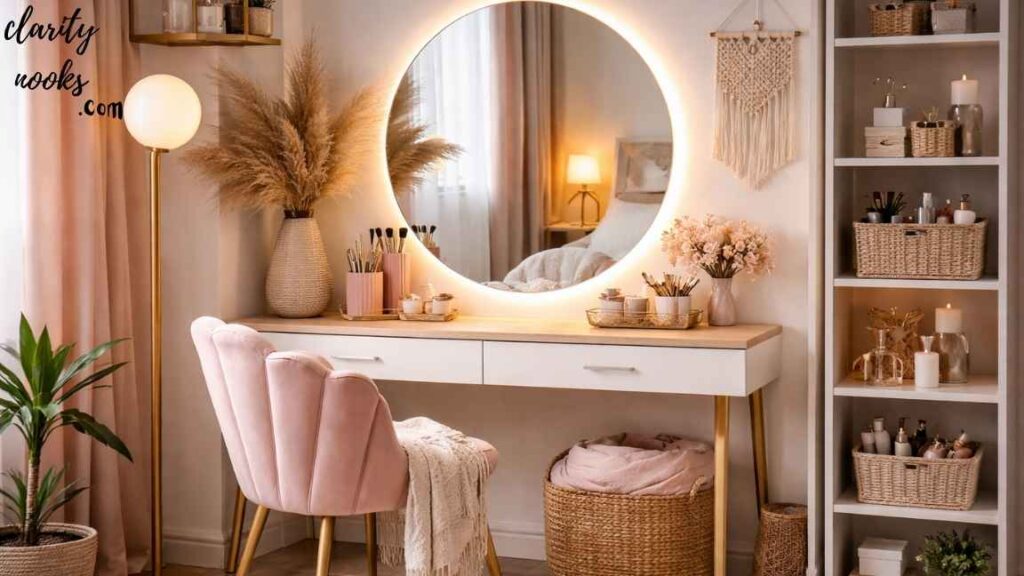
Whether you’re working with a tiny flat, a rental room you can’t drill into, or a generous master bedroom awaiting a centrepiece, there’s a DIY solution here for you. This guide covers six detailed, original ideas each with practical steps, real-world scenarios, and the kind of insight you won’t find in a typical listicle.
Featured Snippet Answer
A DIY dressing table is a handmade or repurposed vanity area built to suit your space and budget. It typically combines a flat surface (desk, shelf, or console), a mirror, adequate lighting, and storage all customised to your needs without buying a purpose-built unit.
Floating Shelf Vanity
Perfect for Small Bedrooms
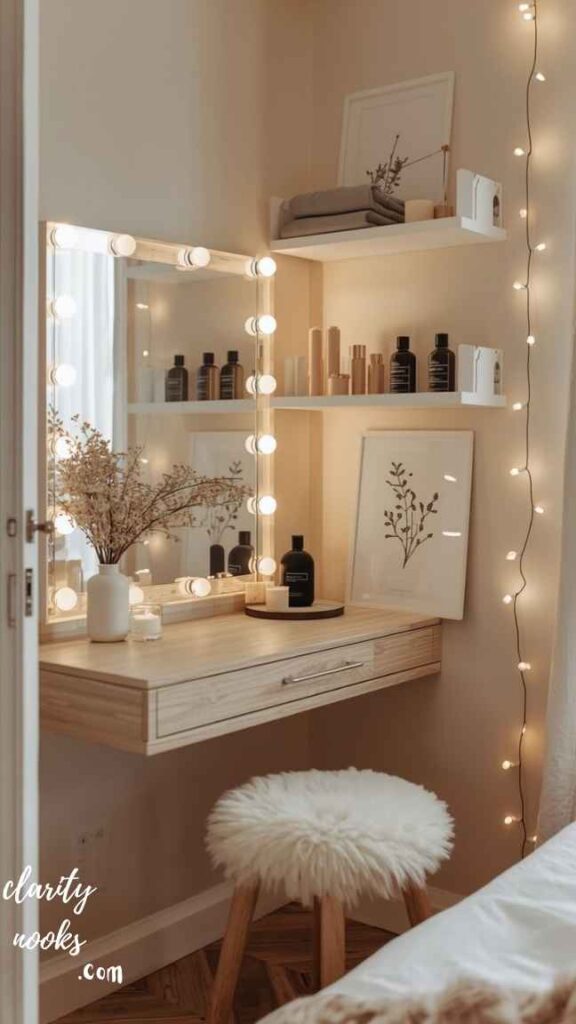
If floor space is a luxury you don’t have, a wall-mounted floating shelf transforms any blank wall into a sleek dressing station. A 90–120cm wide shelf at seated height (roughly 70–75cm from the floor) gives you enough surface for essentials without dominating the room.
Mount two floating shelves one at desk height for your workspace and one above it for mirror placement and product storage. Use concealed cable management clips if you’re adding a Hollywood-style LED mirror. Add shallow IKEA LACK or custom-cut MDF shelves in white or natural oak to match your existing décor.
Real-Life Scenario
Priya, a reader in a London studio flat, installed a 100cm oak-effect floating shelf with a wall-mounted LED mirror above. Total cost: £42. She gained a full vanity station without losing a single square foot of walking space.
This option is especially suited for renters when using heavy-duty picture-rail hooks or tension systems that avoid permanent wall damage. However, always check your wall type before drilling hollow stud walls require appropriate fixings.
Must Read: DIY Library Room Ideas: Modern, Aesthetic & Functional Home Library Designs
Repurposed Desk Vanity
Upcycling at Its Best
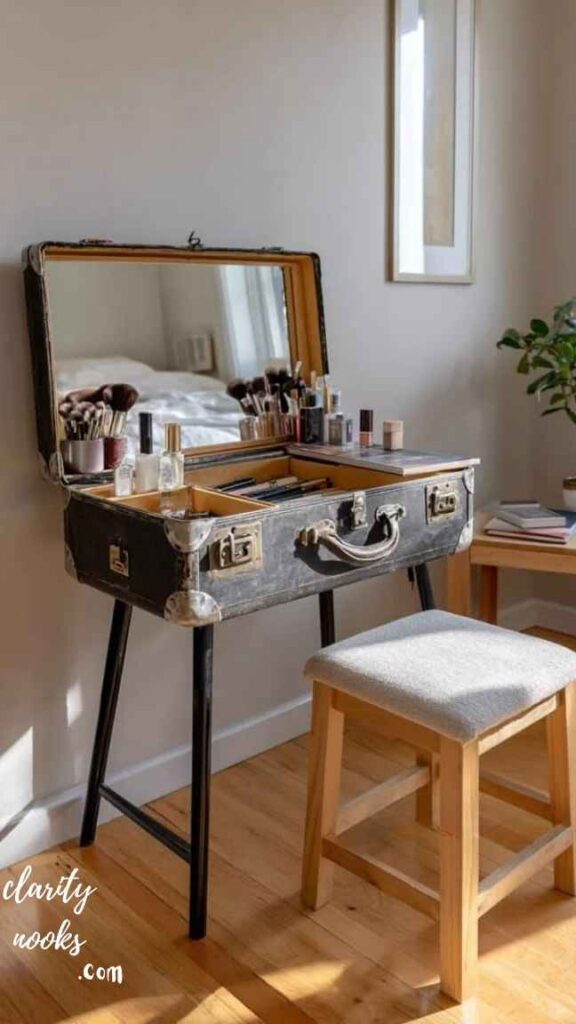
An old writing desk, side table, or even a solid-wood dining chair tray can become a stunning dressing table with minimal effort. The key is choosing a piece with the right height and surface stability. Standard desk height (72–76cm) works perfectly for seated use with a vanity stool.
Sand down the surface, apply a chalk paint in your chosen finish, and add new hardware drawer pulls and knobs are inexpensive game-changers. A round frameless mirror or a vintage ornate mirror leaned against the wall above it completes the look without committing to wall holes.
Mini Case Study
Amara sourced a battered IKEA MICKE desk from Facebook Marketplace for £10. After chalk-painting it dusty rose, replacing handles with gold pulls (£8 for a set), and adding a £22 arched mirror, she had a Pinterest-worthy vanity for £40 total.
For added character, decoupage the inside of drawers with vintage wallpaper or lining paper. It’s an unexpected detail that elevates the piece from “repurposed” to “intentional interior design.”
Also Read: DIY Flower Garden Ideas That Bring Natural Beauty to Any Home
IKEA Hack Vanity
Budget-Smart and Endlessly Customisable
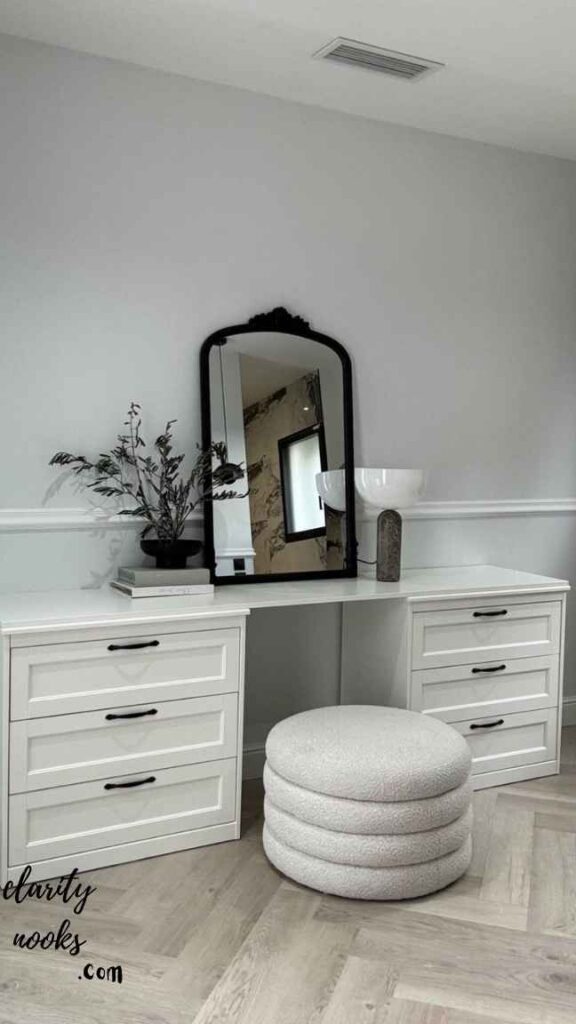
IKEA hacking remains one of the most powerful tools in the DIY decorator’s arsenal. The MALM dresser, ALEX drawers, and HEMNES console table are all top candidates. The ALEX 9-drawer unit is a particular favourite its shallow drawers are ideal for makeup, brushes, and accessories, and its dimensions suit a paired vanity setup beautifully.
Combine two ALEX units side by side with a custom-cut tabletop (MDF, plywood, or a length of butcher block timber) resting across them. This gives you an expansive surface, generous storage, and a completely bespoke look. Finish the tabletop with Rubio Monocoat or a water-based varnish for durability.
For the mirror, consider an IKEA HOVET (aluminium-framed) mounted directly above, or a cluster of three mismatched vintage mirrors arranged gallery-style. Pair with FRÖJER LED strip lights or JANSJÖ clip lights for practical, adjustable illumination.
Don’t Skip: DIY BBQ Patio Ideas That Turn Your Backyard Into a Party Spot
Vanity Nook
Turning Awkward Spaces Into Assets
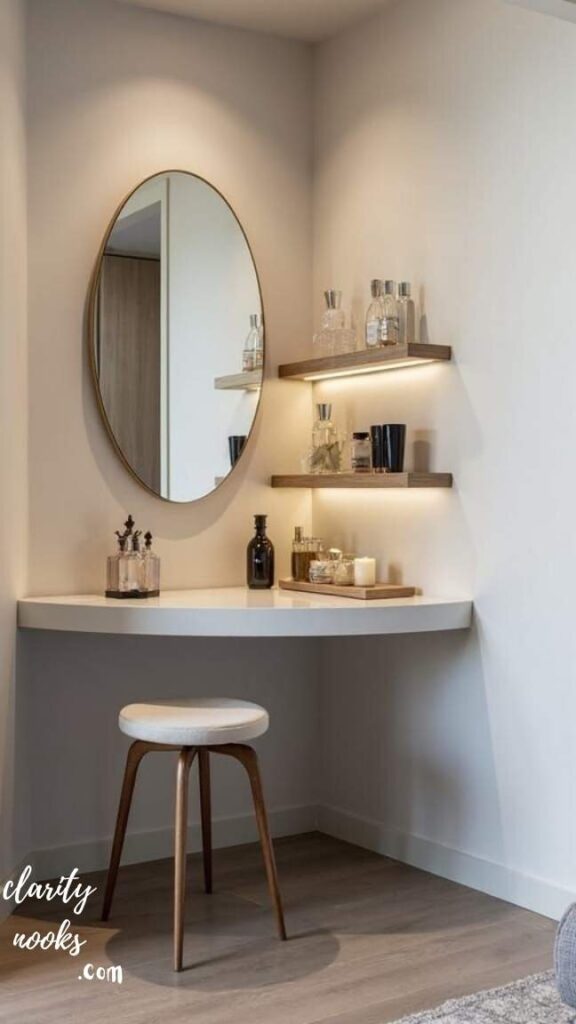
That awkward alcove beside your wardrobe, the recessed wall between two built-ins, or the under-stair nook these dead zones are prime vanity real estate. Building a fitted vanity into an alcove instantly looks architectural rather than added-on, giving your room a polished, custom feel at a fraction of bespoke joinery costs.
Use pre-primed MDF or birch plywood to build simple side panels, a desktop, and an overhead shelf. Most alcoves need only a back panel, two side returns, and a desktop no complex joinery required. Paint everything the same colour as the surrounding walls to create a seamless, built-in effect that significantly increases perceived space.
Real-Life Scenario
In a 2023 home renovation project documented on Instagram (@ourterracedhouse), a couple converted a 60cm-wide chimney breast alcove into a full dressing table with overhead shelving, integrated LED lighting, and two base drawers. Material cost: £95. Equivalent bespoke carpenter quote: £850.
Hollywood Glamour Vanity
Go Bold, Go Bright
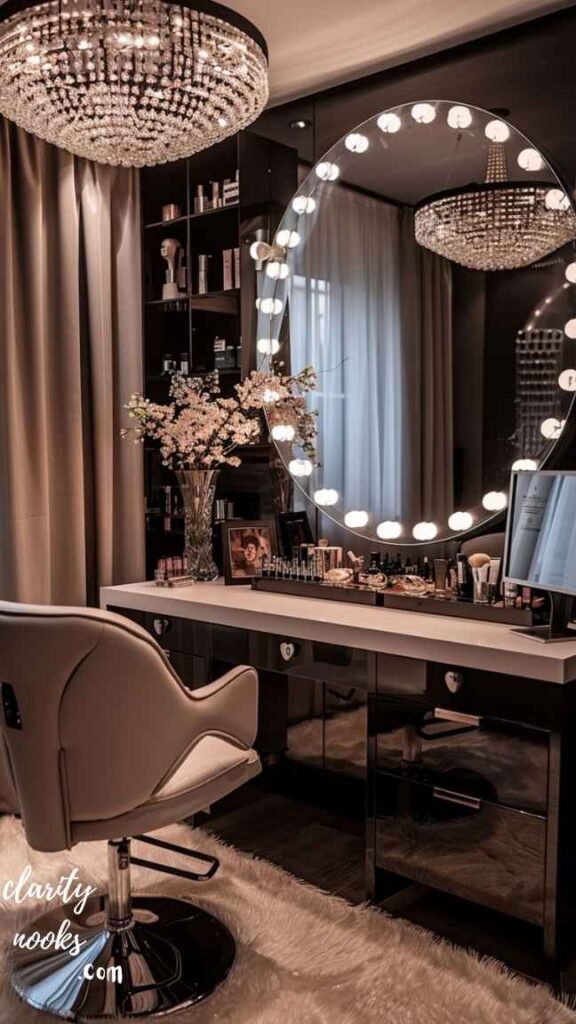
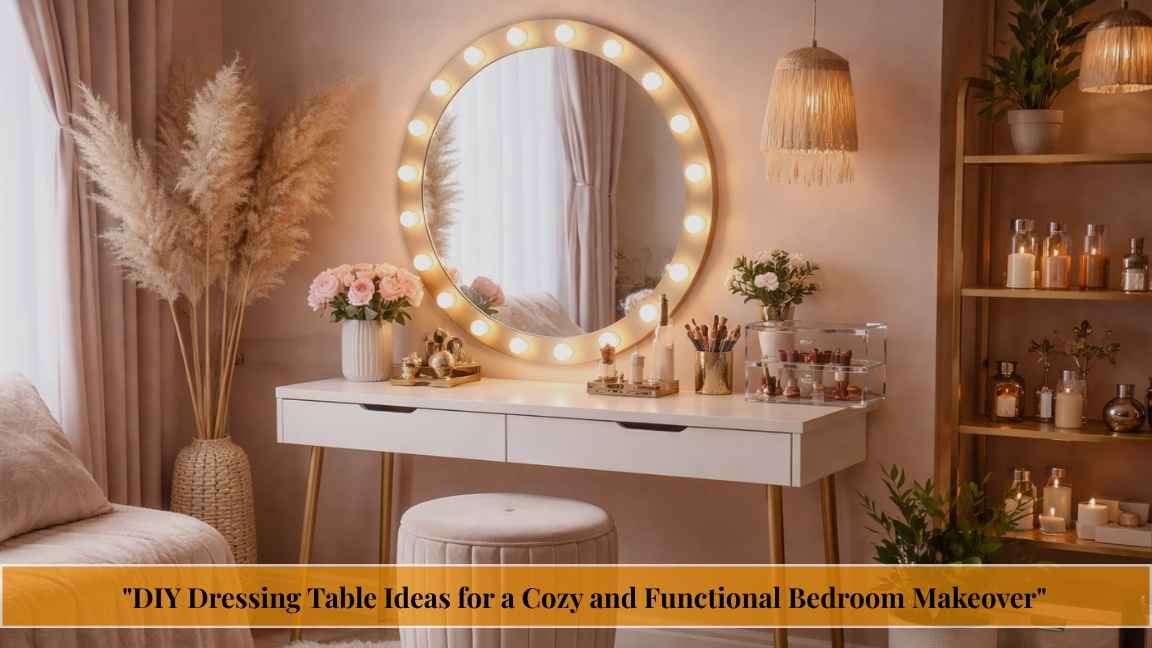
If your aesthetic leans maximalist, a Hollywood-style vanity with a lit mirror and theatrical presence could be your bedroom’s statement piece. The good news: you don’t need a celebrity budget. LED vanity mirrors with adjustable colour temperature (warm to daylight) are available from £35–£85 and produce genuinely useful, flattering light for makeup application.
Pair your lit mirror with a white lacquer or deep jewel-toned surface navy, forest green, or deep burgundy all work beautifully. Velvet upholstered stools in a complementary or contrasting shade complete the look. Add a small tray for perfumes, a ring light clip for content creation, and tiered acrylic organisers for maximum visual drama with practical order.
Crucially, think about light placement. Light from above creates shadows on the face. A mirror with lights on all four sides or side-mounted sconces at face level gives the most even, professional illumination. This is the detail most DIY vanity guides miss entirely.
Read More: Budget-Friendly DIY Media Wall Ideas to Upgrade Your Space
Minimalist Japandi Vanity
Calm, Clean, Intentional
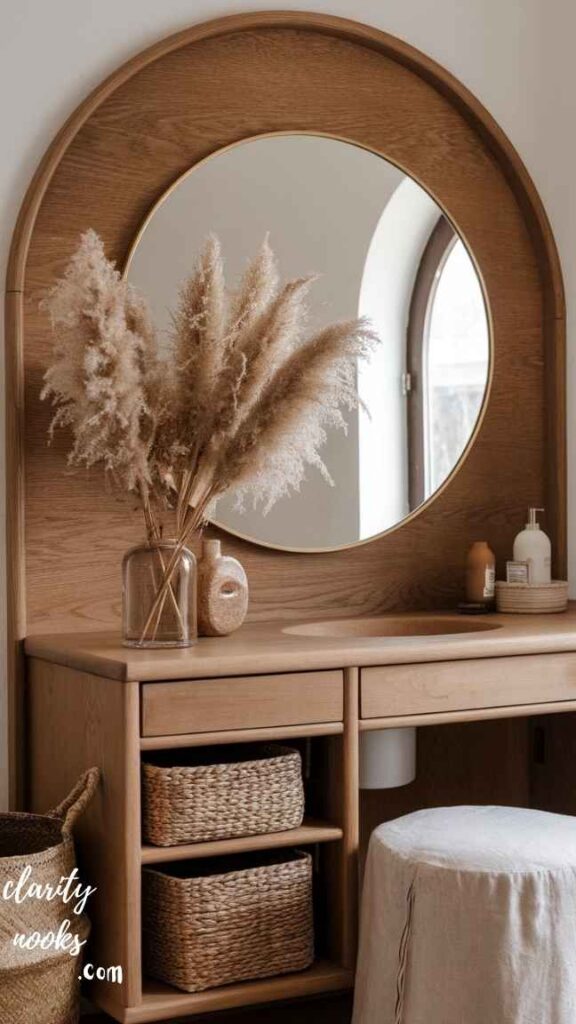
The Japandi aesthetic (a blend of Japanese minimalism and Scandinavian hygge) has influenced interior design profoundly since 2022 and it translates beautifully into dressing table design. The philosophy: every item earns its place. Nothing exists purely for decoration. Materials are natural, honest, and warm.
Use a simple bamboo or pale ash surface with clean lines. A round wooden-framed mirror or a simple rectangular frameless mirror works best. Limit your surface items to three: a small ceramic tray, one statement item (a plant, a candle), and your daily essentials only. Store everything else below or inside. Add a low rattan basket for products you use daily but don’t want on display.
Lighting should be warm (2700K–3000K) and indirect a small table lamp beside the mirror rather than overhead LEDs. This approach feels significantly more considered than a busy Hollywood setup, and it suits shared bedrooms where visual noise is a real source of stress.
Conclusion:
DIY Dressing Table Ideas can change your bedroom without spending much money. You can use simple materials like wood, old tables, or wall shelves. These ideas help you create a neat and stylish space for daily use. Even small rooms can look organized and beautiful with smart design choices.
Overall, DIY Dressing Table Ideas make it easy to improve your home style while staying on budget. You can customize colors, mirrors, and storage based on your needs. These ideas are perfect for beginners and bring comfort, beauty, and function together in one simple setup for a modern bedroom look everyday.
Trend Analysis
Trend Analysis: Where DIY Dressing Tables Are Heading (2026–2029)
2026
Integrated tech vanities are rising fast. Built-in wireless charging pads, USB-C outlets, and smart mirrors with auto-adjusting light temperature are moving from luxury to mainstream DIY.
2026–27
Sustainable upcycling is shifting from niche to norm. Reclaimed timber, vintage mirror frames, and secondhand furniture flips are being prioritised over flat-pack purchases driven by both cost and environmental awareness.
2027
Content-creator vanities are influencing domestic design. More people are building their dressing tables with dual-function in mind getting ready AND recording short-form video content at the same station.
2028–29
AI-assisted interior planning tools will allow homeowners to visualise custom vanity builds using room dimensions and style preferences before buying a single item of material. This reduces waste and increases build confidence.
Expert Practical Tips
Measure seated, not standing
Always test your vanity height while sitting. Standard desk height (72cm) suits most people, but shorter individuals may prefer 68cm for comfort.
Light from the sides
Overhead lighting creates unflattering shadows. Position light sources at face level on both sides of the mirror for the most accurate, flattering result
Use zones, not piles
Divide your surface into three zones: daily use, occasional use, and display. Only zone one stays on the surface. Everything else lives in drawers or containers.
Mirror size matters
Your mirror should be at minimum 45cm wide and 60cm tall for practical use. Anything smaller becomes decorative rather than functional for makeup or hair.
Cable management first
Plan your cable routing before attaching the surface. Drilling a cable hole through the desktop after the fact is awkward and risks damage to finished surfaces.
Hardware transforms everything
Replace standard IKEA or flatpack hardware with quality pulls or knobs before painting. It takes 20 minutes and immediately elevates the piece by 10 years of design quality.
Long-Term Strategy & Sustainability
The most durable DIY dressing table strategy isn’t about choosing the most expensive materials it’s about building for adaptability. Your needs, your space, and your style will evolve. A well-built floating shelf can be repainted and rehardwared multiple times. A solid-wood desktop can outlast three sets of drawer units beneath it.
Invest in quality where it counts: the surface material, the mirror, and the lighting. These three elements are what you interact with daily and what determine whether the vanity feels premium or cheap. Save on the structural elements basic MDF box frames, simple carcasses, and standard fixings where quality differences are invisible once painted.
From a sustainability perspective, choosing secondhand or salvaged furniture as a base is consistently the most environmentally responsible option. A solid-wood piece from a charity shop has already absorbed its production carbon. Repainting and repurposing it adds zero new material to the supply chain.
Future Predictions & Innovations
Smart mirror technology will become a significant force in DIY vanity design within the next three years. Current DIY-accessible options include LED mirrors with Bluetooth speakers, auto-dimming sensors, and app-controlled colour temperature adjustment all available under £100 as of 2026. By 2028, expect AI-integrated mirrors capable of analysing lighting conditions and skin tone to recommend adjustments in real time.
3D printing is quietly becoming relevant here too. Custom drawer pulls, tiered organisers, brush holders, and decorative mirror frames are already being printed at home and shared via Etsy and Printables.com. This opens up a new dimension of personalisation that flatpack products simply cannot compete with.
Common Mistakes & Hidden Gaps
- Ignoring lighting entirely: Most beginner DIY vanities rely on the room’s existing overhead light. This is almost always inadequate. Budget at minimum £25–£40 for dedicated vanity lighting.
- Building too large for the space: A generously sized vanity that blocks a door swing or crowds a bed creates daily frustration. Measure the room with furniture in place before committing to dimensions.
- Skipping the primer: Painting MDF or raw wood without primer causes uneven finish, raised grain, and paint peeling within months. Always prime first it adds 30 minutes and saves hours of frustration later.
- Underestimating storage needs: Most people underestimate how many products they own. Before building, do a full product edit and count what you actually need to store. Then build 20% more storage than you think you need.
- Choosing an unstable mirror: A leaned mirror looks casual and elegant until it falls at 7am. Use proper wall fixings or ensure the mirror base is wide enough and the lean angle shallow enough to be genuinely stable.
- Forgetting the stool: The seating is half of the experience. An uncomfortable, wrong-height stool undermines even the most beautiful vanity build. Test height before purchasing or building.
FAQ’s DIY Dressing Table Ideas
What is the ideal height for a DIY dressing table?
The standard height is 70–76cm similar to a writing desk. The ideal height depends on your seated eye level. Sit in your planned stool and ensure your reflection is centered in the mirror at natural sitting posture.
How much does a DIY dressing table typically cost?
Most DIY dressing tables cost between £40–£150, depending on whether you upcycle an existing piece or buy new materials. Using secondhand furniture as a base is the single biggest cost-saving factor.
Can I make a dressing table without drilling into walls?
Yes. Freestanding desks, dresser-top mirror stands, and tension-rod shelving systems all allow you to create a vanity space without any wall fixings ideal for renters.
What kind of mirror is best for a dressing table?
A mirror at least 45cm wide and 60cm tall works best. Wall-mounted options save surface space; freestanding mirrors add flexibility. LED-backlit or side-lit mirrors give the most accurate light for makeup application.
Rameen Zara is the founder of Clarity Nooks, bringing over five years of experience in home décor and interior styling. She shares simple yet practical design ideas that suit real homes and everyday living. Her approach focuses on cozy aesthetics, soft color palettes, and natural textures that create warm, inviting spaces.