DIY Canopy Bed Ideas: Budget-Friendly Ways to Build a Dreamy Bedroom Retreat

A practical, cost-broken-down guide to building your own canopy bed no carpentry degree required. A plain bed frame can leave even a well-decorated bedroom feeling unfinished. A canopy bed solves that instantly it adds height, softness, and a sense of enclosure that makes a room feel intentional rather than half-furnished.
The problem is that retail canopy beds often cost $800 to $3,000, which puts them out of reach for many renters and first-home buyers. The good news: a DIY canopy bed using PVC pipe, copper, wood, or curtain rods can achieve the same look for $40 to $250.
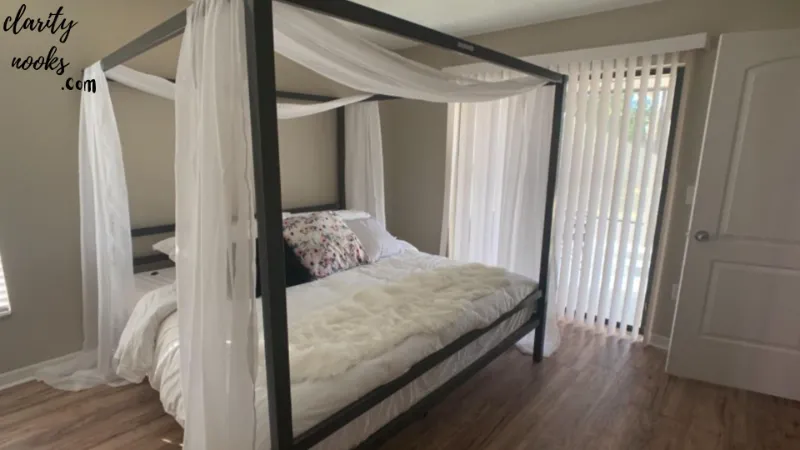
This guide covers 10 tested canopy bed ideas, each with materials, real cost estimates, step-by-step builds, and styling tips. Whether you rent, own, or just want a weekend project, there’s a version here that fits your skill level and budget.
Quick Answer:
What Is a DIY Canopy Bed?
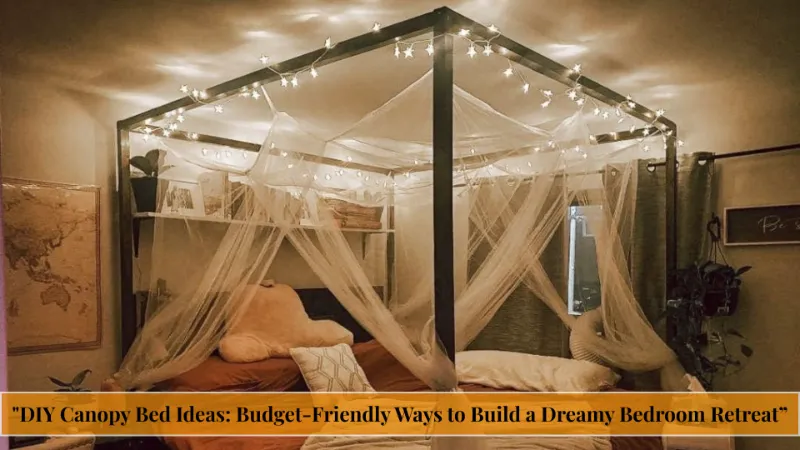
A DIY canopy bed is a bed frame topped with a freestanding or ceiling-mounted frame typically PVC, wood, metal conduit, or curtain rods that supports draped fabric. Most builds take 2 to 6 hours and cost between $40 and $250, depending on materials and bed size.
PVC Pipe Four-Poster Canopy
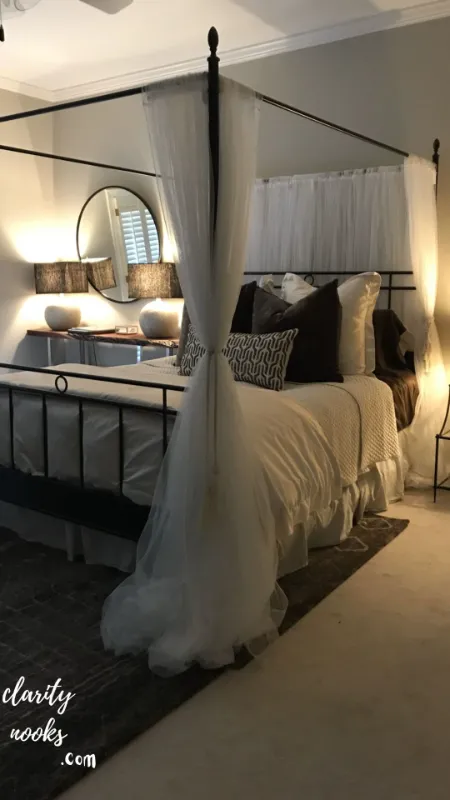
The PVC pipe canopy is the most popular entry point for beginners because PVC is cheap, lightweight, and cuts cleanly with a hand saw. You build a freestanding rectangular frame that sits around the mattress, no ceiling drilling required.
Spray-paint the PVC in matte black, white, or brass-tone before assembly this single step is what separates a DIY canopy bed from looking like plumbing supplies. Use connector elbows at the corners and T-joints if you want a top crossbar for hanging string lights.
| Materials | 1.5″ PVC pipe (4 vertical posts, 4 base rails), 4 corner elbows, spray paint, sheer curtain panels |
| Estimated Cost | $45–$70 |
| Time Needed | 3–4 hours |
| Skill Level | Beginner |
| Benefit | Fully freestanding ideal for renters; no wall or ceiling damage |
| Decorating Tip | Wrap posts in faux ivy or fairy lights before draping fabric for a layered, finished look |
Must-Read Articles: Modern DIY Bedroom Curtain Ideas for a Beautiful Home Interior Look
Copper Pipe Minimalist Frame
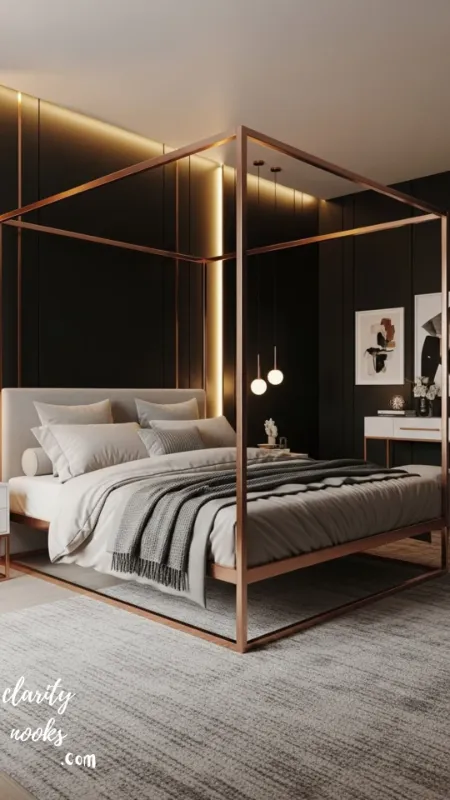
For a more polished, boutique-hotel feel, swap PVC for copper pipe. Copper has a natural warm finish that needs no paint, and the rigid joints create crisp, architectural lines that suit modern and mid-century bedrooms.
This build uses the same four-post structure as the PVC version but skips the painting step entirely. Copper costs more per foot, so this idea suits people who want a refined look without committing to custom furniture.
| Materials | 3/4″ copper pipe and fittings, pipe cutter, linen drape panels |
| Estimated Cost | $90–$160 |
| Time Needed | 3–5 hours |
| Skill Level | Beginner to Intermediate |
| Benefit | No paint or finishing needed; ages beautifully with a natural patina |
| Decorating Tip | Pair with linen or muslin fabric heavier cottons can overwhelm copper’s slim profile |
Keep Exploring: Creative DIY Beach Bedroom Ideas for a Cozy Nautical Style Bedroom
Ceiling-Mounted Embroidery Hoop Canopy
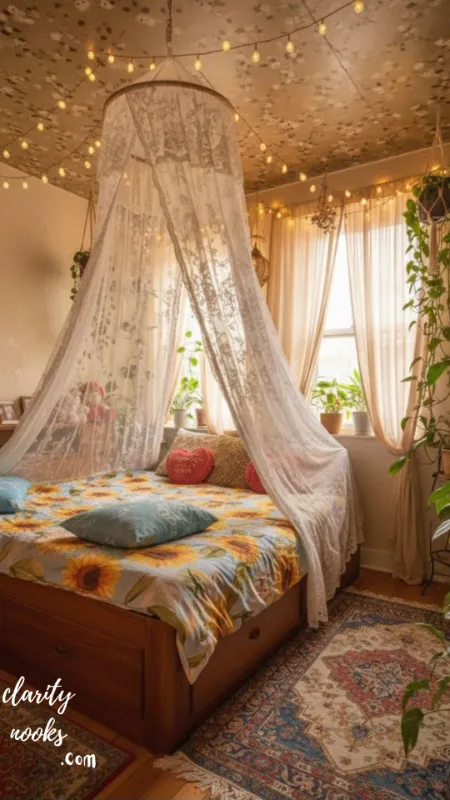
If floor space is tight, an embroidery hoop canopy mounts a single wooden or metal hoop to the ceiling above the headboard, with fabric cascading down around the pillows. It reads as romantic and airy rather than enclosed.
This is the fastest project on this list most people finish it in under an hour. It works especially well in small bedrooms or nurseries where a full four-poster frame would feel oversized.
| Materials | 18″–24″ wooden embroidery hoop, ceiling hook, lightweight voile or tulle fabric |
| Estimated Cost | $25–$45 |
| Time Needed | 45–60 minutes |
| Skill Level | Beginner |
| Benefit | Smallest footprint of any canopy style; great for kids’ rooms or studio apartments |
| Decorating Tip | Gather fabric with a fabric clip or ribbon at the hoop for a deliberate, draped silhouette rather than a flat curtain |
Related Reads: Simple DIY Bedroom Interior Ideas for a Stylish and Relaxing Bedroom Makeover
Reclaimed Wood Four-Poster
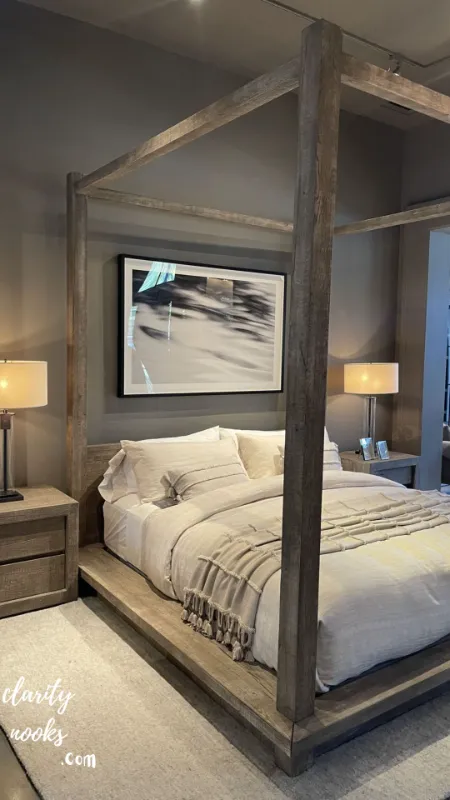
For homeowners who want permanence, a reclaimed wood canopy frame built from 2×2 or 2×3 lumber delivers a substantial, furniture-grade result. This is the most labor-intensive build here, but it’s also the one most likely to outlast every other piece of furniture in the room.
Pocket-hole joinery makes this approachable even without advanced woodworking skills a $40 pocket-hole jig replaces the need for mortise-and-tenon joints. Stain or whitewash the wood to match existing furniture.
| Materials | 2×2 or 2×3 lumber (8 ft posts, cross rails), pocket-hole jig, wood screws, stain/sealant |
| Estimated Cost | $120–$220 |
| Time Needed | 1–2 weekends |
| Skill Level | Intermediate |
| Benefit | Most durable and resale-friendly option; bolts directly to the bed frame for stability |
| Decorating Tip | Leave the top open and string warm LED lights along the cross rail instead of full drapery for a less heavy look |
Start learning now: DIY Bedroom Decor Ideas That Actually Transform Your Space
Curtain Rod Corner Canopy
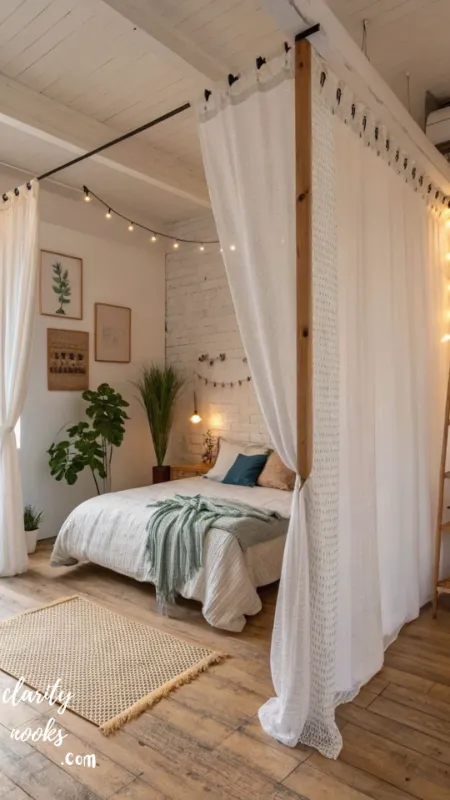
This is the lowest-commitment option on the list. Two L-bracket curtain rods are mounted to the wall behind the headboard at an angle, and fabric is draped from each rod down to the bed corners no frame at all.
Because it uses standard curtain hardware, it can be removed in minutes if you move out, making it one of the better choices for renters who still need wall-mount permission.
| Materials | 2 adjustable L-shaped curtain rods, wall anchors, 2 curtain panels |
| Estimated Cost | $40–$65 |
| Time Needed | 1 hour |
| Skill Level | Beginner |
| Benefit | Removable in minutes; works in rooms with low ceilings where a full frame won’t fit |
| Decorating Tip | Cross the fabric panels at the headboard before draping outward for a four-poster illusion using only two rods |
Don’t miss this guide: DIY Dressing Table Ideas for a Cozy and Functional Bedroom Makeover
Metal Conduit Industrial Canopy
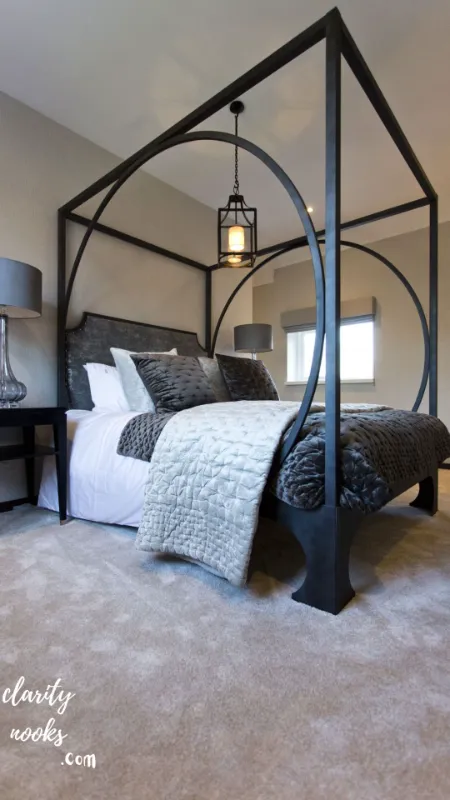
Electrical conduit pipe (EMT) is sturdier than PVC and gives a clean black industrial finish straight off the shelf, no paint needed in most cases. It’s a favorite for modern farmhouse and loft-style bedrooms.
Conduit requires a pipe cutter and either flange fittings or welded corners, so it sits one notch above PVC in difficulty. The payoff is a frame that feels noticeably more substantial and less likely to wobble.
| Materials | 1″ EMT conduit, flange connectors, base plates, canvas or linen drape |
| Estimated Cost | $75–$130 |
| Time Needed | 3–4 hours |
| Skill Level | Intermediate |
| Benefit | Sturdier than PVC; holds heavier fabrics like canvas without sagging |
| Decorating Tip | Skip fabric on two sides and leave it open-frame for an industrial loft look that still reads as a canopy |
Read our expert tips: DIY Under Stairs Storage Ideas: Smart Ways to Reclaim Hidden Space
Bamboo Pole Coastal Canopy
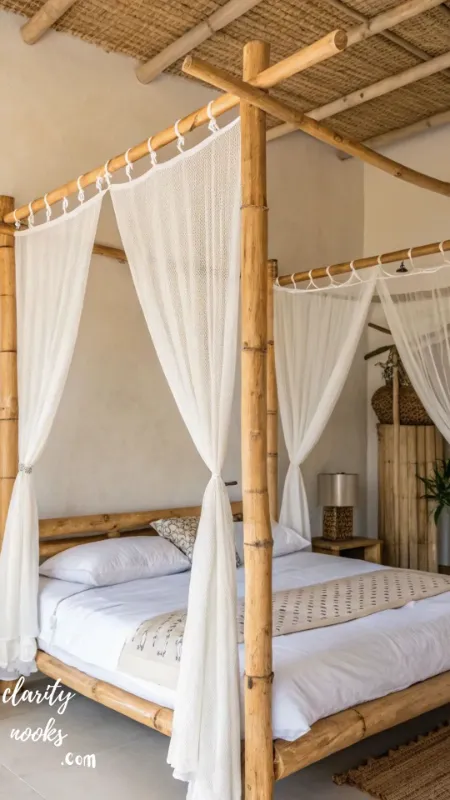
Bamboo poles, lashed at the corners with rope or jute twine, create a relaxed, coastal-leaning canopy frame that pairs naturally with linen, rattan, and woven decor. It’s also one of the lightest structures, easy for one person to assemble.
Because bamboo joints rely on lashing rather than hardware, this build has the most forgiving margin for error uneven cuts are hidden by the rope wrap rather than exposed.
| Materials | 4 bamboo poles (6–7 ft), jute rope or twine, sheer cotton fabric |
| Estimated Cost | $50–$85 |
| Time Needed | 2–3 hours |
| Skill Level | Beginner |
| Benefit | Lightweight and easy to disassemble for moving or seasonal storage |
| Decorating Tip | Use macrame tiebacks instead of plain ribbon to reinforce the coastal/boho aesthetic |
Learn more here: DIY Yoga Room Ideas: Transform Any Space Into Your Perfect Home Sanctuary
Hula Hoop Double-Ring Floating Canopy
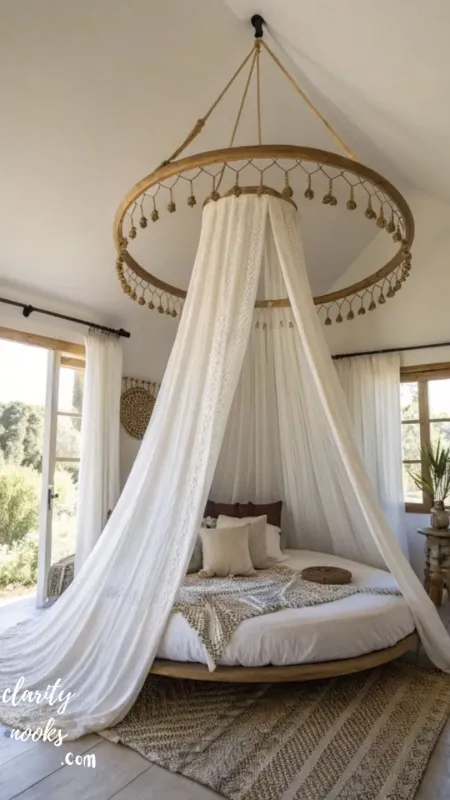
Two stacked hula hoops, wrapped in fabric or rope and suspended from the ceiling at different heights, create a layered, floating canopy effect that costs almost nothing. It’s one of the cheapest builds on this list by a wide margin.
This works particularly well over a bed positioned away from the wall, since the canopy doesn’t depend on a headboard for support. Use ceiling hooks rated for at least 10 lbs to keep the hoops level.
| Materials | 2 hula hoops (different diameters), fabric or rope wrap, 2 ceiling hooks, voile fabric |
| Estimated Cost | $20–$35 |
| Time Needed | 1–1.5 hours |
| Skill Level | Beginner |
| Benefit | Lowest cost option here; ideal for college dorms or temporary spaces |
| Decorating Tip | Stagger the hoop heights by 8–10 inches so the fabric pools naturally instead of hanging flat |
Wall-Mounted Half-Canopy with Shelf
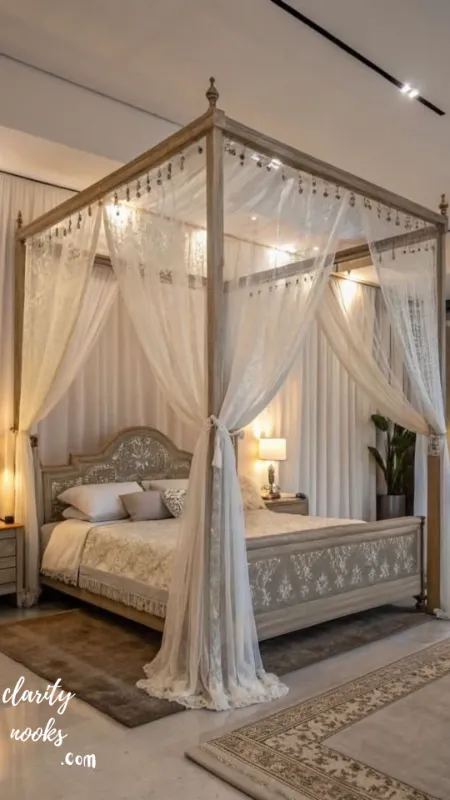
This idea combines function and style: a half-moon or rectangular wood frame is mounted above the headboard with a small built-in ledge, doubling as a place for books or a reading light, while fabric drapes down both sides.
It’s a strong option for small bedrooms where a full canopy frame would compete with limited floor space, since all the visual weight stays on the wall rather than around the bed.
| Materials | 1×6 wood board, wall brackets, curtain rod, 2 fabric panels |
| Estimated Cost | $60–$100 |
| Time Needed | 2–3 hours |
| Skill Level | Intermediate (requires wall mounting into studs) |
| Benefit | Adds storage/display function in addition to the canopy look |
| Decorating Tip | Style the shelf asymmetrically with a small lamp and one or two books rather than centering everything |
Convertible Tension Rod Canopy (No Drilling)
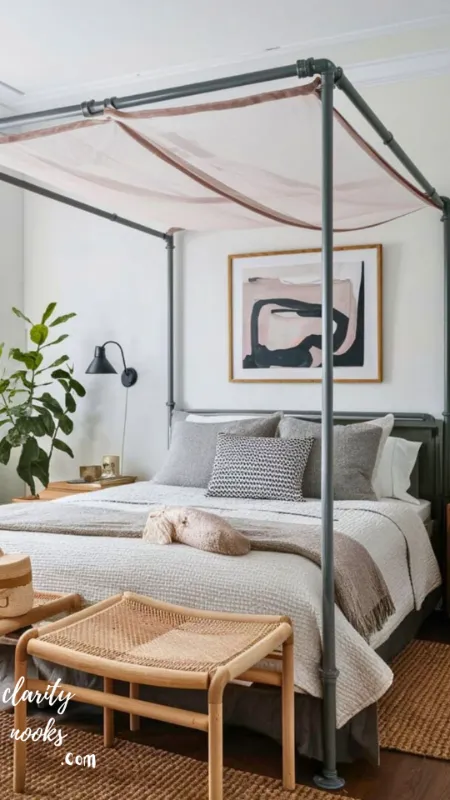
Spring-loaded tension rods, the kind used for closet organizing, can be mounted between two walls or inside a four-poster bed frame’s existing posts without a single screw. It’s the most apartment-friendly build on this list.
This works only if your bedroom has two facing walls close enough to the bed, or an existing frame with posts. Test the tension rod’s weight rating before adding heavier fabrics like cotton duck.
| Materials | 1–2 adjustable tension rods, lightweight curtain panels, curtain rings |
| Estimated Cost | $30–$55 |
| Time Needed | 30–45 minutes |
| Skill Level | Beginner |
| Benefit | Zero permanent damage; fully reversible for strict no-drilling leases |
| Decorating Tip | Use lightweight voile only heavier fabric can cause tension rods to slip over time |
Final Thoughts
A DIY canopy bed is one of the few bedroom upgrades that delivers a dramatic visual change for under $150 in most cases. Whether you choose freestanding PVC, a ceiling-mounted hoop, or a wood-built four-poster, the right fabric and finish make the difference between looking expensive and looking unfinished. Pick the build that matches your skill level and lease terms, and start with the simplest version you can always upgrade fabric or frame later.
Real-World Example: A $95 Studio Apartment Canopy
One reader in a 400-square-foot studio combined idea #8 (hula hoop floating canopy) with idea #10 (tension rod side panels) to avoid drilling into rental walls entirely. Total spend: $95, including fabric and ceiling hooks rated for renters.
The result photographed well enough to be reused across three apartment moves, since both components disassemble in under 15 minutes proof that a DIY canopy bed doesn’t require permanence to look intentional.
Canopy Bed Trends: 2026 and Beyond
In 2026, the dominant shift is away from heavy, fully-enclosed drapery toward open-frame canopy beds that show more wood or metal structure than fabric. This mirrors a broader move toward textural minimalism in bedroom design rather than maximalist layering.
Search behavior backs this up: queries for “no-drill canopy bed” and “renter-friendly canopy bed” have grown steadily, reflecting how many shoppers are apartment dwellers rather than homeowners. Expect this renter-first framing to keep shaping product and tutorial demand through 2028.
Over the next two to three years, expect more hybrid builds canopy frames doubling as shelving, lighting mounts, or even hanging plant supports as people look to justify the structure beyond pure aesthetics in smaller homes.
Expert Insights: What Actually Makes a Canopy Bed Look Expensive
Fabric weight matters more than fabric cost. A lightweight voile or linen drapes in soft folds, while stiff polyester holds awkward angles no matter how the frame is built. If your budget is tight, spend more on fabric and less on hardware.
Paint or finish the frame before assembly, not after. Raw PVC or unfinished wood is the single biggest giveaway of a budget build a $6 can of matte spray paint changes the entire perceived cost of the project.
Mount fabric higher than feels necessary. Most beginners hang drapes level with the mattress top, which crowds the bed visually. Hanging fabric 6–8 inches above the headboard line creates the illusion of higher ceilings.
Long-Term Strategy: Building a Canopy That Grows With the Room
Choose a frame material that can be repainted or refinished rather than one that’s locked into a single color, since bedroom palettes typically change every 3–5 years. Wood and metal conduit both repaint easily; PVC can be repainted but shows wear faster.
Build the frame slightly larger than your current mattress if you anticipate upgrading from a queen to a king. Rebuilding a canopy frame after a mattress upgrade is one of the most common and avoidable redo projects.
Treat fabric as the seasonal layer and the frame as the permanent layer. Swapping drapes from sheer summer linen to a heavier winter cotton is far cheaper than rebuilding the whole structure twice a year.
Future Predictions: Where Canopy Bed Design Is Headed
Expect AI-assisted room planning tools to play a bigger role in canopy bed projects, letting people preview fabric color and drape height against a photo of their actual bedroom before buying materials reducing the trial-and-error currently baked into most builds.
Modular, tool-free connector systems (similar to furniture-grade PVC fittings) are likely to replace glue and screws in budget builds, making canopy frames as easy to assemble and disassemble as flat-pack furniture.
Smart lighting integration LED strips embedded directly into frame channels rather than wrapped externally is likely to move from niche DIY forums into mainstream tutorials within the next two years.
Common Mistakes and Hidden Gaps Most Guides Skip
- Skipping a weight test on ceiling hooks before fully draping fabric a hoop or rod can hold its own weight but fail once wet-look or blackout fabric is added.
- Using fabric that’s too short, which pools awkwardly on the floor instead of pooling intentionally; always buy at least 6 inches more length than the measured drop.
- Ignoring ceiling height ratios a four-poster frame in a room under 8 feet tall can visually shrink the space instead of elevating it; half-canopy or hoop styles work better in low-ceiling rooms.
- Ignoring weight limits on rental-safe hooks (most adhesive hooks max out at 5–7 lbs), which is the most common reason DIY ceiling canopies fail within the first month.
- Forgetting fire-safety distance from any nearby lighting or outlets when draping fabric, especially with string lights woven into the frame.
Frequently Asked Questions
How much does a DIY canopy bed cost?
Most DIY canopy bed builds cost between $25 and $220, depending on whether you use PVC, hula hoops, or solid wood, and how much fabric the design requires.
Can you build a canopy bed without drilling into the ceiling or wall?
Yes. Freestanding four-poster frames (PVC, copper, conduit, bamboo) and tension rod canopies require zero wall or ceiling penetration, making them the best choice for renters.
What fabric is best for a canopy bed?
Lightweight voile, linen, or muslin drape best and create the softest visual effect. Heavier fabrics like cotton duck work only on sturdier frames such as wood or conduit.
How tall should a canopy bed frame be?
Most builds use posts between 6 and 7 feet tall, which clears a queen or king mattress comfortably while leaving enough ceiling clearance in a standard 8-foot room.
Rameen Zara is the founder of Clarity Nooks, bringing over five years of experience in home décor and interior styling. She shares simple yet practical design ideas that suit real homes and everyday living. Her approach focuses on cozy aesthetics, soft color palettes, and natural textures that create warm, inviting spaces.