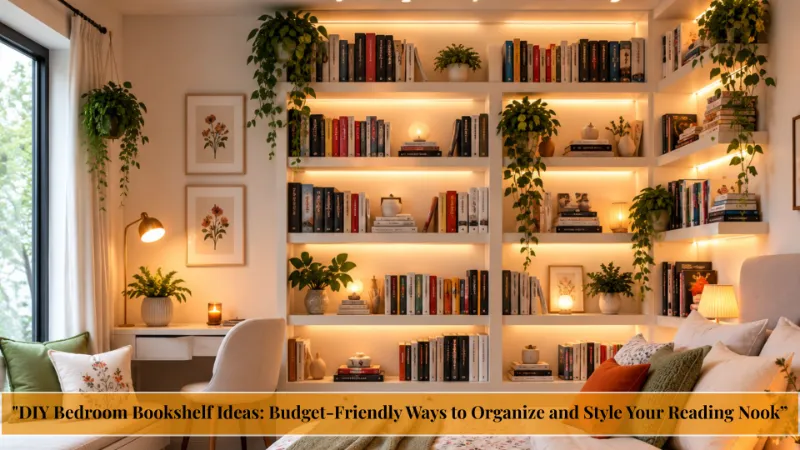
DIY Bedroom Bookshelf Ideas: Budget-Friendly Ways to Organize and Style Your Reading Nook

Books pile up fast, and a cramped bedroom leaves little room for a bulky bookcase. If your nightstand has become a leaning tower of paperbacks, you are not alone and you do not need expensive furniture to fix it.
This guide walks through DIY bedroom bookshelf ideas, each with materials, real costs, and step-by-step instructions. Whether you rent, own, or just want a weekend project, there is a build here that fits your space, skill level, and budget.
Each idea below includes the materials you will need, an estimated cost range, clear build steps, the core benefits, and a styling tip pulled from real builds not generic advice.
What Makes a Great DIY Bedroom Bookshelf?
A great DIY bedroom bookshelf balances three things: it fits the available space, it holds weight safely, and it matches the room’s existing style. The best designs also double as decor, displaying books alongside plants, photos, or small objects rather than treating storage as an afterthought.
Small-space bookshelf ideas in particular need to prioritize vertical space, corners, and multi-use furniture, since floor space in a bedroom is almost always at a premium compared to a living room or office.
Floating Ladder Bookshelf
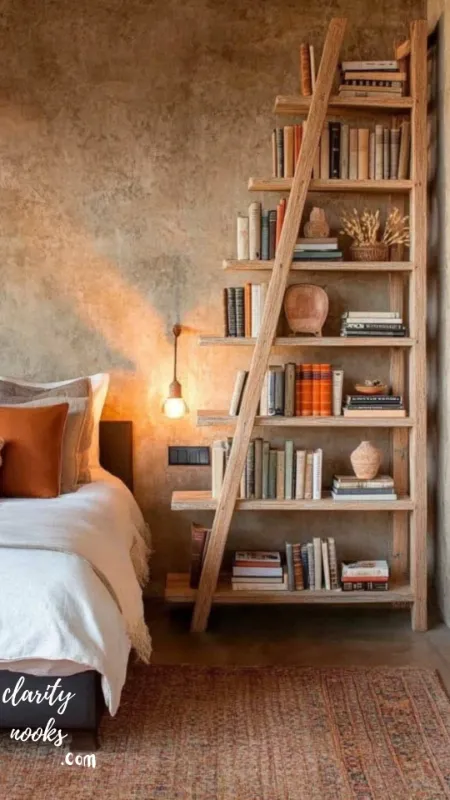
A DIY ladder bookshelf leans against the wall instead of mounting into it, making it perfect for renters who cannot drill. It adds a relaxed, cabin-style look while keeping books within easy reach of the bed.
Estimated Cost: $40–$70
Materials Needed:
- Wooden ladder (or 2 pine boards + dowels)
- 5 wood planks (12–16 inches deep)
- Wood stain or paint
- L-brackets (optional, for stability)
- Sandpaper and wood glue
Step-by-Step Instructions:
- Sand and stain the ladder frame to match your bedroom decor.
- Cut wood planks to fit the ladder’s width for each rung.
- Attach planks to the rungs using wood glue and small screws.
- Lean the finished ladder shelf against a sturdy wall and anchor the top with an L-bracket for safety.
This space-saving bookshelf idea works in tight bedrooms, adds vertical storage without permanent installation, and doubles as a display shelf for plants and framed photos between books.
Styling Tip
Alternate books horizontally and vertically on different rungs to create visual rhythm instead of a flat, uniform row.
Real-World Example
A reader in a 90-square-foot studio bedroom replaced a bulky bookcase with a ladder shelf and reclaimed nearly 3 square feet of floor space, enough to add a small reading chair.
Must-Read Articles: DIY Canopy Bed Ideas: Budget-Friendly Ways to Build a Dreamy Bedroom Retreat
Stacked Wooden Crate Bookshelf
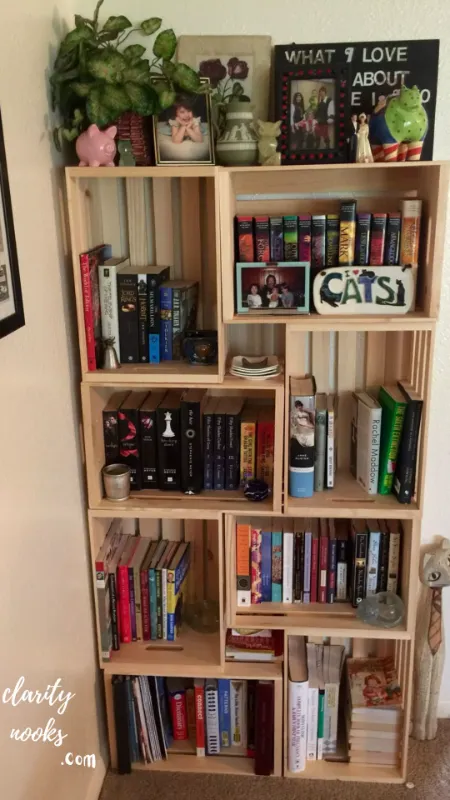
Wooden crate shelves are one of the most popular budget bedroom bookshelf ideas because crates are cheap, modular, and require almost no carpentry skill to assemble into a custom shape.
Estimated Cost: $25–$60
Materials Needed:
- 4–6 wooden crates (same size)
- Wood screws or L-brackets
- Sandpaper
- Paint, stain, or wallpaper liner
- Wall anchors for securing the stack
Step-by-Step Instructions:
- Sand rough edges on each crate to prevent snags on clothing or bedding.
- Arrange crates in a pyramid, grid, or offset pattern on the floor first to test the layout.
- Screw adjoining crates together from the inside for a seamless, unified structure.
- Secure the top crate to the wall with an anti-tip strap for child-safe bedroom storage.
Crate shelving is fully modular, so you can add or remove cubbies as your book collection grows, and each crate can be painted a different accent color for a playful, gallery-style look.
Styling Tip
Line the back of each crate with peel-and-stick wallpaper before assembly for a hidden pop of pattern that shows through the gaps.
Real-World Example
A college student built a 6-crate configuration for under $35 using crates sourced secondhand, then repainted them in a two-tone scheme that matched her dorm bedding.
Recommended for You: Minimal DIY Twin Bedroom Ideas for Clean and Simple Rooms
Industrial Pipe and Wood Shelf
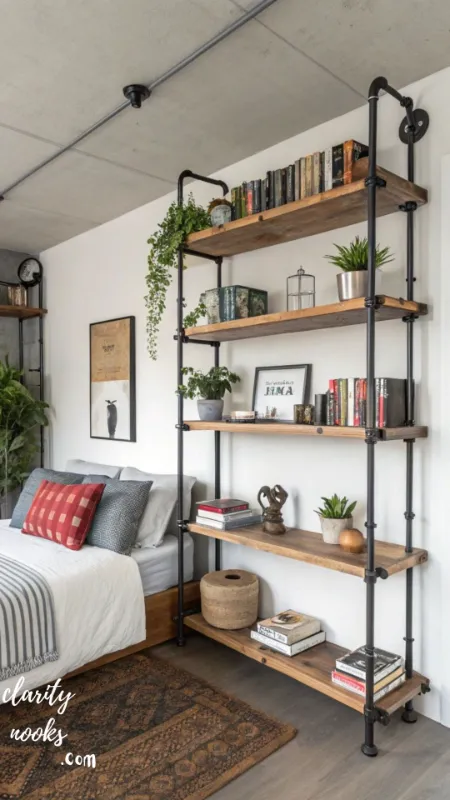
For an industrial bedroom bookshelf, black iron pipes paired with raw or stained wood planks create an exposed, warehouse-inspired shelving system that reads as intentional design rather than a DIY shortcut.
Estimated Cost: $70–$130
Materials Needed:
- Black iron pipe fittings (flanges, elbows, nipples)
- 3 wood boards (1×10 or 1×12)
- Wood stain and polyurethane sealant
- Wall studs finder
- Screws for flanges
Step-by-Step Instructions:
- Locate wall studs and mark bracket positions at even intervals.
- Assemble each pipe bracket by threading the flange, nipple, and elbow together.
- Stain and seal the wood boards, letting them dry fully before mounting.
- Screw pipe flanges into studs, then rest the sealed boards on top of the brackets.
This wall-mounted bookshelf style holds significant weight, suits masculine or loft-inspired bedrooms, and pairs well with exposed brick, concrete, or dark accent walls.
Styling Tip
Stagger shelf heights instead of spacing them evenly to avoid a boxy, office-like appearance and add visual interest.
Real-World Example
A homeowner converting a spare bedroom into an industrial-style reading nook used reclaimed scaffold boards for the shelves, cutting material costs by nearly 40 percent compared to new lumber.
You May Also Like: Modern DIY Bedroom Curtain Ideas for a Beautiful Home Interior Look
Headboard-Integrated Bookshelf
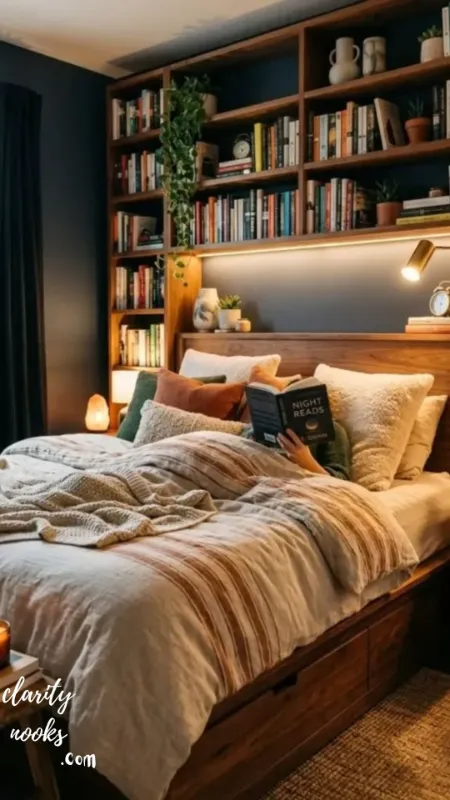
A DIY headboard bookshelf merges storage and seating into one furniture piece, making it one of the smartest small bedroom bookshelf ideas for anyone short on wall space.
Estimated Cost: $90–$180
Materials Needed:
- Plywood sheets (3/4 inch)
- Wood edge banding
- Piano hinge (optional, for a flip-open compartment)
- Wood glue and screws
- Cushion or upholstery fabric for the headboard face
Step-by-Step Instructions:
- Design a headboard frame with open cubbies on one or both sides of the bed.
- Cut plywood panels to size and apply edge banding for a finished look.
- Assemble the frame with glue and screws, checking every joint is square.
- Attach the headboard to the bed frame or wall studs, then add cushioning to the sleeping side.
This design keeps favorite reads within arm’s reach at night, eliminates the need for a separate nightstand shelf, and gives small bedrooms a built-in, custom-furniture feel.
Styling Tip
Add a small lip or raised edge to each cubby opening so books do not slide out when the headboard is bumped during sleep.
Real-World Example
In a 100-square-foot bedroom, a built-in headboard shelf replaced both nightstands and a bookcase, freeing enough floor area for a full-length mirror and a small bench.
Reader Favorites: Simple DIY Boys Bedroom Ideas with Easy Decor and Storage Hacks
Corner Wall Bookshelf
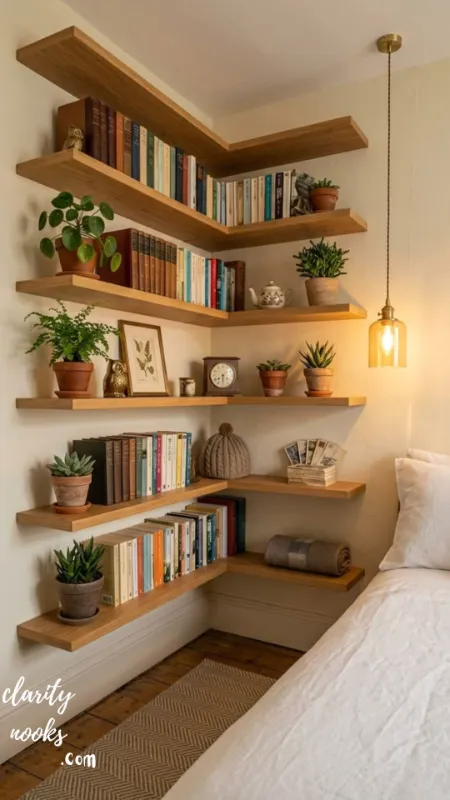
Corners are the most underused real estate in most bedrooms. A corner bookshelf DIY project turns dead space into a functional reading nook without crowding walkways or furniture placement.
Estimated Cost: $30–$65
Materials Needed:
- Triangular wood shelf boards (or cut from plywood)
- L-brackets or floating shelf hardware
- Wood filler and paint
- Level and stud finder
Step-by-Step Instructions:
- Measure the corner and cut boards into triangles that fit flush against both walls.
- Sand edges smooth and fill any visible seams with wood filler.
- Mark and drill pilot holes into studs at your desired heights.
- Mount each triangular shelf using L-brackets, checking level before final tightening.
Corner shelving uses otherwise wasted space, keeps the center of the room open, and visually elongates the ceiling line when shelves are stacked vertically.
Styling Tip
Paint the interior corner wall behind the shelves a contrasting color to make the books and decor pop against the backdrop.
Real-World Example
A reader with a small L-shaped bedroom added four stacked corner shelves beside the closet, gaining storage for over 60 books without touching the room’s usable floor space.
Learn more here: Creative DIY Beach Bedroom Ideas for a Cozy Nautical Style Bedroom
Picture Ledge Bookshelf
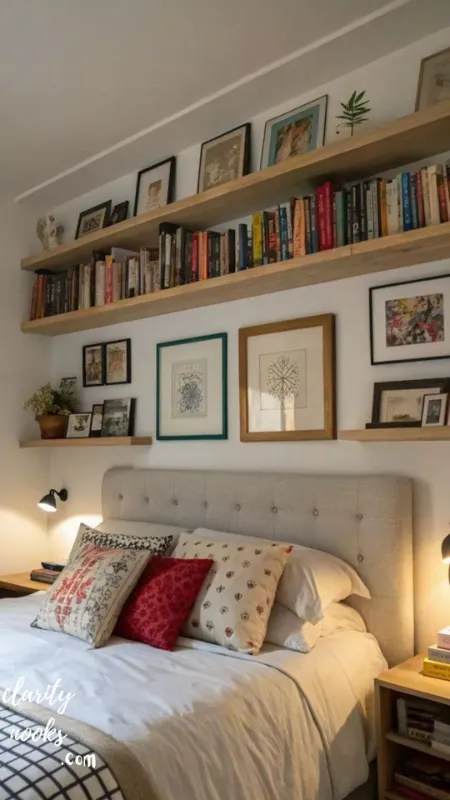
Picture ledge shelves display book covers face-out instead of spine-out, turning your bedroom bookshelf into a rotating art display. This is one of the best aesthetic bookshelf ideas for design-conscious readers.
Estimated Cost: $35–$75
Materials Needed:
- Picture ledge kits or 1×4 boards
- Thin lip trim (front stop)
- Wood screws and wall anchors
- Paint or stain
Step-by-Step Instructions:
- Cut boards to your desired ledge length, typically 24–36 inches.
- Attach a thin front lip along the bottom edge to stop books from sliding forward.
- Paint or stain the ledges to complement your bedroom color palette.
- Mount ledges into wall studs at staggered heights above the bed or dresser.
Face-out display draws attention to cover art, makes it easy to rotate books seasonally, and works well as a low-commitment way to test bookshelf placement before bigger builds.
Styling Tip
Group ledges in odd numbers (three or five) at varying heights for a gallery-wall effect that feels curated rather than accidental.
Real-World Example
A design blogger used three staggered picture ledges above a reading chair to rotate her ‘currently reading’ stack weekly, turning it into a recurring content feature for her audience.
Explore this topic: DIY Dressing Table Ideas for a Cozy and Functional Bedroom Makeover
Repurposed Window Frame Bookshelf
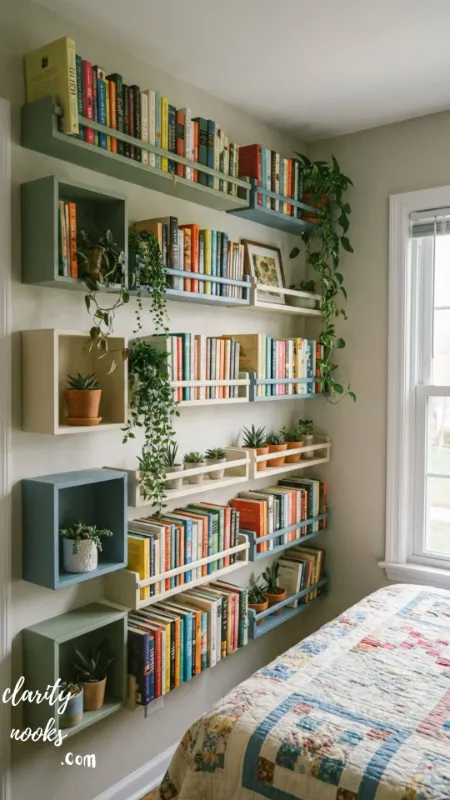
An upcycled window frame bookshelf is a standout choice for anyone chasing a vintage, cottagecore, or farmhouse aesthetic. Old window sashes with individual panes create naturally divided cubbies.
Estimated Cost: $20–$55 (often free if frame is salvaged)
Materials Needed:
- Salvaged window frame with panes
- Thin plywood for shelf dividers
- Wood glue
- Sandpaper and clear sealant or paint
Step-by-Step Instructions:
- Remove any glass panes carefully and clean the frame thoroughly.
- Measure each pane opening and cut plywood shelves to fit snugly inside.
- Glue shelf pieces into place, reinforcing with small brackets if needed.
- Sand, seal, or paint the frame, then mount it flat against the wall like a shadow box.
This project repurposes materials that would otherwise be discarded, gives the bedroom a one-of-a-kind character piece, and creates naturally separated compartments for organizing by genre or color.
Styling Tip
Keep a few panes glass-intact and use them to display small trinkets or dried flowers alongside the book-filled sections for contrast.
Real-World Example
A DIYer sourced a six-pane window frame from a local salvage yard for $12 and turned it into a statement shelf that visitors consistently ask about first when entering the room.
Find out more: Simple DIY Bedroom Interior Ideas for a Stylish and Relaxing Bedroom Makeover
Hanging Rope Shelf
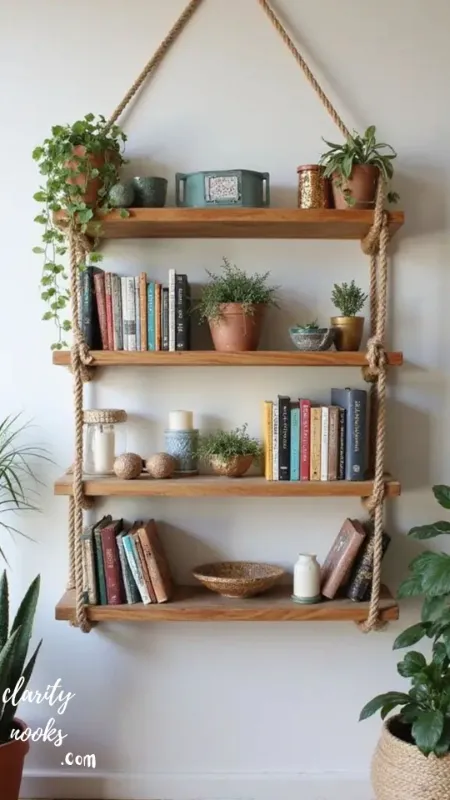
A hanging rope bookshelf suspends wood planks from the ceiling using thick rope, creating a swinging, boho-inspired storage piece. It is one of the most visually distinctive DIY bedroom shelf ideas on this list.
Estimated Cost: $30–$60
Materials Needed:
- 3 wood planks
- Thick cotton or manila rope
- Drill for rope holes
- Ceiling hooks or a sturdy wall bracket
- Wood stain
Step-by-Step Instructions:
- Drill four corner holes into each wood plank for the rope to pass through.
- Thread rope through the bottom plank, tying secure knots underneath.
- Continue threading upward through each plank, spacing shelves evenly with knots.
- Hang the finished structure from ceiling hooks or a wall-mounted bracket, checking it hangs level.
The suspended design adds texture and movement to a bedroom, works well in boho or coastal-themed rooms, and requires no wall studs since weight is distributed through the ceiling anchor.
Styling Tip
Keep heavier books on the bottom shelf to lower the center of gravity and reduce swinging when the shelf is bumped.
Real-World Example
A renter unable to drill into drywall used a ceiling stud finder to anchor a rope shelf safely, proving this design works even in strict no-damage rental units.
See the full breakdown: DIY Bedroom Decor Ideas That Actually Transform Your Space
Budget Built-In Alcove Bookshelf
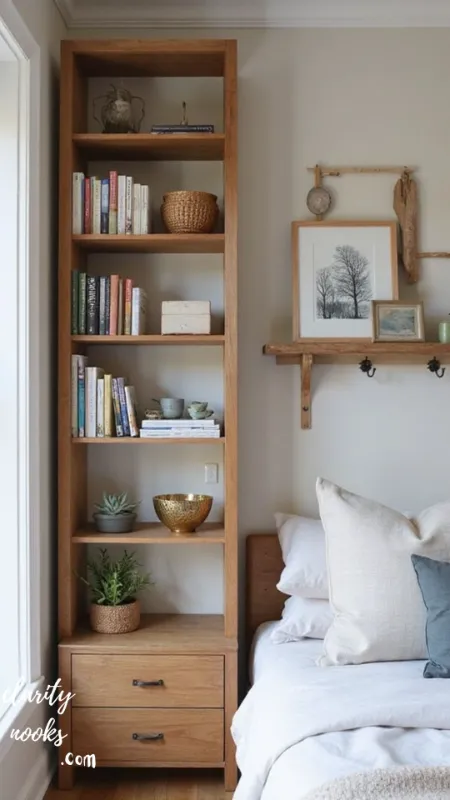
If your bedroom has a wall alcove or nook, a built-in bookshelf DIY using affordable MDF boards can mimic custom carpentry at a fraction of the cost of hiring a contractor.
Estimated Cost: $100–$220
Materials Needed:
- MDF boards cut to alcove width
- 1×2 furring strips
- Wood filler, primer, and paint
- Brad nailer or screws
- Measuring tape and level
Step-by-Step Instructions:
- Measure the alcove’s width, depth, and height precisely at multiple points.
- Attach furring strips to the alcove walls as support ledges for each shelf.
- Cut MDF boards to fit and rest them on the furring strips, securing with brad nails.
- Fill nail holes, prime, and paint the entire structure to match the surrounding wall.
Built-in shelving uses every inch of an awkward alcove, adds long-term home value, and creates a seamless, architectural look that freestanding furniture cannot replicate.
Styling Tip
Paint the shelf interior the same color as the wall so books appear to float, or use a contrasting color to make the alcove a deliberate focal point.
Real-World Example
A homeowner converted an unused closet alcove into built-in shelving for roughly $150, a project appraisers later noted as a value-adding built-in during a home sale evaluation.
Read our expert tips: DIY Colorful Bathroom Ideas: Budget-Friendly Ways to Transform Your Space in 2026
Conclusion
These DIY bedroom bookshelf ideas prove that stylish, functional storage does not require a big budget or a contractor. From leaning ladders to built-in alcoves, each project fits a different space, skill level, and design goal. Pick the one that matches your bedroom, gather your materials, and start building this weekend your books, and your floor space, will thank you.
Trend Analysis: Where Bedroom Bookshelf Design Is Headed
In 2026, bedroom bookshelf trends are moving away from matching furniture sets toward mixed-material, asymmetrical builds think raw wood next to black metal, or salvaged frames beside painted MDF. Homeowners increasingly treat shelving as a personality statement rather than pure storage.
Renter-friendly design is also accelerating. Leaning ladders, tension-rod shelves, and rope-hung units are gaining search volume as more people prioritize no-damage installation. Expect this shift to strengthen over the next 2–3 years as rental markets remain tight in many cities.
Sustainable bookshelf design is another rising theme, with salvaged windows, reclaimed scaffold boards, and secondhand crates moving from niche to mainstream as more DIYers factor material sourcing into their environmental footprint.
Practical Tips and Expert Insights
Always locate wall studs before mounting anything load-bearing. A stud finder costs under $15 and prevents the single most common bookshelf failure: shelves pulling out of drywall under weight.
Distribute books by weight, not just size. Place heavier hardcovers on lower shelves or closer to wall studs, and keep lighter paperbacks on ledges or rope-hung sections where structural support is thinner.
Mix vertical and horizontal book orientation on every shelf. Fully vertical rows read as generic; horizontal stacks used as bookends or display risers add the kind of visual texture seen in professionally styled bedrooms.
Long-Term Strategy: Building a Bookshelf That Scales With You
Choose modular systems like crate shelving or picture ledges if your book collection is still growing. These formats let you add units incrementally instead of replacing an entire bookcase once it is full.
For long-term homeowners, built-in alcove shelving offers the strongest return, since it is often noted as a value-adding feature during home appraisals and resale, unlike freestanding furniture that leaves with you.
Renters should prioritize reversible installs leaning, hanging, or freestanding designs so a security deposit is never at risk while still getting a custom-built bookshelf look.
Future Predictions and Innovations
Expect AI-assisted room planning tools to increasingly suggest custom bookshelf layouts based on a photo of your bedroom, automatically accounting for stud placement, ceiling height, and existing furniture before you buy materials.
Modular hardware kits pre-cut brackets, ledge lips, and rope-anchoring systems sold specifically for bedroom shelving are likely to expand, lowering the skill barrier for beginners over the next few years.
Voice and AI search behavior is also shaping how people plan projects, with more searches phrased as full questions like ‘what bookshelf fits a small bedroom corner’ rather than short keywords a shift this guide’s FAQ section is built to answer directly.
Common Mistakes and Hidden Gaps to Avoid
Beginners often skip stud-finding entirely, mounting shelves into drywall alone. This works temporarily but fails under real book weight a full shelf of hardcovers can weigh 40+ pounds.
Intermediate DIYers frequently underestimate finishing time. Sanding, staining, and sealing often take longer than assembly itself, and skipping sealant leads to warped wood within a year in humid bedrooms.
A commonly overlooked gap: nobody plans for book growth. Building a shelf sized exactly to your current collection means starting over in a year always design with 20–30% extra capacity.
Frequently Asked Questions About DIY Bedroom Bookshelves
What is the cheapest DIY bedroom bookshelf idea?
Stacked wooden crates are typically the most affordable option, often costing under $30 when crates are sourced secondhand, and they require no specialized tools to assemble.
Can I build a bedroom bookshelf without drilling into the wall?
Leaning ladder shelves, stacked crate towers, and freestanding corner shelves all provide sturdy storage without permanent wall mounting, making them ideal for rental bedrooms.
How much weight can a DIY floating bookshelf hold?
A properly anchored floating shelf mounted into wall studs with the right brackets typically holds 20–50 pounds per shelf, though pipe-and-wood designs can hold more.
What is the best bookshelf idea for a small bedroom?
Corner shelves and headboard-integrated shelving are the top choices for small bedrooms because they use vertical or otherwise wasted space instead of consuming floor area.
Rameen Zara is the founder of Clarity Nooks, bringing over five years of experience in home décor and interior styling. She shares simple yet practical design ideas that suit real homes and everyday living. Her approach focuses on cozy aesthetics, soft color palettes, and natural textures that create warm, inviting spaces.