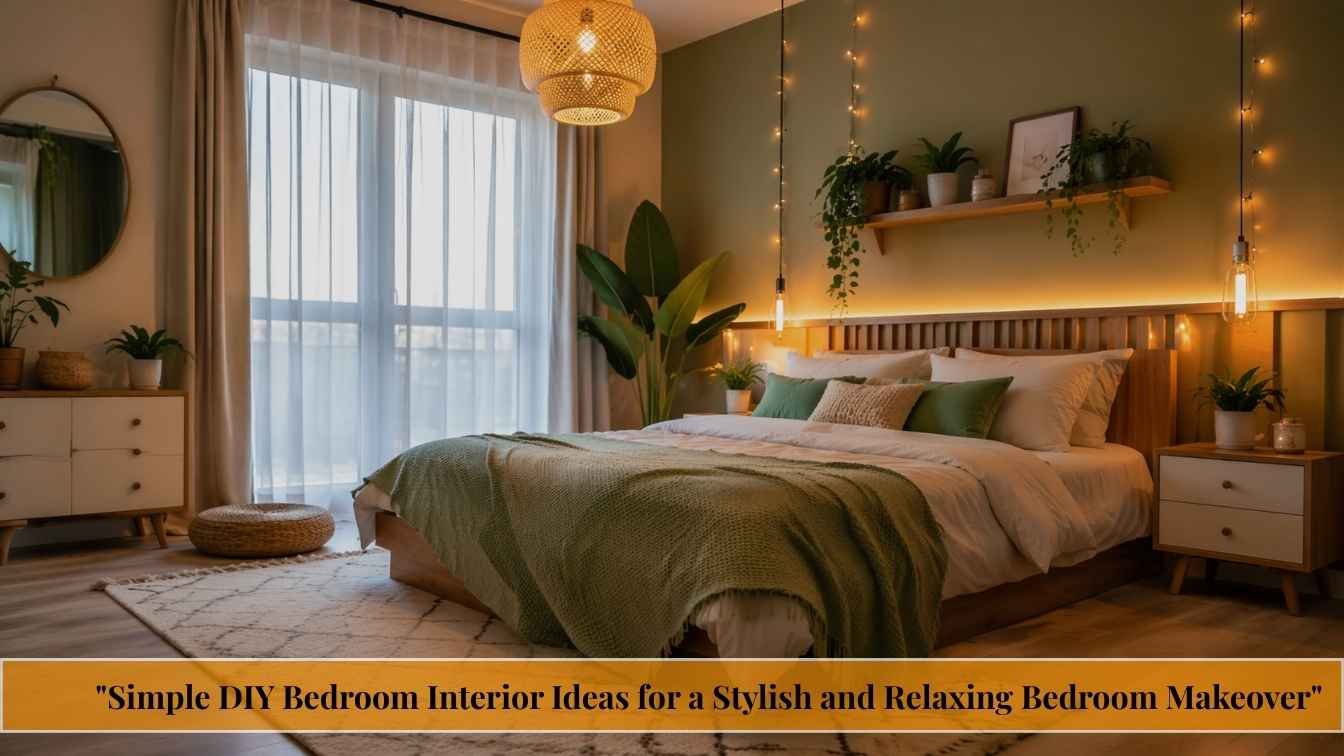
Simple DIY Bedroom Interior Ideas for a Stylish and Relaxing Bedroom Makeover

Most people spend one-third of their lives in their bedroom yet so many bedrooms feel like an afterthought. If yours feels cluttered, uninspiring, or just plain boring, you don’t need a designer or a big renovation budget to fix it. These proven DIY bedroom interior ideas will help you create a space that feels intentional, personal, and genuinely restful.
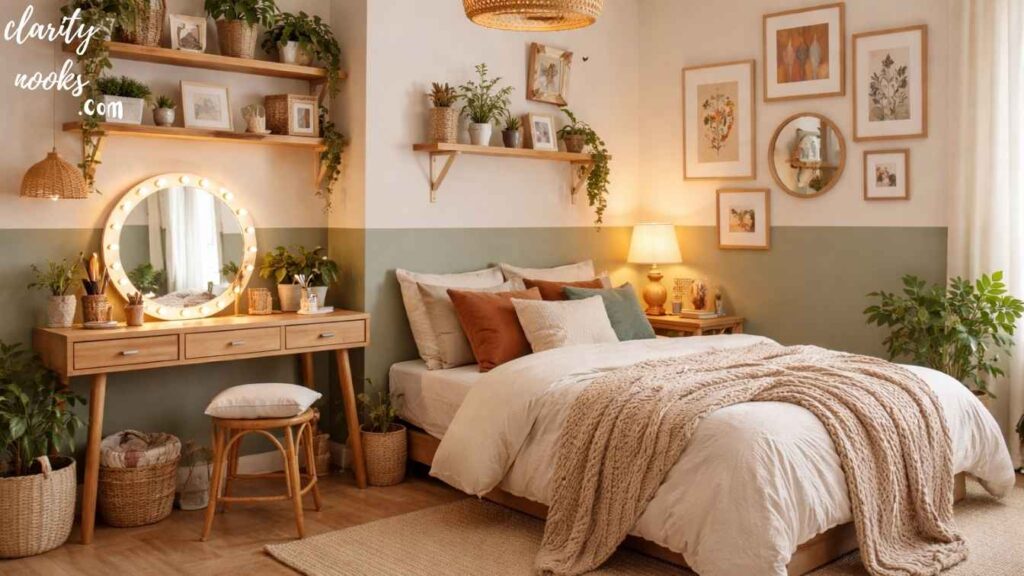
DIY Bedroom Interior Ideas means simple ways to design and decorate your bedroom on your own. It includes changing colors, furniture placement, lighting, and small decor items. The goal is to make your room look stylish without hiring a professional.
Your bedroom should feel like your own peaceful space. But many people feel it looks boring or messy. With DIY Bedroom Interior Ideas, you can easily turn it into a cozy and modern place using simple steps. These ideas are budget-friendly and easy to try at home. You can use wall art, soft lights, and smart storage to improve space. DIY Bedroom Interior Ideas help you create comfort, style, and a fresh look in your room.
Create a Statement Headboard Without Buying One
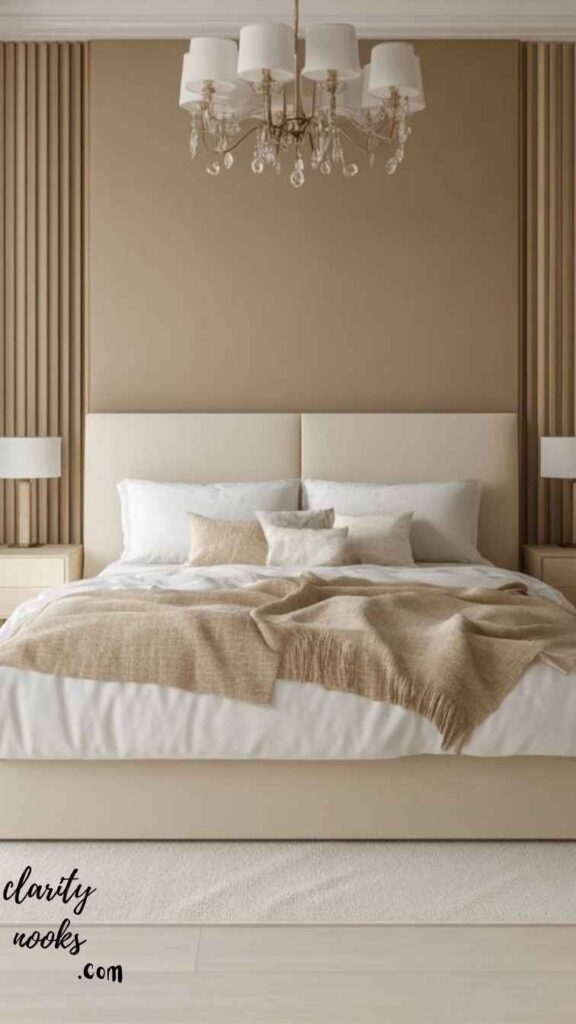
A headboard is the visual anchor of any bedroom, but store-bought ones can cost hundreds. The good news: some of the most stunning headboard designs are completely DIY-able using materials you can find at a local hardware or fabric store.
One of the most popular DIY headboard approaches is the upholstered panel. You’ll need a sheet of plywood cut to size, foam padding, a staple gun, and your chosen fabric. Linen, velvet, or boucle all work beautifully. Cut the foam to match the board, wrap it tightly with fabric, and mount it using French cleats for an easy wall attachment. The total cost typically runs between $60 and $120 compared to $400+ for retail alternatives.
Real-Life Scenario
A homeowner in Islamabad replaced her empty wall behind the bed with a large diamond-tufted velvet panel made from a $15 piece of fabric and reclaimed foam. The result looked like a five-star hotel suite. Total investment: under $40 and one Saturday afternoon.
Pro Tip: If you want something even simpler, use removable wallpaper to create a faux headboard shape on the wall. No tools, no drilling, and it’s renter-friendly.
Must Read: DIY Home Office Ideas That Actually Work Smart Setups for Every Space and Budget
Use a Layered Lighting Strategy
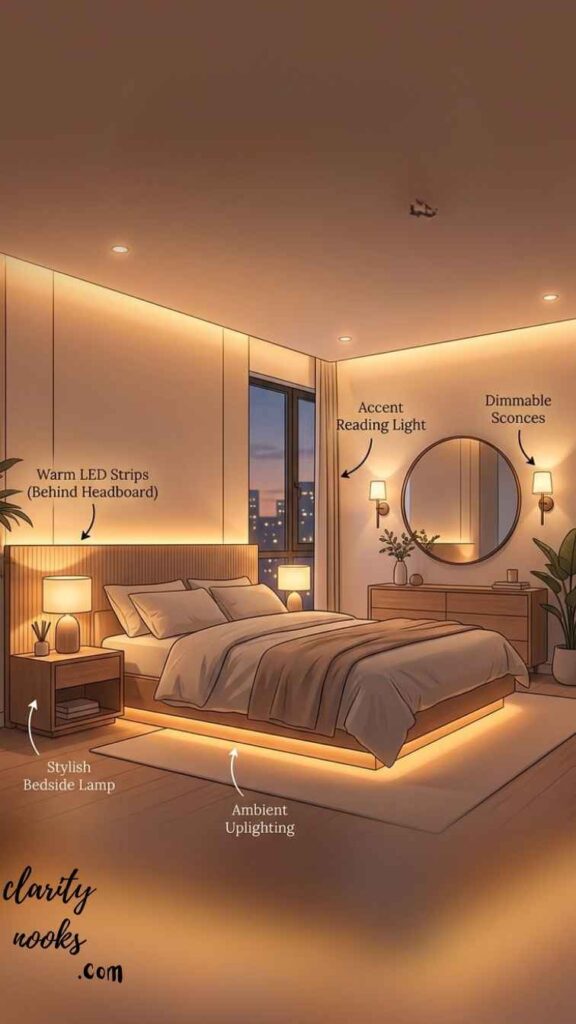
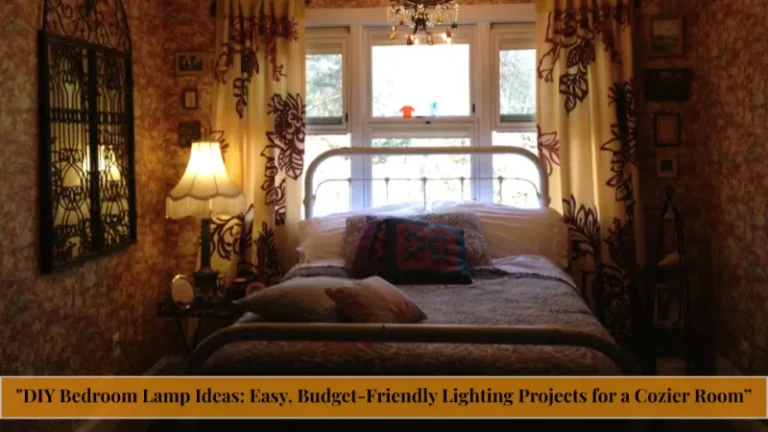
Lighting is the single most underestimated element in DIY bedroom design. Most people rely on one overhead light, which creates flat, harsh illumination that feels clinical rather than restful. A layered approach combining ambient, task, and accent lighting completely changes the mood of a space.
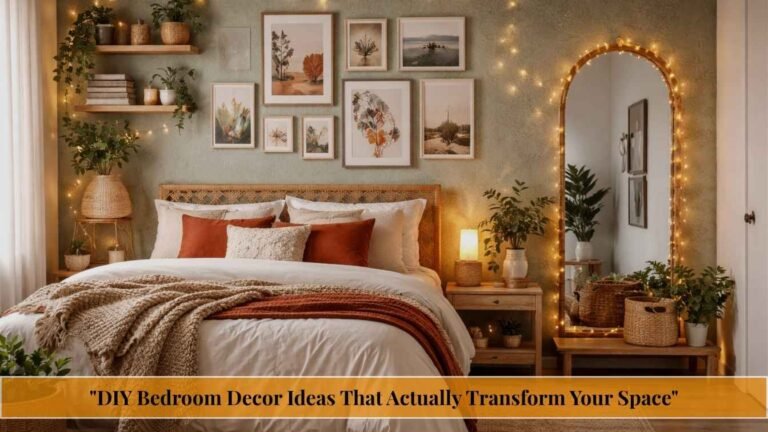
Start by identifying your needs: ambient light for general use, a bedside task light for reading, and accent lighting for atmosphere. String lights or LED strip lights tucked behind your headboard or under a bed frame add warmth at minimal cost. Plug-in wall sconces (no electrician needed) free up nightstand space and look incredibly polished. Dimmer plugs, available for under $15, let you control any existing lamp’s intensity.
How do I make my bedroom lighting cozy?
To make bedroom lighting cozy, use warm-toned bulbs (2700K–3000K), layer at least three light sources, and avoid harsh overhead lighting as your only option. Bedside lamps, LED strips, and candles create depth and warmth.
Don’t Skip: DIY Patio Decor Ideas to Transform Your Backyard on a Budget
Build a Budget Gallery Wall
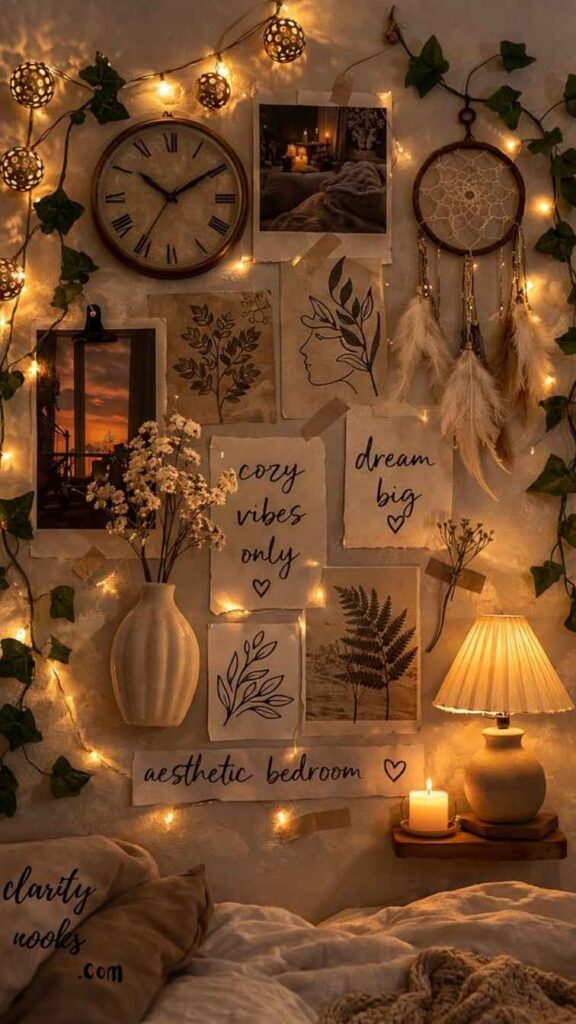
A well-executed gallery wall turns a plain surface into the most personal feature in your bedroom. The key is curation over quantity. You don’t need expensive art thrifted frames, printed photography, textile swatches, and even pressed botanicals all work beautifully together when unified by a consistent color story or frame finish.
Start by laying your arrangement on the floor. Take a photo of it, then transfer it to the wall using paper templates taped up before you nail anything. This eliminates guesswork and extra holes. For a cohesive look, keep frames within the same metal or wood family (all black, all natural wood, or all cream). Mix sizes intentionally: anchor with a larger piece at center, and balance with smaller frames around it.
Mini Case Study
A student in a rented apartment used eight matching IKEA Ribba frames (purchased second-hand), printed her own botanical photos from free image sites, and created a gallery wall above her bed for under $25. It became the most photographed feature of her room.
Don’t Miss: DIY Wall Painting Ideas for Stylish and Cozy Home Walls
DIY Floating Shelves for Storage and Style
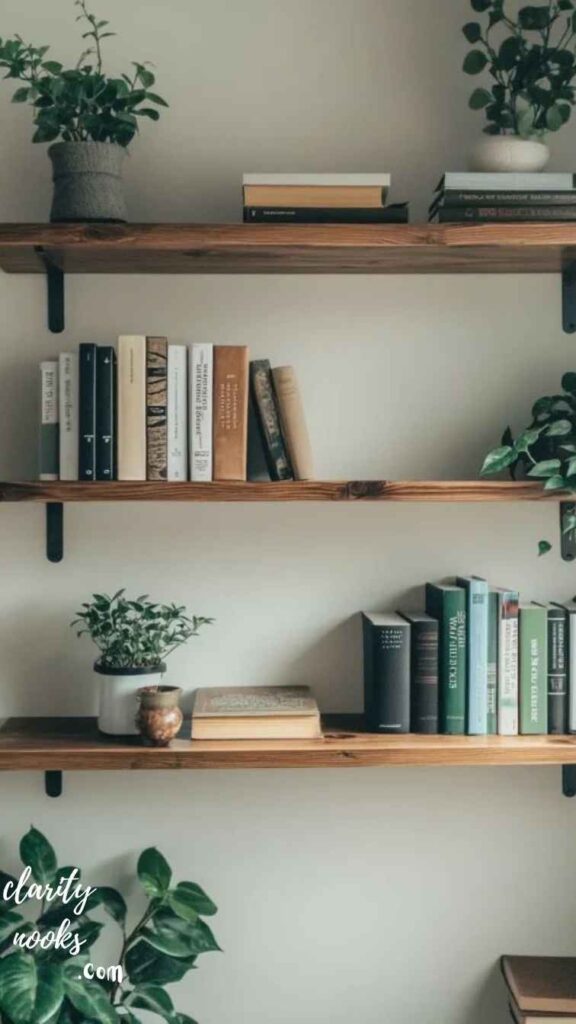
Floating shelves do double duty: they add visual interest while solving real storage problems. In a bedroom, they’re perfect for books, plants, candles, and small decorative objects. The best part is that simple floating shelves are one of the most beginner-friendly DIY projects you can attempt.
For a clean, modern look, use solid pine boards from any hardware store. Sand them smooth, stain or paint them to match your aesthetic, and mount using hidden bracket systems for a truly floating effect. Position them at varying heights above a dresser or beside the bed for a nightstand alternative that works even in the smallest rooms. A set of three shelves above a desk can replace the need for a bulky bookcase entirely.
Space-Saving Insight:
In small bedrooms under 120 sq ft, vertical storage is critical. Shelves that go up rather than out preserve floor space and make ceilings appear taller.
Read More: DIY Garden Decor Ideas for a Cozy Backyard Vibe
Refresh Your Walls with DIY Paint Techniques
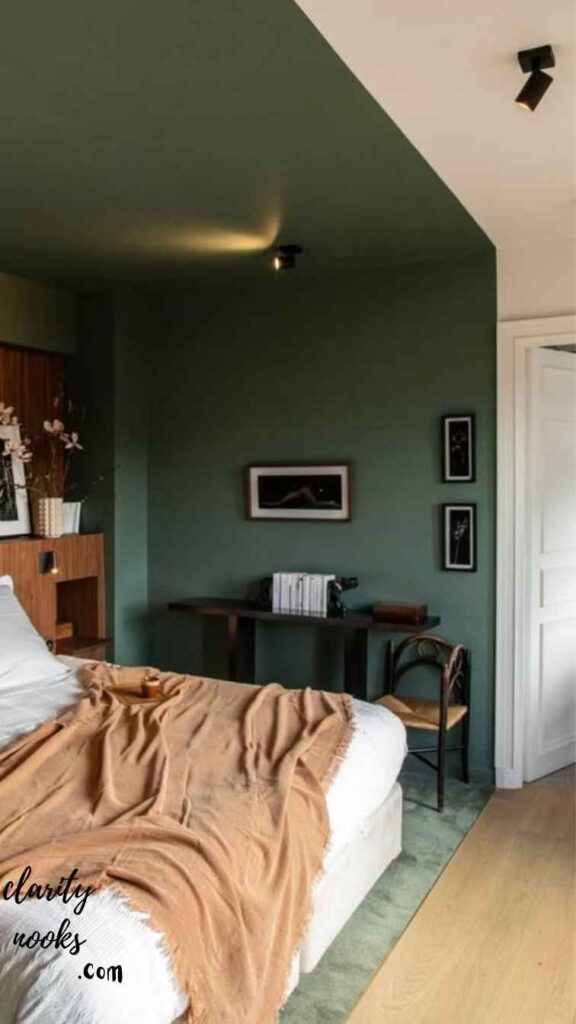
Paint is the highest-ROI DIY bedroom upgrade that exists. A single accent wall in a deep, saturated color can make a room feel completely different more dramatic, more sophisticated, or more serene depending on your choice. But beyond a solid color, DIY paint techniques can add serious visual texture without wallpaper costs.
Color washing gives walls a soft, aged linen effect using two close shades applied wet-on-wet. Limewash paint creates a natural, chalky texture reminiscent of Italian plaster, and several brands now offer peel-and-stick versions for renters. An arched half-wall paint treatment where you paint a large arch shape on the lower half of one wall has become one of the most popular DIY bedroom looks on interior design forums, requiring nothing more than a projector, painter’s tape, and a weekend afternoon.
What paint color makes a bedroom feel bigger?
Light, cool neutrals like soft white, pale sage, and light greige make bedrooms feel larger by reflecting more light. Painting the ceiling the same color as the walls (or slightly lighter) can also visually raise the ceiling height.
Repurpose Furniture with Paint and New Hardware
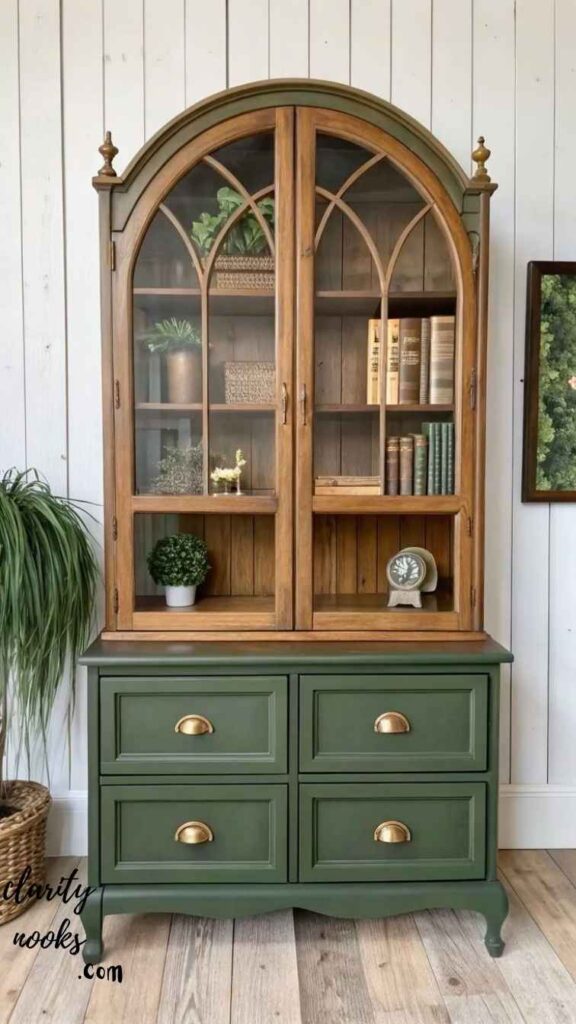
Before you buy new furniture, look at what you already have. A dated dresser, an old nightstand, or a plain wardrobe can be completely transformed with the right paint and new hardware often for less than $30. This approach is both budget-friendly and sustainable, and the results are almost always more unique than anything mass-produced.
Chalk paint is a beginner’s best friend here: it requires no sanding or priming, adheres to almost any surface, and creates a beautiful matte finish. Paint your piece in a bold color deep navy, forest green, or terracotta then swap the original handles for new brass or matte black hardware. A two-drawer bedside table picked up at a thrift store for $8 can look like a designer piece for under $40 total. The transformation is almost always dramatic.
Example
Interior upcycler @thriftedrooms on social media documented turning a $12 garage-sale dresser into a sage green showpiece using chalk paint and vintage glass knobs. The total budget was $35. The finished piece received over 400,000 views.
Add Texture with DIY Textiles and Soft Furnishings
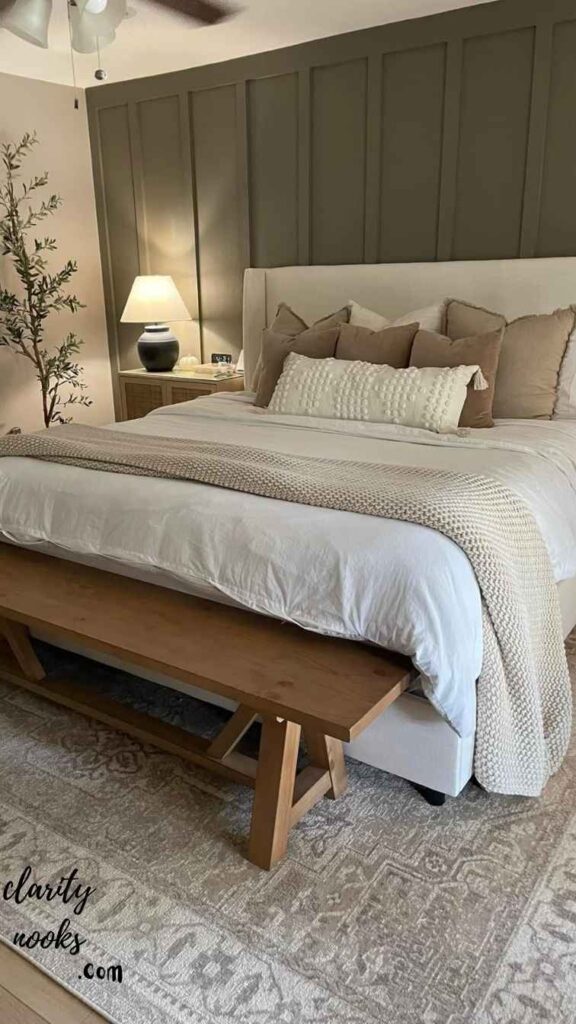
Texture is what separates a flat, staged-looking room from one that feels genuinely lived-in and warm. In a bedroom, textiles are the primary carrier of texture: your duvet, throw pillows, curtains, and rugs do more to determine the feel of the space than almost anything else. The great news is that you can dramatically upgrade your textiles without spending a fortune.
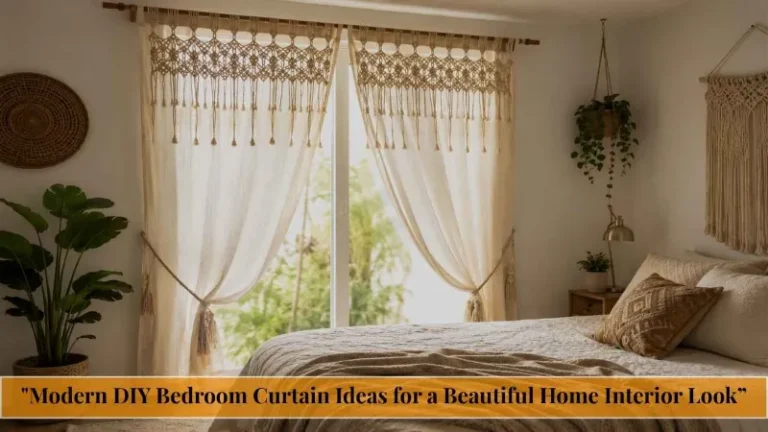
A macramé wall hanging made from natural cotton rope (one of the most beginner-friendly textile crafts) adds organic texture for around $10 in materials. Knotted or tufted throw pillow covers can be made from thrifted sweaters or fabric remnants. For curtains, sheer linen panels in floor-to-ceiling lengths make any window look more dramatic. Layering a flat sheet, a duvet, and a textured throw at the foot of the bed creates that hotel-styled look interior designers always recommend.
Styling Rule:
Layer at least three different textures on your bed: something smooth (cotton), something cozy (knit or fleece), and something structured (linen or velvet). The contrast is what makes a bed look intentionally styled.
Create a Cozy DIY Reading Nook
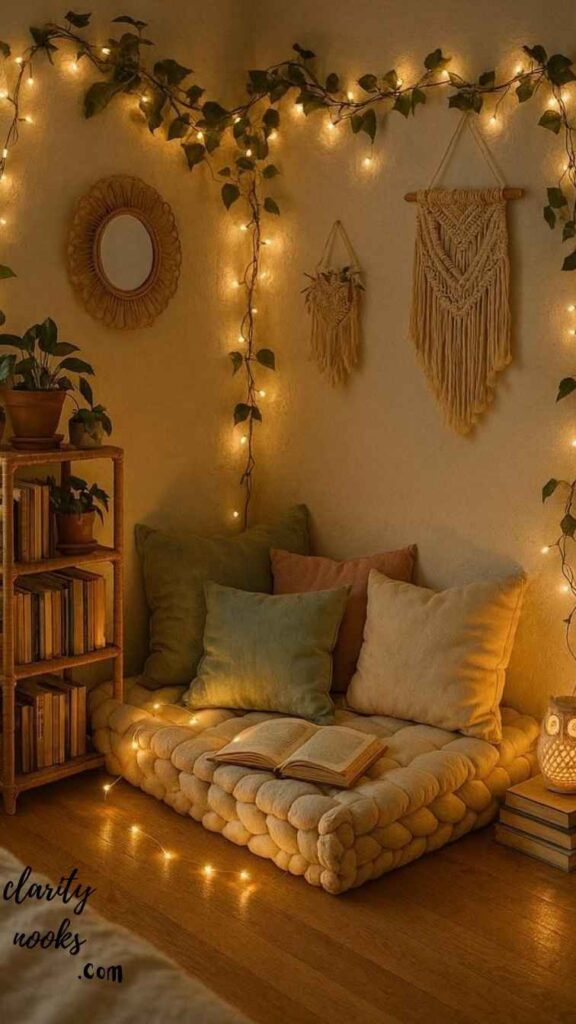
A reading nook transforms an unused corner of your bedroom into its most inviting spot. You don’t need a bay window or a large bedroom to make this work. Even a 3-foot-wide corner can become a proper reading retreat with the right approach.
Start with a floor cushion or a small armchair sourced from a thrift store. Add a floor lamp or a clip-on reading light. Mount a small shelf nearby for books and a candle. Then layer in textiles: a throw blanket, an extra pillow, and a small rug underfoot to visually anchor the space. Hanging a sheer curtain from a tension rod on one side of the nook creates a sense of enclosure and dramatically increases how “intentional” the nook feels.
How do you make a reading nook in a small bedroom?
Use a floor cushion in a corner, add a clip-on or floor lamp, layer with a throw and pillow, and hang a sheer curtain to define the space. A small wall shelf above keeps books within reach. The whole setup can cost under $50.
Design a Functional and Stylish DIY Vanity Area
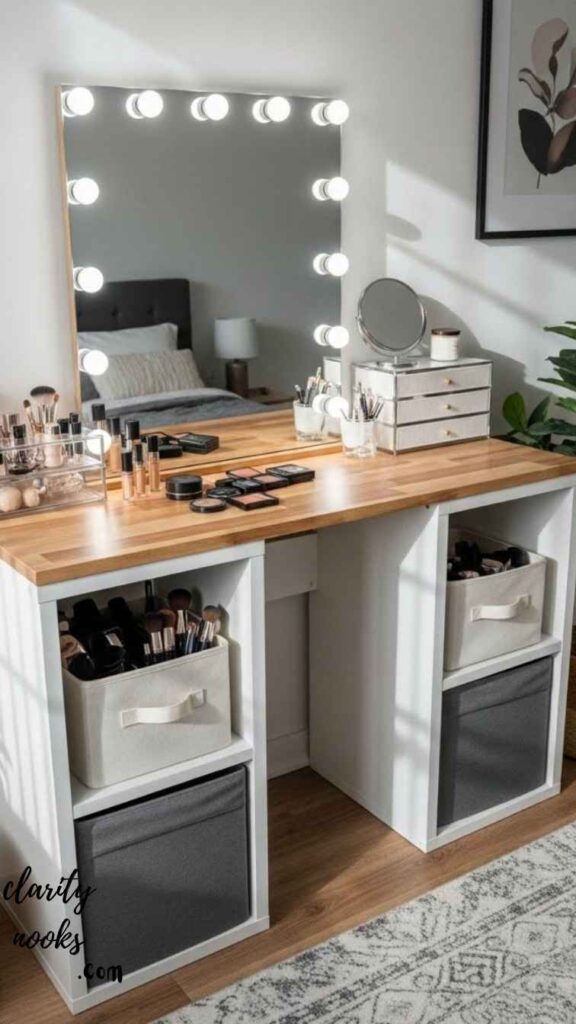
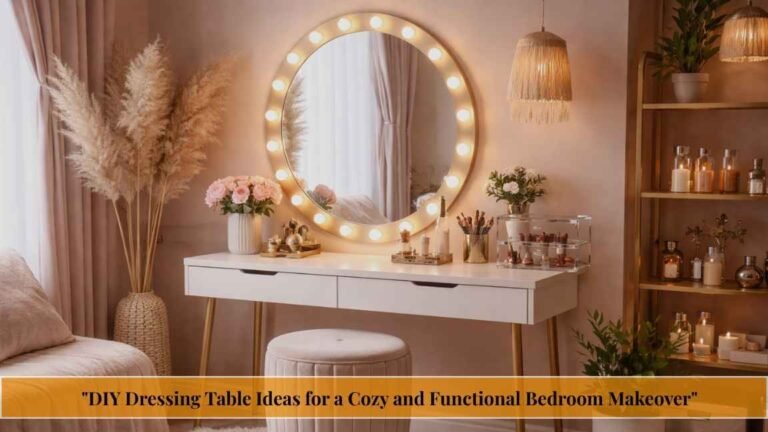
A dedicated vanity doesn’t require a large room or an expensive piece of furniture. A simple wall-mounted mirror, a small desk or console table, and a single good light source are all you need. The vanity area is also one of the most photographed corners of a bedroom making it worth the extra design attention.
For a DIY Hollywood vanity effect, mount a round mirror and surround it with globe bulb string lights attached to the wall. A vintage dressing table from a charity shop, painted and fitted with a new mirror, becomes a completely custom piece. Pegboards mounted above the vanity keep makeup and accessories organized while also looking incredibly stylish a trend popularized by beauty content creators that works equally well in real life.
Lighting Tip:
For a vanity, front-facing light is critical. Side lighting or overhead lighting creates shadows on the face. Position your light source at eye level or just above, on either side of the mirror, for the most flattering and functional setup.
Conclusion:
DIY Bedroom Interior Ideas can change your room into a stylish and comfortable space. You do not need a big budget or professional help. Small changes like wall colors, lighting, and simple decor can make a big difference. These ideas help you create a personal space that feels warm, modern, and relaxing.
Overall, DIY Bedroom Interior Ideas help you improve your home in a simple and creative way. Start small, stay consistent, and enjoy the process. A well-designed bedroom improves mood, comfort, and lifestyle, making your everyday living better and more enjoyable for long lasting comfort and style at home.
Trend Analysis
Where DIY Bedroom Design Is Heading
Current Year (2026) + Next 2–3 Years
The DIY bedroom interior space is evolving rapidly, driven by sustainability concerns, social media influence, and a broader rejection of mass-produced aesthetics. Here’s what the data and design communities are signaling.
Biophilic Design
Living walls, indoor plants, and natural materials dominating bedroom aesthetics in 2026.
Japandi Hybrid
Japanese minimalism meets Scandinavian warmth clean lines, natural wood, muted tones.
Curved Everything
Arched mirrors, rounded headboards, and curved furniture replacing sharp angles.
Dopamine Decor
Bold colors, maximalist layering, and unapologetically personal styling choices.
Sustainable Upcycling
Thrift-first mentality replacing fast furniture buying used, refinishing, and reusing.
AI-Assisted Design
Tools like AI room visualizers helping DIYers plan before they buy or build.
Looking toward 2027–2028, expect modular bedroom furniture systems, more acoustic-focused design (sound panels as decor), and smart lighting that adapts to circadian rhythms becoming standard in even budget DIY setups.
Expert Insights & Practical Tips
- Hang curtains high and wide: Mount curtain rods as close to the ceiling as possible and extend them 8–12 inches beyond the window frame on each side. This makes windows look larger and rooms feel taller one of the most impactful changes with zero structural work.
- Use mirrors strategically not randomly: A mirror only adds light and space when it reflects something worth reflecting. Position mirrors to face windows, not doors or blank walls. A large floor mirror leaning against a wall is one of the most effective (and most renter-friendly) tricks in a small bedroom.
- Follow the 60-30-10 color rule: In any bedroom: 60% of the space should be your dominant color (usually walls and flooring), 30% a secondary color (bedding, curtains, large furniture), and 10% an accent (throw pillows, art, small accessories). This rule prevents visual chaos.
- Place your rug under the bed not in front of it: At minimum, position the rug so the front legs of the bed rest on it. Better still, go large enough that all furniture legs sit on the rug. A rug that’s too small makes the whole room feel disconnected and cluttered.
- Add at least one living element: A plant even a single succulent signals life and care in a room. For low-light bedrooms, pothos and snake plants are practically indestructible. Plants also improve perceived air quality and reduce the sterile feeling of a purely decorated space.
Long-Term Strategy & Sustainability
Building a Bedroom That Grows With You
The smartest DIY approach treats your bedroom as a living investment rather than a one-time project. Instead of redecorating entirely every two years, focus on building a foundation of quality, neutral pieces and refresh with seasonal accessories and small DIY updates.
Invest in quality where it’s functional: your mattress, your main lighting, and your window treatments. Then go budget-DIY on decorative elements that are easy to swap: throw cushions, wall art, side tables, and textiles. This hybrid approach lets you evolve the room’s personality without wasting money or contributing to furniture landfill.
From a sustainability angle, the most future-proof bedroom design chooses natural materials (wood, linen, cotton, jute) over synthetics. These age better, photograph better, and can be repurposed or composted at end of life. They also tend to be timeless rather than trend-dependent a linen-upholstered headboard and warm wood shelves will look appropriate in 2030 just as they do today.
Future Predictions & Innovations
What’s Coming to DIY Bedroom Design by 2028
AI room visualizers: are already changing how people plan DIY projects. Tools that let you upload a photo of your bedroom and virtually “try on” paint colors, furniture arrangements, and decor are becoming mainstream and far more accurate. By 2027, expect these to integrate with shopping platforms so you can go from visualization to purchase in one step.
Acoustic panels as design features: are moving from recording studios into bedrooms. As home offices and hybrid work normalized noise-sensitivity, people are increasingly interested in sound-dampening wall panels which also happen to look excellent as a headboard alternative or accent wall feature.
Modular furniture systems: designed for lifetime adaptability (think reconfigurable shelving that grows from a nightstand to a full wardrobe) will become the default recommendation for DIY-conscious buyers who don’t want to replace furniture every time they move.
Common Mistakes & Hidden Gaps
What Beginners AND Intermediate DIYers Get Wrong
Undersized rugs
Buying a rug that’s too small for the room is the most common DIY mistake it makes the space feel disconnected.
All one light source
Relying on a single overhead fixture makes the room feel flat. Layering is non-negotiable for warmth.
Ignoring scale
Choosing furniture or art that’s too small for the wall or room proportions makes everything look tentative.
Too many focal points
Every wall fighting for attention creates chaos. Choose one feature wall and let the rest breathe.
Styling before decluttering
Adding decor to a cluttered room amplifies the clutter. Always edit down before you add up.
Skipping the “live with it” phase
Buying everything at once locks you into choices you haven’t tested. Buy the big pieces, live in the space, then layer.
Hidden gap competitors miss: Most DIY bedroom guides never address acoustic comfort how sound behaves in the room. Hard surfaces reflect noise; soft surfaces absorb it. A bedroom that feels restless despite looking good is often a room with too many hard surfaces and not enough textile layers. Adding a rug, heavy curtains, and upholstered elements simultaneously quiets and warms the space.
FAQ’s About DIY Bedroom Interior Ideas
How can I make my bedroom look expensive on a budget?
Focus on a few high-impact changes: paint an accent wall, add floor-length curtains mounted close to the ceiling, upgrade your lighting, and layer quality-looking textiles. Most expensive-looking bedrooms use inexpensive materials executed with good proportions and styling discipline.
What is the best DIY bedroom project for beginners?
An accent wall using paint or removable wallpaper is the best starting point. It requires no special skills, is completely reversible, and delivers one of the most dramatic visual results of any bedroom upgrade.
How do I make a small bedroom feel bigger without renovation?
Use light paint colors, hang curtains high and wide, place a large mirror opposite a window, reduce clutter ruthlessly, and use under-bed storage. Vertical shelving draws the eye upward, making ceilings feel higher than they are.
What are the best DIY bedroom ideas for renters?
Removable wallpaper, peel-and-stick tiles, tension rod curtains, gallery walls with adhesive strips, and plug-in wall sconces are all excellent renter-friendly DIY options that leave no permanent marks.
Rameen Zara is the founder of Clarity Nooks, bringing over five years of experience in home décor and interior styling. She shares simple yet practical design ideas that suit real homes and everyday living. Her approach focuses on cozy aesthetics, soft color palettes, and natural textures that create warm, inviting spaces.