DIY Library Room Ideas: Modern, Aesthetic & Functional Home Library Designs

“Your walls are bare, your books are piled in corners, and that spare room feels like wasted potential. Here’s how to turn any space big or small into a home library you’ll use every single day.“
There’s something about a room lined with books that makes a house feel like a home. It signals curiosity, warmth, and intention. Yet most people who love books never actually build a dedicated library not because they lack the space, but because they’re not sure where to start.
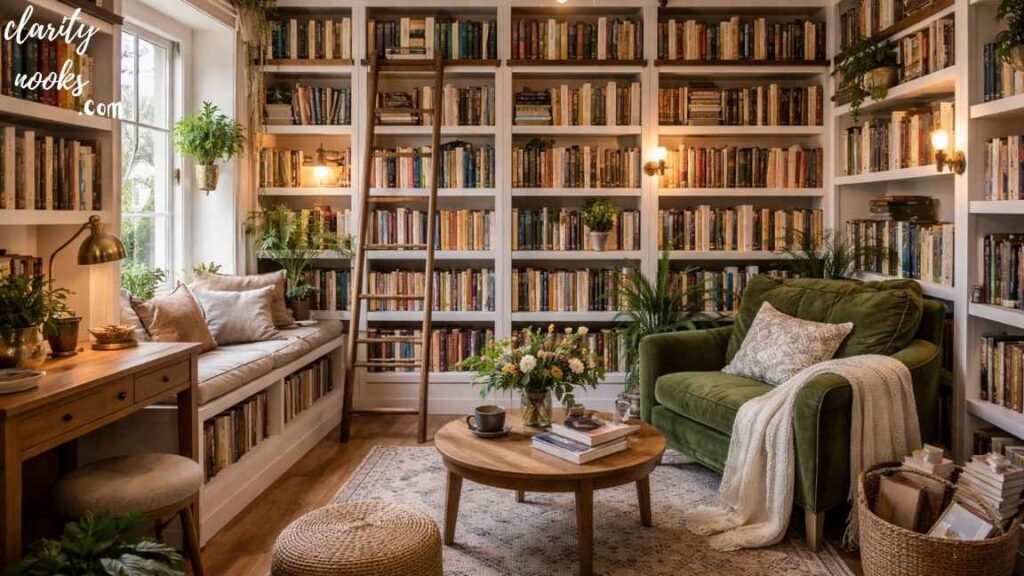
The good news: you don’t need a Victorian mansion or a contractor’s budget. With the right planning and a few smart DIY techniques, even a modest 10×10 bedroom can become a genuinely beautiful, functional home library. This guide covers 10 of the most effective DIY library room ideas with real examples, practical costs, and expert-level design thinking you won’t find in a surface-level listicle.
Floor-to-Ceiling Built-In Shelves
Nothing defines a library room more powerfully than walls of shelving from floor to ceiling. Built-ins look custom and expensive but with IKEA Billy bookcases, trim boards, and a weekend of work, you can achieve the same result for $400–$800 depending on room size. The Billy Bookcase Hack (flanking shelves with trim, adding crown molding at the top, and painting everything the same wall color) has been a staple of DIY design communities for over a decade, and it still delivers the most dramatic transformation per dollar.
The key detail most beginners miss: paint the inside backs of shelves a contrasting or deeper shade of your wall color. This gives depth and frames your book spines beautifully. One homeowner in Austin, Texas, transformed a 12-foot wall in a spare bedroom using eight Billy units, $80 of trim from Home Depot, and six weekends of work. The result looked like a $6,000 custom installation.
Must Read: DIY Flower Garden Ideas That Bring Natural Beauty to Any Home
The Reading Nook Within the Room
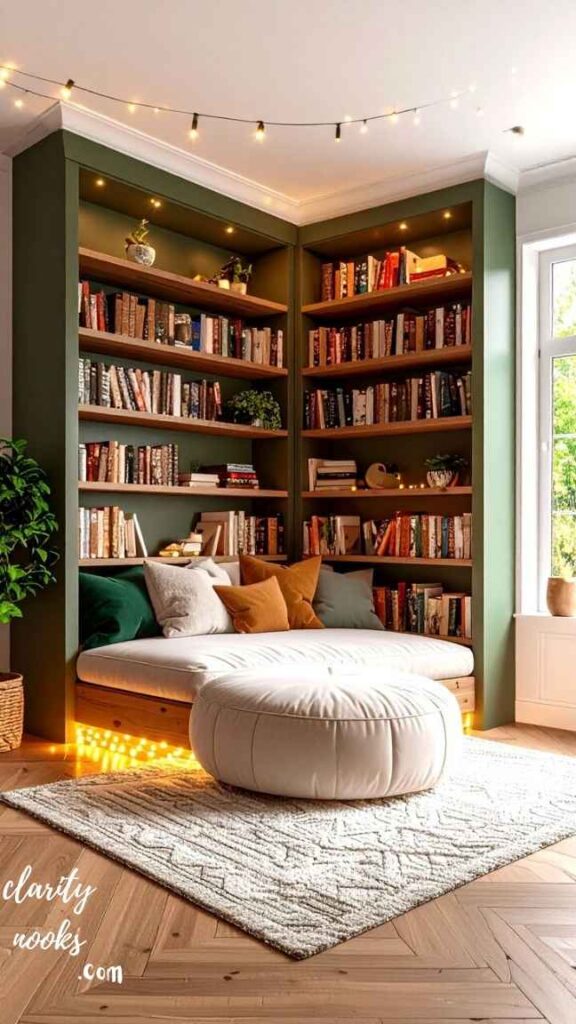
A library room without a dedicated reading spot is just storage. The reading nook is the soul of the space and it doesn’t require a bay window or a built-in alcove. A floor cushion, a small side table, a floor lamp with warm-toned bulbs (2700K is the sweet spot for reading), and a curtain hung from a ceiling rod can create a visually distinct “zone” within any room. This is especially powerful in smaller spaces where the nook creates a sense of intimacy inside a larger room.
For a more permanent feel, consider a plywood window seat bench with a hinged lid for storage. Cut the top panel from 3/4-inch plywood, frame it with 2×4 lumber, upholster the lid with foam and fabric, and you have a built-in seat with hidden book storage for under $120 in materials. Pair it with a canopy or curtain on a curved rod to make it feel like its own little world.
Don’t Skip: DIY BBQ Patio Ideas That Turn Your Backyard Into a Party Spot
Rolling Library Ladder Setup
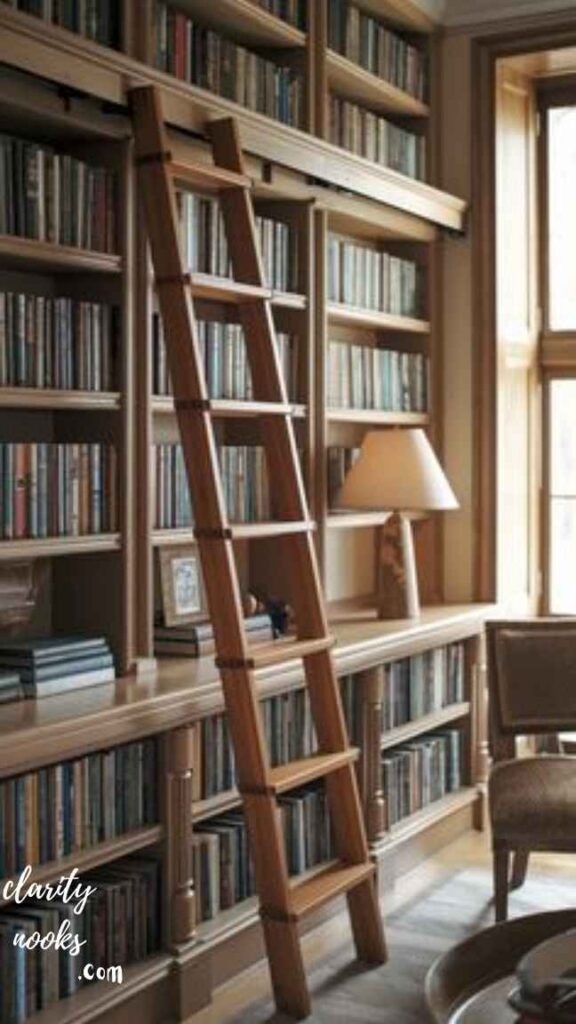
A rolling ladder is one of the most romanticized features in home library design and for good reason. It’s functional, architectural, and immediately signals that you take your book collection seriously. Standard rolling library ladder hardware kits (the track, rollers, and mounting brackets) run $150–$350 on Amazon or Rockler Woodworking. The ladder itself can be built from standard lumber for another $60–$100, or purchased as a pre-built unit.
The hardware requires a sturdy track at the top of your shelving wall. If your shelves are IKEA units, you’ll need to reinforce them with a continuous horizontal board at the top. Secure the track into wall studs not just the shelf backing. A family in Portland installed this setup in a 14-foot-high converted garage library and noted it’s the single most-commented-on feature of their home. Even if your ceilings are a standard 8 or 9 feet, a ladder adds character and accessibility to upper shelves.
Featured Answer
What is a DIY library room?
A DIY library room is a dedicated home space typically a spare bedroom, study, or repurposed room designed and built by the homeowner to house, organize, and showcase a personal book collection, often including custom shelving, seating, and lighting elements built without hiring a general contractor.
Dual-Purpose Library & Home Office
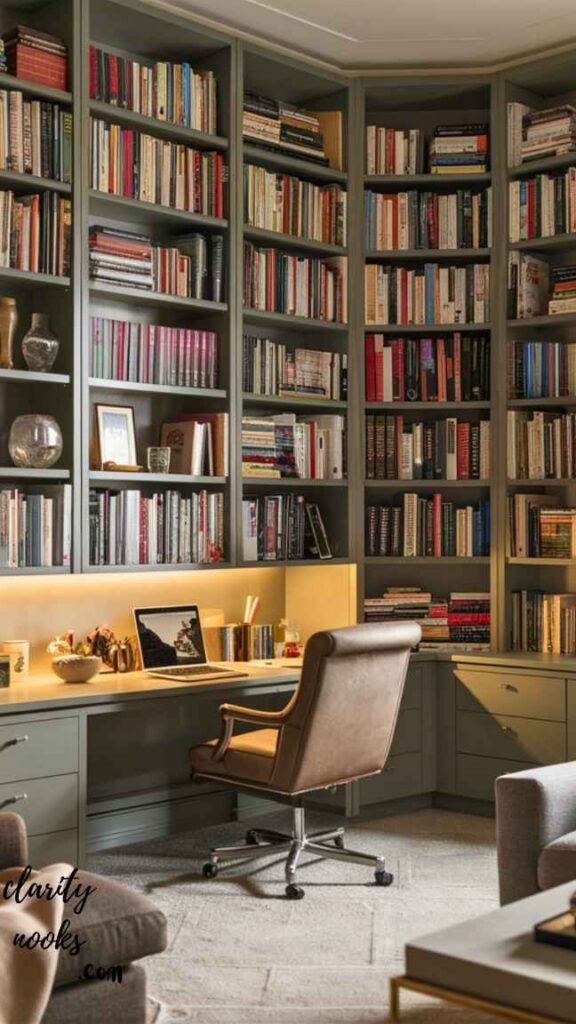
For most people, dedicating an entire room solely to books isn’t realistic. The solution is a thoughtfully designed dual-purpose space where the library and home office coexist without compromise. The key is zoning: bookshelves line the perimeter walls, a desk (ideally floating or L-shaped) occupies a corner, and lighting serves both reading and screen work. Avoid putting your monitor directly facing a bright window but natural light for reading is a gift.
A writer in London turned a 9×11 box room into a home office-library by running continuous shelving at the 7-foot height mark (leaving space below for a desk run-around) and using the area below for deep desktop surface. The shelves above eye level hold reference books; below-desk cabinets hold current reading. Her total cost: £380 in materials plus two weekends. The hybrid approach is increasingly popular especially with remote work making the home office a permanent fixture.
Also Read: Budget-Friendly DIY Media Wall Ideas to Upgrade Your Space
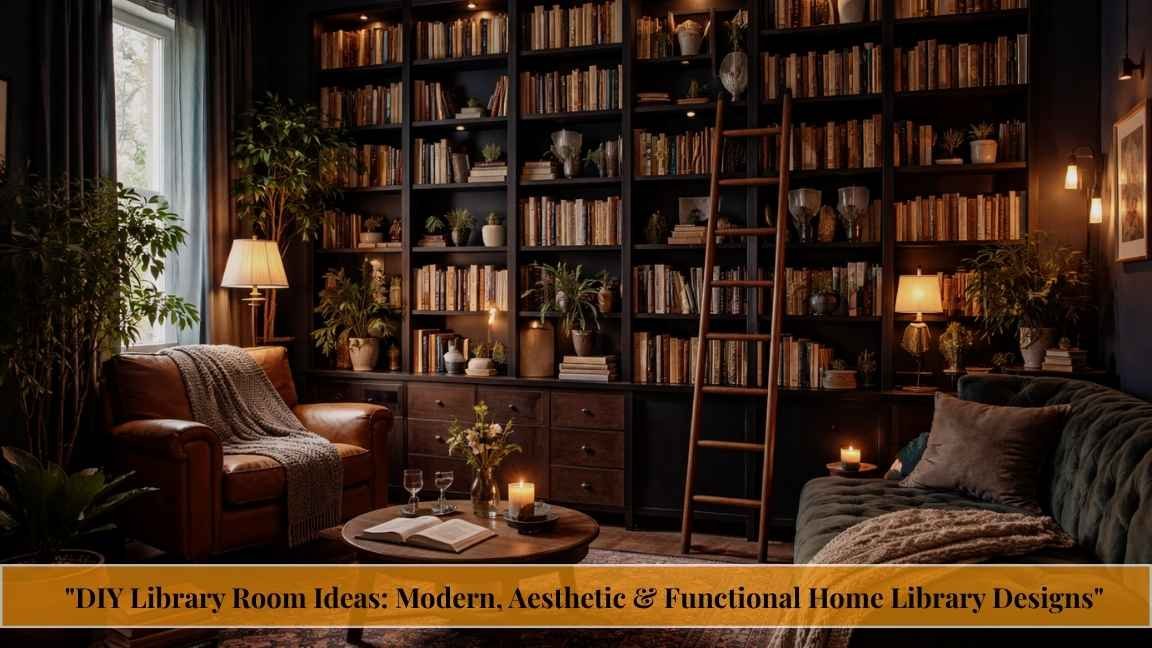
Dark & Moody Maximalist Library
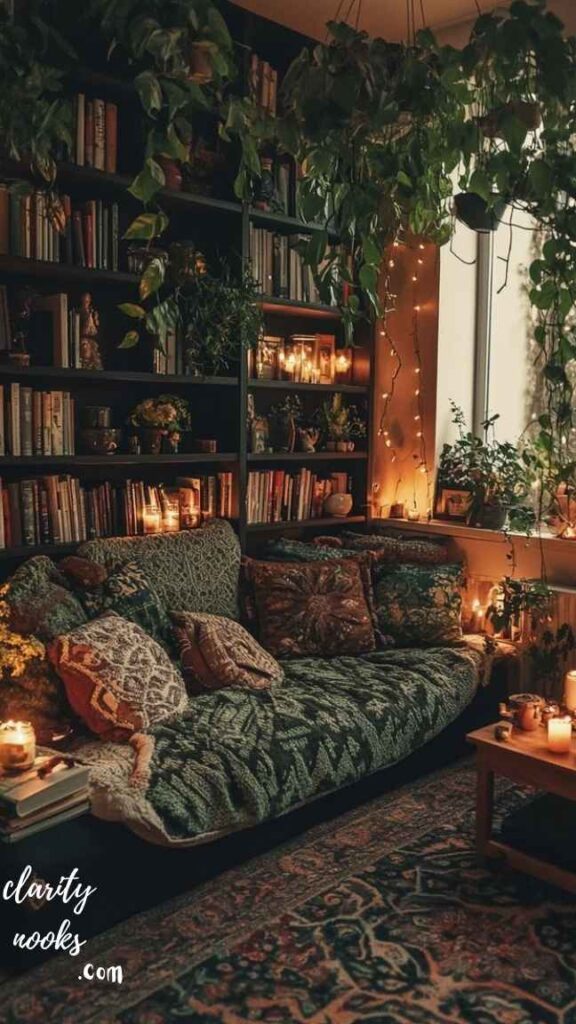
The “dark academia” aesthetic has moved well beyond Pinterest mood boards and into real homes. A moody library characterized by dark wall colors (forest green, navy, charcoal, deep burgundy), warm brass or bronze fixtures, and richly patterned rugs creates an atmospheric space that feels timeless and intentional. The good news: dark paint is cheap. Farrow & Ball’s “Hague Blue” or Benjamin Moore’s “Black Forest Green” can transform a room completely for under $100 in paint.
The counterintuitive truth is that dark walls actually make a small room feel more dramatic rather than smaller as long as you balance them with warm lighting. Wall sconces flanking shelves, Edison bulb pendants, or even a library-style green-shaded desk lamp anchor the aesthetic and provide functional light. Pair with a Persian-style rug, leather armchair, and antique globe for maximum effect. This look photographs beautifully and ages better than trend-chasing minimalism.
Read More: Simple DIY Bedroom Interior Ideas for a Stylish and Relaxing Bedroom Makeover
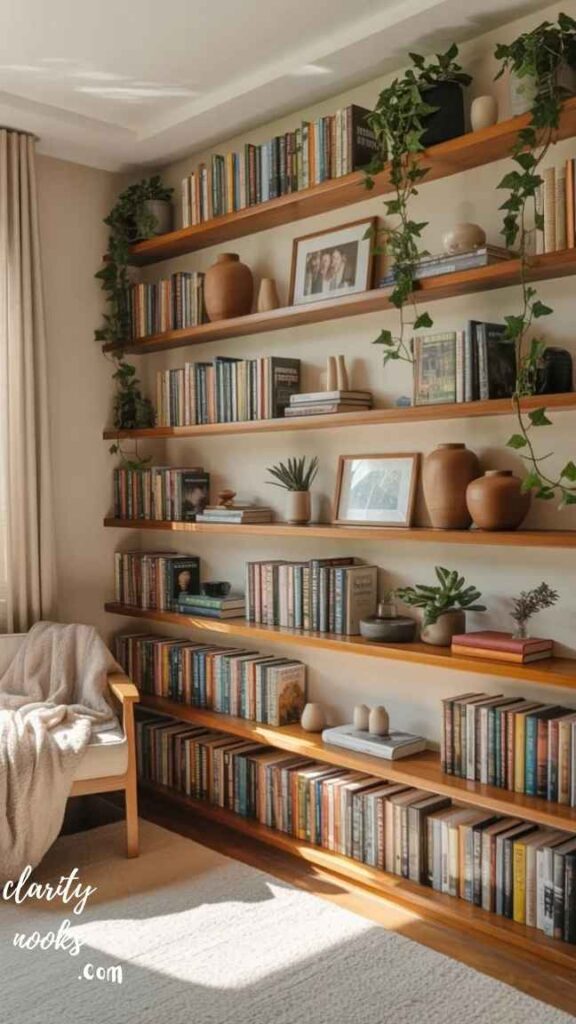
Minimalist Floating Shelf Library
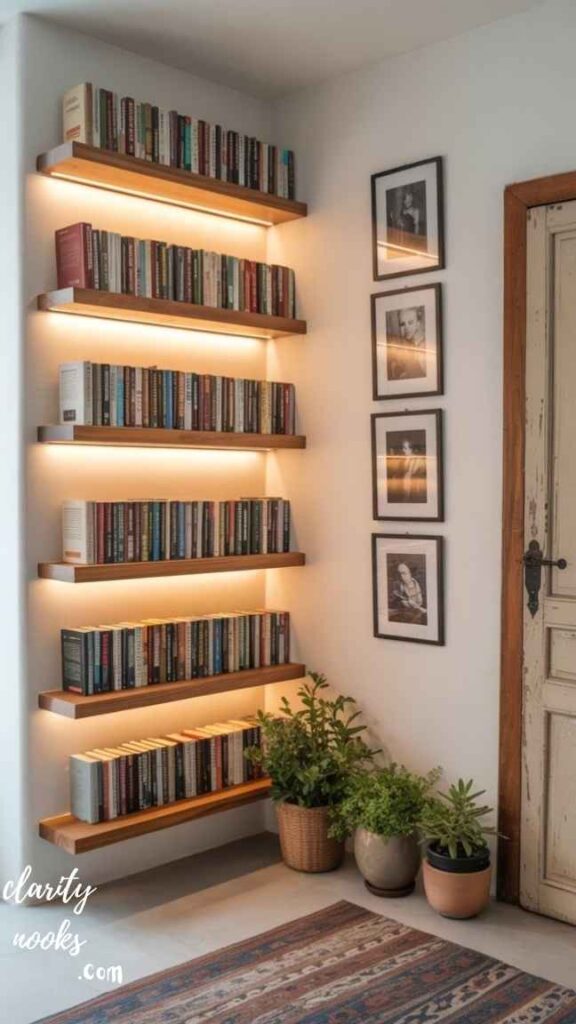
Not every book lover wants the dense, floor-to-ceiling look. A minimalist floating shelf library works beautifully in contemporary homes think Scandinavian or Japanese-influenced design. Wall-mounted floating shelves (secured into studs, not just drywall anchors) in natural wood tones, displayed with books facing out or arranged by color, create a curated gallery feel. The restraint is the point: fewer shelves, better-chosen books, more breathing room.
For structural safety, always anchor floating shelves into wall studs or use heavy-duty hollow wall anchors rated for the weight you’re placing on them. A shelf full of hardcovers weighs more than most people realize budget for 25–30 lbs per linear foot as a rough guide. IKEA’s LACK shelves work for lighter loads; for heavier collections, upgrade to EKBY or custom-cut oak or pine floating shelves mounted with concealed shelf pins.
Under-Stair Library Space
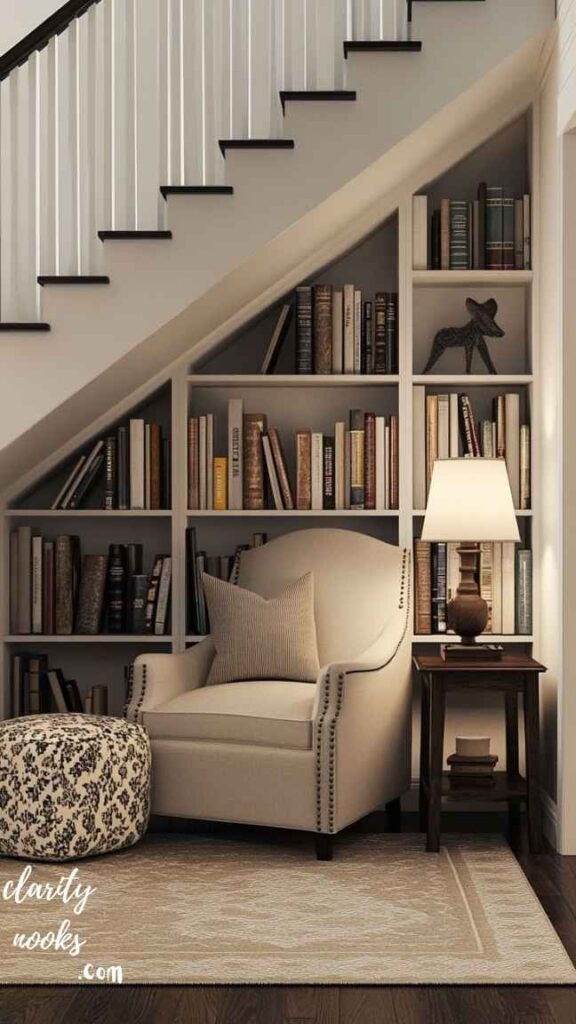
If you have a staircase with enclosed space beneath it, you’re sitting on one of the most charming and underutilized library opportunities in residential design. Under-stair libraries have exploded in popularity on home renovation platforms, and for good reason: the angled geometry creates a visually interesting, uniquely shaped reading nook that couldn’t exist elsewhere. Custom built-ins under stairs typically cost $800–$2,500 when hired out, but a confident DIYer can do it for $150–$400 in plywood and trim.
The trick is planning for varying ceiling heights. Start with the tallest section (nearest the wall) for taller books and reference volumes; use progressively shorter sections for paperbacks and smaller formats. A low cushioned bench at the end transforms it from storage into a genuine reading retreat. Add a small clip-on or track light to illuminate the space, since under stairs can be dim. One homeowner in Chicago converted a 6-foot under-stair space into a children’s library with fairy lights, a bean bag, and painted stars on the ceiling for under $200.
Bay Window Reading Corner
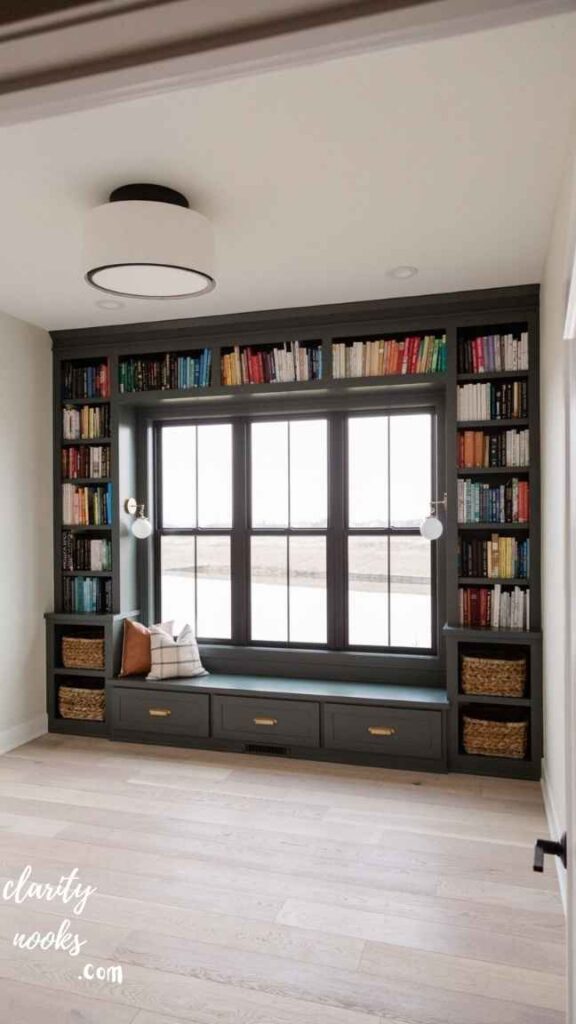
Bay windows were made for reading corners. The natural light, the slight separation from the main room, the sense of being sheltered and elevated it’s a perfect recipe. If your library room has a bay window, build a custom window seat that spans the width of the bay: a plywood box with a hinged lid for storage, a thick foam cushion (4-inch minimum), and custom fabric or even a vintage kilim thrown over the top. Line the walls on either side of the bay with short bookcases to complete the effect.
Without a bay window, you can approximate the feeling with a two-seater bench positioned against a standard window, flanked by tall bookshelves that frame the window symmetrically. Add curtains that can be drawn for evening reading and indirect lighting above or beside the window for a sense of warmth after dark. This layout works especially well in rooms where the window faces east or west morning or afternoon light is ideal for reading without glare.
Gallery Wall + Bookshelf Combination
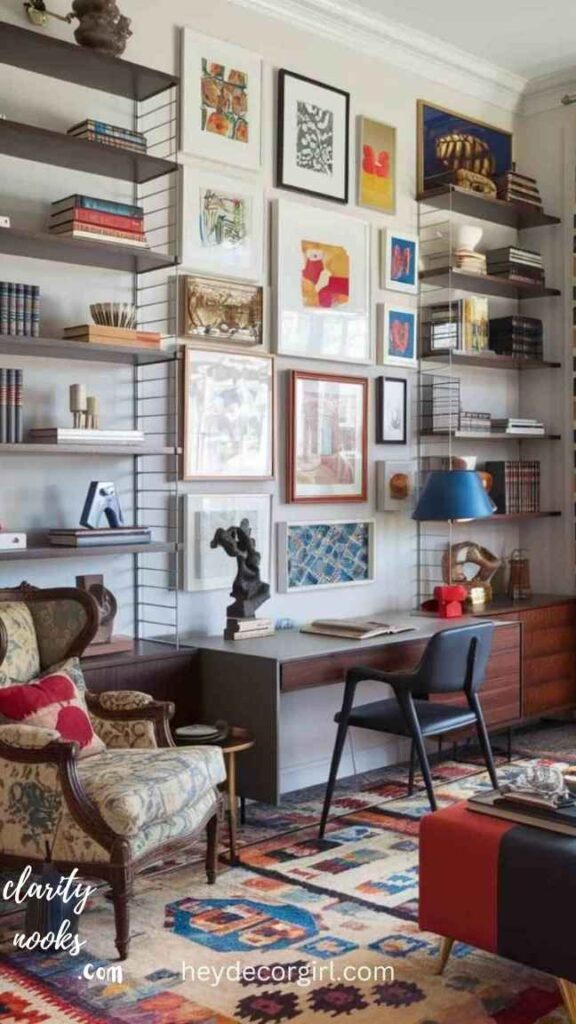
One design move that separates a truly personal library from a generic one: mixing your book collection with framed art, prints, photographs, and objects on a gallery wall. Rather than treating shelves as purely functional, use them as a display canvas. Vary the heights of books, lean framed prints against the back of shelves, tuck in small sculptures or plants, and break up horizontal runs of spines with vertical objects. This creates a curated “cabinet of curiosities” feeling that’s warm and humanizing.
The gallery wall itself on the one non-shelved wall in the room can anchor the space visually. Use a mix of print sizes, a consistent frame style (matte black or natural wood work well), and hang at eye level with a maximum 3-inch gap between frames. Include personal photographs alongside prints and art posters. This approach works particularly well in small libraries where the room needs to feel layered and rich without adding more furniture.
Budget Library Room Under $300
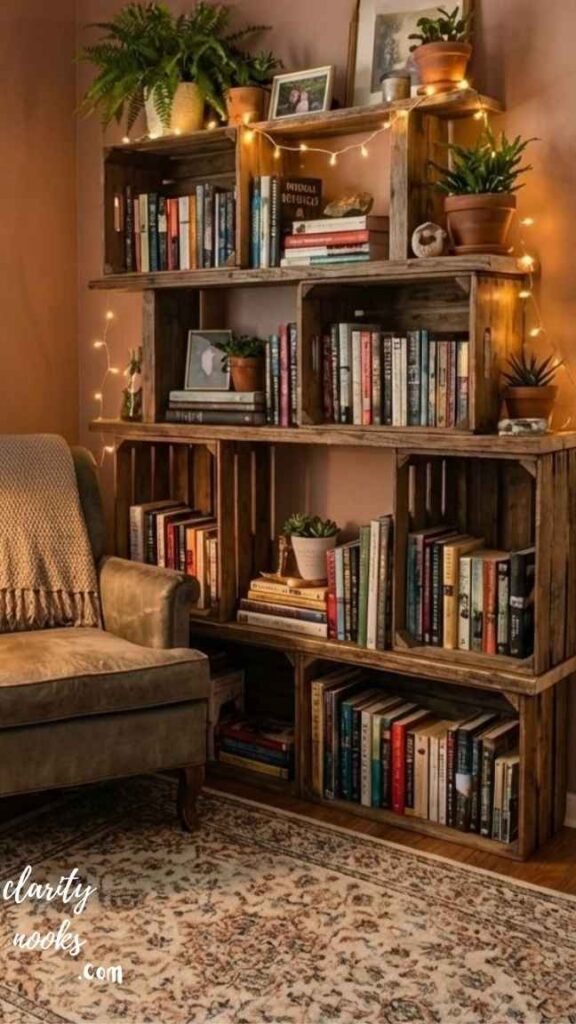
Here’s the reality most design guides skip: you can build a genuinely beautiful library room on a very tight budget. The priorities are: sturdy shelving that won’t bow under weight, good lighting (a $40 floor lamp changes everything), and paint (which costs less than $50 for a room). Facebook Marketplace and local Buy Nothing groups regularly surface second-hand bookcases, armchairs, and side tables that need only a coat of paint or new hardware to look intentional. Mismatched shelves painted the same color read as cohesive and planned.
One librarian in Philadelphia built her home library for $220 total: $0 in shelves (four from Buy Nothing), $18 in furniture paint, $45 for a vintage reading lamp from a thrift store, $80 for a rug from a discount home goods store, and $30 in crown molding from a salvage yard that she glued above the shelves for a built-in look. The total square footage was 9×9. The result looked like a design feature, not a budget compromise. The secret is intentionality every choice was made, not defaulted.
Conclusion:
A beautiful DIY library room is less about budget and more about intention. Whether you’re converting a spare bedroom, carving out an under-stair nook, or transforming a dark corner with floating shelves and a well-placed lamp the principles remain the same: plan for growth, layer your lighting, anchor everything safely, and let the space reflect who you actually are as a reader.
The best home libraries aren’t finished rooms frozen in time. They evolve with you a new shelf added here, a better chair sourced there, the book collection itself expanding to fill the thoughtful space you created for it. Start with one wall, one good light, and one comfortable seat. That’s a library.
Trend Analysis
Trend Analysis: Where Home Libraries Are Heading
The home library has undergone a quiet revival over the past several years accelerated by the shift to remote work, a broader cultural reconnection with physical books, and the “dark academia” aesthetic movement that normalized moody, book-filled interiors in mainstream design media.
Now (2026)
Color-organized bookshelves, dark wall palettes, biophilic accents (plants, natural wood), and hybrid work-library spaces dominate home design searches.
2027–2028
Smart lighting integration (automated circadian rhythm lighting for reading), acoustic wall treatments that double as decor, and AI-assisted book cataloging apps.
2028–2029
Modular library wall systems that reconfigure for different uses, passive house-style libraries optimized for natural light, and biophilic design (living walls alongside bookshelves) gaining momentum.
User behavior is also shifting: people are building home libraries not just for reading, but as deliberate “third places” within their own home spaces that feel different from the bedroom, living room, or kitchen. The rise of Substack, long-form reading, and a backlash against screen fatigue are all driving renewed interest in physical books and dedicated reading spaces.
Expert Insights & Practical Tips
These are the design and construction insights that separate a professional-looking DIY library from an amateur one:
💡
Lighting temperature matters
Use 2700K bulbs for reading zones (warm, relaxing) and 3000K for task areas. Avoid cool white (5000K+) it’s visually harsh and kills ambiance.
📐
Shelf depth: 10–12 inches is the standard
Most standard-sized books fit in 10 inches. Go to 12 for art books and reference volumes. Deeper shelves on lower units give a grounded look.
🎨
Paint shelves the same color as walls
This is the #1 trick for making flat-pack bookcases look built-in. It removes visual breaks and makes the room feel intentionally designed.
🔒
Always anchor tall shelves to wall
Any shelf over 48 inches tall should be secured to wall studs with a bracket. This is a safety requirement, not optional especially in homes with children.
🪴
Add one plant per shelving run
A trailing pothos or small fern on the top shelf softens a wall of books and adds organic life to what can otherwise be a rigid rectangular grid.
🔇
Books are natural acoustic dampeners
A room lined with books is naturally quieter. If you’re building a library adjacent to a noisy area, lean into this full shelves on the shared wall can meaningfully reduce sound transmission.
Long-Term Strategy:
Building a Library That Scales
The most common mistake in home library design is building for your current collection. Most serious readers add 30–80 books per year. If you design your library at capacity, it’s full within two years. Build with expansion in mind: plan for 70% capacity at launch, leave one wall or section for future shelving, and choose a modular system (like IKEA Billy) that can be added to without breaking continuity.
Invest first in quality on the things that don’t change: the lighting fixture, the reading chair, the rug. These anchor the room’s character and last for decades. Be more budget-conscious on shelving you’ll likely reconfigure as your collection evolves, and expensive custom built-ins can be a commitment you’ll want to modify in five years. A hybrid approach (semi-custom IKEA built-ins for permanence, floating shelves for flexibility) gives you the best of both worlds.
Think about your library as a living room for your mind. It should reflect your current intellectual life while being able to accommodate where you’re going. Build a dedicated section for “currently reading,” a section for “to read,” and one for “reference always needed” treating the space like a librarian would makes it dramatically more functional over the long term.
Future Predictions & Innovations
The intersection of technology and the home library is subtle but real. Smart home integration particularly voice-controlled ambient lighting, motorized blackout shades for screen-free reading environments, and wireless charging embedded in side tables is increasingly accessible to DIYers through platforms like Home Assistant and off-the-shelf smart plugs.
More interesting is the emergence of AI-assisted book cataloging apps (like LibraryThing, StoryGraph, and newer entrants) that use your phone camera to scan spines and build a digital catalog of your physical collection. Within the next two to three years, expect augmented reality integrations that let you “see” where a book lives on your shelf via a phone interface. For very large collections, this solves a real problem: knowing what you own.
The broader cultural trend is also worth noting. As cities become more expensive and living spaces smaller, the home library is evolving from a luxury to a mindful design choice a statement about what you value and how you want to live. Multifunctional library spaces (home office, reading room, recording studio for podcasters and educators) will become more common, and DIY community knowledge around building these spaces will continue to deepen.
Common Mistakes & Hidden Gaps
- Ignoring weight capacity: Standard drywall anchors cannot hold heavy book loads. Always locate and use wall studs, or use dedicated shelf anchors rated for 50+ lbs.
- Overhead lighting only: A single ceiling fixture creates flat, harsh light. Layer it with floor lamps, sconces, and shelf lights for a functional, atmospheric space.
- No humidity consideration: Books are sensitive to humidity. Avoid placing a library in a basement without humidity control, and don’t position shelves against exterior walls in humid climates without vapor consideration.
- Building to capacity from day one: A library that looks stuffed immediately feels stagnant. Leave breathing room both visually and practically.
- Forgetting electrical access: If you’re building a dedicated reading room, plan for electrical outlets behind shelving and near the reading chair before the shelves go in. Retrofitting is painful and expensive.
- Skipping the rug: Hard floors in a library room create echo and feel cold. A rug grounds the space acoustically and visually it’s one of the highest-value additions per dollar.
- Color-organizing without a system: Color-organized bookshelves look beautiful in photos but make books impossible to find. Use it on display shelves only keep working shelves organized by author or subject.
FAQ’s About DIY Library Room Ideas
How much does it cost to build a DIY library room?
A basic DIY library room can be built for $200–$500 using second-hand furniture, paint, and budget shelving. A mid-range version with IKEA built-ins, a quality reading chair, and new lighting typically runs $800–$2,000. Custom built-in shelving from a carpenter averages $2,500–$8,000 depending on room size and finish quality.
What size room do you need for a home library?
A dedicated home library works well in any room from 8×8 feet upward. Even a 6×8 foot room can function as a reading room with wall-mounted shelves. The most functional home libraries tend to be 10×12 to 14×14 feet enough for three to four walls of shelving plus comfortable seating.
What lighting is best for a home library?
Warm-toned bulbs at 2700K–3000K are ideal for a library reading environment. Layer ambient overhead light with a dedicated reading lamp (floor or wall-mounted, positioned over the shoulder of the reading seat), and consider shelf lighting for both function and ambiance.
How do I make cheap bookshelves look built-in?
The most effective technique is to paint both the shelves and the surrounding walls the same color, add crown molding at the top of the bookcase run, and use trim boards to fill any gaps between units and between units and the wall. This creates a continuous, custom-looking installation from flat-pack components.
Rameen Zara is the founder of Clarity Nooks, bringing over five years of experience in home décor and interior styling. She shares simple yet practical design ideas that suit real homes and everyday living. Her approach focuses on cozy aesthetics, soft color palettes, and natural textures that create warm, inviting spaces.