DIY Baby Nursery Ideas for Boys: Budget Decor That Looks Expensive

You’ve got an empty room, a growing excitement, and about a million Pinterest tabs open but nothing feels quite right yet. Designing a baby nursery for your boy should feel personal, not like you copied a catalog. The good news? With the right DIY baby nursery ideas for boys, you can create a space that’s warm, functional, and genuinely one-of-a-kind without blowing your entire budget.
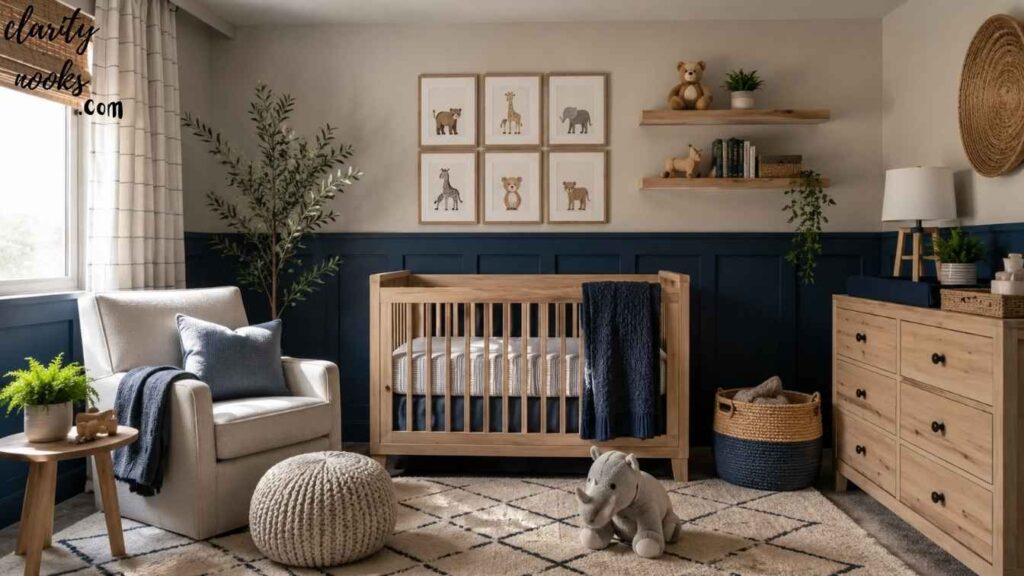
This guide goes beyond the usual ‘paint it blue and add a crib’ advice. We’ll walk you through six deeply thought-out nursery ideas, real-world design scenarios, expert-backed tips, and even what’s trending in 2026 and beyond. Whether you’re a first-time parent or refreshing a sibling’s hand-me-down room, there’s something here to inspire you.
Adventure Explorer Theme
Maps, Mountains & Wanderlust
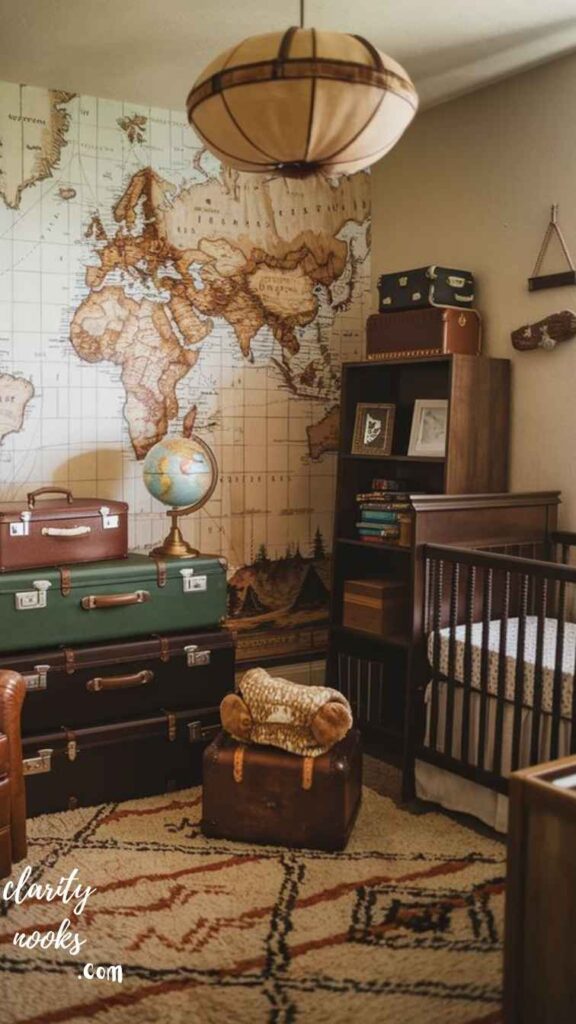
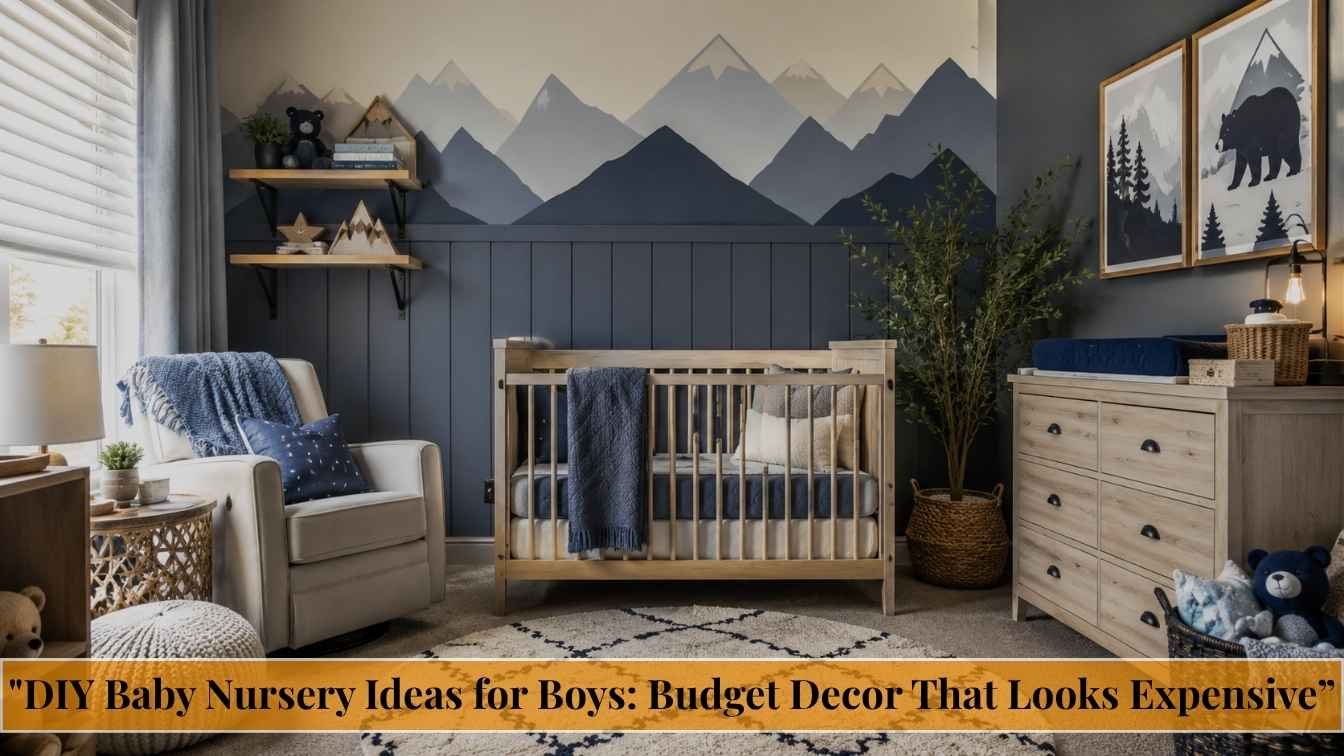
The adventure or explorer theme taps into something timeless the spirit of discovery. Parents who want to inspire curiosity and a love of the outdoors from day one find this theme both meaningful and visually stunning. It’s gender-neutral enough to grow with your child, yet bold enough to feel intentional.
Picture this: a large DIY world map mural painted in muted earth tones on the feature wall. You don’t need to be an artist peel-and-stick map murals are widely available, or you can use a projector to trace a map outline and paint it yourself over a weekend. Pair it with a wooden crib, a woven jute rug, and shelves displaying vintage-inspired globes or small potted succulents.
One real-life example: a mom in Austin, Texas, used chalkboard paint on one wall so the room could evolve as her son grew, the family began drawing their travel memories directly on the wall. What started as a nursery became a living family story map. That’s the kind of long-term magic a thoughtful DIY nursery theme can create.
What is the adventure theme in a baby boy’s nursery?
It’s a decor style built around maps, mountains, compasses, and nature designed to inspire curiosity. Use earth tones, wooden furniture, and DIY wall murals for a warm, explorer-inspired nursery.
DIY Tips for the Explorer Theme
- Use removable map wallpaper for a commitment-free feature wall
- Frame vintage National Geographic covers as artwork
- Add a teepee reading nook with fairy lights for a cozy corner
- Hang a wooden mobile with little hot air balloons or airplanes
Must Read: Easy DIY Dining Table Decor Ideas for Everyday Elegance at Home
Woodland Forest Theme
Foxes, Bears & Earthy Greens
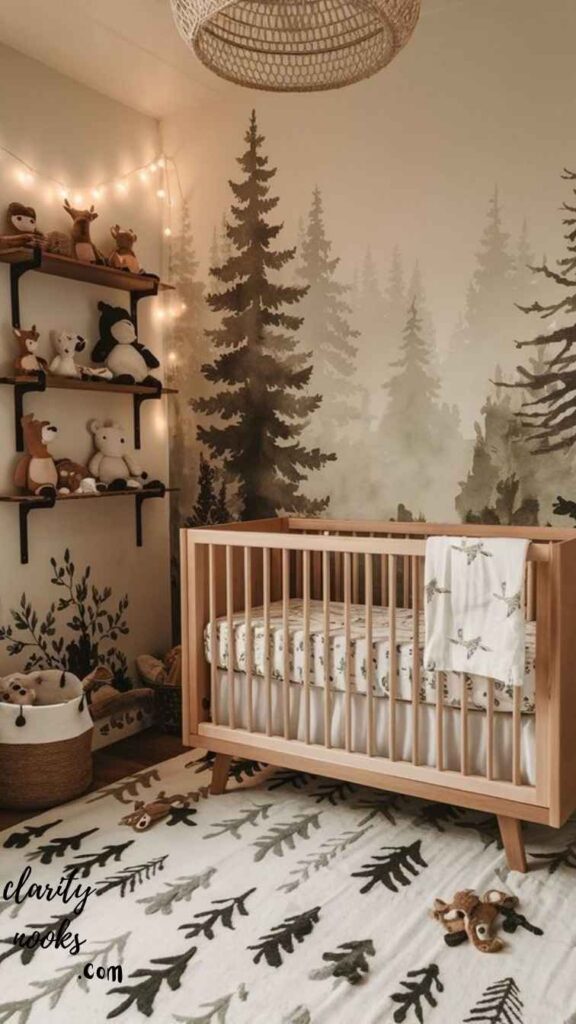
The woodland theme remains one of the most searched DIY baby nursery ideas for boys because it’s peaceful, rich in texture, and incredibly adaptable. Soft greens, warm browns, and cream tones create a soothing environment that’s proven to support better sleep which is something every new parent is chasing.
Start with a sage green or forest green feature wall. You can easily DIY this with a standard roller and painter’s tape no special skills needed. Add a tree decal (you can cut your own from brown craft paper or buy removable vinyl ones) and layer it with woodland animal plush toys foxes, deer, bears placed thoughtfully on open shelves.
Consider Sarah and James from Portland, Oregon. They had a $500 nursery budget and chose the woodland theme. They painted one wall themselves, bought second-hand wooden furniture and refinished it with a light oak stain, made felt fox garlands from a YouTube tutorial, and used fabric remnants to sew a crib skirt. The result looked like a $2,000 professionally designed nursery. DIY doesn’t mean cheap it means intentional.
Woodland Nursery Must-Haves
- Mushroom or tree-shaped nightlight for ambient glow
- Linen or cotton curtains in cream or dusty green
- DIY branch-as-curtain-rod for a rustic finishing touch
- Crochet animal mobile (beginner-friendly pattern available free online)
Read More: Trendy DIY Mini Bar Ideas for a Beautiful Home Upgrade
Outer Space Theme
Stars, Galaxies & Cosmic Wonder
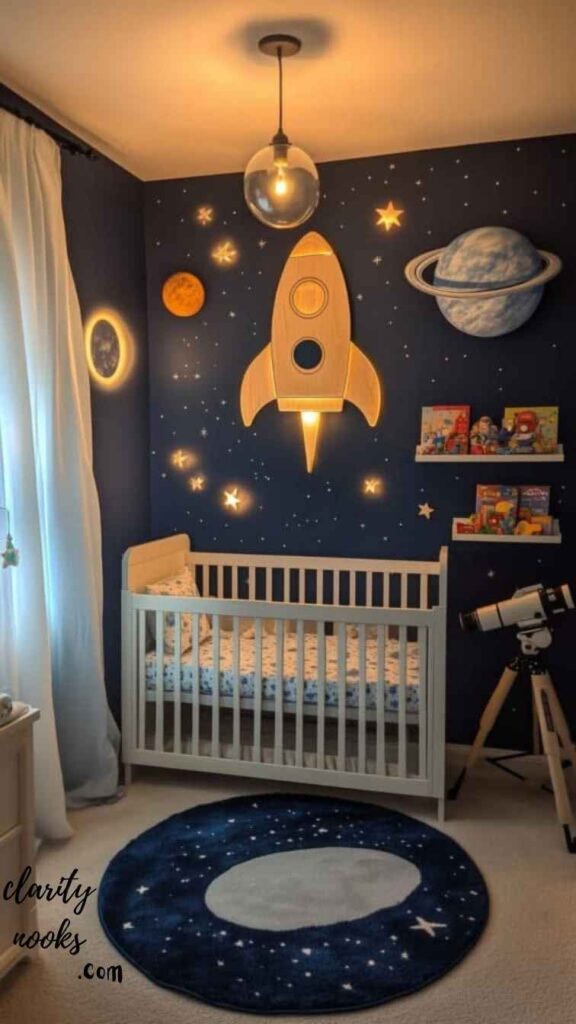
Space-themed nurseries have surged in popularity since 2023, and for good reason. They’re gender-neutral, grow beautifully with a child, and allow for some of the most dramatic and creative DIY wall art you can attempt. A deep navy or charcoal base wall with splattered white paint (simulating stars) is one of the easiest and most impactful DIY nursery projects you can do.
You don’t need a professional to do a galaxy wall. Tape off your feature wall, apply a dark base coat, then use a dry brush or sponge to add clouds of navy, purple, and teal. Flick white paint with a toothbrush for stars. Seal with a matte finish. The whole project takes about four hours and costs under $40 in materials. Pair it with glow-in-the-dark star stickers on the ceiling for a bedtime magic moment.
A father in Chicago documented his space nursery on his blog: he used a projector to paint a detailed solar system on the ceiling, added NASA mission patches framed as art, and suspended a DIY felt rocket mobile above the crib. The nursery earned over 200,000 saves on Pinterest and cost him less than $300 total. The key was patience and layering going slow gives DIY nursery projects a professional finish.
How do you make a space-themed nursery for a baby boy?
Paint a navy feature wall, splatter white paint for stars, add glow-in-the-dark ceiling stickers, and hang a rocket mobile above the crib. Budget-friendly and magical.
Also Read: DIY Outdoor Kitchen Ideas for a Perfect Backyard Cooking Space
Vintage Sports Theme
Classic Equipment, Timeless Style
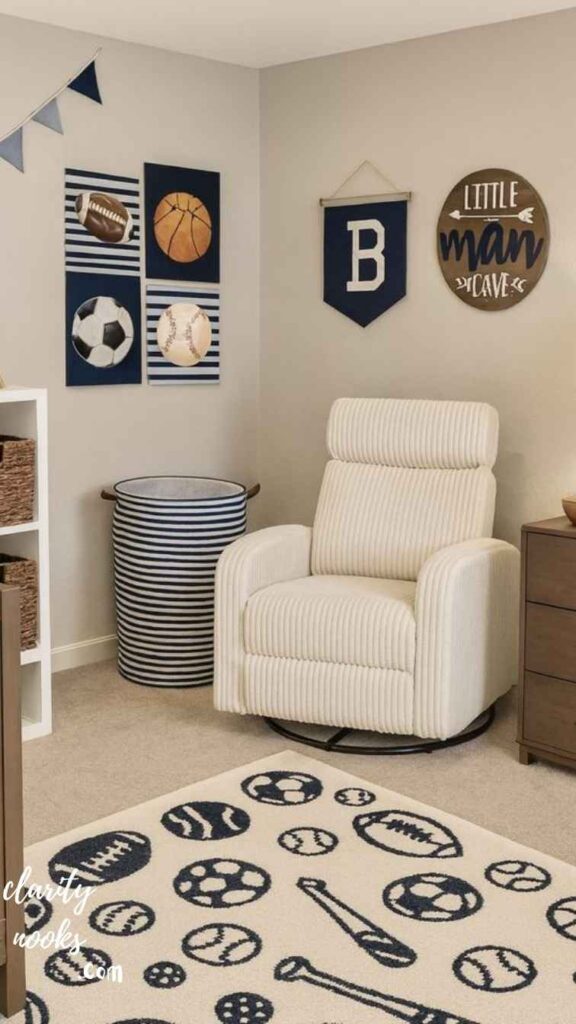
Sports nurseries often fall into the trap of being too literal team logos everywhere, bright primary colors, plastic trophies. But a vintage sports theme takes a totally different approach. Think aged leather, worn wood textures, sepia tones, and antique-style sports equipment used as decor. It’s sophisticated enough for parents to love and playful enough to delight a growing boy.
For a DIY approach, visit thrift stores for old tennis rackets, baseball gloves, leather footballs, or vintage roller skates. Mount them on the wall as art a simple wooden mounting bracket turns any piece of equipment into a display piece. Use a chalkboard panel to write your baby’s stats: name, birth date, height, and weight, framed like a sports card. This becomes an instant heirloom.
One parent couple in Nashville went all-in: Dad built a simple wooden shelf that looked like stadium bleachers, and they displayed small vintage sports collectibles on each tier. Mom stenciled a ‘Game Day’ banner above the crib in a distressed font. The whole project cost $120 and took two weekends. The crib area became the centerpiece of an entire magazine-worthy nursery.
Vintage Sports Nursery Quick Wins
- Frame a vintage sports pennant from a local flea market
- Use athletic tape to create a geometric pattern on an accent wall
- Hang a chalkboard scoreboard as a name/stats display
- Repurpose a wooden locker as a wardrobe or toy storage
Don’t Skip: DIY Outdoor Patio Ideas That Make Small Backyards Look Amazing
Boho Nautical Theme
Oceans, Rope & Natural Textures
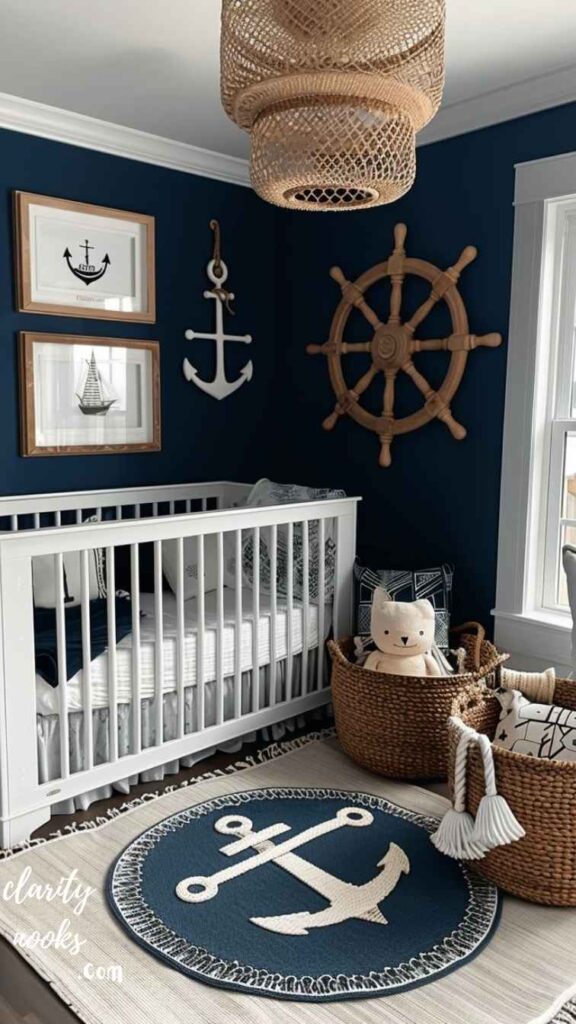
Nautical nurseries have always been popular for boys, but the traditional anchor-and-navy approach feels dated in 2026. The boho nautical twist replaces primary blues with soft slate, seafoam green, and sandy beige. It swaps plastic anchors for macramé wall hangings, rope accents, and driftwood shelves. The result feels calm, organic, and beautifully layered.
A macramé wall hanging above the crib is one of the easiest DIY projects for this theme. Basic macramé requires just cotton rope and a dowel rod both available cheaply online. A beginner can complete a simple hanging in an afternoon, and it instantly elevates the room. Pair it with a rattan crib mobile, a jute area rug, and seagrass baskets for toy storage.
This theme works especially well in coastal homes or smaller nurseries because the light, airy palette makes spaces feel larger. A family in San Diego used the boho nautical theme in a 9×9 foot nursery. By keeping furniture minimal (a crib, a glider, and two floating shelves), and layering texture through a macramé hanging, linen curtains, and a woven storage basket, the room felt intentional rather than cramped. Texture is the real hero of this theme.
💡 Pro Tip:
Avoid plastic or synthetic materials in a boho nursery. Natural materials wood, cotton, jute, rattan not only look better, they’re safer and more eco-friendly for your baby’s space.
Modern Minimalist Theme
Clean Lines, Bold Accents
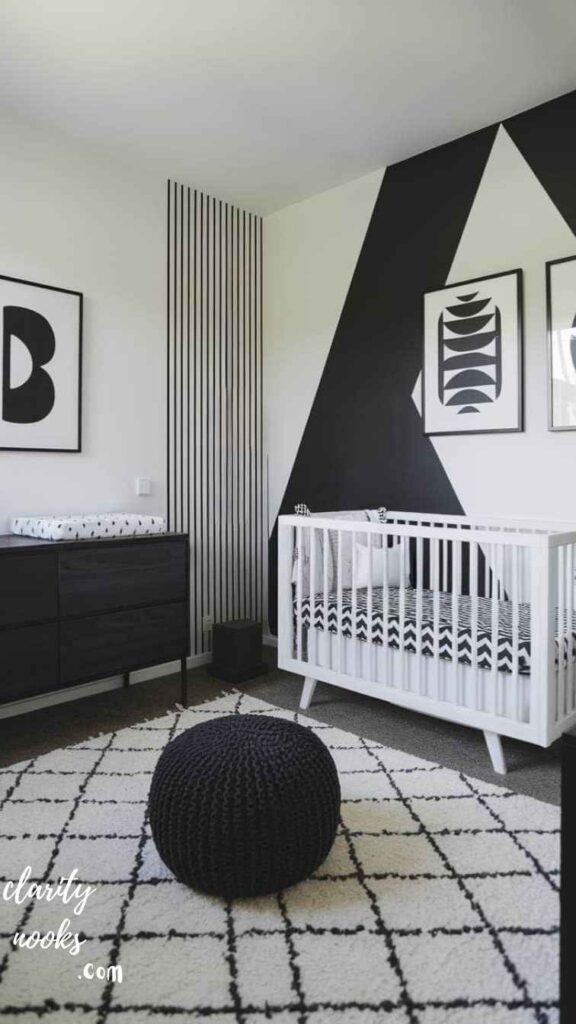
The minimalist nursery is one of the most practical and future-proof DIY baby nursery ideas for boys. It prioritizes function, clean design, and intentional color choices over clutter and novelty. And here’s the secret: minimalist doesn’t mean boring. A single bold accent color, one statement piece of wall art, and carefully chosen textures can make a minimalist nursery more striking than a room filled with decor.
Choose a white or light gray base for walls. Then pick one bold accent a terracotta orange, a deep forest green, or a warm mustard yellow. Paint a single geometric shape on one wall (a large circle, arch, or triangle) in your accent color using painter’s tape and a roller. This takes two hours and creates a designer look. Add a black-framed crib, simple white shelves, and a single oversized piece of abstract art.
The real advantage of this theme? It adapts. A minimalist nursery can easily transition into a toddler room, then a school-age bedroom, with minimal changes. You’re not locked into rocket ships or forest animals you’re locked into great design principles. Parents who choose this style often report it’s the lowest-maintenance nursery to keep looking good because there’s simply less to manage.
Minimalist Nursery Essentials
- Neutral base walls with one bold geometric accent
- Functional furniture in natural wood or matte black finishes
- Monochrome abstract art in a large format frame
- Hidden storage solutions baskets inside shelves, not on top
Conclusion
Designing a DIY baby nursery for boys is one of the most rewarding projects you’ll take on as a parent. Whether you’re drawn to the wonder of outer space, the calm of a woodland forest, or the clean lines of minimalist design, the best nursery is the one that reflects your family’s personality and sets the stage for your son’s story.
Start small pick one idea that excites you, plan your budget, and build from there. The most beautiful nurseries aren’t the most expensive ones; they’re the ones made with intention, care, and a little elbow grease. Ready to start? Pick your theme, grab your paint roller, and make something your little boy will grow up remembering.
Trend Analysis
Baby Boy Nursery Design in 2026 and Beyond
What Parents Are Choosing Right Now
In 2026, the dominant shift in baby boy nursery design is away from character-licensed themes (superheroes, cartoon characters) and toward nature-inspired, timeless, and multi-use spaces. Google Trends data shows a consistent year-over-year rise in searches for ‘gender-neutral nursery ideas,’ ‘sustainable nursery decor,’ and ‘minimalist baby room.’ Parents today are designing nurseries that will still look great at age 7, not just age 1.
Biophilic design incorporating natural elements like wood, plants, and organic textiles is the single biggest macro trend affecting nursery design. This means more rattan, jute, and linen; fewer plastics and synthetic materials. Sound machines that mimic natural environments (rainfall, forest sounds) are being integrated into smart nursery setups alongside dimmable, warm-toned LED lighting systems.
The Next 2-3 Years: What’s Coming
Expect to see AI-assisted nursery planning tools becoming mainstream by 2027 apps that let you photograph your room and overlay virtual furniture and color schemes before you buy anything. Modular furniture that transforms from a crib to a toddler bed to a desk will become the standard, not the exception, as sustainability-conscious parents demand longer product lifecycles. Smart air quality monitors will become nursery staples as awareness of VOCs in paint and furniture grows.
Practical Tips & Expert Insights
What Interior Designers and Pediatric Experts Recommend
Professional nursery designers consistently emphasize the importance of lighting as the most underrated nursery element. Natural light is ideal for daytime, but you need at least two artificial lighting levels: a bright overhead for diaper changes and nighttime feeds, and a very dim, warm nightlight for settling. Install a dimmer switch it’s a $15 DIY project that makes a massive daily difference.
From a developmental standpoint, pediatric occupational therapists suggest incorporating high-contrast patterns (black and white) in at least one area of a newborn nursery. In the first 3 months, babies’ vision is limited to about 8-12 inches and responds best to strong contrast. A simple black-and-white mobile or framed art near the changing area provides excellent early visual stimulation.
- Paint walls before assembling furniture always
- Choose washable paint finishes (eggshell or satin, never flat) for easy cleaning
- Measure your doorway before buying any large furniture
- Install all shelves and wall decor before the baby arrives never while sleep deprived
- Buy the crib mattress last so it fits your specific crib model
Long-Term Strategy
Designing a Nursery That Grows With Your Boy
Future-Proof Your Investment From Day One
The most expensive nursery mistake parents make is designing for infancy only. A room that requires a total redesign at age 2 or 3 wastes money and time. The solution is designing with a long view: invest in high-quality, neutral furniture (white, natural wood, or gray) and keep theme-specific elements swappable wall decals instead of painted murals, removable wallpaper instead of permanent wallcovering.
Floor space is your most valuable nursery asset. Resist the urge to fill every corner. A clear floor area gives toddlers and young children space to play, and it gives you space to add age-appropriate furniture as they grow. The glider you use for nighttime feeds can eventually be replaced by a reading chair. The shelves holding board books will one day hold chapter books and Lego sets. Build flex into your design from the start.
Sustainable choices also pay dividends. Solid wood furniture holds its value and can be repurposed or resold. Low-VOC paints protect your baby’s air quality and don’t yellow over time. Natural fiber rugs are easier to clean, more durable, and better looking after 5 years than synthetic alternatives. Every sustainable choice is also a long-term financial choice.
Future Predictions & Innovations in Nursery Design
How Technology and Sustainability Are Reshaping Baby Rooms
The nursery of 2028 will likely feature integrated smart-home technology from birth. Crib-integrated sleep trackers that monitor breathing and movement without wearables are already in development from multiple manufacturers. Smart lighting systems that gradually brighten in the morning to naturally wake both baby and parent are replacing jarring alarms. These technologies will become affordable and standard within 2-3 years.
Material innovation is also accelerating. Mycelium-based furniture (grown from mushroom roots) is being prototyped as a fully compostable, non-toxic alternative to MDF and pressed wood materials currently common in budget nursery furniture. Paint companies are developing carbon-negative formulations. The nursery of the near future will be not just beautiful and functional, but measurably better for the planet.
For DIY parents, AI design assistants will become genuinely useful tools not just for inspiration, but for precise room planning, material selection based on VOC content, and even guided instruction for complex DIY projects. Expect voice-search optimization in home design to matter more: ‘Hey Google, how do I paint a galaxy wall in my son’s nursery’ will become as common as googling the same question today.
Common Mistakes & Hidden Gaps
in DIY Baby Nursery Planning
What Beginners Get Wrong (And What Intermediate DIYers Miss Too)
The most common beginner mistake is starting with decor instead of function. New parents often spend hours choosing wall art and bedding before figuring out where the crib, changing table, and glider will actually go. Layout should always come first. A well-laid-out nursery with simple decor will outperform a beautifully decorated room with awkward traffic flow every single time.
Intermediate DIYers often over-decorate. They master one technique (say, a beautiful shiplap wall) and apply it everywhere, creating visual noise. Restraint is a design skill. One statement DIY project per room a feature wall, a custom mobile, a built-in bookshelf is almost always more impactful than five competing DIY elements fighting for attention.
Hidden Gaps That Even Experienced Nursery Designers Miss
- Outlet placement: Make sure at least one outlet is near the crib area for a sound machine and nightlight
- Cord management: Every lamp, monitor, and sound machine cord is a safety hazard plan cord concealment from the start
- Blackout curtains: This is non-negotiable for sleep, yet underestimated by 80% of first-time nursery designers
- Rug size: A rug that’s too small makes the room feel disjointed go larger than you think you need
- Temperature control: Babies cannot self-regulate temperature. A ceiling fan (with summer/winter mode) is a functional must-have
- Scent sensitivity: Many candles, air fresheners, and even some paints contain chemicals that can irritate infant airways choose fragrance-free everything
FAQ’S About DIY Baby Nursery Ideas for Boys
How much does it cost to DIY a baby boy nursery?
A fully DIY baby boy nursery can be completed for as little as $300-$800 if you’re willing to thrift furniture, paint yourself, and make some decor elements. Mid-range DIY nurseries with new furniture typically run $800-$1,500. The biggest savings come from doing your own painting, making your own mobile, and buying second-hand dressers or shelving to refinish.
What paint colors are best for a baby boy’s nursery in 2026?
The top trending nursery colors for boys in 2026 are sage green, slate gray, warm white, terracotta, and dusty navy. These replace the traditional bright blue as the go-to boy nursery color. Earth tones and muted naturals are preferred for their calming effect and their ability to work with multiple themes over time.
Is it safe to DIY paint a nursery while pregnant?
It’s recommended to avoid painting while pregnant due to VOC (volatile organic compound) exposure. If painting must be done during pregnancy, choose zero-VOC or low-VOC formulas, ensure excellent ventilation, and minimize exposure time. Ideally, have a partner or friend do the painting and allow the room to air out for at least 2-3 days before the pregnant person re-enters the space.
When should you start setting up the baby nursery?
Most parents begin setting up the nursery around the 28-32 week mark (start of the third trimester). This gives enough time to complete DIY projects without rushing, allows the room to air out (especially after painting), and accounts for any unexpected delays in furniture delivery. Aim to have the nursery fully ready by week 36.
Rameen Zara is the founder of Clarity Nooks, bringing over five years of experience in home décor and interior styling. She shares simple yet practical design ideas that suit real homes and everyday living. Her approach focuses on cozy aesthetics, soft color palettes, and natural textures that create warm, inviting spaces.