How to Arrange Your Furniture After Moving Into a New Home

Moving day is over. The boxes are stacked, the truck is gone, and you’re standing in the middle of your new living room wondering where the couch is supposed to go. This part of moving gets less attention than packing or hiring movers, but it matters just as much. A room with the wrong furniture layout feels cramped and awkward even if everything you own is expensive and beautiful.
Arranging furniture in a new space is different from rearranging a room you already know. You don’t have years of muscle memory telling you where the light falls in the afternoon or which wall echoes when you talk too loud. You’re starting from zero. That’s actually an advantage, you get to build good habits into your new home instead of just repeating old ones.
Here’s how to approach it room by room, without wasting a weekend hauling a couch back and forth six times.
Start With the Room’s Job, Not the Furniture You Own
Before you move a single box, decide what each room is actually for. This sounds obvious, but a lot of people skip it and just start placing furniture where it “seems to fit.”
Ask yourself:
- What will happen in this room most often?
- How many people will use it at once?
- What’s the main path someone walks through to get from one door to another?
A living room used mostly for watching TV with two people needs a very different layout than one that doubles as a play area for kids or a spot for hosting friends on weekends. Figure out the primary use first, then everything else follows from that.
Map Out Traffic Flow Before Anything Else
Traffic flow is the invisible line people walk along to get through a room. If your furniture blocks that line, you’ll be squeezing past a side table every day for the next five years, and it will annoy you more than you’d expect.
Stand in each doorway and imagine walking to the room’s most-used spot, the couch, the bed, the kitchen counter. That imaginary line needs at least two feet of clear space. Anything narrower feels tight even if the room technically has room for a chair there.
A simple trick: use painter’s tape on the floor to mark out furniture footprints before you move anything heavy. It takes ten minutes and saves you from realizing too late that the dresser blocks the closet door.
Common Traffic Flow Mistakes
- Placing a coffee table too close to the couch, cutting off the main walking path
- Facing seating away from the room’s natural entry point
- Blocking a window with a tall bookshelf when the window is your main light source
Anchor the Room With Your Largest Piece First
Every room has one piece of furniture that dictates everything else—usually a bed, a couch, or a dining table. Place that piece first, then build around it. Trying to arrange smaller items before deciding where the big piece goes usually means redoing your work later.
In a bedroom, the bed almost always goes against the longest wall that isn’t interrupted by a door or window. This gives you room on both sides for nightstands and keeps the layout balanced.
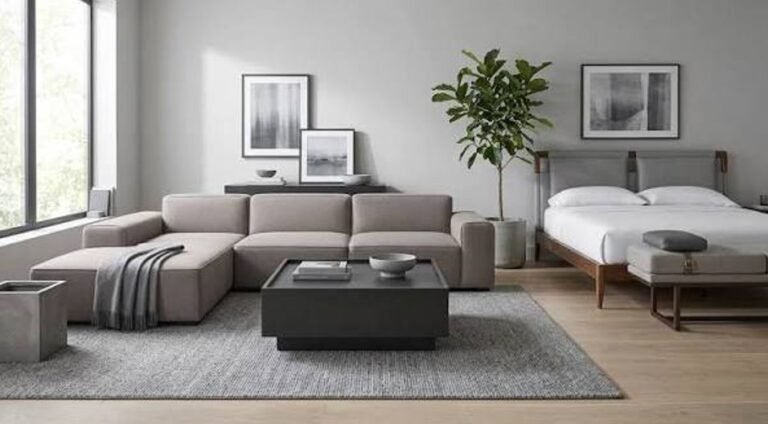
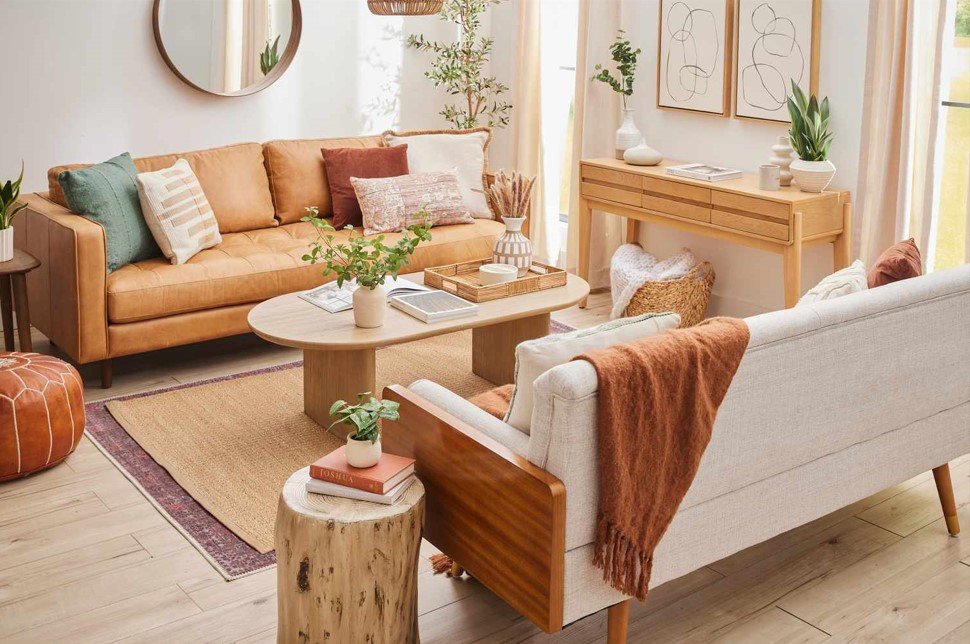
In a living room, the couch usually faces the room’s natural focal point, a fireplace, a TV, or a window with a good view. If there’s no obvious focal point, create one. A gallery wall or a media console can serve the same purpose.
Leave Breathing Room Around Furniture
New homeowners often push furniture flush against walls out of habit, thinking it makes the room feel bigger. Sometimes it does. But floating furniture a few inches off the wall, especially in larger rooms, can actually make a space feel more intentional and less like a waiting room.
A general guideline:
- Leave 14 to 18 inches between a coffee table and the couch
- Leave at least 30 inches for main walkways
- Leave 6 to 8 inches between dining chairs when pushed in
These aren’t strict rules, just starting points. Adjust based on how the room actually feels once furniture is in place.
Work With Natural Light, Not Against It
Natural light changes how a room feels throughout the day, and it’s worth thinking about before you settle on a final layout. A reading chair tucked in a dark corner rarely gets used. The same chair near a window gets used constantly.
Walk through your new home at different times of day if you can, even before the move. Note which rooms get morning light and which get afternoon light. Position seating areas and workspaces to take advantage of that, rather than blocking windows with tall furniture.
Room-by-Room Quick Guide
Living Room
Anchor with the couch, face it toward the focal point, and keep the coffee table close enough to reach from every seat without blocking the main path through the room.
Bedroom
Place the bed against the longest open wall first. Nightstands go on either side if space allows. Dressers work well opposite the bed or along an unused wall, away from the door swing.
Kitchen and Dining
If you have a separate dining area, center the table under a light fixture if there is one, and make sure chairs can pull out fully without hitting a wall or counter.
Home Office
Position your desk so you’re not facing a blank wall all day, but also not directly facing a doorway, which can feel exposed. A slight angle toward the window often works best.
Give Yourself Time Before Deciding It’s “Wrong”
It’s tempting to judge a room the first night you unpack. Resist that. Live with a layout for a few days before making changes. You’ll notice things you couldn’t predict on moving day—like a lamp switch that’s hard to reach, or a chair that blocks the closet door only when it’s open.
Small adjustments after a week of actually living in the space almost always beat trying to get everything perfect on day one.
When Heavy Lifting Becomes the Bottleneck
Even with a clear plan, moving heavy furniture into position is physically demanding, especially if you’re doing it alone or with one helper. Beds, dressers, and sectional couches are awkward to maneuver through doorways and around corners, and it’s easy to scratch floors or strain your back trying to get the placement exactly right.
This is where a lot of people bring in help just for the arranging stage, even if they handled the actual move themselves. Companies that offer professional moving services, such as Little Man Moves in St. George, Utah, often include options for placing furniture exactly where you want it as part of a full-service move, which takes the physical strain out of getting a room right.
Final Thoughts
Arranging furniture in a new home isn’t about following a rigid formula—it’s about understanding how you’ll actually use each space and building the layout around that. Start with the room’s purpose, protect your traffic flow, anchor with the largest piece first, and give yourself permission to adjust after living with it for a bit.
The goal isn’t a perfect showroom. It’s a home that works for the way you actually move through your day.
Rameen Zara is the founder of Clarity Nooks, bringing over five years of experience in home décor and interior styling. She shares simple yet practical design ideas that suit real homes and everyday living. Her approach focuses on cozy aesthetics, soft color palettes, and natural textures that create warm, inviting spaces.