DIY Front Porch Ideas to Create a Cozy Outdoor Space Fast

The most impactful DIY front porch upgrades include painting the front door, adding outdoor seating with layered cushions, installing string lights, using container gardens for seasonal color, and upgrading house numbers and hardware. Most projects cost under $150 and can be completed in a weekend.
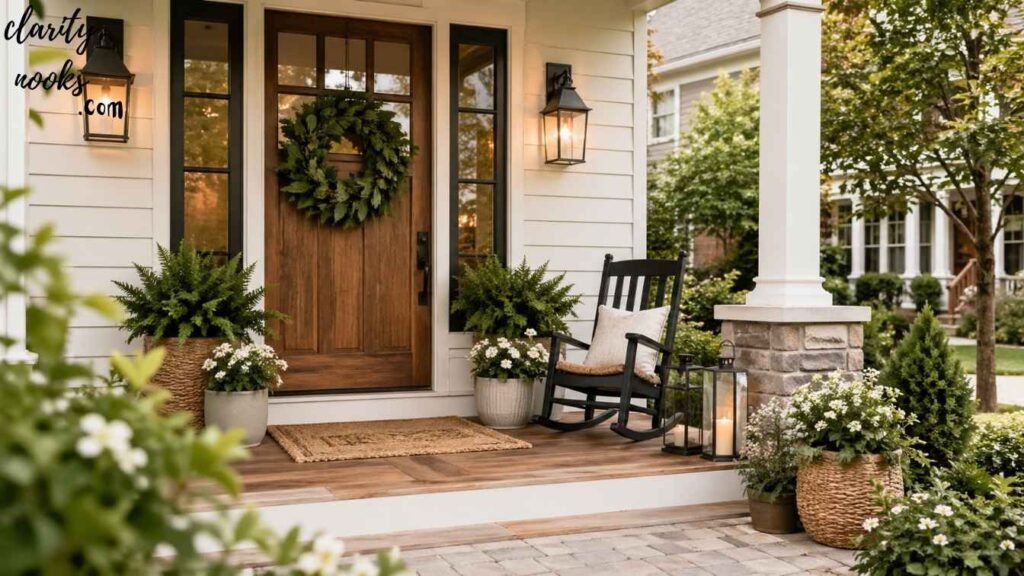
Walk up to any home that draws your eye, and you’ll notice the same thing: the front porch is doing real work. It’s not just functional it sets the entire mood of the house. And here’s the frustrating part: you don’t need a $15,000 renovation budget to get there. You need the right ideas, a free weekend, and the willingness to try.
This guide covers ten genuinely effective DIY front porch ideas, from quick one-afternoon wins to slightly bigger weekend projects. Every idea includes real examples, cost estimates, and the kind of practical advice that actually helps you execute not just inspire you to pin something and forget about it.
94%
of buyers say curb appeal matters when choosing a home
7%
avg. home value increase from strong curb appeal improvements
$150
average spend for high-impact porch transformation
2 days
is all most of these projects actually require
Paint Your Front Door a Bold, Intentional Color
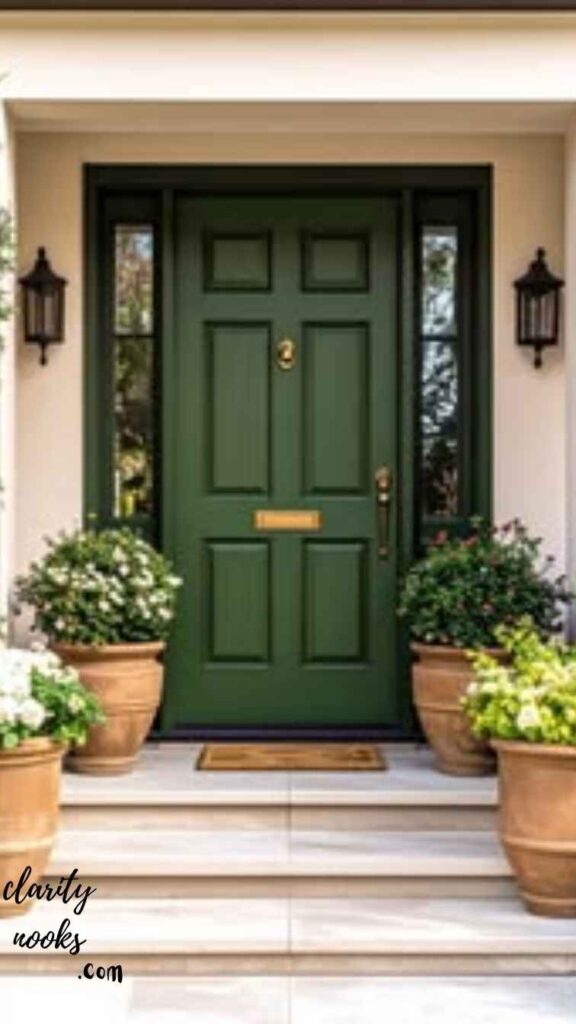
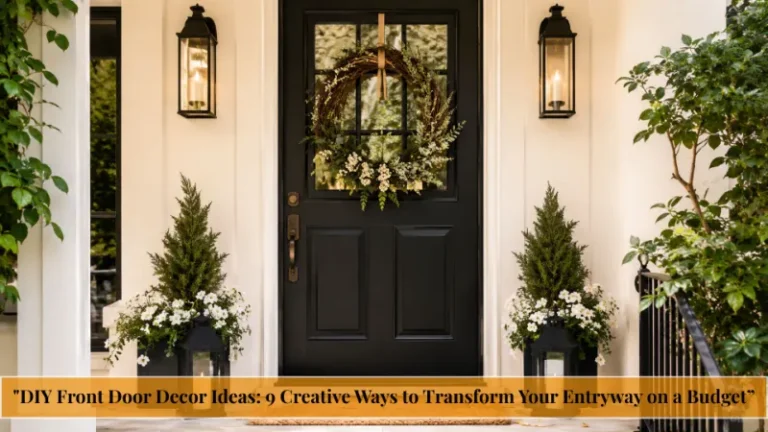
A freshly painted front door is the single highest-ROI improvement you can make to a porch and it costs between $30 and $60 in paint and supplies. The key word here is intentional. Forget beige. Think deep navy, olive green, brick red, or a moody charcoal. These colors signal personality, and buyers and neighbors respond to them instinctively.
The trick most people miss is prep work. Sand down peeling areas, apply a primer coat if you’re going lighter over a dark color, and use an exterior satin or semi-gloss finish flat paint chips too fast on doors. For a Victorian-style home in Denver, one homeowner switched from a faded tan door to Benjamin Moore’s “Hale Navy” and reported her neighbors started calling it “the blue house” within a week. That kind of neighborhood landmark status is free marketing for your home.
Expert Tip:
Paint your door and its frame the same color for a polished, designer look. Also repaint or replace the kick plate the small panel at the base. It’s often forgotten and shows wear first.
Real-Life Scenario
A homeowner in Austin, TX painted her white builder-grade door “Sherwin-Williams Emerald” a saturated deep green. Combined with a $12 brass knocker from a thrift store, the entire porch shifted from forgettable to editorial. Total cost: $48. Time: 4 hours.
Must Read: DIY Home Gym Ideas to Build a Motivating Workout Space at Home
Create a Layered Seating Vignette
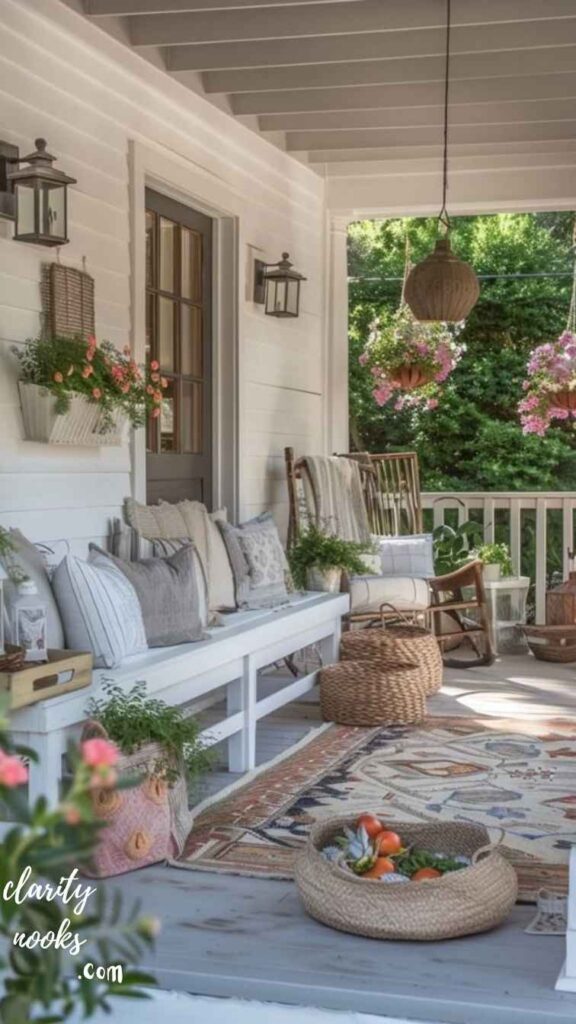
A front porch without seating is just a landing pad. Adding even one chair placed thoughtfully, with a small side table signals that this is a space meant to be enjoyed, not just passed through. The layered approach means you’re thinking in terms of a room, not just furniture: a chair, a table, a lantern, a throw, a plant. Each element builds on the last.
You don’t need matching outdoor furniture sets. A rocking chair found at an estate sale ($25), repainted in a satin black or forest green, placed on a striped outdoor rug ($45 from a discount home store) with a small metal side table ($30) creates something that looks curated, not cheap. The layering is what sells it it’s how interior designers approach outdoor spaces, and it works just as well on a 6×8 porch as on a sprawling wraparound.
Expert Tip:
When space is tight, use a bench instead of two chairs. A wooden bench with cushions takes up less visual weight and reads as intentional design, not compromise.
Read More: Smart DIY Home Exterior Ideas to Improve Style and Function
Use Container Gardens for Year-Round Color

Plants are the fastest way to make a porch feel alive. The mistake most people make is buying a flat of annuals in spring and calling it done. A smarter approach is to use containers two flanking the door, one off to the side and rotate what’s in them seasonally. In spring: pansies and trailing ivy. In summer: geraniums, lantana, and sweet potato vine. In fall: ornamental kale, mums, and pumpkins. In winter: evergreen boughs, red twig dogwood stems, and pine cones.
This seasonal rotation approach is what separates homes that look perpetually fresh from ones that look abandoned from November through March. The containers themselves matter, too aged terracotta, black iron urns, or wooden Versailles-style planters add texture and permanence even when they’re between plantings. A pair of 14-inch terracotta pots costs around $20 at a garden center and lasts for years.
Real-Life Scenario
A homeowner in Portland, OR who was selling her home spent $80 on three large containers and a mix of seasonal plants. Her real estate agent later confirmed the porch staging played a visible role in three buyers mentioning the home’s “welcoming entrance” in feedback forms.
Also Read: Creative DIY Salon Interior Design Ideas for Stylish and Functional Spaces
Hang String Lights for Instant Ambiance
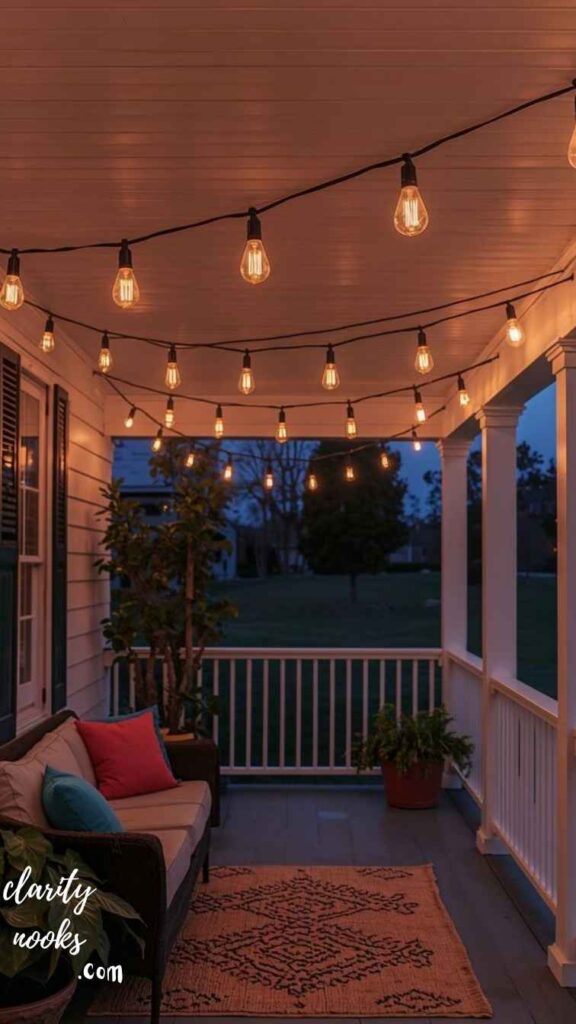
Outdoor string lights do something almost no other cheap upgrade can: they transform how the porch looks at night. And most people experience their neighborhood at dusk on evening walks, coming home after work, passing by during dinner. A porch lit by warm Edison bulbs looks inviting in a way that a porch with a single overhead fixture simply never will.
The execution matters. Cafe-style string lights (the globe Edison bulb variety) strung along the roofline and wrapped loosely around a column create a relaxed, European bistro feel. For a more structured look, run them in parallel lines across the ceiling of a covered porch. Use smart bulbs that dim a $30 upgrade and you can set the right mood from your phone. Avoid the cheap mini-light strings: they look like Christmas year-round and cheapen the effect.
Expert Tip:
Pair string lights with a flameless pillar candle or two on the steps. The layered light at multiple heights overhead plus eye-level feels far warmer than any single light source.
Don’t Miss: DIY Home Decoration Ideas to Add a Personal Touch to Your Space
Upgrade Your House Numbers and Door Hardware
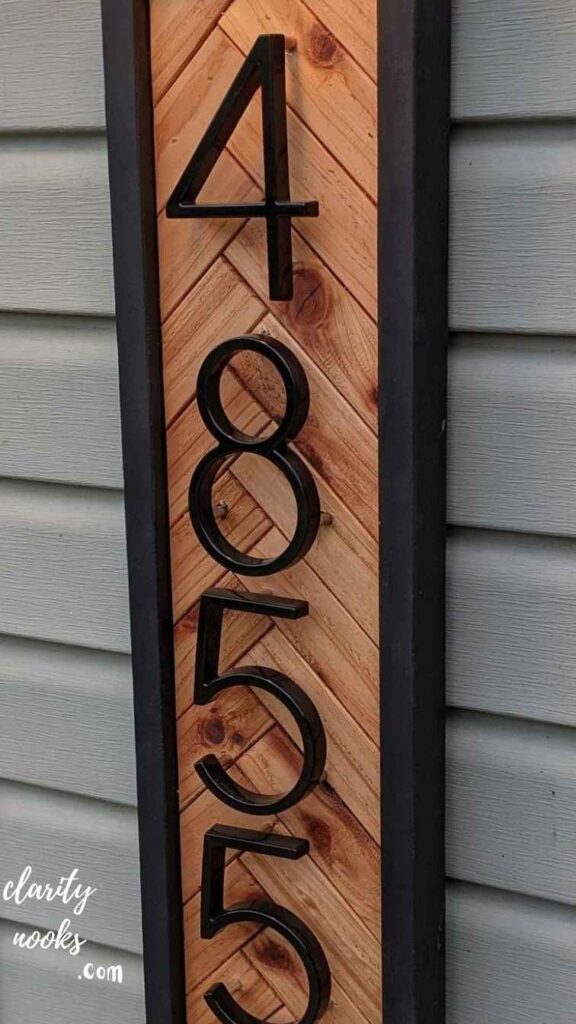
This is the detail that separates a house that looks “almost there” from one that looks completely polished. Old, tarnished brass numbers that are 2 inches tall in a Times New Roman font read as neglected. Modern brushed gold, matte black, or unlacquered brass numbers in a clean sans-serif typeface, mounted with intention (centered, at eye level, with proper spacing), immediately shift the entire face of a home.
Pair the new numbers with a coordinating door knocker, kickplate, and exterior light fixture. This is called a “hardware story,” and it’s what interior designers do inside homes too every metal finish in a room matches because our brains register coherence even when we can’t consciously name why something looks right. Budget: $60–$120 for the full set, depending on quality. Time: 2 hours.
Expert Tip:
Choose one metal finish and use it everywhere numbers, knocker, light fixture, mailbox, and door handle. Mixing finishes (brass numbers + silver light fixture + black knocker) looks chaotic, not eclectic.
Lay an Outdoor Rug to Define the Space
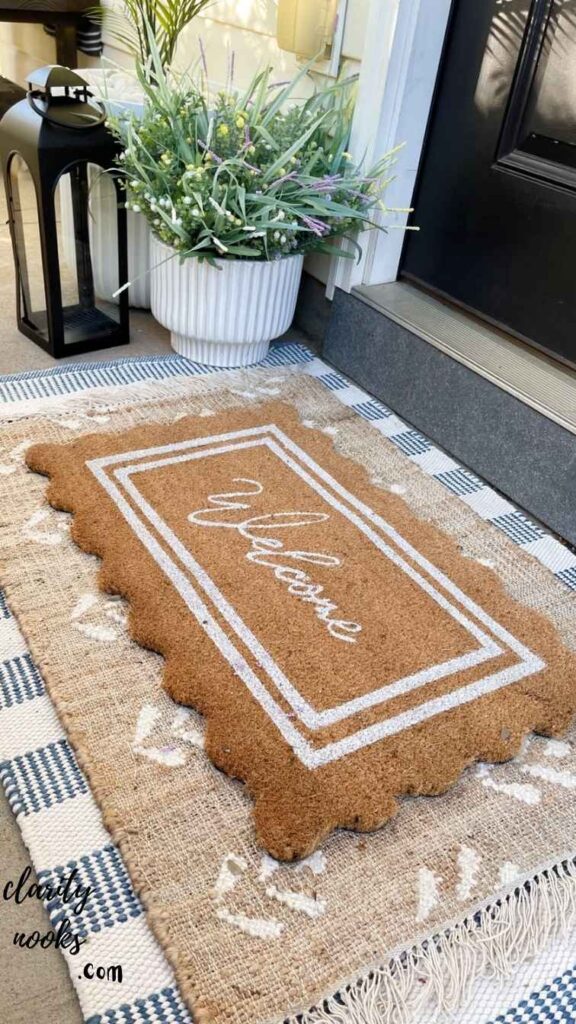
An outdoor rug is one of those upgrades that people consistently underestimate until they try it. A rug instantly makes a porch feel like an outdoor room rather than an extension of the driveway. It defines a seating zone, adds color and pattern, and softens what is often a cold, hard concrete surface. For covered porches, it’s a near-mandatory step in the design process.
The most common mistake is buying too small. On a front porch, the rug should sit under or very close to the seating not floating in the middle of the space like a doormat. A 5×7 or 6×9 is usually the right scale for a typical porch. Look for flatweave polypropylene options: they’re UV-resistant, easy to clean with a hose, and typically cost $45–$120 at places like Rugs USA, HomeGoods, or Amazon.
Refresh Porch Columns and Railings
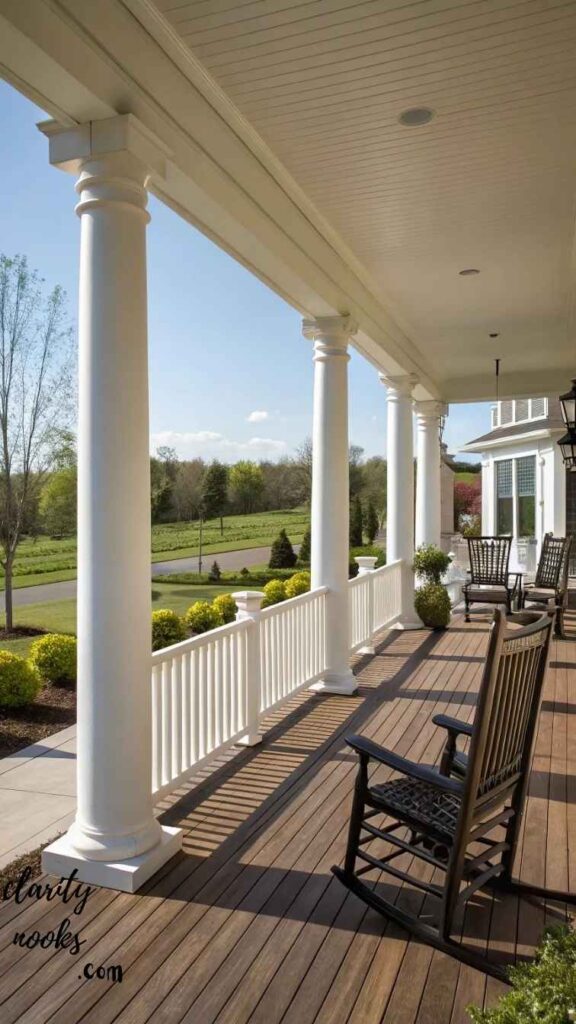
Columns and railings accumulate the most visible grime and weathering of anything on your porch, and yet they’re the easiest to miss because you stop seeing them. A fresh coat of exterior paint on columns especially white trim paint on wood or composite columns takes a porch from dingy to crisp in a single weekend. The contrast between a freshly painted column and the weathered one next to it will stop you cold.
If your railings are structurally sound but aesthetically tired, the most budget-conscious approach is cleaning (a good pressure wash removes years of oxidation and algae) followed by two coats of an exterior trim paint. If they’re damaged, consider replacing wooden balusters with composite or PVC options they don’t rot, don’t need painting as often, and cost about $2–$4 per baluster. A 12-foot railing section can often be replaced entirely for under $120 in materials.
Mini Case Study
A homeowner in New Orleans with a historic Craftsman bungalow had columns painted in the original period color a cream with sage green capitals. The paint was peeling after 8 years. A weekend scrape-sand-repaint project using Sherwin-Williams Duration Exterior ($75 for a gallon) completely restored the home’s historic character. She received three compliments from neighbors the following week.
Add a Wooden Porch Swing or Hanging Chair
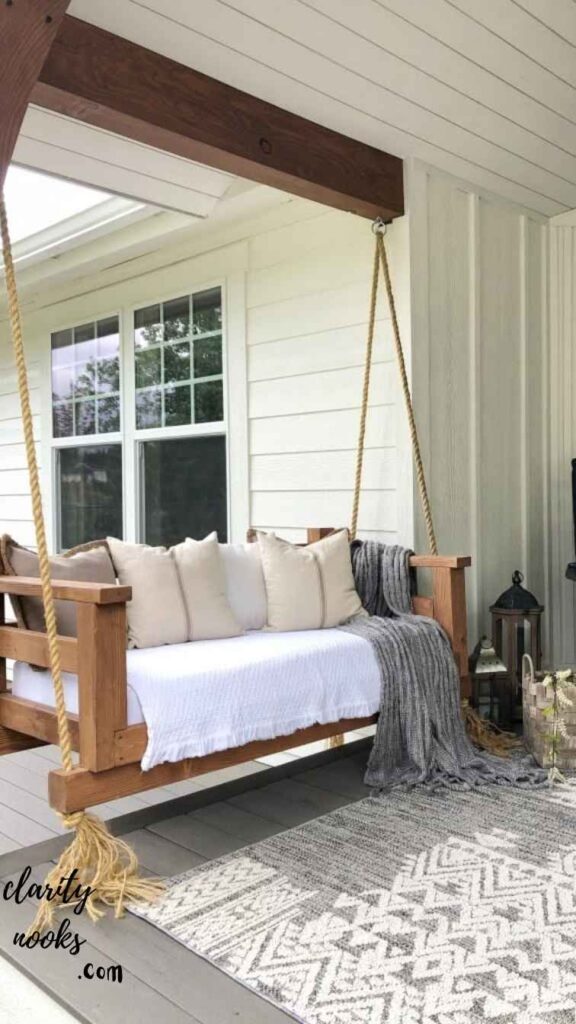
A porch swing is one of those items that signals a certain relationship with a home that the people who live there actually use and enjoy their space. It’s aspirational, but it’s also incredibly functional. A cedar porch swing from a local lumber yard or online retailer runs $150–$350 depending on size and quality, and installation on a properly reinforced ceiling beam takes about two hours.
For smaller porches or apartments with a compact covered stoop, a hanging egg chair achieves a similar effect. These became wildly popular on social media around 2022–2023, and they haven’t lost their appeal because they deliver genuine comfort alongside visual interest. They install from a single ceiling hook (rate-rated for 250–300 lbs) and can be removed in minutes if you need the porch clear. Look for versions with UV-resistant wicker or rope cheap versions fade and fray in a single season.
Frame the Entry With Vertical Privacy Screens or Trellises
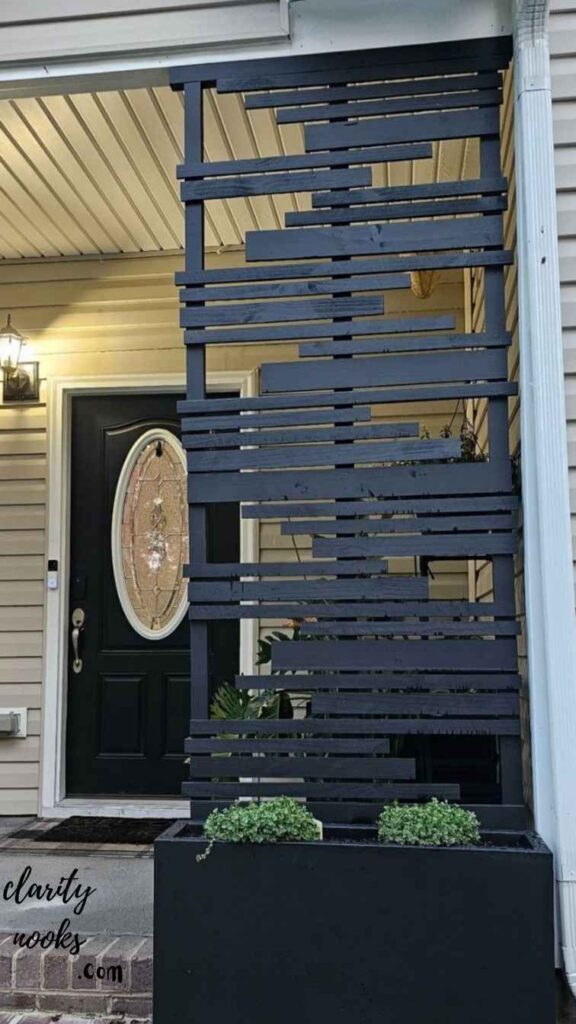
This is the DIY idea competitors almost never cover, and it’s one of the most transformative. A trellis either a freestanding structure or wall-mounted panel gives a flat, box-like porch architecture and depth. It creates a partial sense of enclosure that makes the space feel more like a room. Add a climbing vine (jasmine, clematis, or a fast-growing annual like morning glory), and within a single growing season, the effect is dramatic.
Privacy screens serve a similar purpose, particularly on porches that face busy streets or neighboring homes. Cedar lattice panels, bamboo screens, or even metal planters with tall ornamental grasses can buffer sightlines while adding visual interest. This is the kind of project that a landscape architect would charge thousands to design; a DIY version using cedar boards from a home improvement store costs $80–$200 and requires only basic tools.
Expert Tip:
For renters or anyone who can’t install permanent structures, use large freestanding planters with tall plants (bamboo, arborvitae, tall grasses) as moveable privacy screens. No drilling required.
Accessorize With Intention
Lanterns, Wreaths, and a Welcome Mat
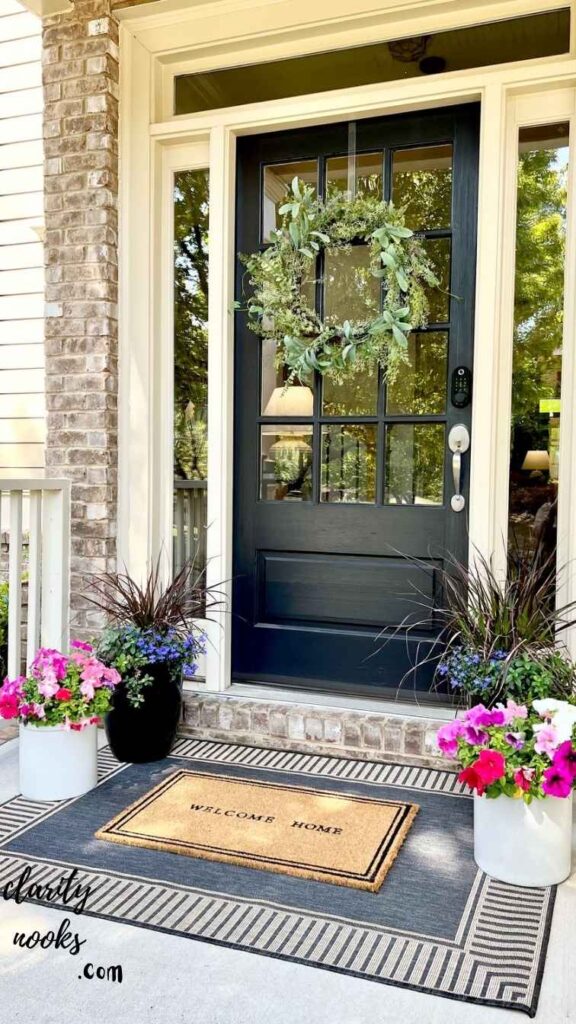
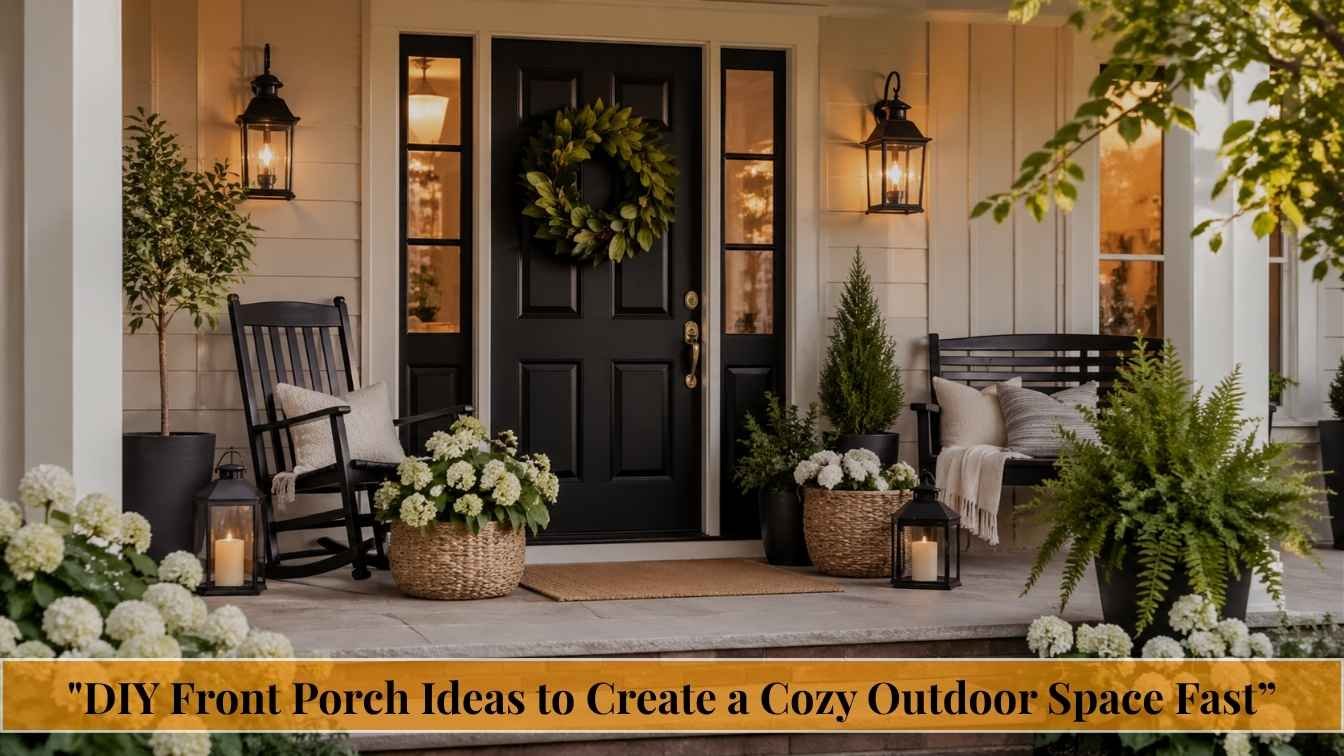
The finishing layer of any well-designed front porch is the accessories and the keyword is intention. Three items done right: a quality welcome mat (not the $8 rubber ones that look industrial), a lantern or two on the steps with flameless candles, and a seasonal wreath on the door. Done thoughtfully, these three items cost under $60 total and complete the porch in a way that makes even bare-bones spaces feel curated.
Avoid accessory overload the tendency to pile up ceramic pumpkins, wind chimes, garden flags, and mismatched planters in a visual cacophony. Choose one theme (natural/botanical, modern/minimal, coastal, farmhouse) and stick to it. Every item should either belong to the theme or be removed. Interior designers call this “editing,” and it’s the skill that separates a cluttered porch from a magazine-worthy one.
Real-Life Scenario
A homeowner in Chicago stripped her porch of 11 individual decorative items she’d accumulated over years and replaced them with: one large jute welcome mat, two black metal lanterns, and a simple eucalyptus wreath. The porch photographed for a neighborhood Instagram feature within two months. Total spent replacing: $54.
Conclusion
DIY Front Porch Ideas can truly change the way your home looks and feels from the outside. Even small changes can bring a fresh and welcoming touch. You do not need a big budget to create a beautiful space. Simple updates like adding plants, soft lighting, or a cozy chair can make a big difference. Keep your porch clean and well arranged. Choose colors that match your style. These ideas are easy to try and can quickly improve your home’s curb appeal in a natural way.
With DIY Front Porch Ideas, you can also show your personal taste and creativity. Mix comfort with simple design to create a relaxing space. Use items you already have and give them a new look. Add small details like cushions or seasonal decor for extra charm. Take your time and enjoy each step of the process. A well-designed porch can become your favorite spot to sit and relax. It can also leave a warm and lasting impression on your guests.
Trend Analysis
Front Porch Trends: 2026 and the Next 2–3 Years
Front porch design is no longer an afterthought for homeowners it’s become a deliberate extension of interior design aesthetics pushed outward. Social media platforms, particularly Instagram Reels and TikTok’s home improvement verticals, have accelerated trend cycles significantly. What started as a slow-moving category has become one of the fastest-evolving segments in home improvement retail.
2026 Now
Nature-Forward Palettes
Deep greens, aged terracotta, and warm browns are replacing the all-white farmhouse aesthetic across porch design. Earthy, natural materials dominate.
2026 Now
Outdoor Living Rooms
Porches are being styled as full outdoor rooms with rugs, layered lighting, side tables, and even outdoor-safe bookshelves or plant stands.
2027 →
Smart Porch Technology
Smart doorbell cameras, motion-activated lighting, and app-controlled outdoor string lights are becoming mainstream porch features, even for renters.
2027–2028 →
Biophilic Design Language
Living walls, moss panels, and dense container gardening are moving from boutique hotels into residential porches as plant parents demand more from their outdoor spaces.
2027–2028 →
Sustainability-First Materials
Reclaimed wood, FSC-certified cedar, and recycled composite decking are being specifically requested by buyers as environmental awareness shapes purchasing decisions.
2028 →
Personalized Addresses
Custom ceramic house number tiles, bespoke door signs, and individual entry statements are emerging as the new luxury porch touch handmade over mass-produced.
The overarching direction is clear: porch design is shifting from curb appeal as a real estate strategy to porch living as a genuine lifestyle choice. Homeowners, especially in suburban markets where yard space is shrinking, are investing in porches as primary outdoor living areas rather than transitional spaces.
Expert Insights
Practical Tips the Design Community Actually Uses
These are the strategies that professional designers, stagers, and longtime DIY enthusiasts apply not the obvious advice you’ll find on the back of a paint can.
🎯 The “Hero Item” Rule: Every great porch has one element that does the heavy visual lifting a bold door color, a sculptural planter, a statement light fixture. Everything else supports it. If you can’t identify your hero item, you don’t have a design you have a collection of objects.
📏 Scale Before Buying: Take measurements of your porch and tape out the footprint of furniture on your floor before purchasing. More buyers are disappointed by items that “seemed bigger online” than by any other single mistake in outdoor decorating.
🌦️ Material Hierarchy for Durability: Rate materials for your climate, not your taste. In humid Southern climates, wrought iron and PVC outlast raw wood. In dry Western climates, cedar performs beautifully. In coastal areas, teak and marine-grade stainless are worth the premium salt air destroys cheaper metals fast.
📸 The Phone Test: Step back to the sidewalk and take a photo of your porch. Then look at it honestly. The camera reveals proportion issues, color clashes, and asymmetry that your eyes miss when you’re standing close. Use this test before and after any porch project.
🌙 Design for Dusk: Spend $20 on a simple plug-in timer for your outdoor string lights or porch lamp. A porch that’s lit every evening at dusk consistently, automatically builds an entirely different kind of neighborhood presence than one that’s lit sporadically.
Long-Term Strategy
Building a Porch That Grows With You
The mistake most homeowners make is treating front porch improvements as isolated projects fix this, add that, replace this when it breaks. A more strategic approach thinks in phases: Phase 1 is foundation (structural integrity, paint, hardware). Phase 2 is comfort (seating, lighting, rug). Phase 3 is personality (plants, accessories, art).
This phased approach matters for two reasons. First, it means you’re spending money in order of impact rather than impulse. A new wreath means nothing if your porch floor is cracked and your door paint is peeling. Second, it gives your porch room to evolve as your taste develops and it will. Most people who engage seriously with DIY home improvement report that their aesthetic sense sharpens significantly over 12–18 months of active projects.
For long-term sustainability, choose materials that age well rather than materials that look new. Aged terracotta develops a patina. Cedar weathers to a silver gray that many designers find more beautiful than the original wood color. Copper hardware oxidizes into verdigris over years. Leaning into materials that improve with age means your porch gets better over time rather than more tired.
Future Predictions
Where DIY Porch Design Is Heading and What’s Coming
AI-powered design tools are already beginning to change how homeowners plan porch makeovers. Apps that let you photograph your porch and virtually “try on” paint colors, furniture arrangements, and plant placements are improving rapidly. By 2027–2028, expect these tools to offer hyper-personalized recommendations based on your home’s architecture, local climate, and even neighborhood aesthetic norms derived from satellite imagery.
The prefab outdoor living category pre-designed porch packages that include coordinating furniture, lighting, rugs, and planters in a single curated kit is gaining serious traction with major retailers. This “porch-in-a-box” model will make high-design porch setups accessible to homeowners who want the result without the decision fatigue of assembling it piece by piece.
Voice search is already reshaping how people find DIY porch content. Queries like “what should I put on my small front porch” and “how do I make my porch look nice without spending a lot” are increasingly typed as full natural-language questions into Google and answered by AI-powered search engines. Content that directly answers these questions in plain, conversational language will continue to outperform listicle-style articles that never get specific enough to be genuinely useful.
Common Mistakes
What’s Holding Your Porch Back (And How to Fix It)
These aren’t the obvious beginner mistakes “don’t buy cheap paint” or “measure twice.” These are the subtler errors that even confident DIYers make once they’ve tackled a few projects.
- Matching the porch aesthetic to the interior, not the exterior: Your porch should relate to your home’s exterior architecture first the roofline, the siding material, the window trim style. A modern minimalist interior doesn’t necessarily mean a stark white porch if you have a 1920s Craftsman bungalow.
- Buying porch furniture at interior furniture scale: Outdoor furniture needs to look right from 30–50 feet away from the street. Delicate side chairs that look elegant up close read as flimsy and small from a distance. Scale up.
- Ignoring the ceiling: Porch ceilings especially on older homes with bead board are often painted in the original “haint blue” for a reason. They reflect sky, deter insects, and add enormous charm. A dingy gray or unpainted porch ceiling is a missed opportunity that costs almost nothing to fix.
- Over-decorating seasonally without a year-round foundation: Pumpkins in fall, wreaths at Christmas, flags on holidays none of it matters if you have no baseline design. Build the year-round layer first; seasonal layers become additions rather than substitutes.
- Forgetting to account for drainage and water flow: Large pots directly on concrete without drainage holes will stain your porch floor. Rugs that collect and hold moisture will mold. Outdoor textiles need to breathe. These are the unglamorous details that cause expensive problems.
- Treating the front porch as separate from the path and yard: The best-looking porches connect to their landscape. The walkway, the garden borders, the tree placement these all frame the porch. Improving the porch while ignoring an overgrown hedge blocking it from view is like framing a painting and hanging it behind a curtain.
FAQ’S About DIY Front Porch Ideas
What is the cheapest DIY front porch improvement?
Painting your front door is the cheapest high-impact improvement a quart of quality exterior paint costs $18–$28, and the transformation is immediate and dramatic. Replacing door hardware runs a close second at $30–$60 for a full set.
How do I make a small front porch look bigger?
Use vertical elements (a tall planter, a trellis, a hanging basket) to draw the eye up. Choose a light color for the porch floor if it’s painted concrete it visually expands the space. Keep furniture scaled correctly and avoid clutter: one chair or bench with a small table reads as intentional, not cramped.
What color should I paint my front porch floor?
Porch floor paint in classic grays, sage greens, or warm taupes works with most home exteriors. Historically, “porch grey” (a blue-green gray) was the traditional choice for American homes, and it still looks timeless. Avoid stark white it shows dirt immediately and looks harsh in direct sun.
How long does a front porch makeover take on a budget?
Most impactful DIY front porch transformations painting the door, adding a rug, seating, and plants can be completed in a single weekend. More involved projects like repainting columns or installing a porch swing typically add another 4–6 hours of work.
Do front porch improvements increase home value?
Yes curb appeal improvements, including front porch upgrades, consistently show positive ROI. Real estate studies suggest a well-maintained, attractive front entry can add 5–10% to perceived home value and can reduce time on market. Even cosmetic upgrades like a painted door and fresh plants make a measurable first impression on buyers.
Rameen Zara is the founder of Clarity Nooks, bringing over five years of experience in home décor and interior styling. She shares simple yet practical design ideas that suit real homes and everyday living. Her approach focuses on cozy aesthetics, soft color palettes, and natural textures that create warm, inviting spaces.