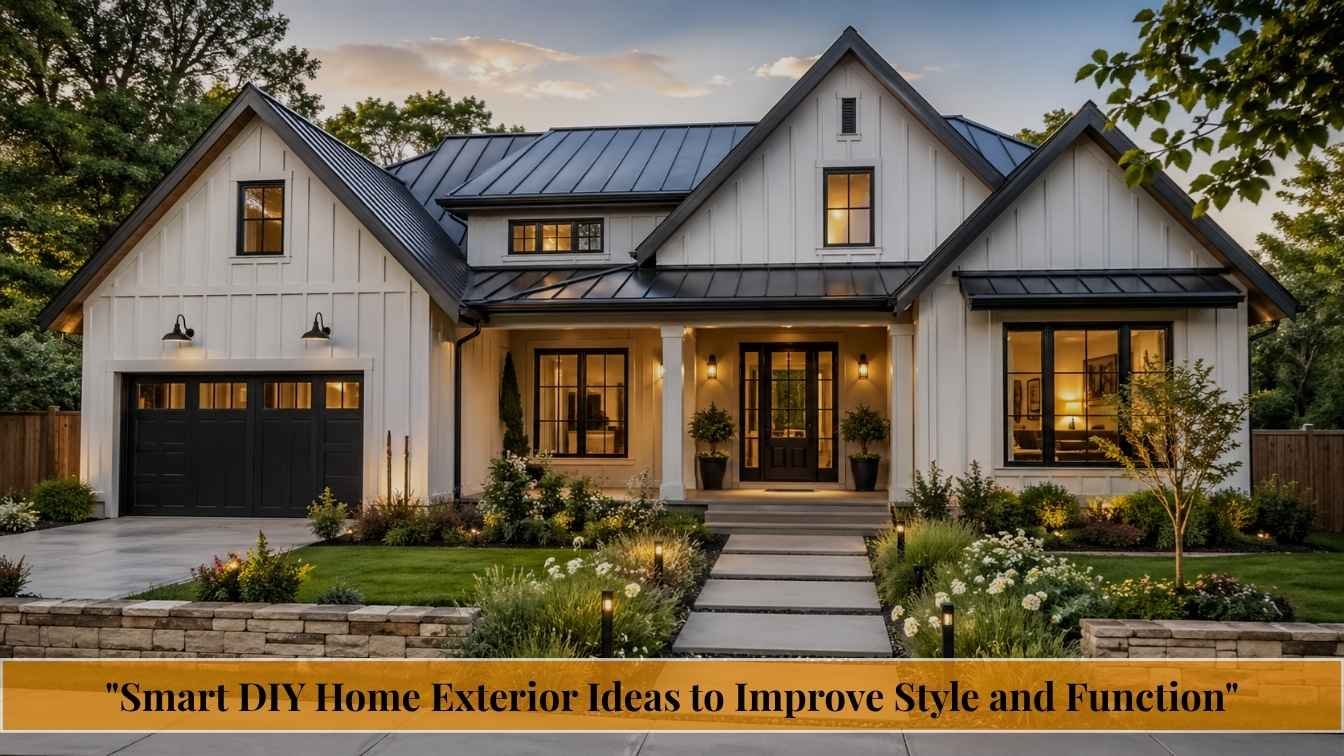
Smart DIY Home Exterior Ideas to Improve Style and Function

DIY Home Exterior Ideas are simple ways to improve the outside look of your home by yourself. They include easy tasks like painting walls, adding lights, and decorating the entrance. These ideas do not need high cost or expert skills. Anyone can try them with basic tools and a little time. DIY Home Exterior Ideas help make your home look clean, fresh, and more attractive from the outside. They also allow you to add your own style and create a space that feels warm and welcoming for everyone who visits your home.
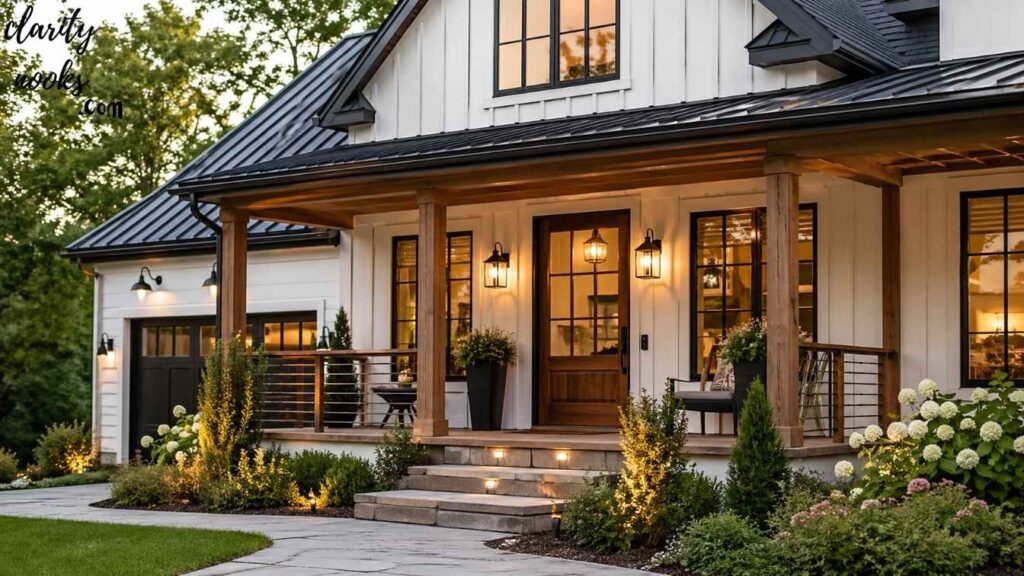
Do you want your home to look new and stylish without spending too much money? DIY Home Exterior Ideas can make a big difference with small changes. You can update your front door, add plants, or improve outdoor lighting easily. These ideas help boost curb appeal and make your home stand out in your neighborhood. They also add value over time and improve comfort. With simple planning and effort, you can turn your home exterior into a beautiful and inviting space.
94%
of real estate agents say curb appeal matters in buying decisions
7%
average increase in home sale price from exterior improvements
$500
average DIY budget to meaningfully refresh a home’s exterior
Fresh Exterior Paint
Job Done the Right Way
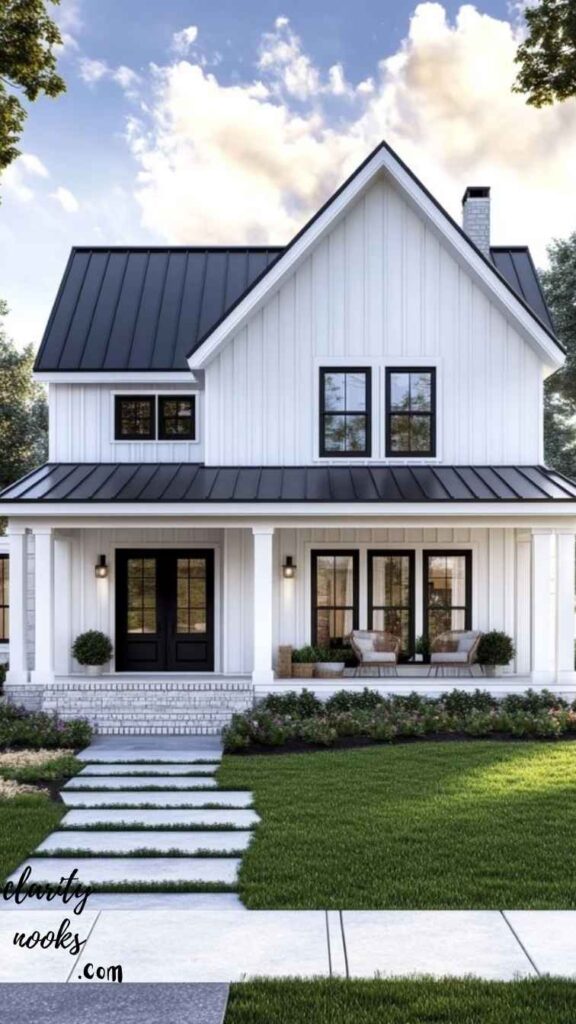
Nothing transforms a home’s exterior quite like a fresh coat of paint but most DIYers make the same critical mistake: they skip the prep work and wonder why the paint peels in two years. A professional-quality exterior paint job starts with thorough cleaning, filling cracks, sanding loose areas, and priming bare wood or patched spots before a single drop of top coat touches the surface.
When choosing color, follow the timeless “three-color rule”: one dominant color for the main siding, a secondary tone for the trim and fascia boards (usually a lighter or contrasting shade), and one accent color for the front door. If you’re unsure, Benjamin Moore’s Aura Exterior in a warm white paired with deep charcoal trim is consistently the most resale-friendly combination according to real estate staging experts in 2026–2027.
🏡 Real-Life Scenario
Homeowner in Austin, TX:
Replaced faded beige with a soft sage green exterior and crisp white trim. Cost: $420 in paint and supplies. Appraiser noted a perceived value increase of $12,000 at the next evaluation. Total weekend project.
💡 Pro Tip:
Always use 100% acrylic latex paint for exteriors. It flexes with temperature changes, resists mildew, and lasts 10–15 years. Oil-based paints crack faster in climates with real seasons.
Click Here👈
Budget range: $200–$700 depending on square footage | Time: 2–3 weekends
Read Also: Creative DIY Salon Interior Design Ideas for Stylish and Functional Spaces
Front Door Focal Point Makeover
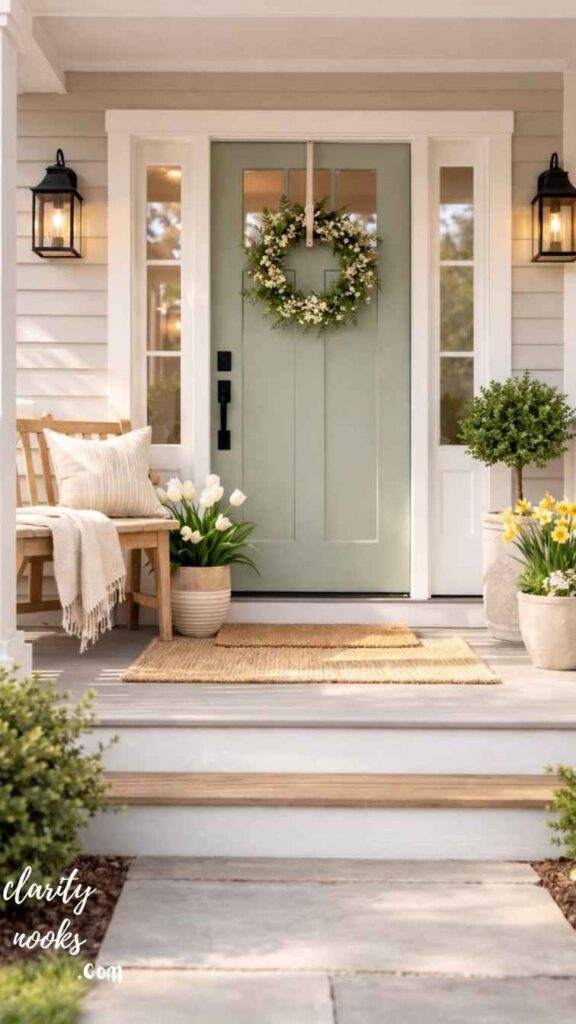
Your front door is your home’s handshake. According to Zillow’s buyer research, homes with black or dark navy front doors sell for up to $6,000 more than comparable homes with standard doors. You don’t need to replace the door itself a gallon of high-gloss exterior paint in a bold, confident color costs around $45 and takes an afternoon to apply properly.
Beyond paint, consider upgrading the hardware. Swapping cheap brass handles for brushed nickel, matte black, or unlacquered brass statement hardware immediately elevates the look. Add a new house number in a font that suits your home’s architecture modernist sans-serif fonts for contemporary homes, traditional serif or serif-adjacent styles for craftsman or colonial styles.
Featured Snippet Answer:
What is the most valuable front door color for resale?
Black and navy doors consistently yield the highest buyer interest and appraisal value lift, according to Zillow data and NAR staging reports.
Click Here👈
Budget range: $45–$400 (paint only vs. full hardware refresh) | Time: 4–8 hours
Also Read: DIY Kitchen Lighting Ideas to Make Your Kitchen Look Modern and Warm
Outdoor Lighting That Looks Like It Costs a Fortune
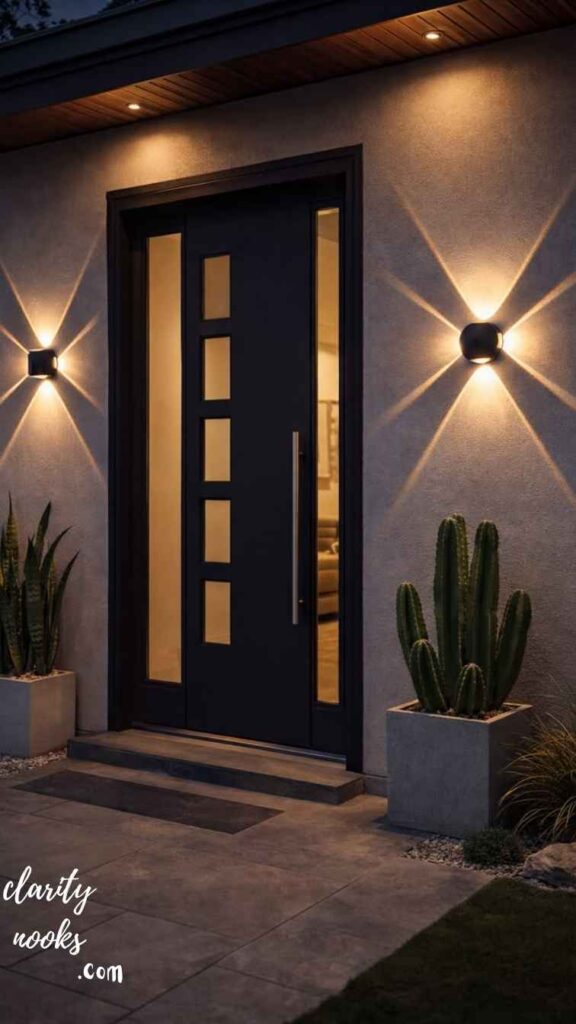
Exterior lighting does double duty: it improves security and it makes your home look deliberately designed rather than accidentally adequate. The biggest upgrade most homeowners miss is replacing dated builder-grade coach lights with oversized, contemporary fixtures. A statement lantern flanking the front door even an inexpensive one from a home improvement store reads as architectural confidence.
For the garden and pathways, solar-powered stake lights have dramatically improved in quality since 2023. The new generation offers 8–12 hours of warm LED light, weather resistance up to IP65, and auto-dimming features. Line your front walkway with them, and place uplights at the base of trees or key architectural features to create dramatic depth and shadow that flatters your home’s form at night.
Pro Tip:
Use warm white bulbs (2700–3000K color temperature) for exterior lighting. Cool white or daylight bulbs make homes look clinical and uninviting. Warm light reads as “home.”
Click Here👈
Budget range: $80–$350 | Time: 1 day
Don’t Skip: Creative DIY Kitchen Nook Ideas That Make Your Kitchen Feel Warm and Inviting
Low-Maintenance Landscaping Beds That Actually Stay Beautiful
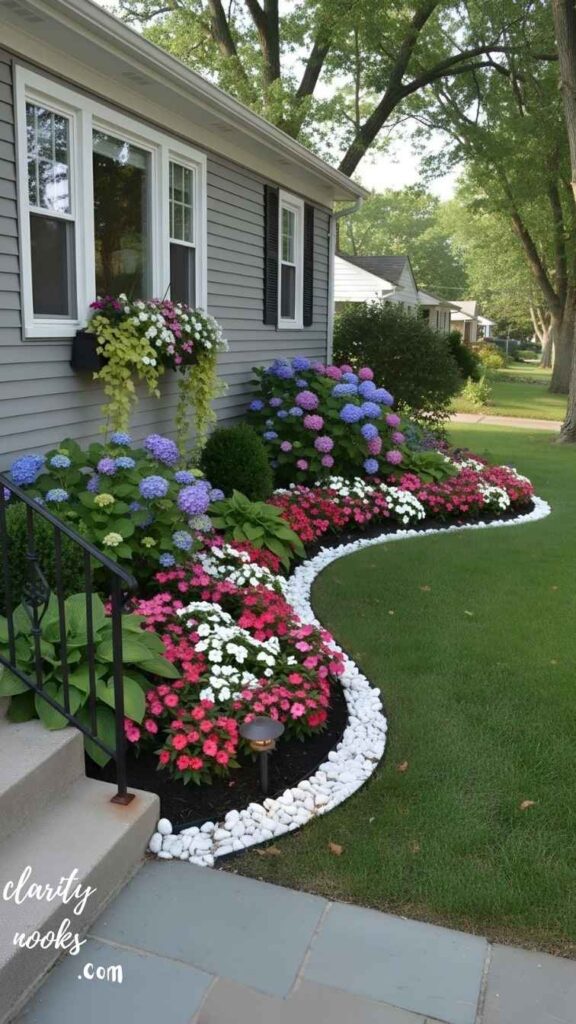
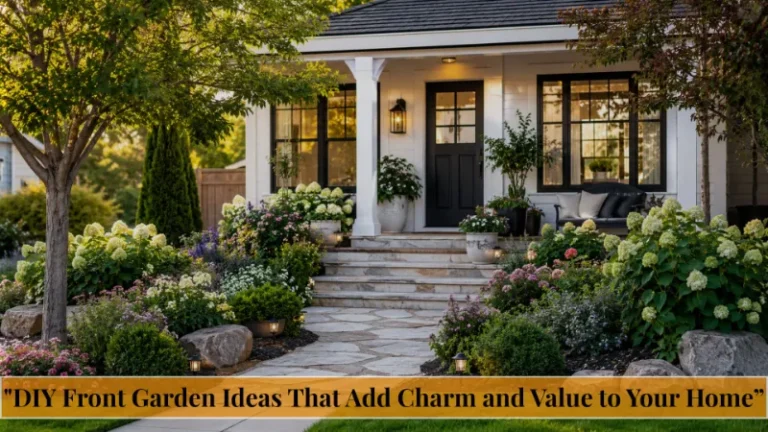
Overgrown, weedy, or completely bare foundation planting beds are among the most common curb appeal killers. The key is designing a bed you can actually maintain not one that requires daily watering and weekly pruning. A simple formula: one or two anchor shrubs (like boxwood, knockout roses, or ornamental grasses), filled with a ground-cover perennial that returns each year, and topped with a 2–3 inch layer of fresh mulch.
Fresh mulch is one of the highest ROI exterior investments you can make. A $60–$100 bag order of black or dark-brown mulch applied to all foundation beds instantly makes a home look freshly tended and intentional even if nothing else has changed. The contrast between dark mulch and green plants is visually striking in photos and in person.
🌿 Design Example:
A front bed formula that works:
Two ‘Emerald Green’ arborvitae as vertical anchors flanking the entrance → filled with ‘Karl Foerster’ feather reed grass in the middle → edged with creeping phlox as a colorful ground cover → finished with dark cocoa mulch. Zero annuals to replant. Looks designed, stays maintained.
Click Here👈
Budget range: $150–$500 | Time: 1–2 weekends
Read More: DIY Small Kitchen Ideas to Make Cooking Spaces More Functional
Shutter & Trim Upgrades That Frame Your Home Perfectly
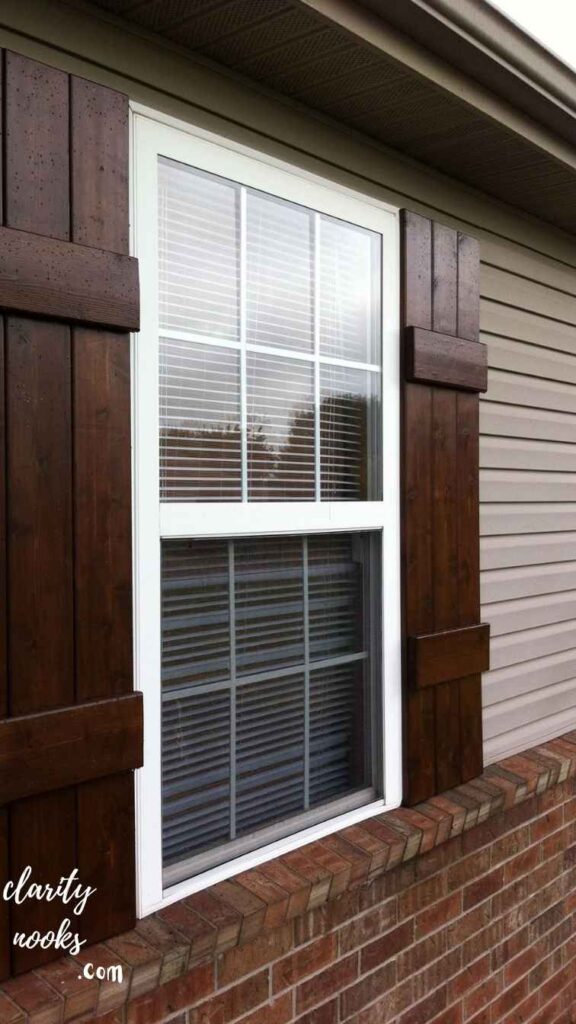
Shutters and trim are to your home what a frame is to a painting they define edges, create contrast, and signal attention to detail. If your home currently has shutters, they should be the right size (as tall as the window, never shorter), the right style (flat panel for modern, louvered for traditional), and in a paint color that reads as intentional contrast, not afterthought. Mismatched or undersized shutters hurt more than they help.
If your home doesn’t have shutters but has a flat exterior, consider adding Board and Batten accent panels to a gable end or the main facade. This architectural texture is one of the fastest-growing DIY exterior trends of 2026–2027 precisely because it transforms a plain box into something that looks custom-built for a fraction of contractor cost.
💡 Pro Tip:
Always mount shutters directly to the siding, not just to the window frame. Improperly mounted shutters look decorative in the worst sense like stickers, not structural elements.
Click Here👈
Budget range: $100–$600 | Time: 1–2 days
Must Read: DIY Home Decoration Ideas to Add a Personal Touch to Your Space
Pathway & Driveway Refresh That Changes Everything
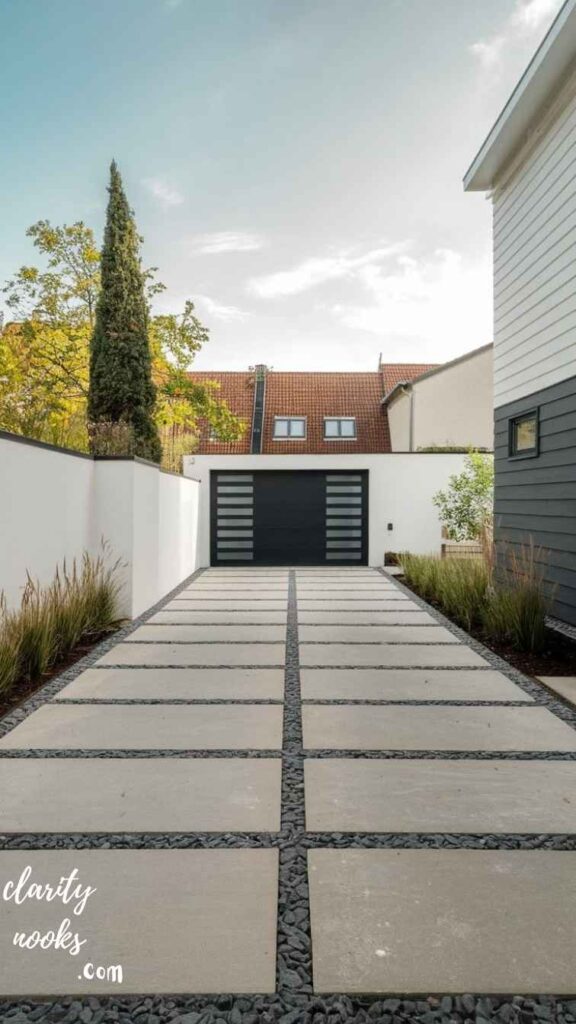
A cracked, stained concrete walkway communicates neglect before a visitor even reaches your front door. Pressure washing alone can make a 10-year-old pathway look almost new and it’s a $30–$80 rental investment that pays back instantly. For driveways, a fresh coat of driveway sealer ($40–$80 per can) applied every 3–5 years restores color and prevents further cracking.
For a genuine upgrade, consider adding a border or edging to an existing concrete walk using landscape edging stones or pavers. Even a simple double row of brick pavers along the edges of a plain concrete path elevates it from builder-grade to intentional design. It’s a $200–$400 weekend project that buyers and appraisers notice.
Click Here👈
Budget range: $30–$400 | Time: 4 hours to 1 weekend
Accent Siding & Cladding Details for Architectural Depth
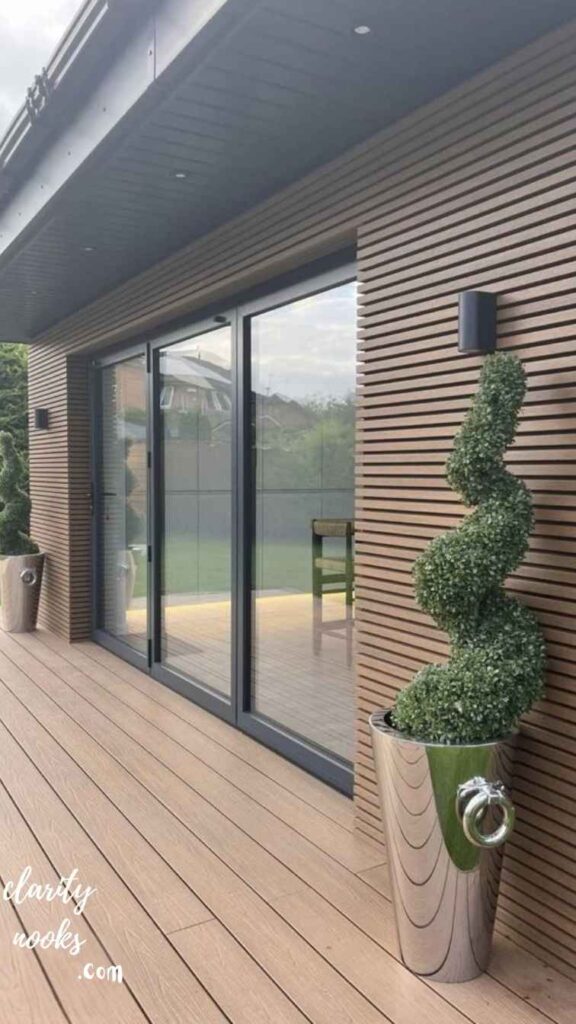
One of the most effective ways to update an older home’s exterior without replacing everything is to add an accent cladding material to a specific zone typically the gable, the lower third of the facade, or a bump-out or bay area. Popular DIY-friendly options include vertical cedar planks, shiplap-style fiber cement panels, or stone veneer kits designed specifically for DIY installation.
Stone veneer, in particular, has become remarkably easy to work with. Manufactured stone veneer panels from brands like Eldorado Stone can be cut with a grinder and mortared into place by a capable DIYer over a weekend. Adding even 40–60 square feet of stone to a front porch column base or the lower facade creates an entirely different perceived quality level for the home and adds genuine resale appeal.
🏗️ Mini Case Study
Suburban Chicago homeowner:
Added manufactured stone veneer to the lower 36 inches of their ranch home’s front facade and around the garage base. Material cost: $680. Labor: two full weekends. An informal pre-listing appraisal noted the exterior had moved from “average” to “above average” quality worth an estimated $18,000 in perceived value.
Click Here👈
Budget range: $300–$1,200 | Time: 2–3 weekends
Front Porch Staging That Makes People Want to Stay
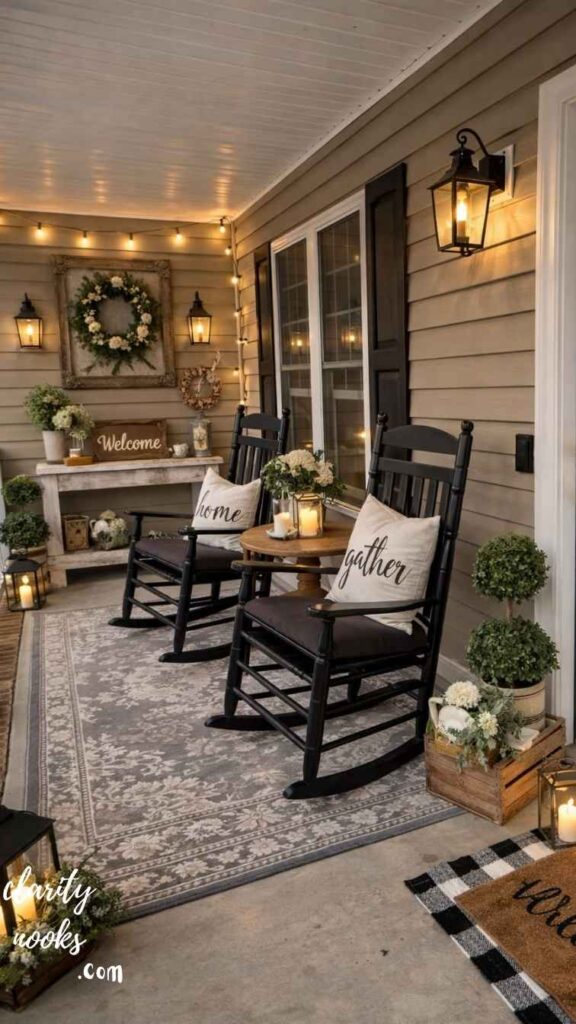
A front porch even a tiny stoop is an opportunity to communicate warmth, personality, and intention. The biggest mistake homeowners make is leaving it completely bare or treating it as a storage zone for boots and Amazon boxes. Instead, think of it as an outdoor room: a weather-resistant rug, one or two rocking chairs or a simple bench, a side table, and one or two potted plants in coordinating containers.
Scale matters here. Oversized urns or planters always read better than small, scattered pots. Two matching 24-inch planters flanking your front door with a single bold plant like a lollipop bay tree, ornamental grass, or even a well-trimmed boxwood topiary create instant symmetry and architectural formality that buyers remember.
Pro Tip:
Match your planter color to your door hardware or house number for a coordinated, intentional look. This micro-detail signals design literacy and is something that photographs incredibly well for listing photos.
Click Here👈
Budget range: $100–$400 | Time: 1 afternoon
Fence & Gate Refresh That Ties the Whole Property Together
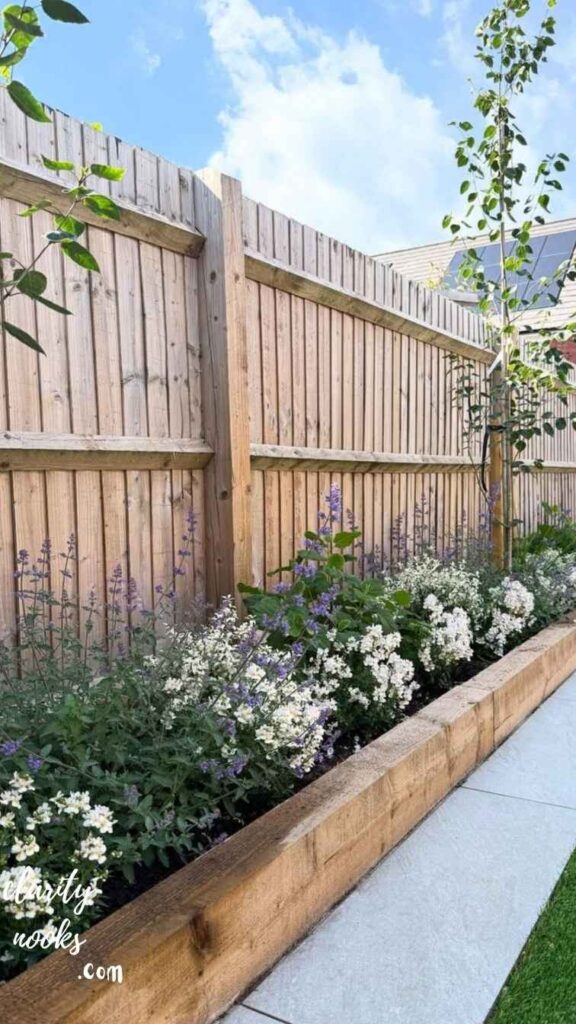
A weathered, gray-stained wood fence is one of the fastest ways to make an otherwise nice home look tired. The fix is simpler than most people think: a thorough pressure wash followed by a solid-color wood stain (not paint) in a deep charcoal, warm black, or rich brown color. Solid stain penetrates the wood rather than sitting on top of it, which means it won’t peel the way paint does and typically lasts 5–7 years with minimal maintenance.
If your fence has a few boards that are warped, cracked, or broken, replace just those boards before restaining the fresh wood and existing weathered wood will look uniform after staining. For metal fences or gates, a rust-inhibiting spray paint in matte black is a 90-minute transformation that takes a $20 investment.
Click Here👈
Budget range: $60–$300 | Time: 1 weekend
Conclusion
DIY Home Exterior Ideas are a simple way to improve your home’s look without spending too much money. Small changes can make a big difference. You can paint, add lights, or update your front door. These ideas help your home look clean and fresh. They also make your space more welcoming for family and guests. With a little effort, you can create a style you love.
DIY Home Exterior Ideas also add value to your home over time. You do not need special skills to get started. Just plan well and work step by step. Choose ideas that fit your budget and taste. Keep things simple and neat. In the end, your home will feel more comfortable and look more beautiful every day.
Trend Analysis
What’s Shaping Exterior Design in 2026 and Beyond
The most significant shift in DIY home exterior design right now is the move toward material honesty and permanence. Homeowners who bought in the 2020–2022 rush are now investing in quality improvements that reduce ongoing maintenance while improving aesthetics not quick flips. This means natural materials like wood, stone, and brick are outperforming synthetic alternatives in perceived value.
Current Trends (2026)
Dark exterior palettes continue to dominate, with deep charcoal, forest green, and navy being the most searched exterior paint colors since late 2024. This is a direct reaction to a decade of gray-and-beige dominance. Additionally, mixed material facades combining two or three exterior materials on a single home are replacing the single-material “contractor special” look. Board and batten, combined with horizontal siding and a stone accent, is the most-pinned exterior combination on design platforms right now.
Near-Future Trajectory (2027–2029)
Smart exterior integration is the next frontier. Solar roof tiles, app-controlled exterior lighting systems, and insulated cladding panels are all becoming more DIY-accessible. Expect to see modular fence systems, pre-finished cladding products, and peel-and-stick stone veneer options becoming mainstream by 2027–2028. Sustainable landscaping drought-resistant native plants, permeable pathways, and rain gardens will shift from niche to norm as water restrictions expand across the US and Europe.
Practical Expert Insights for Better Results
Always start with a photo audit
Before spending a dollar, take 10–15 photos of your home’s exterior from every angle and distance, including from across the street. Most homeowners have “exterior blindness” they stop seeing what’s actually there. Photos reveal exactly what a buyer or guest sees when they first arrive, and frequently expose issues (a missing shutter, a cracked fascia, a dead plant) that weren’t consciously registered.
The “buyer’s eye” principle
When prioritizing where to spend your budget, ask one question: “What would a buyer see in the 30 seconds between parking their car and reaching my front door?” Everything in that visual corridor the driveway condition, the walkway, the lawn edge, the front door deserves your attention first. The side and rear of the house can wait. The front-facing first impression is worth 80% of your budget.
Weather windows matter
Exterior painting should only happen when temperatures are between 50°F and 85°F and no rain is forecast for 48 hours after application. Caulking and sealing are best done in moderate temperatures. Planning your projects with seasonal windows in mind typically spring and early fall in most US climates dramatically improves results and longevity.
Long-Term Strategy & Sustainability
The most cost-effective approach to DIY home exterior improvement is what designers call the “maintenance-first, aesthetics-second” model. Before you spend money on decorative improvements, address the functional ones: replace rotted fascia boards, reseal around windows, repair foundation cracks, and clean gutters. Decorative improvements applied over functional problems are money wasted and they can actually hide issues that become more expensive over time.
For long-term sustainability, invest in materials and plants that reduce your ongoing maintenance burden. A simple rule: every time you make an exterior change, ask whether it will require more or less attention in three years than what it’s replacing. A drought-tolerant perennial garden requires far less water, time, and seasonal replanting than an annual flower bed but looks equally beautiful by year two. That asymmetry is where real long-term value lives.
Future Predictions & Innovations
AI-powered exterior design tools
Tools like Houzz’s VisualMatch and Sherwin-Williams’ ColorSnap Visualizer have already made it dramatically easier to preview exterior color combinations before committing. By 2027–2028, expect AI tools that can analyze your home’s architectural style, geographic climate, and neighborhood context to generate personalized, optimized improvement plans essentially a free AI exterior design consultant that uses your home’s actual photos as input.
Pre-finished & modular exterior products
The biggest friction in DIY exterior work is the finishing priming, painting, curing, and protecting materials on-site. The industry is actively moving toward pre-finished, pre-primed, and pre-treated products that arrive ready to install. This reduces DIY complexity and improves consistency. Pre-finished fiber cement siding with 30-year paint warranties, pre-colored concrete pavers, and modular metal fence systems with factory-applied coatings are all advancing rapidly.
Biophilic design goes mainstream
The concept of “biophilic design” incorporating natural materials, living elements, and organic forms is moving from luxury architecture into the DIY mainstream. Living walls (vertical plant installations), green roofs, and natural stone pathways are all becoming more accessible through pre-made kits and DIY-friendly installation systems. Homes that incorporate these elements will command a significant aesthetic and perceived-value premium through the end of this decade.
Common Mistakes
Common Mistakes & Hidden Gaps Most Homeowners Miss
- Skipping the caulk: Gaps around windows, doors, and where siding meets trim are the #1 source of water intrusion and paint failure. Caulking every gap before painting is non-negotiable, not optional.
- Choosing trendy over timeless colors: The color trending on Instagram in 2025 may look dated by 2028. If you’re planning to sell within 5 years, stick to colors with 10+ year staying power off-white, deep charcoal, warm navy, sage green.
- Buying cheap exterior paint: The price difference between a discount exterior paint and a premium one is $20–$40 per gallon. But cheap paint fades in 3–5 years; premium paint lasts 10–15. You’ll spend more repainting than you saved.
- Planting too close to the foundation: Plants placed within 18 inches of the foundation trap moisture and can damage your home’s structure over time. Leave adequate clearance and choose slow-growing species near walls.
- Ignoring the roofline and gutters: You can have the most beautiful front door in the neighborhood, but if your gutters are rusted, sagging, or full of debris, they’ll undermine everything. Clean, straight gutters are the baseline that everything else depends on.
- Asymmetric lighting fixtures: One coach light on the left of a garage and a different style on the right is a common mistake in older homes where fixtures have been replaced individually. Matching fixture pairs read as intentional design; mismatched pairs read as neglect.
- Intermediate mistake over-styling the porch: Too much furniture, too many plants, too many decorative elements on a small front porch reads as cluttered rather than welcoming. Edit aggressively. One or two elements done beautifully beats six elements done adequately every time.
FAQ’S About DIY Home Exterior Ideas
What is the single highest-ROI DIY exterior improvement?
A fresh coat of exterior paint in a well-chosen color consistently delivers the highest ROI among all DIY home exterior projects. The NAR reports an average 107% ROI on exterior paint, meaning you typically recoup more than you spend. A front door repaint specifically yields up to 6,000% ROI according to Zillow’s data.
How long does exterior paint last?
Premium 100% acrylic latex exterior paint lasts 10–15 years on properly prepared surfaces. Cheap latex paints typically last 3–5 years. Proper surface prep (cleaning, caulking, priming) is more important than the paint itself for longevity.
What exterior home improvements add the most value for resale?
In order: exterior paint (107% ROI), new front door (188% ROI for steel, per NAR), new garage door (194% ROI), landscaping (100%+), and outdoor lighting. The exact returns vary by market, but these categories are consistently the top performers across US regions.
How do I choose the right exterior paint color?
Follow the three-color rule: one dominant siding color, one trim/fascia color (lighter or contrasting), and one accent for the front door. Test at least three large (12″x12″) paint swatches on your actual exterior wall and observe them in morning, midday, and evening light before committing. Digital color preview tools are helpful but not a substitute for real-world swatches.
Rameen Zara is the founder of Clarity Nooks, bringing over five years of experience in home décor and interior styling. She shares simple yet practical design ideas that suit real homes and everyday living. Her approach focuses on cozy aesthetics, soft color palettes, and natural textures that create warm, inviting spaces.