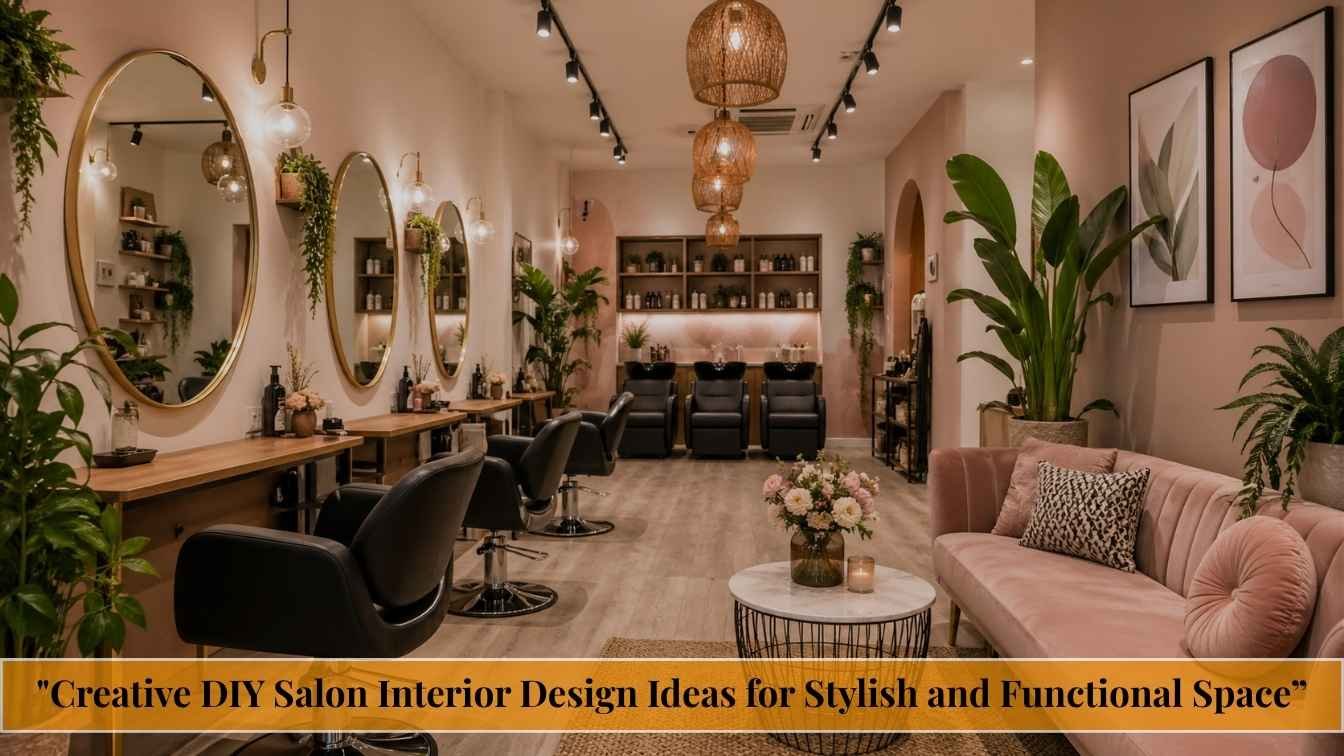
Creative DIY Salon Interior Design Ideas for Stylish and Functional Spaces

our salon’s interior is your first impression, your brand statement, and your client retention strategy all rolled into one. Yet most salon owners either overspend on designers they can’t afford, or underspend on decor that quietly screams “temporary.” Neither extreme serves you well.
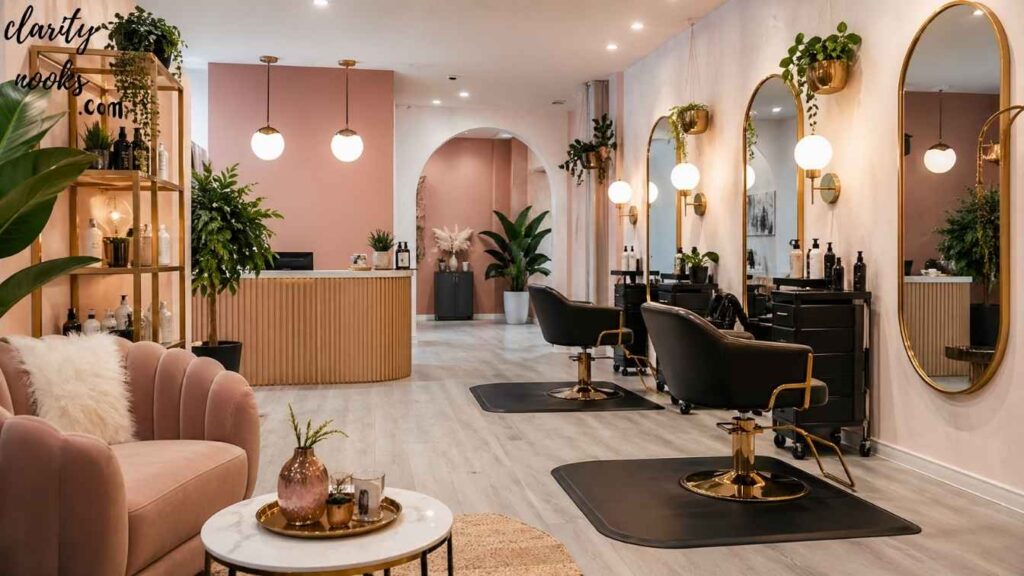
The truth is, a stunning salon interior doesn’t require a $50,000 renovation budget. It requires intention. The right lighting, a coherent color palette, and thoughtful layout choices can transform even a compact, rented space into a destination clients genuinely look forward to visiting. This guide covers 12 actionable DIY salon interior design ideas grounded in real-world examples, spatial psychology, and current trends that you can implement yourself.
Whether you’re launching a brand-new salon, rebranding an existing one, or simply refreshing a tired space, these ideas will help you design a salon that works harder for your business. Let’s get into it.
What Makes a Great Salon Interior?
A great salon interior combines three things: functional layout, intentional atmosphere, and brand consistency. The best salon designs feel effortless clients feel relaxed, stylists work efficiently, and every detail reinforces the salon’s identity. Good salon design isn’t about expensive furniture. It’s about cohesion, lighting, and making every square foot work harder.
Build a Statement Mirror Wall Without the Contractor Bill
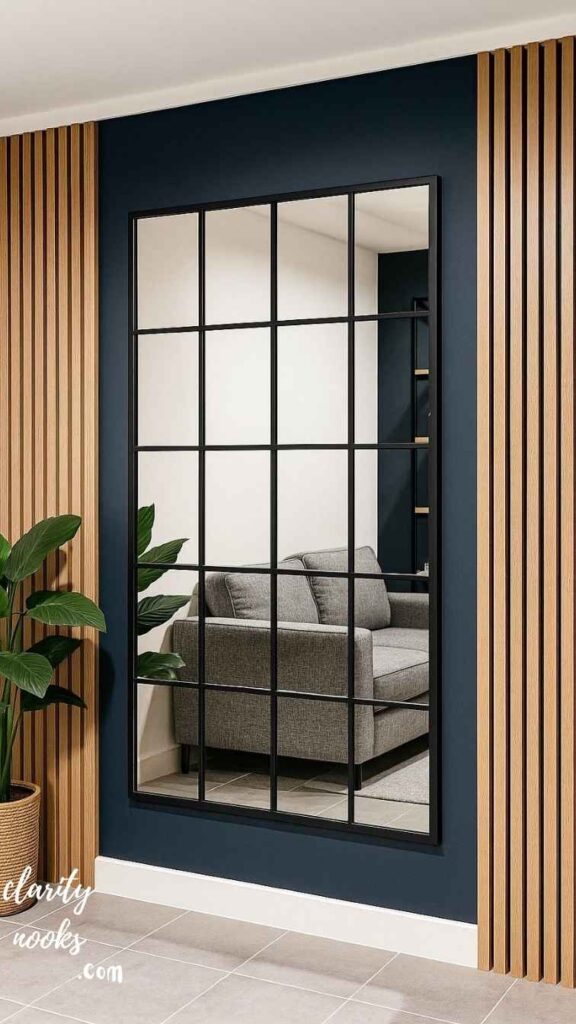
Your mirrors are the centerpiece of every styling station so make them unforgettable. Instead of ordering expensive custom mirrors, source large decorative mirrors from thrift stores, IKEA, or Facebook Marketplace. Arrange them in a gallery-wall style, mixing different frame shapes and finishes (gold, black, raw wood) for an intentional, eclectic look.
A salon owner in Nashville did exactly this she spent $340 total on seven mismatched mirrors from thrift stores and spray-painted the frames in matte black for cohesion. The result? Clients regularly comment on the “designer” mirror wall. The key is planning your arrangement on the floor before hanging anything, and keeping the top edges aligned for visual harmony.
Pro tip:
Add LED strip lighting behind or around your mirror cluster. It creates a soft halo effect that photographs beautifully a free marketing asset every time a client posts a selfie.
Must Read: DIY Home Decoration Ideas to Add a Personal Touch to Your Space
Use Peel-and-Stick Wallpaper to Define Your Brand Aesthetic
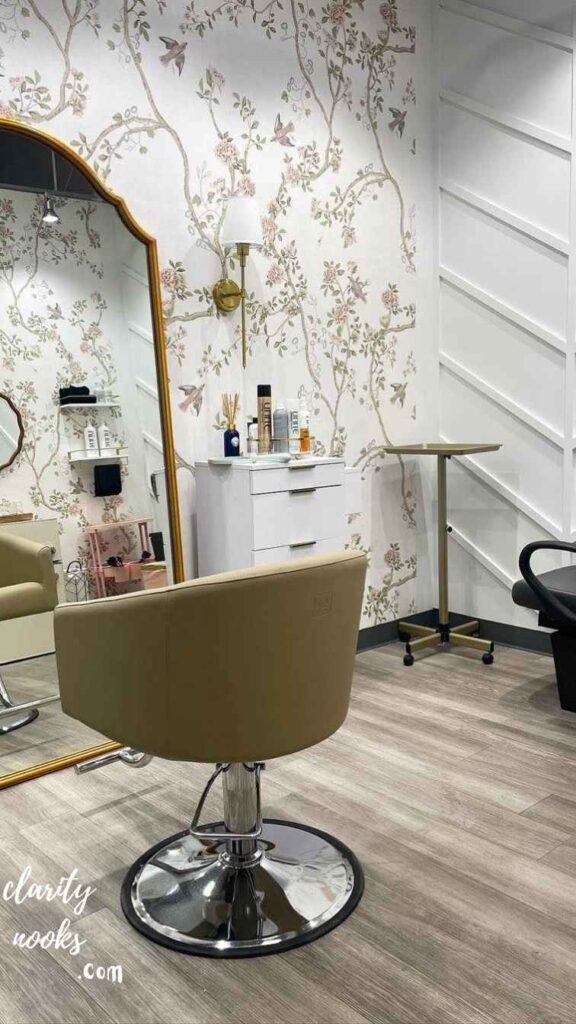
Accent walls have been a salon staple for years but temporary peel-and-stick wallpaper has made them infinitely more accessible and risk-free. You can change the look seasonally, experiment with bold prints without committing, and remove it cleanly if you’re in a rented space.
The trick is choosing a wallpaper pattern that tells your brand story. A luxury balayage studio might opt for moody, dark botanical prints. A kids’ salon might go bright and playful. A clean, minimalist studio might choose subtle geometric textures in white and grey. The wallpaper becomes your brand without a word of signage.
Real example:
A home salon in Austin used a dusty rose floral peel-and-stick wallpaper on the wall behind her shampoo bowl. Her Instagram bookings tripled within two months because that wall became the background for every “after” photo she posted free, recurring advertising built into the design itself.
Don’t Skip: DIY Kitchen Lighting Ideas to Make Your Kitchen Look Modern and Warm
Hack IKEA Furniture Into High-End Salon Stations
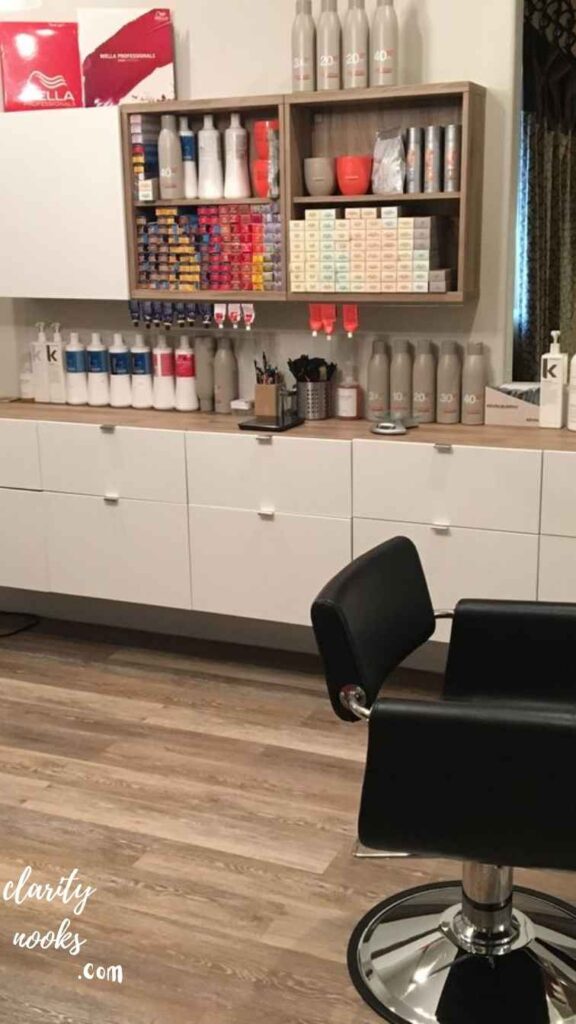
This is the secret most professional salon designers won’t tell you: many high-end salon interiors are built around IKEA bases. The ALEX drawer unit, for example, is an ideal DIY salon station when paired with a custom-cut butcher block or marble-look countertop from a hardware store.
Add caster wheels, replace the standard hardware with brushed gold handles, and mount a clip-on ring light. The result looks indistinguishable from a $1,200 professional styling station and costs under $300. Dozens of salon owners in the beauty community on YouTube and Instagram have documented this exact build, making it one of the most validated DIY salon hacks available.
The functional advantage is equally important: the Alex units have deep drawers perfectly sized for hot tools, color supplies, and accessories. Good design and good function, all in one budget move.
Also Read: Creative DIY Kitchen Nook Ideas That Make Your Kitchen Feel Warm and Inviting
Master the Power of Layered Salon Lighting
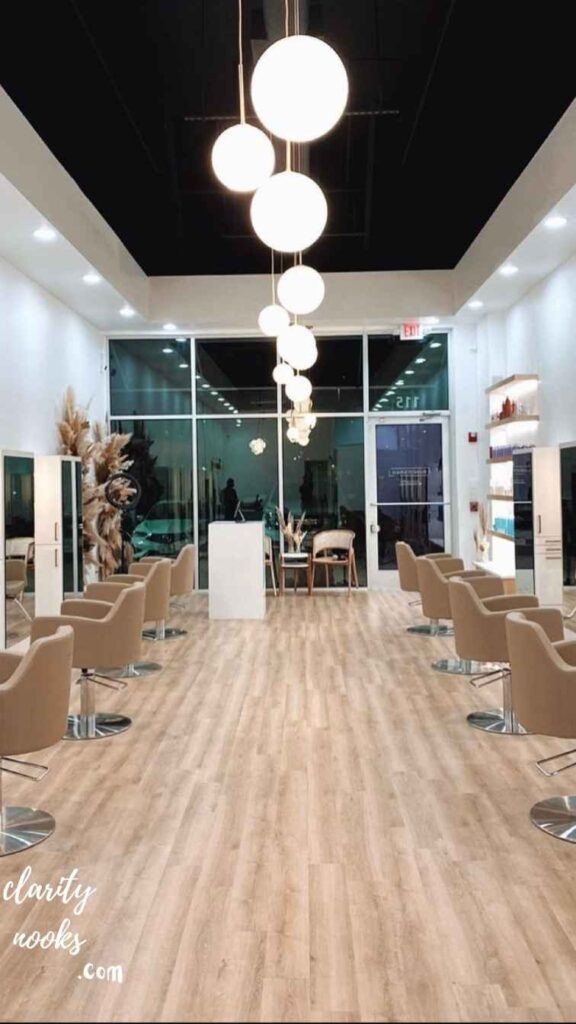
Nothing ages a salon faster than a single row of overhead fluorescent lights. And nothing elevates it more reliably than layered lighting a combination of ambient, task, and accent lighting working together.
Start with your task lighting: LED vanity bulbs or ring lights positioned at the styling stations. These should render color accurately (look for bulbs with a CRI of 90+, ideally in the 5000K–5500K daylight range this is critical for color work). Then add ambient warmth with dimmable Edison bulbs or warm-white LED strips in the waiting area. Finally, use accent lighting to highlight architectural features a backlit shelf, an under-counter glow, or a neon sign.
A salon suite designer in Chicago retrofitted an entire salon’s lighting for under $600 using a mix of smart LED bulbs, plug-in sconces (no electrician required), and under-shelf LED strips. The before-and-after photos are almost unbelievable same room, completely different atmosphere. Lighting is the highest-ROI design investment in any salon.
Read More: DIY Small Kitchen Ideas to Make Cooking Spaces More Functional
Create a Waiting Area That Feels Like a Lounge, Not a Waiting Room
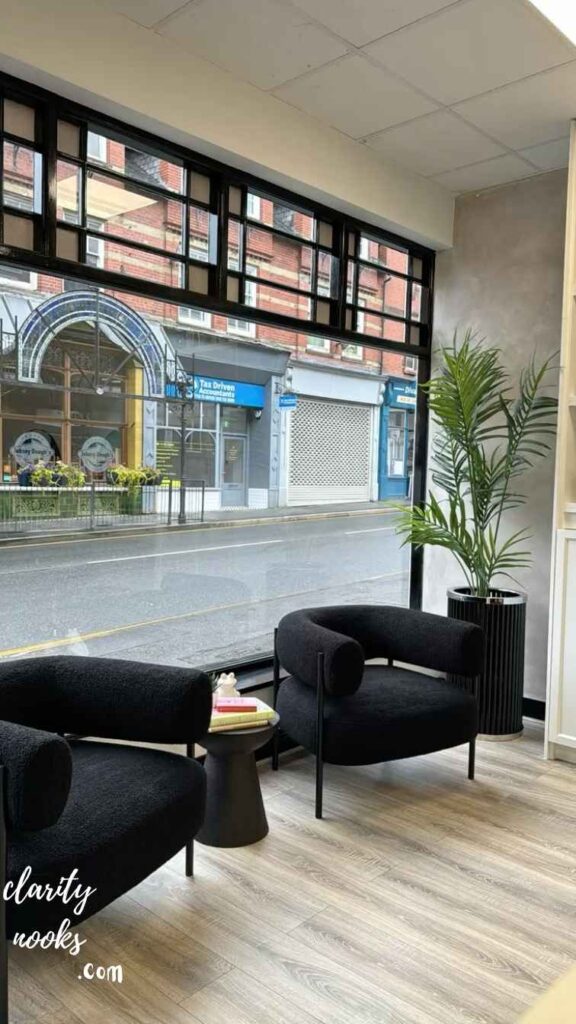
The waiting area is where first impressions are set. Most salons treat it as an afterthought a row of chairs pushed against a wall. The better approach is to treat it like a boutique hotel lounge.
Use two or three chairs in complementary textures (velvet, leather, woven) rather than a matched set. Add a small accent table with a curated stack of design books or coffee table magazines. A tray with a diffuser, a candle, and a small plant turns a corner into a sensory moment. If your budget allows, a dedicated coffee or tea station signals luxury without significant cost.
The psychological benefit is real: when clients feel genuinely comfortable in your waiting area, their overall satisfaction with the appointment rises even before the service begins. This is known in hospitality design as “arrival experience,” and it’s something the best salons borrow from luxury hotels.
Design a Shampoo Bowl Area That Feels Spa-Like
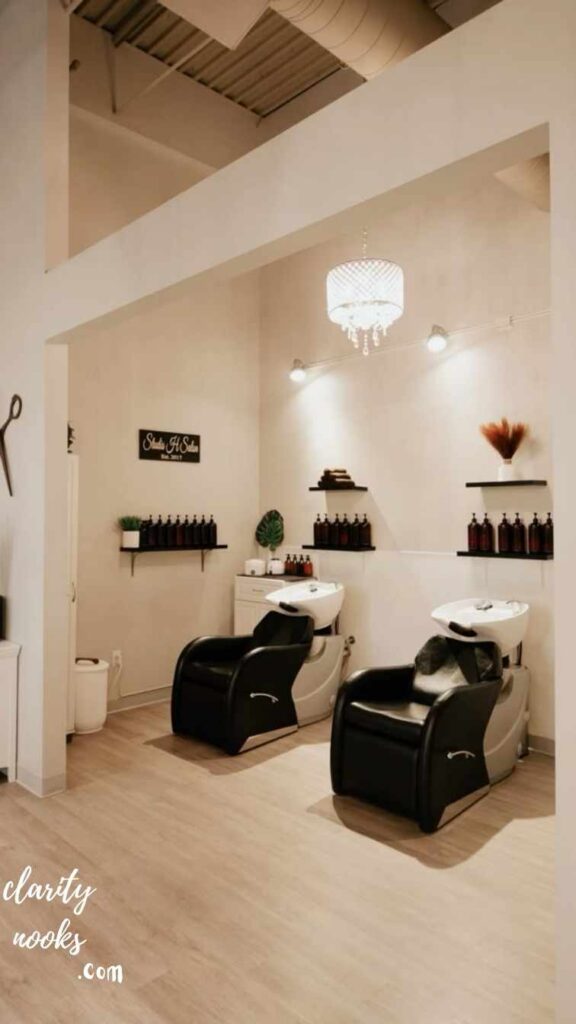
The shampoo bowl is where clients close their eyes and fully surrender to the experience. This is your highest-leverage design opportunity and most salons completely waste it.
Hang something beautiful directly in a client’s sightline from the reclined shampoo position. A hanging macramé art piece, a cluster of pendant lights, or even a ceiling-mounted fabric canopy creates an “above you” focal point that transforms the experience. Add a small shelf nearby with a calming scent (eucalyptus spray or a reed diffuser) and a folded warm towel. Suddenly, a shampoo becomes a ritual.
One salon owner in Portland installed a $45 bamboo canopy from a home goods store directly over her shampoo bowl, paired with a string of warm Edison lights. She reported that clients started specifically requesting her “relaxing shampoo area” and that retail sales of her aromatherapy products displayed right there increased by 40%.
Use Color Psychology to Set the Right Mood
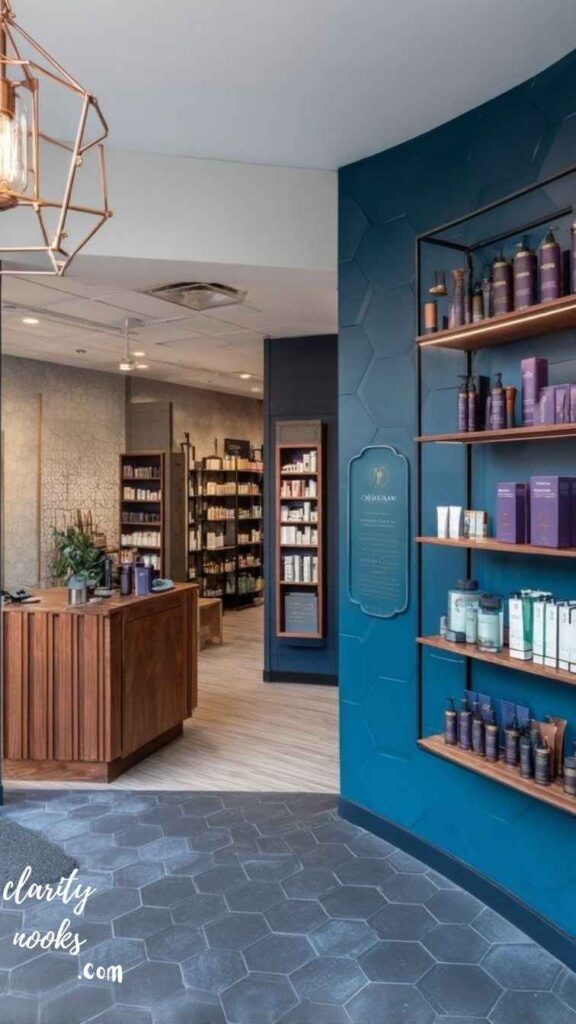
Color is the silent language of your salon’s brand identity. And getting it wrong can subtly undermine the entire experience even if every other design element is perfect.
Warm neutrals (terracotta, warm white, camel, dusty blush) create comfort and intimacy ideal for boutique salons and beauty studios. Cool neutrals (grey, slate, off-white) read as clean and professional better for clinical aesthetics or med-spas. Bold, saturated colors (deep green, navy, plum) communicate confidence and luxury when used strategically as accents.
The mistake most DIYers make is choosing paint colors they personally love without considering how those colors photograph. Salons with strong social media followings almost universally choose colors that look beautiful in photos meaning softer, slightly desaturated tones with warm undertones. Test your paint choices under your actual salon lighting before committing. What looks perfect in a hardware store can look entirely different under salon conditions.
Build a Branded Retail Display That Doubles as Wall Art
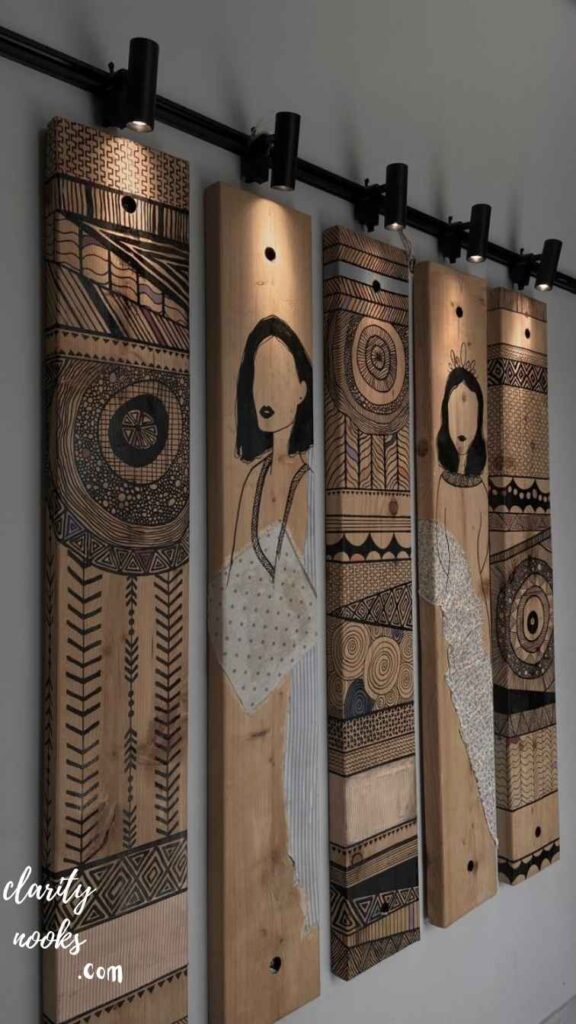
If you sell retail products and you should your display is both a revenue driver and a design element. Most salons use boring wire shelving. The opportunity is to create a branded retail moment that looks curated and feels like a boutique.
Floating wall shelves in a grid pattern, painted the same color as your wall for a seamless look, create an almost invisible framework. Products become the art. Group items by texture, color, or use not just brand. Add a small sign with a handwritten-style font that says something like “Our Favorites” or “Client Picks.” This framing increases product curiosity and purchase intent.
A salon in Brooklyn replaced a generic retail rack with a custom grid of $12 IKEA floating shelves, painted matte black. They reported a 25% increase in retail sales within the first month not because they changed their products, but because the display finally made the products feel worth buying.
Incorporate Living Greenery Strategically
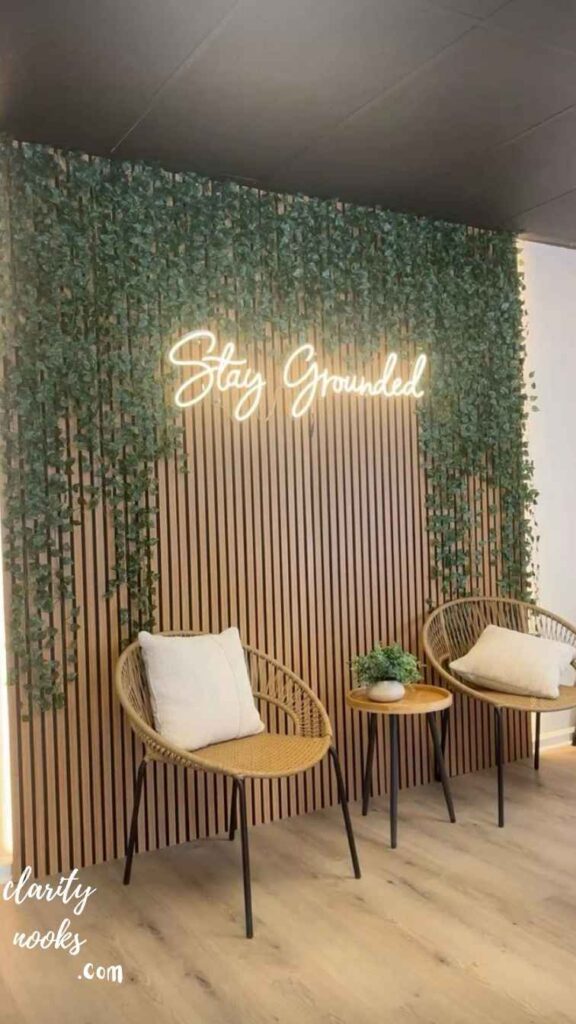
Plants are a design cheat code. They add life, texture, and warmth to any space. They photograph beautifully. They improve air quality. And done right they signal that your salon is a thoughtful, living environment, not a sterile service stop.
The key word is “strategic.” Don’t scatter small plants randomly cluster them intentionally. A grouping of three plants at different heights (tall fiddle leaf fig, medium pothos, low succulent tray) in one corner creates a visual moment. A trailing pothos along a shelf adds organic movement. A single large statement plant a monstera or rubber tree in the waiting area anchors the whole room.
If you travel or forget to water, choose low-maintenance options: ZZ plants, sansevierias, and pothos thrive on neglect. Realistic faux plants from premium suppliers are now so convincing that many professional interior designers use them in commercial spaces without apology.
Design Your Salon for Instagram Before Anything Else
This sounds counterintuitive, but the best DIY salon designers think about photography first. Why? Because every photo a client posts from your salon is free advertising. And the design choices that make your salon photogenic are almost always the same ones that make it beautiful in person.
Create at least one “photo moment” a wall, corner, or detail specifically designed to be a background. A neon sign with your salon’s name or a motivational phrase, a gallery wall with intentional artwork, a beautifully styled product shelf any of these works. The goal is for clients to instinctively want to photograph themselves in your space.
Lighting consistency is critical here. Natural light from windows is the most flattering and universally loved. If you can design your station layout to maximize natural window light, you’ve built a photography advantage into your floor plan itself. Salons with good natural light consistently outperform in social media reach and organic client referrals.
Create Privacy and Flow With Strategic Room Dividers
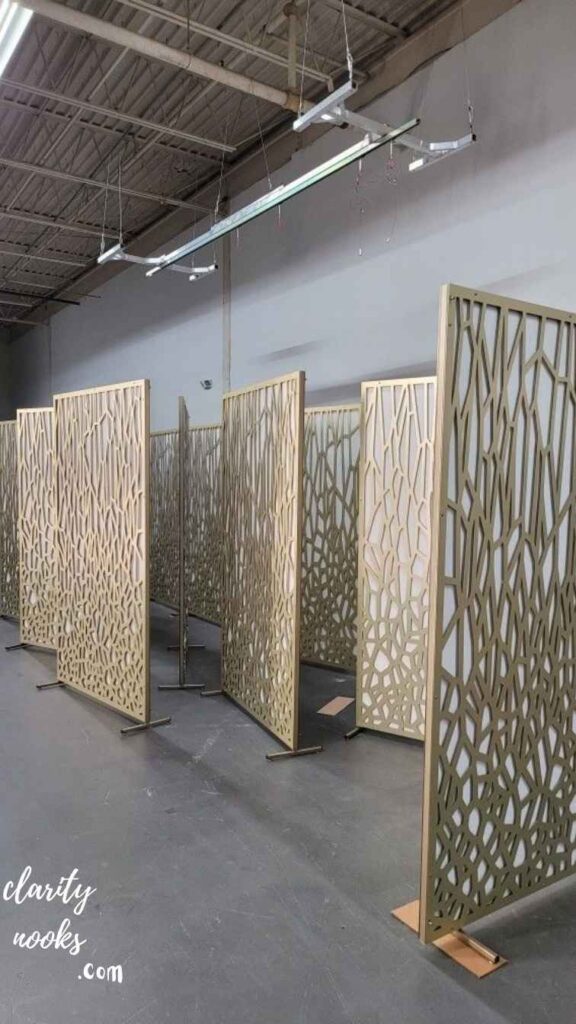
Open-plan salons can feel chaotic. But full walls are expensive and permanent. The DIY solution: strategic room dividers that create zones, improve privacy, and add design interest simultaneously.
Bookcase dividers (like the IKEA Kallax, styled with books, plants, and decor on one side and product storage on the other) create functional separation. Curtain dividers on ceiling-mounted tracks add softness and can be completely open or closed. Hanging rattan screens or macramé panels add texture while suggesting separation without blocking light or airflow.
The goal isn’t to create isolated boxes it’s to give clients a sense of their own space within the salon. Studies in service design show that perceived privacy increases client relaxation and overall satisfaction, even in relatively small spaces. This is especially important for color correction appointments, which tend to run long and involve a high degree of client vulnerability.
Invest in One Hero Piece That Anchors the Whole Design
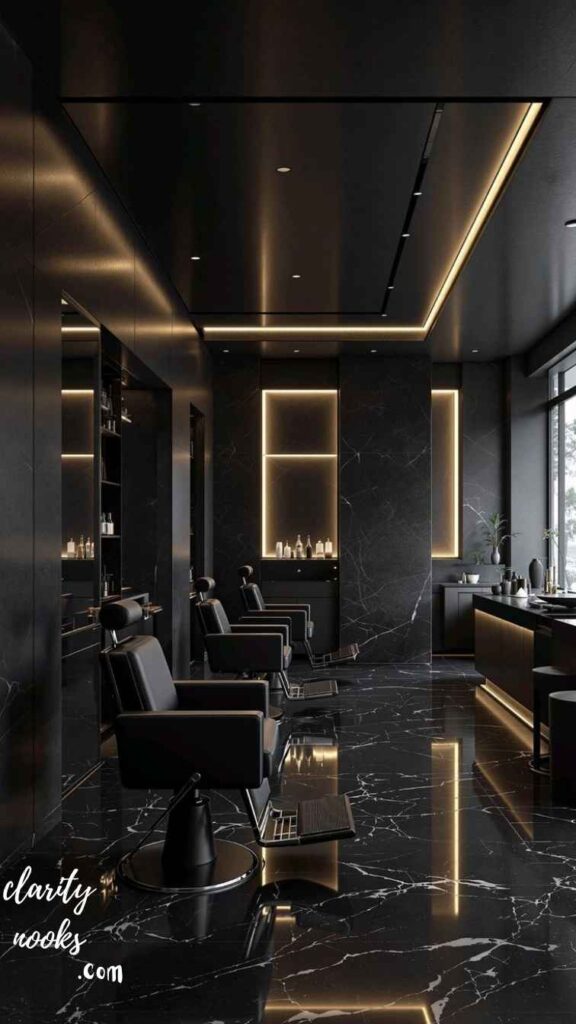
Every well-designed salon has one element that makes people say “wow” a single focal point that the rest of the design supports. This doesn’t have to be expensive. It has to be intentional.
It might be a vintage barber chair repainted in a surprising color. A custom neon sign with your salon’s tagline. A dramatic chandelier over the shampoo area. A large-scale piece of art commissioned from a local artist (often surprisingly affordable and uniquely yours). Whatever it is, it should feel like the room was designed around it because it should be.
A salon owner in Melbourne found a vintage 1960s salon chair at an estate sale for $80. She reupholstered it in deep emerald velvet, placed it in a dedicated corner with a ring light and floral backdrop, and used it exclusively for a “luxury treatment chair” experience she charged a premium for. The chair became her brand icon featured on her website, her social media, and in a local design magazine.
Conclusion
DIY Salon Interior Design Ideas can truly change the look and feel of your salon. With simple and budget-friendly changes, you can create a space that feels modern, clean, and welcoming. Good lighting, smart furniture placement, and soft colors can make a big difference. Even small salons can look stylish with the right planning. These ideas help you improve comfort for both clients and staff while keeping costs low.
In the end, DIY Salon Interior Design Ideas are a smart way to upgrade your business. You don’t need a big budget or professional help to create beauty. Just use creative thinking and simple tools. A well-designed salon can attract more clients and leave a strong impression. Keep your space neat, organized, and trendy to grow your salon successfully.
Trend Analysis
DIY Salon Design in 2026 and Beyond
What’s Dominating Salon Design Right Now
The dominant aesthetic shift in salon interior design for 2026 is away from the stark, all-white minimalism of the 2010s and toward what designers are calling “warm maximalism” rich colors, layered textures, and curated clutter that feels personal rather than sterile. Deep greens, terracotta, aged brass, and tactile materials like rattan, velvet, and linen are replacing grey laminate and acrylic everywhere.
Biophilic design integrating natural elements like plants, natural light, wood, and stone has moved from trend to expectation. Clients increasingly associate natural environments with wellness and self-care, and salons that reflect this alignment see higher client loyalty and stronger word-of-mouth.
The Next 2–3 Years: Where Salon Design Is Heading
Personalization will be the defining competitive edge in salon design through 2027 and 2028. Cookie-cutter salon suites are everywhere and increasingly invisible. The salons that will win are those with a specific, recognizable aesthetic identity. This means more custom signage, more artist collaborations, more storytelling through design.
Sensory design intentional management of scent, sound, texture, and temperature is emerging as a professional discipline in salon environments. Leading salons are investing in curated playlists, diffuser systems with signature scents, and tactile touchpoints (weighted neck wraps, heated styling chairs) that create a full-body experience rather than a transactional service.
Sustainability will also become a more visible design signal. Reclaimed materials, vintage furniture, locally sourced decor, and low-VOC paints are increasingly used as selling points not just cost-saving measures.
Practical Tips and Expert Insights
On Budget Allocation: Spend 40% of your design budget on lighting it delivers the highest visual return. Spend another 30% on your single hero piece or statement wall. The remaining 30% can cover functional improvements to workflow and storage.
On Color Choices: Always test paint colors under your salon’s actual lighting before committing to a full wall. Purchase sample pots and paint 12×12 inch test patches. View them at different times of day and under your salon lights at night.
On Sustainability: Source secondhand furniture first, always. Apps like Facebook Marketplace, OfferUp, and Chairish are goldmines for high-quality salon furniture at 10–20 cents on the dollar. Sand, paint, and reupholster the results are almost always superior to flat-pack equivalents.
On DIY vs. Hiring Out: There are two things worth paying a professional for: electrical work (always) and custom millwork if your brand depends on truly seamless cabinetry. Everything else painting, wallpaper installation, furniture assembly, plant styling, accessory placement is completely within a motivated owner’s capability.
On Documentation: Photograph your salon every time you make a significant change. Over time, this becomes a powerful visual story of your brand’s evolution great content, and useful for future funding or franchise conversations.
Long-Term Strategy and Sustainability
A well-designed salon is not a one-time project. The most successful salon owners treat design as an ongoing investment refreshing seasonal accents, updating wallpaper every few years, and gradually upgrading key pieces as the business grows. This approach avoids the “big bang renovation” mentality that often results in overcapitalized, quickly dated spaces.
Design consistency is a form of brand equity. The more recognizable your salon’s aesthetic becomes, the more easily clients refer others and the more powerfully your social media presence compounds over time. Choose a foundational color palette and stick with it. Build around it, don’t rebuild from scratch.
From a sustainability standpoint, the most responsible salon design decisions are also often the most financially sound: durable materials over trendy fast-decor, quality lighting systems that last a decade, and secondhand furniture that already has its depreciation absorbed. A salon designed with longevity in mind will look better in five years than one designed for the Instagram moment.
Future Predictions and Innovations in Salon Design
AI-Assisted Design Planning is already arriving in the form of apps that let you upload a photo of your salon and virtually test paint colors, furniture arrangements, and lighting scenarios. Tools like Houzz, RoomGPT, and emerging salon-specific platforms will make advanced space planning accessible to any owner within the next two years.
Smart Salon Technology is integrating into interior design through hidden charging stations, app-controlled lighting systems, and ambient sound management. The “invisible tech” trend where technology is fully embedded in the aesthetic rather than sitting on top of it will define premium salon environments through 2028.
Biometric Design spaces calibrated to measurably reduce client cortisol levels through controlled temperature, scent, sound, and light is moving from luxury spas into mainstream beauty environments. Expect this to become a differentiating feature for top-tier salons.
Common Mistakes and Hidden Gaps
- Neglecting the Ceiling The ceiling is the largest uninterrupted surface in most salons and the most ignored. A painted ceiling in a contrasting color, exposed wood beams, a draped fabric canopy, or even a simple coat of warm white paint (instead of stark bright white) transforms the perceived warmth of the entire room.
- Over-Matching Everything Perfectly matched furniture sets look manufactured and impersonal. Deliberately mixing textures, materials, and styles while keeping color palette consistent creates the layered, curated look that feels designed rather than decorated.
- Ignoring Acoustics Hard surfaces (tile, mirrors, laminate) create echo and noise that increase client stress. Adding soft elements upholstered chairs, area rugs, fabric art panels, curtains absorbs sound and significantly improves the sensory experience. This is one of the most commonly overlooked salon design factors.
- Mistake 4: Designing for Yourself, Not Your Client Your salon’s design should reflect your brand, not your personal home taste. Ask yourself: “Who is my ideal client, and what does their dream environment look like?” Let that answer guide your design decisions.
- Skipping the Details The details are the design. Matching outlet covers to your wall color. A coordinated set of towel hooks. A beautiful tray holding your tools. The experience of quality comes from a hundred small details executed consistently not one dramatic gesture surrounded by carelessness.
FAQ’S About DIY Salon Interior Design Ideas
How much should I budget for a DIY salon makeover?
A meaningful DIY salon refresh can be accomplished for $500–$2,000 depending on salon size. Focus first on lighting (highest ROI) and one statement feature wall or piece.
What is the best lighting for a hair salon?
For hair color work, use bulbs with a CRI of 90+ at 5000K–5500K (daylight). For the waiting area and reception, use warmer bulbs (2700K–3000K) for comfort and ambiance.
How do I make a small salon look bigger?
Use large mirrors, keep the color palette light and cohesive, maximize natural light, and avoid heavy furniture. Vertical lines tall shelves, floor-to-ceiling curtains draw the eye upward and make ceilings feel higher.
What DIY salon design elements attract clients on Instagram?
Neon signs, statement wallpaper walls, curated plant clusters, and beautiful lighting consistently perform best on social media. Design at least one intentional “photo moment” in your salon.
Rameen Zara is the founder of Clarity Nooks, bringing over five years of experience in home décor and interior styling. She shares simple yet practical design ideas that suit real homes and everyday living. Her approach focuses on cozy aesthetics, soft color palettes, and natural textures that create warm, inviting spaces.