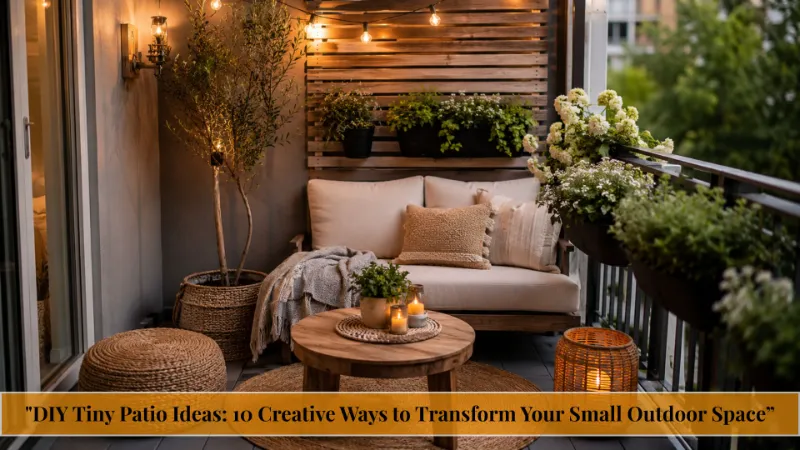
DIY Tiny Patio Ideas: 10 Creative Ways to Transform Your Small Outdoor Space

You have a tiny patch of outdoor space maybe a narrow balcony, a compact concrete slab, or a cramped corner behind your home and it feels like nothing beautiful can grow there. That’s the lie most homeowners believe. The truth? Some of the most stunning outdoor retreats in the world measure under 100 square feet. The secret isn’t size it’s smart, intentional design.
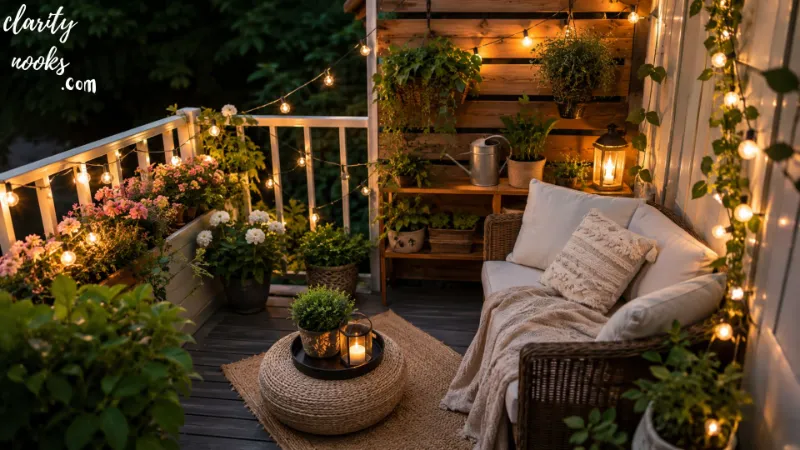
This guide covers practical DIY tiny patio ideas that are budget-friendly, beginner-accessible, and designed to maximize every inch. Whether you want a cozy reading nook, an urban container garden, or a weekend entertainment zone, you’ll find a clear path from idea to finished space. Each idea includes materials, estimated costs, step-by-step guidance, and real decorating tips that actually work.
No contractor. No massive budget. Just creative thinking, smart sourcing, and a free weekend. Let’s build something worth sitting in.
Pallet Deck Platform: A Budget Outdoor Floor That Changes Everything
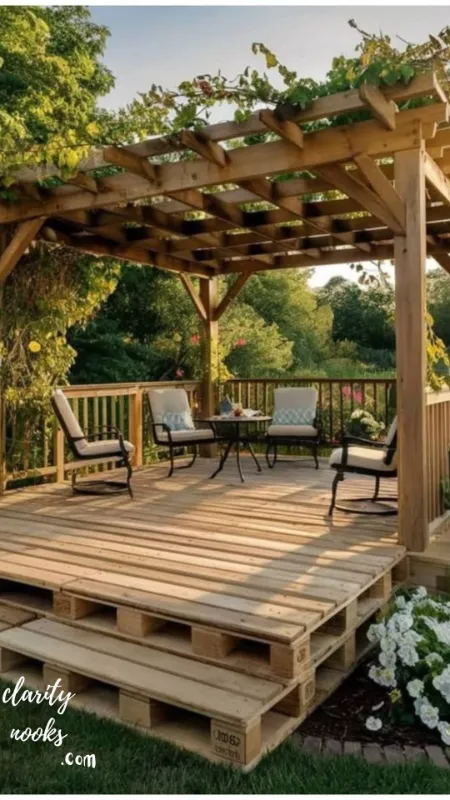
A bare concrete slab or patchy grass kills the patio vibe before it starts. A DIY pallet deck platform is one of the most transformative upgrades you can make for under $100. By elevating your floor even by just 4 inches you visually separate your patio from the surrounding yard and give it the defined room feel that makes small spaces feel intentional and complete.
Reclaimed wooden pallets are widely available for free or near-free from hardware stores, garden centers, and local Facebook Marketplace listings. Sand them smooth, apply outdoor sealant or stain in a warm tone, and lay them side by side on a level surface. For a 10×10 space, you’ll need roughly 8–10 standard pallets. The natural wood grain adds organic texture that instantly elevates the space.
Real-life scenario: Emily in Portland turned her 8×8 apartment concrete pad into a functional coffee nook using 6 free pallets, $12 of exterior stain, and a weekend. She reports her patio “finally feels like a room.” Total spend: $28. This is exactly the power of small patio DIY done right.
| Materials | Wood pallets, sandpaper (80-grit), exterior wood stain or sealant, paintbrush, rubber mallet, landscape fabric (optional) |
| Tools Needed | Circular saw or handsaw, drill, measuring tape, level |
| Estimated Cost | $0–$80 (pallets often free; stain ~$20–$40) |
| Time Required | 4–6 hours |
| Best For | Concrete slabs, bare dirt, uneven grass patches |
Decorating Tips for Pallet Deck Platforms
- Use a weatherproof outdoor rug on top to add color and warmth
- Add string lights overhead for an instant nighttime transformation
- Place potted plants on corners to anchor the platform visually
- Stain in warm cedar or grey-wash tones for a modern farmhouse aesthetic
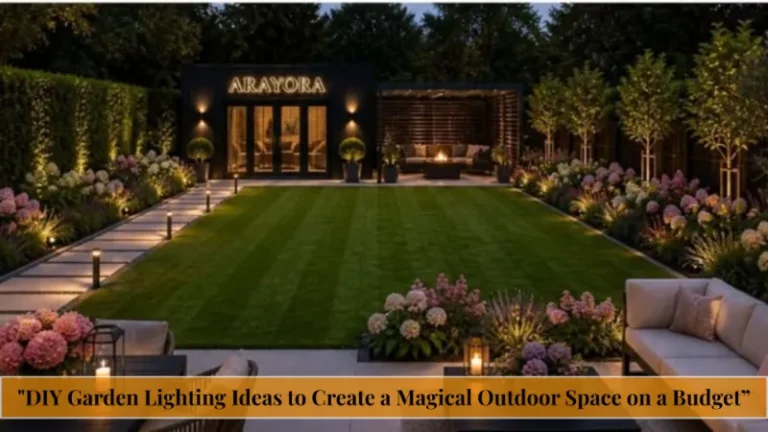
Learn more here: DIY Garden Lighting Ideas to Create a Magical Outdoor Space on a Budget
Vertical Container Garden: Turn a Blank Wall into a Living Green Feature
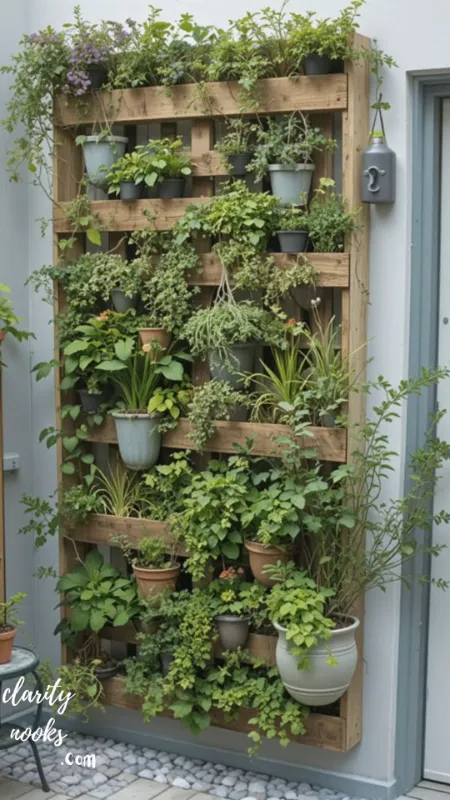
When horizontal square footage is limited, your greatest untapped resource is vertical space. A DIY vertical container garden mounted on a fence or exterior wall turns a bland boundary into a lush, living focal point. This approach is especially effective for balcony patio ideas and urban settings where ground space is practically nonexistent.
Use pocket planters, repurposed wooden pallets with planter inserts, or a mounted pegboard system. Herbs like basil, mint, and rosemary thrive in vertical setups and provide both visual beauty and practical utility. Succulents are perfect for low-maintenance arrangements. Mix trailing plants (like pothos or sweet potato vine) with upright herbs for dynamic visual contrast.
Mini case study: Marcus in Brooklyn mounted a 3-tier pallet planter on his 6-foot fence using $35 in lumber and repurposed mason jars. He now grows tomatoes, basil, and marigolds and the wall has become the most photographed feature of his small urban patio.
| Materials | Pocket planters or pallet with planter inserts, mounting brackets, screws, potting soil, plants of choice |
| Estimated Cost | $25–$90 depending on planter style and plant selection |
| Time Required | 2–4 hours |
| Best For | Balconies, fence-lined patios, rental spaces (portable options available) |
Step-by-Step Guide
- Measure your wall and choose a planter system that fits (pocket, pallet, or modular)
- Mount brackets 16-inch apart, into wall studs or use a freestanding planter frame for rental spaces
- Fill with quality potting mix not garden soil, which compacts in containers
- Plant herbs at the top (best drainage), trailing vines in the middle, and colorful annuals at the base
- Water with a slow-drip watering can and fertilize monthly with liquid fertilizer
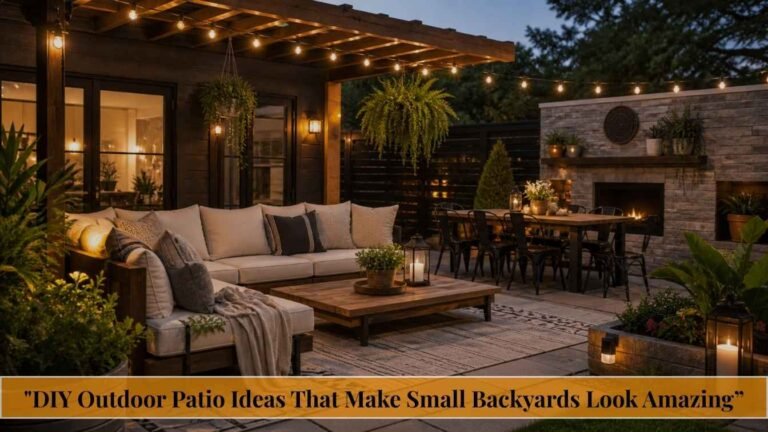
Explore this topic: DIY Outdoor Patio Ideas That Make Small Backyards Look Amazing
Bistro Corner Setup: The Classic European Café Look for Under $150
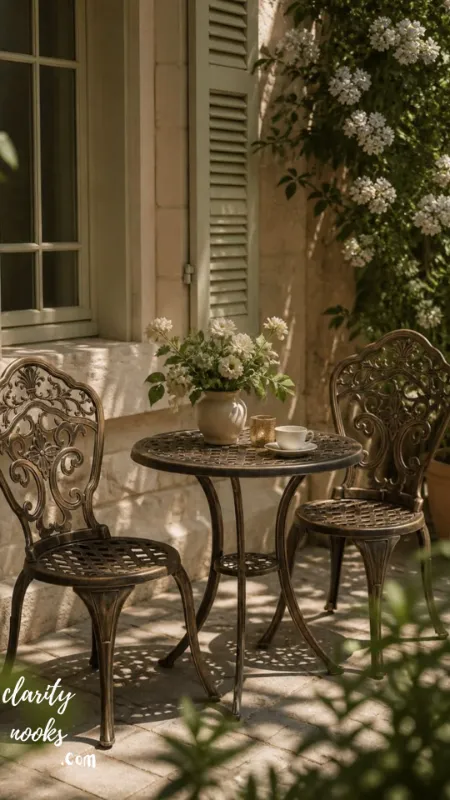
Nothing communicates “intentional outdoor living” faster than a well-placed bistro set. A small round table with two wrought iron or rattan chairs tucked into a corner or against a wall creates an entire usable dining and coffee zone without consuming much floor space at all. This is one of the most popular tiny patio makeover ideas precisely because it delivers maximum style with minimal footprint.
The key to making a bistro corner feel rich rather than sparse is layering. Start with the furniture, then add a small potted plant centerpiece, a tablecloth or runner in a bold pattern, and a candle lantern. Above the table, string a small halo of lights or hang a waterproof lantern on the wall. The effect is cozy, magazine-worthy, and achievable in a weekend.
| Materials | Bistro table + 2 chairs (rattan, metal, or wood), outdoor cushions, string lights or lantern, small potted plant, weather-resistant tablecloth |
| Estimated Cost | $80–$200 (chairs often $30–$60 each at IKEA, Target, or secondhand stores) |
| Time Required | 1–2 hours |
| Best For | Corners, balconies, entryway patios |
Decorating Tips for Bistro Corners
- Paint the wall behind the set in a deep olive or terracotta for Mediterranean warmth
- Use a tiered plant stand nearby to add greenery without using table space
- Add a small outdoor mirror on the wall to visually double the perceived space
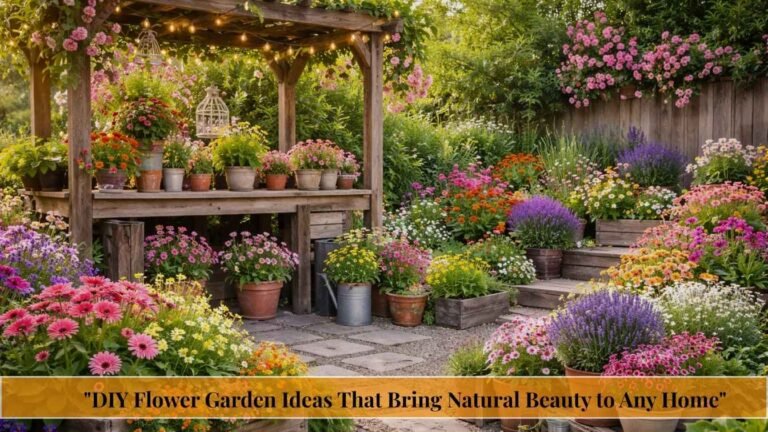
Check out our detailed article: DIY Flower Garden Ideas That Bring Natural Beauty to Any Home
DIY Cinder Block Bench and Planter Combo: Rustic, Durable, and Free-Form
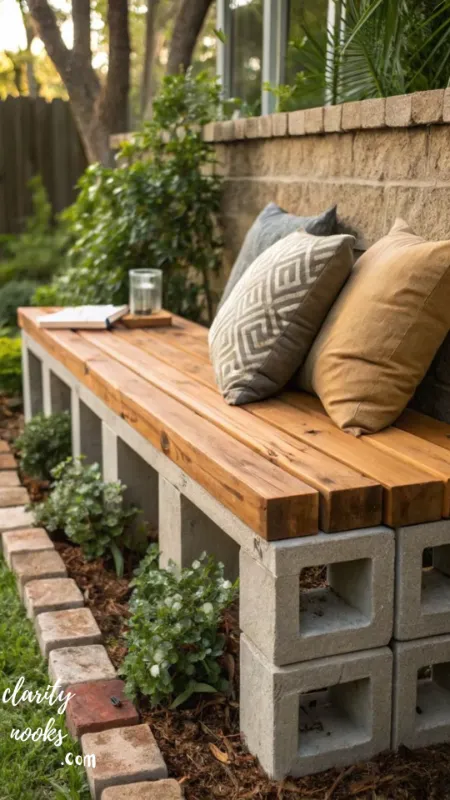
Cinder blocks are one of the most underrated building materials in DIY outdoor furniture. Stacked and arranged thoughtfully, they create sturdy benches, raised planters, and even outdoor shelving all without mortar or permanent installation. For small patio decorating ideas on a tight budget, few materials deliver more structural flexibility at this price point.
Build an L-shaped bench by stacking two courses of cinder blocks along a corner, then placing a wooden plank seat (a 2×10 cedar board works perfectly) across the top. In the open block cavities, plant trailing succulents, ornamental grasses, or seasonal flowers. Spray paint the blocks in warm grey, black, or terracotta for a polished look.
| Materials | Cinder blocks (approx. 20–30), 2×10 cedar planks, outdoor spray paint, outdoor cushions, potting soil + plants |
| Estimated Cost | $60–$120 (blocks ~$1.50–$2 each; lumber ~$20–$40) |
| Time Required | 3–5 hours |
| Best For | Permanent or semi-permanent corners; renters can disassemble easily |
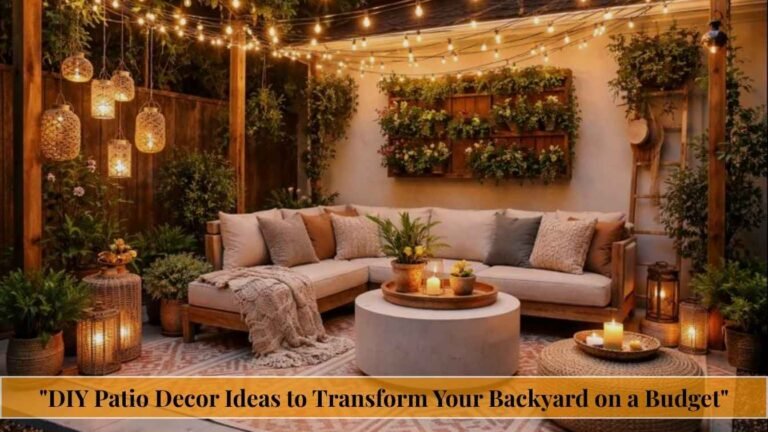
See This Post: DIY Patio Decor Ideas to Transform Your Backyard on a Budget
String Light Canopy: The Easiest Way to Make a Tiny Patio Feel Magical
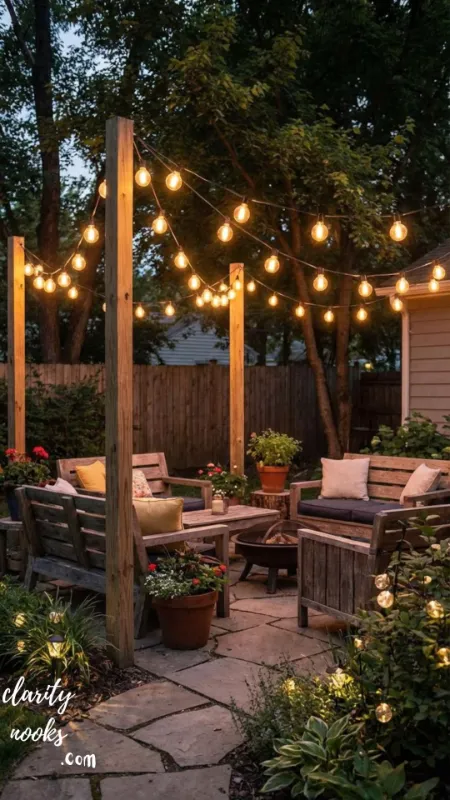
If there is a single upgrade that transforms a tiny patio from “functional” to “breathtaking,” it’s a DIY string light canopy. Studies on outdoor entertaining show that ambient lighting is the number-one factor homeowners cite when rating their patio enjoyment above furniture, plants, or even size. A well-executed string light arrangement transforms a plain space into an enchanting outdoor room after dark.
For a compact patio, run waterproof Edison-style or globe string lights diagonally from corner to corner, or in a grid pattern using wooden poles anchored in bucket planters filled with concrete. This freestanding approach means no drilling, no permanent installation perfect for renters. A set of 48-foot weatherproof LED string lights typically costs $20–$35 and uses minimal electricity.
| Materials | 48-ft weatherproof LED string lights, eye hooks or S-hooks, wooden posts or shepherd’s hooks, concrete mix (for post bases) |
| Estimated Cost | $30–$80 |
| Time Required | 2–3 hours |
| Best For | Evening entertaining, romantic nooks, rental-friendly setups |
Step-by-Step String Light Canopy
- Determine anchor points: fence posts, exterior walls (with hooks), or freestanding poles
- For poles: fill 5-gallon buckets with quick-dry concrete, insert 8-ft wooden dowels, let cure 24 hours
- Run lights diagonally or in parallel lines, hanging approximately 18″ apart
- Plug into a GFCI outdoor outlet with a weatherproof extension cord
- Add dimmable bulbs for adjustable ambiance at different times of night
Start learning now: DIY Garden Decor Ideas for a Cozy Backyard Vibe
DIY Outdoor Privacy Screen: Create Intimacy Without Losing Light
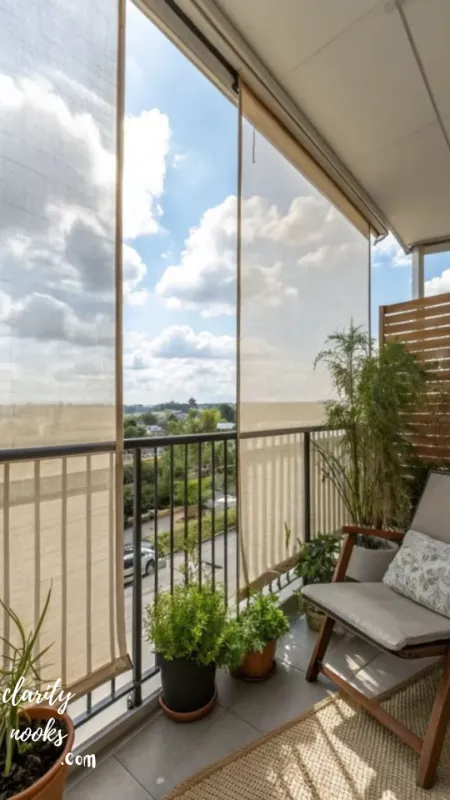
One of the biggest challenges with small patio spaces is the exposure to neighbors, to street noise, to wind. A DIY outdoor privacy screen solves all three. Unlike a full fence, a screen can be partial, portable, and architecturally beautiful. The goal isn’t to block everything it’s to create a sense of sheltered enclosure that makes the patio feel like its own world.
Build a simple frame from cedar 2x4s and fill it with bamboo rolls (available at garden centers for $15–$30), lattice panels, or repurposed shutters. Mount on casters for a fully moveable screen. Add climbing plants like clematis or jasmine to the frame for a living privacy wall that blooms seasonally and smells incredible.
| Materials | Cedar 2×4 lumber, bamboo roll or lattice panel, exterior screws, hinges, optional casters |
| Estimated Cost | $40–$110 |
| Time Required | 4–6 hours |
| Best For | Open patios, townhome back yards, apartment balconies |
Painted Concrete Patio Floor: The $50 Makeover That Changes the Whole Feel
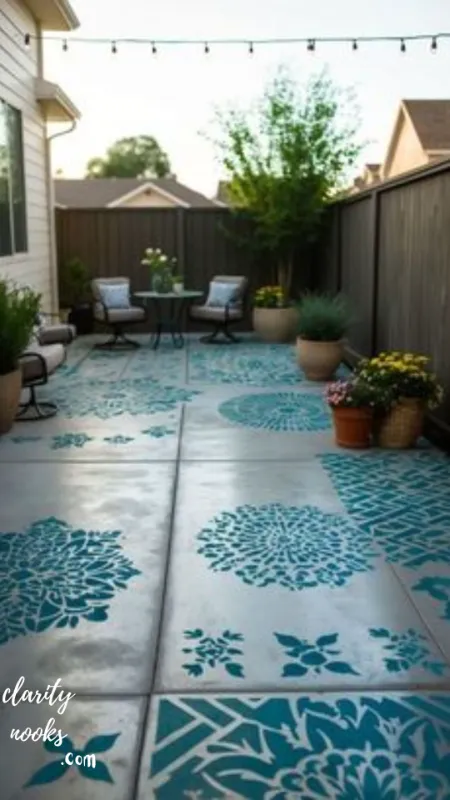
A cracked or stained concrete patio doesn’t need to be replaced it needs to be painted. A DIY painted concrete floor is one of the highest-ROI upgrades in the world of outdoor space makeovers. For under $50, you can completely reinvent the visual baseline of your patio and make every piece of furniture look better by association.
Use outdoor concrete paint or porch and floor enamel for durability. Options include solid colors (deep charcoal is very popular), faux stone textures, or hand-painted geometric tile patterns using painter’s tape. The Moroccan-tile stencil technique has become enormously popular on Pinterest and can be achieved beautifully with $25 in paint and a $10 stencil kit.
| Materials | Concrete cleaner/degreaser, primer, outdoor porch paint or concrete stain, painter’s tape, foam roller, optional stencils |
| Estimated Cost | $30–$75 |
| Time Required | 6–8 hours (including drying time) |
| Best For | Plain or aging concrete slabs; renters should verify lease terms |
Step-by-Step Painted Concrete Floor
- Clean the concrete thoroughly with degreaser and a stiff brush; let dry 24 hours
- Apply one coat of concrete primer and let cure per product instructions
- Apply base coat color with a foam roller in long, even strokes
- If using stencils, tape in place and apply contrast color with a dry brush technique
- Seal with clear outdoor polyurethane for protection against weather and foot traffic
DIY Fire Pit Seating Area: Build a Gathering Spot in Any Size Space
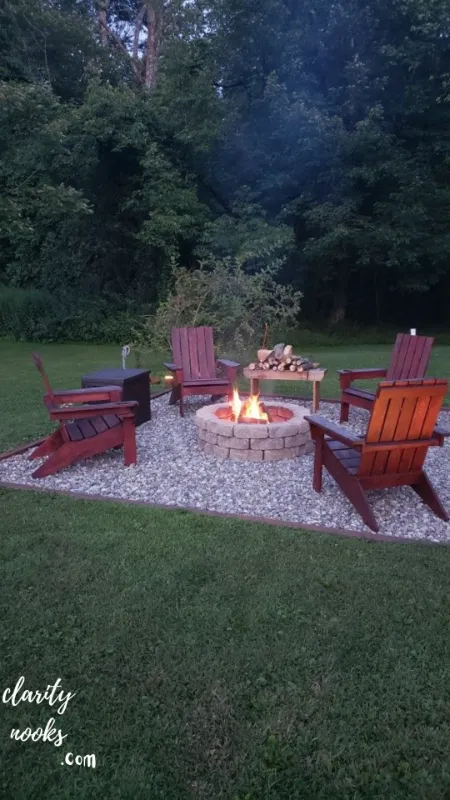
A DIY fire pit instantly becomes the centerpiece of any outdoor space and it works in surprisingly compact patios. You don’t need a roaring bonfire pit. A tabletop propane fire bowl or a small concrete block fire pit (18-inch diameter) provides all the warmth, light, and social magnetism of a full-size fire feature in a fraction of the footprint.
Build a small DIY fire pit using retaining wall blocks arranged in a circle no mortar needed. For ultra-small spaces, a propane tabletop fire bowl sits on your bistro table and eliminates the need for floor space entirely. Surround with low-profile seating: floor cushions, Moroccan poufs, or a simple built-in concrete bench. The result is an intimate outdoor gathering zone that draws people outdoors year-round.
| Materials | Retaining wall blocks (approx. 30) OR tabletop propane fire bowl, gravel base, fire-safe sand |
| Estimated Cost | $60–$150 (tabletop option: $40–$80) |
| Time Required | 2–4 hours |
| Best For | Patios with 8+ feet of clearance from structures; always check local fire codes |
Tiered Herb and Flower Garden Stand: Functional Beauty on Zero Floor Space
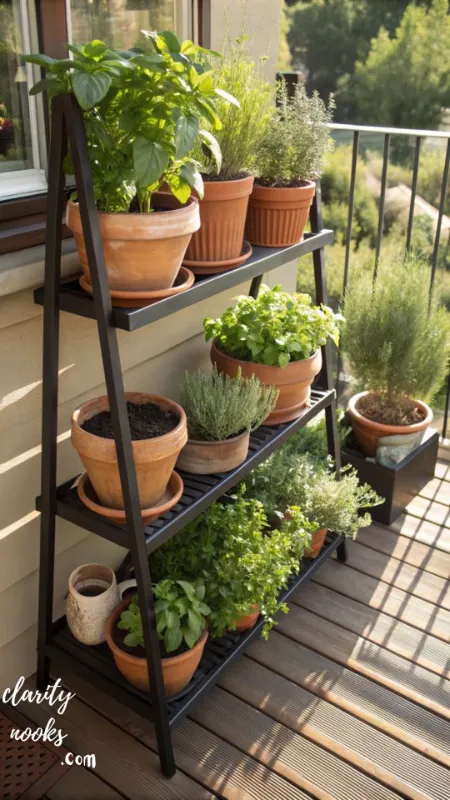
A DIY tiered plant stand is the most elegant solution to the small outdoor garden problem. By stacking plants vertically in a tiered ladder or stepped-shelf configuration, you can display 12–20 pots in the space that 3 or 4 would normally occupy. It’s one of the most visually impactful tiny patio decorating ideas that costs almost nothing to build.
Build a simple 3-tier plant ladder using 2×2 lumber or repurpose an old wooden ladder. Paint in matte black for a contemporary look or whitewash for farmhouse style. Fill tiers with a combination of trailing plants (string of pearls, creeping jenny), upright herbs (rosemary, lavender), and bold bloomers (calibrachoa, petunias) for a cascading effect that feels curated and lush.
| Materials | Old wooden ladder OR 2×2 lumber, wood screws, outdoor paint or stain, assorted pots, potting soil |
| Estimated Cost | $15–$50 |
| Time Required | 2–3 hours |
| Best For | Corners, fence lines, entryways |
Outdoor Reading Nook with Canopy: Your Private Retreat in 6 Square Feet
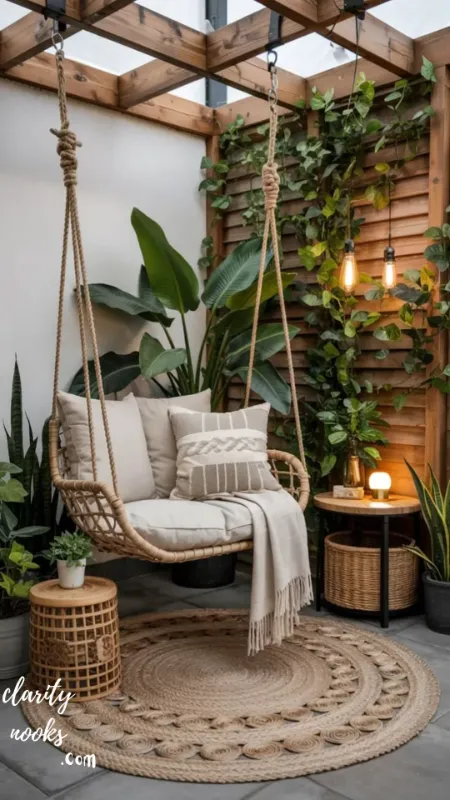
The ultimate tiny patio transformation is turning a corner of your outdoor space into a true personal sanctuary. An outdoor reading nook just a comfortable chair, a canopy for shade, a side table, and some greenery creates an experience of escape and restoration that a bare patio simply cannot provide.
Start with a rattan egg chair or papasan chair (both available for $50–$120 secondhand). Add a simple sail shade canopy overhead for UV protection ($20–$40). Place a small side table for drinks and books. Surround with potted tall grasses or bamboo for a sense of enclosure. A string of solar fairy lights overhead completes the cozy outdoor retreat aesthetic.
| Materials | Comfortable outdoor chair, sail shade or patio umbrella, side table, outdoor cushions and throws, potted tall plants |
| Estimated Cost | $80–$200 depending on chair choice |
| Time Required | 2–3 hours |
| Best For | Solo relaxation zones, apartment balconies, shaded corners |
Conclusion
Small spaces don’t limit great design they demand it. Every one of these DIY tiny patio ideas proves that with smart planning, the right materials, and a creative eye, even the most compact outdoor area can become a place you genuinely love spending time. Whether you start with a pallet deck, a vertical garden, or a string light canopy, the key is to begin because momentum creates transformation.
Pick one idea from this guide that fits your space and budget, gather your materials this weekend, and build something that changes how you experience your home. Your tiny patio is waiting to become your favorite room in the house.
Trend Analysis: Small Patio Design in 2026 and Beyond
The outdoor living market has seen sustained double-digit growth since 2020, and industry data from the American Home Furnishings Alliance indicates that the fastest-growing segment is compact patio and balcony products purpose-built for spaces under 150 square feet. This is driven by urban population density, rising apartment living rates, and a post-pandemic cultural shift toward home-based outdoor wellness.
Key trends for 2026–2028 include: modular furniture systems (reconfigurable pieces for multi-use spaces), biophilic design integration (living walls, moss panels, water features), and a major surge in solar-powered outdoor lighting as energy costs rise. The “slow living” outdoor aesthetic raw wood, terracotta, linen textures, and abundant plant life continues to dominate design searches on Pinterest, Houzz, and Instagram.
By 2027, expect to see AI-assisted patio planning tools integrated into home improvement retailer apps (Home Depot, Lowe’s) that allow homeowners to virtually design their space before purchasing. This will make small outdoor space design more accessible and better-informed than ever before.
Practical Tips & Expert Insights for Small Patio Transformations
1. Design for Multi-Function from Day One
Every piece you place on a tiny patio should ideally serve two purposes. A storage ottoman doubles as extra seating. A planter can double as a privacy screen. A foldable bistro table serves as workspace, dining area, and potting bench depending on the day. Multi-functionality is the single biggest leverage point in compact outdoor design.
2. Work With Your Existing Architecture
Many DIYers fight their patio’s natural features instead of embracing them. A low fence becomes a mounting rail for planters and lighting. An ugly drainage pipe becomes a vertical garden totem wrapped in climbing plants. The wall behind your patio is prime real estate for art, trellises, or outdoor mirrors all of which make the space feel dramatically larger.
3. Invest in Weather Resistance Early
The single most common DIY patio mistake is underestimating weather exposure. Use exterior-rated materials exclusively: outdoor paint, marine-grade cushions, stainless or galvanized hardware. A $30 cushion that disintegrates in one season is not a deal it’s an expense that repeats. Budget for quality where it counts most: seating, lighting, and decking surfaces.
Long-Term Strategy & Sustainability for Your DIY Patio
Think of your patio as a living project, not a one-time renovation. The most beautiful outdoor spaces evolve over seasons a spring container garden transitions to a summer entertaining zone, which becomes a cozy autumn firepit lounge. Design your foundational elements (deck, furniture, lighting) to be seasonally adaptable through swappable textiles, rotating plant arrangements, and flexible décor accents.
From a sustainability standpoint, prioritize reclaimed or repurposed materials wherever possible not just for budget reasons, but because they carry a character that new materials often lack. Cedar, teak, and FSC-certified pressure-treated lumber offer the best balance of longevity and environmental responsibility. Solar-powered lighting eliminates ongoing electricity costs and reduces your outdoor space’s carbon footprint.
Strategically, build your patio in phases. Phase 1: foundation and flooring. Phase 2: seating and shade. Phase 3: lighting and greenery. Phase 4: decorative accents and personalization. This spread-cost approach lets you maintain quality at each stage without overextending your budget.
Future Predictions & Innovations in Small Patio Design
The next 3–5 years will bring meaningful innovation to DIY outdoor living. Smart outdoor technology is already entering the mass market: app-controlled string lights, automated plant-watering systems, and AI-powered outdoor design tools are available today and will become dramatically cheaper and more accessible by 2026–2027.
Prefabricated modular outdoor room systems (think flat-pack pergolas with integrated lighting and storage, assembling in under 4 hours) are emerging from brands like IKEA, Suncast, and several Kickstarter-era startups. These will enable homeowners to build near-professional outdoor rooms in tiny spaces without a contractor.
Materials science is also evolving: high-density polyethylene (HDPE) decking that looks like wood but never rots, splinters, or requires staining is already competitively priced. Expect these materials to dominate the DIY decking market by 2027. For SGE and voice search: the future of patio design discovery is visual and conversational AI will let homeowners photograph their space and receive instant, purchase-linked design recommendations.
Common Mistakes & Hidden Gaps in DIY Tiny Patio Projects
Beginner Mistakes
- Overcrowding the space: More furniture doesn’t mean more function. One quality seating area beats five cramped pieces. Leave breathing room aim for at least 24 inches of clearance between pieces.
- Ignoring drainage: Placing rugs, platforms, or planters without accounting for water runoff creates rot, mold, and standing water. Ensure a slight grade away from structures.
- Choosing non-outdoor materials: Indoor pillows, untreated wood, and standard extension cords degrade quickly and create hazards outdoors.
Intermediate Mistakes
- Neglecting scale: A massive umbrella or oversized planter can visually overwhelm a small patio. Always measure and use painter’s tape on the ground to test sizes before purchasing.
- Skipping the vertical dimension: Most intermediate DIYers design horizontally only. Vertical layers tall plants, hanging lights, wall art create the depth that makes compact spaces feel expansive.
- Not planning for nighttime: Many patios are designed entirely for daylight use. Layered lighting overhead ambiance, task light for dining, accent light on plants makes an outdoor space usable and enjoyable from 6 PM onward.
The Hidden Gap Most Competitors Miss
Very few patio design guides address the psychological dimension: scent and sound design. Fragrant plants (jasmine, lavender, gardenias) placed near seating areas create a multisensory experience that makes a patio feel luxurious regardless of its size or budget. Similarly, a small tabletop water feature ($30–$60 solar-powered) masks urban noise and adds a meditative quality to even the most modest outdoor space. These details separate good patios from unforgettable ones.
Frequently Asked Questions
What is the cheapest DIY patio idea for a tiny space?
A painted concrete floor combined with a string light canopy delivers the most dramatic transformation for the lowest cost often under $60 total. These two upgrades address both the ground plane and the overhead plane, which are the two visual anchors of any outdoor space.
How do I make a small patio look bigger?
Use light colors, add an outdoor mirror to one wall, choose furniture with legs (rather than solid bases), incorporate vertical elements like tall plants and trellises, and use a large-scale outdoor rug to define the floor area. These techniques exploit visual perception to make the space feel larger than it measures.
Can I create a patio in a rental without permanent changes?
Pallet decking, freestanding furniture, portable privacy screens, string lights on shepherd’s hooks, and container gardens require zero permanent installation. Always review your lease, but these approaches are generally renter-safe and fully reversible.
What plants work best for tiny patios?
The best plants for small patios are those that provide maximum visual impact in containers: lavender, boxwood, ornamental grasses, dwarf citrus, trailing rosemary, and seasonal annuals like petunias or calibrachoa. For vertical walls, herbs, succulents, and climbing vines like clematis or jasmine are ideal.
Rameen Zara is the founder of Clarity Nooks, bringing over five years of experience in home décor and interior styling. She shares simple yet practical design ideas that suit real homes and everyday living. Her approach focuses on cozy aesthetics, soft color palettes, and natural textures that create warm, inviting spaces.