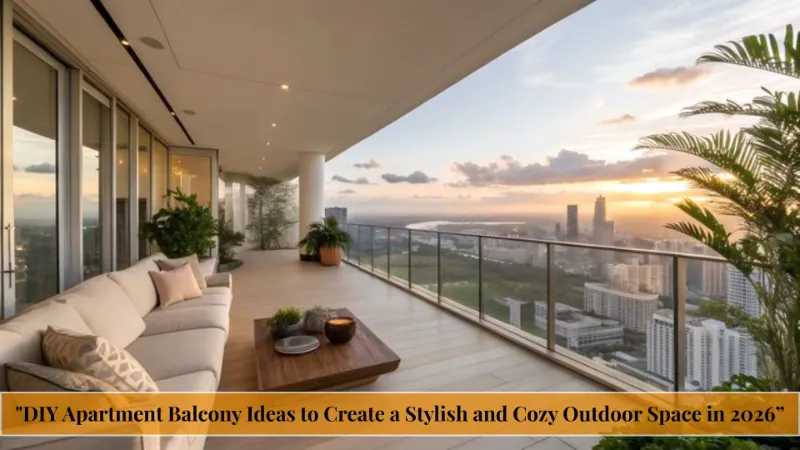
DIY Apartment Balcony Ideas to Create a Stylish and Cozy Outdoor Space in 2026

You scroll past stunning outdoor spaces on Pinterest and Instagram, then glance at your own balcony a bare concrete slab with a forgotten folding chair. Sound familiar? Most apartment dwellers sit on some of the most underutilized real estate in their home. A balcony, no matter how small, has enormous potential to become your personal retreat, garden, or entertainment spot.
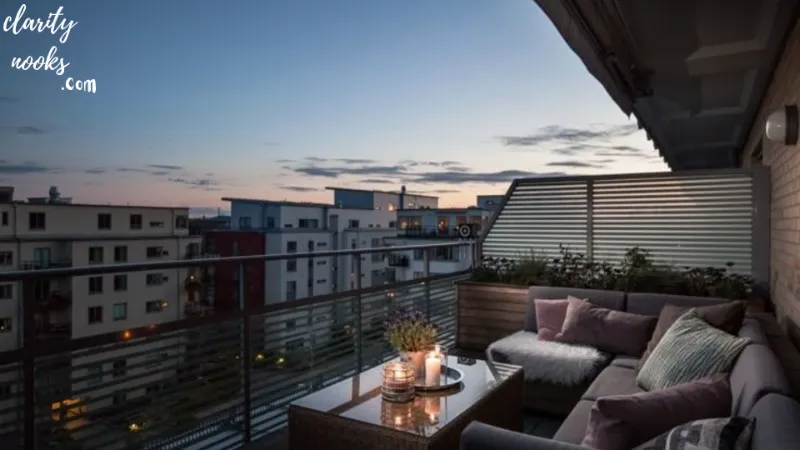
The good news? You don’t need a designer’s budget or a contractor’s skills. With the right DIY balcony ideas, some creativity, and a weekend’s worth of effort, you can completely transform your outdoor space. This guide covers practical, budget-friendly apartment balcony ideas that real people have used with step-by-step instructions, material lists, and honest cost estimates.
Whether you have a tiny Juliet balcony or a generous wraparound ledge, there’s something here for every space and every budget.
What Makes a Great DIY Apartment Balcony?
Before diving into specific ideas, it’s worth understanding what separates a great balcony makeover from a cluttered mess. The best small balcony designs share three qualities: they maximize every square foot, they reflect the resident’s personality, and they solve a real problem (lack of seating, no greenery, no privacy).
Featured Snippet Answer: A great DIY apartment balcony combines functional furniture, vertical space usage, adequate lighting, and personal style all without violating lease agreements or exceeding weight limits.
Always check your lease before drilling, hanging heavy items, or installing permanent fixtures. Most landlord-friendly ideas use tension, adhesive hooks, or freestanding structures that leave no damage behind.
Build a Pallet Wood Deck or Floor Cover
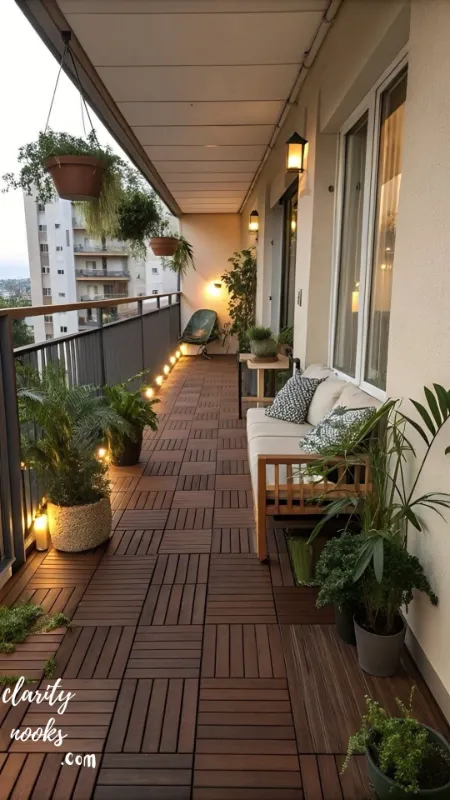
The Problem It Solves: Ugly concrete or tile flooring that makes your balcony feel institutional.
What It Is: Repurposed wooden pallets or interlocking deck tiles laid directly over your existing balcony floor. No screws, no damage, no lease violations.
Materials Needed:
- 4–6 wooden pallets (often free from hardware stores or Facebook Marketplace)
- Sandpaper (80-grit and 120-grit)
- Exterior wood stain or paint
- Polyurethane sealant (for weather protection)
- OR: Interlocking composite deck tiles (a faster, cleaner alternative)
Step-by-Step:
- Sand all pallet surfaces thoroughly to remove splinters.
- Apply exterior stain in your chosen tone (natural wood, gray-wash, or ebony are popular).
- Seal with two coats of polyurethane let dry 24 hours between coats.
- Arrange pallets flush across the balcony floor, cutting to fit edges if needed.
Estimated Cost: $0–$80 for pallets + stain. Interlocking tiles run $3–$8 per square foot.
Benefits: Instant warmth, slip resistance, and a dramatic visual upgrade. It also protects your existing floor.
Decorating Tip: Pair with a jute or outdoor rug in a complementary color to add layered texture.
Real-Life Example: A renter in Chicago sourced 6 pallets from a local garden center for free, spent $35 on stain, and created a rustic outdoor deck her landlord actually complimented. Total time: one Saturday afternoon.
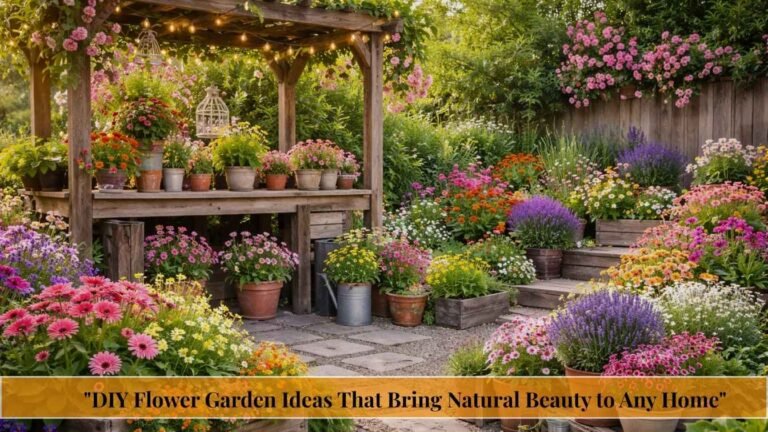
You May Also Like: DIY Front Garden Ideas That Add Charm and Value to Your Home
Create a Vertical Garden Wall
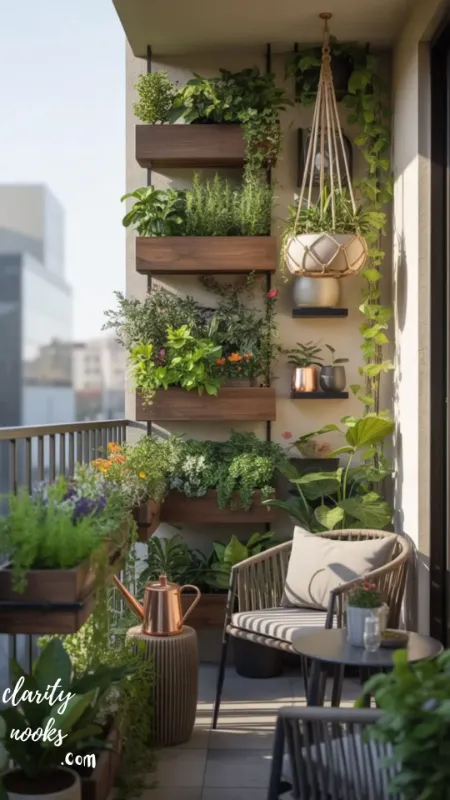
The Problem It Solves: No ground space for plants, desire for privacy, and a blank wall that feels sterile.
What It Is: A wall-mounted vertical planter system that turns your balcony railing or wall into a living green installation. This is one of the most popular small balcony garden ideas for urban dwellers.
Materials Needed:
- Hanging shoe organizer (fabric, $10–$20) OR vertical planter pockets
- Wall hooks or railing clips (no-drill versions available)
- Potting mix for containers
- Herbs, succulents, or trailing plants (pothos, ferns, nasturtium)
- Drip trays or moisture-resistant backing
Step-by-Step:
- Choose your structure: shoe organizers are the cheapest option; modular planter systems are more polished.
- Attach to your railing using S-hooks or bungee clips, or to a wall using removable adhesive strips.
- Fill each pocket with potting mix, leaving 1 inch from the top.
- Plant herbs (basil, mint, parsley) or ornamentals, and water gently.
- Place a tray underneath to catch drips and protect the floor.
Estimated Cost: $15–$60 total depending on materials and plant choices.
Benefits: Adds privacy, improves air quality, and gives you fresh herbs year-round. Also dramatically improves the visual appeal of a bare wall.
Decorating Tip: Alternate green foliage with flowering plants like calibrachoa or petunias for color contrast.
Mini Case Study: A studio apartment renter in Austin, Texas, installed a 3-pocket vertical herb wall on her south-facing balcony railing. She now harvests fresh basil weekly and reports a noticeable reduction in sun glare through her sliding door.
Learn more here: Modern DIY Terrace Design Ideas for Comfortable Outdoor Living
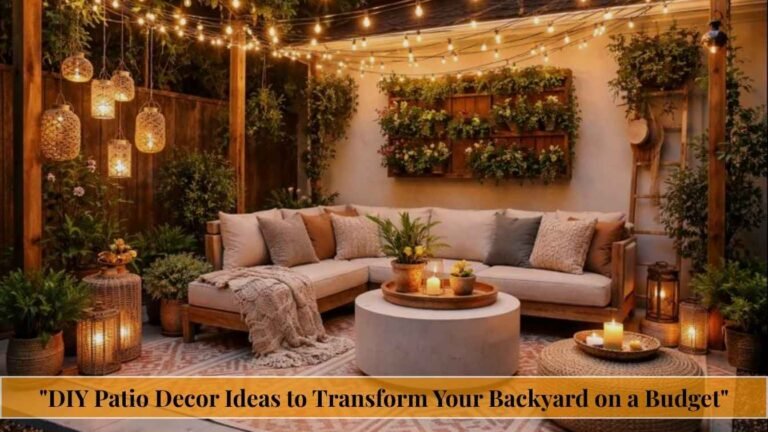
Install String Lights for Ambiance
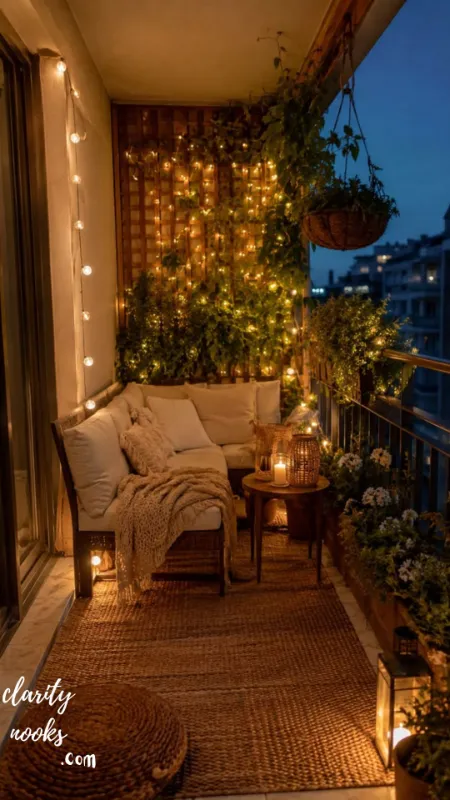
The Problem It Solves: A balcony that feels unusable after dark, killing your evening relaxation time.
What It Is: Outdoor string lights also called Edison or café lights strung across the balcony to create a warm, cozy glow that makes any space feel intentional.
Materials Needed:
- 25–50 ft outdoor-rated LED string lights (weather-resistant)
- Adhesive cable clips or tension wire
- A power source (outdoor extension cord or solar-powered option)
- Optional: a timer plug for automation
Step-by-Step:
- Measure your balcony’s perimeter to calculate how many feet of lights you need.
- Use adhesive hooks (Command strips rated for outdoor use) to mark anchor points.
- Run a zigzag or straight-line pattern across the ceiling or railing.
- Plug in and test; add a smart plug or timer if you want them to turn on automatically at dusk.
Estimated Cost: $20–$60 for quality LED string lights. Solar options start at $15.
Benefits: Creates immediate atmosphere for dinner parties or evening relaxation. LED lights are energy-efficient and last thousands of hours.
Decorating Tip: Warm white (2700K) creates the most inviting, romantic ambiance. Avoid cool white, which feels clinical outdoors.
Expert Insight: Always buy lights rated IP44 or higher for outdoor use. This ensures they’re protected from light rain and humidity a critical detail many beginners miss.
Find out more: Smart DIY Home Exterior Ideas to Improve Style and Function
Build a DIY Balcony Bar or Folding Tab le
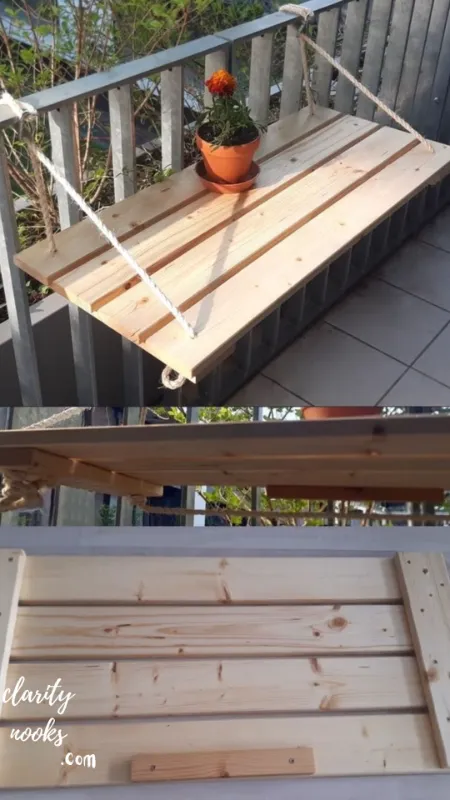
The Problem It Solves: No surface to eat, work, or set drinks on forcing you to juggle everything on your lap.
What It Is: A wall-mounted fold-down table that unfolds when needed and flips flat against the wall when not in use. It’s the ultimate space-saving balcony furniture idea.
Materials Needed:
- 1 piece of 24″ x 36″ plywood or butcher block (¾ inch thick)
- Folding table hardware/piano hinges (available at hardware stores)
- 2 wall-mounted brackets or a support leg
- Sandpaper, wood stain, and exterior sealant
- Drill and screws (or removable mounting hardware for rentals)
Step-by-Step:
- Sand and seal your tabletop piece thoroughly with exterior sealant.
- Attach the piano hinge along one long edge of the board.
- Mount the hinge side to the wall using wall anchors (or attach to your railing if drilling isn’t allowed).
- Install a folding support leg or chain bracket underneath.
- Test the fold-down action and make adjustments as needed.
Estimated Cost: $40–$90 depending on wood choice and hardware.
Benefits: Adds a functional workspace, dining surface, or bar area without permanently consuming floor space.
Decorating Tip: Add a small bar caddy, candle, and succulent to instantly style your new surface. A bistro set pairing works beautifully alongside a fold-down table.
See Related Articles: DIY Tiny Patio Ideas: 10 Creative Ways to Transform Your Small Outdoor Space
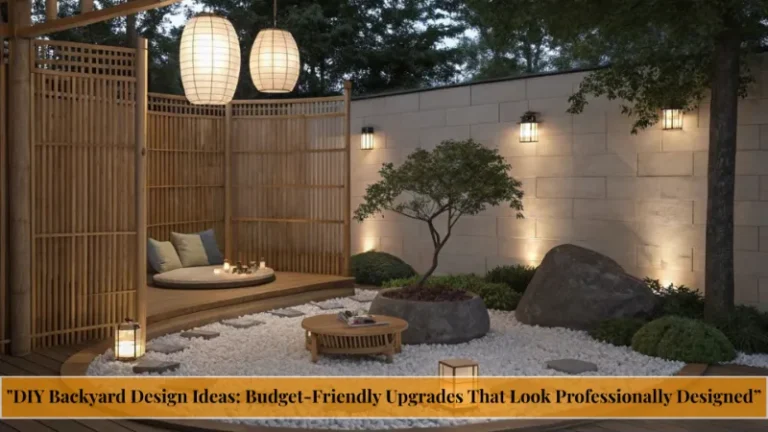
Add Privacy Screens or Bamboo Panels
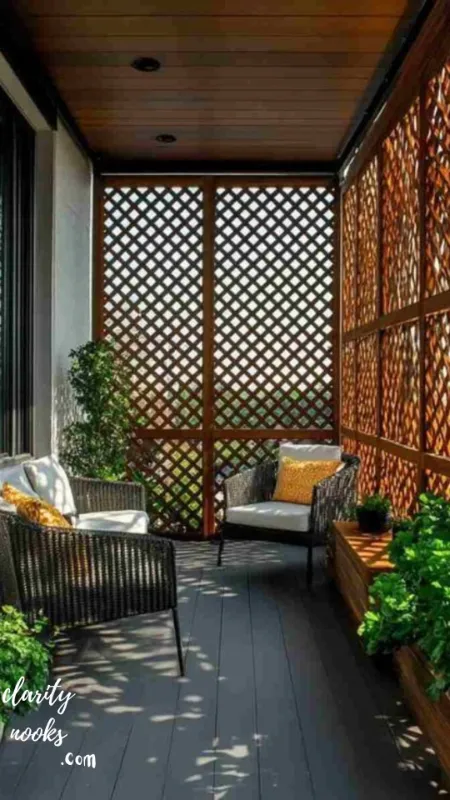
The Problem It Solves: Neighbors overlooking your space, making it feel exposed and impossible to relax.
What It Is: Balcony privacy screens made from bamboo, outdoor fabric, or artificial hedge panels attached to your railing or balcony walls to create a secluded outdoor room.
Materials Needed:
- Bamboo roll fencing (sold by the foot at most garden centers)
- Zip ties or outdoor wire
- Artificial green hedge panels (optional, for a lush look)
- OR outdoor canvas fabric with grommets and tension rope
Step-by-Step:
- Measure the length and height of your railing sections.
- Cut bamboo roll fencing to size using wire cutters.
- Attach to railing using zip ties threaded through the bamboo rolls space ties every 8–12 inches for stability.
- For added coverage, stack two layers or supplement with hanging plants.
Estimated Cost: $20–$80 depending on size and material. Bamboo rolls are the most affordable option.
Benefits: Instant privacy, wind protection, and a visual softening of the outdoor space. Bamboo also filters harsh sunlight.
Decorating Tip: Pair bamboo panels with hanging lanterns or string lights woven through for a Bali-inspired outdoor retreat aesthetic.
Recommended for You: DIY Garden Lighting Ideas to Create a Magical Outdoor Space on a Budget
Create a Cozy Outdoor Seating Area with Floor Cushions
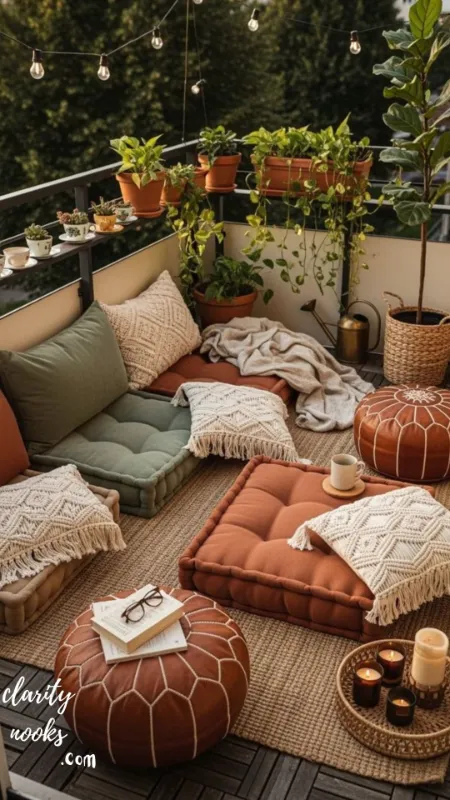
The Problem It Solves: Bulky, expensive outdoor furniture eating up precious square footage.
What It Is: A floor seating arrangement using weatherproof floor cushions, a low coffee table, and stacked poufs inspired by Moroccan and Japanese lounge design. This is ideal for tiny balcony ideas where standard chairs simply won’t fit.
Materials Needed:
- 2–4 outdoor floor cushions or waterproof floor pillows
- A low pallet table or bamboo tray table
- Outdoor rug (jute or synthetic)
- Poufs or ottomans with removable, washable covers
Step-by-Step:
- Lay down your outdoor rug to anchor the seating zone.
- Arrange floor cushions in an L-shape or semicircle around the low table.
- Add a pouf in a contrasting color for variety and extra seating.
- Stack a few decorative throw pillows for a layered, intentional look.
Estimated Cost: $50–$150 depending on cushion quality.
Benefits: Dramatically lowers the visual weight of furniture, making small balconies feel larger and more relaxed.
Decorating Tip: Choose cushions in earthy tones (terracotta, sage, cream) for a bohemian balcony look that photographs beautifully.
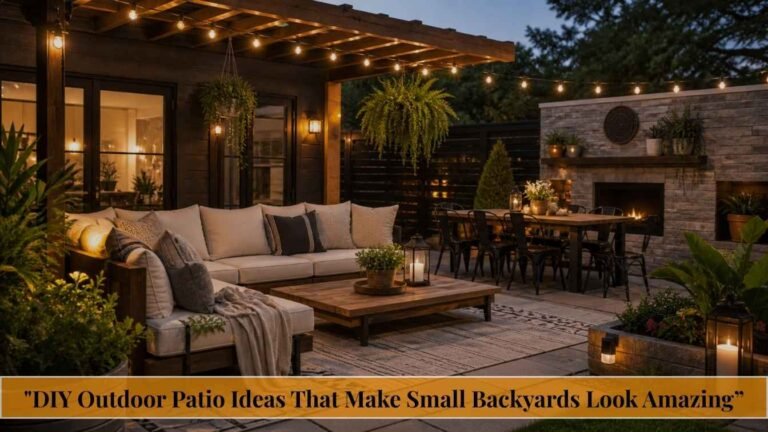
Don’t miss This Post: DIY Outdoor Patio Ideas That Make Small Backyards Look Amazing
Install a Railing Planter Garden
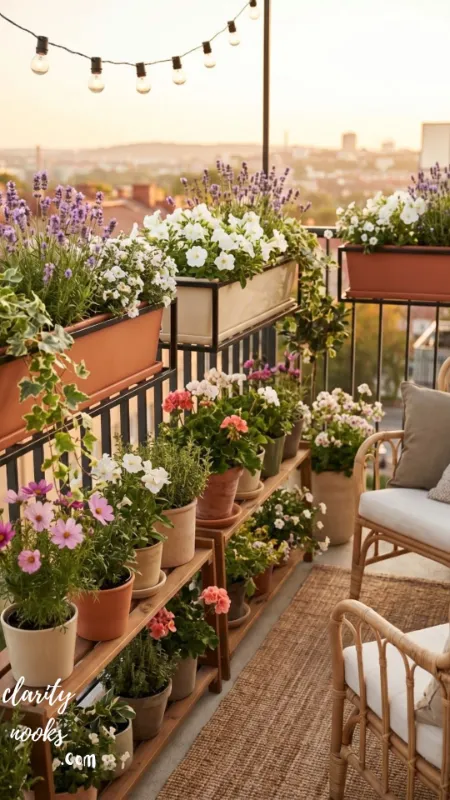
The Problem It Solves: Wanting plants without sacrificing precious floor space.
What It Is: Railing planter boxes that clip or hook directly onto your balcony railing, turning the perimeter of your space into a blooming garden border.
Materials Needed:
- Railing planter boxes (metal or resin, available at garden centers)
- Universal railing clamps or hooks (check compatibility with your railing width)
- Potting mix with slow-release fertilizer
- Plants: petunias, geraniums, calibrachoa, trailing ivy
Step-by-Step:
- Check your railing width (most planters fit railings up to 2.5 inches thick).
- Attach clamps securely, testing for stability before adding soil.
- Fill with a mix of potting soil and perlite for good drainage.
- Plant in a thriller-filler-spiller arrangement: tall plant in center, bushy plant around it, trailing plant at edges.
- Water when the top inch of soil feels dry.
Estimated Cost: $15–$40 per planter box; a full railing setup runs $60–$120.
Benefits: Adds color, fragrance, and privacy at eye level. Hanging planters also attract pollinators.
Decorating Tip: Mix edible plants (cherry tomatoes, strawberries) with ornamentals for a balcony kitchen garden that’s both beautiful and functional.
DIY Outdoor Movie or Projection Setup
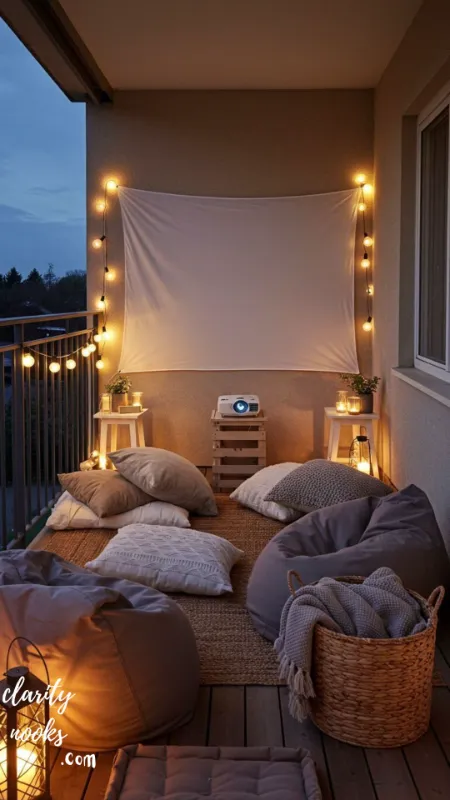
The Problem It Solves: Wanting entertainment on your balcony without a permanent installation.
What It Is: A portable outdoor projector setup using a blank wall, white sheet, or pull-down screen to create an open-air cinema experience on your balcony.
Materials Needed:
- Mini LED projector ($60–$150)
- White sheet or pull-down projector screen
- Portable Bluetooth speaker
- Extension cord or battery pack
- Tension rods or railing hooks to hang the screen
Step-by-Step:
- Hang a white sheet or projector screen using tension rods between walls or clipped to the railing.
- Position your projector on a stable surface — a stack of books, a small table, or a tripod.
- Connect a streaming device (Firestick, Chromecast) to the projector via HDMI.
- Pair your Bluetooth speaker and adjust audio settings.
- Set up your seating and queue up the film.
Estimated Cost: $80–$200 for initial setup; reusable indefinitely.
Benefits: Creates a unique, Instagram-worthy experience. Perfect for date nights or small gatherings.
Decorating Tip: Add a popcorn bowl, fairy lights, and a throw blanket for the full outdoor cinema experience.
Build a Tiered Plant Stand or Ladder Shelf
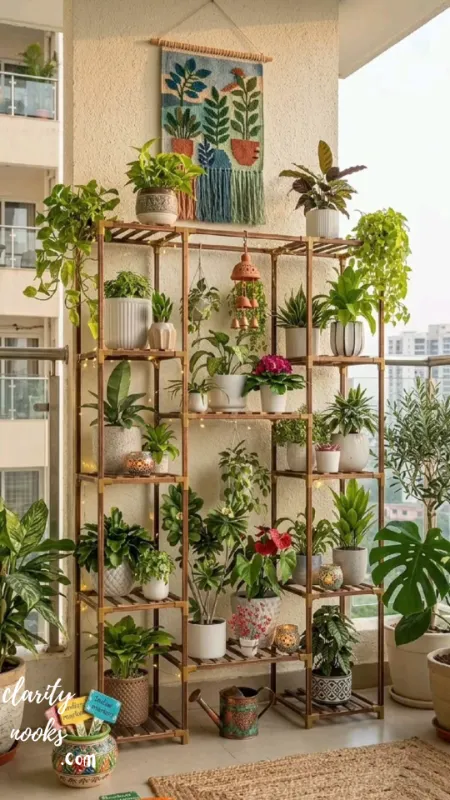
The Problem It Solves: Too many plants, too little floor space, and no vertical organization.
What It Is: A DIY plant ladder or tiered stand that displays multiple plants at varying heights, creating visual depth and maximizing growing space.
Materials Needed:
- 4 wooden boards (1″x4″x6 ft) for a ladder-style shelving unit
- Wood screws and wood glue
- Sandpaper and exterior stain
- Optional: hairpin legs for a modern look
- Weather-resistant finish
Step-by-Step:
- Cut your boards to create two vertical sides and three to four horizontal shelves.
- Sand all surfaces to 120-grit smoothness.
- Assemble using wood screws (pre-drill to prevent splitting) and wood glue at joints.
- Apply exterior stain and two coats of polyurethane.
- Let cure fully (48 hours) before loading with plants.
Estimated Cost: $30–$70 for materials. Pre-made plant ladders run $40–$120.
Benefits: Creates a lush, layered plant display without any wall damage. Also stores gardening tools and accessories on lower shelves.
Decorating Tip: Alternate pot sizes and textures terracotta, concrete, and ceramic for a curated, collected look that feels organic rather than staged.
Add a Water Feature for Relaxation
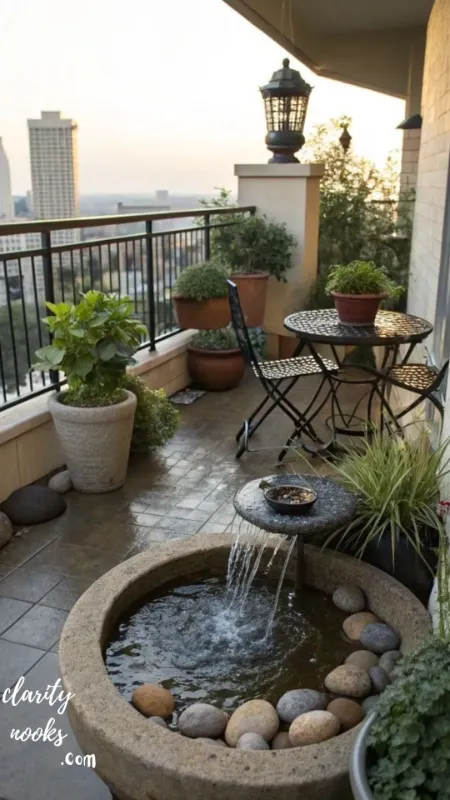
The Problem It Solves: City noise, lack of ambiance, and a space that feels more functional than peaceful.
What It Is: A tabletop fountain or DIY water feature using a small pump, a container, and decorative stones to add the soothing sound of running water to your balcony.
Materials Needed:
- Small submersible water pump ($15–$30)
- A wide, waterproof container (ceramic pot, galvanized tub)
- River stones or pebbles
- Extension cord or solar-powered pump
- Optional: aquatic plants or driftwood
Step-by-Step:
- Place the pump at the bottom of your container.
- Thread the power cord over the edge and connect to power.
- Fill with river stones up to 2 inches below the rim.
- Fill with water until the pump is fully submerged.
- Test the flow rate using the pump’s adjustable valve.
Estimated Cost: $30–$80 depending on container choice.
Benefits: Masks city noise, creates a meditative atmosphere, and doubles as a bird bath supporting local urban wildlife.
Decorating Tip: Add aquatic plants like water hyacinth or dwarf lotus for a natural, self-contained zen garden aesthetic.
Design a Minimalist Balcony Office or Reading Nook
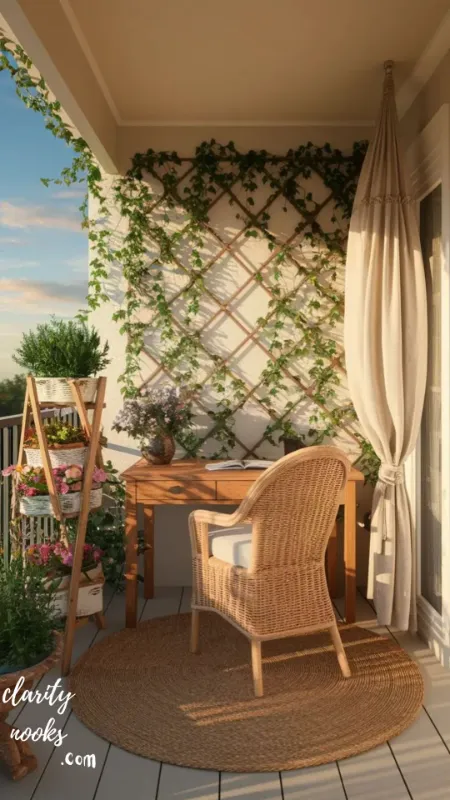
The Problem It Solves: The need for a focused workspace or quiet reading corner outside your main living area.
What It Is: A compact, intentional balcony reading nook or micro-office using a bistro chair, clip-on side table, and outdoor plant backdrop to create the feeling of a secluded outdoor room.
Materials Needed:
- One comfortable weather-resistant chair (egg chair, Adirondack, or sling chair)
- Clip-on side table or small freestanding table
- Outdoor-rated floor lamp or clip-on reading light
- Privacy screen or tall potted plants for visual separation
- Weatherproof storage box (doubles as footrest)
Step-by-Step:
- Position your chair in the best-lit corner of the balcony.
- Attach or place your side table within arm’s reach.
- Install a privacy screen on the exposed side to create enclosure.
- Add lighting for evening use string lights overhead, clip-on light for reading.
- Style with a small plant, a candle lantern, and a magazine rack.
Estimated Cost: $80–$200 depending on chair quality.
Benefits: Creates a dedicated zone for focus, reading, or remote work that feels separate from your home’s interior. Research shows that time in outdoor spaces improves concentration and reduces stress hormones.
Decorating Tip: A hanging egg chair with a macramé basket and trailing pothos creates an editorial-quality boho balcony reading nook that feels completely private.
Conclusion
Your apartment balcony can be far more than a storage unit for unused bikes and boxes. With these 11 DIY apartment balcony ideas, you have everything you need to build a space that’s personal, functional, and genuinely enjoyable. Whether you start with $20 string lights or invest a weekend in a full pallet-floor makeover, every step forward brings you closer to the outdoor retreat you deserve.
The best balcony transformation is the one you actually do so pick one idea from this list, gather your materials, and start this weekend. Your future self, sipping coffee in your own little outdoor sanctuary, will thank you.
Trend Analysis: Balcony Design in 2026 and Beyond
Current Trends (2026): The biggest shifts in balcony decorating trends right now center on biophilic design the intentional integration of nature into living spaces. Urban gardening has exploded, with vertical gardens, railing planters, and food-producing balcony setups dominating social platforms. Simultaneously, “outdoor rooms” are replacing mere “outdoor spaces” meaning people want their balconies to function with the same intentionality as an interior living room.
Sustainability is central. Upcycled pallet furniture, solar-powered lighting, and reclaimed material planters are surging in popularity. Renters especially are seeking zero-damage, landlord-friendly solutions that are also environmentally responsible.
2027–2029 Projections: Smart outdoor living will grow significantly. Solar-integrated planters, app-controlled irrigation for balcony gardens, and weather-adaptive LED lighting systems will become affordable consumer products. Expect modular, subscription-based “balcony kit” services to emerge curated packages of furniture, plants, and accessories designed for specific apartment dimensions.
Behavioral Shift: Post-2020 work-from-home culture has permanently elevated the value of outdoor spaces. Renters now rank “usable outdoor space” among their top 5 apartment selection criteria, which means well-designed balconies are directly linked to lease satisfaction and renewal.
Practical Tips & Expert Insights
Weight Limits Are Non-Negotiable. Most apartment balconies have a weight limit of 40–60 lbs per square foot. Large ceramic planters, water features, and furniture can add up quickly. Always calculate your load before installing heavy features, and consult your building management if unsure.
Use the Rule of Three. Great balcony styling, like interior design, follows the rule of three: group objects in odd numbers, vary heights, and balance visual weight. A tall plant, a mid-height side table, and a low cushion create natural hierarchy and visual flow.
Waterproof Everything. This sounds obvious, but many beginners forget that outdoor furniture fabrics, cushion covers, and wood finishes need to be rated for outdoor use not just “water-resistant.” Look for fabrics rated solution-dyed acrylic (like Sunbrella) and finishes labeled “exterior” or “marine-grade.”
Seasonal Flexibility Matters. Design your balcony to transition across seasons. Portable heaters, outdoor blankets, and windproof candles extend usability into fall and winter. Four-season balconies deliver dramatically more value than those used only in summer.
Drainage Is Critical for Plants. Every planter needs a drainage hole and a drip tray. Without drainage, roots rot within weeks. This is the single most common cause of balcony garden failure among beginners.
Long-Term Strategy & Sustainability
Build in Phases. The smartest approach to any balcony transformation is phased investment. Start with foundational elements flooring, lighting, and one seating piece and add layers over months. This prevents buyer’s remorse and allows you to test what actually works in your specific space.
Choose Timeless Over Trendy. Trendy colors and styles cycle quickly. Natural materials wood, bamboo, stone, terracotta age gracefully and pair well with any style evolution. They’re also more sustainable, as they don’t require replacement every 2–3 years the way cheap plastic furniture does.
Invest in Quality Lighting Last. Many people spend their entire budget on furniture and neglect lighting. Lighting has the highest impact-to-cost ratio of any balcony investment. A $40 set of warm string lights can make a $500 furniture setup sing or make a modest $100 setup feel magical.
Document Before and After. Keep a simple photo log of your balcony evolution. Beyond the personal satisfaction, this protects you when moving out proving you returned the space to its original condition and helping negotiate deposit returns.
Future Predictions & Innovations
AI-Assisted Balcony Design: Interior design AI tools are rapidly evolving toward outdoor spaces. Within 2–3 years, you’ll be able to photograph your balcony and receive a complete design plan furniture placement, plant selection, lighting layout generated by AI trained on thousands of successful balcony setups.
Smart Plant Systems: Self-watering, soil-monitoring planters with app connectivity are already entering the consumer market at accessible price points. By 2027, smart balcony gardens with automated irrigation, UV tracking, and growth analytics will be standard in urban living.
Modular Outdoor Furniture: Brands are developing furniture systems specifically designed for apartment balconies lightweight, weatherproof, stackable, and reconfigurable. These will replace the awkward compromise of using “patio furniture” in spaces patio furniture wasn’t designed for.
Carbon-Neutral Materials: Recycled ocean plastic, mycelium-based composites, and reclaimed wood will become standard in outdoor furniture by 2028, driven by both consumer demand and regulatory pressure. Early adopters who embrace these materials now are ahead of the curve.
Common Mistakes & Hidden Gaps
Mistake 1: Ignoring Wind. Most balcony design content ignores wind completely. But wind is the single biggest destroyer of balcony setups it blows over unsecured plants, shreds lightweight fabric, and makes sitting outside genuinely unpleasant above the 5th floor. Always anchor planters, use wind-resistant species, and consider a windbreak screen before adding delicate elements.
Mistake 2: Buying Outdoor Furniture That’s Actually Indoor Furniture. Many “patio” products sold at discount retailers aren’t truly weather-rated. Check for UV-fade resistance, rust-proof hardware, and waterproof fabric ratings before purchasing.
Mistake 3: Overcrowding. The biggest design mistake on small balconies is adding too much. A few quality, intentional pieces create far more impact than a crowded collection of mismatched items. Edit ruthlessly.
Mistake 4: No Focal Point. Every well-designed space has a focal point a visual anchor the eye returns to. On a balcony, this might be a dramatic plant, a piece of outdoor art, or a beautiful lantern. Without one, the space feels unresolved regardless of how much you spend.
Mistake 5: Forgetting the Ceiling. The balcony ceiling is one of the most underused surfaces in apartment design. String lights, hanging planters, and outdoor ceiling fans can dramatically change how a balcony feels but most guides never mention ceiling-level design.
Hidden Gap: The Acoustic Dimension. Almost no balcony design content addresses sound. A wind chime, a small fountain, or even a Bluetooth speaker hidden in a planter can transform the sensory experience of your outdoor space in ways that purely visual improvements cannot.
FAQ: Quick Answers for Voice & AI Search
How do I decorate a small apartment balcony on a budget?
Start with string lights ($20–$40), a floor cushion ($30–$50), and one or two railing planters ($20–$30). This three-piece setup creates an immediately inviting space for under $100.
What can I put on my apartment balcony without damaging it?
Use freestanding furniture, railing-clip planters, adhesive hooks (Command strips rated for outdoors), and interlocking deck tiles. None of these require drilling or permanent installation.
How do I make my balcony private?
Attach bamboo roll fencing to your railing using zip ties, or install a freestanding privacy screen. Tall potted plants (bamboo, ornamental grasses) also provide natural screening.
What plants grow best on apartment balconies?
Succulents, herbs (basil, mint, rosemary), petunias, geraniums, and trailing pothos all thrive in container environments. Choose sun-loving varieties for south-facing balconies and shade-tolerant plants for north-facing ones.
Can you have a garden on an apartment balcony?
Railing planters, vertical herb walls, and tiered plant stands allow apartment dwellers to grow herbs, vegetables, flowers, and even small fruit plants (strawberries, dwarf tomatoes) without any ground access.
Rameen Zara is the founder of Clarity Nooks, bringing over five years of experience in home décor and interior styling. She shares simple yet practical design ideas that suit real homes and everyday living. Her approach focuses on cozy aesthetics, soft color palettes, and natural textures that create warm, inviting spaces.