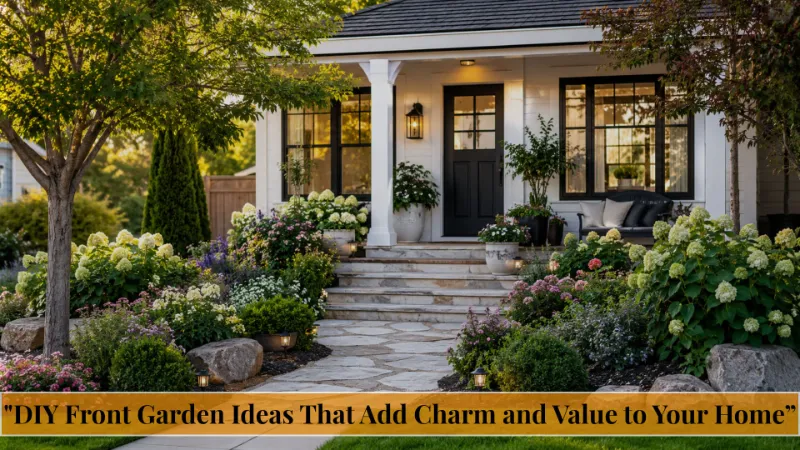
DIY Front Garden Ideas That Add Charm and Value to Your Home

our front garden is the first thing anyone sees about your home including potential buyers, guests, and neighbours. Yet it’s often the most neglected space on a property, sitting somewhere between the pavement and the front door as a forgotten strip of dead grass or overgrown shrubs. If you’ve been meaning to “sort it out” for months, you’re not alone. The good news? You don’t need a professional landscaper or an eye-watering budget to make a dramatic difference.
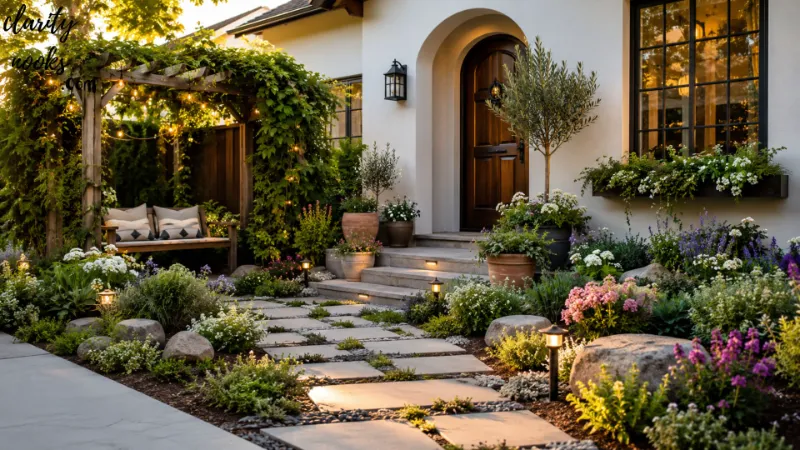
DIY front garden ideas have evolved far beyond planting a few petunias in a window box. In 2026, homeowners are combining smart material choices, low-maintenance planting, and clever design principles to create entrances that look like they cost thousands for a few hundred pounds or dollars at most. This guide goes beyond the surface-level advice you’ll find elsewhere. Instead, it gives you six fully developed strategies, each with real-world examples and the practical details you need to actually get it done.
📌 Quick Answer: What is a front garden makeover?
A front garden makeover is the process of redesigning the space between your property’s boundary and front door to improve kerb appeal, functionality, and planting. DIY front garden projects can range from simple gravel or planting schemes to more complex raised bed constructions most achievable over a single weekend with basic tools.
Whether you’re working with a 3-metre-wide city strip or a generous suburban plot, these ideas are designed to scale. Each section covers materials, approximate costs, planting tips, and the mistakes most people make. Read right through the later sections on trends and long-term strategy will save you from undoing your hard work in two years.
Replace Dead Lawn with a Decorative Gravel Path
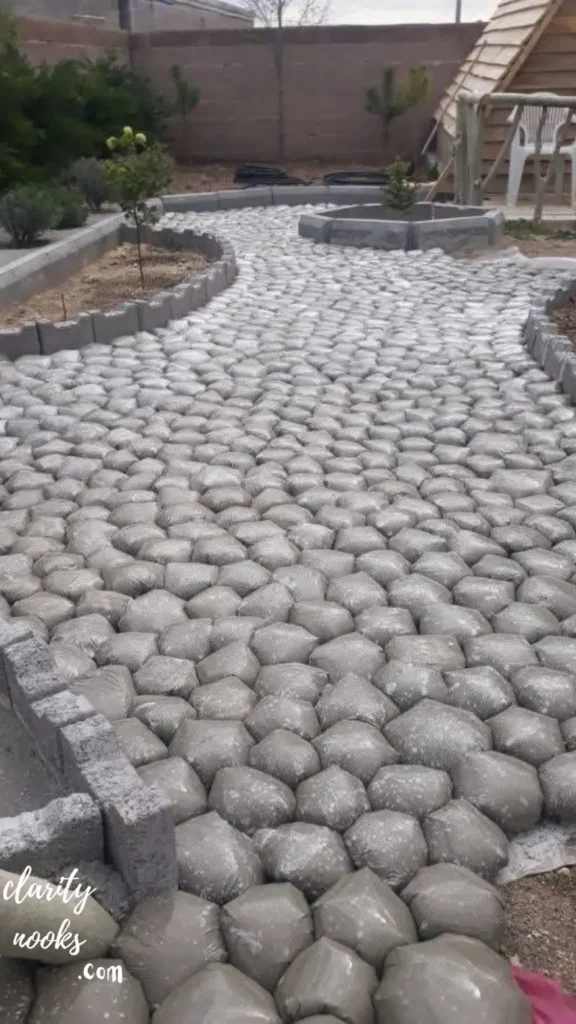
A struggling front lawn is one of the most common garden problems and one of the easiest to solve permanently. Swapping patchy grass for a gravel path with planting pockets on either side instantly creates structure, reduces ongoing maintenance, and gives the garden a defined sense of arrival. It also solves the perennial drainage problem that causes waterlogged lawns in the first place.
For a standard semi-detached property with a 4m x 5m front garden, you’ll need roughly 1.5 tonnes of decorative gravel (pea gravel or slate chippings work beautifully), a roll of permeable weed membrane, and basic edging boards to define the path width. Total material cost runs between £180–£320 depending on the gravel type. The key is laying the membrane correctly first this is the step most DIYers skip, and it’s why weeds push through within a season.
🏠 Real-Life Scenario
Emma, a first-time homeowner in Leeds, inherited a front garden with compacted clay soil and a lawn that refused to grow. Instead of re-turfing (which would have failed again in the same soil), she spent one Saturday laying a curved gravel path with lavender planted at intervals along each edge. Nine months later, the lavender had established, the gravel required zero maintenance, and her neighbour asked for the name of her landscaper. Total cost: £240.
Gravel types that work best for front gardens
Not all gravel is created equal. Pea gravel is affordable and rounded, making it comfortable underfoot and less likely to scatter onto the pavement. Slate chippings create a more contemporary look and compact better. Golden flint adds warmth to brick-fronted properties. Avoid white quartz for high-footfall paths it discolours within months and shows every leaf that falls on it.
Must Read: Smart DIY Bookshelf Decor Ideas for a Clean and Stylish Look
Build DIY Raised Flower Beds for Instant Structure
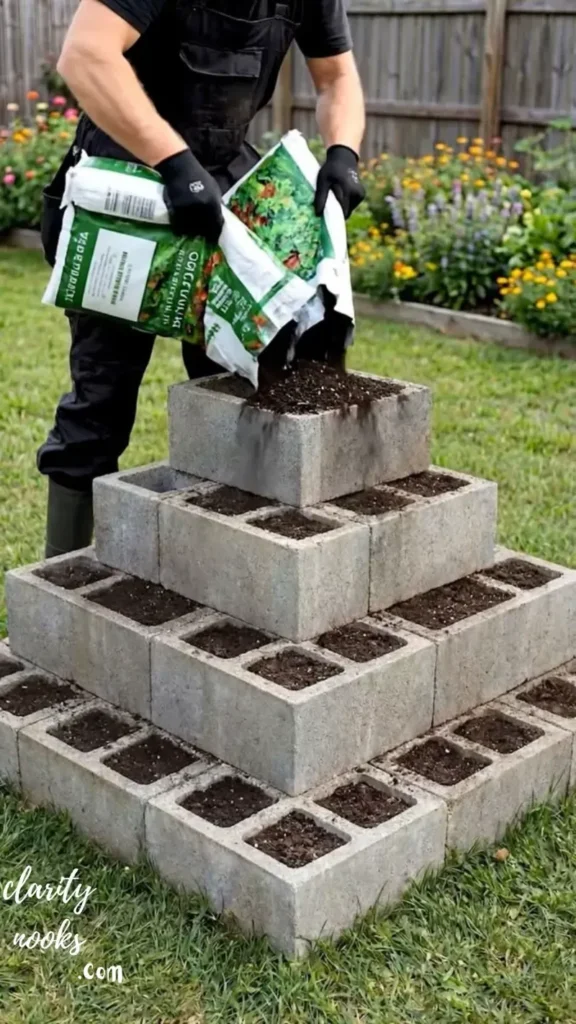
Raised beds solve three problems simultaneously: poor soil quality (extremely common in front gardens, which often contain builder’s rubble), slug and snail pressure on young plants, and the visual flatness that makes front gardens look unfinished. A raised bed at just 25–30cm height dramatically changes the visual depth of a planting scheme, especially when combined with trailing plants that spill over the edges.
For a beginner builder, sleeper-style raised beds are the most forgiving. Timber sleepers either genuine reclaimed railway sleepers or the new-format landscaping sleepers sold at most DIY stores can be stacked two courses high without any joinery skills. Simply pin them with rebar rods hammered through pre-drilled holes. A 2m x 0.6m bed costs around £60–£110 in timber, and you can fill it with quality topsoil mixed with compost for another £30–£50.
📌 Expert Insight
Landscape designer Tom Marchetti notes: “The single biggest upgrade a front garden can get is height variation. Even one raised bed positioned next to a low planting area immediately creates professional-looking layering. Most homeowners try to solve kerb appeal with more plants, when what they actually need is more structure.”
What to plant in a front garden raised bed
For year-round interest, use the “thriller, filler, spiller” formula: a tall structural plant (a slim ornamental grass or Verbena bonariensis), surrounded by medium flowering perennials (Salvia, Echinacea), with trailing plants softening the edges (Bacopa, Lobelia, or Creeping Jenny). This approach means something is always in flower from March through November with zero replanting.
Also Read: Modern DIY Bedroom Curtain Ideas for a Beautiful Home Interior Look
Create a Cottage-Style Planting Scheme on a Budget
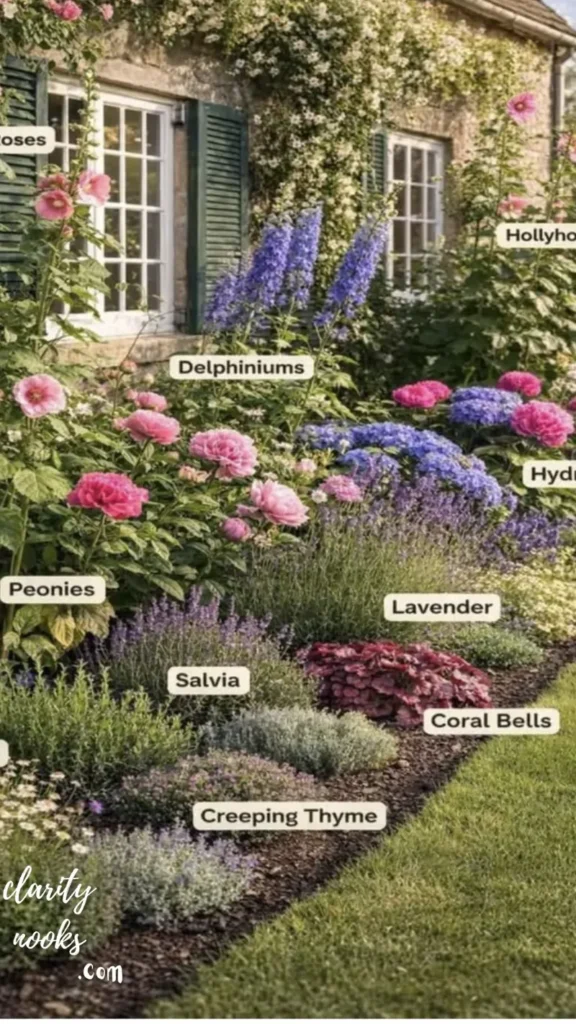
The cottage garden aesthetic dense, seemingly informal planting that’s actually carefully curated remains one of the most universally appealing front garden styles. It works with period and modern properties alike, and crucially, it gets better with age rather than requiring constant replanting. The secret is choosing the right mix of self-seeding annuals, long-lived perennials, and structural evergreen anchors.
A cost-effective approach is to start from seed in late winter. Foxgloves, aquilegias, verbascum, and nigella are all extremely easy to grow from seed and cost pennies compared to nursery plants. Sow them in modules in January or February, harden off in April, and plant out in May. Within one season, you’ll have a planting density that would cost £200+ to buy as plug plants for under £15 in seed packets.
“A cottage garden doesn’t happen by accident. It happens by choosing plants that reward neglect and then strategically neglecting them.”
The best low-cost cottage plants for front gardens
Lavender is almost mandatory it edges paths beautifully, smells extraordinary, and requires almost no care in free-draining soil. Alliums (ornamental onions) add architectural height in early summer. Hardy geraniums (cranesbills) spread quickly and suppress weeds naturally. Rosa ‘Ballerina’ and Rosa ‘The Fairy’ are shrub roses that stay compact enough for front garden borders without the disease problems of hybrid tea roses.
Read More: Modern DIY Outdoor Bar Ideas for the Perfect Summer Setup
Design a Low-Maintenance Front Garden That Looks Curated
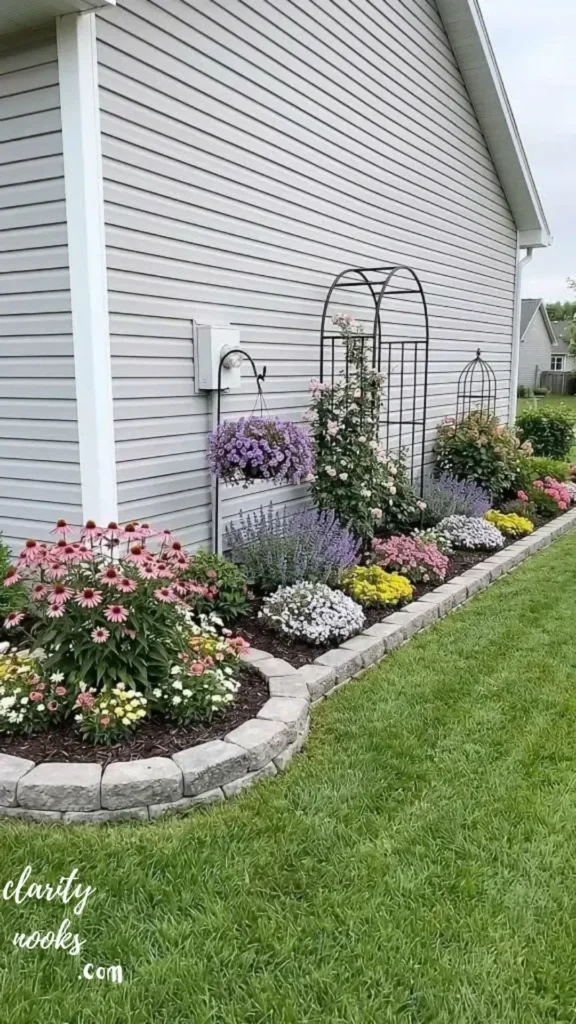
Low-maintenance doesn’t mean low-interest. The most successful low-effort front gardens use a combination of textural evergreen planting, mulched beds to suppress weeds, and hard landscaping that requires zero upkeep. The key shift in thinking is from “plants that flower a lot” to “plants that look good all year” a different but ultimately more satisfying goal for a front-facing space.
Consider a planting palette built around structural evergreens: Box balls (or their blight-resistant alternative, Ilex crenata) provide year-round form. Pittosporum ‘Tom Thumb’ adds rich burgundy colour through winter. Ornamental grasses like Festuca glauca or Carex oshimensis ‘Evergold’ work at the front of borders and require cutting back just once a year. A deep mulch of bark or cocoa shell applied in spring does the rest suppressing annual weeds for the whole season.
🌿
Use weed membrane right
Always overlap seams by 15cm and pin with landscape staples every 30cm. A badly laid membrane is worse than none at all.
💧
Deep mulch saves hours
Apply bark mulch at 7–10cm depth in March. This suppresses most annual weeds for a full 12 months.
✂️
Choose once-a-year plants
Ornamental grasses, hardy geraniums, and evergreen shrubs need attention just once annually late winter cut-back.
The real magic of a low-maintenance front garden is the compound effect. Year one requires some effort. By year three, the plants have knitted together, weed pressure is minimal, and your garden actually looks better because established plants fill space more naturally than newly planted ones. This is why patience and choosing perennials over annuals pays dividends.
Don’t Miss: DIY Basement Bar Ideas to Create a Fun Entertainment Corner
Add Solar Garden Lighting for All-Hours Kerb Appeal
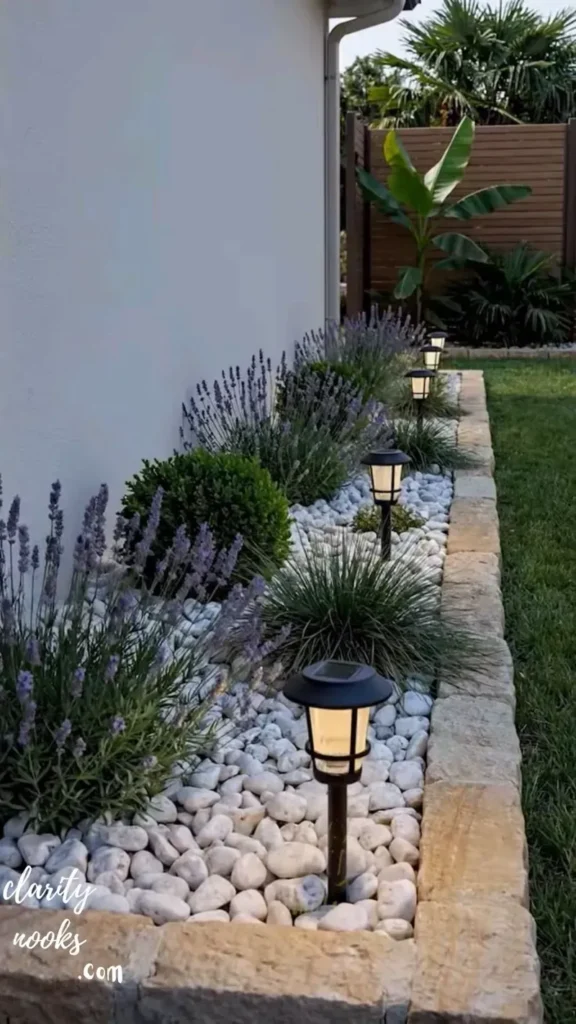
Most DIY front garden guides overlook lighting entirely which is surprising given that for six months of the year in northern climates, most people arrive home after dark. A well-lit front garden does something powerful: it transforms the home’s appearance in the evening from an anonymous dark facade to a welcoming, characterful entrance. And solar technology has improved dramatically, making this genuinely achievable without an electrician or complicated wiring.
The best solar pathway lights now offer genuine lumen outputs comparable to low-voltage wired systems. Look for lights rated at 30+ lumens for path lighting and 100+ lumens for accent spots. A combination of low path lights (to define the route to the door), uplights (to highlight a tree or architectural shrub), and a statement porch lantern creates three-dimensional evening interest at a fraction of the cost of hardwired lighting.
Real-Life Scenario
When Marcus listed his Victorian terrace in Bristol, his estate agent recommended improving the exterior photos. Rather than repainting (too expensive), he installed six solar path lights along the garden edge and a pair of solar uplights beneath a mature bay tree. The evening listing photo became his primary marketing image. The lights cost £85 total and agents credited the improved photography with a faster sale.
Lighting placement principles that actually work
Never space path lights at uniform intervals it looks like a runway. Instead, alternate sides of the path and vary the spacing slightly for a natural feel. Position uplights closer to the plant base than you think most beginners place them too far away, which washes the mid-section rather than creating the dramatic silhouette effect. Warm white (2700–3000K) always flatters garden planting; cool white reads as clinical and harsh outdoors.
Install a Vertical Garden or Trellis Wall for Narrow Plots
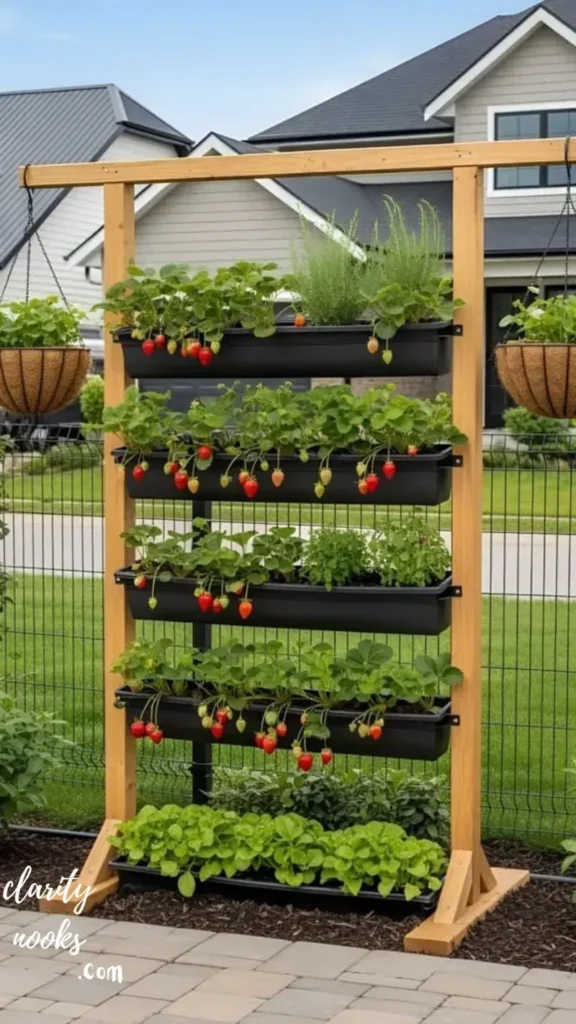
For city properties with a front garden measuring less than 2 metres deep, thinking vertically is the most transformative strategy available. A simple timber trellis fixed to a front wall even a rendered or pebbledash surface immediately creates a canvas for climbing plants, and those plants soften the harshness of masonry in a way no amount of front-border planting can replicate.
For a DIY trellis installation, use treated timber battons to create a 50mm standoff from the wall surface this is essential to allow air circulation behind the plants and prevent damp penetration. Expand metal trellis panels into this frame. The whole structure costs around £40–£70 in materials and takes a Saturday morning to install. Train a climbing hydrangea (for shaded walls) or Rosa ‘Climbing Iceberg’ (for sunny aspects) and within three years you’ll have an entrance feature that stops people in the street.
Best climbing plants for front garden walls in 2026
Trachelospermum jasminoides (star jasmine) has become arguably the most popular front garden climber of the decade it’s evergreen, flowers in June with intense fragrance, and tolerates partial shade. Clematis montana is faster and more vigorous for quickly covering larger walls. For a contemporary look, Parthenocissus (Virginia creeper) offers spectacular autumn colour on north-facing walls without any support other than its own adhesive pads.
Conclusion
DIY front garden ideas work best when they’re built around your specific property, soil conditions, and lifestyle not copied wholesale from a magazine. The six approaches covered here give you a toolkit to pick from: whether you start with a simple gravel path this weekend or commit to a full seasonal planting scheme over the coming months, any one of these strategies will make a meaningful, lasting difference to your home’s entrance.
The front garden is a small investment with a disproportionately large return on your home’s value, on your daily experience of arriving home, and increasingly, on local biodiversity. Start with the change that excites you most, and build from there. You don’t need to do everything at once.
Trend Analysis
Front Garden Design 2026–2029
The front garden is undergoing a values-driven transformation. Where previous decades were dominated by low-maintenance paving and block paving drives, a measurable counter-movement has emerged driven partly by biodiversity concerns, partly by local authority restrictions on hard landscaping, and partly by a post-pandemic reconnection with the natural world.
| Trend | Status | Why It Matters |
|---|---|---|
| Pollinator-friendly planting | Rising ↑ | Planning departments in the UK now actively discourage front garden paving. Bee-friendly schemes are increasingly expected. |
| Permeable surfaces | Dominant | Regulations in England require planning permission for impermeable surfaces over 5m². Gravel and permeable pavers are the workaround. |
| Native plant schemes | Rising ↑ | Gardeners increasingly prioritise ecological value over ornamental novelty hawthorn hedges, field roses, and native grasses are mainstream again. |
| AI-assisted garden planning | Emerging | Apps using AR overlays and AI plant recommendations are transforming how homeowners plan garden layouts before committing to purchases. |
| Productive front gardens | Rising ↑ | Growing herbs, small fruit trees, and even vegetables in front gardens is accelerating particularly among under-35 homeowners. |
Looking toward 2028–2029, expect the integration of smart irrigation systems at the consumer level to become standard in DIY front garden projects. Solar-powered micro-irrigation, already common in commercial horticulture, will reach accessible price points that make automatic watering viable for a front border without any electrical installation. This will further remove the last barrier to low-maintenance planting schemes for time-pressed homeowners.
Practical Tips & Expert Insights
Measure your soil pH before buying plants. Front garden soil is notoriously variable often contaminated with builder’s rubble, mortar, and compacted sub-soil from original construction. A £5 pH test kit tells you in five minutes whether you’re working with acidic or alkaline conditions, and saves you from planting ericaceous plants in lime-rich soil (the number one reason rhododendrons die in front borders).
Plan for the view from inside. Most front garden advice focuses on the street view, but you’ll see your front garden from your window far more often than you’ll stand outside admiring it. Plant tall structural plants where they frame the view rather than block it. Consider what the garden looks like in January, not just July.
Invest in your path, not just your planting. A beautifully planted front garden with a cracked concrete path will always look unfinished. If budget forces a choice, repair or replace the hard landscaping first. A clean path with simple planting on either side outperforms elaborate planting with a shabby approach every single time.
Use restraint with colour. The temptation in a small front garden is to include as many flowering plants as possible. Professional designers consistently do the opposite limiting the palette to two or three colours creates coherence and makes a small space feel intentionally designed rather than randomly planted.
Long-Term Strategy & Sustainability
The most successful DIY front gardens are designed with a five-year timeline in mind, not a five-week one. The difference is significant: a five-week mindset buys plants in flower from garden centres at premium prices, achieves an immediate visual result, and then watches that result deteriorate. A five-year mindset starts with structure, invests in good soil preparation, and chooses plants for their mature size and long-term performance.
For sustainability, prioritise perennial plants over annuals wherever possible in the front garden. Annuals (bedding plants, hanging basket plants) require replanting every season, generate considerable plastic pot waste, and provide minimal ecological value. Perennials establish slowly but reward patience with spreading coverage, self-seeding, and the ability to be divided and multiplied for free after two or three seasons.
Consider the long-term water use of your plant choices. South-facing front gardens in particular will increasingly experience summer drought stress as climate patterns shift. Mediterranean planting lavender, cistus, rosemary, artemisia, and ornamental alliums is genuinely better adapted to these conditions than traditional cottage planting, and requires no irrigation once established after year two.
Future Predictions & Innovations
AR-assisted garden planning is already transforming how homeowners visualise front garden changes before making a single purchase. Apps that overlay planting schemes onto smartphone photos of your actual garden are becoming sophisticated enough to show mature plant sizes, seasonal appearance, and even estimated maintenance hours per year. Expect this technology to become mainstream and free within 18–24 months.
Modular garden systems pre-engineered raised bed kits, interlocking path systems, and clip-together trellis panels are growing rapidly as a product category. These reduce the DIY skill barrier significantly and will likely define how the next generation approaches front garden design: purchasing a configured system rather than planning from scratch.
Perhaps most significantly, the boundary between garden and architecture will continue to blur. Green walls and planted facades currently the province of high-end developments will become accessible at a domestic DIY level as lightweight growing systems, improved irrigation, and purpose-bred wall plants (compact, drought-tolerant climbers) reach consumer price points.
Common Mistakes & Hidden Gaps
Even experienced gardeners make these errors in front garden projects and they’re rarely discussed in standard advice:
- Ignoring the “looking out” view. Most people plan for kerb appeal (the view from the street) and forget they’ll spend more time looking at the garden from inside. Place your best planting where it frames windows, not just where passing traffic sees it.
- Planting too close to the boundary. Plants need room to grow outward. A shrub planted 30cm from the fence today will be overhanging the pavement in three years, creating both a maintenance headache and a neighbour dispute.
- Using the wrong gravel depth. Gravel laid at less than 5cm depth shifts underfoot, scatters onto paths, and allows weeds to push through the membrane. The correct depth is 5–7cm, which requires more material than most people budget for.
- Choosing plants for their flowering peak. If every plant in your front garden flowers in June and July, you have nothing from August through May. Plan with a seasonal calendar and ensure something is contributing interest in every month.
- Skipping the soil preparation step. The single most common reason plants fail in front gardens is poor soil. Spending £30 on compost and working it into the top 30cm before planting is more valuable than £100 of extra plants.
- Designing in isolation from the house. Your front garden should respond to the style of the property. A traditional cottage garden against a stark modernist facade looks incongruous, however beautiful the planting. Match the design language of the house to the garden aesthetic.
Rameen Zara is the founder of Clarity Nooks, bringing over five years of experience in home décor and interior styling. She shares simple yet practical design ideas that suit real homes and everyday living. Her approach focuses on cozy aesthetics, soft color palettes, and natural textures that create warm, inviting spaces.