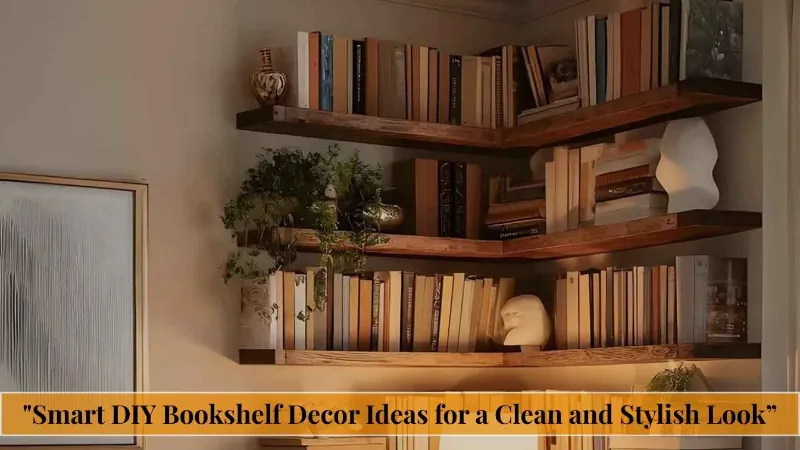
Smart DIY Bookshelf Decor Ideas for a Clean and Stylish Look

You walk past your bookshelf every day and feel nothing. It’s cluttered, boring, or just… forgettable. Sound familiar? Most people treat their bookcase as pure storage, but here’s the truth: a well-styled bookshelf is one of the most powerful and affordable home decor statements you can make.
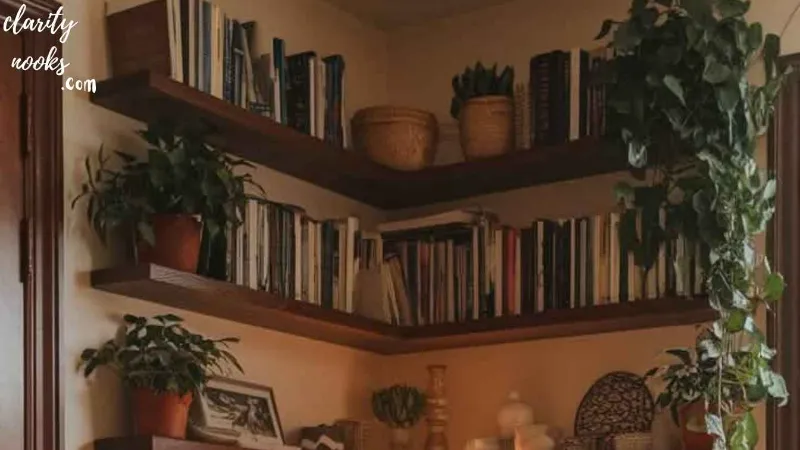
DIY bookshelf decor doesn’t require a design degree or a big budget. With the right ideas, a little intention, and materials you likely already own, you can turn any shelf into a curated display that reflects your personality and elevates the entire room. This guide gives you six proven, deeply explained ideas plus expert insights, trend analysis, and mistakes to avoid.
The fastest way to upgrade bookshelf decor?
Clear 30% of items, group remaining objects in odd numbers, and add one natural element like a small plant or wood piece. Instant transformation.
Rule of Three Group Objects Like a Pro Stylist
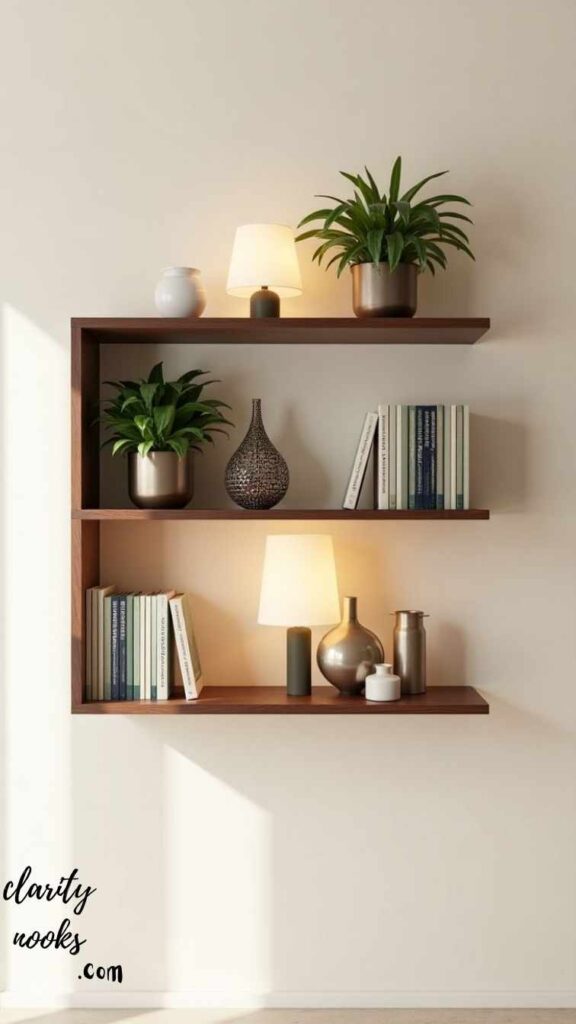
Professional interior stylists use one golden rule above all others: always arrange objects in groups of three. The human eye finds odd numbers naturally appealing it creates visual tension that holds attention. When you place three items of varying height, texture, and scale together, the arrangement feels intentional and balanced rather than random.
For example, imagine a small succulent pot (low), a stack of two hardcover books (medium), and a vintage ceramic vase (tall). These three different heights create a triangular visual flow that draws the eye upward and across. This is exactly how IKEA showrooms and Anthropologie stores style their display shelves and you can replicate it at home for free.
Real-Life Scenario
Emma, a teacher from Austin, had a chaotic BILLY bookcase stuffed with paperbacks and random items. After applying the rule of three grouping her books by color and pairing each cluster with two decorative objects her living room looked like a Pinterest board. The best part? She didn’t buy a single new item.
- Vary heights within each group: short, medium, tall
- Mix textures: smooth ceramic + rough wood + glossy book cover
- Leave intentional breathing space between groups
- Use a tray or small riser to elevate one item per cluster
Must Read: Modern DIY Bedroom Curtain Ideas for a Beautiful Home Interior Look
Color Blocking Your Books for Maximum Visual Impact
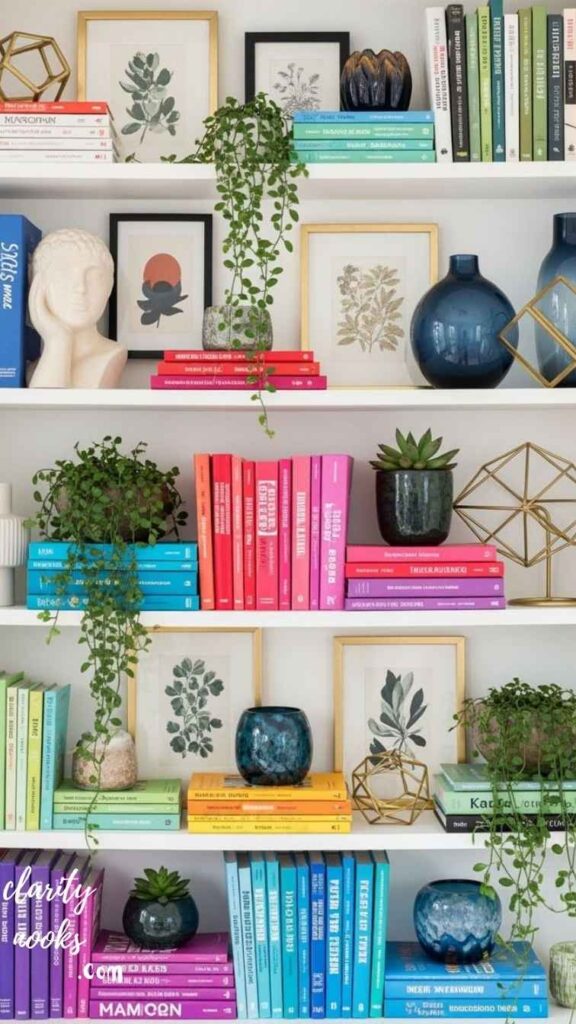
One of the most shareable DIY bookshelf decor trends on social media right now is color-blocked bookshelves. Instead of shelving books randomly, you organize them by spine color creating rows of red, then orange, then yellow, all the way through the spectrum. The effect is stunning and costs absolutely nothing.
However, color blocking has a smarter, subtler cousin: tonal zoning. Rather than full rainbow arrangement, you pick two or three complementary shades that match your room’s existing palette and organize your books within that range. This looks more editorial and less like a Pinterest experiment, making it ideal for living rooms and home offices that need to look polished.
Mini Case Study: The Gradient Shelf
Interior blogger Sofia Morales documented a $0 bookshelf transformation using color blocking. She sorted 140 books from warm tones (reds and oranges) on the left to cool tones (blues and greens) on the right, with neutrals in the middle. The post received over 200,000 saves on Pinterest. Her only investment: two hours of rearranging.
To color-block a bookshelf, sort books by spine color into groups either rainbow order or matching your room’s color palette. Remove dust jackets from books with clashing colors to reveal plain spines underneath.
Read More: Modern DIY Outdoor Bar Ideas for the Perfect Summer Setup
Bring Nature In Plants, Driftwood & Organic Textures
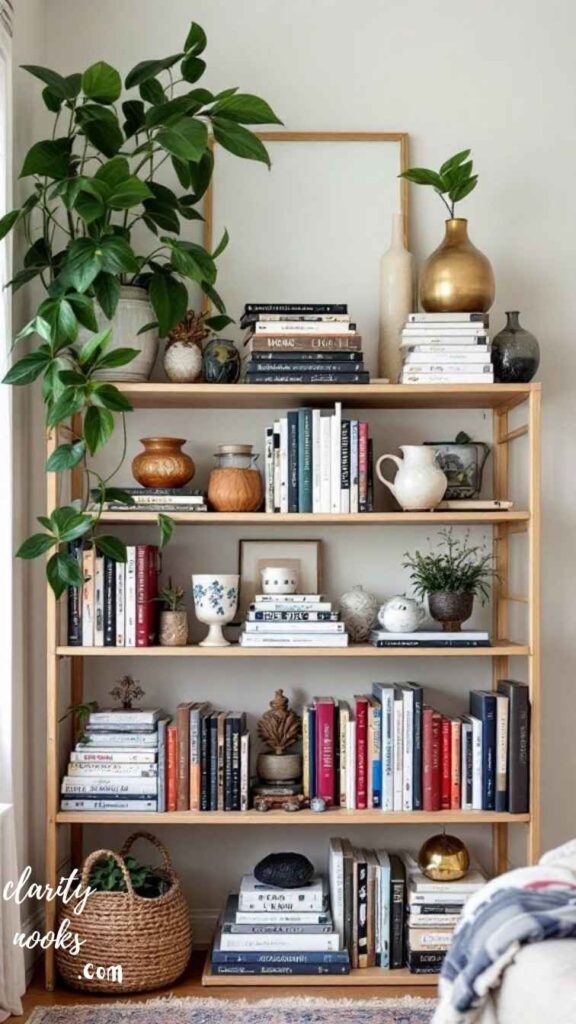
Nothing makes a bookshelf feel curated and lived-in like natural elements. Plants, in particular, are transformative they add color, life, movement, and a sense of care. Trailing plants like pothos or string of pearls drape beautifully over shelf edges, while small succulents and air plants tuck into tight corners without overwhelming the space.
Beyond plants, consider incorporating driftwood pieces, smooth river stones, pinecones, woven baskets, or dried pampas grass. These organic textures contrast beautifully with the rigid geometry of books and shelving units. A single piece of weathered driftwood resting against a stack of books communicates a whole aesthetic: earthy, collected, and intentional.
Practical Application
If you’re worried about watering plants on shelves (fair concern), try self-watering propagation stations or simply use high-quality artificial succulents modern faux plants are incredibly realistic and require zero maintenance. For a bookshelf in a low-light room, snake plants and ZZ plants are nearly indestructible and genuinely beautiful.
- Use a trailing plant on the top shelf for dramatic effect
- Small ceramic pots in earthy tones complement any book color scheme
- Propagation vases with single stems feel modern and minimalist
- Dried grasses add height without blocking sightlines
Also Read: DIY Basement Bar Ideas to Create a Fun Entertainment Corner
Art on the Shelf Leaning
Frames & Mini Galleries
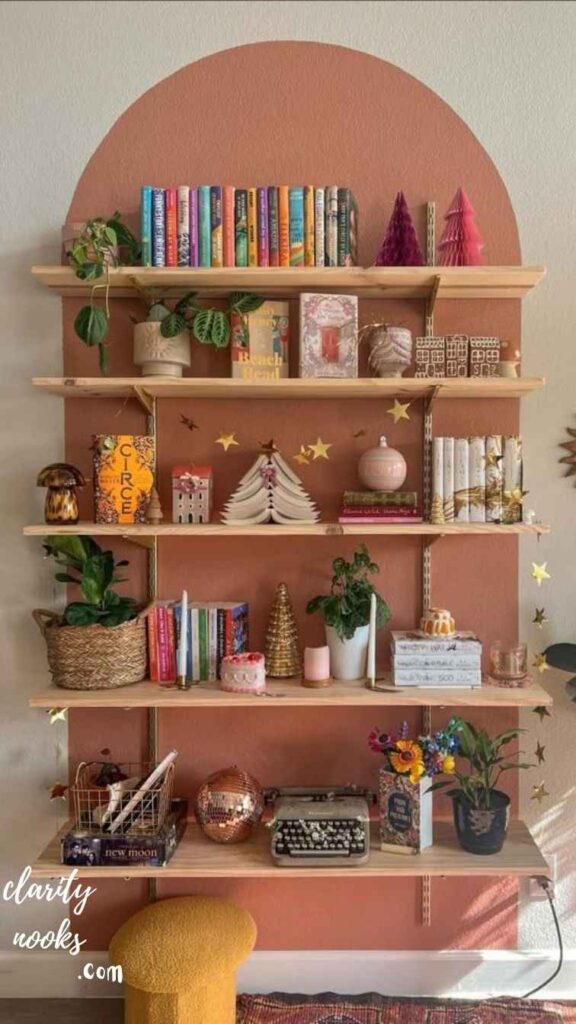
Most people put art on walls. Smart decorators put it on shelves too. Leaning small framed prints, photos, or even postcards against the back wall of a shelf adds depth, personality, and color without putting holes in your walls. This technique works especially well for renters or anyone who rotates their decor frequently.
The key to pulling this off is scale. Use frames that are roughly 60–80% of the shelf height so they read as intentional rather than accidentally small. Mix frame finishes a black metal frame next to a natural wood frame next to a white frame to create an organic, collected-over-time look. Layer a smaller object in front of the frame to add dimension.
DIY Art Idea
Print free downloadable art (search ‘free printable wall art’ on sites like Canva or Freepik), frame them in thrifted or dollar-store frames, and lean them on your shelves. You can swap prints seasonally autumn botanicals in fall, watercolor florals in spring keeping your decor fresh at minimal cost. This also gives you a rotating gallery that feels personal and curated.
“What can I put on a bookshelf besides books?”
Framed art, plants, candles, small sculptures, decorative boxes, woven baskets, clocks, and personal mementos all work beautifully alongside books.
Don’t Miss: DIY Gaming Chair Ideas for a Cool and Comfortable Setup at Home
Power of Negative Space
Editing is Decorating
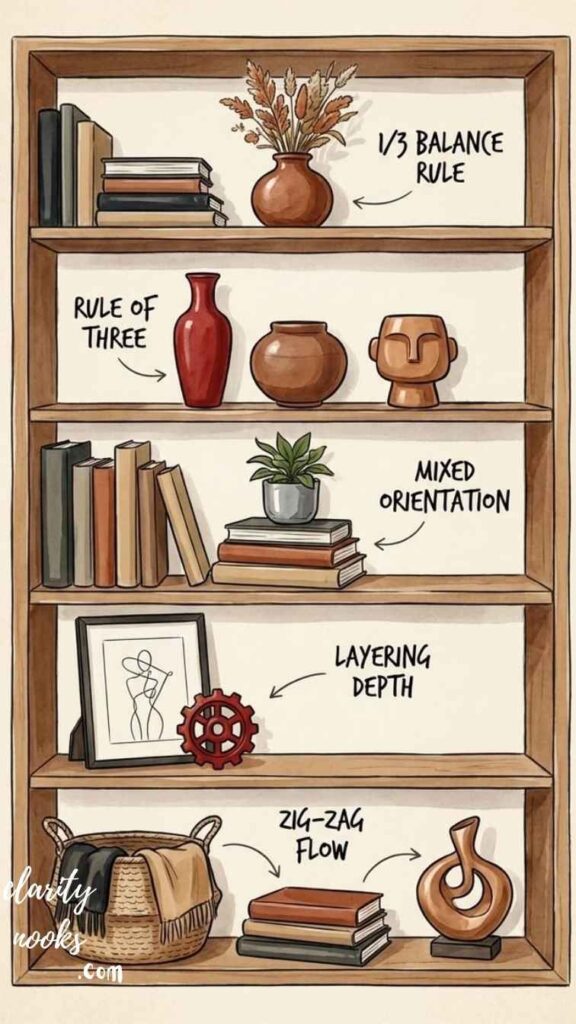
Here’s the decorating insight most people miss: removing things is just as important as adding them. Overstuffed shelves look chaotic regardless of how beautiful each individual item is. Professional stylists typically aim for shelves that are 60–70% full, leaving the rest as intentional negative space that allows each object to breathe and stand out.
Start by removing everything from your shelf. Then place only what you truly love back the books you’re proud of, the objects that mean something. Resist the urge to fill every gap. That empty space isn’t wasted; it’s doing essential visual work. It creates rhythm, rest for the eye, and makes your curated pieces feel more special.
The Edit-Down Challenge
Try this exercise: take everything off your bookshelf and place it on the floor. Now only return items that pass two tests you either use it regularly or it genuinely makes you happy. Everything else goes into a donate box, a storage bin, or another room. Most people discover they were living with 40% more stuff than they actually wanted.
- Remove all items and only replace what sparks joy
- Group similar items together before placing them back
- Aim for 30–40% open space across the total shelf area
- Store rarely-used books in boxes under the bed or in closets
Lighting as Decor
Battery LED Strips & Fairy Lights
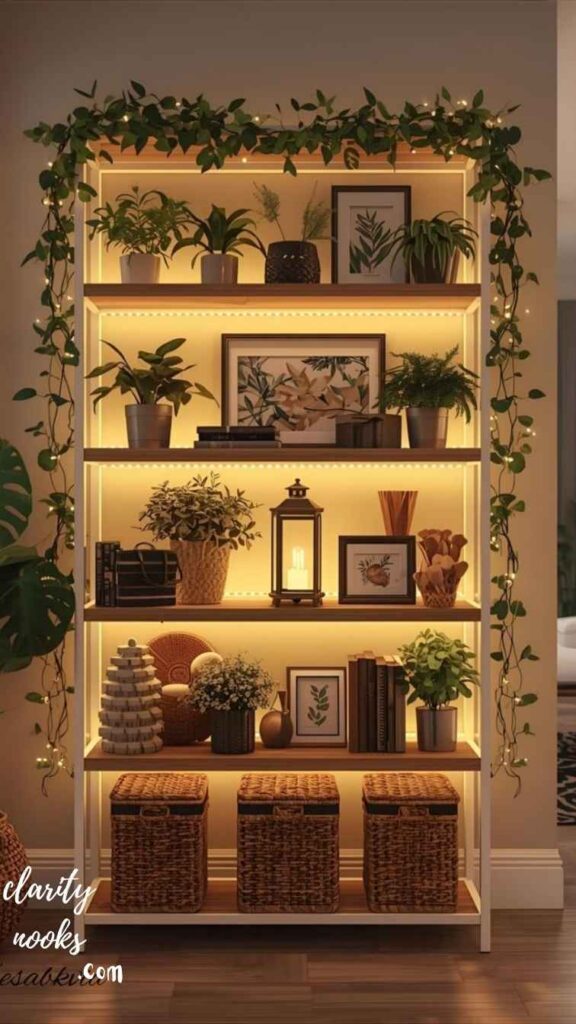
Lighting is the single most underused tool in DIY bookshelf decor. Adding warm LED strip lights or battery-operated fairy lights to your shelves dramatically changes the ambiance of a room especially in the evenings. It’s also one of the most affordable upgrades available, with quality LED strips available for under $15 on Amazon or at any hardware store.
For a clean look, apply adhesive LED strip lights to the underside of each shelf so they wash light downward across your objects. This creates a warm, gallery-like glow. Alternatively, weave fairy lights loosely through your decorative objects for a more relaxed, bohemian feel. Both approaches photograph beautifully for social media and add genuine warmth to your living space.
Technical Tips for Shelf Lighting
Choose LED strips with a warm white color temperature (2700K–3000K) rather than cool white (5000K+), which can feel clinical. For battery-operated lights, rechargeable battery packs are more economical long-term. If you want smart home integration, Govee and Philips Hue both make shelf-compatible LED strips that can be voice-controlled via Alexa or Google Home.
- Warm white LEDs (2700K): cozy and flattering for photos
- Stick LED strips underneath each shelf for a floating glow effect
- Add a dimmer or smart plug for atmospheric control
- Fairy lights work especially well on top open shelves
Conclusion
DIY Bookshelf Decor Ideas are a simple way to make your home feel warm and stylish. You can mix books, plants, candles, and small decorations to create a clean and cozy look. Small changes can make your shelves look fresh and beautiful without spending too much money.
These DIY Bookshelf Decor Ideas work well for living rooms, bedrooms, and small spaces. Try different colors, textures, and layouts to match your style. The best part is that you can change the design anytime and keep your home looking modern and organized.
Trend Analysis
What’s Shaping Bookshelf Decor in 2026 & Beyond
Current Trends (2026)
The dominant aesthetic right now is ‘curated minimalism’ fewer objects, higher quality, more intentional arrangements. Social media, particularly Pinterest and Instagram Reels, continues to drive demand for color-blocked shelves and biophilic (nature-inspired) shelf styling. There’s also a growing shift toward sustainability: thrifted decor, upcycled frames, and vintage finds outperform new mass-market items in engagement metrics.
AI-generated room planners (like IKEA’s Kreativ tool and similar apps) are becoming mainstream, letting users virtually style their shelves before moving a single book. This means consumers are arriving at decorating decisions more informed and intentional than ever before.
Next 2–3 Years
By 2027–2028, expect modular and customizable shelf systems to dominate the market. Companies like String Furniture and new DTC brands are developing shelf ecosystems where users can mix materials, depths, and finishes across a single unit. Additionally, sustainable materials reclaimed wood, recycled metal, mycelium-based composites will move from niche to mainstream in shelf construction.
Shoppable shelf tours (where viewers can click to buy displayed items directly from video content) will reshape how people discover decor ideas, blurring the line between editorial content and commerce. Creators who build genuine authority in this space now will have significant advantages.
Practical Tips & Expert Insights
The back wall of a shelf is prime real estate most people ignore. Painting just the interior back of a bookcase in a contrasting or complementary color instantly makes the whole unit look more custom and expensive. A dark navy back wall with white shelves, for example, creates a striking, gallery-like effect without painting an entire room.
Professional stylists always style shelves from a seated viewing position the angle from which most people actually see the shelf. Stand back 8–10 feet and crouch slightly to view your arrangement at eye-level from a couch or chair. This perspective reveals what’s actually visible and whether your tallest items are blocking shorter ones unnecessarily.
- Paint the back panel a contrasting color for a custom built-in look
- Always photograph your shelf in natural daylight before posting or finalizing
- Rotate seasonal decor every 3 months to keep the space feeling fresh
- Use museum putty to secure lightweight objects on lower shelves (pet/kid-proofing)
- Mirror backing panels make small shelves appear twice as deep
Long-Term Strategy & Sustainability
Building a bookshelf decor aesthetic that lasts isn’t about chasing trends it’s about establishing a personal style language that evolves slowly and intentionally. The most visually coherent shelves typically stick to a consistent color palette of 3–4 tones, a consistent material palette (e.g., natural wood + white ceramics + brass), and consistent scale relationships between objects.
From a sustainability angle, invest in a few high-quality anchor pieces a beautiful ceramic vase, a solid wood sculpture, a quality frame and rotate seasonal or trend-driven items around them using thrifted or low-cost finds. This approach is both financially smart and environmentally responsible, reducing consumption without sacrificing style.
For scalability: as your home or life changes, your shelf aesthetic should flex rather than require a complete overhaul. A system built around neutral anchor pieces, plants, and personal mementos will feel relevant across different rooms, homes, and life stages.
Future Predictions & Innovations
The next frontier in bookshelf decor is intelligent shelving. Early-stage products already embed wireless charging pads, ambient sensors, and LED lighting directly into shelf structures. Within three to five years, expect mainstream shelf units that automatically adjust lighting color temperature based on time of day or integrate with smart home systems as ambient displays.
AI styling assistants will become genuinely useful for shelf design not just generating inspiration images, but analyzing photos of your actual shelf and providing specific, actionable rearrangement suggestions. Apps that do this in real-time via phone camera are already in beta from several startups.
The resale economy will also reshape how people approach shelf decor. As platforms like Facebook Marketplace, Vinted, and Depop mature, decorating with intentionally resellable items becomes a real strategy styling with vintage and collectible pieces that hold or increase in value rather than cheap disposable decor.
Common Mistakes & Hidden Gaps
Beginner Mistakes
The most common beginner mistake is treating every shelf as a book dump. Books should be thoughtfully edited, not simply relocated from a pile on the floor to a shelf. Similarly, beginners often buy too many small decorative items knick-knacks that individually seem charming but collectively create visual noise. When in doubt, use fewer, larger objects.
- Mixing too many competing styles (bohemian + industrial + farmhouse = chaos)
- Using frames that are too small always size up for shelf art
- Ignoring the floor beside the shelf (a floor plant or basket completes the vignette)
- Leaving cords and cables visible near shelves with electronics
Intermediate Mistakes (What Experienced Decorators Get Wrong)
Intermediate decorators often over-style. They’ve learned the rule of three, the value of negative space, and the power of plants and then apply all of it simultaneously on every shelf. The result is a shelf that looks like it was assembled by a formula rather than a human. Variation in approach across different shelves within the same unit creates authenticity.
Another hidden gap: ignoring the shelf’s relationship to the surrounding room. A beautifully styled shelf in a poorly lit, cluttered room has limited impact. The shelf and the space around it work as a system which is why clearing the floor area in front of a bookcase, adding a nearby lamp, or decluttering adjacent surfaces can dramatically elevate how the shelf reads.
- Over-symmetry: perfectly mirrored shelves feel sterile, not curated
- Ignoring the viewing angle style for where you actually sit, not where you stand
- Using only decorative objects books and functional items ground the display
- Forgetting to dust regularly (a styled shelf that’s dusty undermines all the effort)
Content Gaps Competitors Miss (Differentiation Opportunities):
- Shelf styling by room type (kids room vs. home office vs. living room) underserved
- Bookshelf decor for renters with no-paint rules high search volume, low competition
- Shelf styling for small spaces / apartments under 500 sq ft
- Seasonal bookshelf refresh guides (cost-per-season breakdown)
- Video tutorials: ‘shelf styling time-lapse’ content performs extremely well on Reels/Shorts
Voice Search & AI Search Optimization Notes:
This article directly answers conversational queries likely to be processed by SGE (Search Generative Experience), ChatGPT search, and Perplexity AI. The featured snippet boxes, FAQ-style inline answers, and specific numbered steps give AI assistants clear, extractable answers. For maximum AI search visibility, ensure each H2 section could standalone as a complete answer to a specific question.
FAQ’S About DIY Bookshelf Decor Ideas
How do I make my bookshelf look expensive?
Use a limited color palette (3–4 tones maximum), incorporate one or two higher-quality anchor objects like a ceramic vase or brass object, ensure 30–40% open negative space, and add warm LED lighting. These four elements together create the ‘expensive’ look regardless of your actual budget.
What is the best way to organize a bookshelf for decor?
Organize books by color or genre into clusters, then style each cluster with 1–2 decorative objects of varying heights. Use the rule of three, leave intentional space between clusters, and balance heavier visual elements (dark books, tall objects) with lighter ones across the shelf.
How often should I restyle my bookshelf?
A light seasonal refresh (swapping one or two items, adjusting a plant, updating a framed print) every 3 months keeps the display feeling current. A full restyle every 12–18 months is sufficient for most people. Avoid over-styling constant major changes prevent you from developing a cohesive personal aesthetic.
Can DIY bookshelf decor work in a small apartment?
Absolutely and it’s often more impactful in small spaces. A single well-styled bookshelf can serve as the entire focal point and personality of a studio or small apartment. Focus on vertical height, mirrors to add depth, and light colors to keep the space feeling open.
Rameen Zara is the founder of Clarity Nooks, bringing over five years of experience in home décor and interior styling. She shares simple yet practical design ideas that suit real homes and everyday living. Her approach focuses on cozy aesthetics, soft color palettes, and natural textures that create warm, inviting spaces.