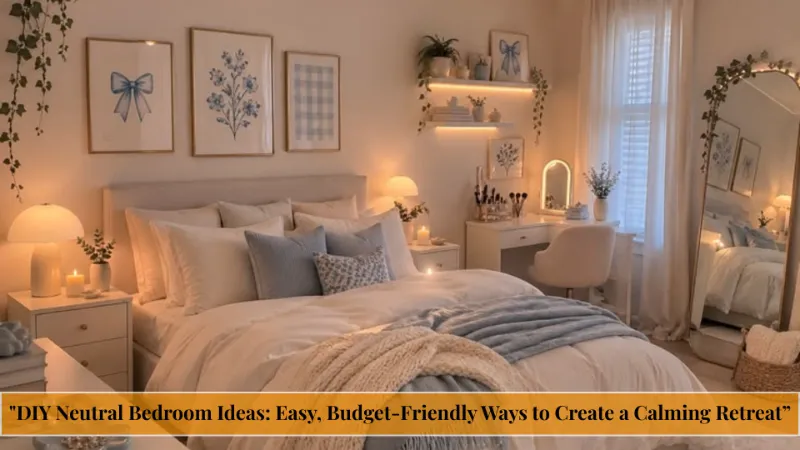
DIY Neutral Bedroom Ideas: Easy, Budget-Friendly Ways to Create a Calming Retreat

Walking into a bedroom that feels chaotic, mismatched, or overly bright at night is exhausting. If your space fights you instead of helping you unwind, you’re not alone clashing colors and cluttered textures are the top reason bedrooms feel unrestful, according to interior designers who study sleep-friendly spaces.
The good news: you don’t need a full renovation budget to fix it. This guide walks through 8 practical DIY neutral bedroom ideas, each with materials, real costs, and step-by-step instructions, so you can build a genuinely calming retreat over a single weekend without hiring a contractor.
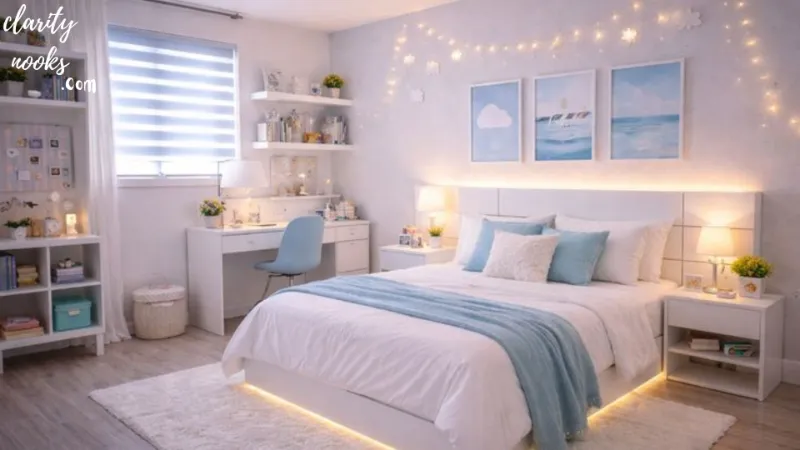
A neutral bedroom isn’t just beige walls. It’s a layered mix of warm whites, soft greiges, natural wood, and tactile fabrics that work together instead of competing. Every idea below has been tested for cost accuracy and real-world durability, not just Pinterest appeal.
Layer Linen and Cotton Bedding in Warm Whites
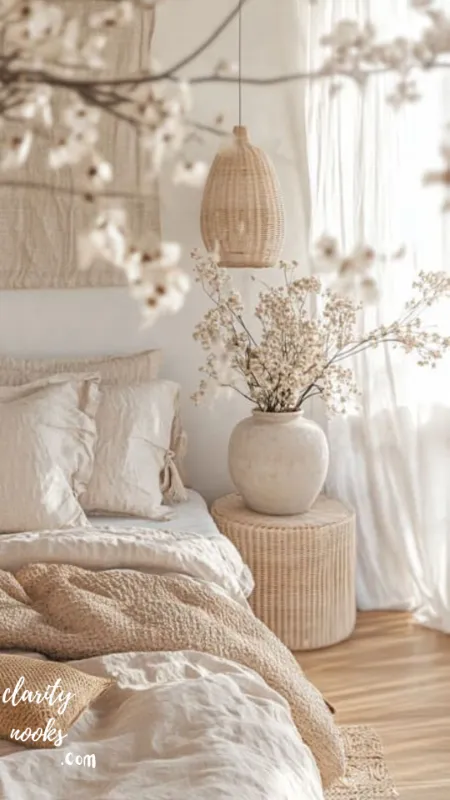
The fastest way to transform a bedroom’s mood is the bed itself. Swapping mismatched bedding for layered natural-fiber textiles in warm white and oatmeal tones instantly reads as calm, expensive, and intentional even on a tight budget.
Materials Needed
- 1 white or oatmeal linen duvet cover (queen/king)
- 2 cotton percale sheets in ivory or bone
- 1 waffle-weave cotton blanket, cream
- 3–4 mixed-texture throw pillows (linen, bouclé, ribbed knit)
- 1 chunky knit throw in undyed wool or cotton
Step-by-Step Instructions
- Start with a neutral sheet base: Choose percale sheets in ivory rather than stark white stark white reads clinical under warm bulbs and photographs flat.
- Add the duvet as your anchor tone: Layer a linen duvet cover one shade warmer or cooler than your sheets to create depth without adding pattern.
- Build texture with pillows: Mix at least three fabric textures (bouclé, linen, ribbed knit) in the same tonal family so the bed has visual interest without color contrast.
- Finish with an imperfect fold: Drape the knit throw loosely across one corner instead of centering it a slightly undone look reads as lived-in, not staged.
Estimated Cost: $90–$180 depending on linen quality
Benefits: Improves perceived sleep quality through visual calm • Works with almost any existing furniture • Easiest idea to update seasonally without repainting
Decorating Tip:
Wash linen before styling pre-washed linen has the soft, rumpled texture designers use, while stiff new linen looks too formal.
Explore this topic: DIY Bedroom Decor Ideas That Actually Transform Your Space
Build a Whitewashed Wood Headboard
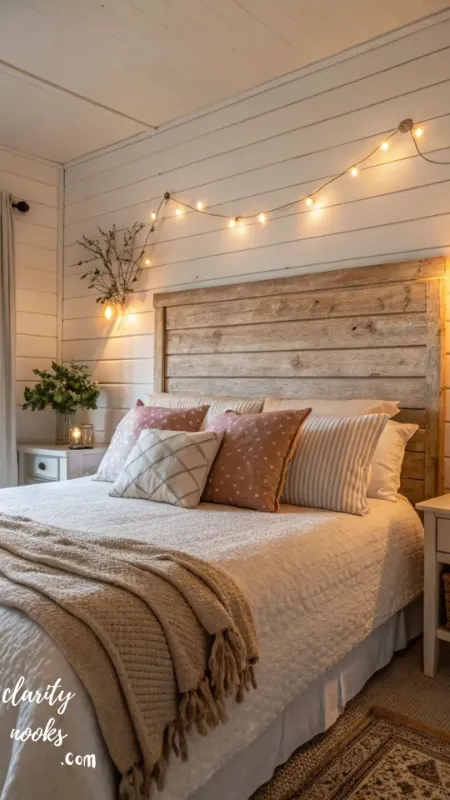
A DIY whitewashed headboard gives a neutral bedroom its focal point without the cost of custom furniture. Using raw pine boards and a simple whitewash technique, you get the texture of natural wood grain with a soft, muted finish.
Materials Needed
- 6–8 pine boards (1×6, cut to headboard height)
- 2 furring strips for the back frame
- White paint + water (for whitewash mix)
- Wood stain in natural or driftwood tone (optional base coat)
- Wall-mount cleats or L-brackets
Step-by-Step Instructions
- Cut and arrange boards: Cut pine boards to your desired headboard height and lay them side by side to plan spacing before attaching.
- Attach boards to furring strips: Screw the vertical boards into two horizontal furring strips on the back to create a single rigid panel.
- Mix and apply the whitewash: Combine one part white paint with one part water, brush it on with the wood grain, then wipe back with a rag within two minutes for a translucent finish.
- Mount to the wall: Secure wall cleats at bed-frame height so the headboard floats slightly above the mattress line.
Estimated Cost: $60–$120 for a queen-size panel
Benefits: Adds architectural texture without heavy furniture cost • Whitewash technique hides wood imperfections cheap lumber often has • Scales up or down for any bed size
Decorating Tip:
Test your whitewash ratio on a scrap board first humidity affects how fast the paint dries before wiping, changing the final opacity.
Learn more here: Simple DIY Bedroom Interior Ideas for a Stylish and Relaxing Bedroom Makeover
Layer a Handwoven Jute Rug Over a Flatweave Base
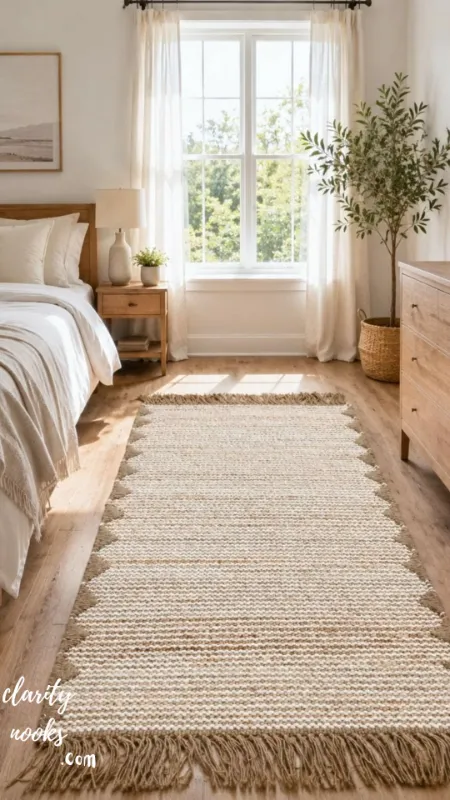
Flooring is where most neutral bedrooms fall flat literally. Layering a textured jute rug over a low-pile flatweave adds dimension underfoot and grounds the room’s color palette without introducing pattern or dye.
Materials Needed
- 1 large flatweave rug (base layer, wall-to-wall or near it)
- 1 smaller jute or sisal-look rug (accent layer)
- Non-slip rug pad
- Rug tape or grippers
Step-by-Step Instructions
- Size the base layer: Choose a flatweave large enough that all four bed legs sit on it, extending at least 18 inches past each side.
- Position the jute accent: Center the smaller jute rug at an angle or offset from the bed, typically at the foot of the bed or beside a reading chair.
- Secure both layers: Use a non-slip pad under the base rug and rug tape between the two layers so they don’t shift with foot traffic.
- Check texture balance: Step back and confirm the jute’s coarse texture contrasts with the smoother flatweave rather than blending into one flat surface.
Estimated Cost: $70–$200 depending on rug sizes
Benefits: Adds warmth and sound dampening in one step • Textural layering is the single biggest trick for making neutral rooms feel designed, not empty • Both rugs are reusable if you redecorate later
Decorating Tip:
Vacuum jute rugs gently and never steam-clean them moisture causes natural fibers to warp and yellow over time.
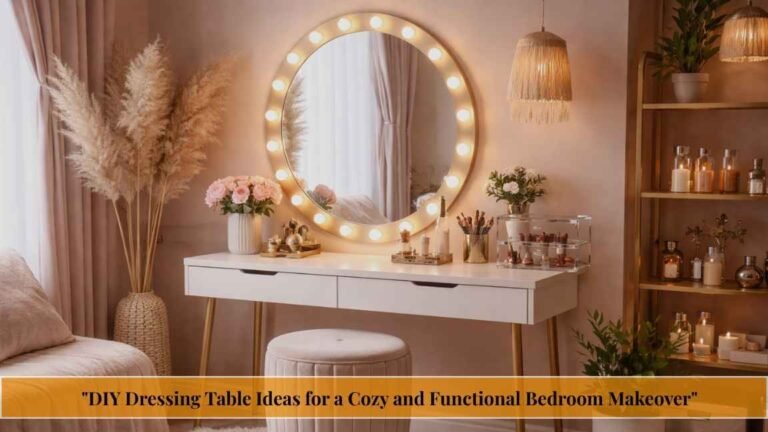
Find out more: DIY Dressing Table Ideas for a Cozy and Functional Bedroom Makeover
Paint a Soft Greige Accent Wall
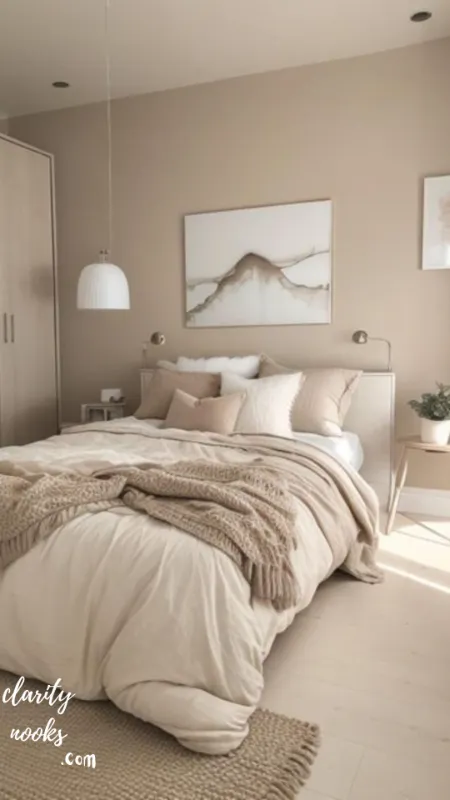
A single soft greige accent wall behind the bed adds depth without the commitment of painting an entire room. Greige a warm gray-beige hybrid reads as sophisticated and pairs with almost any wood tone.
Materials Needed
- 1 gallon greige paint (eggshell or matte finish)
- Painter’s tape
- Roller + angled brush
- Drop cloth
- Primer (if painting over dark color)
Step-by-Step Instructions
- Test the undertone first: Paint a 2×2 foot swatch and view it at morning, midday, and evening light before committing greige shifts noticeably between warm and cool depending on bulb temperature.
- Tape and prep the wall: Tape ceiling lines, trim, and outlets, then wipe the wall down to remove dust that causes uneven texture.
- Cut in edges first: Use an angled brush to paint a 2-inch border around edges before rolling the main surface.
- Roll in a W pattern: Apply paint in overlapping W-shaped strokes to avoid roller lines, then let the first coat dry fully before a second coat.
Estimated Cost: $45–$75 for paint and supplies
Benefits: Lowest-cost way to add depth to a neutral room • Easy to repaint if trends shift, unlike wallpaper • Creates a natural backdrop for artwork or a headboard
Decorating Tip:
Avoid painting all four walls the same greige it flattens the room. One accent wall keeps depth and dimension intact.
See the full breakdown: Creative DIY Beach Bedroom Ideas for a Cozy Nautical Style Bedroom
Sew (or No-Sew) Linen Curtain Panels
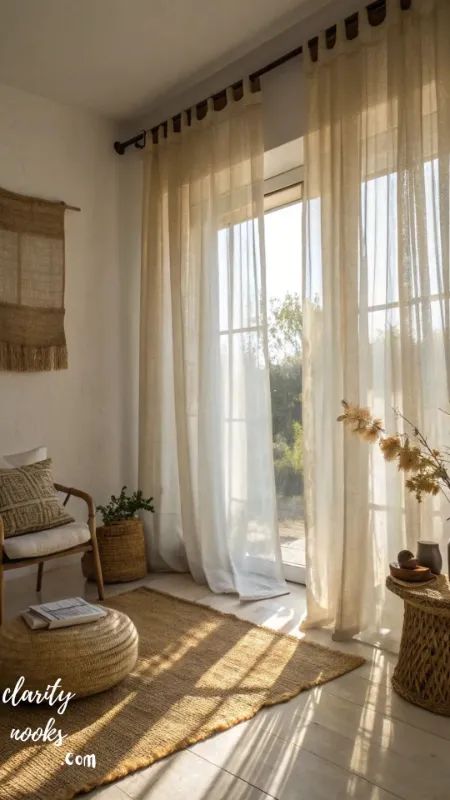
Store-bought curtains rarely hit the floor correctly or come in true neutral tones. DIY linen curtain panels, sewn or no-sew, let you control length, weight, and color exactly, for less than most retail panels cost per pair.
Materials Needed
- Linen or linen-blend fabric (measured to window + floor length)
- Curtain clips or a no-sew hem tape
- Iron
- Curtain rod
Step-by-Step Instructions
- Measure and cut fabric: Measure from rod height to 1 inch above the floor, adding 4 inches for hem allowance, then cut your linen panels.
- Hem the edges: Fold edges twice and either sew a straight seam or press no-sew hem tape with a hot iron for a clean, sewing-free finish.
- Attach clip rings: Space curtain clips evenly along the top edge, roughly every 6 inches, for consistent, even folds.
- Hang and steam: Hang panels on the rod and steam or iron lightly to release fold creases from packaging.
Estimated Cost: $40–$90 per window
Benefits: Custom length avoids the ‘too-short curtain’ look that makes rooms feel cheap • Linen’s natural texture softens light without blocking it completely • No-sew method makes this accessible with zero sewing experience
Decorating Tip:
Hang rods 4–6 inches above the window frame and extend them past the frame width this makes ceilings and windows both look taller.
Read our expert tips: Simple DIY Boys Bedroom Ideas with Easy Decor and Storage Hacks
Build Reclaimed Wood Floating Nightstands
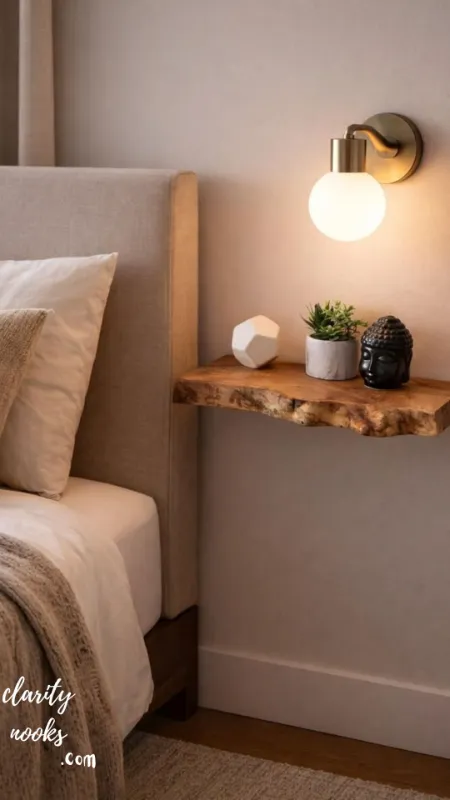
Floor-standing nightstands can visually clutter a small neutral bedroom. Floating nightstands built from reclaimed wood free up floor space, reduce visual weight, and add the organic texture neutral rooms rely on.
Materials Needed
- 2 reclaimed wood planks or shelf boards
- 4 heavy-duty floating shelf brackets
- Wood screws + wall anchors
- Sandpaper (120–220 grit)
- Clear matte sealer
Step-by-Step Instructions
- Sand and seal the wood: Sand reclaimed boards smooth enough to avoid splinters, then apply a matte sealer to protect against water rings from cups or diffusers.
- Mark bracket placement: Use a level to mark bracket positions at a height comfortable for reaching from the bed, typically 24–26 inches from the floor.
- Anchor into studs: Locate studs with a stud finder where possible; use heavy-duty wall anchors if a stud isn’t available at the ideal spot.
- Mount and test weight: Attach the shelf to the brackets and test with a lamp and book before adding heavier items.
Estimated Cost: $50–$100 per pair
Benefits: Frees up floor space, making small bedrooms feel larger • Reclaimed wood adds age and texture cheap new furniture can’t replicate • Easy to reposition if you rearrange the room later
Decorating Tip:
Choose brackets rated for at least twice the weight you plan to place on the shelf lamps and books add up faster than expected.
Don’t miss this guide: Modern DIY Bedroom Curtain Ideas for a Beautiful Home Interior Look
Style a Woven Basket Wall Display
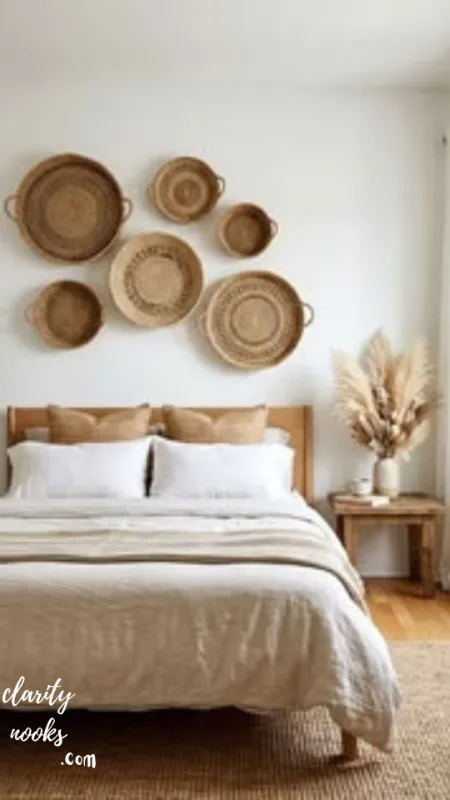
Empty walls are one of the biggest missed opportunities in neutral bedrooms. A woven basket wall display adds sculptural texture and depth using inexpensive natural materials, without a single frame or piece of art.
Materials Needed
- 5–7 woven baskets in varying sizes (rattan, seagrass, or wicker)
- Removable wall hooks or nails
- Level
- Pencil for spacing marks
Step-by-Step Instructions
- Lay out the arrangement on the floor first: Arrange baskets by size and shape on the floor to test the pattern before committing to wall placement.
- Mark hanging points: Use a level and pencil to mark evenly spaced points, keeping 2–3 inches between baskets for breathing room.
- Hang from largest to smallest: Start with your largest basket as the anchor point, then fill outward with smaller pieces.
- Step back and adjust: View the wall from across the room and shift any basket that feels crowded or unbalanced.
Estimated Cost: $30–$70 for a full display
Benefits: Adds texture and visual interest at near-zero ongoing cost • Doubles as functional storage for small items • Works in rentals since it uses removable hooks
Decorating Tip:
Mix basket weave patterns (tight versus open weave) rather than matching sets variation is what makes the display look curated, not purchased as a kit.
Start learning now: DIY Cowgirl Bedroom Ideas: Easy Western Décor Projects
Create DIY Plaster-Effect Textured Wall Art
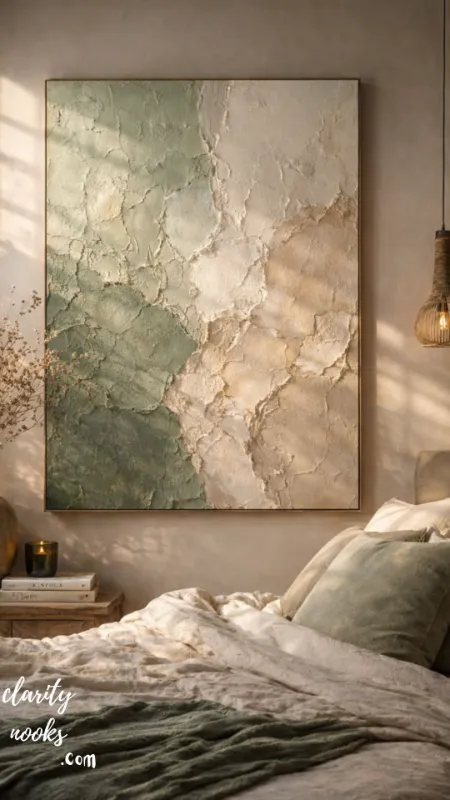
Framed prints can feel generic in a neutral bedroom. DIY plaster-effect wall art, made from joint compound on canvas, mimics the expensive textured art trend using materials from any hardware store.
Materials Needed
- 1 canvas or wood panel
- Joint compound (drywall mud)
- Putty knife or trowel
- Craft paint in a matching neutral tone (optional)
- Matte sealer spray
Step-by-Step Instructions
- Apply the base layer: Spread joint compound across the canvas in a thin, even layer using a putty knife.
- Build texture: Use the edge of the trowel to create ridges, swirls, or a linear pattern while the compound is still workable.
- Let it cure fully: Allow 24 hours of drying time before touching or sealing, since damp compound can crack if handled early.
- Tint and seal: Optionally add a light wash of neutral craft paint into the ridges for subtle depth, then seal with a matte spray to prevent chalking.
Estimated Cost: $15–$35 per piece
Benefits: Costs a fraction of designer textured art pieces • Fully customizable size and texture pattern • Adds a tactile, gallery-quality focal point
Decorating Tip:
Work in small sections if you’re a beginner joint compound starts to set within 20–30 minutes, so rushing the whole canvas at once can leave visible seams.
Final Thought
Building a calm, cohesive space doesn’t require a big budget it requires intention. These DIY neutral bedroom ideas show that layered textures, warm tones, and a few weekend projects can outperform expensive furniture sets. Start with one idea, like new bedding or a painted accent wall, and build from there.
The goal isn’t a perfectly matched room; it’s a space that feels calm every time you walk into it. Pick one project from this list and try it this weekend your bedroom (and your sleep) will thank you.
Trend Analysis: Where Neutral Bedroom Design Is Heading (2026–2029)
Warm neutrals are replacing cool grays as the dominant bedroom palette this year, driven by a broader shift toward organic modern and quiet luxury aesthetics. Designers report homeowners requesting fewer stark whites and more oatmeal, clay, and greige tones that feel lived-in rather than sterile.
Over the next two to three years, expect textural layering to matter more than color choice itself. As more people work from home and prioritize sleep quality, bedrooms are being treated as recovery spaces first, style statements second which favors natural fiber materials like linen, jute, and reclaimed wood over synthetic finishes.
AI-assisted room planning tools are also changing how people shop for neutral decor. Instead of guessing whether a rug or paint color will clash, more shoppers are using visualization apps before buying, which is pushing retailers toward offering more true-to-life neutral swatches and 3D previews.
Practical Tips and Expert Insights for Neutral Bedroom Design
Follow a 60-30-10 tonal ratio: 60% of the room in your lightest neutral (walls, large textiles), 30% in a mid-tone (rugs, furniture), and 10% in your darkest accent (frames, hardware). This ratio prevents the flat, one-note look many neutral rooms fall into.
Lighting temperature matters more than most people realize. Bulbs rated 2700K–3000K render neutral tones as warm and inviting, while anything above 3500K can make the same paint color look cold or clinical at night.
Always test paint swatches across a full day. Greige and warm white shift dramatically between morning shadow, midday sun, and evening lamp light a color that looks perfect at 2pm can look muddy or pink-toned after sunset.
Long-Term Strategy: Building a Neutral Bedroom That Lasts
A well-executed neutral palette is one of the few design choices with genuine long-term value. Because it doesn’t chase seasonal color trends, a neutral bedroom rarely needs a full repaint or re-furnish cycle, saving both money and time over a five-to-ten-year horizon.
Prioritize durable, natural materials over trend-driven synthetic decor. Solid wood, linen, and wool cost more upfront but outlast fast-furniture equivalents by years, which matters if you plan to sell your home neutral, well-maintained bedrooms consistently photograph better for real estate listings.
Treat decor purchases like a capsule wardrobe: buy fewer, higher-quality pieces in tones that all work together, rather than accumulating mismatched neutral items that don’t actually coordinate once combined in the same room.
Future Predictions and Innovations in Neutral Bedroom Design
Smart lighting systems that automatically adjust color temperature throughout the day are becoming more affordable, letting a single neutral palette look warm at night and crisp in the morning without changing a single physical item in the room.
Expect wider adoption of recycled and reclaimed materials in mainstream retail, not just specialty stores reclaimed wood nightstands and recycled-fiber rugs are moving from niche DIY projects to shelf-ready products as sustainability demand grows.
Modular furniture designed specifically for small or rented spaces is also expanding, giving renters more ways to achieve the floating-nightstand and layered-textile look described above without permanent wall modifications.
Common Mistakes and Hidden Gaps in Neutral Bedroom Design
The most common beginner mistake is choosing matching neutrals with zero contrast an all-beige room with no tonal variation reads as unfinished rather than calm. Contrast between light, mid, and dark neutral tones is what creates depth.
Intermediate decorators often skip texture entirely, relying on paint color alone to do all the work. Without at least three different textures in a room (smooth wood, woven fiber, soft textile), even a perfect paint choice will look flat.
A less obvious mistake is ignoring undertones. Neutrals carry hidden pink, gray, or green undertones that clash when mixed carelessly pairing a pink-toned greige wall with a gray-toned rug, for example, creates a subtle but noticeable visual conflict most people can’t identify but still feel.
Frequently Asked Questions
What is a neutral bedroom color palette?
A neutral bedroom palette uses low-saturation tones like warm white, greige, oatmeal, and taupe, layered with natural textures instead of bold colors or patterns.
Are neutral bedrooms more expensive to decorate?
Neutral bedrooms are often cheaper long-term because timeless tones don’t need frequent repainting or replacing as trends shift.
How do I keep a neutral bedroom from looking boring?
Layer at least three textures (wood, woven fiber, soft textile) and use a 60-30-10 tonal ratio so light, mid, and dark neutrals all appear in the room.
What paint undertone works best for a neutral bedroom?
Warm greige with a slight beige undertone works with the widest range of wood tones and lighting types, avoiding the cold, clinical look of blue-gray undertones.
Rameen Zara is the founder of Clarity Nooks, bringing over five years of experience in home décor and interior styling. She shares simple yet practical design ideas that suit real homes and everyday living. Her approach focuses on cozy aesthetics, soft color palettes, and natural textures that create warm, inviting spaces.