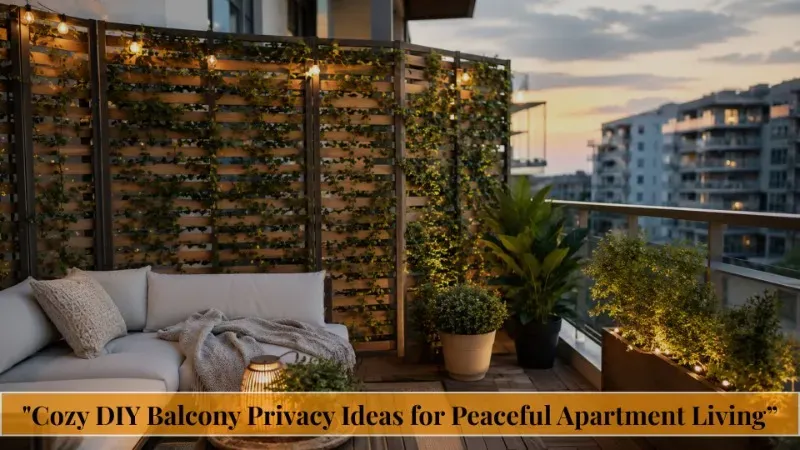
Cozy DIY Balcony Privacy Ideas for Peaceful Apartment Living

You step out onto your balcony, ready to sip your morning coffee in peace only to lock eyes with your neighbor three feet away. Sound familiar? Lack of privacy is one of the biggest reasons people stop using their balconies altogether. The good news? You don’t need a contractor, a big budget, or even a weekend of hard labor to fix this.
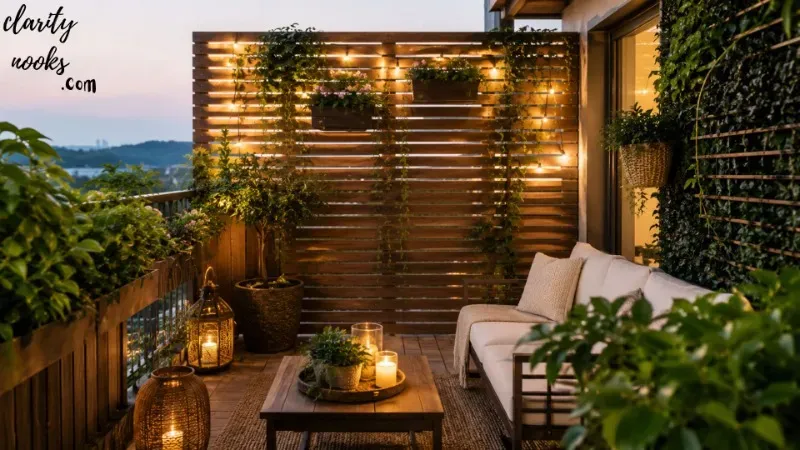
DIY balcony privacy ideas have exploded in popularity because they work and they’re surprisingly affordable. Whether you’re renting an apartment, living in a dense urban neighborhood, or simply want to turn your outdoor space into a personal retreat, the right privacy solution can transform everything. This guide covers 11 creative, practical, and stylish ideas that go far beyond what you’ll find on a typical home improvement blog.
Why Balcony Privacy Matters More Than You Think
Short answer: Privacy directly impacts how often and how deeply you enjoy your outdoor space.
Research on urban living consistently shows that people who feel exposed on their balconies use them less. That translates to wasted square footage and a missed opportunity to enjoy fresh air, greenery, and a genuine outdoor experience. Privacy isn’t just about blocking views it’s about creating a sense of safety, comfort, and ownership over your own space.
Beyond comfort, privacy screens and panels can reduce wind, filter harsh afternoon sunlight, and even dampen ambient noise from the street. These functional benefits make DIY balcony privacy solutions a smart, multi-purpose investment not just a decorative upgrade.
Bamboo Screening Panels
Fast, Natural, and Affordable
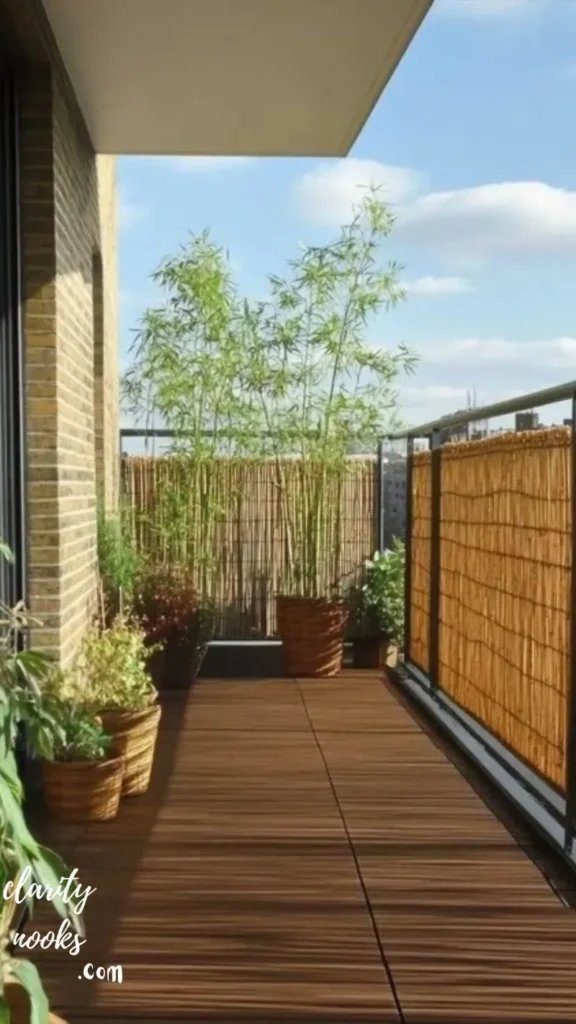
Bamboo roll-up screens are one of the most popular DIY balcony privacy solutions for good reason. They’re lightweight, weather-resistant, easy to install, and bring a warm, natural aesthetic to any outdoor space. You can attach them to railings or hang them from a basic PVC or wooden frame you build yourself.
Real-life scenario: A renter in Chicago fixed 6-foot bamboo panels to her apartment balcony railing using zip ties and eye bolts no drilling required. Her landlord approved it, the total cost was under $40, and she now uses her balcony daily for reading and yoga.
For best results, choose carbonized bamboo panels, which are treated for durability and resist mold better than natural bamboo. Seal the edges with outdoor wood sealant once a year to extend their lifespan significantly.
Must Read: DIY Girly Room Ideas: Trendy Decor Hacks for a Soft Glam Bedroom Look
Vertical Planter Walls
Green Privacy That Grows Over Time
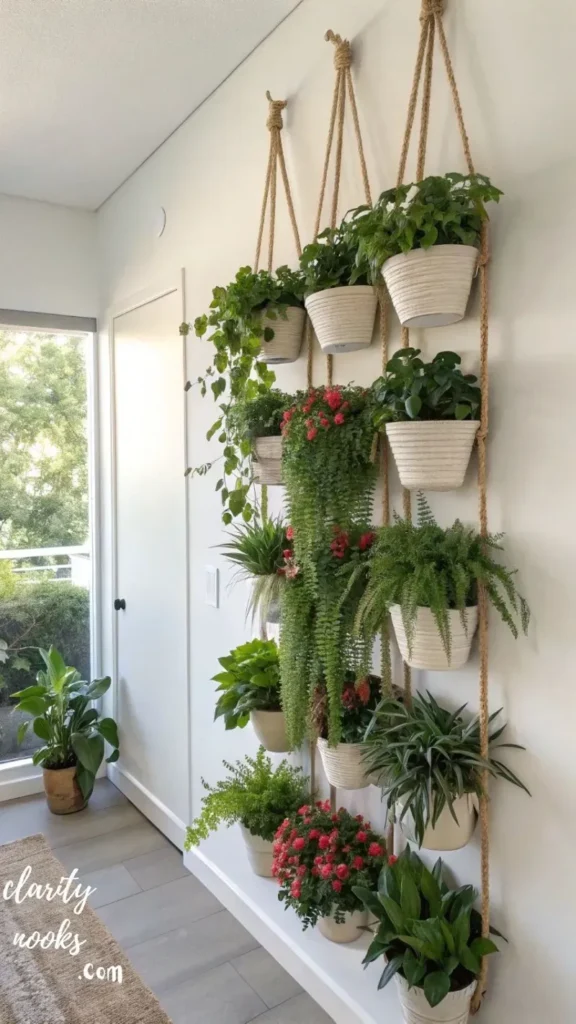
A vertical planter wall does double duty it creates a lush, living privacy screen while adding greenery and even fresh herbs or vegetables to your space. You can build one using wooden pallets, modular pocket planters, or stacked terracotta pots on a mounted ladder shelf.
Mini case study: A couple in Austin, Texas built a vertical pallet planter on their south-facing balcony for $60 in materials. Within one growing season, their climbing jasmine covered the entire 5-foot section creating full privacy and releasing a beautiful fragrance every evening.
Choose fast-growing plants like English ivy, sweet potato vine, or climbing hydrangea for quicker coverage. For renters, freestanding ladder planters or stackable modular systems need zero installation and can move with you.
Read Also: Easy DIY Funky Bathroom Ideas to Refresh Your Bathroom on a Budget
Outdoor Curtains
Elegant, Adjustable, and Renter-Friendly
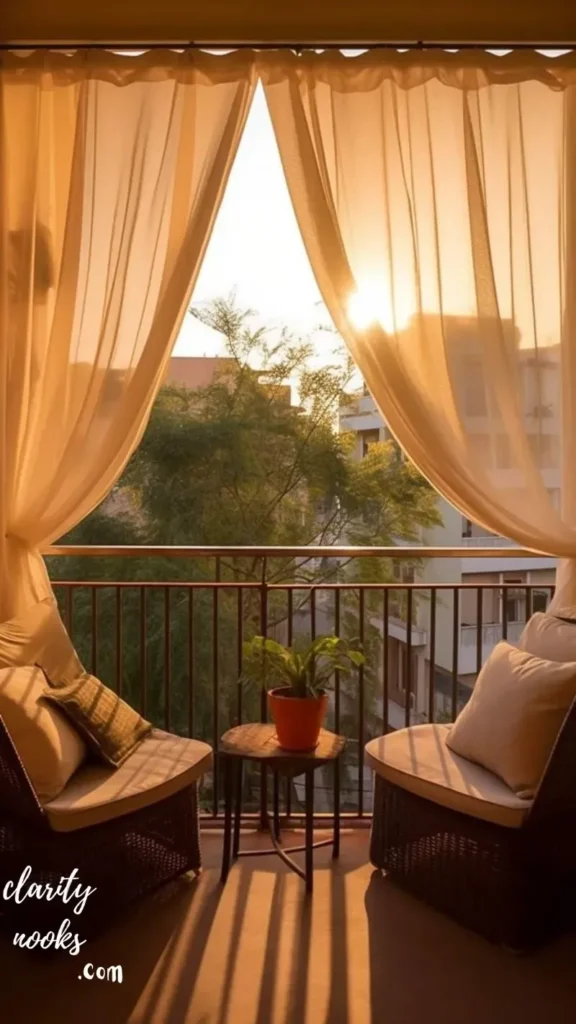
Hanging outdoor curtains between posts or along a tension rod system is one of the most elegant DIY balcony privacy ideas available. They’re completely adjustable you can pull them open to enjoy the view, or close them for full seclusion. They add a resort-like feel that few other solutions can match.
Look for weather-resistant polyester or Sunbrella fabric, which handles UV rays, rain, and wind without fading. For renters who can’t drill into ceilings, use tension curtain rods or clamp-on bracket systems that attach to the railing without permanent fixtures.
Pro tip: White or light-colored curtains maximize natural light while still blocking direct sightlines. Weighted hem tape prevents them from billowing annoyingly in the wind a small detail that makes a big quality-of-life difference.
Read More: Minimal DIY Twin Bedroom Ideas for Clean and Simple Rooms
Lattice Panels with Climbing Plants
A Classic Combo for Good Reason
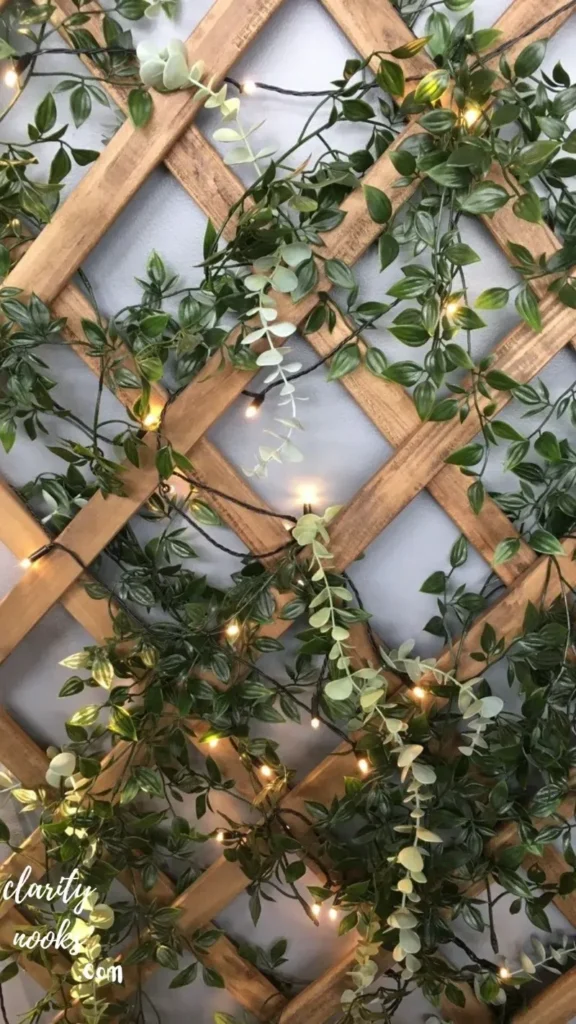
A wooden or vinyl lattice panel gives climbing plants the perfect structure to grow on and together, they create one of the most visually striking and private balcony setups imaginable. Install a freestanding lattice frame using PVC pipes as a base, and you don’t need to touch a single wall.
Wooden lattice from a hardware store typically costs $15–$25 per 4×8-foot panel. Paint it in a color that complements your space navy, charcoal, or forest green are trending in 2025–2026. Pair it with fast-growing morning glories, scarlet runner beans, or clematis for coverage within a single season.
This approach also allows you to customize the level of privacy. A more open lattice pattern with sparse planting creates a semi-private, dappled-light effect. Dense planting on a finer lattice creates near-total visual blocking.
Explore: DIY Birthday Party Ideas That Make Home Parties Feel Special
Artificial Hedge Panels
Low-Maintenance, Year-Round Privacy
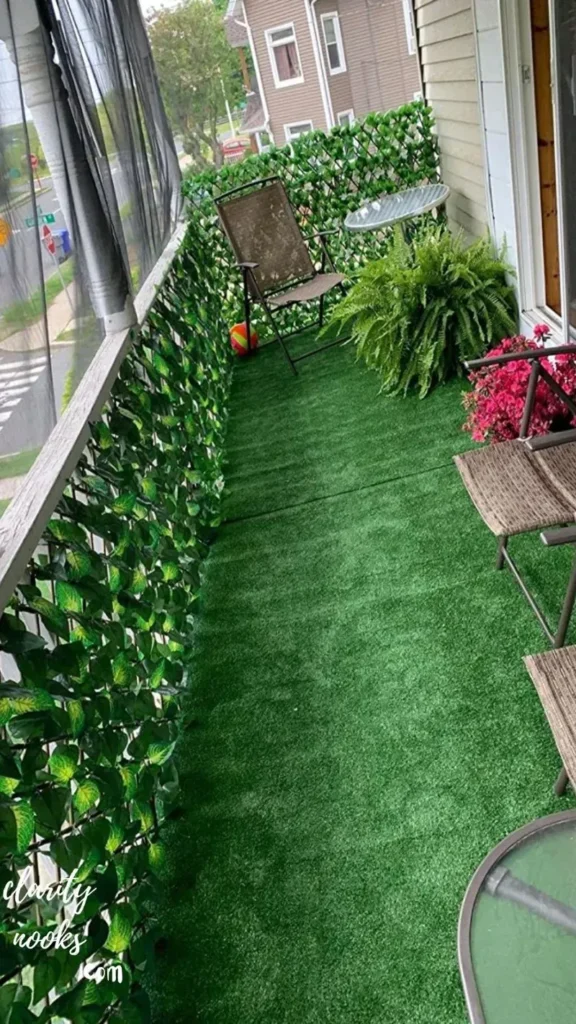
High-quality artificial hedge panels have improved dramatically. Today’s premium options look realistic enough that guests do a double-take. They require zero watering, stay green year-round, and are UV-stabilized to resist fading for 5+ years outdoors.
Featured snippet opportunity:
What are artificial hedge panels?
They are pre-made panels of synthetic foliage usually boxwood, ivy, or fern designed for outdoor installation on fences, railings, or freestanding frames to create instant, maintenance-free privacy screens.
Attach panels directly to balcony railings using cable ties, or build a simple wooden frame and mount panels to it. Costs range from $25 to $60 per 20×40 inch panel. For a 10-foot balcony, expect to spend $150–$250 for full coverage still far cheaper than professional landscaping.
Outdoor Shade Sails
Diagonal Privacy From Above
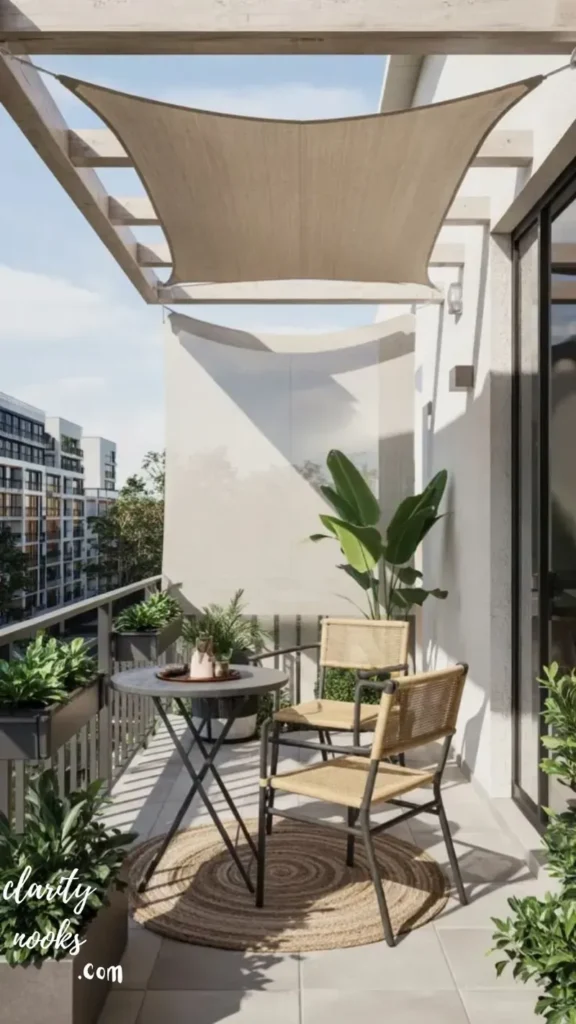
Most balcony privacy ideas focus on the sides. But what about overhead sightlines from taller buildings across the street, or neighbors on a floor above? Shade sails address this gap beautifully. These triangular or rectangular tensioned canopies attach to wall anchors or corner posts and can be angled for partial or full overhead coverage.
Shade sails are UV-blocking, breathable, and available in dozens of colors. A 10×13-foot sail typically costs $50–$120. For a DIY installation, attach anchor points to the exterior wall or build corner post brackets that clamp to the balcony railing no permanent drilling required with the right hardware.
As a bonus, shade sails reduce afternoon heat significantly some studies suggest they can lower surface temperatures by up to 30°F, making a previously unusable sun-baked balcony comfortable again.
Repurposed Wooden Shutters
Architectural Character on a Budget
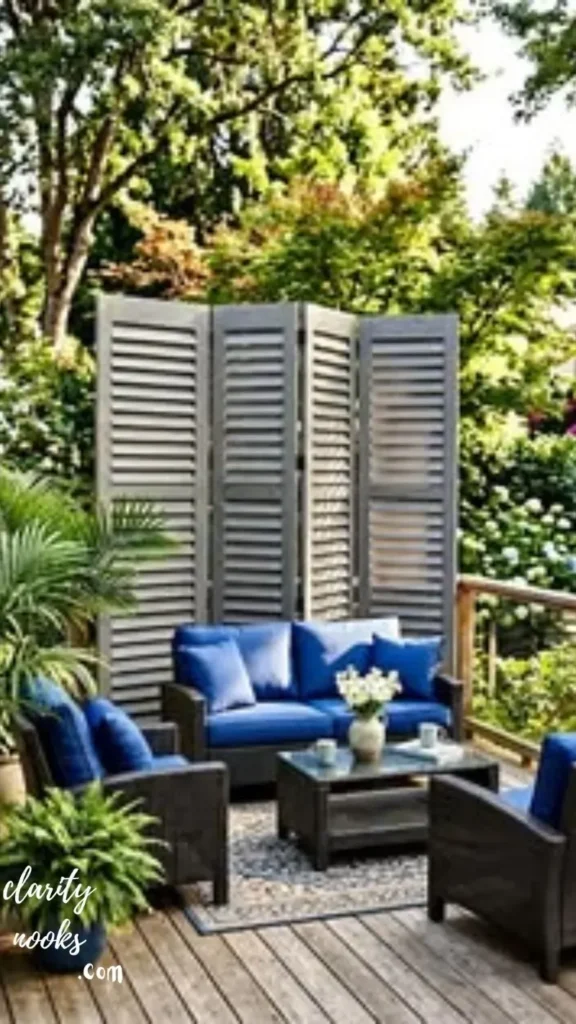
Old wooden shutters found at salvage yards, Facebook Marketplace, or thrift stores make surprisingly effective balcony privacy panels. Painted in a fresh color and mounted in a hinged or fixed configuration, they add a charming, architectural element that off-the-shelf screens simply can’t match.
Real-life example: A DIYer in Portland found six pairs of old pine shutters for $5 each at a salvage sale. She painted them sage green, hinged three pairs together into a folding screen, and placed it on her apartment balcony. The result looked like a custom outdoor room divider for under $80 total, including paint.
Sand, prime, and use an exterior-grade paint to ensure longevity. Shutters also fold flat for storage, which is ideal if your lease requires you to clear the balcony seasonally.
Reed or Willow Fencing Rolls
Rustic Texture With Great Coverage
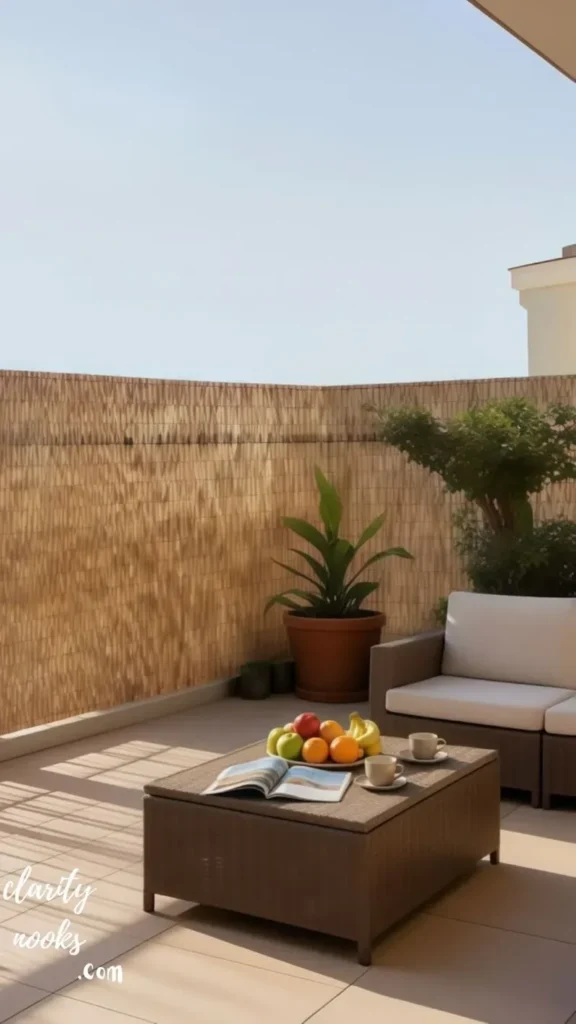
Reed and willow fencing rolls are similar to bamboo screens but offer a slightly different texture and aesthetic more rustic and tactile, with a natural variation in color that bamboo doesn’t always provide. They’re lightweight, flexible, and easy to cut with scissors or garden shears to fit any railing or frame.
Prices are comparable to bamboo around $1–$2 per square foot. Willow holds up better in wet climates, while reed performs well in drier regions. Both are fully biodegradable, making them one of the most eco-friendly balcony privacy options available.
Privacy Window Film for Glass Railings
Modern and Invisible
If your balcony has glass panels instead of metal or wood railings, traditional privacy screens won’t work. Privacy window film solves this elegantly. Frosted, etched, or decorative patterned films apply directly to the glass, blocking sightlines from outside while still allowing natural light through.
Installation is genuinely DIY-friendly. You wet the glass, apply the film, squeegee out bubbles, and trim the edges. No tools required beyond a spray bottle and squeegee. Films cost $10–$30 for a roll large enough to cover most balcony glass panels.
One-way privacy films which are transparent from the inside but reflective from outside during daylight are the most popular choice for balconies. They’re also removable without damage, making them perfect for renters.
Tall Potted Plants in a Strategic Arrangement
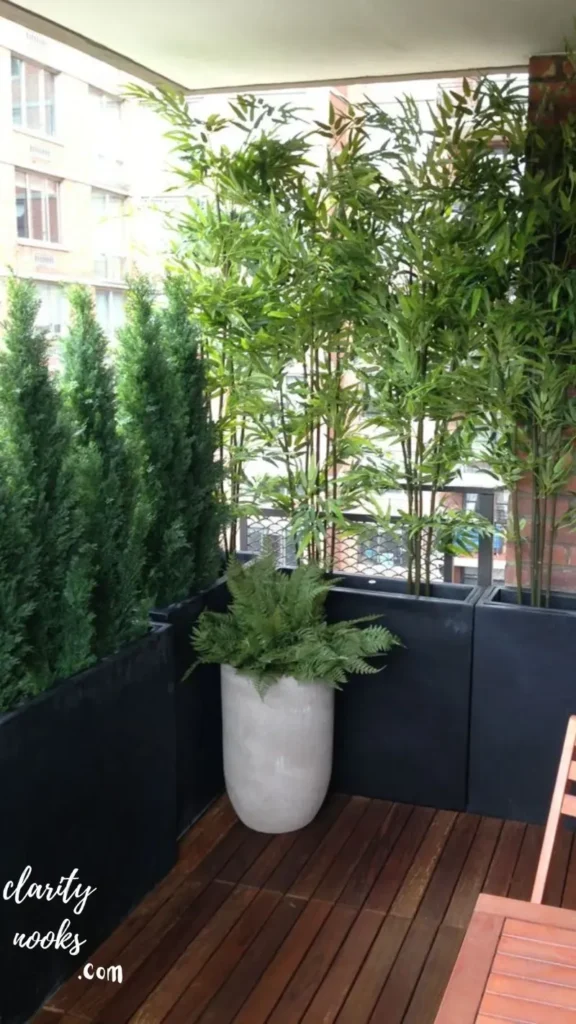
You don’t always need a structure to create privacy. A carefully arranged row of tall potted plants can block sightlines effectively while adding natural beauty and fresh air quality to your space. The key is choosing the right plants and pots tall enough to matter, wide enough to overlap.
Good choices include arborvitae (which can grow 6+ feet in a pot), bamboo in containers, ornamental grasses, or tall ornamental grasses like pampas grass. Use large-diameter pots (16 inches or wider) with good drainage holes, and line them up along the railing edge for maximum coverage.
Voice search optimization answer:
What tall plants are best for balcony privacy?
Arborvitae, clumping bamboo, ornamental grasses, and tall ornamental cabbages are excellent choices they grow quickly, stay manageable in containers, and create dense visual screening year-round or seasonally.
DIY Macramé or Woven Rope Screens
Artisan Style, Surprising Function
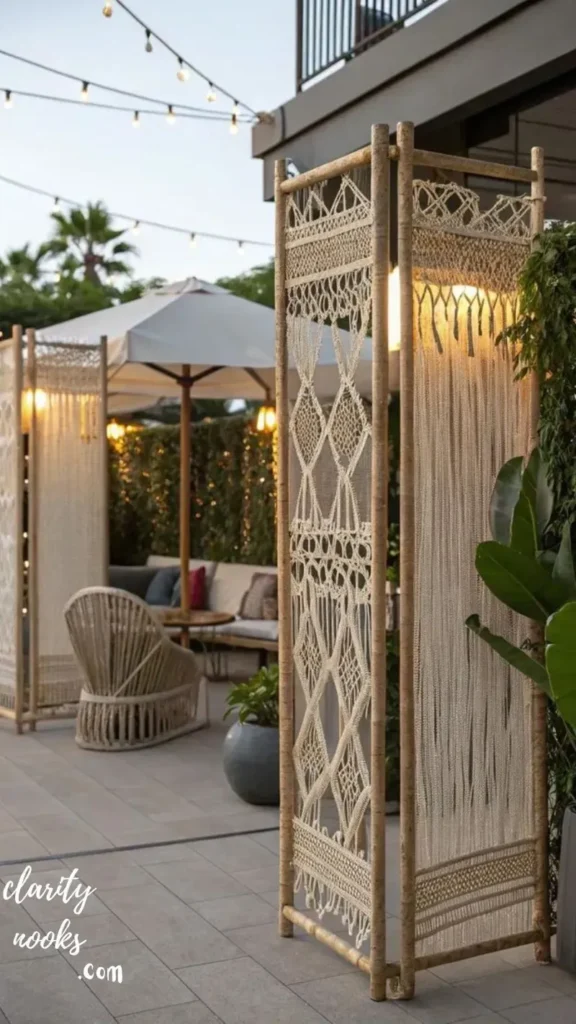
Macramé and woven rope panels have made a massive comeback in bohemian and modern interior design and they translate beautifully to outdoor balcony privacy screens. A large macramé panel hung from a railing or wooden dowel creates a partial privacy screen that filters light beautifully and adds serious handmade character.
For a 4×5-foot panel, you’ll need roughly 400 feet of 3mm outdoor-rated cotton or nylon rope and a basic knotting guide. The total material cost runs $20–$40. The knotting itself takes a weekend but is a meditative, rewarding process.
For partial privacy needs where you want to reduce direct sightlines without full visual blocking macramé is ideal. It’s also one of the few DIY balcony privacy ideas that doubles as genuine outdoor art.
Conclusion
DIY Balcony Privacy Ideas can make your outdoor space feel calm, cozy, and more personal. Simple changes like bamboo screens, curtains, plants, and wooden panels can give your balcony a fresh and stylish look. These ideas are easy to try and work well for both small and large balconies.
With the right DIY Balcony Privacy Ideas, you can enjoy more comfort and peace at home. You do not need a big budget to create a private outdoor corner. Pick the style that matches your space and enjoy relaxing, reading, or spending quiet time on your balcony every day.
Trend Analysis
Balcony Privacy in 2026 and Beyond
The balcony privacy market is shifting fast. In 2025–2026, the biggest trend is biophilic design the integration of living plants and natural materials into privacy solutions. Homeowners and renters are moving away from purely functional barriers toward designs that improve air quality, mental wellness, and connection to nature simultaneously.
Modular, no-drill systems are also gaining significant traction. As urban rental rates rise and lease restrictions tighten, product designers are responding with railing-clamp systems, tension-based frames, and magnetic attachment solutions that require zero permanent installation. Expect this category to grow 35–50% by 2028 as renter demographics expand.
AI-powered outdoor design tools like Houzz’s AI room planner and emerging balcony-specific configurators are helping users visualize privacy setups before purchasing materials. This reduces waste and increases project success rates, which is accelerating DIY adoption across the board.
Practical Tips & Expert Insights
Measure twice, buy once. Before purchasing any screen or panel, measure your balcony’s exact width, railing height, and depth. Most privacy screens come in standard sizes that need trimming knowing your dimensions prevents costly overbuying or gaps in coverage.
Layer your privacy. The most effective balcony setups combine two elements for example, a bamboo screen on the railing combined with tall potted plants in the corners. Layering creates depth and eliminates the “checkerboard” sightline gaps that single-layer solutions often leave.
Consider your neighbor’s perspective literally. Stand where your neighbor typically sits or stands and assess what they can actually see. You may need far less coverage than you think, which saves money and avoids over-cluttering your space.
Check your lease before building anything permanent. Most landlords allow freestanding or attachment-free privacy solutions without issue. However, drilling into exterior walls or railings may require written approval. A simple email or text to your landlord takes two minutes and avoids deposit disputes later.
Long-Term Strategy & Sustainability
The smartest balcony privacy investments combine durability with adaptability. Bamboo, quality outdoor fabric, and UV-stabilized artificial panels all offer 5–10 year lifespans with minimal maintenance making them better long-term value than cheaper alternatives that need annual replacement.
Think about what happens when you move. Freestanding solutions modular planters, lattice frames on weighted bases, folding shutters travel with you and protect your investment. Fixed solutions, however beautiful, stay behind.
From a sustainability standpoint, natural materials like bamboo, willow, and real plants have a clear advantage. They’re biodegradable, carbon-absorbing, and improve local air quality. If environmental impact matters to you, prioritize living screens or natural fiber panels over PVC and synthetic alternatives.
Future Predictions & Innovations
Smart privacy materials are coming. Electrochromic glass panels which switch from transparent to opaque with a switch or app command are currently in commercial buildings but are beginning to appear in residential applications. Expect affordable DIY versions of this technology to reach the home market by 2028–2030.
Modular green wall systems with built-in irrigation and LED grow lights are already available at the premium end of the market. As manufacturing scales and prices drop, self-watering living walls will become a mainstream DIY option for urban balconies within five years.
AI-assisted garden planning is also evolving rapidly. Apps that analyze your balcony’s sun exposure, wind patterns, and dimensions to recommend specific plant species, pot sizes, and placement arrangements are already in beta. These tools will significantly reduce the trial-and-error that discourages many first-time balcony gardeners.
Common Mistakes & Hidden Gaps
Mistake #1: Underestimating wind. A balcony screen that works perfectly in calm conditions can become a sail in strong wind, stressing railings, pulling out fixings, or even becoming a falling hazard. Always use weighted bases, multiple attachment points, and wind-rated materials for any screen taller than the railing.
Mistake #2: Choosing style over function. Macramé looks beautiful but won’t stop a direct sightline from 10 feet away. Know what level of privacy you actually need before choosing materials semi-privacy and full-privacy solutions are very different products.
Mistake #3: Ignoring weight limits. Apartment balconies have structural weight limits typically 40–60 lbs per square foot, but this varies significantly. Large planters filled with soil are surprisingly heavy. A 16-inch pot with wet soil can weigh 60–80 lbs alone. Check your building’s specs, and use lightweight alternatives like perlite-mixed soil or fabric grow bags to reduce load.
Hidden gap competitors miss: Most balcony privacy content ignores overhead privacy the view from balconies or windows on higher floors. Shade sails, pergola-style roof frames, and outdoor umbrellas address this specific gap and dramatically expand the usable comfort of your space.
Hidden gap #2: Acoustic privacy is almost never mentioned in this niche. Thick fabric curtains, dense planting, and acoustic panel inserts can meaningfully reduce ambient noise from streets and neighbors a quality-of-life upgrade as important as visual privacy in dense urban environments.
FAQ’S About DIY Balcony Privacy Ideas
What is the cheapest DIY balcony privacy idea?
A: Bamboo roll-up screens and reed fencing rolls are the most affordable options typically $1–$2 per square foot and install without any tools or permanent fixtures.
Can renters add privacy to their balcony?
A: Yes. Freestanding planters, railing-clamp screens, tension curtain rods, and pressure-fit lattice frames require no drilling and are approved by most landlords.
What plants grow fast for balcony privacy?
A: Morning glory, scarlet runner beans, sweet potato vine, and clumping bamboo are among the fastest-growing options for creating a living privacy screen on a balcony.
Rameen Zara is the founder of Clarity Nooks, bringing over five years of experience in home décor and interior styling. She shares simple yet practical design ideas that suit real homes and everyday living. Her approach focuses on cozy aesthetics, soft color palettes, and natural textures that create warm, inviting spaces.