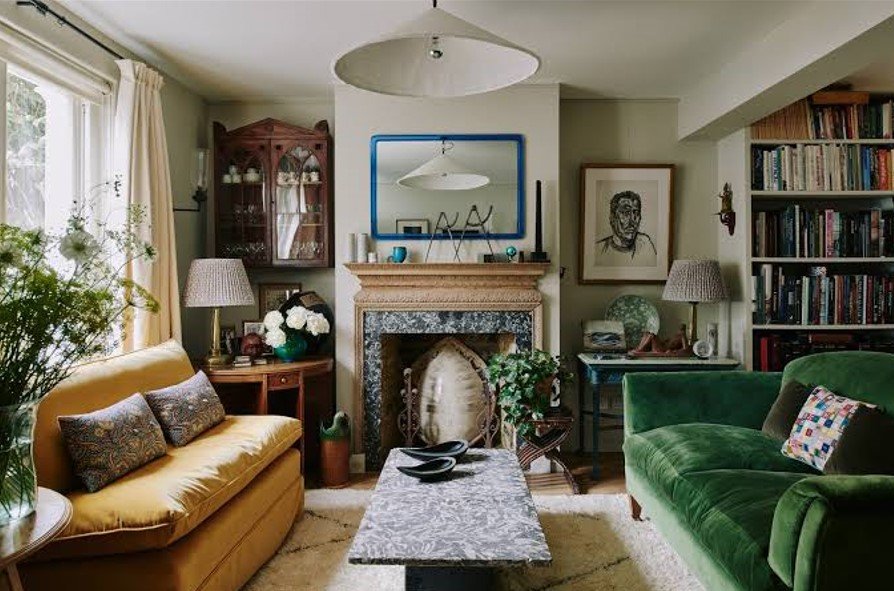
How To Make A Home Feel Collected With Small Decor Finds

Creating a curated space is not about buying everything at once and filling the room with items. This is a gradual process of accumulating items that reveal the homeowner’s lifestyle and personality. Thoughtful home decor can help a room feel warmer and more personal without requiring new furniture, a renovation, or a crowded shelf full of accessories.
The essence is not in filling the room with ornamental things, but in filling it with small decorative items that harmonize with the furniture, the room’s colors, and the lifestyle of a particular customer.
Why Small Decor Works So Well
Minor decorative items are adaptable. They can help create different ambiance in a room without a big investment and can be easily transferred from one location to another within the house. The best decorative pieces create contrast, add texture, and volume.
Decoration is just one part of interior design, which also concerns a space’s functionality and comfort for its users. Developing this idea is beneficial for home decoration.
Start With A Simple Room Plan
Take the room as it currently exists into account before going shopping. Snap a picture at the room’s entrance and note which elements catch your attention. The bare console table or the disorganized coffee table could be a great area to focus on. Focus on one thing instead of tackling the whole thing all at once.
- Photograph the room from a few angles.
- Identify one awkward, bare, or overly busy area.
- Decide what that area needs, such as storage, lighting, softness, or personality.
- Set a spending limit before browsing.
- Pull together pieces you already own before buying anything new.
This short plan creates a filter for every purchase. It also makes it easier to spot an item that is attractive but does not actually suit the room.
Choose A Clear Color Story
By following a straightforward color story, seemingly unrelated items can look perfectly complementary. You should start with the color choices that are not too easy to change, such as the flooring type, fabrics used, or curtains. After that, you will pick two or three additional colors and incorporate them into the space’s design.
- Use warm neutrals and wood tones for an easy base.
- Add a muted green or blue as an accent color for a calmer look.
- Use black, bronze, or deep brown in small amounts to give an arrangement visual weight.
- Reserve one brighter shade for a pillow cover, a vase, a small print, or a seasonal stem.
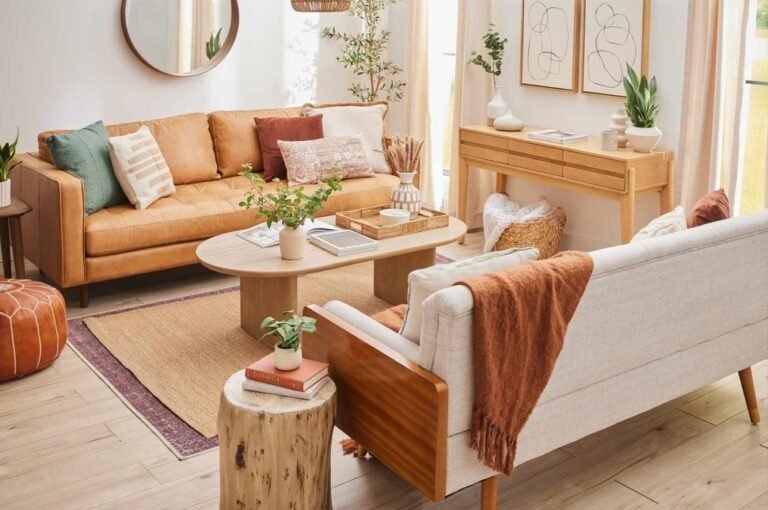
So, for instance, the interior design of a lounge area with a beige couch and brown furniture can be successfully complemented by a russet pillow and a brown photo frame. It is a good idea to apply similar principles in kitchens and hallways.
Add Texture Before More Color
Introducing material porosity to a monotonous interior design can achieve a much better effect than simply adding another bright color to the palette. For this end, various combinations of finishes can be used. For example, mixing woven textiles, cotton, and cork with rough wood or stone can create an interesting overall design while remaining within a limited color palette.
In order to achieve that, you can use an elegant vase on a wooden plate, drape a cotton throw on the armchair, or make a stack of books and a woven basket together. In this way, the space will appear sophisticated through its layering rather than through the combination of many objects.
Choose Pieces That Earn Their Space
The most successful small decor pieces often solve a daily problem. A tray can contain remotes and candles. A lidded basket can hold blankets, toys, or extra pillows. A mirror reflects sunlight around the space of an entry or living room, while a table lamp provides a softer option at night. According to Consumer Reports, we should use different kinds of containers and organizers to make it easy to access kitchen tools and accessories.
Application of relevant items allows us to maintain the house’s functionality. An object with a definite purpose will not be transformed into mere clutter.
Use Scale To Create Balance
No matter how insignificant a thing may seem, size matters. Even the smallest objects should fit the space where they are placed. On a narrow shelf, a small grouping may be enough.
- Combine tall, medium, and low objects rather than lining up items at one height.
- Leave some open surface visible around each arrangement.
- Group smaller items together so they read as one composition.
- Use one larger piece when several small pieces begin to look scattered.
On a console table, a lamp can provide height, a leaning frame can provide a middle layer, and a shallow bowl can ground the arrangement. The empty space around them is part of the styling, not an unfinished area that must be filled.
Style The Most Visible Areas First
Entryways
Create an entryway with a key tray, a shoe basket, a mirror for the final glance before leaving, or hooks for bags. Make it uncomplicated, so it is easy to implement.
Living Rooms
Start with the coffee table, a side table, or a single shelf. Include different heights and textures, and one personal item, such as a photo, travel souvenir, or favorite book.
Kitchens And Bedrooms
In the kitchen, you use a wooden cutting board, a pot holder statuette, or a nice combination of decorative elements. In the bedroom, focus on a bedside lamp, a cozy fabric, and calm decor rather than filling the bedside table with things.
Avoid The Clutter Trap
When we say ‘collected’, we don’t mean ‘chaotic’. If a space begins to feel busy and messy, remove everything and start the arrangement over, using only essential or meaningful objects. Group similar items, leave an empty space, and only then assess the arrangement from across the room.
If unsure regarding an item you want to add to the space, give it a day. One day is enough to determine whether a place needs editing rather than more decor.
Refresh A Room By Season
Seasonal changes don’t require a whole bin of seasonal decorations; changing pillow covers, rotating a piece of art, adding branches, switching a light throw with a heavier one, or swapping one table accessory for another is enough to change the mood of the room without altering its overall character.
Use A Simple Shopping Checklist
- Does it work with the room’s existing colors or finishes?
- Does it add function, texture, height, or personal meaning?
- Is it proportionate to the surface where it will live?
- Can it be used in another room later?
- Is there a specific place for it, rather than just a temporary impulse?
Final Thoughts
Home demonstrates a sense of unity because all the separate parts of the place are carefully chosen. To create such a sense of unity, the first step is to consider every part of the property so that furniture and decorations are selected accordingly. Afterward, the same colors and materials are used several times, and empty spaces are filled.
Rameen Zara is the founder of Clarity Nooks, bringing over five years of experience in home décor and interior styling. She shares simple yet practical design ideas that suit real homes and everyday living. Her approach focuses on cozy aesthetics, soft color palettes, and natural textures that create warm, inviting spaces.