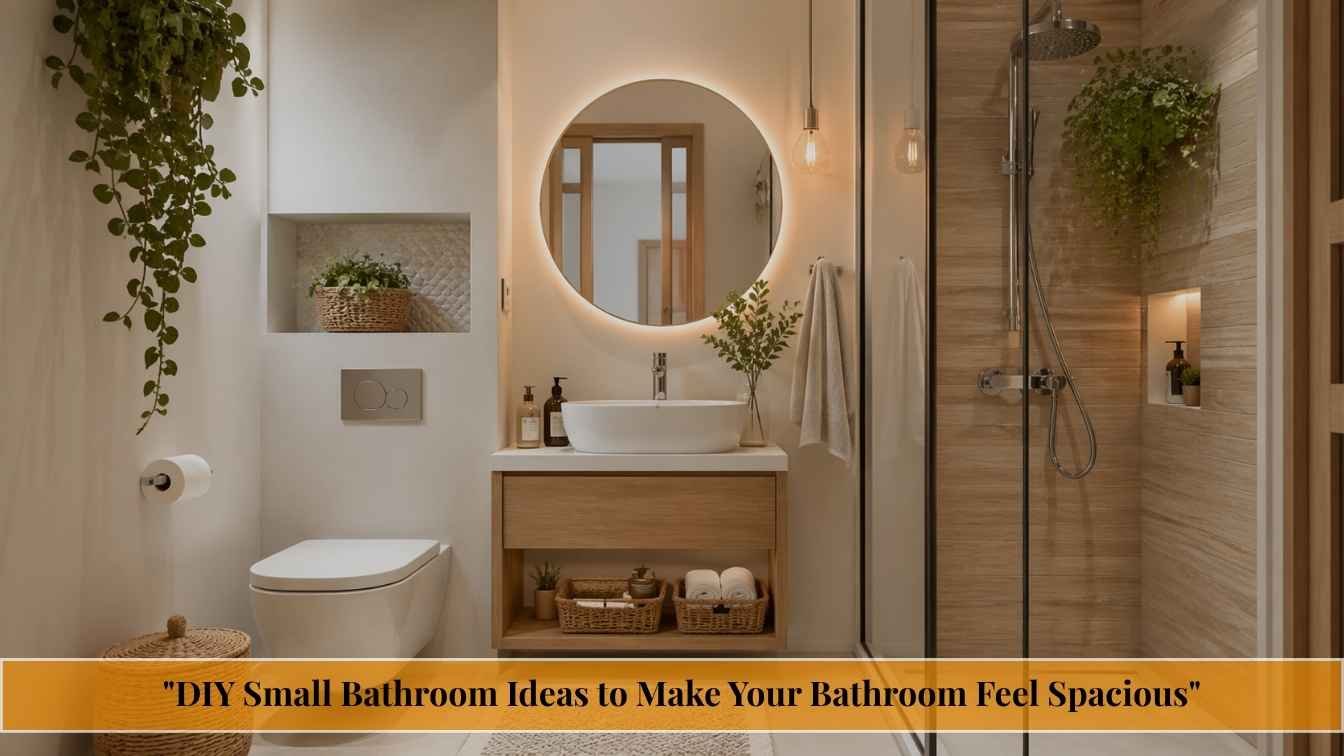
DIY Small Bathroom Ideas to Make Your Bathroom Feel Spacious

You walk into your bathroom every morning, and the first thought that hits you isn’t refreshing it’s cramped. Sound familiar? A small bathroom can feel like a design problem with no solution, especially when you’re staring at limited square footage, awkward layouts, and a budget that won’t stretch to a full renovation.
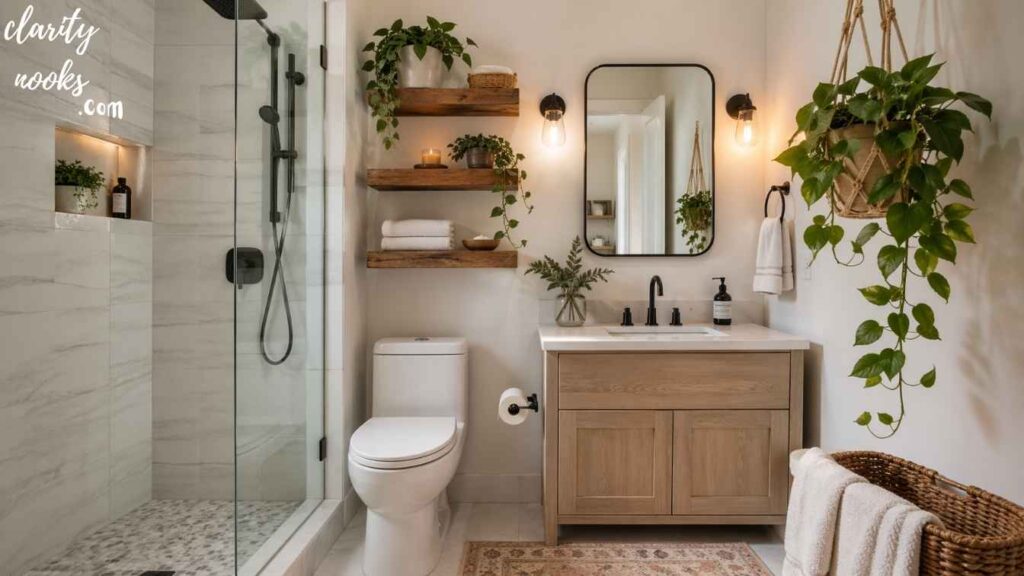
Here’s the truth that most design blogs skip over: the best small bathroom transformations rarely involve knocking down walls or hiring expensive contractors. The real magic happens through smart, strategic DIY small bathroom ideas that manipulate light, space, and storage without touching your plumbing. This guide covers 15 proven ideas backed by real-world results that can genuinely change how your bathroom looks, feels, and functions.
Whether you’re renting, working on a tight budget, or simply want to refresh your space over a weekend, this article gives you actionable, experience-driven strategies. From vertical storage tricks to reflective surfaces that visually double your space, you’ll find ideas you can start today.
Go Vertical: Mount Storage High and Reclaim Floor Space
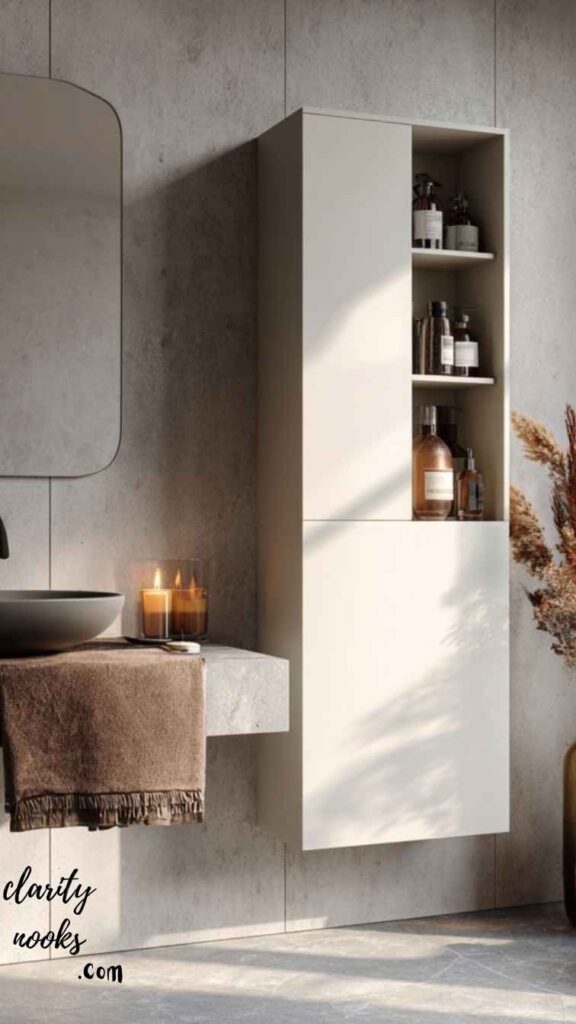
One of the most overlooked principles in small bathroom design is using vertical space. Most people focus on what’s at eye level, completely ignoring the wall real estate above the toilet, beside the mirror, and near the ceiling. Floating shelves mounted at 60–70 inches above the floor free up your vanity and keep everyday items within reach without cluttering the room.
A real-life example: a homeowner in a 40-square-foot bathroom in Chicago installed three floating walnut shelves above her toilet for around $45. She moved her towels, toiletries, and small plants up and the floor space she recovered made the bathroom look nearly twice as large in photographs. The trick isn’t just installing shelves; it’s being selective about what goes on them.
💡 Pro Tip:
Use identical containers or baskets on your vertical shelves. Consistent containers make the storage look intentional rather than cluttered, which is critical in a small space.
Must Read: Trendy DIY Living Room Curtain Ideas for a Fresh and Elegant Look
Use an Oversized Mirror to Visually Double Your Space
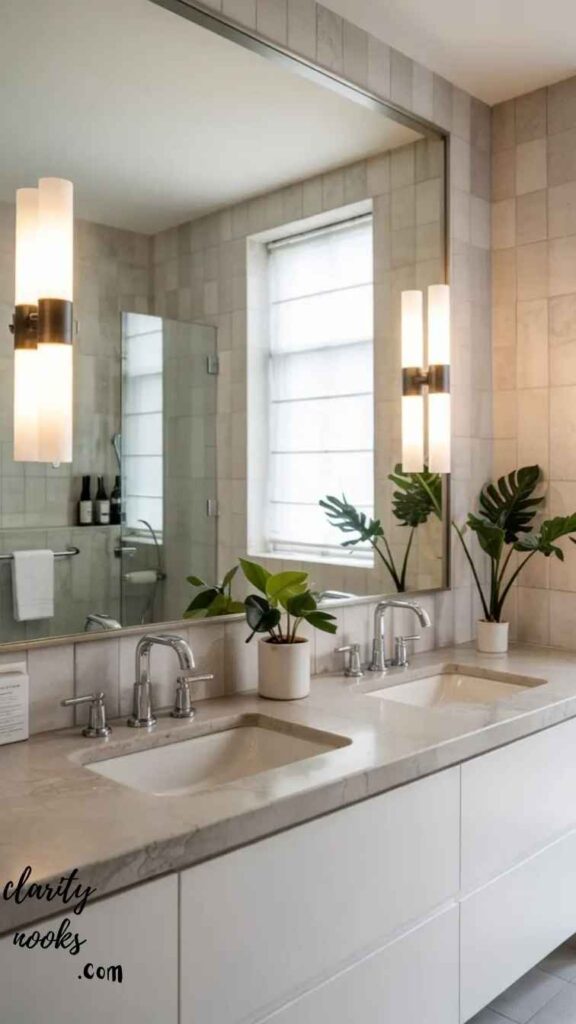
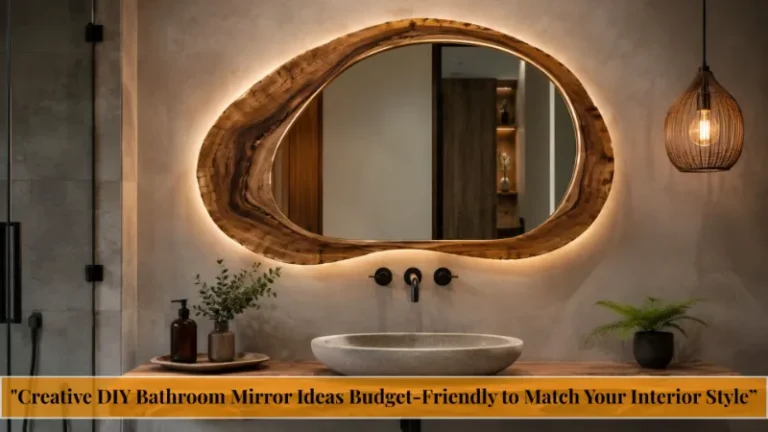
Mirrors are the single most cost-effective tool in small bathroom design. An oversized mirror one that spans nearly the full width of your vanity creates the illusion of a room that continues beyond the wall. Light bounces off the surface, windows appear larger, and the depth becomes perceptually infinite. This is why luxury hotels always use full-wall mirrors in compact bathrooms.
For a DIY approach, consider replacing your standard medicine cabinet mirror with a frameless mirror that’s at least 24 by 36 inches. Alternatively, lean a large decorative mirror against the wall beside the vanity. One designer trick: position the mirror so it reflects a window or light source directly. This multiplies the natural light effect, making your bathroom feel airy even without adding a single fixture.
Case Study:
A rental apartment in New York swapped its 18×24 mirror for a $79 frameless 36×48 version from a home improvement store. The before-and-after photos showed a dramatic change no paint, no renovation, just a larger mirror. Bathroom perceived size increased by an estimated 30% based on tenant feedback.
Also Read: DIY Baby Nursery Ideas on a Budget: Affordable & Adorable Room Makeovers
Layer Your Lighting
One Overhead Bulb Is Never Enough
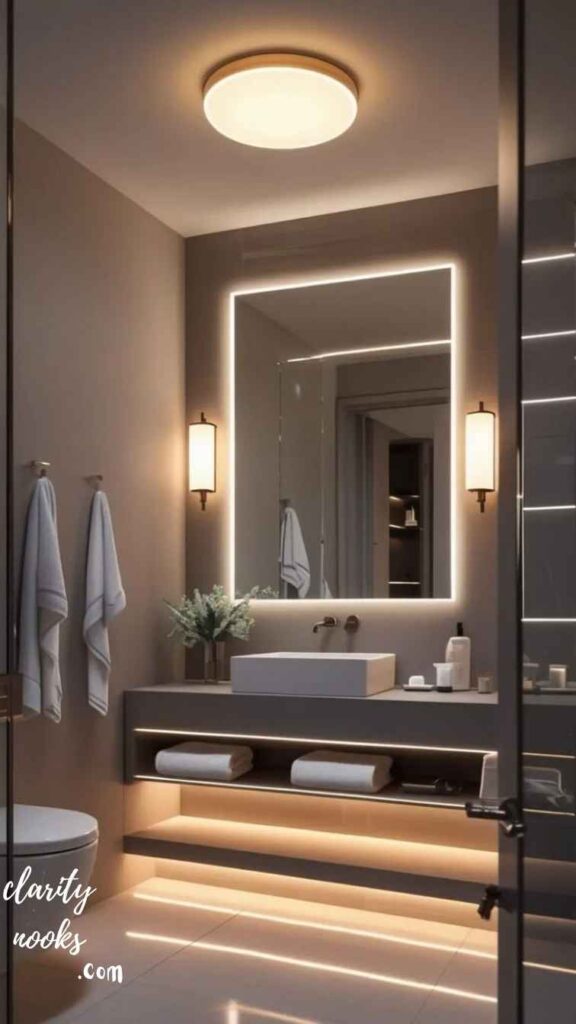
Single-source lighting is the number one culprit that makes small bathrooms feel like caves. When one overhead fixture casts a single pool of light, it creates harsh shadows, flattens textures, and makes the room feel smaller and more claustrophobic. Layered lighting combining ambient, task, and accent sources creates depth and dimensionality.
For a DIY-friendly upgrade, add plug-in sconces beside your mirror for task lighting. These require no electrical work and can be found for under $40 each. Add a small LED strip light behind the mirror or underneath a floating vanity for soft accent illumination. The warm glow from multiple sources makes the bathroom feel intentionally designed, not accidentally adequate.
💡 Pro Tip:
Use bulbs with a color temperature between 2700K and 3000K. This warm white light is flattering on skin and creates a spa-like ambiance that cooler, bluer bulbs cannot replicate.
Choose Light Colors
But Use Contrast Strategically
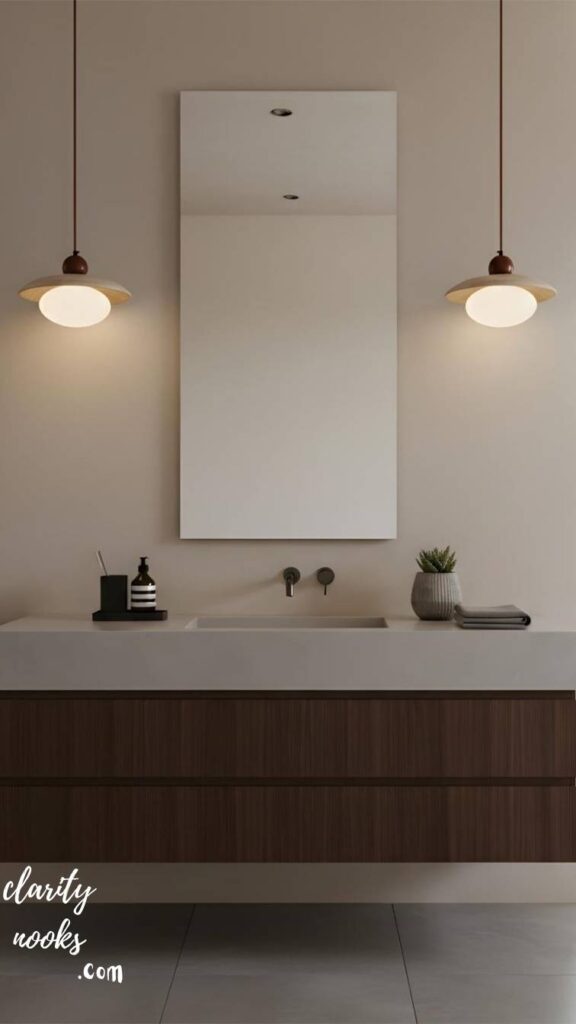
Pale walls expand a small bathroom this is well-established design principle. Light gray, soft white, warm cream, and pale sage all reflect light and make walls recede visually. However, an entirely monochromatic space in light tones can feel sterile and uninspired. The trick is to use a single dark accent element to create depth without closing in the space.
Consider painting your vanity cabinet a deep navy or charcoal while keeping walls white. Or use dark grout with light tiles to create a deliberate pattern effect that draws the eye without overwhelming. This contrast signals intentional design. It also means your small bathroom doesn’t look like it’s trying to hide its size it’s confidently working with it.
Designer Insight: Interior designer and blogger Emma Mills notes that the “one bold element” approach consistently performs better in small bathrooms than attempting to make everything light. One bold piece a dark vanity, a patterned tile floor, a statement faucet becomes the focal point, pulling attention away from the room’s size.
Read More: DIY Baby Room Ideas: Creative Ways to Build a Nursery Your Baby Will Love
Swap the Shower Curtain for a Glass Panel or Clear Curtain
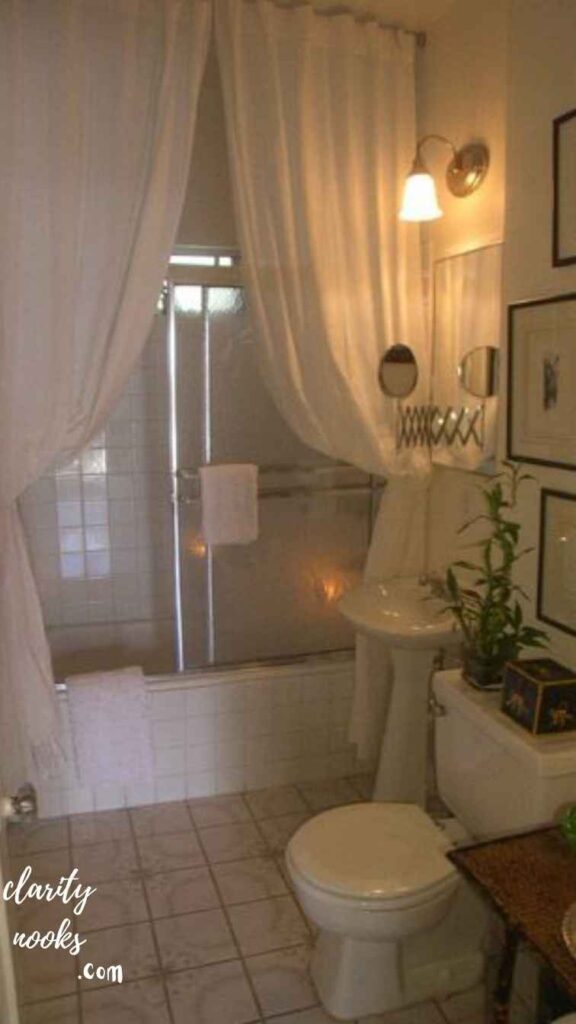
A heavy, opaque shower curtain creates a visual barrier that chops your bathroom into two smaller-feeling zones. It blocks light, disrupts sightlines, and makes even a generously sized bathroom feel tight. Replacing it with a clear or semi-transparent option is one of the easiest DIY small bathroom ideas you can execute in under an hour.
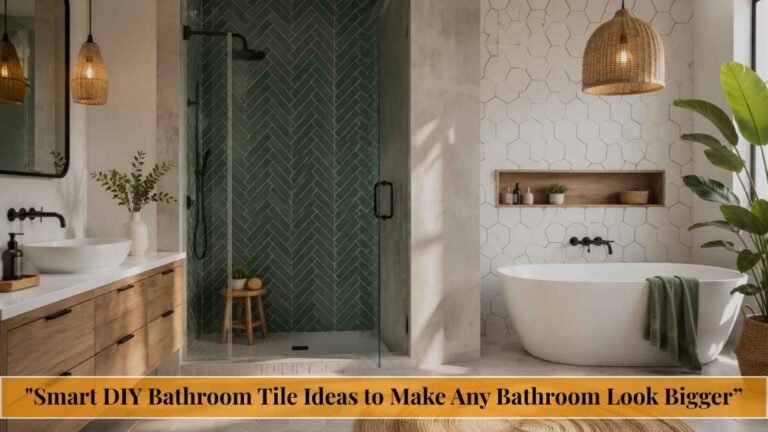
A frameless glass panel is the premium solution beautiful, open, and permanent but it comes at a cost. For a fraction of the price, a clear PEVA shower curtain ($15–$25) achieves nearly the same visual effect. You can see through to the tile, the wall, and the window beyond, which expands the perceived depth of the room significantly. If privacy is a concern, a light frosted or linen-texture clear curtain strikes the right balance.
Don’t Skip: DIY Laundry Room Ideas: Easy Makeovers for a Clean, Functional Space
Create a Recessed Shower Niche for Zero-Floor-Space Storage
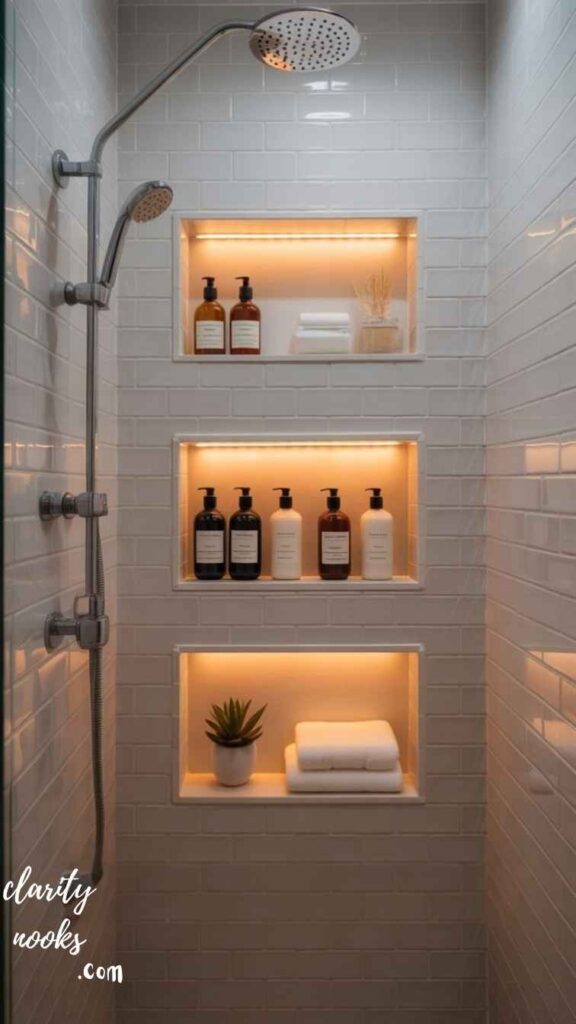
Shampoo bottles lined up on the edge of your tub or on a hanging caddie create visual noise and make a small bathroom feel messy. A recessed shower niche built between wall studs provides elegant, organized storage that takes up exactly zero floor or shelf space. For homeowners comfortable with tile work, this is a highly achievable DIY project.
The process involves locating studs, cutting a precise opening, waterproofing the cavity, and tiling the interior to match your existing shower. The result is a custom, built-in look that adds perceived value to your home. For renters, free-standing narrow shower caddies with suction-cup niche inserts offer a no-damage alternative that mimics the same clean aesthetic.
💡 Pro Tip:
Install your shower niche at shoulder height on a side wall rather than the back wall. This placement avoids hitting water supply pipes and keeps the niche out of the main spray zone, protecting your toiletries from getting soaked.
Install a Floating Vanity to Expose Floor Space
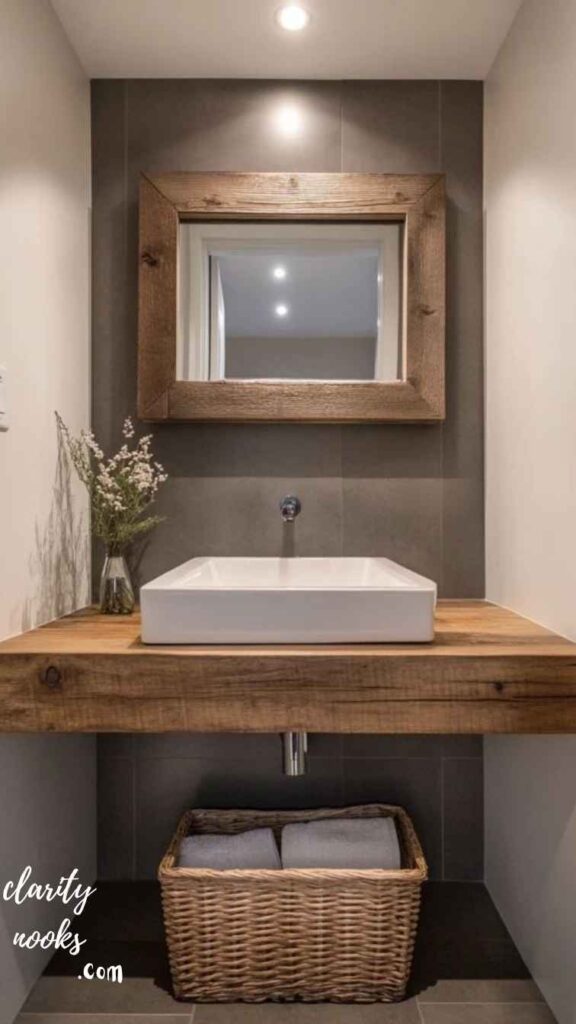
Floor-mounted vanities create a visual stop the eye drops to the vanity base and the room feels lower and more enclosed. A wall-mounted, floating vanity lifts that visual stop point and exposes the floor underneath, which reads as more space. It’s one of those design moves that photographs beautifully and performs even better in person.
For a DIY installation, wall-mounted vanities require locating studs and ensuring your wall can support the weight most can, with proper hardware. Units from IKEA, Home Depot, and Wayfair range from $150 to $600 and include detailed instructions. The exposed floor beneath can be kept clean to maximize the open feel, or you can tuck a small decorative basket underneath for extra storage.
Don’t Miss: Modern DIY Walk In Closet Ideas for Organized and Elegant Storage
Replace Towel Bars with Multi-Hook Rails for Smarter Use of Wall Space
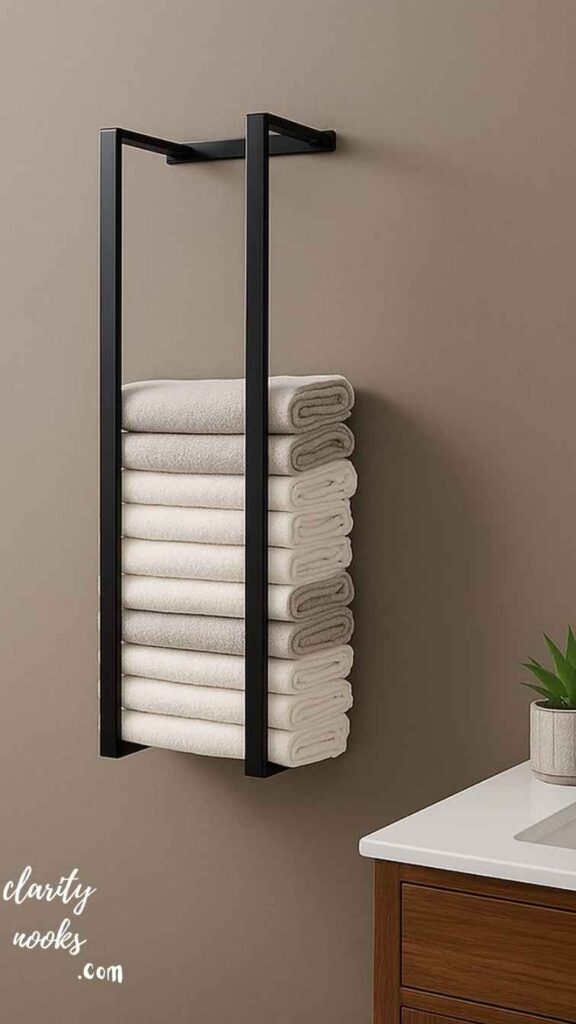
A single towel bar holds one or two towels maximum. In a small bathroom with multiple users, this creates constant competition and usually results in towels piled on the floor or hanging over the shower rod. A multi-hook rail, mounted at the same height as a traditional bar, can hold four to six towels, robes, and bags without requiring any additional wall space.
Brass, matte black, and brushed nickel hook rails add a design element rather than just a function. A five-hook rail in a coordinating metal finish elevates the look of the entire bathroom, particularly if it matches your faucet and cabinet hardware. Installation takes about 20 minutes with a stud finder, drill, and level.
Real Scenario: A family of four in a shared 55-square-foot bathroom replaced two separate towel bars with a single 24-inch, six-hook rail. Result: four towels, two robes, and a toiletry bag all hanging neatly, no floor towels, and the wall space previously occupied by the two bars was freed up for a small open shelf.
Add Low-Maintenance Plants to Create Depth and a Spa-Like Feel
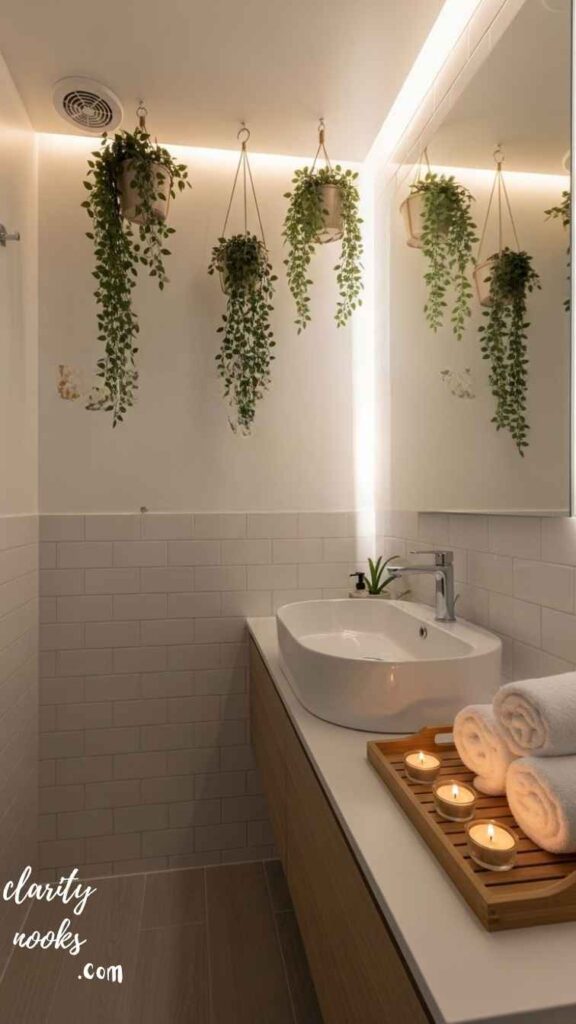
Plants in a bathroom serve more than an aesthetic function they create organic visual layering that makes a space feel alive and intentionally curated. In a small bathroom, a single well-placed plant draws the eye, creates a natural focal point, and makes the space feel larger by introducing an element that contrasts with the hard geometry of tiles and fixtures.
The best plants for low-light bathrooms are pothos, snake plants, air plants, and peace lilies. None of them require soil watering more than once a week, and all thrive in the humidity that naturally exists in bathrooms. Mount a small macramé planter on the wall, place a snake plant in a corner, or hang pothos from the top shelf edge for a trailing effect that adds vertical interest.
Swap Upper Cabinet Doors for Open Shelving to Reduce Visual Weight
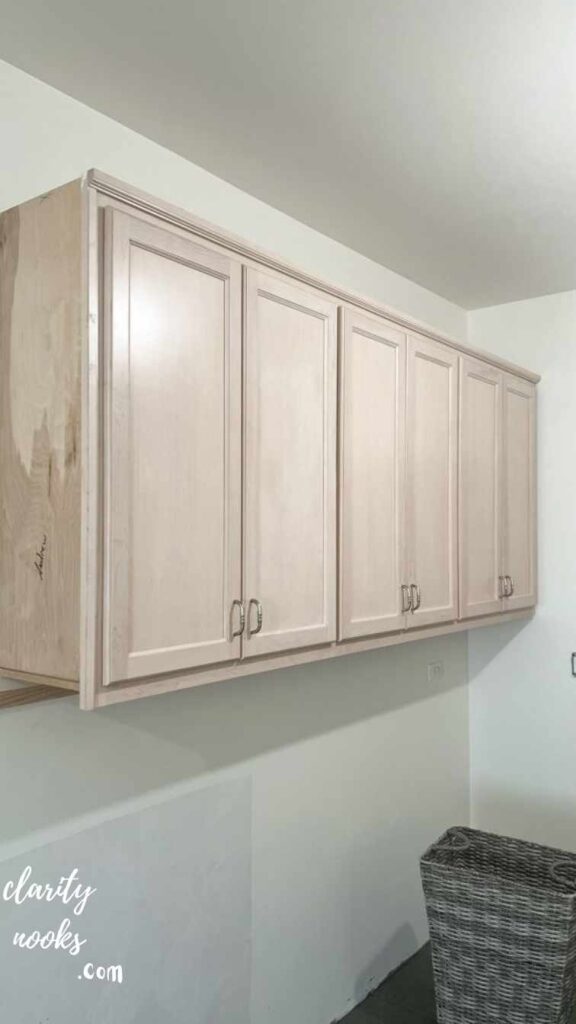
Cabinet doors especially white or light-colored ones reflect light and appear flat. In a small bathroom, multiple cabinet doors can make the walls feel heavy and closed-off. Removing one set of cabinet doors and replacing them with styled open shelves reduces visual weight and creates an airy, curated look. It’s a free DIY project if you’re willing to reorganize your storage.
The key to making open shelving work in a bathroom is organization. Use matching containers, roll towels uniformly, and keep displayed items to a curated minimum. A small open shelf with two rolled white towels, a plant, and a candle looks intentional. The same shelf stuffed with random products looks cluttered. The design does the heavy lifting your organization is what makes it work.
Use Peel-and-Stick Wallpaper on One Accent Wall for Maximum Impact
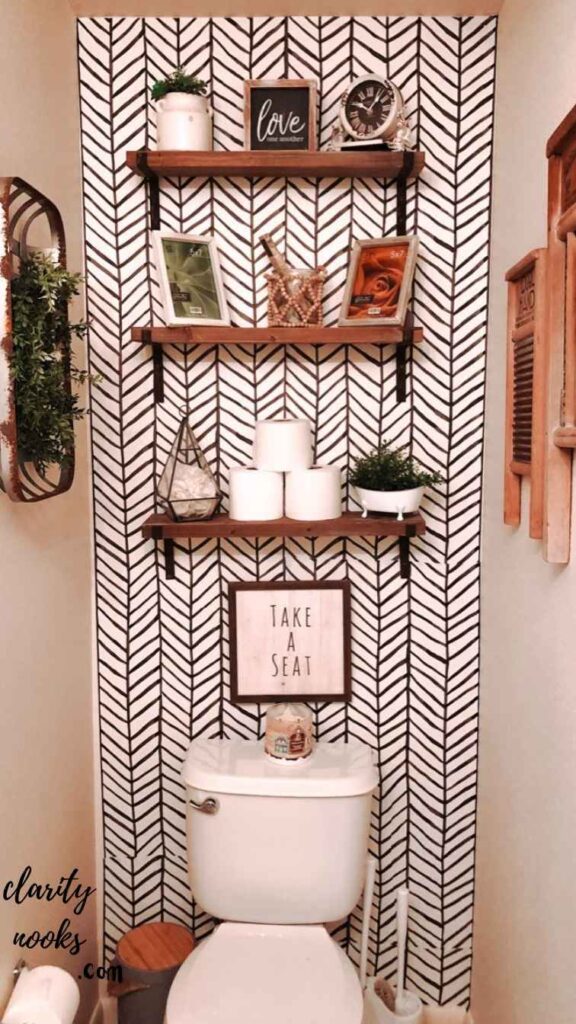
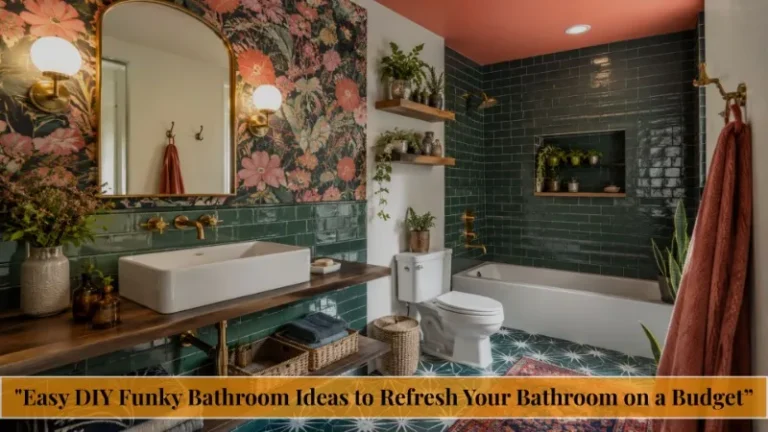
Wallpaper might seem like a bold move in a small bathroom, but done strategically on just one accent wall it creates a focal point that expands perception of the space rather than compressing it. The human eye moves toward pattern and interest, so a patterned back wall behind the toilet or vanity draws attention forward and away from the room’s narrow dimensions.
Peel-and-stick wallpaper has transformed the DIY bathroom market. Brands like NuWallpaper, Tempaper, and RoomMates offer hundreds of moisture-resistant designs that apply without adhesive mess and remove cleanly perfect for renters. A bold botanical print, geometric tile pattern, or classic Moroccan design can completely change the character of your bathroom for under $50.
💡 Pro Tip:
Measure twice before ordering peel-and-stick wallpaper. Account for pattern repeat large-pattern repeats waste more material, so choose a smaller repeat pattern for budget efficiency in a small wall area.
Maximize Over-Toilet Storage with a Smart Above-Toilet Cabinet
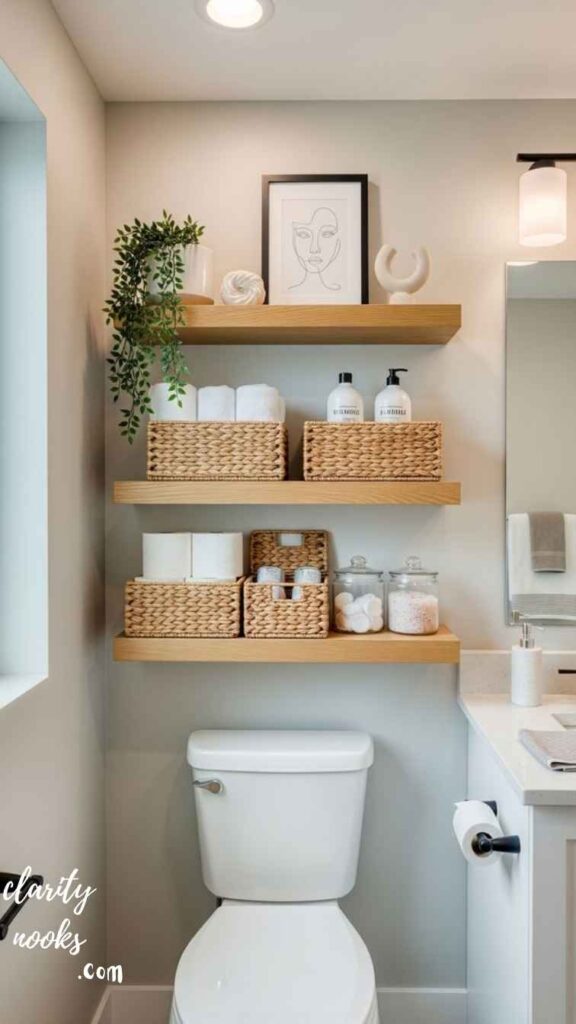
The space above the toilet is one of the most underutilized real estate areas in any bathroom. It’s typically empty sometimes occupied by a framed print while homeowners struggle with storage everywhere else. An above-toilet organizer, ladder shelf, or built-in cabinet turns this dead zone into functional storage for towels, toiletries, and decorative items.
Freestanding over-toilet towers are easy to assemble, require no drilling, and range from $35 to $150. They’re the quickest ROI project in small bathroom design. For a more custom look, install a simple open shelving unit with three tiers at graduated heights above the toilet the narrowing of the tiers as they go up creates a sense of height and visual interest.
Replace Your Hinged Door with a Pocket Door or Barn Door
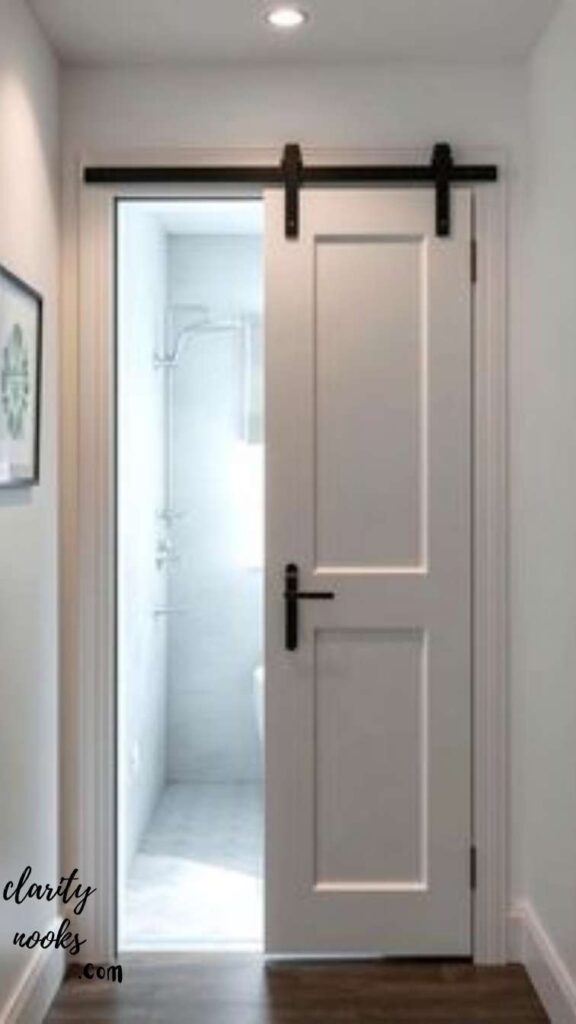
Every swinging door in a small bathroom steals floor space from the room. A standard 24-inch bathroom door requires a 4-square-foot clearance arc for opening in a 40-square-foot bathroom, that’s 10% of your total floor space gone just to let the door move. Replacing a hinged door with a pocket door (which slides into the wall) or a barn door (which slides across the outside) immediately returns that space.
Pocket door installation is a moderate DIY project that involves cutting into the wall and installing a sliding track inside the cavity. For a simpler option, a barn door slides along a surface-mounted rail and requires only a drill and basic carpentry skills. Both solutions eliminate the swing arc completely and can add significant visual interest a reclaimed wood barn door, in particular, adds instant character to any bathroom.
Cost vs. Value:
Pocket door kits run $100–$250. A barn door hardware kit costs $60–$120, and the door itself can be as inexpensive as a repurposed interior door from a salvage store. Either investment is recouped through improved flow, usable floor space, and visual impact.
Upgrade Your Hardware
It’s the Jewelry of Your Bathroom
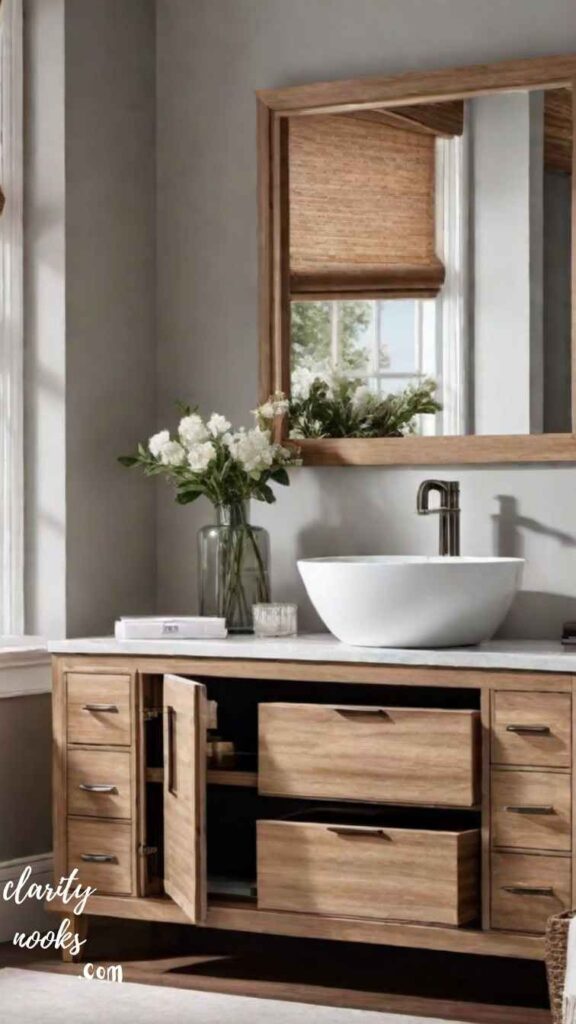
Faucet handles, cabinet knobs, towel ring, toilet paper holder these are the smallest elements in your bathroom and the ones most likely to be ignored. But cohesive, high-quality hardware is what separates a bathroom that looks renovated from one that looks updated. Swapping out generic chrome fixtures for matte black, brushed gold, or brushed nickel equivalents costs very little and signals precision and intentional design.
Budget for hardware upgrades: a full bathroom set faucet, towel bar, toilet paper holder, and cabinet knobs can be replaced for $80–$200, depending on the finishes you choose. The installation time for all of these combined is typically under two hours. The visual return is disproportionately high for such a small investment, particularly in older bathrooms where original fixtures are scratched or discolored.
💡 Pro Tip: Commit to one metal finish throughout the entire bathroom. Mixing metals can work in larger rooms, but in a small bathroom, a consistent finish reads as cleaner and more deliberate.
Adopt the “Visible 20%” Rule
Less Is Genuinely More
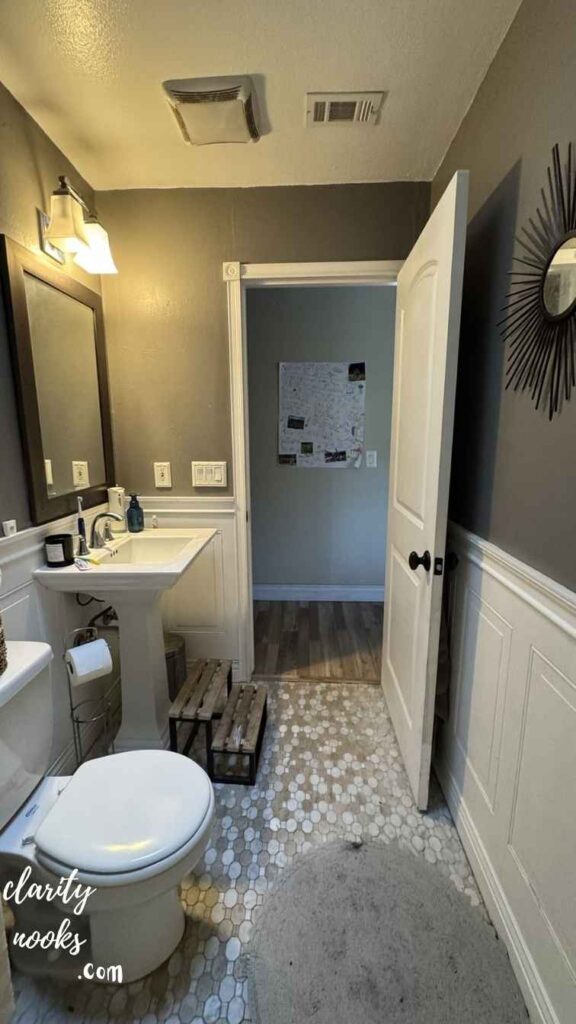
The final and arguably most important idea isn’t about what you add it’s about what you remove. Small bathrooms feel small primarily because they’re overstuffed with products, decorations, and storage solutions competing for the same limited visual space. The “Visible 20%” rule is simple: only 20% of your countertop and open shelf space should be occupied by visible items.
This doesn’t mean you own less it means you store more intentionally. Move everyday products into drawers, behind cabinet doors, or into labeled bins. Keep only two or three items visible on the counter a hand soap dispenser, a plant, a candle. The negative space you create does more for your bathroom’s perceived size than any paint color, mirror, or storage unit you could add.
Mini Case Study:
A blogger documented a small bathroom “declutter challenge” no purchases, no renovation, just a full declutter and reorganization session over one Saturday. The before-and-after photos showed a dramatic transformation that multiple readers mistook for a renovation. The only change was what was visible.
Conclusion
DIY small bathroom ideas don’t have to be complicated or expensive to be transformative. The 15 strategies covered in this guide from floating vanities and oversized mirrors to the Visible 20% rule and peel-and-stick wallpaper prove that smart, strategic changes have a greater impact than major renovations. Your bathroom’s size is fixed, but how it looks, feels, and functions is entirely within your control.
Start with the ideas that address your biggest pain points first: lack of storage, poor lighting, or visual clutter. Even implementing two or three of these DIY small bathroom ideas will create a noticeable shift. The best small bathroom designs aren’t accidents they’re the result of deliberate choices layered together.
Pick one idea from this list today and make it happen this weekend. Small changes, executed consistently, compound into a bathroom you’re genuinely proud of.
Trend Analysis: 2026 and Beyond
Current Trends Defining Small Bathrooms Right Now
The dominant aesthetic shift in 2026 is toward what designers are calling “warm minimalism” clean layouts and uncluttered surfaces combined with natural textures like travertine, wood, and linen. Gone is the sterile, all-white bathroom of the early 2020s. Homeowners now want minimal storage, maximal warmth, and materials that feel organic rather than manufactured.
Matte black fixtures, which peaked around 2022–2023, are giving way to unlacquered brass and warm bronze finishes that patina over time and give bathrooms a lived-in, curated feel. Simultaneously, curved rather than angular cabinetry is becoming mainstream, softening the geometry of small spaces. Round mirrors have replaced rectangular ones as the default choice across social platforms including Instagram and TikTok.
What’s Coming in 2027–2028
Smart storage integration is the next frontier. Expect to see bathroom furniture with built-in charging ports, app-controlled vanity lighting, and mirror displays that show weather, calendar, and health metrics. These technologies are entering the mid-range market and will become DIY-accessible in the next two to three years.
Biophilic design incorporating natural elements like stone, plants, and wood into bathroom spaces will accelerate as research increasingly links nature-adjacent environments with improved wellbeing. For small bathrooms, this means DIY stone veneer panels, living moss walls, and material-forward design that uses texture to create depth without requiring physical space.
Practical Tips & Expert Insights
Interior designers who specialize in compact spaces consistently emphasize one principle above all others: solve the storage problem first, then think about aesthetics. Cluttered counters and overflowing cabinets undermine every design decision you make a beautiful mirror cannot compete with a chaotic background.
- Always use waterproof materials in areas within six feet of water sources even for “decorative” items like shelves and frames.
- Install your shower rod two to four inches higher than standard. It gives the illusion of a taller ceiling and makes the shower feel more open.
- Use a small tray to corral countertop items. A tray creates a contained zone, and a contained zone looks organized even when it’s full.
- Test paint colors in large swatches (at least 12×12 inches) on your actual bathroom walls before committing. Bathroom lighting dramatically changes how colors appear.
- Always include at least one element at floor level a plant, a small stool, a woven basket to create a sense of completion and grounding in the space.
Long-Term Strategy & Sustainability
The smartest approach to small bathroom improvement is to think in phases rather than attempting a comprehensive overhaul at once. Phase one: storage and declutter. Phase two: lighting upgrades. Phase three: visual enhancements (mirrors, hardware, paint). Each phase builds on the previous one and allows you to budget and plan deliberately rather than reactively.
From a sustainability perspective, choosing durable, quality materials even for small items like towel hooks and soap dispensers reduces the frequency of replacement and the associated waste. A $45 ceramic soap dispenser will outlast ten $5 plastic versions. Sustainable materials like bamboo, recycled glass tile, and reclaimed wood are also increasingly competitive in price with conventional alternatives.
For long-term ROI: kitchen and bathroom renovations consistently return the highest resale value among all home improvement projects. Even DIY small bathroom ideas implemented thoughtfully floating vanity, new hardware, fresh paint, updated fixtures can meaningfully increase your home’s appraised value and buyer appeal, often returning $2–$3 for every $1 invested.
Future Predictions & Innovations
Artificial intelligence is beginning to enter the bathroom design space in practical ways. AI-powered design tools some already available in beta can analyze a photo of your bathroom and generate photorealistic mockups of proposed changes before you spend a dollar. By 2027, expect these tools to be accessible through free apps and integrated into retailer websites, allowing you to visualize peel-and-stick wallpaper or a new vanity in your specific space.
Modular bathroom systems pre-fabricated wall panels with integrated storage, lighting, and shelving are emerging as a DIY-friendly alternative to traditional renovation. These systems, already popular in European markets, are entering North American retail through brands like IKEA, Duravit, and smaller DTC companies. By 2028, it may be possible to completely upgrade a small bathroom’s storage and aesthetic infrastructure in a single weekend with zero permanent modifications to the structure.
Water efficiency technology is also advancing rapidly. Smart showerheads that monitor water usage, faucets with motion-sensor activation, and greywater recycling systems designed for residential bathrooms are moving from luxury to mid-range accessibility. Homeowners who install these systems today are future-proofing against increasing water costs and regulation.
Common Mistakes & Hidden Gaps
Mistakes Beginners Make
The most common beginner mistake is buying furniture and fixtures before measuring accurately. Small bathrooms have very little tolerance for error a vanity that’s two inches too wide can block a door, make a space feel impossibly tight, or simply not fit at all. Always measure the room in full, including door swings, before purchasing anything.
- Choosing paint colors online without testing them on the actual walls first.
- Installing shelves without finding studs floating shelves loaded with toiletries will pull from drywall anchors alone.
- Over-decorating adding too many elements in an effort to make the space feel finished. In small bathrooms, restraint is the mark of a skilled designer.
Mistakes Intermediate DIYers Make
More experienced DIYers often fall into the trap of over-engineering solutions. They invest in elaborate custom storage systems when simpler, off-the-shelf solutions would perform identically. They also tend to tackle too many projects simultaneously, leaving the bathroom in a state of partial renovation for months which creates stress and often produces worse results than a phased, focused approach.
- Skipping waterproofing on any wall storage installed within the shower zone.
- Installing lighting without a dimmer switch dimmable lighting is one of the highest-ROI small bathroom upgrades available.
- Choosing trendy fixtures instead of timeless ones trends cycle quickly, and a bathroom that’s perfectly on-trend today can feel dated in three years.
Hidden Gaps
Almost no design guide addresses the importance of scent in small bathroom perception. A bathroom that smells fresh and clean is perceived as larger, cleaner, and better designed than an identical bathroom that doesn’t. A simple reed diffuser, regular cleaning of grout and drains, and a small fan for ventilation are as important to the experience of your bathroom as any visual upgrade.
Similarly, door design is rarely discussed. Most small bathroom guides never mention that the type of door you use and which direction it swings has a significant impact on how much usable space you have. Bi-fold doors, pocket doors, and barn doors all reclaim floor space that swinging doors permanently consume.
Rameen Zara is the founder of Clarity Nooks, bringing over five years of experience in home décor and interior styling. She shares simple yet practical design ideas that suit real homes and everyday living. Her approach focuses on cozy aesthetics, soft color palettes, and natural textures that create warm, inviting spaces.