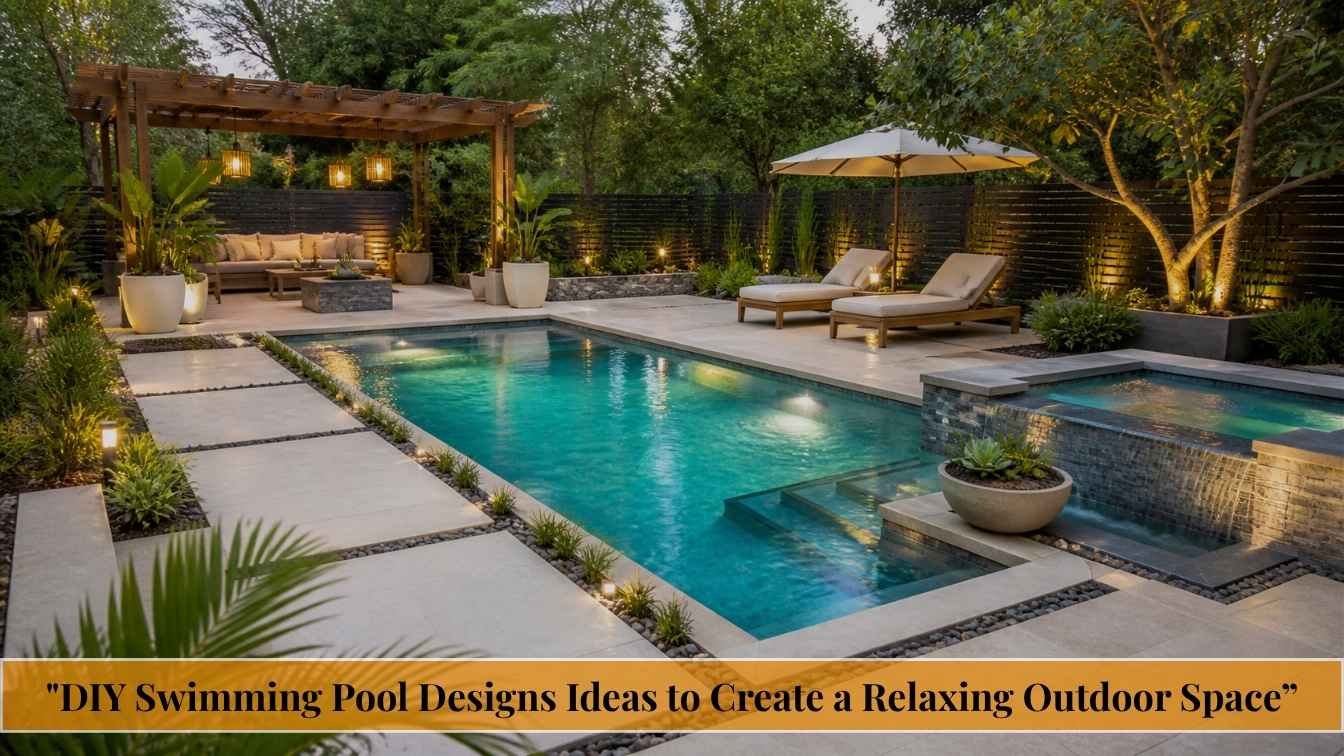
DIY Swimming Pool Designs Ideas to Create a Relaxing Outdoor Space

You don’t need a six-figure budget or a professional contractor to have the backyard pool of your dreams. Here’s how to design and build one yourself the smart way.
Most people believe a backyard swimming pool is out of reach too expensive, too complicated, too permanent. But thousands of homeowners are proving otherwise every single year by designing and building their own pools for a fraction of the cost.
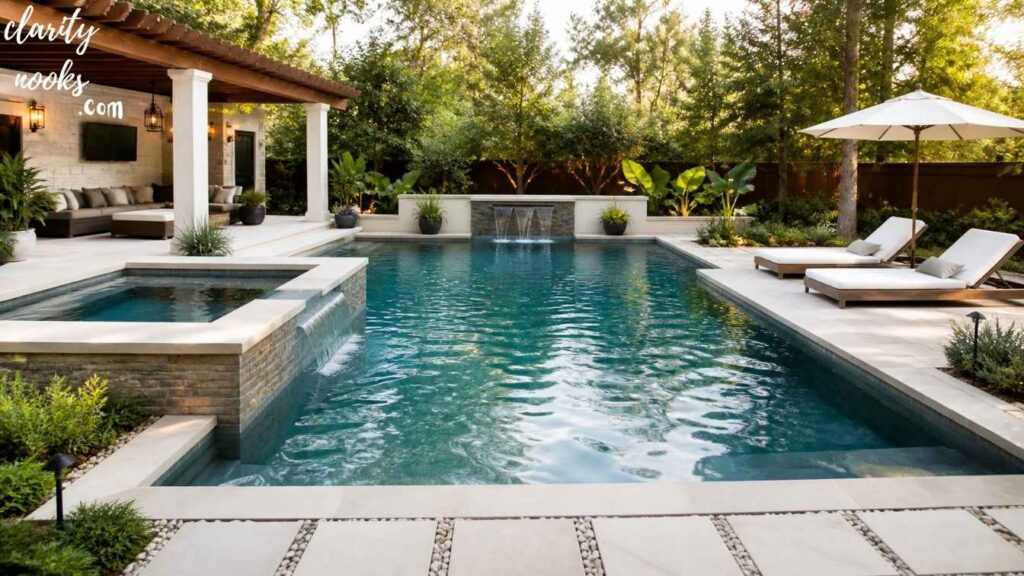
The real problem isn’t cost or complexity it’s not knowing where to start. Without a clear design vision, DIY pool projects either stall at the planning stage or spiral into expensive reworks. This guide gives you a concrete blueprint: seven proven DIY swimming pool design ideas, each adapted to real budgets, real backyards, and real skill levels.
Plunge Pool
Small Footprint, Maximum Impact
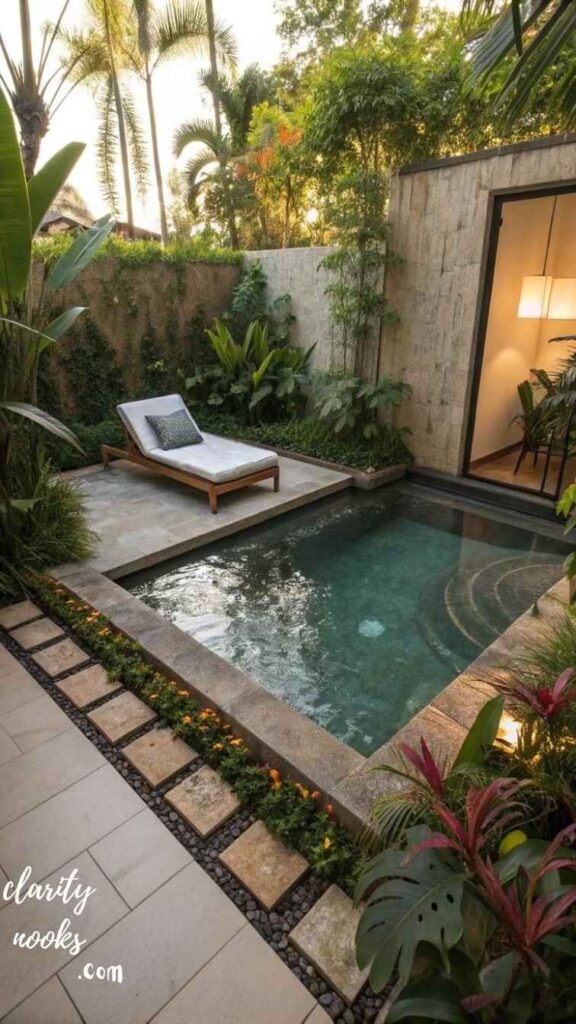
If your backyard is compact say, under 300 square feet of usable outdoor space a DIY plunge pool is your best investment. Typically 6–12 feet long and 4–6 feet deep, plunge pools require far less excavation, fewer materials, and dramatically lower ongoing maintenance costs than full-sized pools.
The design key is going deep rather than wide. A plunge pool of 5 feet deep feels luxurious despite small dimensions. Use concrete block construction or a pre-cast fiberglass shell (available from pool suppliers for $8,000–$18,000) and set it partially above grade to reduce excavation costs. Finishing touches like a timber deck surround and a single water feature wall transform a basic rectangle into a resort-style retreat.
Mini Case Study
Suburban Sydney, Australia:
A homeowner with a 28-foot by 22-foot backyard installed a 10×6 plunge pool using a prefab fiberglass shell and DIY decking. Total cost: $14,200 AUD. A contractor quote for the same had been $38,000. The project took 6 weekends.
Must Read: DIY Sun Room Ideas to Add Style, Comfort, and Natural Light
Natural Swimming Pool
Swim in a Living Ecosystem
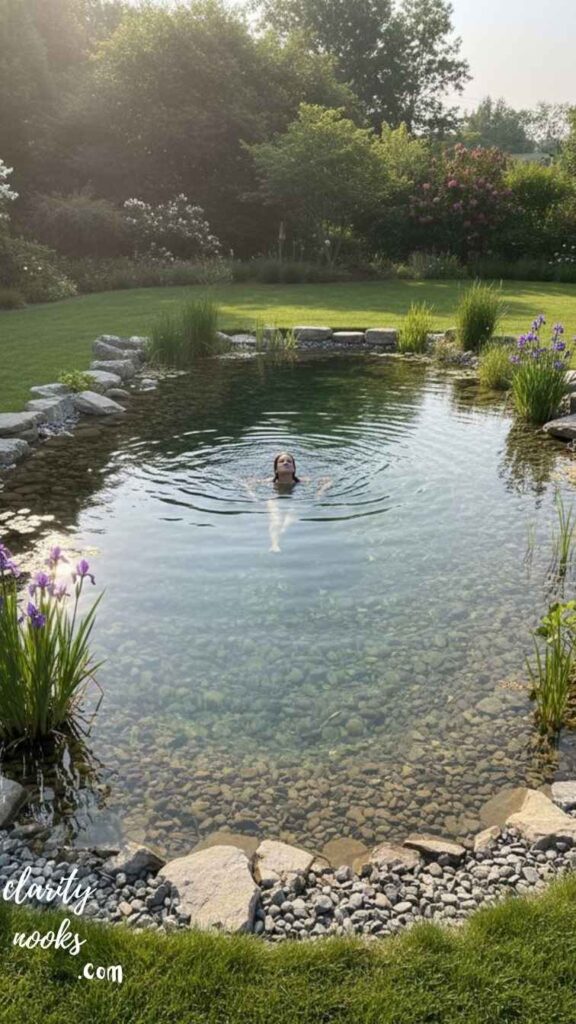
A natural swimming pool (NSP) replaces chlorine with plants and biology. The pool is split into two zones: a swimming zone (typically 60% of total area) and a regeneration zone filled with aquatic plants like reeds, irises, and water hyacinths. Microorganisms in the plant zone filter the water naturally no chemicals needed.
NSPs are genuinely one of the most complex DIY pool types to design, but they’re also among the most rewarding. You’ll need to properly size your plant zone (at least 50% of the pool surface area), manage the water circulation pump, and select the right native plants for your climate. The upfront material cost is comparable to a concrete pool, but ongoing costs drop to almost zero since you’re not buying chemicals year-round.
This design works beautifully with an organic, garden-integrated aesthetic. Think irregular shapes, stone edging, and planted margins. It becomes a wildlife haven as much as a swimming pool.
Quick Definition:
A natural swimming pool uses biological filtration aquatic plants and microorganisms instead of chlorine or salt systems to maintain crystal-clear water safe for swimming.
Read More: DIY Entryway Decor Ideas That Make a Stunning First Impression
Container Pool
The Most Achievable DIY Build
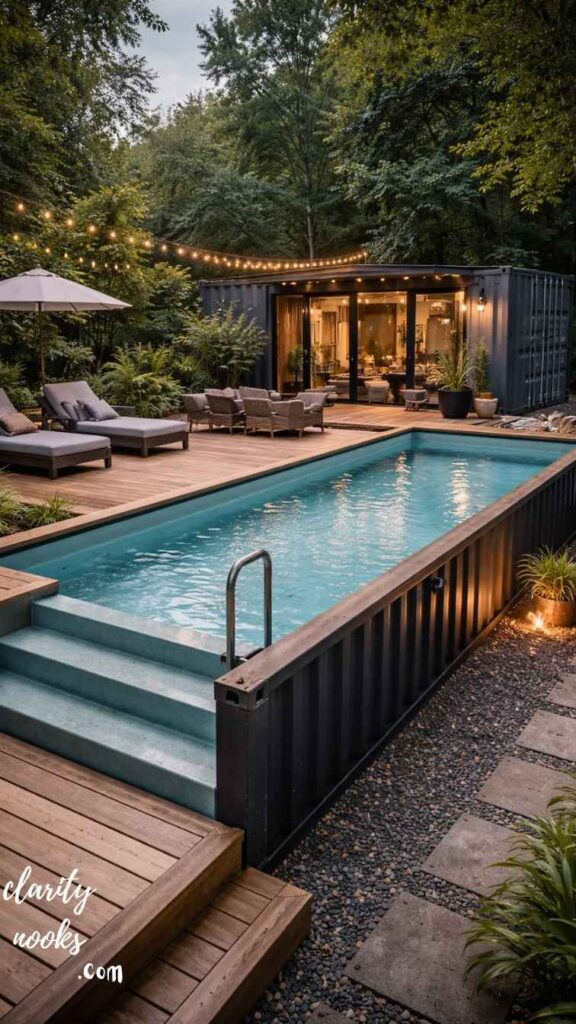
Repurposed shipping containers have become one of the hottest DIY pool trends, and for good reason: the structural shell is already built for you. A standard 20-foot container (8 feet wide) gives you a lap-capable pool that costs between $5,000 and $15,000 fully outfitted with pump, filtration, liner, and deck surround far less than any comparable in-ground option.
The process involves sourcing a one-trip (single-use) container, sandblasting and epoxy-coating the interior, cutting in access points, and plumbing in a filtration system. Many companies now sell purpose-built container pool kits. However, doing the interior coating, plumbing, and electrical work yourself is where serious savings lie. You’ll need to check local building codes most jurisdictions treat container pools like above-ground pools for permit purposes.
How much does a DIY container pool cost?
A DIY shipping container pool typically costs $5,000–$15,000 depending on whether you use a kit or source materials independently. Professional installation of the same runs $20,000–$40,000. The biggest savings come from doing the interior epoxy coating, plumbing, and surround decking yourself.
Don’t Skip: DIY Door Painting Ideas for a Modern, Stylish Look Without Spending Much
Lagoon-Style Pool
Organic Shapes for a Natural Feel
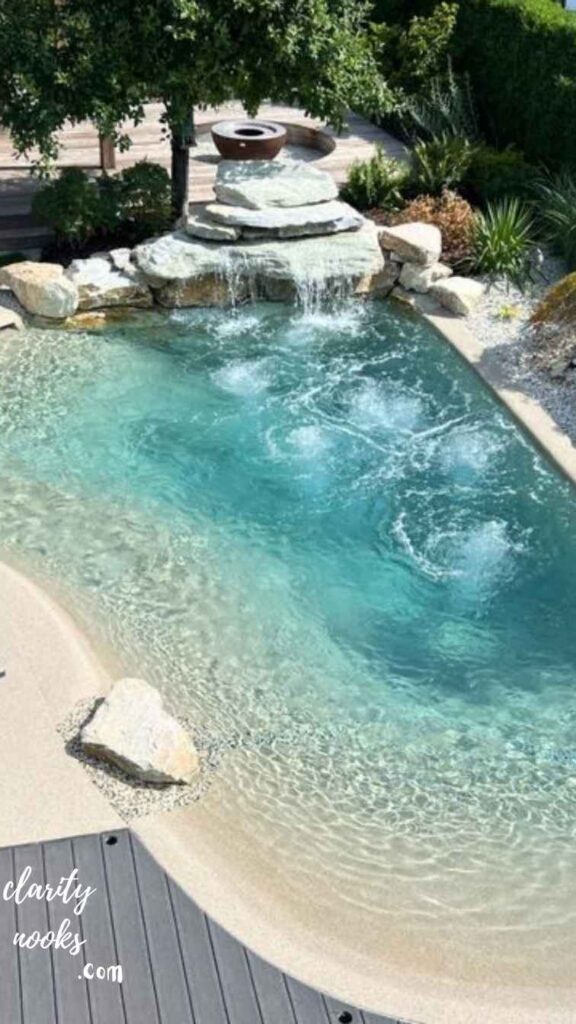
If you have space and a larger budget, a DIY lagoon-style pool creates the most visually dramatic backyard transformation possible. Unlike rectangular pools, lagoon pools use freeform shapes rounded edges, irregular outlines, rocky outcroppings, and integrated planting beds to mimic the look of a natural body of water.
For a DIY build, gunite or shotcrete is typically used you hire a shotcrete crew for the shell itself (usually $8,000–$14,000 for the concrete work alone) but do all the finishing, coping, tiling, decking, and landscaping yourself. That’s where the real cost savings are. Adding artificial rock formations (made from ferro-cement over rebar armature) and tropical plantings brings the total lagoon experience together without a professional landscaper’s price tag.
Also Read: DIY Front Porch Ideas to Create a Cozy Outdoor Space Fast
Lap Pool
Function-First Design for Serious Swimmers
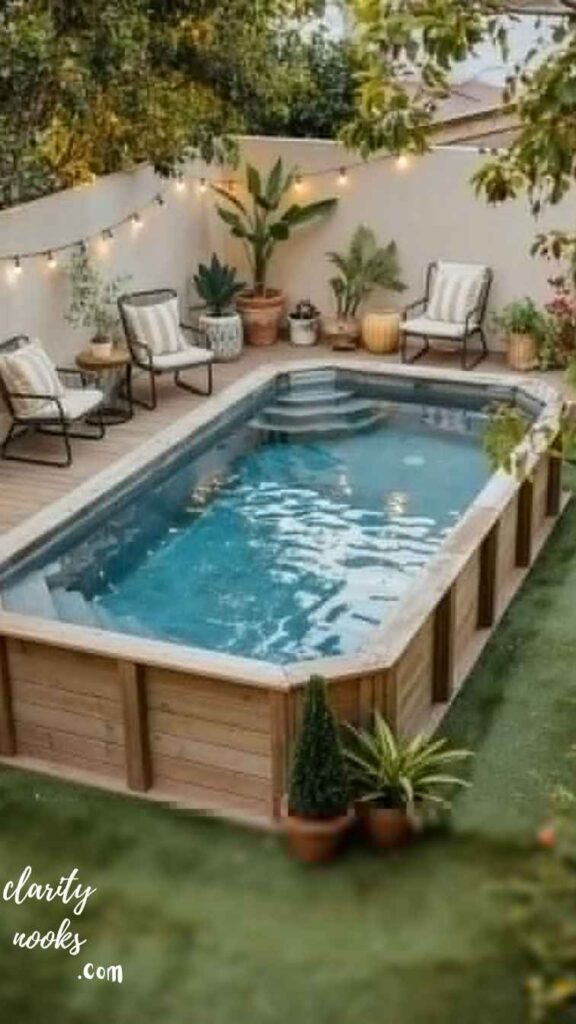
A DIY lap pool doesn’t need to be expensive or elaborate. In fact, simplicity is its defining design principle. The ideal dimensions are 25 meters (82 feet) long for serious training, but a practical backyard version of 40–50 feet by 8–10 feet wide delivers real fitness value. The design is rectangular, clean, and uncluttered which also makes it the most DIY-friendly pool shape to build.
Concrete block construction (also called CMU block pools) is the most accessible method for DIYers. You mortared block, apply hydraulic cement, then a finish coat and fiberglass reinforcement. The total material cost for a 40×10 lap pool using this method runs approximately $12,000–$22,000. Add a swim current machine (jet-propelled resistance system) for roughly $1,500–$3,000 and you have a functional training pool for around what you’d spend on three years of gym memberships.
Real-Life ScenarioTexas homeowner, 2024:
Built a 45×9 CMU block lap pool over 14 months of weekends. Final cost was $19,400 including equipment. Contractor bids had ranged from $55,000–$78,000. He documented the build online; it became a viral reference for the DIY pool community.
Infinity-Edge Pool
Achievable Drama on a Slope
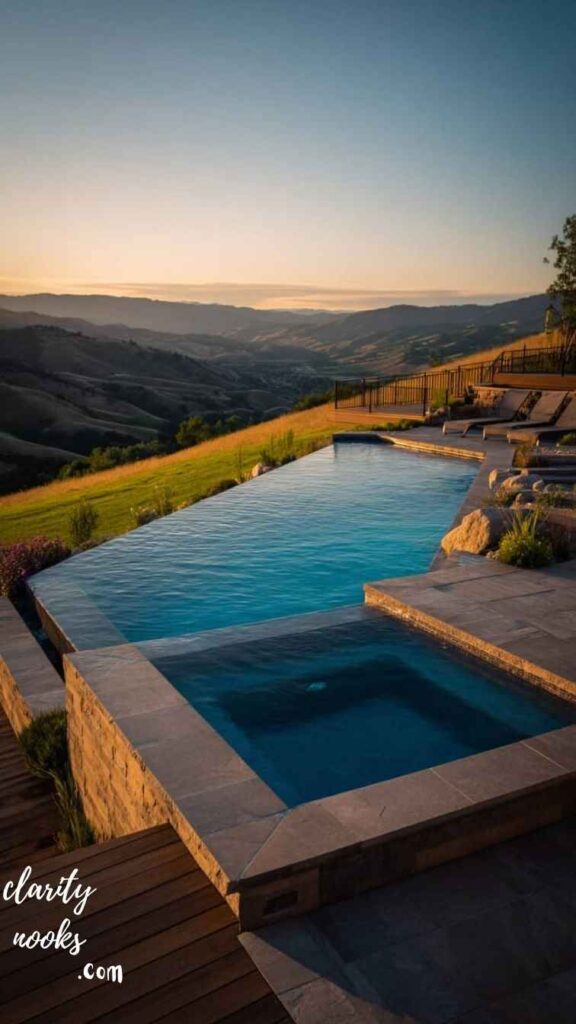
An infinity edge (vanishing edge) pool is often assumed to be out of reach for DIYers and on flat lots, it largely is. But if your property has a natural slope or drop, an infinity edge becomes both structurally logical and visually spectacular. The water cascades over one edge into a catch basin below, which is then pumped back into the pool continuously.
The critical DIY challenge is the catch basin and recirculation system. You need precise engineering: the weir (overflow edge) must be perfectly level, the catch basin must hold at least 20% of the pool’s volume, and the pump must be sized correctly to prevent the basin from running dry during peak overflow. This is one pool design where consulting a structural engineer for the initial design even if you do all the construction yourself is genuinely worth the $500–$1,500 cost.
For the visual effect on a budget, consider a single-edge infinity design on one wall only, with the remaining three sides being standard coped edges. This dramatically reduces complexity while preserving the showpiece aesthetic.
Sunken Courtyard Pool
Integrated Architecture
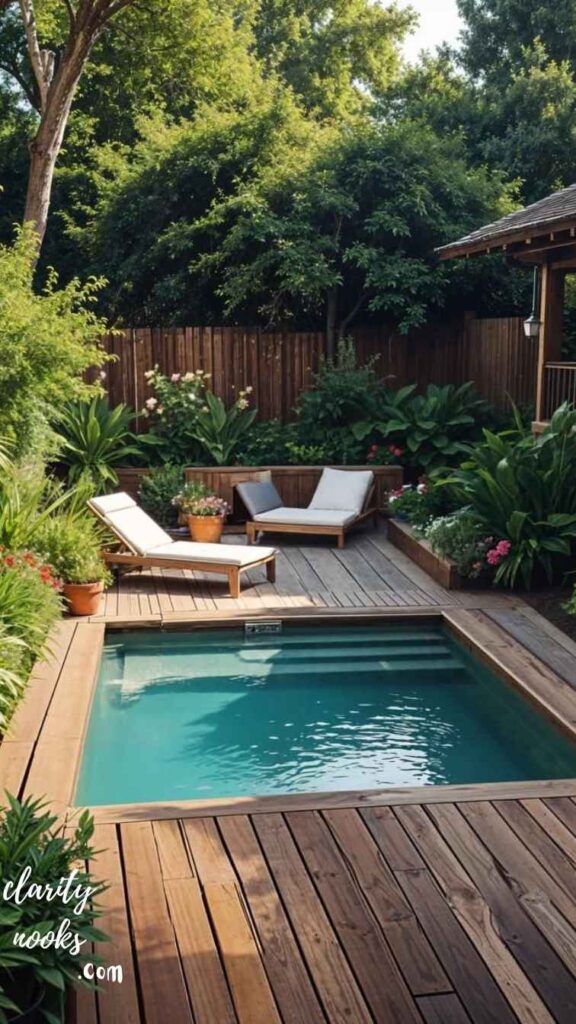
A sunken courtyard pool integrates the swimming pool into your home’s architecture rather than treating it as a separate landscape element. The pool is recessed into a walled outdoor room surrounded by stone or rendered masonry walls, overhead shade structure, and integrated seating creating an intimate, sheltered environment that works even in climates with variable weather.
This design is ideal for urban homes with overlooking neighbors, or properties in windier climates where an exposed pool is less comfortable to use. The walls provide privacy and wind protection while the enclosed space retains heat. From a DIY standpoint, the courtyard walls are the main addition typically rendered block work combined with a standard rectangular pool shell. The design synergy between pool and architecture is what creates the luxury feel, not expensive materials.
Conclusion
Building your own swimming pool is one of the most rewarding home improvement projects you can take on if you plan it right. The seven DIY swimming pool design ideas in this guide range from the ultra-accessible container pool to the architecturally ambitious sunken courtyard design, but they all share one thing: they’re achievable with research, patience, and a realistic budget.
The biggest mistake isn’t choosing the wrong design. It’s starting without a plan. Permit first, design second, build third and always budget a contingency. Your ideal backyard pool is closer than you think.
Trend Analysis
2026–2028 Where DIY Pool Design Is Heading
The DIY pool space is evolving faster than most people realize. Three converging forces material innovation, AI-assisted design tools, and environmental regulation are reshaping what’s possible for the home builder.
Now · 2026
Prefab fiberglass shells dominate entry-level DIY. Container pools going mainstream. Natural pools rising among eco-conscious buyers.
Near · 2027
AI pool design tools (like PoolStudio AI) enable non-designers to generate accurate 3D plans in hours. Dramatically reduces planning errors.
Future · 2028
Solar-integrated pool systems, smart chemical dosing sensors, and heat pump technology become standard even in mid-budget DIY builds.
User behavior is shifting toward smaller, smarter pools. The average DIY pool size has decreased by roughly 18% over the past five years as homeowners prioritize year-round usability, lower running costs, and multi-functional outdoor rooms over sheer square footage. The “bigger is better” era of pool design is definitively over.
Water conservation regulations are also tightening across drought-prone regions in the US Southwest, Southern Europe, and Australia. Designers and DIYers who build with covers, evaporation reduction, and recirculation efficiency in mind will face far fewer regulatory headaches and lower ongoing water bills in the years ahead.
Practical Tips
What Experienced DIY Pool Builders Actually Do Differently
Permit before you plan
Experienced builders pull permits and check setback requirements before finalizing any design. Pool setbacks from property lines typically range from 3 to 10 feet depending on your jurisdiction. Discovering a 6-foot setback requirement after you’ve designed a pool that reaches to 3 feet from your fence means redesigning everything. Check first, design second.
Overbuild the filtration system
Most beginners undersize their filtration. The standard rule: your pump should be able to cycle the entire pool volume in 6–8 hours. But many experienced DIYers size for 4 hours, giving themselves a buffer for heavy swimmer loads, algae recovery periods, and hot weather surges. The pump and filter are the hardest things to upgrade later get it right at installation.
Budget 15–20% for contingency
Underground surprises are real. Unexpected rock, high water tables, and clay soils that swell against your pool shell are all common. Every experienced pool builder includes a contingency buffer. If you don’t use it, you have funds left over for landscaping. If you do use it, your project still finishes instead of stalling incomplete.
Plan the electrical before you excavate
Pool electrical lighting, pump power, potential heated water systems needs to be trenched in at excavation time. Adding it after the pool is built means digging up finished work. Coordinate with a licensed electrician before breaking ground, even if you’re doing everything else yourself. In most jurisdictions, pool electrical must be done by a licensed professional regardless of how much DIY you’re doing.
Long-Term Strategy
Building a Pool That Ages Well
The most expensive pool isn’t the one you build it’s the one you maintain poorly. The design decisions you make at construction determine your maintenance costs for the next 20–30 years. Choosing a salt-water chlorination system over a traditional chlorine system, for example, adds roughly $800–$1,200 upfront but eliminates the $500–$900 per year in chemical costs (while being gentler on skin, eyes, and swimwear).
Material selection matters enormously for longevity. Pebble-finish interiors outlast painted finishes by 15–20 years. Epoxy-coated steel pools corrode without perfect maintenance. Fiberglass is the most forgiving surface long-term, resisting algae growth and requiring fewer chemicals. If you’re choosing your pool shell and expecting to live with it for decades, longevity should outweigh upfront cost in your decision matrix.
Design for your climate, not a pool magazine. A beautiful tiled outdoor pool in Minnesota that sits frozen and unused eight months a year is a liability, not an asset. Designs that work with your climate solar covers to extend the season, heat pumps for shoulder months, or an indoor/outdoor hybrid design pay for themselves in actual use hours.
Resale value reality
It’s worth being honest about property value. In hot climates (Florida, Arizona, California, Queensland), a well-designed pool adds genuine resale value often 5–8% according to real estate appraisers. In colder northern climates, buyers are split: a pool can attract the right buyer at a premium, or deter others who don’t want the maintenance. Know your local market before framing a pool as a financial investment.
Future Predictions
The Next Generation of Backyard Pool Design
The most significant near-term innovation is smart pool management. Systems like Fluidra’s aQua Connect and Pentair’s IntelliConnect already allow complete remote pool control temperature, chemistry, filtration cycles, lighting from a smartphone. Within 2–3 years, AI-driven chemical dosing systems will automatically adjust chemistry in real time based on sensor readings, essentially eliminating manual pool maintenance for water chemistry.
Solar thermal integration is becoming practical at residential scale. New flexible solar collector panels (unlike bulky rooftop arrays) can be integrated into fencing, pergolas, or dedicated pool-side ground panels, extending swimming seasons significantly at low installation cost. In sunny climates, solar heating can extend a swim season by 3–5 months without any ongoing energy cost.
Modular pool systems factory-assembled pool units delivered and installed in a single day are also maturing rapidly. Think of them as the prefab housing equivalent for pools. As these systems proliferate, the gap between “hiring a professional” and “DIYing it” will narrow, giving homeowners more control over the process even when using prefabricated components.
Perhaps the most disruptive development: AI-powered design tools are making professional-quality pool planning accessible to non-designers. Software that takes your backyard dimensions (via satellite image or LiDAR scan from a smartphone) and generates structurally sound, permit-ready pool designs is already in early release from several companies. By 2027–2028, this technology will be mainstream and free, fundamentally democratizing pool design.
Common Mistakes
What Goes Wrong (Even for Experienced Builders)
- Skipping a soil test. High clay content causes soil movement that can crack a concrete pool shell within 5 years. Expansive soils require a fully engineered shell design. A $200 soil test before excavation can prevent a $15,000 structural failure.
- Designing for looks, not sun orientation. A pool in perpetual shadow (from your house, a fence, or mature trees) is rarely used. Orienting your pool to catch afternoon sun when outdoor temperatures peak makes the difference between a pool you use daily and one you don’t.
- Forgetting the equipment pad and room for access. Pool equipment (pump, filter, heater, chemical feeder) needs a dedicated pad of at least 4×6 feet, out of the primary sightlines, with room to service each component. Dozens of DIY builds bury equipment behind landscaping that then has to be removed for every service event.
- Underestimating water evaporation costs. An uncovered 400-square-foot pool in a warm, dry climate can lose 1–1.5 inches of water per week to evaporation around 6,000 gallons monthly. A pool cover (costing $500–$2,000) pays for itself in water savings within 12–18 months in most regions.
- Not accounting for fencing requirements. In most jurisdictions, residential pools must be enclosed by a compliant safety fence typically 4 feet minimum height with self-latching gates. This is non-negotiable, not optional. Budget $1,500–$6,000 for fencing depending on pool perimeter and material choice.
- Choosing the wrong depth profile. A uniform 5-foot depth is the single most versatile and safest profile for a family pool you can swim laps, stand comfortably, and play safely. Diving-depth pools (8+ feet) require special permits, larger volumes, more excavation cost, and significantly higher heating costs. Most DIYers who add a deep end rarely use it.
FAQ’S About DIY Swimming Pool Designs Ideas
Can I build a swimming pool entirely by myself with no experience?
Yes with the right design. Container pools and above-ground liner pools are the most accessible entry points for complete beginners. Concrete shell construction involves more technical skill (or hiring a shotcrete crew for the shell itself). Most successful DIY builders do a hybrid: hire specialists for the structural shell and electrical, and do all finishing work themselves.
What is the cheapest DIY swimming pool option?
An above-ground pool with a liner is the cheapest at $500–$5,000 for materials. A container pool ($5,000–$15,000) is the next most affordable permanent option. Fully in-ground concrete pools start around $15,000–$25,000 in materials for a basic DIY build.
Do I need a permit to build a DIY pool?
In almost all jurisdictions, yes. In-ground pools universally require building permits. Above-ground pools above a certain size (often 24 inches deep) typically require them too. Check with your local planning authority before beginning any work.
How long does a DIY pool build typically take?
Realistically, 3–18 months depending on pool type, your available weekends, and whether you hit delays. Container pools can be done in 6–8 weekends. Concrete in-ground pools average 4–12 months for a committed DIY builder working weekends.
What pool design adds the most resale value?
In warm climates, a clean, rectangular in-ground pool with modern coping and neutral finishes adds the most reliable resale value. Unusual shapes, elaborate water features, and hot tub additions don’t consistently return their cost at resale but a well-maintained standard pool in the right market can add 5–8% to property value.
Rameen Zara is the founder of Clarity Nooks, bringing over five years of experience in home décor and interior styling. She shares simple yet practical design ideas that suit real homes and everyday living. Her approach focuses on cozy aesthetics, soft color palettes, and natural textures that create warm, inviting spaces.