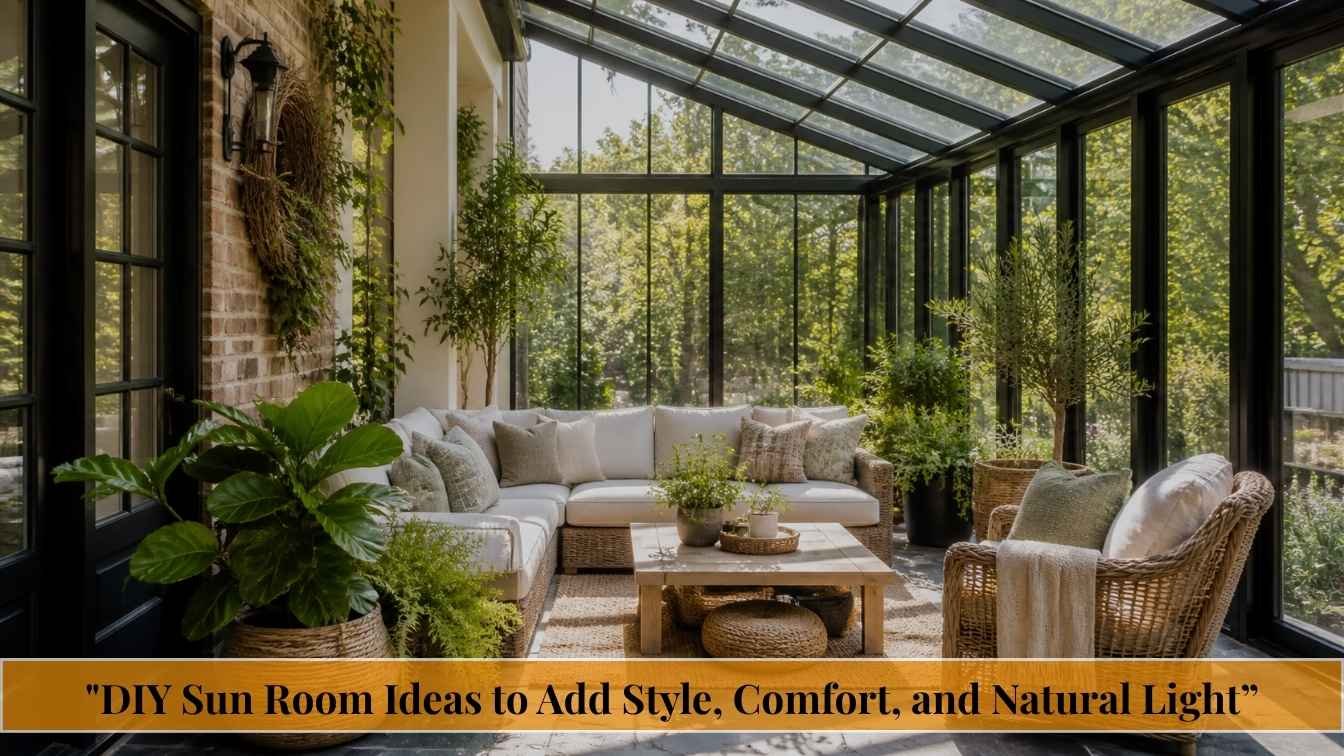
DIY Sun Room Ideas to Add Style, Comfort, and Natural Light

Most homeowners dream of a sun room but assume it costs a fortune. The truth? With the right approach, you can create a stunning, functional space for far less than you think.
There’s a particular magic to a room flooded with natural light a place where the outdoors feels close but the comfort of inside remains intact. A sun room, also called a solarium or three-season room, delivers exactly that. Yet many homeowners shelve the idea the moment they imagine contractor quotes and permits.
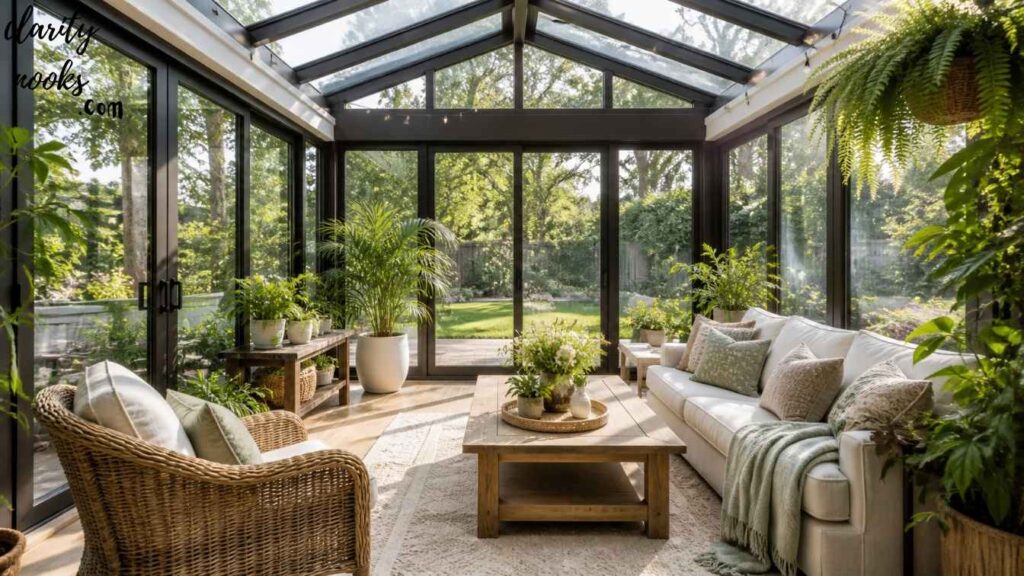
Here’s what those homeowners miss: a large portion of a sun room project is absolutely DIY-friendly. Framing, insulation, flooring, glazing kits, and interior styling can all be handled by a motivated homeowner. The result? A livable space that adds measurable value to your home, reduces your energy bill (when designed well), and becomes the room everyone actually wants to spend time in.
This guide covers nine original, well-tested DIY sun room ideas from full builds to budget-friendly conversions along with expert insights, trend analysis, and the mistakes even experienced renovators make.
+8%
Average home value increase from a sun room addition
$15K
Typical DIY build cost vs. $40K+ for contractors
3–4x
More natural light vs. a standard interior room
A DIY sun room is an enclosed, light-filled space attached to a home, built using glazed walls, a transparent or skylight roof, and an insulated floor. Common DIY approaches include converting an existing porch, using prefab glazing kits, or building a timber-frame structure. Costs typically range from $8,000–$25,000 depending on size and materials.
Convert an Existing Porch or Deck
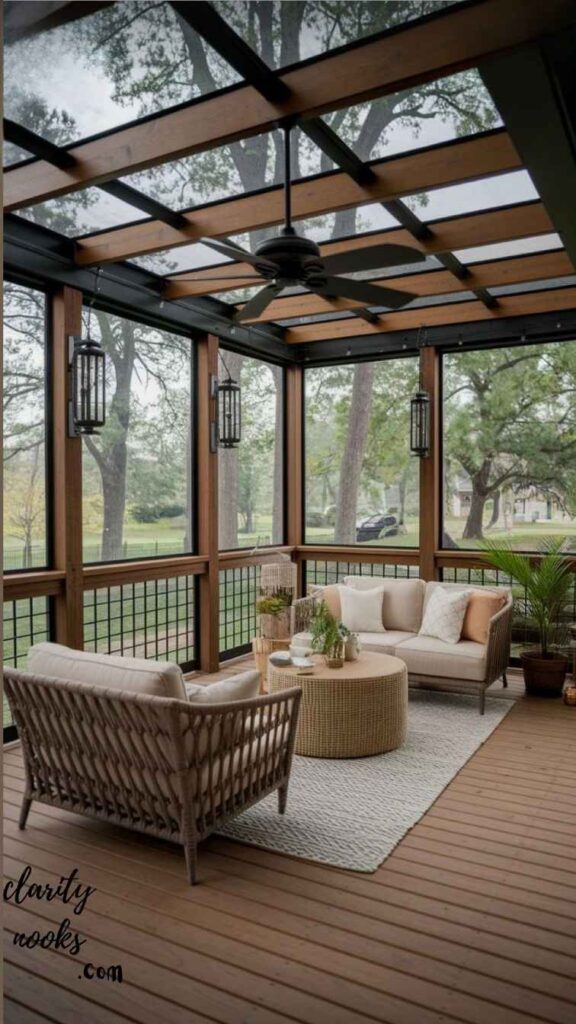
The fastest route to a sun room is the one that already exists. If your home has an open porch or an underused deck, you’re looking at a shell that already has a roof and a foundation. Enclosing it with insulated glazing panels or aluminum-framed glass walls can transform the space in a single weekend project.
The structural work is already done your biggest task becomes choosing the right glazing system. EZE-Breeze vinyl-framed panels, for example, are a favorite among DIYers because they slide open for ventilation, require no special tools, and can be removed seasonally. For a more permanent three-season or four-season room, tempered glass in aluminum frames offers better insulation and a cleaner aesthetic.
Real-life scenario: A homeowner in Charlotte, NC converted a 200 sq ft covered porch into a reading sun room for under $6,000 using polycarbonate roof panels and EZE-Breeze siding. Total project time: three weekends. The room now serves as a year-round office with a ceiling fan and portable electric heater.
Must Read: DIY Entryway Decor Ideas That Make a Stunning First Impression
Build a Prefab Sunroom Kit
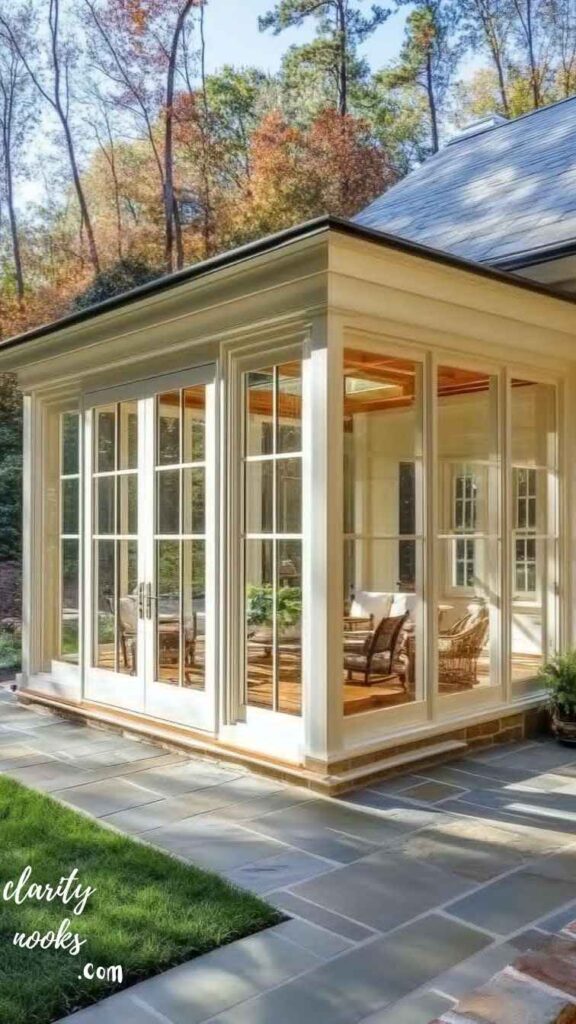
Prefab sunroom kits have improved dramatically. Companies like Sunview, Four Seasons, and Patio Enclosures now offer complete DIY-assembly kits with pre-cut framing, tempered glass panels, and detailed instructions. The kits arrive on a flatbed and are engineered to meet most local building codes which means permit approval is typically faster.
The key advantage here is precision. Every component is measured and cut to fit before it leaves the factory. You’re assembling, not building from scratch. Most 10×12 ft kits can be erected by two people in 3–5 days. Budget for a concrete slab or deck foundation, as most kits require a separate base preparation.
Pro Tip
Always check your local zoning laws before ordering a kit. Most municipalities require a building permit for any enclosed structure over 120 sq ft attached to the home. Permits typically cost $150–$500 and ensure your addition won’t create issues when you sell.
Read More: DIY Door Painting Ideas for a Modern, Stylish Look Without Spending Much
Design a Timber-Frame Sunroom from Scratch
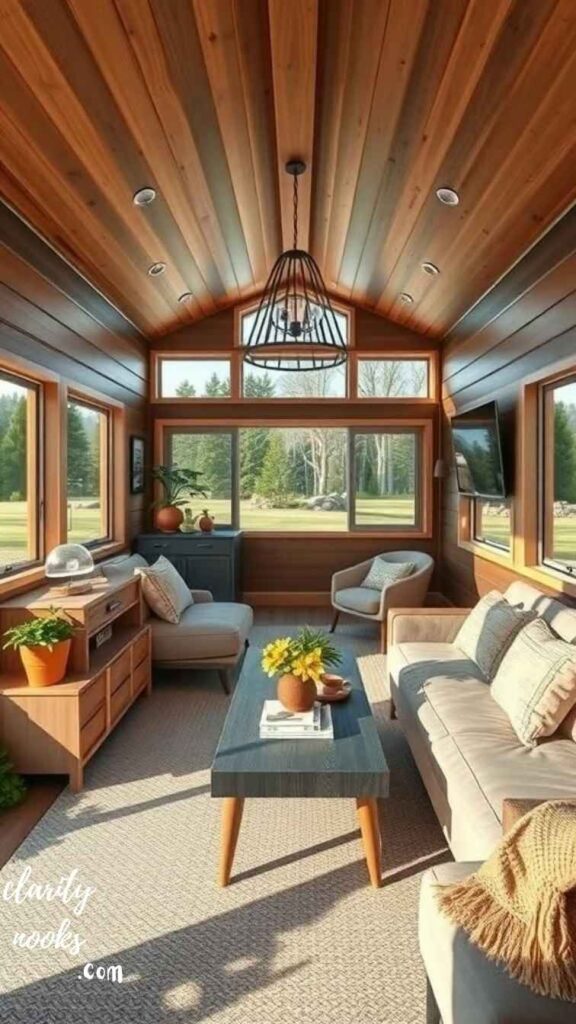
For the experienced DIYer who wants full creative control, a timber-frame sun room built from scratch is deeply satisfying and highly customizable. Douglas fir or cedar are the woods of choice both are dimensionally stable, naturally rot-resistant, and visually beautiful when left with a clear-coat finish. A 12×16 ft room framed in 6×6 posts with exposed rafters creates a warmth no prefab kit can replicate.
The frame dictates everything. Space your posts 4 ft apart maximum if you plan on glazed infill panels, and design your roof pitch carefully a steeper pitch (4:12 or higher) sheds water and snow more effectively and allows for more dramatic ceiling height inside. Twin-wall polycarbonate roofing panels are the most popular DIY-friendly glazing choice because they’re lightweight, cut with a circular saw, and offer excellent thermal performance.
One design detail competitors consistently miss: include a continuous ridge vent along the roof peak. Sun rooms trap heat fast a passive ventilation system keeps the space comfortable from spring through fall without relying on HVAC.
Read Also: DIY Front Porch Ideas to Create a Cozy Outdoor Space Fast
Create a Four-Season Room with Proper Insulation
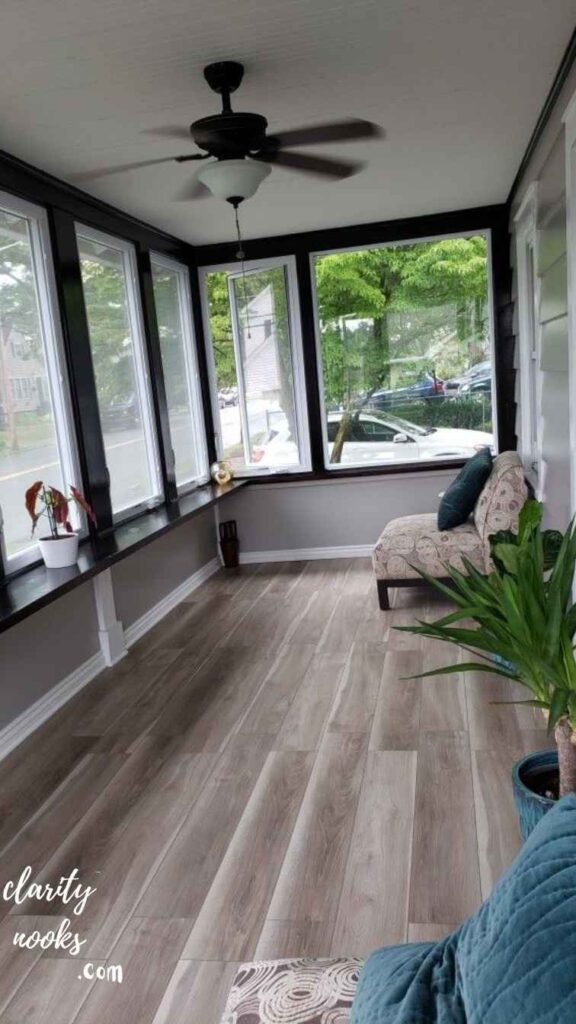
A true four-season sun room works in January as well as July. The difference between a seasonal porch and a genuine all-weather living space comes down to three things: insulated walls, double or triple-pane glazing, and a thermal break in the framing. Miss any one of these and you’ll have a room that’s too cold in winter or too hot in summer to actually use.
Spray foam insulation in the walls and roof cavities is worth the investment it outperforms fiberglass batt insulation in air sealing, which is where most sun rooms leak their conditioning. Low-E glass coating on your windows and glazing panels reduces solar heat gain by up to 70% in summer while allowing passive solar heat gain in winter a critical distinction for a space with this much glass surface area.
Connect your four-season sun room to your home’s existing HVAC system if possible, or install a ductless mini-split. The latter is often preferred by DIYers because installation requires only a small hole through the wall for the refrigerant line far simpler than extending ductwork.
Don’t Miss: DIY Home Gym Ideas to Build a Motivating Workout Space at Home
Use a Sunroom as a Dedicated Plant Sanctuary
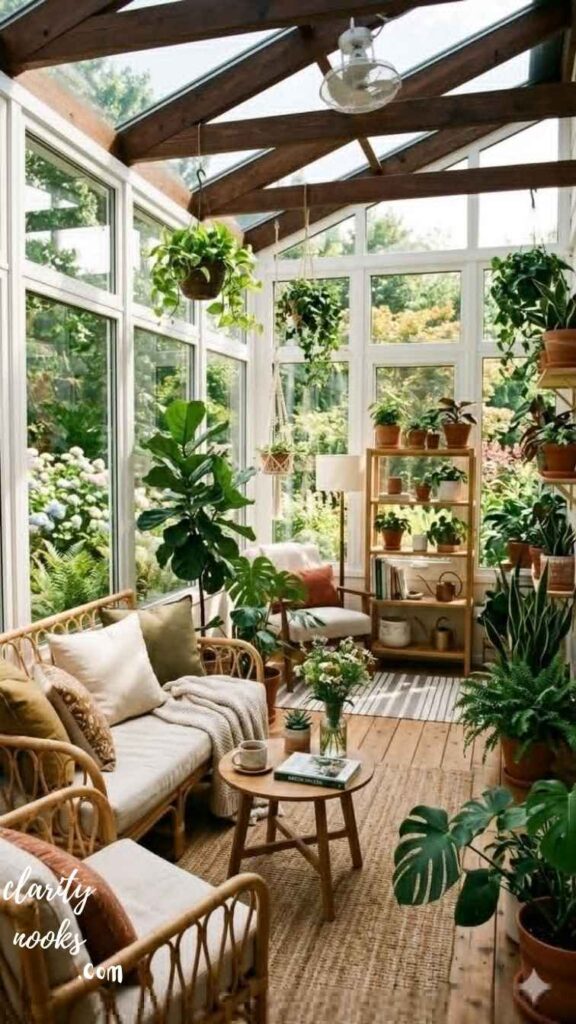
A sun room purpose-built for plants sometimes called a home greenhouse or a growing room is one of the most functional interpretations of the concept. The same principles apply: glazed walls, abundant light, and climate control. But the interior choices shift dramatically. You’ll want sealed concrete or tile flooring (not wood), a utility sink, drainage access, and humidity-resistant materials throughout.
The plant sanctuary sun room works beautifully in urban homes where outdoor growing space is limited. Tropical plants that struggle indoors fiddle leaf figs, bird of paradise, citrus trees thrive in a south-facing glazed room. Many homeowners also use this setup for overwintering tender perennials, starting seeds in late winter, or growing herbs year-round.
Mini Case Study
A homeowner in Portland, OR built a 10×14 ft plant room off her kitchen using twin-wall polycarbonate panels and a simple aluminum frame. She installed a ceiling fan for air circulation, a rubber-backed tile floor with a center drain, and a small wall-mounted electric heater. Total cost: $9,200. The space now houses 40+ tropical plants and serves double duty as a morning coffee room.
Build a Lean-To Sunroom Against an Existing Wall
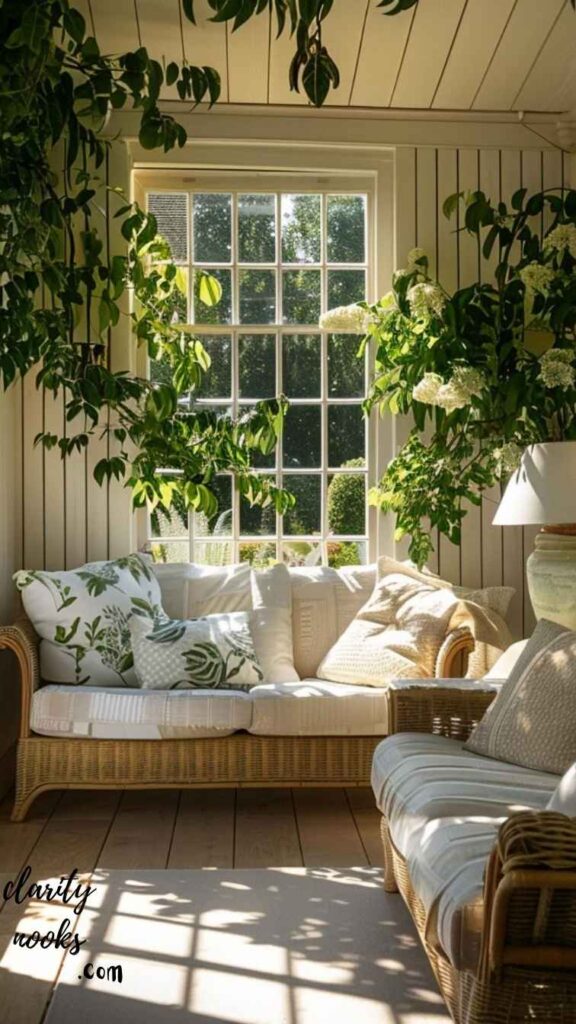
A lean-to sun room also called a mono-pitch or shed-roof addition is the most structurally simple option when you’re building from scratch. One wall of the room is the existing exterior wall of your house; the other three walls and the single-pitch roof are all new construction. This dramatically reduces framing complexity and cost.
Lean-to designs are ideal for narrow side yards, back-of-house additions where a gabled structure would be visually intrusive, or situations where you want to bring light into an existing room by adding a glazed buffer zone. A clever use of a lean-to sun room is attaching it to a north-facing room the reflected and diffused light from the sun room’s interior actually brightens the adjacent room considerably.
Structurally, you’ll anchor the top plate of your lean-to into the home’s rim joist or existing framing using lag screws and joist hangers. This connection point must be properly flashed to prevent water intrusion it’s the single most important detail in a lean-to build and the one spot worth hiring a professional to inspect, even in a fully DIY project.
Design a Sunroom Office or Studio
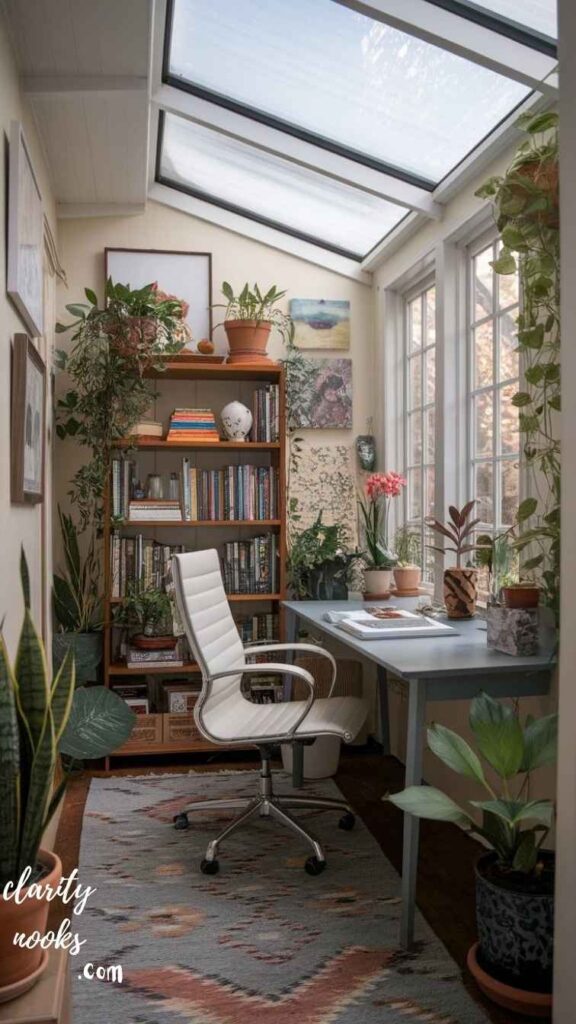
The post-2020 shift to remote work created massive demand for home office spaces that don’t feel like a spare bedroom. A sun room office solves multiple problems at once: it’s physically separated from the main living space (reducing household noise distractions), it offers abundant natural light (which significantly improves focus and mood per well-documented human factors research), and it signals a psychological shift from home mode to work mode.
For a sun room studio, acoustics matter more than in a casual living sun room. Rugs, upholstered furniture, and acoustic panels on any solid interior walls will tame the echoes that glass-heavy rooms naturally produce. Position your desk perpendicular to the largest glass wall rather than facing it this eliminates screen glare while still flooding your peripheral vision with light and greenery.
A creative variation worth noting: several architects now design “detached” sun room studios freestanding glass structures in the garden rather than attached to the house. These require more permitting and a separate utilities connection, but they create genuinely distinct spaces that foster a creative flow state many people find impossible to achieve in a home attachment.
Retrofit an Attached Garage into a Sun Room
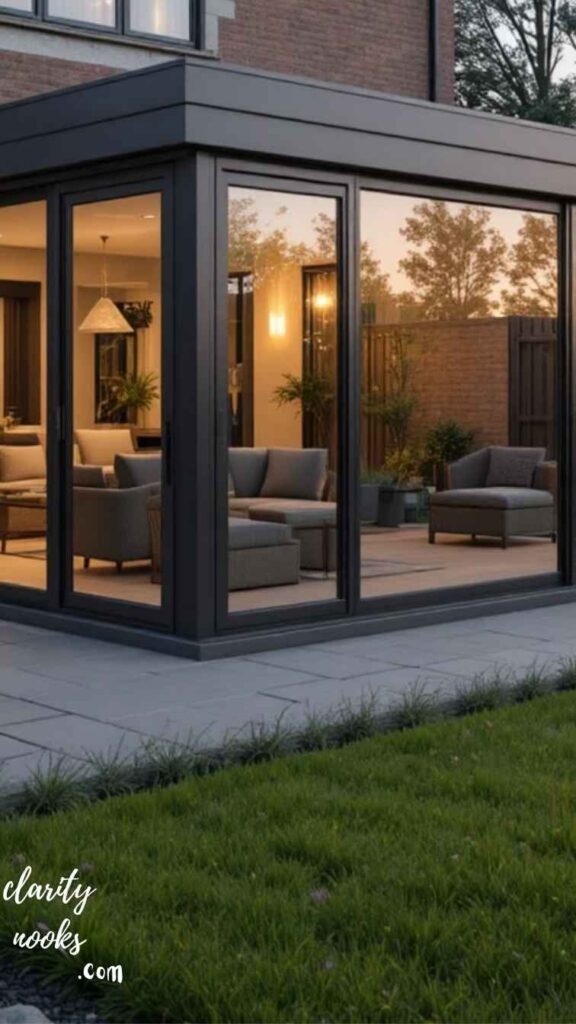
An attached garage conversion is one of the highest-ROI sun room projects available because the structural shell already exists. The overhead door opening becomes your primary glazing opportunity replace it with a full-width glass panel system or a bank of French doors flanked by fixed glass sidelights. The existing slab is your floor foundation; add in-floor radiant heating if you want year-round comfort, or pour a new decorative concrete finish over the existing slab.
The practical challenges in a garage conversion are utilities and insulation. Garage walls are typically uninsulated; you’ll need to frame interior walls 2–3 inches inside the existing structure to create a cavity for batt or spray foam insulation. The ceiling is also usually uninsulated blown-in cellulose is the most DIY-friendly option for an existing ceiling cavity. Finally, plan your electrical layout carefully, as sun rooms benefit from circuits for ceiling fans, lighting, heating/cooling, and entertainment.
Create a Budget Sunroom with Polycarbonate and Cedar
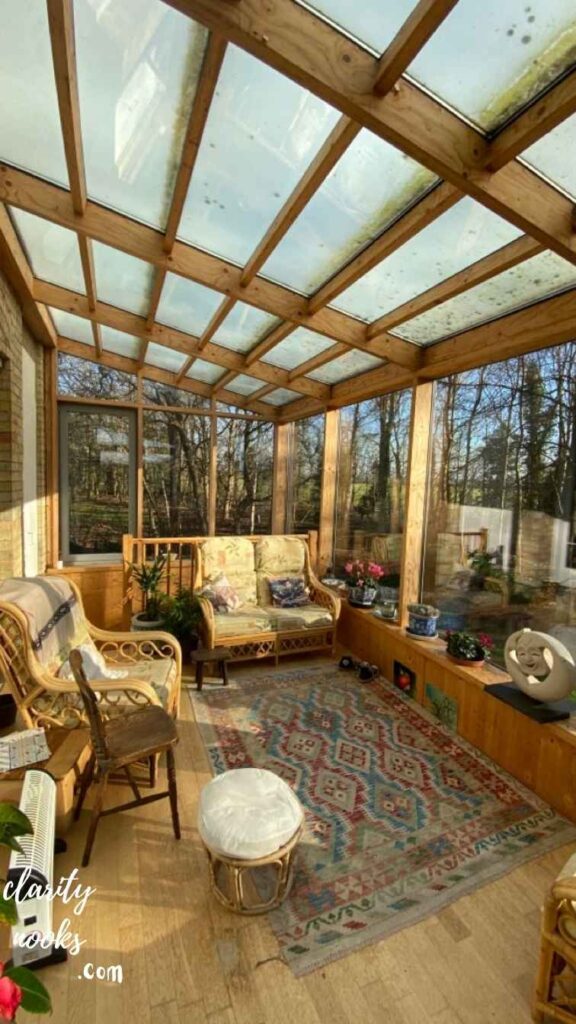
Not every sun room needs to be a luxury addition. A beautifully designed three-season room using cedar framing and twin-wall polycarbonate glazing can be built for $8,000–$12,000 in materials and it can look genuinely high-end if the proportions are right and the detailing is careful. Polycarbonate is UV-stabilized, virtually unbreakable, and offers better insulation than single-pane glass at a fraction of the cost.
The visual key to making a budget sun room look premium is the frame design. Avoid using dimensional lumber in visible locations; instead, use smooth-planed cedar with a natural finish for any exposed structural members. Black-painted steel hardware against warm cedar creates a refined, contemporary aesthetic that photographs beautifully and holds its appeal for decades.
One interior move that transforms a budget sun room: a continuous built-in bench along the perimeter walls. Cedar bench tops with concealed storage below, cushioned with outdoor-grade fabric, create a space that feels custom-designed rather than cost-constrained. Total material cost for a perimeter bench in a 12×12 room: approximately $400–$600.
Conclusion
DIY Sun Room Ideas help you create a bright and calm space at home. You can use simple items and low-cost materials. Natural light makes the room feel fresh and open. Soft colors and cozy furniture add comfort. Keep the design clean and simple. Small changes can give a big result. Anyone can try these ideas with basic effort.
With DIY Sun Room Ideas, you can enjoy a peaceful place for rest or family time. Make the space match your taste and needs. Add plants and soft decor for a warm feel. Take your time and enjoy each step. A sun room should feel happy and relaxing every day.
Trend Analysis
Sun Room Design in 2026 and Beyond
Sun rooms are experiencing a design renaissance driven by three converging forces: the continued growth of remote work, rising energy costs that make passive solar design more attractive, and a cultural shift toward biophilic living the intentional integration of nature into everyday indoor spaces.
Now (2026)
Biophilic integration
Plants, natural materials, and water features inside sun rooms
Now (2026)
Hybrid work rooms
Sun rooms doubling as permanent home offices with cable management
2027–2028
Smart glazing
Electrochromic glass that darkens on demand without blinds
2027–2028
Solar-integrated roofing
Transparent PV panels generating power while allowing diffused light
2028–2029
Passive house sun rooms
Triple-glazed, airtight designs that heat the adjacent home passively
2028–2029
Modular/expandable kits
Add-on modules allowing room to grow without rebuilding
Voice search and AI-assisted design tools are also changing how homeowners plan these projects. In 2026, roughly 38% of home improvement searches begin with a voice query questions like “how do I build a sunroom on a budget” or “what permits do I need for a DIY sunroom addition.” Optimizing for these natural-language queries (as this article does) reflects a meaningful shift in how homeowners research before they build.
Practical Tips from Real Builds
Orientation is your most important design decision
South-facing sun rooms capture the most winter sun in the Northern Hemisphere and are the best choice for passive solar heating. East-facing rooms get gentle morning light ideal for breakfast rooms and studios. West-facing rooms get afternoon and evening sun comfortable in fall and spring but can become unbearably hot in summer without proper shading. North-facing rooms receive no direct sun counter-intuitively, these are excellent plant rooms because they receive even, diffused light all day without the scorching intensity that damages many species.
Don’t undersize your ventilation
Sun rooms can reach 20–30°F above outdoor temperature on sunny days due to the greenhouse effect. Every glazed room needs operable windows or vents equal to at least 10% of the floor area for cross-ventilation. Ridge vents, gable vents, and ceiling fans work together to create passive convection hot air rises and exits while cooler air enters at lower openings. Neglecting this turns a beautiful room into an unusable sauna from May through September.
Choose your flooring for thermal mass
Concrete, tile, and stone flooring absorb heat during the day and radiate it back at night this is called thermal mass, and it’s one of the key mechanisms in passive solar design. A dark-colored tile floor in a south-facing sun room can meaningfully reduce your heating load in adjacent rooms. Avoid wood flooring in sun rooms with significant temperature and humidity swings even engineered hardwood will cup and gap over time in these conditions.
Long-Term Strategy: Building a Sun Room That Lasts Decades
The sun rooms that fail within 10 years almost always fail for the same reasons: poor water management, inadequate ventilation, and materials chosen for initial cost rather than longevity. The ones that last 30+ years share a commitment to overbuilding the basics proper drainage, quality flashing, and materials rated for exterior exposure.
Aluminum framing outperforms wood for longevity in glazed structures because it doesn’t rot, warp, or require repainting. However, aluminum is a thermal conductor in a four-season room, thermally broken aluminum (frames with a non-conductive barrier inside) is essential to prevent condensation and heat loss. This single specification difference can account for 30–40% variance in a room’s energy performance over its lifetime.
From a return-on-investment perspective, four-season sun rooms consistently outperform three-season rooms when it comes to home sale value. Buyers in colder climates specifically seek usable year-round spaces. The additional upfront cost of proper insulation, double-pane glazing, and HVAC connection typically returns 70–90 cents on the dollar at sale significantly better than most other home additions.
Future Predictions & Innovations in Sun Room Design
The next decade will bring three genuinely transformative technologies to DIY sun room construction. First: building-integrated photovoltaics (BIPV) solar panels that function as structural glazing. By 2028, several manufacturers are projected to offer DIY-compatible BIPV roof panels that generate electricity while transmitting 20–30% of incoming light. A sun room roof could realistically power its own heating and cooling system.
Second: smart electrochromic glass is rapidly approaching DIY price points. Currently priced at $80–$150 per sq ft (prohibitive for most budgets), manufacturing scale is expected to bring this to $25–$40 per sq ft by 2028. At that price, glass that darkens at the touch of a button eliminating the need for blinds entirely becomes viable for standard sun room projects.
Third: AI-assisted design tools are already beginning to transform the planning phase. Tools like those integrated into major home improvement retailers can now generate permit-ready sun room plans based on satellite imagery of your property, local zoning rules, and your stated budget. This collapses the planning and design phase from months to hours for DIY builders.
Common Mistakes & Hidden Gaps
These are the errors that trip up beginners and intermediate DIYers alike often invisible until the project is complete and expensive to fix afterward.
- Skipping the permit: Unpermitted sun rooms can block home sales, void homeowner’s insurance claims, and require demolition. The permit process also triggers inspections that catch structural errors before they become costly.
- Using single-pane glass to save money: Single-pane glazing creates extreme temperature swings, persistent condensation problems, and radiant heat discomfort. The marginal cost of double-pane glass pays back within 3–5 years in energy savings alone.
- Flashing the roof-to-wall connection incorrectly: This is the number one cause of water damage in sun room additions. Use self-adhering membrane flashing (not just caulk), step flash at every rafter, and install a proper drip edge. Have a roofer inspect this connection point if you have any doubt.
- Ignoring glare and overheating in west-facing rooms: A west-facing sun room without external shading (a pergola overhang, shade sail, or motorized exterior blinds) is often unusable in summer afternoons. Design shading into the project from day one, not as an afterthought.
- Connecting to the home without accounting for differential movement: Your home’s framing and a new sun room addition expand and contract at different rates. A rigid, fully sealed connection without a control joint will crack both the connection itself and potentially the adjacent interior finishes. Use a soft flashing joint with an appropriate sealant at the connection.
- Underestimating electrical needs: Sun rooms need more circuits than people expect: lighting, ceiling fan, heating/cooling, entertainment, and charging stations at minimum. Running a single 15-amp circuit is insufficient and often results in tripped breakers or a frustrating partial renovation later.
FAQ’S About DIY Sun Room Ideas
What is the difference between a sun room and a conservatory?
A sun room typically has insulated walls with glazed panels and a solid or partially glazed roof. A conservatory is almost entirely glazed walls and roof and is more common in the UK. Conservatories offer more light but less insulation and are harder to climate-control year-round.
How much does a DIY sun room cost?
A basic three-season porch conversion runs $4,000–$10,000 in materials. A custom-built four-season room with proper insulation, double-pane glazing, and HVAC connection typically costs $15,000–$30,000 in materials for a 200–300 sq ft space. Labor savings versus hiring a contractor are typically 40–60%.
Do I need a permit to build a DIY sun room?
Almost certainly yes if the structure is attached to your home or over 120 sq ft. Requirements vary by municipality, but most jurisdictions treat sun rooms as habitable additions requiring a building permit, structural review, and inspections at foundation, framing, and final stages.
What is the best glazing material for a DIY sun room?
Twin-wall polycarbonate panels are the best choice for DIY roof glazing lightweight, insulating, easy to cut, and far more impact-resistant than glass. For vertical walls, double-pane tempered glass in aluminum frames offers better clarity and thermal performance. Avoid single-wall polycarbonate and single-pane glass.
Rameen Zara is the founder of Clarity Nooks, bringing over five years of experience in home décor and interior styling. She shares simple yet practical design ideas that suit real homes and everyday living. Her approach focuses on cozy aesthetics, soft color palettes, and natural textures that create warm, inviting spaces.