
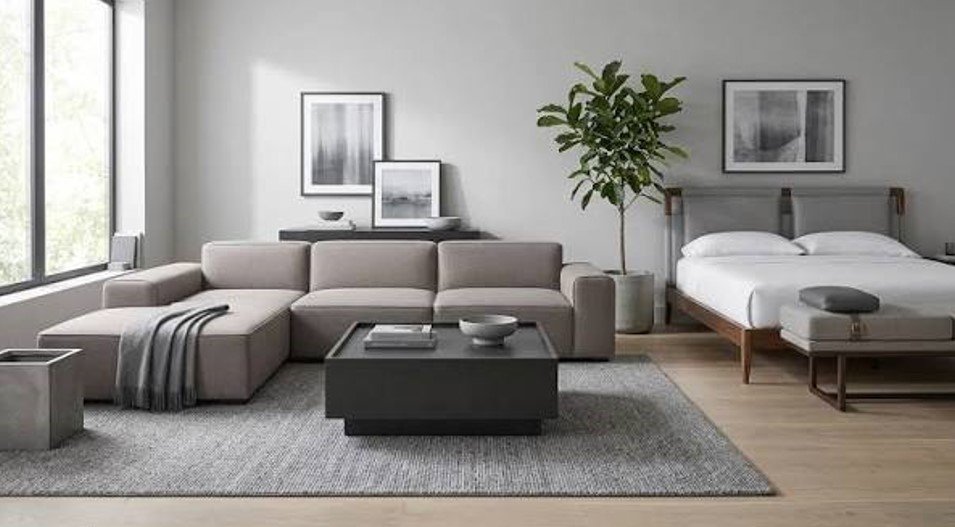
How to Select Furniture That Suits Your Home and Your Lifestyle

The right furniture does more than occupy an empty spot in the room. It accommodates your lifestyle when it comes to relaxation, eating, working, entertaining guests, storing things, and moving around your home. So when replacing an old couch or furnishing your home for the first time, it helps to shop for the best couch at Poly & Bark with an eye toward how that new piece will actually function in the everyday life of its users.
A stylish chair may turn out to be a bad idea if it interferes with the flow of movement, is hard to clean, or feels uncomfortable after sitting on it for a short period of time. In general, one should begin with practical needs and later choose colors, textures, and types of furniture design to express their personal style.
Think Practically
When choosing furniture, think, above all, about your lifestyle. For example, a family room requires furniture that is durable and provides a space for drinks and games. A reading nook requires a supportive chair, proper lighting, and a tabletop for the book. A dining area may also mean a space for working on a laptop and entertaining guests. Furniture needs to solve real-life problems first and follow the trends later.
Measure Everything Before Buying
Start with measuring walls, ceiling height, windows, doors, outlets, and the necessary spacing for walking. Then proceed with measuring the path and everything that has to do with logistics. Prepare a simple floor plan and mark the dimensions of the pieces in painter’s tape or flat cardboard. This way you will see any problems with scale before the actual delivery.
Plan for Motion
There should be enough space for people to come in and out, sit down, stand up, and have access to the storage without doing too much work around obstacles. Do not forget about the space for the chairs at the dining table, the drawers in the chest of drawers, the doors of the cabinets, the recliners and the sofa beds. It is true that the floor space is not wasted, and it will help make the room look spacious and enhance efficiency in everyday tasks. The helpful advice on the arrangement of the furniture will help you learn about the proportions and positions in the room.
Match Your Furniture to the Routine
The names of the rooms do not tell the whole story. For instance the sofa in the living room can be used for conversation, watching films, sleeping and hosting overnight guests. List the major activities in the room, the people who use it, what should be stored nearby, as well as what kind of actions can be performed at the table.
There are some flexible furniture, for instance, nesting tables that can be used when needed, storage benches for keeping clutter out of sight, or extendable dining tables that do not take up much space but can fit everyone.
Pick Comfort First
Comfort is not all about being soft. There are many other things affecting the feeling while sitting in a certain chair or on a sofa. This includes the height and depth of the seat, the firmness of the cushion, the angle of the back, the height of the armrest and the footrest that has an impact on overall feeling. If possible, desk and chair selection must be grounded on the ability to change positions and also the fit between the employee and the environment through ergonomics.
Choosing the Right Materials
Choose materials not just on the basis of the showroom appearance but based on the demands of your home such as children and pets. Different materials such as wood, glass, leather, metal, and plastics need different levels of care. Analyze your needs concerning the presence of the sun, kids, pets, and your willingness to maintain the appearance of the material.
Using Smart Design Solutions
Correct proportions, not just minimum pieces are important in small rooms. You can install a storage ottoman, a bench with storage space, a folding table, or a wall-mounted shelf to save space and use it effectively. A wall-mounted shelf, a round table, a thin arm sofa, and a table with sheer legs will help to avoid feeling crowded.
Striking the Right Balance Between Style and Durability
Do not use big pieces of furniture as a base; rather, make them a support and build on the base out of durable materials. Use cheerful colors, interesting shapes, and modern patterns. A coordinated room doesn’t have to have matching items to feel united. Using similar finishes, color schemes, or patterns helps build cohesiveness between many different elements.
Develop a Realistic Budget
Account for delivery, assembly, rugs, lighting, floor coverings, cleaning products, and possible repairs. It is sometimes worth investing in durable pieces that will be used every day such as mattresses, couches, dining chairs, and office chairs. Double-check what the return policy, the process of returning goods, restocking fees, warranty, and spare parts are before purchasing. Buying one room at a time will help avoid costly mistakes.
Use the Final Furniture Checklist
- Fit – does it fit the space and the route of delivery?
- Function – does it provide some important function?
- Comfort – will it be used by its main users?
- Flow – is it easy to move around?
- Care – is it easy to maintain?
- Durability – will it withstand a fair amount of wear?
- Value – does it worth its price?
Common Questions
How much space should be left around furniture?
There needs to be a certain amount of space depending on the kind of room, the type of furniture, and the volume of traffic. Measure the space needed for the traffic surrounding furniture, especially beds, chairs, cabinets, and recliners.
Does all furniture have to match?
No. Matching furniture collections looks neat but combining slightly different elements often creates a more interesting and unique look. Similar pieces should include wood or metal finishes, colors, and designs.
What is best for a small room?
It is recommended to choose compact seating, closed storage, nesting tables, raised furniture, and multifunctional pieces. The proper type would depend on the interior design.
Is comfort more important than style?
Comfort should prevail when it comes to long-term furniture. It is easier to change elements of the design than it is to replace an uncomfortable couch, bed, or office chair.
How can furniture help make a room less cluttered?
Using correctly-sized furniture, providing walkways, choosing close storage for visual noise, and not blocking windows will create a relaxed atmosphere.
Conclusion
The appropriate furniture helps in making life easier. Start by measuring, then move on to planning and testing comfort levels before picking a material that fits into your wife’s household. Sticking to the right furniture ensures happiness and satisfaction in life and does not have to follow any trend.
Rameen Zara is the founder of Clarity Nooks, bringing over five years of experience in home décor and interior styling. She shares simple yet practical design ideas that suit real homes and everyday living. Her approach focuses on cozy aesthetics, soft color palettes, and natural textures that create warm, inviting spaces.