Modern DIY Terrace Design Ideas for Comfortable Outdoor Living

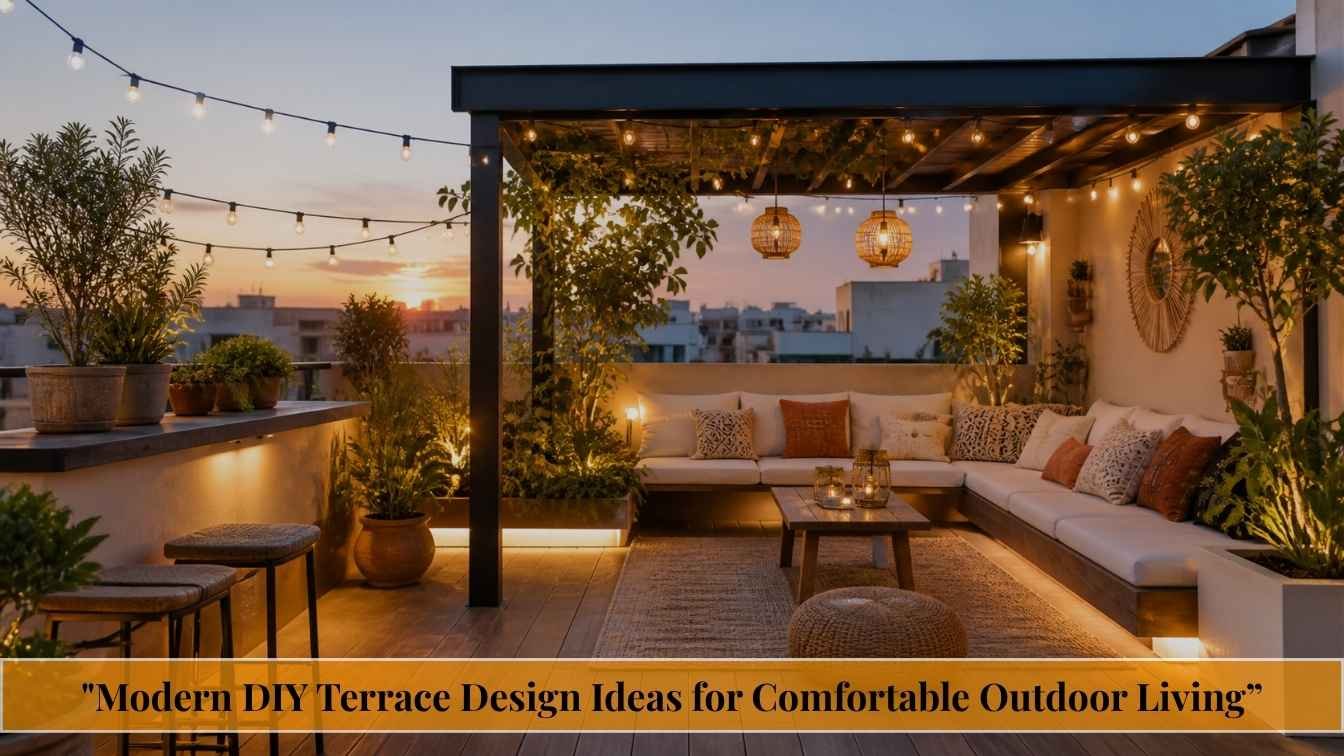
Your terrace is just sitting there underused, uninspiring, maybe even embarrassing. But here’s the truth: some of the most stunning outdoor spaces in the world were built by homeowners with limited budgets, basic tools, and a little imagination. This guide gives you 9 practical, beautiful DIY terrace design ideas that actually work no contractor required.
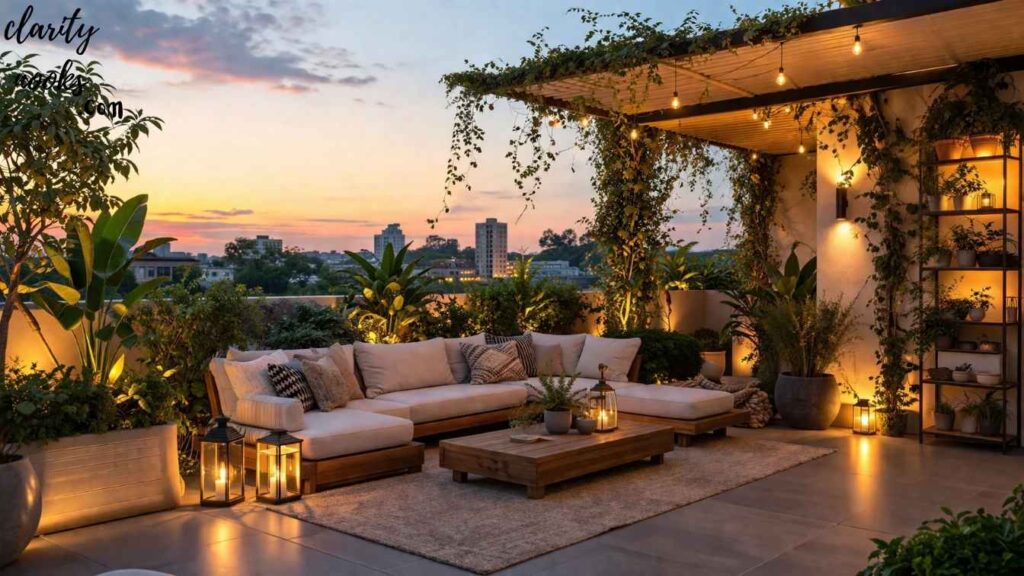
Most people walk past their terrace every single day without realizing the potential right outside their door. A terrace whether it’s a rooftop, a balcony extension, or a ground-level patio is essentially an open canvas. And yet, the most common outcome is a couple of plastic chairs and a forgotten potted plant.
The good news is transforming a dull terrace into a functional, stylish outdoor living area doesn’t require a landscape architect or a five-figure budget. It requires the right ideas, a clear plan, and the willingness to do a bit of work. Let’s get into it.
What Makes a Good DIY Terrace Design?
A great DIY terrace design balances three things: function (how you actually use the space), comfort (furniture, shade, weather protection), and aesthetics (materials, plants, lighting). The best designs feel intentional like every element was placed with purpose.
Outdoor Rugs and Furniture Placement
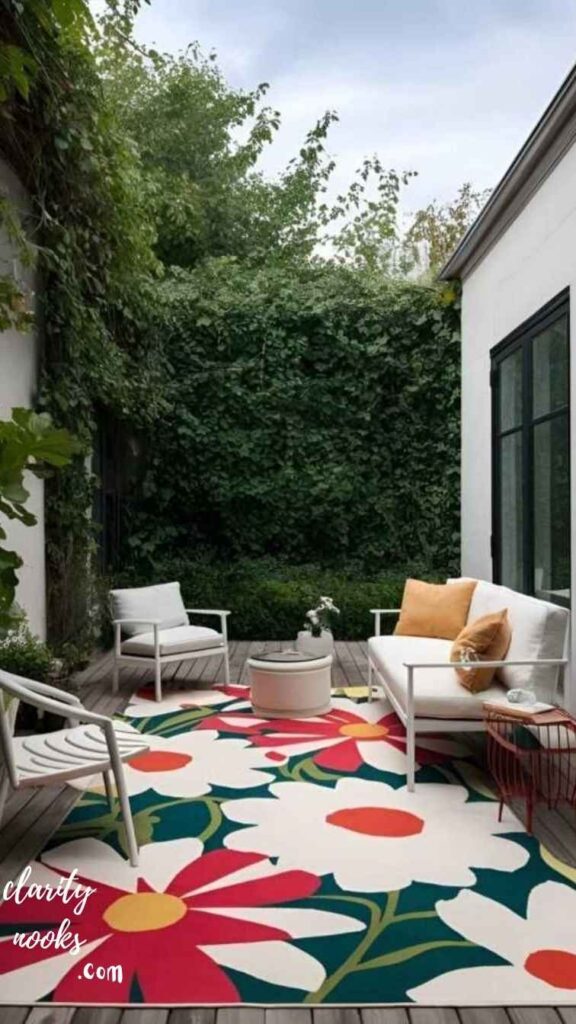
One of the biggest mistakes people make with terrace design is treating the entire space as one undifferentiated area. A terrace even a small one can serve multiple purposes: dining, lounging, reading, even container gardening. The secret is zoning. And you don’t need walls to create zones.
Outdoor rugs are one of the most affordable and effective tools for defining space. A 6×9 ft rug under a bistro table instantly creates a “dining zone,” even on an open terrace. Pair it with a different texture bamboo matting or composite decking tiles in an adjacent area to signal a relaxation corner. This visual separation makes even a compact terrace feel purposeful and designed.
Real-Life Scenario
Priya, a teacher in Lahore with a 120 sq ft rooftop terrace, divided her space using two outdoor rugs sourced locally and rearranged her existing patio chairs into an L-shape. She added a small folding table for meals. The result? A space that now functions as a dining area, a reading nook, and a herb garden all within the same square footage.
For furniture, resist the urge to push everything against the walls. Float your seating arrangement slightly inward the way interior designers do indoors and you’ll immediately create a more intimate, intentional feel. Even a modest budget allows for this shift; it costs nothing but rethinking.
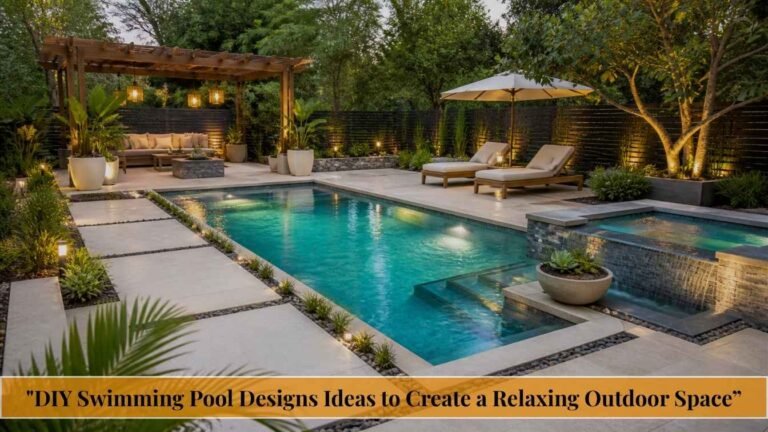
Must Read: DIY Swimming Pool Designs Ideas to Create a Relaxing Outdoor Space
DIY Vertical Garden Wall
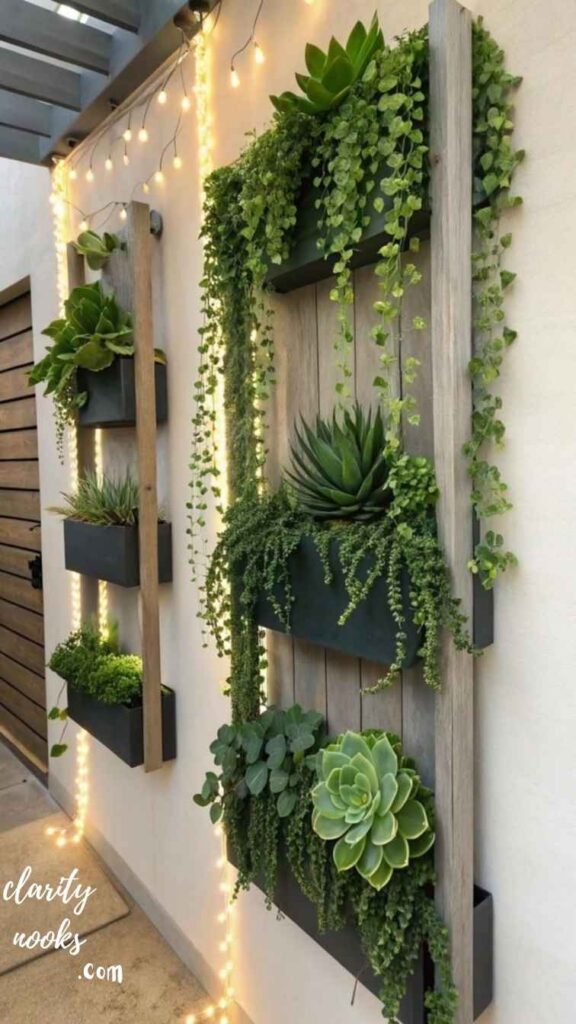
Vertical gardens are perhaps the single most transformative DIY element you can add to a terrace. They solve two problems at once: they add lush greenery without eating up floor space, and they create a natural privacy screen that feels organic rather than clinical. For a terrace in a dense urban neighborhood, this is invaluable.
The simplest version involves installing a wooden pallet or a modular pocket-planter system against a wall or railing. Fill it with a mix of trailing plants (like pothos or string of pearls for aesthetic drape) and edible herbs (basil, mint, cilantro) for dual functionality. The total cost of a basic vertical garden setup runs between PKR 2,000–8,000 depending on the plants and structure you choose.
Expert Insight
Choose drought-tolerant plants for the top rows of your vertical garden they receive more sun and dry out faster. Place moisture-loving varieties lower down, closer to the water source when you hand-water. This small adjustment dramatically reduces plant loss for beginners.
If you’re on a rooftop, weight matters. Opt for lightweight fabric grow pockets over heavy clay pots. A felt pocket planter system weighs a fraction of traditional terracotta and performs just as well for herbs and small flowering plants. This is also far more wind-resistant, which matters enormously on exposed rooftop terraces.
Read More: DIY Sun Room Ideas to Add Style, Comfort, and Natural Light
Ambient String Lights for Evening Atmosphere
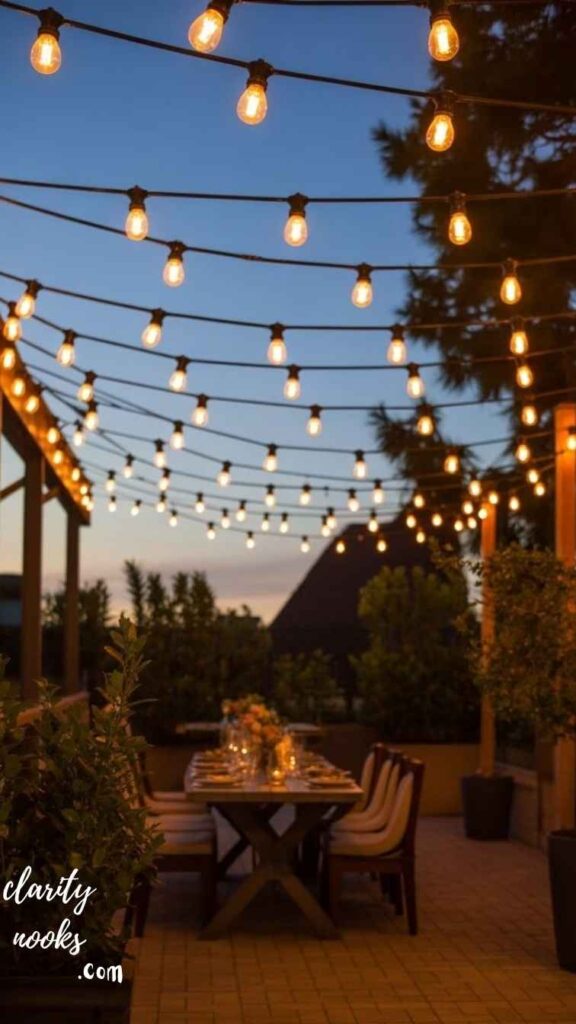
If there’s one DIY addition that delivers the highest return on investment both financially and aesthetically it’s string lights. They are inexpensive, easy to install, require no electrician, and completely change the mood of a terrace after dark. Yet most people either skip them or install them poorly.
The key to making string lights look intentional rather than haphazard is the installation method. Instead of draping them loosely, run them between anchor points: two wooden posts, a pergola frame, or hook brackets screwed into the wall. Aim for a gentle catenary curve (that classic café-style drape). Solar-powered LED string lights have improved dramatically in 2026–27, with options that provide warm 2700K light lasting 8–12 hours on a full charge.
Layering light sources creates depth. Combine overhead string lights with a few solar stake lights along the perimeter and a couple of LED lanterns at ground level. This three-layer approach overhead, mid-height, and ground level mimics how professional outdoor lighting designers work, and you can achieve it for under PKR 5,000 total.
Also Read: DIY Entryway Decor Ideas That Make a Stunning First Impression
Composite Decking Tiles Over Existing Surfaces
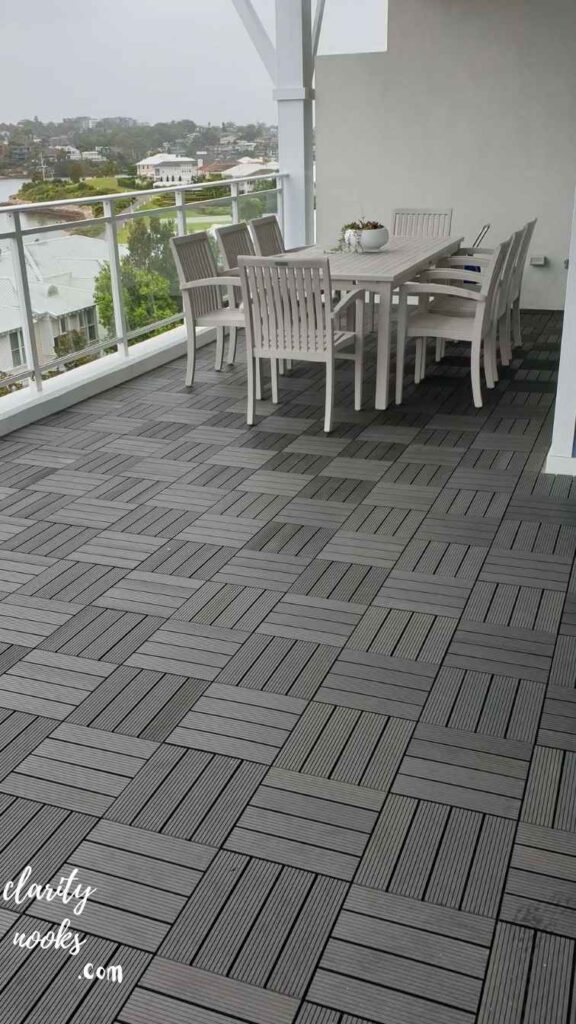
If your terrace floor is bare concrete, cracked tiles, or just plain unattractive, the solution doesn’t have to involve a full renovation. Interlocking composite decking tiles often called deck tiles sit directly on top of your existing surface and snap together without any tools, adhesive, or professional installation. You can cover a 100 sq ft terrace in an afternoon.
In 2026, composite and wood-look deck tiles are widely available in Pakistan through home improvement retailers and online platforms. They’re designed for outdoor use, UV-resistant, and can handle heavy rainfall. Teak-finish and grey-weathered options are particularly popular because they complement most furniture styles and hide dirt well between cleanings.
Featured Snippet Answer
How do you cover an ugly concrete terrace floor?
Interlocking deck tiles are the easiest DIY solution. They sit on top of existing surfaces, require no tools or adhesive, and can be removed or reconfigured. Wood-composite options offer the look of natural wood with far greater weather resistance.
DIY Bamboo or Fabric Screens
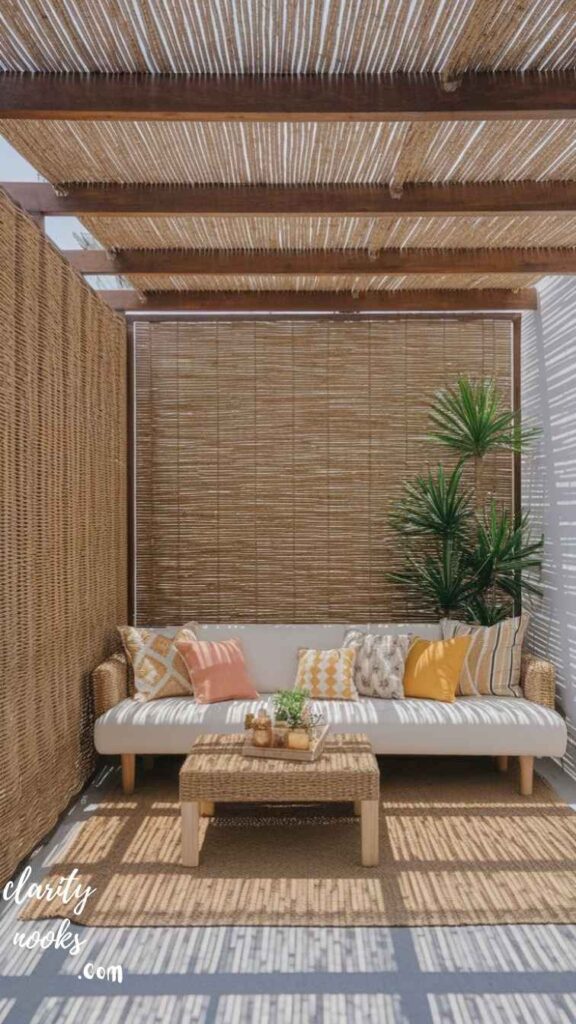
Privacy is one of the most underrated aspects of terrace comfort. An exposed terrace visible to neighbors, overlooked by upper floors never quite feels like a personal retreat. Yet most people accept the lack of privacy as a fixed condition. It isn’t. Building your own privacy screen is one of the most practical terrace design upgrades you can make.
Bamboo roll screens are the classic solution: affordable, natural-looking, and easy to install along railings or between posts. However, they degrade over 2–3 seasons in harsh sun. A more durable alternative is outdoor fabric stretched over a simple wooden frame essentially a DIY fabric panel. Use shade cloth or outdoor canvas, and you create both privacy and sun protection in one element.
Mini Case Study
A family in Islamabad with a shared rooftop terrace built three 6×4 ft wooden frames from timber offcuts, stretched shade cloth across them (sewn at the corners with zip ties), and arranged them in an L-shape. The cost was under PKR 3,500. The screened area now functions as their private evening lounge, invisible from the neighboring rooftop.
Don’t Skip: DIY Front Porch Ideas to Create a Cozy Outdoor Space Fast
DIY Outdoor Seating Bench with Storage
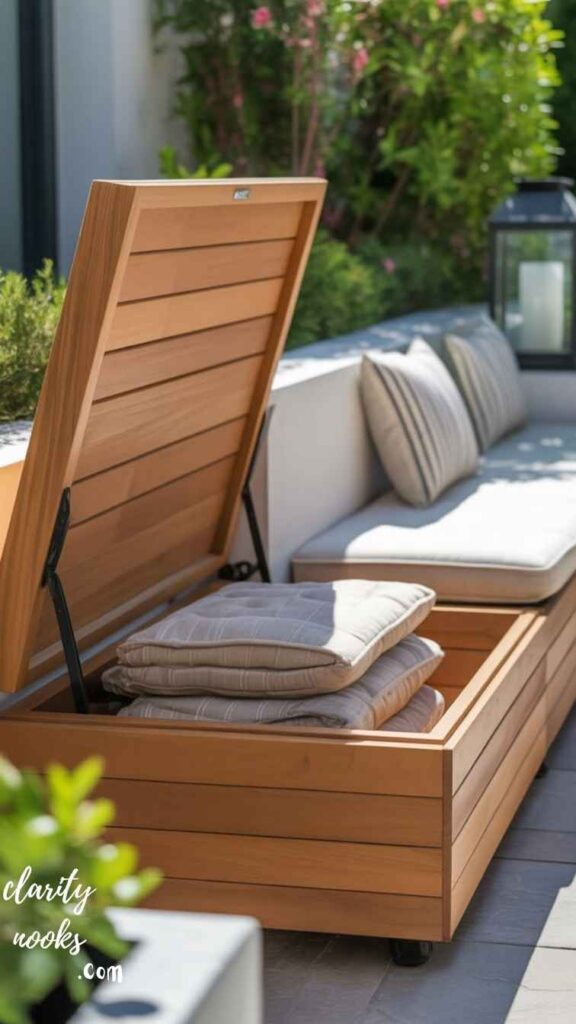
Outdoor storage is one of the most practical problems on any terrace cushions, tools, garden supplies, and toys accumulate quickly. A built-in storage bench solves two problems at once: it provides seating and hides clutter in a way that looks deliberate rather than desperate. And building one is far simpler than most people think.
A basic outdoor storage bench can be assembled from exterior-grade plywood and 2×4 timber in a weekend. The structure is essentially a rectangular box with a hinged lid. Line the interior with plastic sheeting to protect stored items from moisture. Finish the exterior with exterior wood paint or a weatherproof stain in a color that complements your terrace palette.
For those who prefer not to build from scratch, upcycling an old wooden crate, pallet bench, or even a vintage storage trunk works beautifully. Weatherproof it with marine varnish, add an outdoor cushion on top, and you have a piece that looks curated and performs a functional double duty.
DIY Pergola or Shade Sail Structure
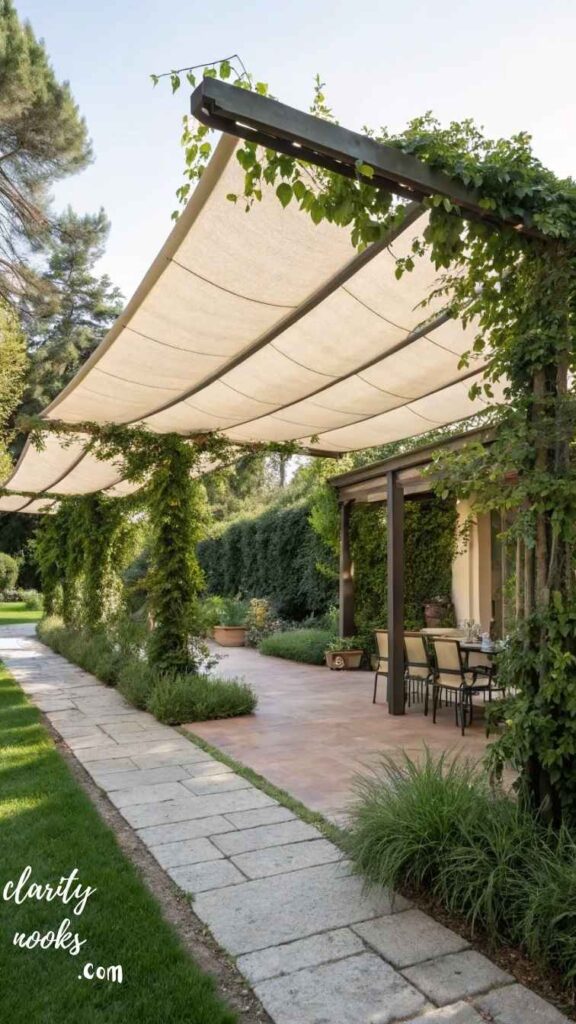
Sun exposure is the number one reason terraces go unused during daylight hours in South Asia. A shaded terrace, however, becomes a genuinely livable outdoor room usable from morning through late afternoon. A pergola or shade sail addresses this directly, and both can be built or installed as DIY projects with moderate effort.
A shade sail is the faster option: a triangular or rectangular UV-resistant fabric panel tensioned between anchor points. Installation involves drilling wall brackets or installing freestanding poles. A high-quality shade sail blocks 90–95% of UV radiation and can be removed and stored seasonally. They’re available in a wide range of colours and sizes to suit virtually any terrace layout.
A DIY pergola offers more permanence and design impact. Even a simple four-post timber frame with a slatted or polycarbonate roof transforms the character of a terrace entirely. Add climbing plants like bougainvillea or jasmine over time, and the structure evolves into a living architectural feature. Budget permitting, this is the single highest-impact structural addition you can make.
Container Garden with Layered Heights
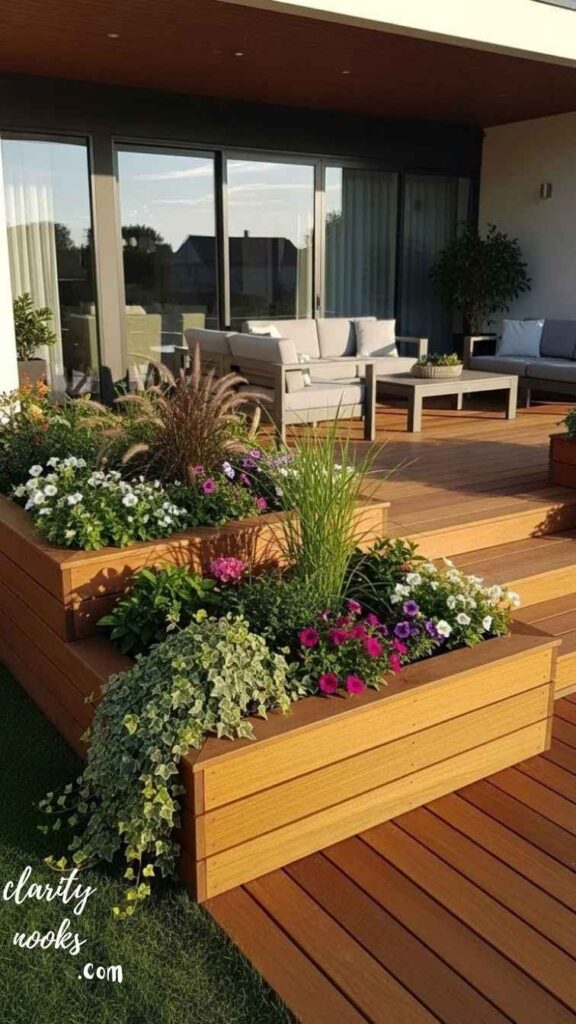
Container gardening is the backbone of terrace horticulture, but most people arrange their pots in a flat, monotonous row along the railing. Height variation is what separates an amateur setup from something that looks professionally landscaped. The trick is working with three distinct levels: tall statement plants, mid-height flowering containers, and low ground-cover or trailing plants at the edge.
For the tallest tier, consider ornamental grasses, bamboo in contained pots, or a standard-trained olive tree all of which add structure and movement. Mid-height flowering plants like bougainvillea, geraniums, or petunias provide seasonal color. At the lowest level, trailing sweet potato vine or lobularia creates a cascading effect that softens hard edges beautifully.
Pro Tip
Group containers in odd numbers (3, 5, 7) and vary the pot materials terracotta, glazed ceramic, and galvanized metal together look intentionally eclectic. Odd groupings feel more natural to the eye than symmetrical pairs or even-numbered arrangements.
Cozy DIY Fire Pit or Tabletop Fire Bowl Area
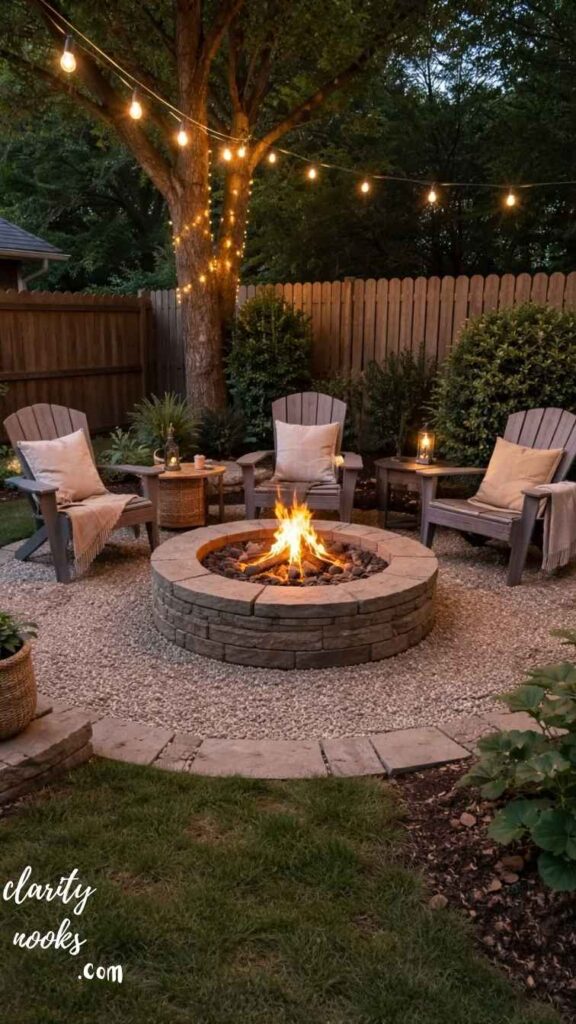
Few things signal “this space is meant for people to gather” as powerfully as a fire element. On a terrace, a portable fire pit or tabletop fire bowl creates an immediate focal point and social magnet and in cooler evening weather, it extends the usable hours of your outdoor space well into autumn and winter months.
For rooftop terraces where an open flame is a safety concern, bio-ethanol tabletop fire bowls are the ideal solution. They burn cleanly, produce no smoke, require no gas line or chimney, and are visually stunning. Arrange three or five mismatched fire bowls on a low central table surrounded by floor cushions and poufs for an evening setup that feels like a resort lounge.
If you have a ground-level terrace with more space, a DIY fire pit built from stacked concrete blocks or a repurposed cast iron vessel set on gravel is a weekend project. Surround it with a curved seating arrangement even mismatched garden chairs unified by similar cushion covers and the fire pit becomes the centrepiece that anchors the entire outdoor room.
Conclusion
Transforming your terrace doesn’t require a large budget or a professional designer it requires the right DIY terrace design ideas applied thoughtfully and in the right order. Start with your floor and zones, layer in privacy and shade, add greenery through vertical gardens and containers, then finish with lighting and atmosphere. Each of these nine ideas works independently, but the magic happens when you combine them into a cohesive outdoor space that reflects how you actually live.
Your terrace is waiting. Pick one idea from this guide and start this weekend that single first step usually opens the door to everything that follows. You don’t need permission, a large budget, or perfect conditions. You just need to begin.
Trend Analysis
Terrace Design in 2026 & Beyond Where the outdoor living space is heading and what smart homeowners are doing now
The most significant shift in terrace design for 2026 is the move from “outdoor area” to “outdoor room” a fully functional living space with the same intentionality as an interior room. Search data from home improvement platforms shows a 68% increase in queries related to outdoor living spaces over the past two years, reflecting a lasting behavioral shift accelerated by the work-from-home era.
| Trend | 2026 Status | 2027–28 Outlook |
|---|---|---|
| Biophilic Design | Peak adoption | Integration with smart plant care systems |
| Sustainable Materials | Growing fast | Recycled composite and reclaimed wood dominate |
| Outdoor Kitchens | Rising strongly | Modular plug-and-play outdoor kitchen kits |
| Smart Outdoor Lighting | Early majority | Voice + sensor automation standard |
| Vertical Gardening | Mainstream | Hydroponic vertical walls for food production |
Color-wise, terracotta tones, warm greiges, and deep botanical greens are replacing the cool greys that dominated outdoor spaces in the early 2020s. This warmer palette aligns with a broader wellness-driven aesthetic that emphasizes natural materials and organic forms over industrial minimalism.
Practical Tips & Expert Insights
Actionable strategies based on real-world terrace transformations
- Start with the floor, end with accessories. The single most impactful change on any terrace is improving the floor surface. It anchors every other decision. Tackle it first before buying furniture or décor.
- Buy outdoor furniture cushions before the furniture. Cushion fabrics vary wildly in quality. Find weather-resistant cushions you love, then choose furniture to match not the other way around.
- Use mirrored surfaces strategically. An outdoor mirror on a wall dramatically expands the perceived size of a small terrace. Use stainless steel or sealed mirror panels designed for exterior use.
- Think in “outdoor rooms,” not “setups.” A room has a ceiling (real or implied), walls (real or implied via screens and plants), and a floor. Design your terrace using this framework.
- Pressure-test your layout with chalk first. Before buying anything large, outline furniture footprints on the floor with chalk and live with the arrangement for 48 hours. You’ll discover problems before they cost money.
- Invest in one weather-durable focal piece. One high-quality, weather-resistant statement item a woven hanging chair, a solid teak table, a striking fire bowl elevates the entire space more than ten budget accessories.
Long-Term Strategy & Sustainability
Building a terrace that lasts, grows, and stays relevant
The most sustainable terrace design decisions are also the most financially intelligent ones. Cheap plastic furniture costs less upfront but requires replacement every 2–3 years; powder-coated aluminium or solid teak can last 15–20 years with minimal maintenance. Calculated over a decade, the premium materials are always the better investment.
Think modularity from the beginning. Modular outdoor furniture sectional sofas, stackable chairs, convertible tables gives you the ability to reconfigure as your needs change. A terrace you design for quiet evening relaxation today might need to accommodate larger gatherings in two years. Modular design makes that transition seamless rather than expensive.
For plant choices, prioritize perennials over annuals wherever possible. Perennial plants established shrubs, dwarf trees, ornamental grasses build structural presence year over year. They create the feeling of an established garden rather than a seasonal display, and they require significantly less ongoing investment and effort once established.
Future Predictions & Innovations
What’s coming to outdoor living spaces in the next three years
AI-powered garden planning tools are already changing how homeowners design outdoor spaces. By 2027, it will be routine to photograph your terrace, input your climate and sun exposure data, and receive a fully rendered 3D design with a shopping list and plant care schedule all generated in seconds. This democratizes what previously required an expensive landscape consultation.
Smart outdoor technology is moving toward full integration. Expect sensor-triggered shade sails that automatically deploy when UV reaches a set level, self-watering vertical garden systems that monitor soil moisture via smartphone, and solar-integrated terrace furniture with built-in USB charging and LED lighting. The “smart outdoor room” concept will be commercially mainstream by 2028.
On the materials front, watch for expanded use of mycelium composites (grown from mushroom roots), recycled ocean plastic lumber, and bio-based outdoor coatings that are carbon-negative. Sustainable terrace design won’t just be an ethical choice it will increasingly be the most cost-effective one as traditional materials face supply chain pressures.
Common Mistakes & Hidden Gaps
What beginners and intermediate designers get wrong
🪑Buying furniture before measuring: The number one error. A sofa that looks perfectly sized in a store or online listing will overwhelm a compact terrace. Always measure your usable space and mark furniture outlines with tape before purchasing anything.
🌿Choosing plants for appearance over climate suitability: A plant that thrives in a cool Murree summer will struggle on a hot Karachi rooftop. Always research climate tolerance sun hours, humidity requirements, and heat tolerance before buying. Beautiful plants that die within a season are expensive failures.
💡Skipping terrace lighting entirely: Intermediate designers often spend their budget entirely on daytime aesthetics and forget that most terrace use actually happens in the evening. Without lighting, an otherwise beautiful space is unusable after dark.
🌧️Ignoring drainage and weather proofing: Deck tiles placed over a poorly draining surface create standing water and mold beneath them. Always check drainage before installing any flooring, and ensure furniture and cushions have adequate storage or covers for rain season.
🎨Using too many colors or materials: The most common aesthetic mistake, even from experienced DIYers, is material and color overload. Limit your palette to 2–3 colors max, and restrict primary materials to 2 types. Cohesion creates the illusion of intentional design, even on a modest budget.
📐Neglecting vertical space on small terraces: Small terrace owners over-focus on floor-level arrangements and leave walls completely bare. Vertical surfaces wall-mounted planters, hanging lights, trellises, art are prime real estate on a compact terrace and shouldn’t be wasted.
Rameen Zara is the founder of Clarity Nooks, bringing over five years of experience in home décor and interior styling. She shares simple yet practical design ideas that suit real homes and everyday living. Her approach focuses on cozy aesthetics, soft color palettes, and natural textures that create warm, inviting spaces.