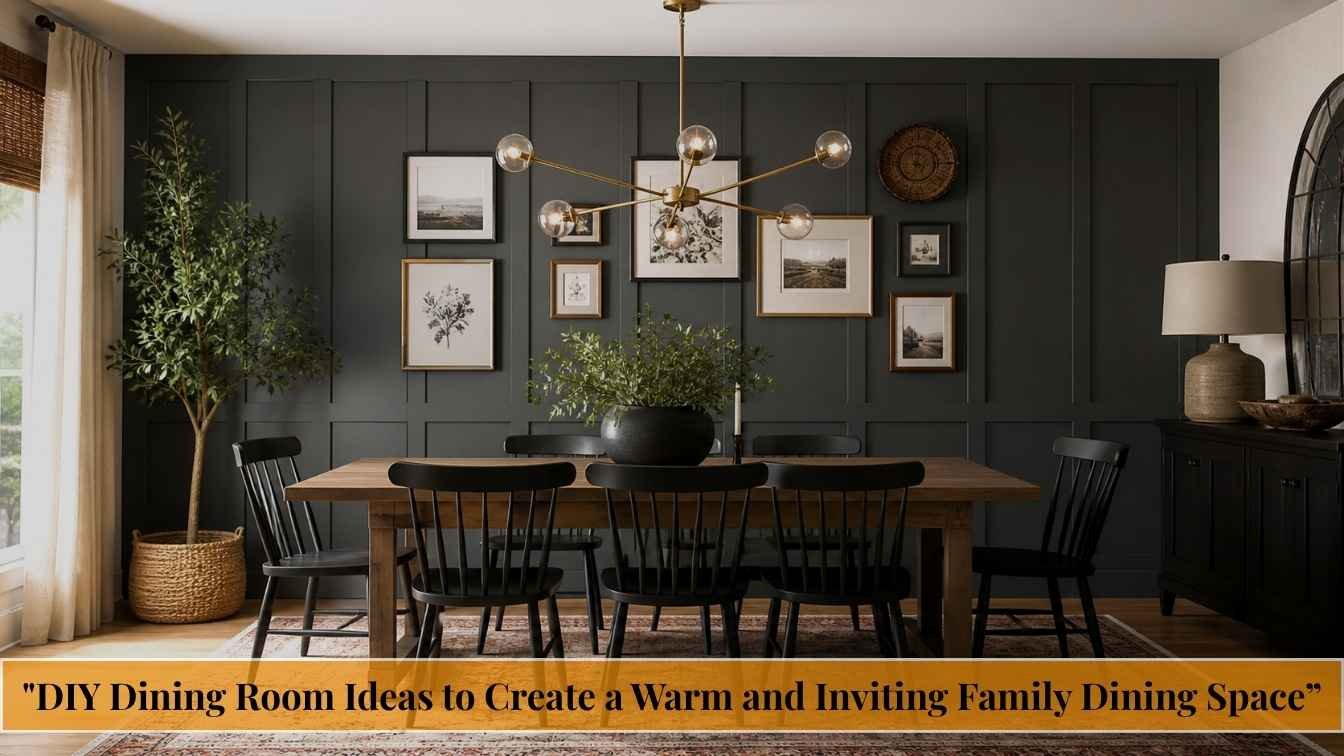
DIY Dining Room Ideas to Create a Warm and Inviting Family Dining Space

Your dining room does more than hold a table and chairs. It’s where birthdays are celebrated, difficult conversations happen, and Sunday mornings stretch lazily into the afternoon. Yet for most homeowners, it’s also the most neglected room in the house beige walls, a builder-grade fixture, and furniture that says ‘I gave up.’
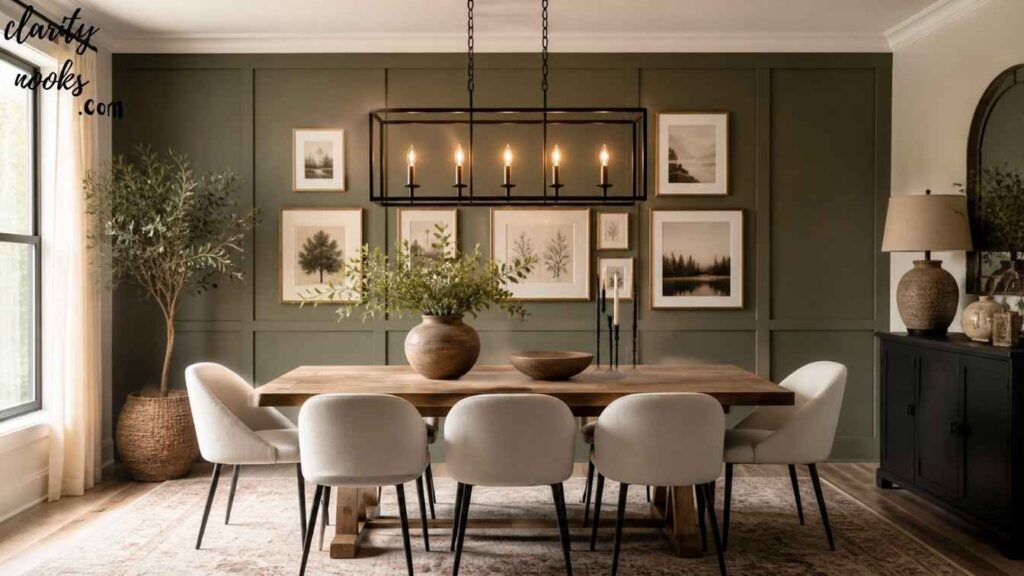
Here’s the good news: you don’t need a designer budget or a contractor to change that. With the right DIY dining room ideas, a few weekends, and a clear plan, you can create a space that feels genuinely intentional. This guide covers seven deeply practical, experience-driven ideas ones that go far beyond ‘add a rug and some art.
Build a Statement Accent Wall with Board and Batten
Why This Works Better Than Paint Alone
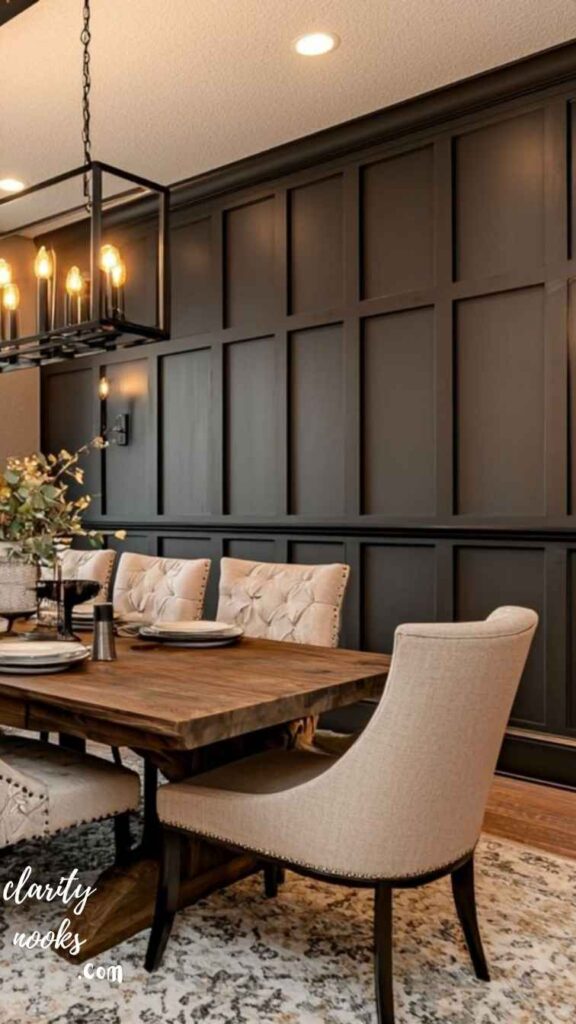
A flat coat of paint can update a room, but board and batten gives your dining room architectural weight the kind that makes guests ask ‘was this house always like this?’ The technique involves attaching vertical and horizontal strips of wood (usually MDF or pine) to your wall in a grid pattern, then painting everything the same color for a cohesive, sculpted effect.
The material cost is surprisingly low. A standard 10×8 ft dining wall costs between $80–$140 in materials. The key is spacing your battens consistently most designers recommend 12 to 16 inches apart. Use a level obsessively. Even a 1-degree tilt becomes obvious at eye level over dinner.
Real-Life Scenario:
Sarah from Austin, Texas, completed a board and batten wall in her rental dining room over a single weekend using removable construction adhesive instead of nails. Her landlord approved it. Total cost: $97. The room now reads as a proper dining space rather than a corridor with a table in it.
- Use MDF for smooth paint finish; pine for a more textural, rustic look
- Paint battens and wall the same color two tones look dated quickly
- Satin or eggshell finish holds up better to humidity near kitchens
Must Read: DIY Party Decor Ideas That Add Color and Style to Any Celebration
Reupholster Your Dining Chairs
The Single Biggest Visual Return on Investment
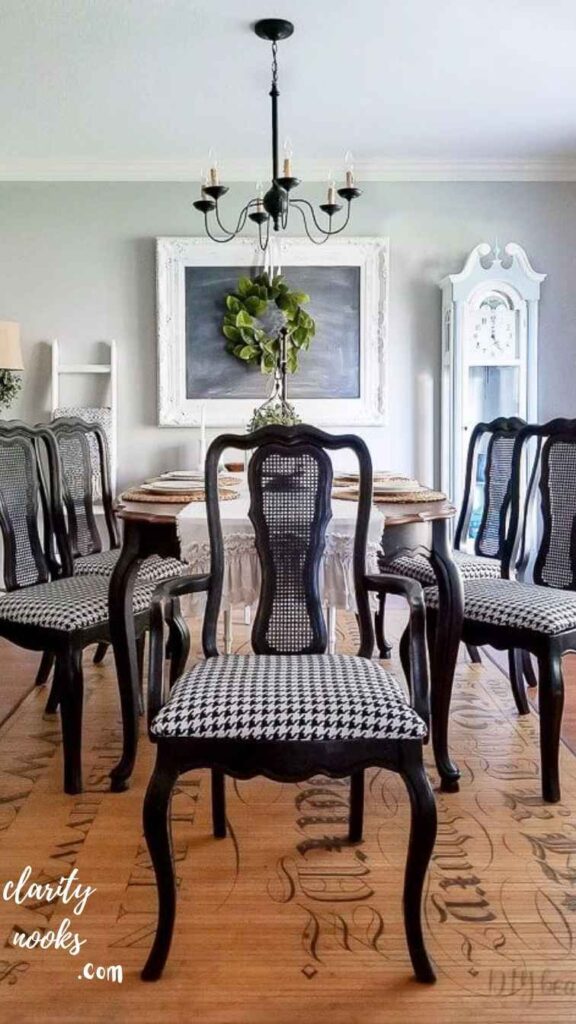
Worn, stained, or dated chair fabric is one of the fastest ways a dining room ages. But replacing chairs entirely is expensive a decent set of six chairs can run $600 to over $2,000. Reupholstering the seat pads, however, costs about $15–$25 per chair in fabric and supplies, and takes roughly 20 minutes per chair once you’ve done the first one.
Most dining chair seats are attached with four screws underneath. You remove the seat, pull off old fabric with pliers, cut your new fabric 4 inches larger than the seat on all sides, wrap and staple with a heavy-duty staple gun, then reattach. Performance fabrics (look for ‘Crypton’ or ‘Sunbrella’ labels) resist stains and are worth the extra few dollars per yard if you have kids or regularly host.
Mini Case Study:
A family in Portland reupholstered eight vintage wood chairs they found at an estate sale for $12 each. With $60 in fabric from a local remnant shop, they built a dining set that would retail for $1,400+. The chairs are now the most commented-on element in their home.
Read More: DIY Gaming Room Ideas for Small Spaces: Maximize Comfort & Style in Your Setup
Install a DIY Statement Lighting Fixture
Lighting Is the Room’s Emotional Volume Control
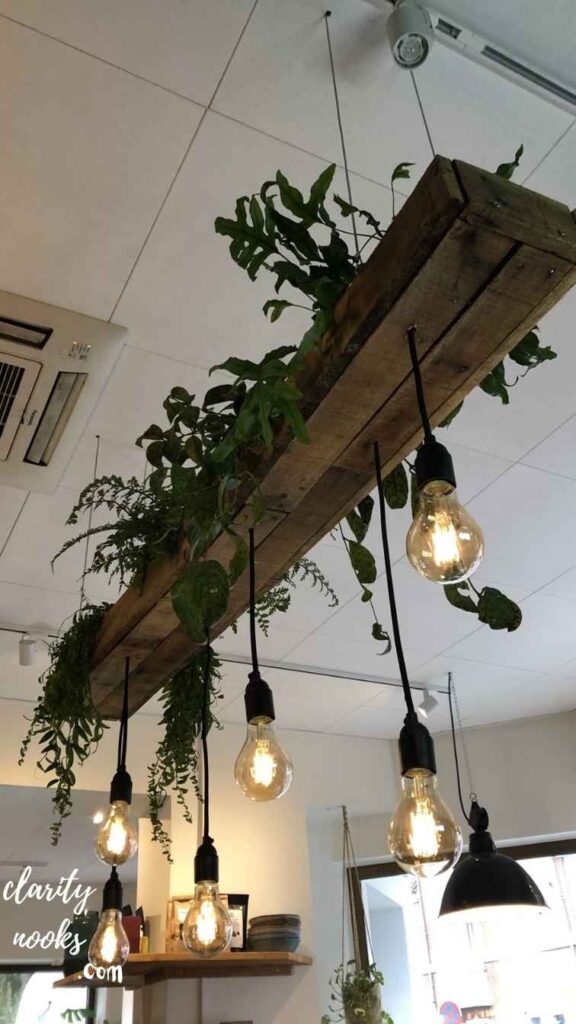
Nothing changes the feeling of a dining room faster than the light over the table. A builder-grade flush mount or a cheap chandelier communicates ‘unfinished.’ A well-chosen, well-placed pendant or chandelier communicates ‘this room was thought about.’
The DIY opportunity here is real. Linen drum shades, rattan pendants, and even clustered Edison bulb fixtures are all available as swappable kits that connect to existing ceiling junction boxes no electrician required in most cases. The key specs to nail: hang your fixture 30 to 36 inches above the table surface, and size the diameter to be roughly half to two-thirds the width of your table.
For a fully custom approach, consider a DIY driftwood chandelier or a macrame pendant. Neither requires electrical work you use a simple plug-in cord kit (available for $20–$40) and route the cord to an outlet or use a cord cover painted to match the ceiling.
- Warm white bulbs (2700K) create the most flattering, intimate dining atmosphere
- Dimmer switches cost $25 and transform how a space feels at different times of day
- Use a swag hook if your junction box isn’t centered over your table
Don’t Skip: Modern DIY Terrace Design Ideas for Comfortable Outdoor Living
Create a Gallery Wall That Earns Its Place
Intentional Curation vs. Random Accumulation
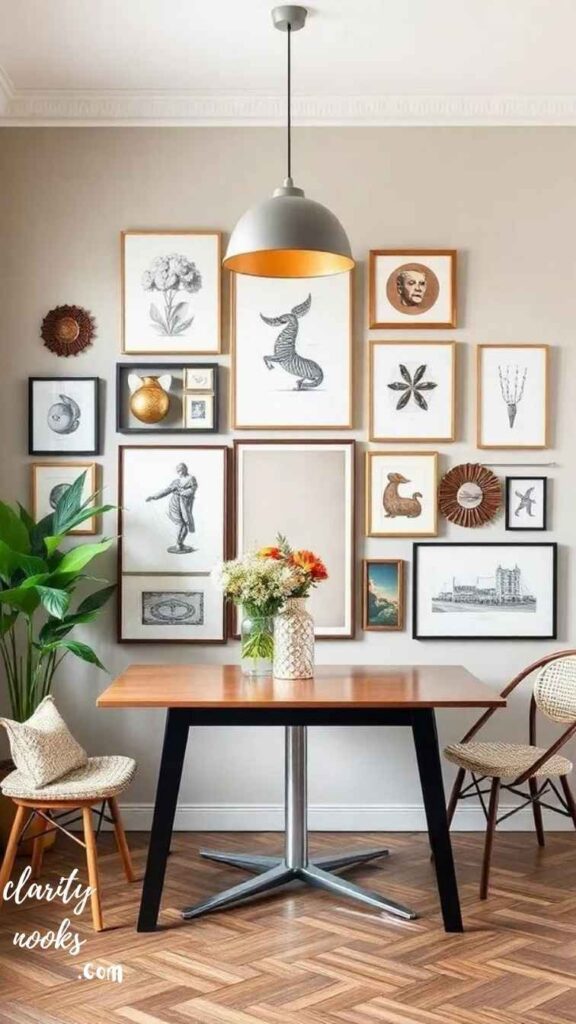
The gallery wall has been done to death but done badly. Most DIY gallery walls suffer from two problems: inconsistent framing (mixing black, gold, and wood tones) and poor layout planning (hung piece by piece with no overall structure). The result looks accidental rather than curated.
A gallery wall that actually elevates your dining room requires a system. Choose one or two frame finishes only. Lay your arrangement on the floor first and photograph it. Keep at least 2.5 inches of space between frames. Hang the center of the arrangement at eye level (typically 57–60 inches from the floor). The subject matter matters too dining rooms absorb botanical prints, food-themed illustrations, vintage maps, and abstract art particularly well.
Featured Snippet Opportunity:
What’s the easiest way to plan a gallery wall?
Trace each frame onto kraft paper, cut the shapes out, and tape them to the wall with painter’s tape. Rearrange freely before committing a single nail.
For a more original approach, mix in non-frame elements: ceramic plates, sculptural wall art, or woven textiles. These additions break the flatness and give the arrangement dimension.
Don’t Miss: DIY Swimming Pool Designs Ideas to Create a Relaxing Outdoor Space
Build or Upgrade Your Dining Table
The Centerpiece That Changes Everything
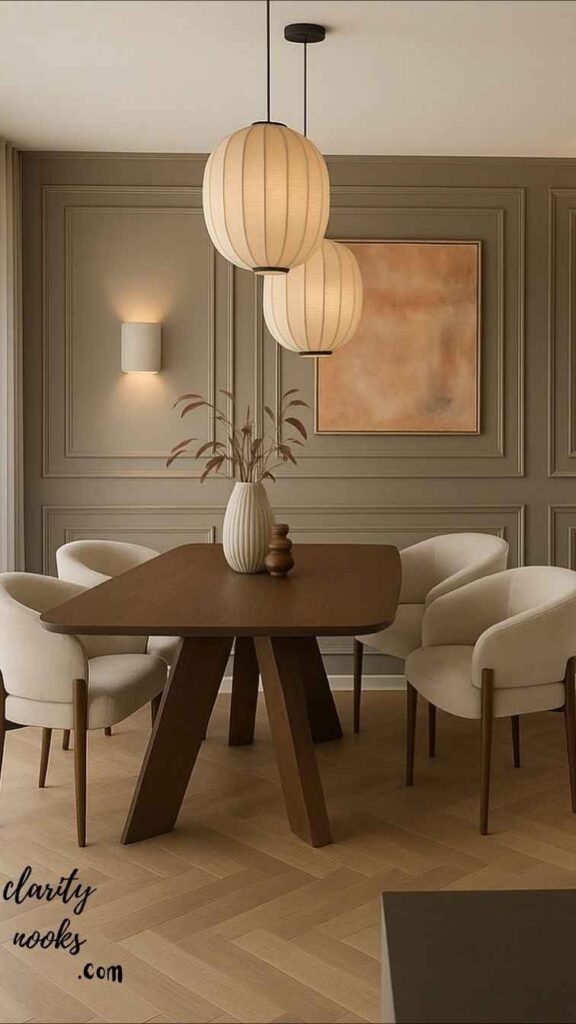
If your dining table doesn’t excite you, nothing else in the room will compensate. A DIY dining table is one of the most rewarding weekend projects available and far more achievable than most people assume. A basic farmhouse-style trestle table uses standard lumber (2x4s, 2x6s, and 4×4 legs), a Kreg pocket hole jig, and wood screws. Total materials: $150–$250 for a 6-foot table. The same table in retail would cost $800–$2,000.
If building from scratch feels like too much, consider a ‘table flip’: buy a secondhand table with good bones (solid wood, right size) and refinish it. Strip the old finish with a chemical stripper or orbital sander, apply a fresh stain or paint, and seal with a water-based polyurethane for durability. A $40 thrift store table becomes a $400 piece.
- Seal all dining tables with at least 2–3 coats of polyurethane for heat and moisture resistance
- Round corners on DIY tables with a jigsaw sharp corners chip and bruise over time
- Hairpin legs are the easiest way to modernize an old table top four screws per leg
Add Architectural Interest with Wainscoting or Shiplap
Texture That Photography Cannot Fully Capture
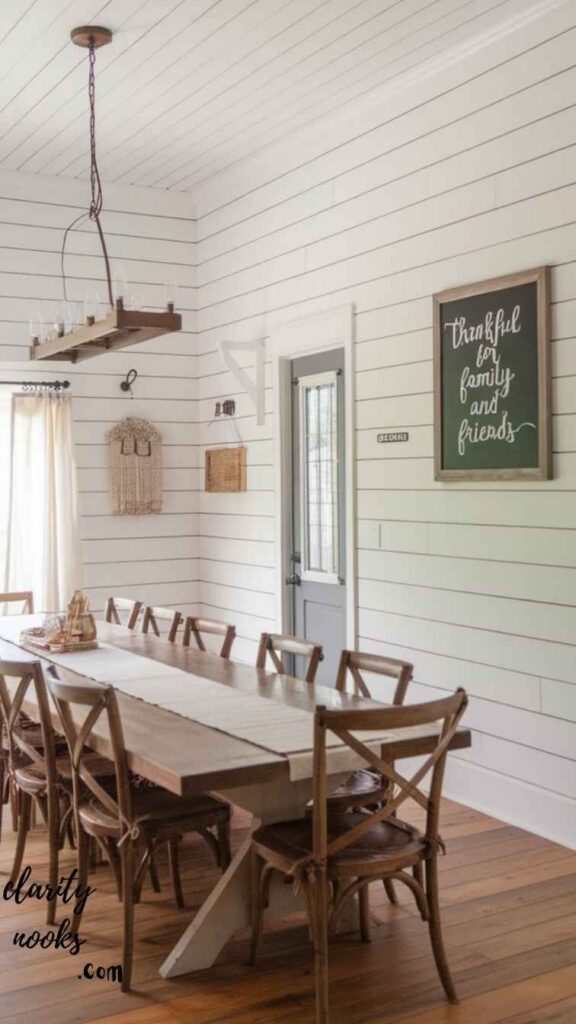
Wainscoting paneling applied to the lower portion of a wall, typically 36 to 48 inches high is one of those details that makes a home feel finished and considered. In a dining room, it’s especially effective because it creates visual weight at the lower half of the room, making the upper half feel airier and taller by contrast.
Classic wainscoting uses recessed panel kits available at any home improvement store. Shiplap, popularized extensively through home renovation television, is even simpler: horizontal boards installed with a small, consistent gap between each one. Both approaches can be completed in a weekend and cost $200–$400 for a typical dining room. Paint them in a contrasting or complementary color to your upper wall for maximum impact.
Real-Life Scenario:
A couple in Chicago installed DIY shiplap on three walls of their dining room using pine boards from a local lumber yard. They painted the shiplap in a deep navy and kept the upper walls white. The result stopped every dinner guest in their tracks. Total spend: $280.
Redesign Your Dining Room Layout The Free Transformation
Furniture Placement Is Underrated Design
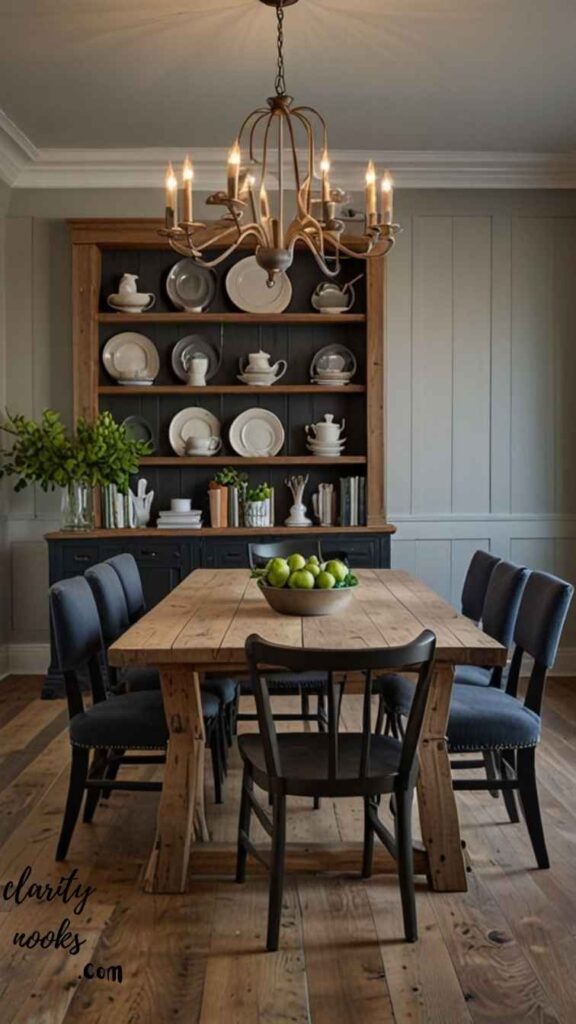
Before spending a dollar on materials, spend an hour rethinking your furniture layout. Most dining rooms suffer from default thinking: table centered in the room, chairs tucked in, buffet against one wall. But there are alternatives worth experimenting with.
Consider floating your table closer to a window to leverage natural light during daytime meals. Try angling a buffet or bar cart at 45 degrees in a corner it breaks the boxy feeling of a rectangular room. If you have an open-plan layout, use a large area rug under the dining set to visually anchor the space and separate it from the living area. The rug should extend at least 24 inches beyond each side of the table so chairs stay on it when pulled out.
The psychological principle at work:
humans perceive spaces as larger and more intentional when furniture placement has an obvious logic and flow. A ‘wrong’ layout (even in a beautiful room) reads as cramped and accidental. Getting this right costs nothing.
Conclusion
DIY Dining Room Ideas are a simple way to give your home a fresh and modern look. You don’t need expensive furniture or big changes. Small updates like wall colors, lighting, table setup, and wall decor can totally change the feel of your dining space. These ideas help you create a warm, cozy, and welcoming area where family and guests can enjoy meals together. It also adds style and personality to your home without stress.
In the end, DIY Dining Room Ideas give you full freedom to design your space your way. You can try different themes, mix colors, or reuse old items in creative ways. Every small effort improves the look and comfort of your dining room. With simple DIY steps, your space becomes more beautiful, organized, and inviting. It is an easy and fun way to upgrade your home style on a budget.
Trend Analysis: 2026–2028
What’s Shaping DIY Dining Rooms Right Now
The dominant trend of 2026 is the rejection of the all-white, Scandinavian-lite aesthetic that dominated the 2010s. Homeowners are moving toward ‘grand_millennial’ warmth: deeper wall colors (burgundy, forest green, terracotta), mixed wood tones, and layered textiles. The viral success of ‘dark academia’ and ‘cottagecore’ aesthetics on social platforms is directly influencing purchasing and DIY decisions.
Over the next two to three years, expect to see micro-cement surfaces move from restaurant interiors into residential dining rooms applied directly over existing tile or wood as a cost-effective refinishing technique. Biophilic design elements (living walls, large-format botanical prints, natural fiber lighting) will continue to grow, driven partly by research linking natural elements in dining spaces to longer, more relaxed meals.
The DIY market itself is shifting. Short-form video has dramatically compressed the learning curve for techniques like wainscoting and table building. The generation currently purchasing their first homes grew up watching tutorials and are more willing to attempt intermediate-level projects than any prior generation. This means competitor content needs to reach beyond ‘basics’ to stay relevant.
Practical Tips & Expert Insights
What Experienced DIYers Actually Do Differently
The most common mistake inexperienced DIYers make is skipping the planning phase. Experienced renovators spend as much time planning as executing creating mood boards, measuring three times, and testing paint samples in the actual room at different times of day before committing. Paint colors change dramatically under artificial versus natural light; what looks perfect on a chip can be disastrous on a wall.
- Always prime before painting, especially over dark colors or new drywall skipping primer costs more in paint than the primer itself
- Buy 10–15% more material than you calculate needing; running short mid-project means a second trip and potential lot-number mismatch
- Rent tools you’ll use once (tile saws, drum sanders) rather than buying home improvement retailers offer daily rentals
- Apply painter’s tape the day before painting, not the morning of; it adheres better and pulls cleaner
On the design side, professional interior designers consistently emphasize scale and proportion over style. A beautiful chair in the wrong scale for your table ruins the room. A standard dining table is 30 inches tall; chairs should have seats 17–19 inches from the floor. Benches should match the table height minus 10–12 inches.
Long-Term Strategy & Sustainability
Building a Dining Room That Ages Well
The smartest long-term approach is to invest quality in structural and fixed elements walls, flooring, lighting and allow flexibility in moveable pieces. A well-built board and batten wall will outlast five sets of chairs. A solid wood table, properly maintained, will outlast the house it’s in. Soft goods (cushions, curtains, table runners) are where you can experiment affordably and update seasonally.
On the sustainability front, the most environmentally responsible DIY decisions are also frequently the most economical: refinishing rather than replacing, reupholstering rather than discarding, and sourcing secondhand furniture rather than buying new. The secondhand market for dining furniture particularly solid wood pieces from the 1950s through 1980s offers extraordinary quality at a fraction of retail prices.
Think in 10-year horizons when making material choices. Oil-based finishes are harder to apply but last significantly longer than water-based alternatives on high-traffic surfaces like table tops. Solid wood is repairable; MDF and particle board are not. These choices compound over time.
Future Predictions & Innovations
Where DIY Dining Room Design Is Heading
AI-powered design tools are already beginning to change how homeowners plan DIY projects. Apps that use your phone’s camera to visualize paint colors, furniture arrangements, and lighting in real time are moving from novelty to necessity. Within two to three years, expect photorealistic AR previsualization the ability to ‘place’ a DIY board and batten wall in your actual room before you buy a single piece of wood to be widely accessible and free.
Material innovation will also reach the DIY market. Peel-and-stick wall paneling (more realistic and durable than the products of five years ago), peel-and-stick tile, and removable wallpaper have already made significant inroads for renters and renovation-cautious homeowners. The next generation of these products will include magnetic wall panels allowing easy reconfiguration of accent walls without tools.
For sustainable design, mycelium-based furniture and reclaimed material marketplaces are moving toward mainstream availability. Within five years, sourcing locally reclaimed wood for a dining table through an app-based platform will likely be as easy as ordering from a big-box retailer.
Common Mistakes & Hidden Gaps
What Beginners and Intermediate DIYers Consistently Get Wrong
Beginners most commonly underestimate prep work. Painting over a dirty, greasy wall produces a finish that peels within months. Installing board and batten over an uneven surface (common in older homes) creates visible waves. The preparation phase cleaning, sanding, skimming imperfections, priming is where 80% of the final result is determined. Rushing it means redoing the work.
Intermediate DIYers tend to make a different category of mistake: over-decorating. They successfully execute several of the ideas in this article board and batten, gallery wall, statement lighting without editing. The result is a dining room that’s visually exhausting rather than inviting. The rule of thumb professionals use: if you can’t identify the single most dominant element in a room, there are too many competing for attention.
A hidden gap that almost no DIY content addresses: acoustic design in dining rooms. Hard surfaces (wood floors, plaster walls, glass) create significant echo that makes dinner conversation difficult and fatiguing. Adding a large area rug, upholstered chairs, linen curtains, and soft art (canvas prints, textile wall hangings) significantly reduces reverberation. A dining room that sounds good is a dining room people want to linger in.
- Don’t hang art at standing height seat-level viewing is correct for dining spaces
- Avoid overhead lighting as your only light source; add wall sconces or a buffet lamp for layered warmth
- Check for plumb before installing any vertical element most walls have a slight lean
Rameen Zara is the founder of Clarity Nooks, bringing over five years of experience in home décor and interior styling. She shares simple yet practical design ideas that suit real homes and everyday living. Her approach focuses on cozy aesthetics, soft color palettes, and natural textures that create warm, inviting spaces.