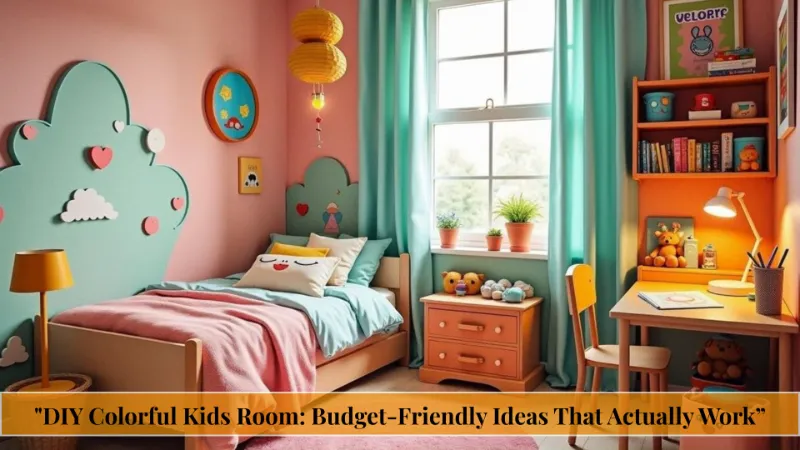
DIY Colorful Kids Room: Budget-Friendly Ideas That Actually Work

A practical, cost-honest guide to painting, decorating, and organizing a vibrant kids’ bedroom on a real budget. Staring at a plain, beige kids’ bedroom while decor stores charge hundreds of dollars for a single accent wall? You’re not alone. Most parents want a colorful kids room, but tight budgets, rental restrictions, and limited weekends make big renovations feel out of reach.
Here’s the good news: you don’t need a contractor or a big budget to make it happen. With basic supplies from a hardware or craft store, you can turn a dull bedroom into a vibrant, playful space in a single weekend using simple DIY colorful kids room projects anyone can execute.
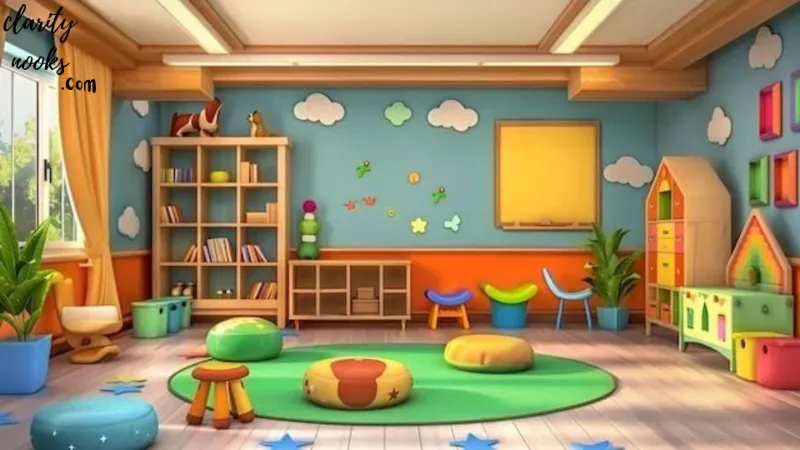
Every idea below includes real steps, a materials list, an honest cost estimate, the specific benefit it delivers, and a decorating tip pulled from actual use not guesswork. Let’s get into it.
What Is DIY Colorful Kids Room Decor?
Quick Answer DIY colorful kids room decor refers to hands-on, budget-conscious design projects such as painted accent walls, upcycled furniture, and handmade wall art that use bold color palettes to create a cheerful, stimulating bedroom for a child without hiring a professional designer.
Rainbow Accent Wall with Washi Tape
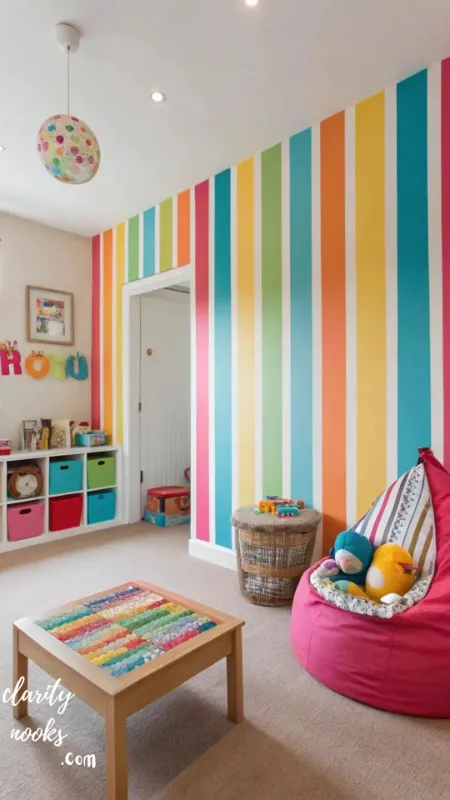
A rainbow accent wall delivers the biggest visual impact on this list without a full repaint. Washi tape creates crisp stripe borders, and because it lifts cleanly off most painted surfaces, this project works even in rented apartments where damage deposits are on the line.
Materials needed:
- Washi tape (assorted widths)
- 5–6 sample-size paint pots or leftover paint
- Foam roller and small brush
- Painter’s tape, level, pencil
Steps:
- Measure the wall and mark even stripe widths in pencil.
- Run washi tape along each pencil line to define stripe borders.
- Paint alternating sections in different colors and let dry fully.
- Peel tape at a 45-degree angle while paint is still slightly tacky.
| Estimated Cost | $35–$60 |
| Key Benefit | Reversible, renter-safe, and dramatic for the price most parents finish in a single afternoon. |
| Decorating Tip | Buy sample-size paint pots instead of full gallons; a rainbow stripe wall rarely needs more than a cup of each color. |
Related Reads: DIY Baby Nursery Ideas for Boys: Budget Decor That Looks Expensive
Color-Block Painted Wall Design
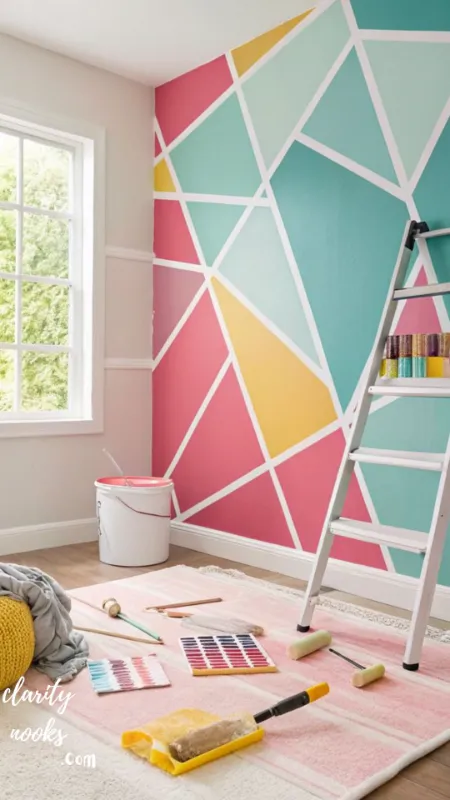
Color blocking uses two or three bold shades in geometric sections to add depth without covering the entire wall in one loud color. It reads more sophisticated than a rainbow stripe, which makes it a smart pick for kids’ rooms that need to stay stylish as they age.
Materials needed:
- Painter’s tape
- 2–3 coordinating paint colors
- Level and pencil
- Foam roller, angled brush
Steps:
- Sketch your block design on paper first, including measurements.
- Transfer the layout to the wall using a level and pencil.
- Tape off shapes, starting with the largest block.
- Paint, let dry, then tape and paint smaller accent blocks.
| Estimated Cost | $40–$70 |
| Key Benefit | Adds architectural depth and can be softened later by painting over just one block as tastes change. |
| Decorating Tip | Pick two shades from the same color family, like navy and sky blue, for a combination that feels calm rather than chaotic. |
Must-Read Articles: DIY Baby Room Ideas: Creative Ways to Build a Nursery Your Baby Will Love
Colorful Fabric Bunting and Garland Ceiling Decor
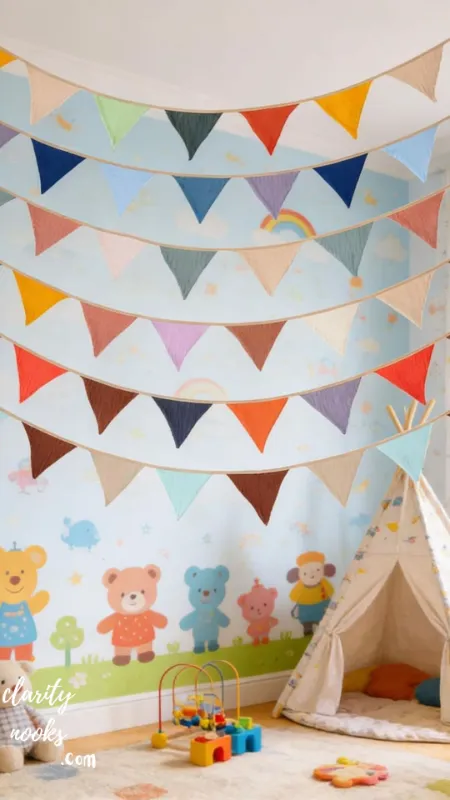
If you can’t touch the walls at all, look up. Hanging fabric bunting or paper garlands across the ceiling adds color and movement instantly, and the entire project comes down in minutes if you ever need your deposit back.
Materials needed:
- Scrap fabric or cardstock
- Scissors, twine or string
- Hot glue gun
- Removable adhesive ceiling hooks
Steps:
- Cut triangle or circle shapes from fabric scraps.
- Fold each shape over a length of twine and glue in place.
- Space shapes evenly along the string in a mixed color order.
- Hang using removable hooks in a scalloped pattern overhead.
| Estimated Cost | $15–$30 |
| Key Benefit | The cheapest project on this list; fully removable and ideal for rentals or shared rooms. |
| Decorating Tip | Mix a couple of patterned fabric scraps with solids so the garland looks curated instead of flat. |
Recommended for You: DIY Baby Nursery Ideas on a Budget: Affordable & Adorable Room Makeovers
Painted Wooden Crate Storage Cubes
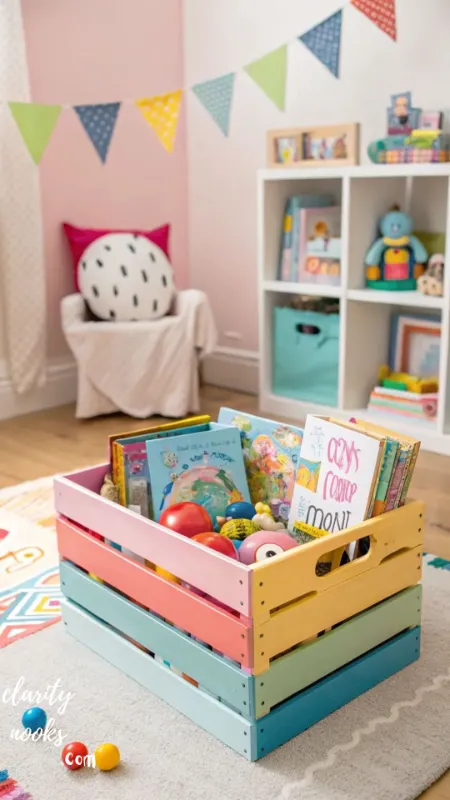
Toy clutter is the number-one complaint in most kids’ rooms, and painted crates solve it while adding color. This DIY storage project turns plain wooden crates into a modular, stackable system that adapts as your child’s toy collection changes.
Materials needed:
- 4–6 wooden crates
- Sandpaper, primer
- Acrylic or chalk paint
- Matte sealant
Steps:
- Sand each crate until smooth and wipe away dust.
- Apply one coat of primer and let it cure.
- Paint each crate a different bright color; apply a second coat if needed.
- Seal with matte varnish once fully dry, then stack or mount.
| Estimated Cost | $60–$100 |
| Key Benefit | Cuts visible clutter dramatically while turning storage into a colorful design feature. |
| Decorating Tip | Stencil or label each crate by category blocks, books, cars so kids can sort their own toys. |
Real-Life Scenario:
The $70 Crate Wall A parent in a two-bedroom apartment turned six thrift-store crates into a stacked toy wall for under $70. The project cut visible clutter roughly in half and gave her four-year-old a color-coded system he could manage on his own within a week.
Latest Insights: DIY Home Decor Ideas That Actually Transform Your Space
Chalkboard Paint Play Wall
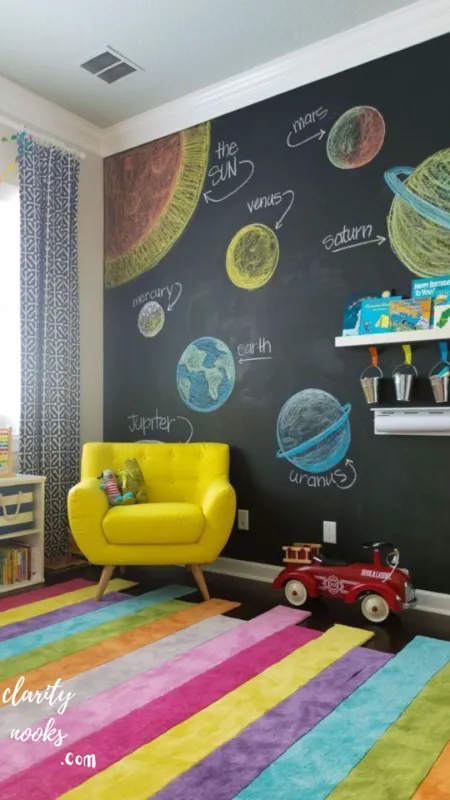
A chalkboard wall gives kids permission to draw directly on their bedroom without ruining the paint job. Keeping it to one low section, roughly waist height, contains the mess and turns a single wall into an ever-changing art gallery.
Materials needed:
- Chalkboard paint
- Painter’s tape
- Foam roller
- Basic chalk set
Steps:
- Tape off a rectangle at your child’s height.
- Apply two even coats of chalkboard paint.
- Let the paint cure for three days before first use.
- Season the surface by rubbing chalk sideways across it, then wipe clean.
| Estimated Cost | $25–$45 |
| Key Benefit | Encourages open-ended creativity and keeps crayon marks off the surrounding walls. |
| Decorating Tip | Frame the chalkboard section with washi tape or painted trim so it looks like an intentional feature, not a patch. |
Learn more here: Trendy DIY Living Room Curtain Ideas for a Fresh and Elegant Look
DIY Color-Coded Reading Nook
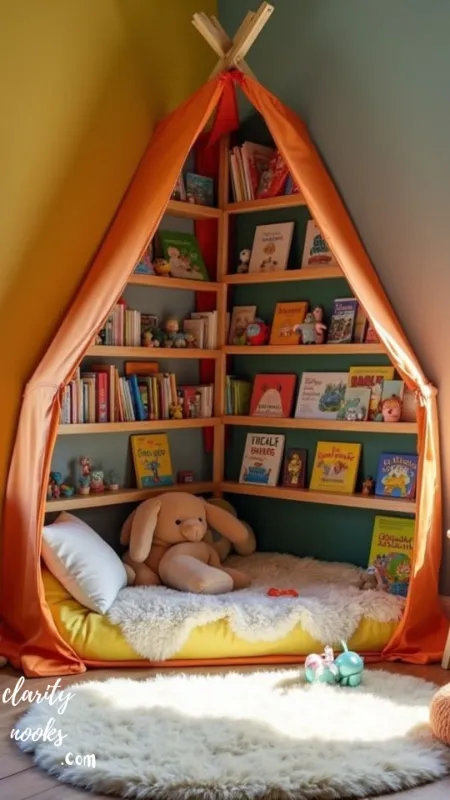
A colorful reading nook combines soft seating, a low bookshelf, and books arranged by spine color for an instant rainbow effect. Tucked into an unused corner, it becomes both a cozy retreat and a strong visual anchor for the room.
Materials needed:
- Floor cushions or a small bean bag
- Tension rod or canopy kit and fabric
- Small wall-mounted shelf
- String lights
Steps:
- Choose an underused corner near natural light.
- Mount a low shelf within your child’s reach.
- Arrange books by color to create a rainbow gradient.
- Add cushions, a canopy overhead, and string lights for ambiance.
| Estimated Cost | $50–$90 |
| Key Benefit | Builds a reading habit while doubling as one of the most photographed corners in the room. |
| Decorating Tip | Rotate which book covers face outward weekly so the color arrangement and the reading options stay fresh. |
Find out more: DIY Living Room Decor Ideas That Actually Transform Your Space
Fabric Pom-Pom Curtains and Mobiles
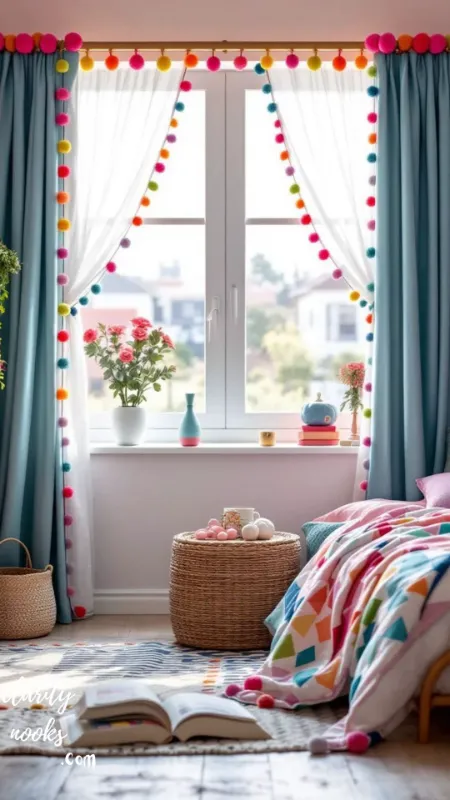
Handmade pom-pom trim turns plain curtains into a playful, textured focal point at almost no cost. The same technique works as a hanging mobile, giving toddlers a soft, safe pop of color at eye level.
Materials needed:
- Yarn in assorted colors
- Pom-pom maker or a fork
- Hot glue or needle and thread
- Embroidery hoop (for mobiles)
Steps:
- Make 15–20 pom-poms in mixed colors.
- Glue or sew them evenly along a curtain hem.
- For a mobile, tie pom-poms at varying lengths from an embroidery hoop.
- Hang the finished mobile securely from a ceiling hook.
| Estimated Cost | $10–$25 |
| Key Benefit | One of the lowest-cost projects here, and soft enough to be safe near cribs and toddler beds. |
| Decorating Tip | Stick to one dominant color plus two accent colors so the finished piece feels designed, not random. |
See the full breakdown: Minimal DIY Twin Bedroom Ideas for Clean and Simple Rooms
Upcycled Furniture with Bright Paint
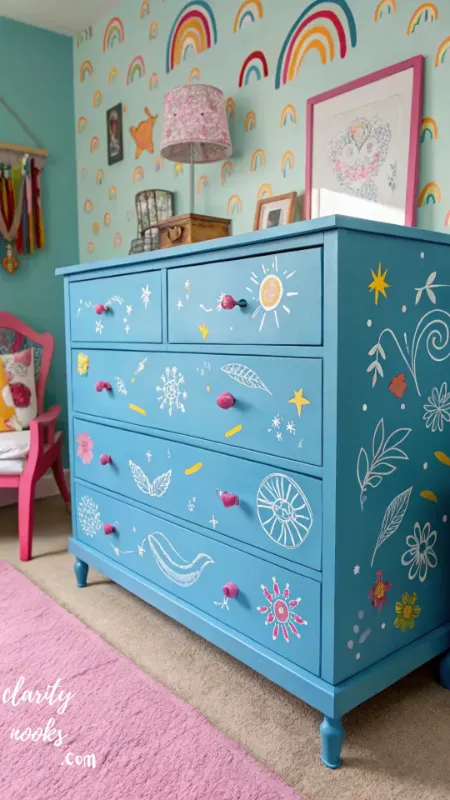
Refinishing a secondhand dresser is one of the most cost-effective ways to bring color into a kids’ room. Upcycled furniture projects divert usable pieces from landfills while giving the room a statement piece that new furniture rarely matches at the same price.
Materials needed:
- Secondhand dresser or nightstand
- Sandpaper, primer
- Furniture paint
- New drawer pulls
Steps:
- Remove all hardware and sand the surface lightly.
- Wipe clean and apply a coat of primer.
- Paint two even coats, sanding lightly between coats.
- Attach new colorful pulls once the paint has fully cured.
| Estimated Cost | $30–$80 |
| Key Benefit | Costs a fraction of comparable new furniture and keeps a usable piece out of the landfill. |
| Decorating Tip | Paint just the drawer fronts a bold color and leave the body neutral for a look that ages well over several years. |
Real-Life Scenario:
The $15 Dresser Rescue One family found a scratched $15 dresser at a yard sale, painted each drawer a different bright color, and repurposed it as their daughter’s art-supply station. The finished piece cost roughly $45 total about $200 less than a comparable new dresser.
Colorful Gallery Wall with Kids’ Art
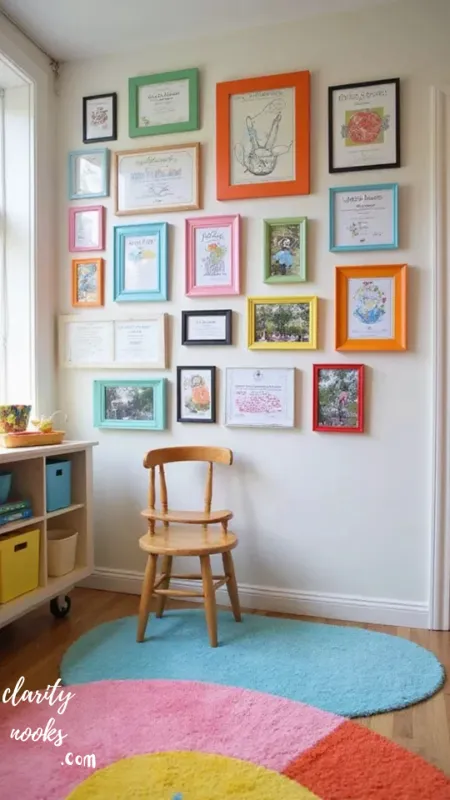
A kids’ art gallery wall turns your child’s own drawings into real decor instead of hiding them in a drawer. Mismatched thrifted frames, sprayed in bright colors, cost far less than store-bought art and grow more personal every time a new drawing goes up.
Materials needed:
- 6–10 thrifted or dollar-store frames
- Spray paint in assorted colors
- Kids’ artwork or printed pages
- Removable adhesive strips
Steps:
- Collect mismatched frames of a similar shape.
- Spray paint each frame a different bright color and let cure 24 hours.
- Lay the frames on the floor to plan the layout first.
- Hang using adhesive strips or nails once you’re happy with the arrangement.
| Estimated Cost | $20–$50 |
| Key Benefit | Celebrates your child’s creativity and costs far less than framed prints from a home decor store. |
| Decorating Tip | Keep every frame the same general shape, even with different colors, so the wall reads as cohesive rather than cluttered. |
DIY Ombre Rug or Painted Floor Cloth
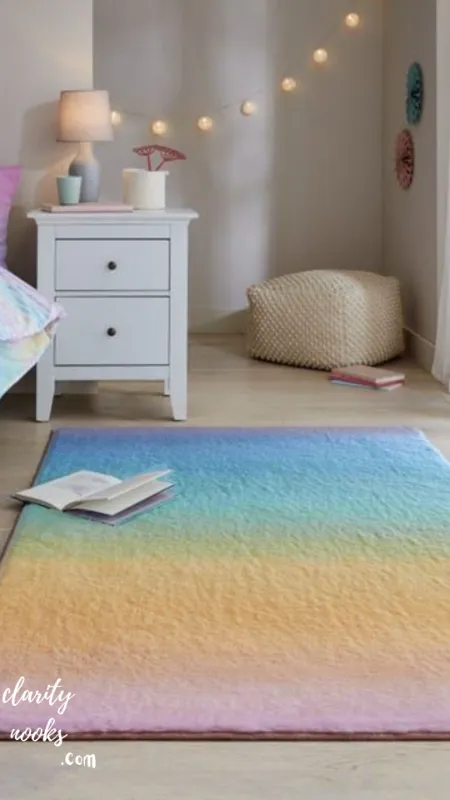
A painted canvas drop cloth makes a surprisingly durable, budget alternative to a patterned area rug. This ombre floor cloth adds a soft color gradient underfoot for a fraction of the price of a comparable textile rug.
Materials needed:
- Canvas drop cloth
- Fabric paint in 2–3 shades
- Sea sponge, painter’s tape
- Fabric sealant spray
Steps:
- Cut the canvas to size and hem the raw edges.
- Tape off gradient bands across the cloth.
- Sponge-dab paint from lightest to darkest shade, blending while wet.
- Let dry completely, then seal with a fabric protectant spray.
| Estimated Cost | $30–$55 |
| Key Benefit | Washable, durable, and far cheaper than a patterned rug of comparable size. |
| Decorating Tip | Practice the sponge-blending technique on cardboard first smooth ombre gradients usually take a couple of test passes. |
Glow-in-the-Dark Star Ceiling with Color Accents
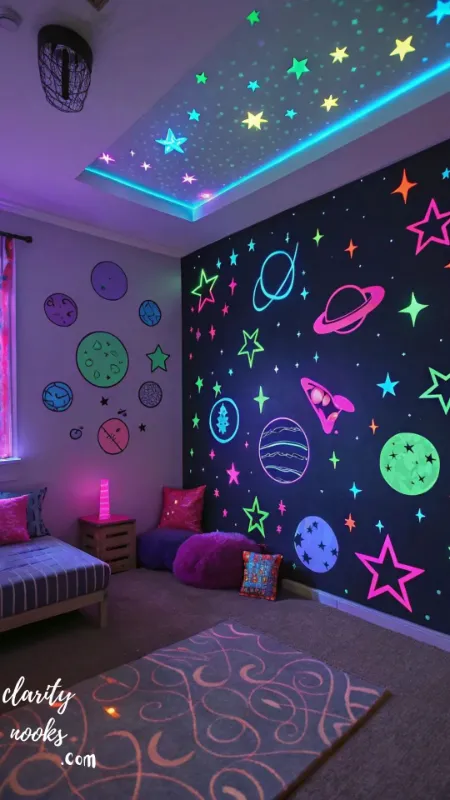
This project gives a room two looks in one: a soft painted ceiling by day and a glowing constellation at night. A glow-in-the-dark ceiling paired with a muted color wash is one of the easiest ways to make bedtime feel calmer without losing personality.
Materials needed:
- Glow-in-the-dark star stickers or paint
- Ceiling paint in a soft color
- Star stencils (optional)
- Sturdy step ladder
Steps:
- Paint a section of ceiling, or the full ceiling, in a soft color.
- Let the paint dry completely, at least 24 hours.
- Stencil or hand-place glow stars in a loose constellation pattern.
- Press each star firmly to ensure it adheres long-term.
| Estimated Cost | $20–$40 |
| Key Benefit | Adds daytime color and a calming nighttime feature that can ease bedtime resistance. |
| Decorating Tip | Cluster stars more densely above the bed and thin them toward the room’s edges to mimic a real night sky. |
Cost Comparison at a Glance
If you’re planning a full room refresh, use this table to mix low-cost and higher-impact projects until you hit your budget for a budget kids bedroom makeover.
| Project | Cost Range | Time |
| Rainbow Accent Wall with Washi Tape | $35–$60 | 1 afternoon |
| Color-Block Painted Wall Design | $40–$70 | 1 afternoon |
| Colorful Fabric Bunting and Garland Ceiling Decor | $15–$30 | 1 afternoon |
| Painted Wooden Crate Storage Cubes | $60–$100 | 1 afternoon |
| Chalkboard Paint Play Wall | $25–$45 | Full weekend |
| DIY Color-Coded Reading Nook | $50–$90 | Full weekend |
| Fabric Pom-Pom Curtains and Mobiles | $10–$25 | 1 afternoon |
| Upcycled Furniture with Bright Paint | $30–$80 | Full weekend |
| Colorful Gallery Wall with Kids’ Art | $20–$50 | Full weekend |
| DIY Ombre Rug or Painted Floor Cloth | $30–$55 | Full weekend |
| Glow-in-the-Dark Star Ceiling with Color Accents | $20–$40 | 1 afternoon |
Final Thoughts
A DIY colorful kids room doesn’t require a big budget or a professional crew just a free weekend and one or two projects from this list. Start small with a bunting garland or painted crates, then build toward a full accent wall once you see how much personality a little color adds. Pick one idea today, gather your materials, and turn your child’s bedroom into a space they genuinely love waking up in.
Trend Analysis: Where Colorful Kids Room Design Is Headed (2026–2029)
In 2026, kids room color trends are shifting away from single primary-color statement walls toward what designers call “dopamine decor for kids” softened, muted brights like dusty coral, sage, and butter yellow that stay cheerful without becoming overstimulating over years of daily use.
Expect biophilic accents leafy wall decals, wood-and-color combinations, and nature-inspired murals to keep gaining ground through 2027 as parents balance stimulation with calm, especially in shared or smaller bedrooms where overstimulation affects sleep.
By 2028–2029, expect more modular and swappable decor systems: interchangeable wall panels, magnetic art rails, and paint lines specifically marketed as low-VOC and rental-safe, reflecting a broader shift toward flexible, non-permanent color solutions in kids’ spaces.
Practical Tips and Expert Insights
Always test paint swatches directly on the wall, in the room, at different times of day. A color palette for kids room design that looks perfect in a store often shifts dramatically under a child’s actual overhead lighting or afternoon sun.
Involve your child in choosing at least one color. Rooms designed entirely around adult taste tend to get less “buy-in” from the kid who actually sleeps there and children who help choose colors are more likely to keep the space tidy.
Apply the 60-30-10 rule even in a playful room: 60% a calming base color, 30% a secondary color, and 10% bold accent pops. This keeps a vibrant kids room design energetic without becoming visually exhausting for daily use.
Long-Term Strategy and Sustainability
Treat wall color and large furniture as the “bones” of the room, and treat bunting, cushions, and art as the swappable layer. This lets you refresh the room’s personality every year or two by changing only the cheapest elements.
Choose low-VOC or zero-VOC paint for any project your child will be near for hours each night this matters more for long-term indoor air quality than color choice itself, and most major paint brands now offer a low-VOC line at a similar price point.
Favor upcycled and modular furniture over trend-specific pieces. A neutral-bodied dresser with colorful drawer fronts, for example, can be repainted in an afternoon as your child’s taste changes from toddler to tween protecting your original investment.
Future Predictions and Innovations in Kids Room Design
AI-assisted room planning apps are already letting parents upload a photo of a bedroom and preview different paint colors and layouts before buying a single can expect this to become a standard, free feature in most paint brand apps by 2027.
Color-changing smart wallpaper and app-controlled LED accent strips are moving from novelty to mainstream, giving kids the ability to switch a room’s color mood for daytime play versus nighttime wind-down without repainting anything.
Augmented reality (AR) preview tools, already used in furniture apps, are expected to expand into full room design letting parents and kids co-design a colorful bedroom together on a tablet before a single project begins.
Common Mistakes and Hidden Gaps Most Guides Miss
- Overloading the room with too many colors at once three to four core colors is usually the limit before a room starts feeling chaotic rather than cheerful.
- Ignoring how lighting changes paint color a shade that looks soft in a store can read neon under a child’s overhead light.
- Choosing decorative materials that aren’t washable or durable, which shortens the lifespan of an otherwise great project.
- Skipping non-toxic, low-VOC paint specifically formulated for high-exposure rooms like a child’s bedroom.
- Not checking rental lease restrictions before starting a project that involves paint or wall anchors.
- Designing entirely around what looks good in photos instead of what a child will actually enjoy living with daily.
Frequently Asked Questions
What is the best paint for a kids room accent wall?
Low-VOC or zero-VOC latex paint in a washable, matte or eggshell finish is generally the best choice for a kids room accent wall, since it resists fingerprints and off-gasses far less than standard interior paint.
How much does it cost to DIY a colorful kids room?
Most single DIY colorful kids room projects from this list cost between $15 and $100, and a full room refresh combining three or four projects typically lands between $150 and $300 total.
Are chalkboard walls safe for kids?
Most modern chalkboard paints are low-VOC and safe once fully cured, which typically takes about three days. Always ventilate the room while painting and drying.
How do I make a rented kids room colorful without damaging walls?
Focus on renter-friendly kids room ideas like washi tape stripes, fabric bunting, removable decals, and gallery walls using adhesive strips instead of nails or paint.
What colors are best for a child’s bedroom?
Soft, muted brights dusty blue, sage, coral, and butter yellow tend to stay calming for sleep while still feeling playful, which is why most 2026 kids bedroom color palettes lean toward this softened-bright approach rather than pure primary colors.
Rameen Zara is the founder of Clarity Nooks, bringing over five years of experience in home décor and interior styling. She shares simple yet practical design ideas that suit real homes and everyday living. Her approach focuses on cozy aesthetics, soft color palettes, and natural textures that create warm, inviting spaces.