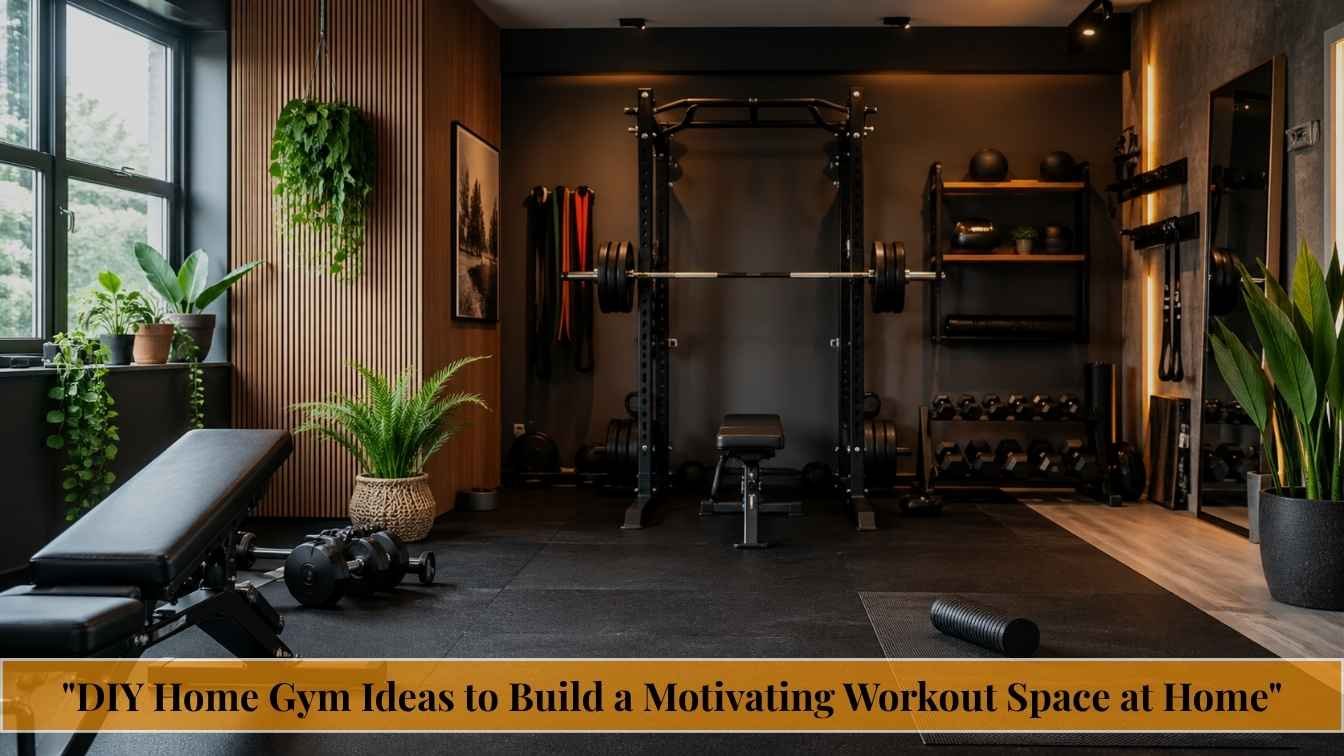
DIY Home Gym Ideas to Build a Motivating Workout Space at Home

You don’t need a spare room, a big budget, or a contractor. You just need a plan and these 12 smart ideas to build a home gym that fits your life.
You joined the gym with good intentions. Then life happened the commute, the packed classes, the monthly fee quietly draining your account. Sound familiar? Most people quit commercial gyms within 90 days. The real problem isn’t motivation. It’s friction. Every minute you spend driving, parking, and waiting for equipment is a minute your brain negotiates its way out of the workout.
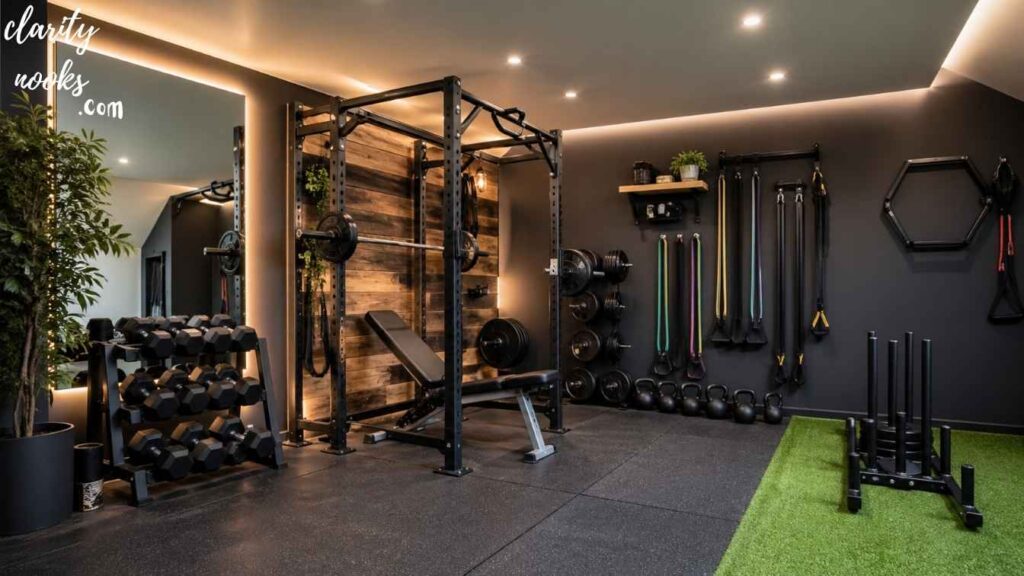
A DIY home gym removes that friction entirely. When your training space is 20 feet from your bedroom, the excuses shrink dramatically. And the best part? You don’t need a dedicated room, a $10,000 budget, or any construction experience. With smart planning, even a modest corner of your home can become a functional, motivating fitness space.
This guide covers 12 practical, experience-backed DIY home gym ideas from budget-friendly setups to intelligent space design plus trend analysis, expert insights, and the mistakes most people make that quietly sabotage their results.
$300
Minimum budget for a functional starter gym
50 sq ft
Minimum space needed for an effective workout zone
2x
More likely to train consistently at home vs. a commercial gym
Start with a Rubber Flooring Foundation
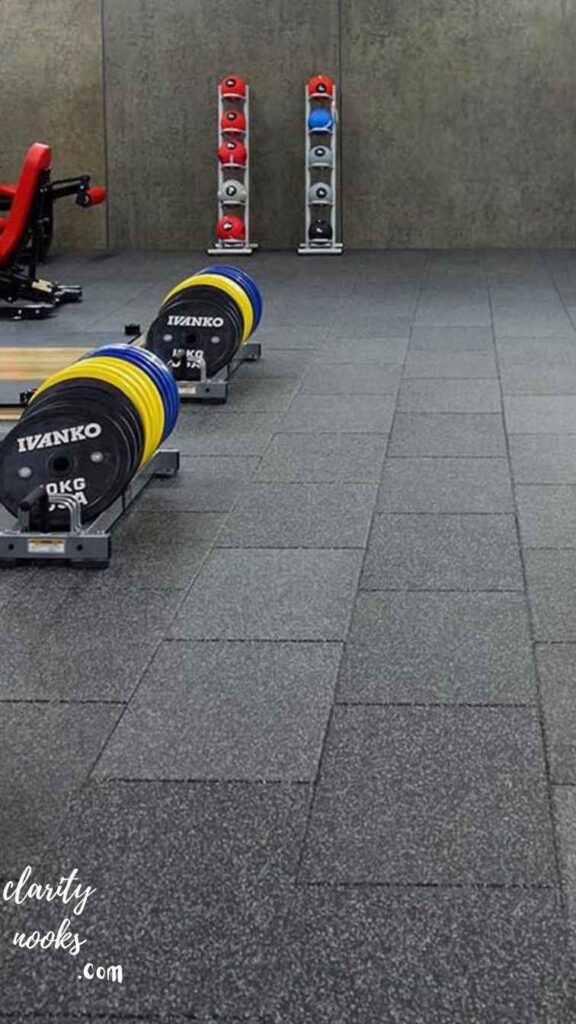
Before you buy a single piece of equipment, get your floor right. Interlocking rubber tiles (3/8″ to 3/4″ thick) are the single best investment in any home gym. They protect your subfloor, dampen noise, cushion heavy landings, and give you a defined training zone that signals “this is the gym” to your brain.
Real-world scenario: Marcus, a father of two in Manchester, converted a corner of his garage using six 24″x24″ rubber tiles for under £80. He says the floor alone changed how he approached workouts it made the space feel intentional rather than improvised. For yoga and HIIT, foam tiles work too, but rubber handles weights far better.
Featured Snippet Answer
The best flooring for a DIY home gym is interlocking rubber tiles (3/8″–3/4″ thick). They absorb impact, protect subfloors, reduce noise, and are durable enough for free weights, cardio equipment, and plyometric exercises.
Must Read: Smart DIY Home Exterior Ideas to Improve Style and Function
Build a Pull-Up Bar Station
(No Studs Required)
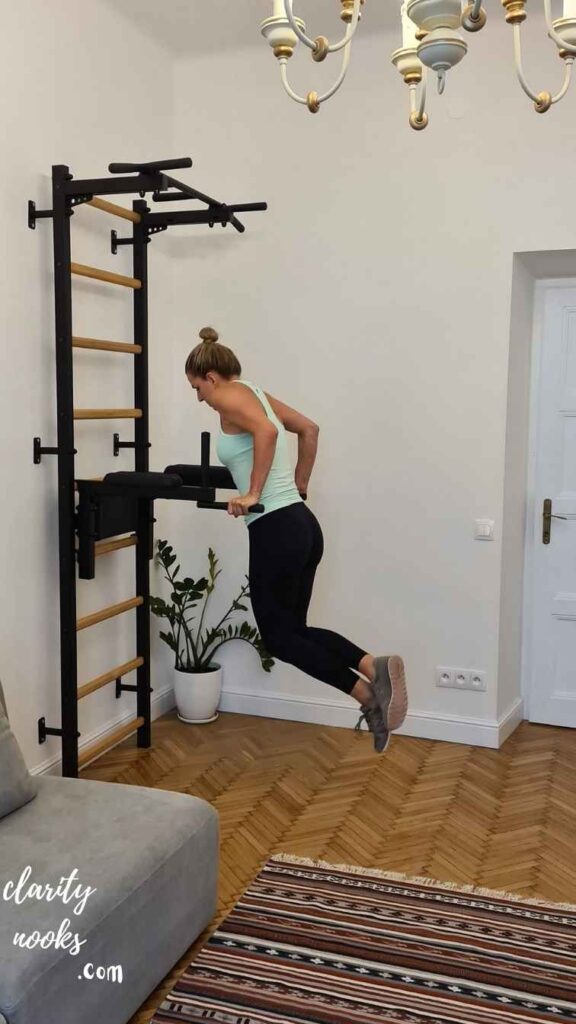
A doorframe pull-up bar is the most underrated piece of home gym equipment on the market. At $25–$60, it delivers upper-body pulling work lat pulldowns, chin-ups, hanging leg raises that you’d otherwise need a cable machine to replicate. Most models support up to 300 lbs and require zero drilling or permanent installation.
For a more permanent setup, a wall-mounted pull-up rig anchored into studs costs $80–$200 and becomes a full functional fitness station. Add gymnastics rings for $30 and you’ve unlocked dips, push-up variations, body rows, and suspension training a full upper-body system for under $250 total.
Read More: Creative DIY Salon Interior Design Ideas for Stylish and Functional Spaces
Use Adjustable Dumbbells to Maximize Space
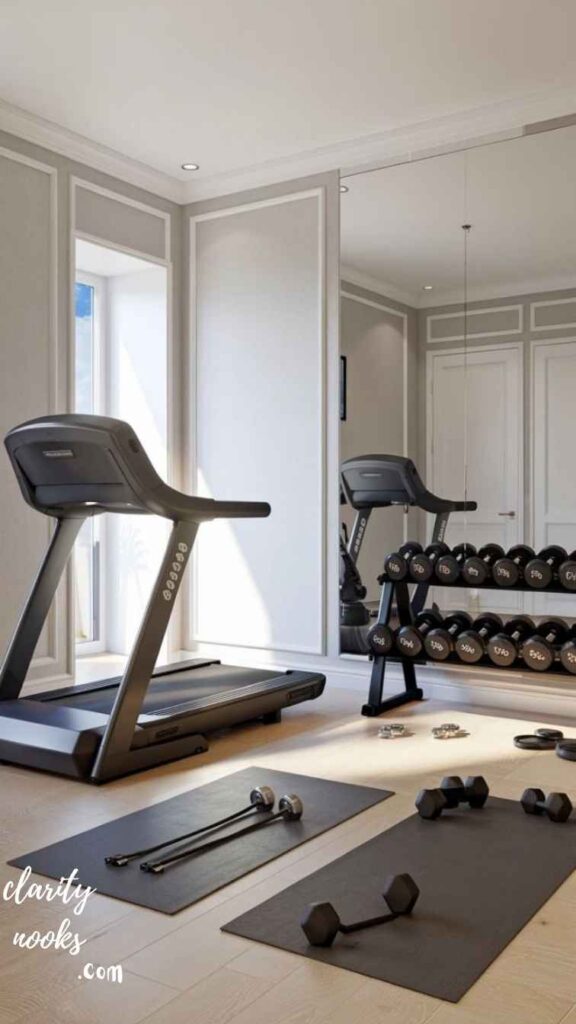
Buying individual dumbbells from 5 lbs to 50 lbs costs £400–£900 and takes up enormous floor space. A single pair of adjustable dumbbells (like PowerBlocks or Bowflex SelectTech) covers the same range for £200–£350 and stores in a space the size of a shoebox. For small home gyms, this isn’t a compromise it’s the smarter choice.
The secondary benefit is underrated: adjustable dumbbells force progressive overload thinking. You can’t just “grab a pair” and zone out. You consciously select your weight each set, which naturally encourages better programming. Pair them with a folding adjustable bench ($80–$150) and you have a complete free-weight system in under 15 square feet.
Also Read: DIY Home Decoration Ideas to Add a Personal Touch to Your Space
The Garage Gym: Zone It Intelligently
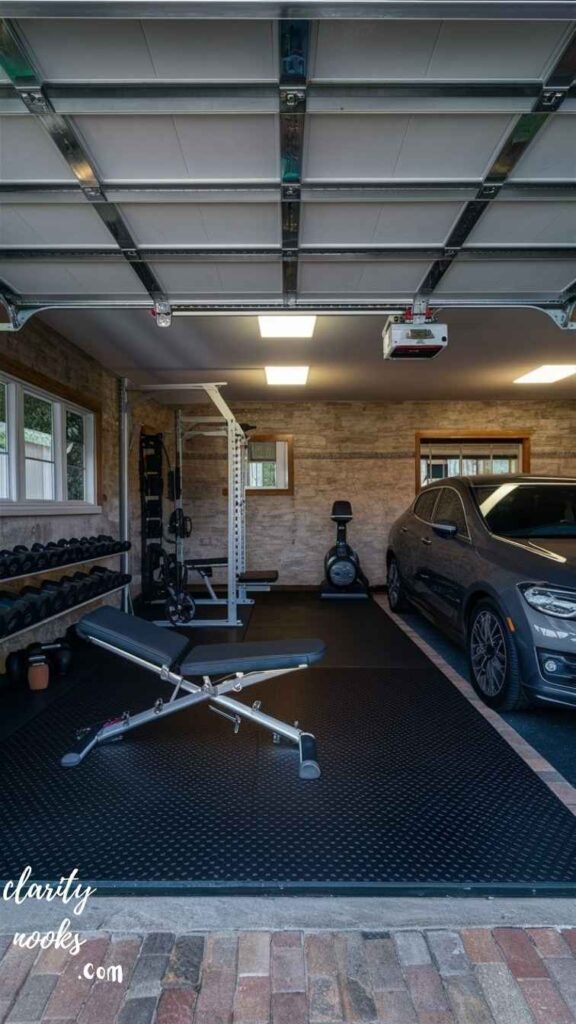
A two-car garage (roughly 400–440 sq ft) is the gold standard for home gyms, but most people waste it by cramming equipment randomly. Instead, divide it into three zones: a lifting zone (barbell rack, weights), a cardio zone (rower or bike), and a recovery zone (foam roller, yoga mat, stretching space). This zoning approach mirrors how serious athletes train with intention in each area.
Mini case study: Sarah, a physical therapist in Texas, converted her one-car garage on a $1,200 budget over three weekends. She used wall-mounted storage for plates, painted a motivational quote on one wall, added a $15 Bluetooth speaker, and installed overhead LED shop lights. Her verdict after 18 months: “I haven’t been inside a commercial gym since. I train more consistently than I ever did.”
Space Planning Tip
Allow 36 inches of clearance on all sides of a barbell for safe Olympic lifting. A 7-foot bar needs roughly 8×8 feet of unobstructed space for squats and deadlifts.
Apartment Home Gym
The No-Noise, No-Damage Solution
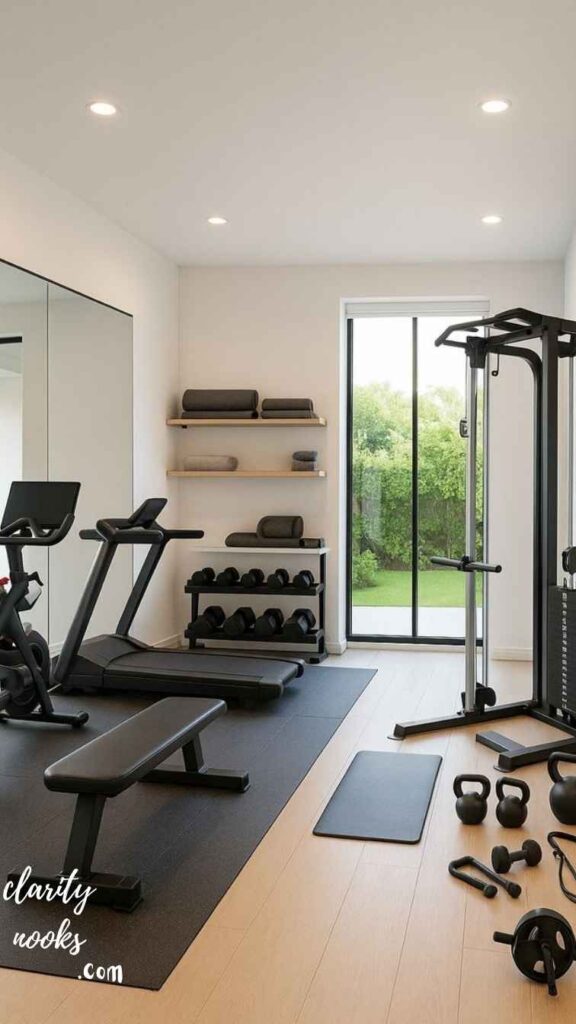
Living in an apartment doesn’t disqualify you from a serious home gym it just changes the equipment list. Prioritize resistance bands (a full set covers $20–$60), a set of kettlebells (one 16kg and one 24kg handles 80% of kettlebell training), a TRX suspension trainer, and a jump rope. These tools cover strength, cardio, and mobility without disturbing neighbors or violating leases.
The key constraint is impact noise. Avoid barbell drops, jumping on hard floors without thick rubber mats, and heavy sled-style movements. Instead, embrace tempo training slowing reps down to 4 seconds on the eccentric which actually produces better hypertrophy results while generating zero impact noise. It’s a hidden advantage of apartment-gym training that most people miss.
Don’t Skip: DIY Kitchen Lighting Ideas to Make Your Kitchen Look Modern and Warm
Install Wall-Mounted Storage to Reclaim Floor Space
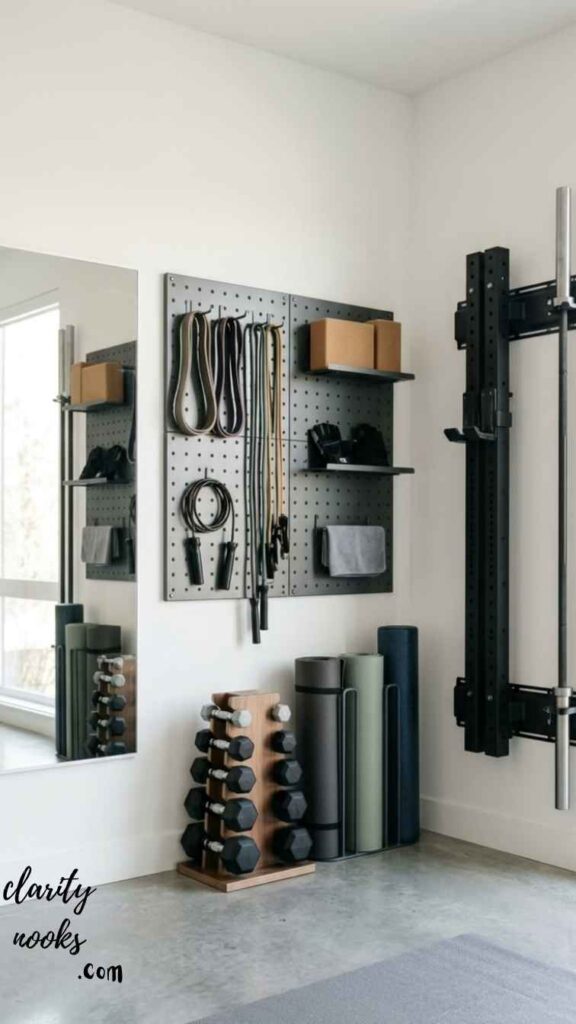
Storage is the unsolved problem in most home gyms. Plates stacked on the floor become trip hazards. Dumbbells scattered around create chaos that discourages use. The solution is vertical: wall-mounted plate trees, pegboard organizers, and J-hook racks turn dead wall space into an organized equipment library. This single change can recover 30–40 square feet of usable floor space.
A DIY pegboard panel (4’x8′ plywood + pegboard hooks, under $60) mounted at shoulder height stores resistance bands, jump ropes, wrist wraps, lifting belts, and small accessories neatly. Paint it a contrasting color to your walls and it becomes a visual anchor for the space part organization, part gym aesthetic.
A Squat Rack as the Centerpiece
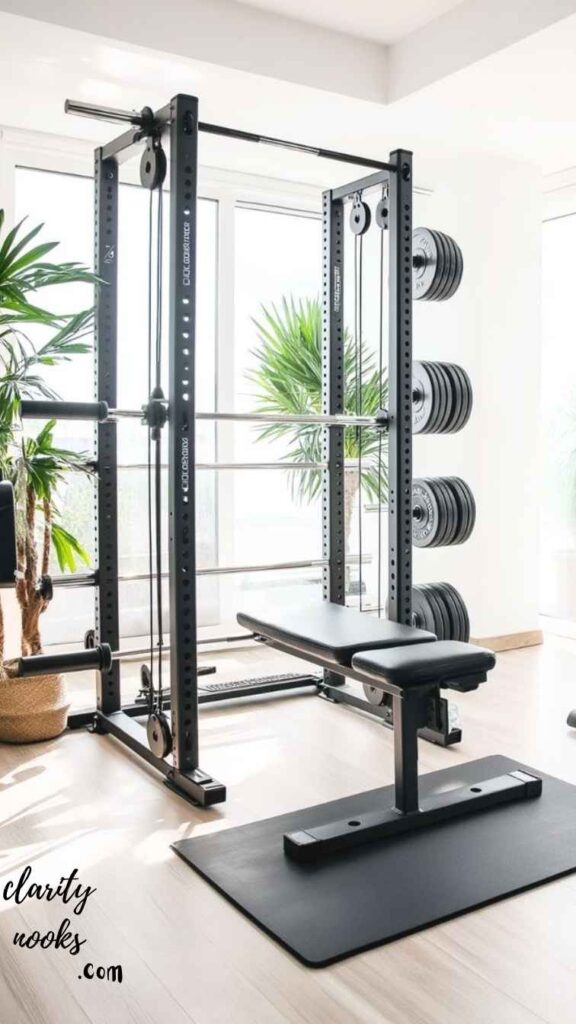
If you’re committed to strength training, a power rack or squat stand is the non-negotiable centerpiece of any serious home gym. Entry-level folding wall-mounted racks start at $300–$400 and fold flat against the wall when not in use perfect for tighter spaces. A proper free-standing power cage runs $500–$1,200 and is a lifetime investment that outlasts any commercial gym membership.
Budget breakdown for a complete barbell setup: squat rack ($400) + 7-foot Olympic barbell ($150) + 300 lbs of bumper plates ($350) = $900 total. That recoups a $60/month gym membership in 15 months and then pays for itself every year after. The math is compelling. The convenience is transformative.
Add Mirrors Strategically
(Not Everywhere)
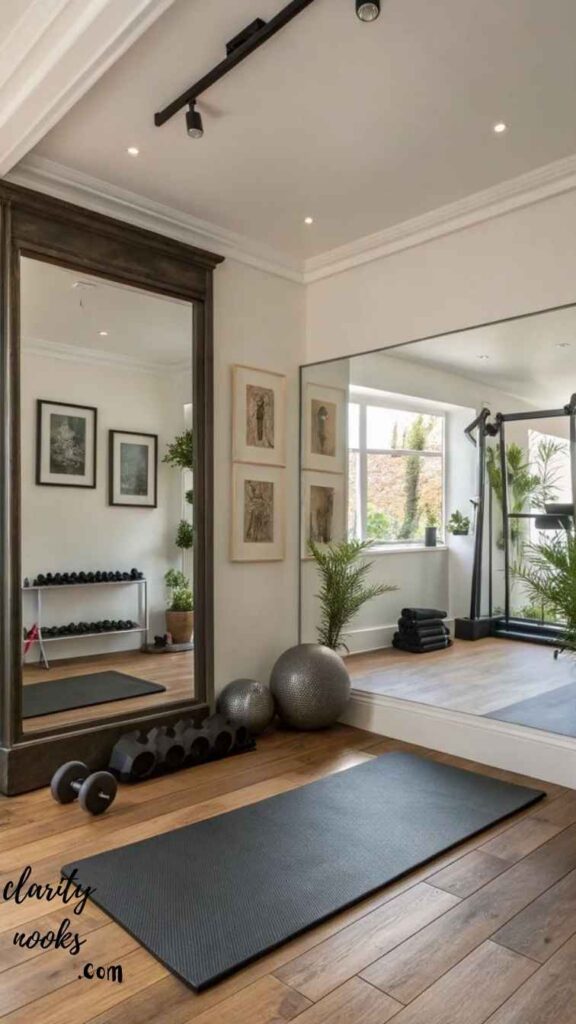
Mirrors in a gym serve two functions: form feedback and perceived space expansion. A single large mirror (48″x60″) behind your primary lifting area is enough to check your squat depth, overhead press alignment, and deadlift hip hinge. Full wall-to-wall mirror coverage is expensive, harder to install safely, and not necessary for most home gyms.
Adhesive-backed gym mirror tiles ($40–$80 for a 4-piece set) work well on flat, smooth walls and can be repositioned without damage. Avoid placing mirrors opposite windows the glare makes them counterproductive. Instead, position them perpendicular to your main light source for clear, useful visibility during lifts.
Use a Rowing Machine for Full-Body Cardio in Minimal Space
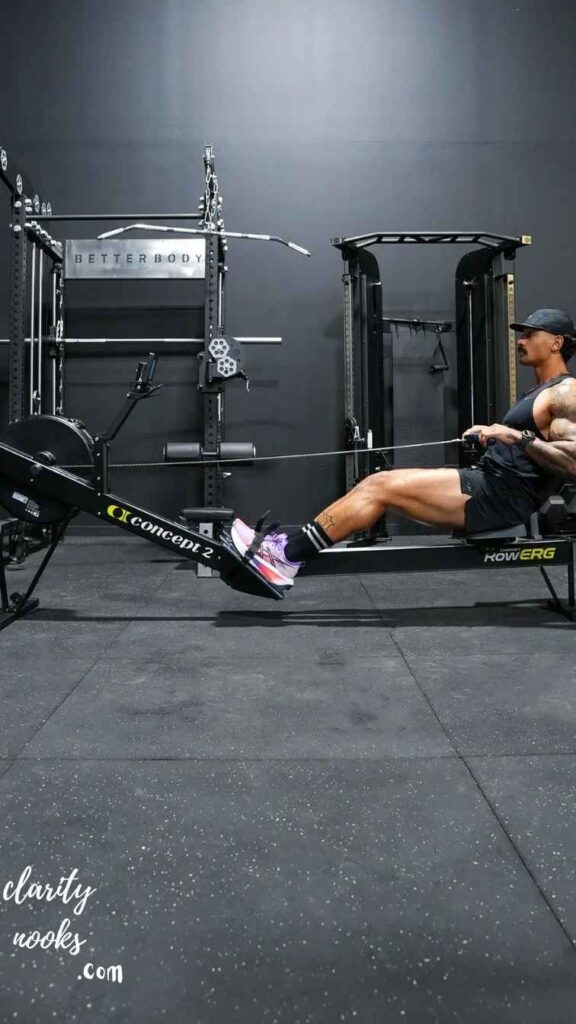
Treadmills require 30–35 square feet and feel pedestrian. Stationary bikes are effective but isolate the lower body. A rowing machine, by contrast, engages 86% of muscle groups, delivers genuinely brutal cardiovascular conditioning, and folds upright against a wall for storage. The Concept2 RowErg is the industry standard it’s used by Olympic athletes and has a near-zero depreciation curve (you can resell it for 80% of retail years later).
For apartment gyms, rowing is also a low-impact alternative to running, making it joint-friendly for older users or those in recovery from lower-body injuries. Even 20 minutes of rowing intervals burns comparable calories to 45 minutes of moderate jogging with zero pavement pounding.
Create a Dedicated Stretch and Mobility Corner
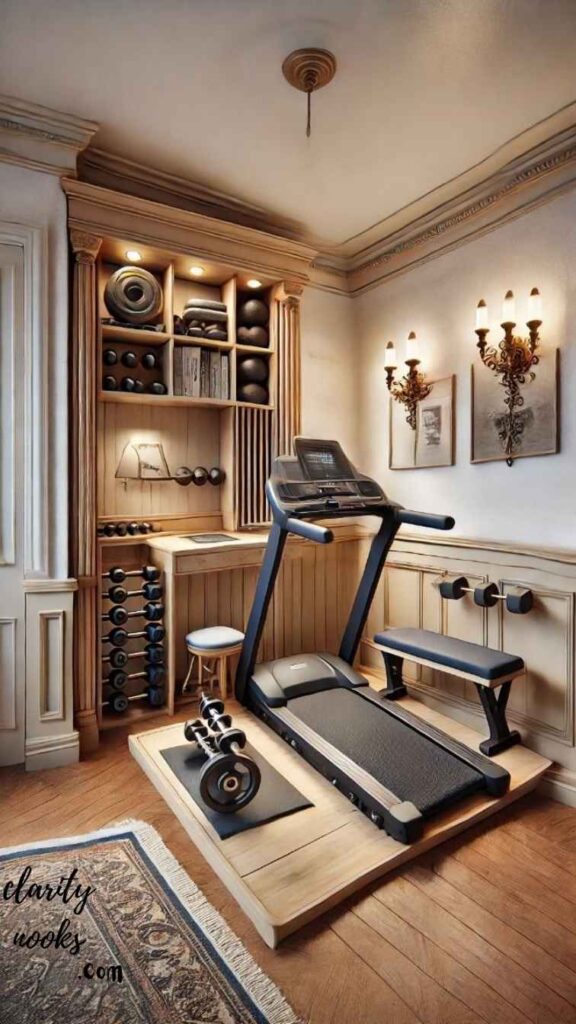
Most home gym builders obsess over the lifting equipment and completely ignore recovery the part that actually produces the results. A dedicated mobility corner requires almost no investment: a yoga mat, a foam roller ($25–$40), a lacrosse ball for trigger point work, and a stretch strap. Together, these cost less than one month at most commercial gyms.
Position this corner near a wall with a hook for a resistance band, and you’ve built a warm-up station, cool-down zone, and injury prevention center in about 25 square feet. If you add a small Bluetooth speaker nearby and make this the “decompression zone,” it changes your relationship with recovery from an afterthought to an integrated ritual.
Optimize Lighting and Ventilation for Performance
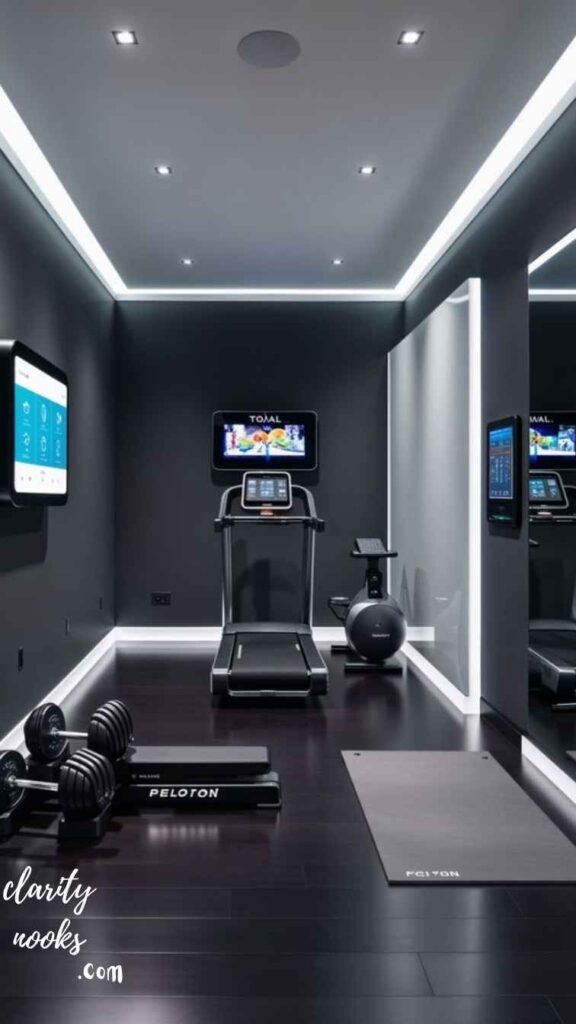
Dim, poorly ventilated gyms breed poor workouts. Studies on lighting and performance consistently show that bright, cool-toned light (5000K–6500K) improves alertness, energy output, and perceived effort. A pair of LED shop lights (total $60–$90) transforms a dark garage or basement into an energizing workout space. Position them directly above your primary lifting zone, not offset to the sides where they create shadows.
Ventilation is equally important and almost universally ignored. A simple box fan ($30) aimed at your primary training area maintains airflow and reduces heat buildup which directly affects workout duration and intensity in warmer months. In enclosed spaces, even a small window exhaust fan can meaningfully improve air quality during high-intensity sessions.
Program Your Space Like a Professional Gym
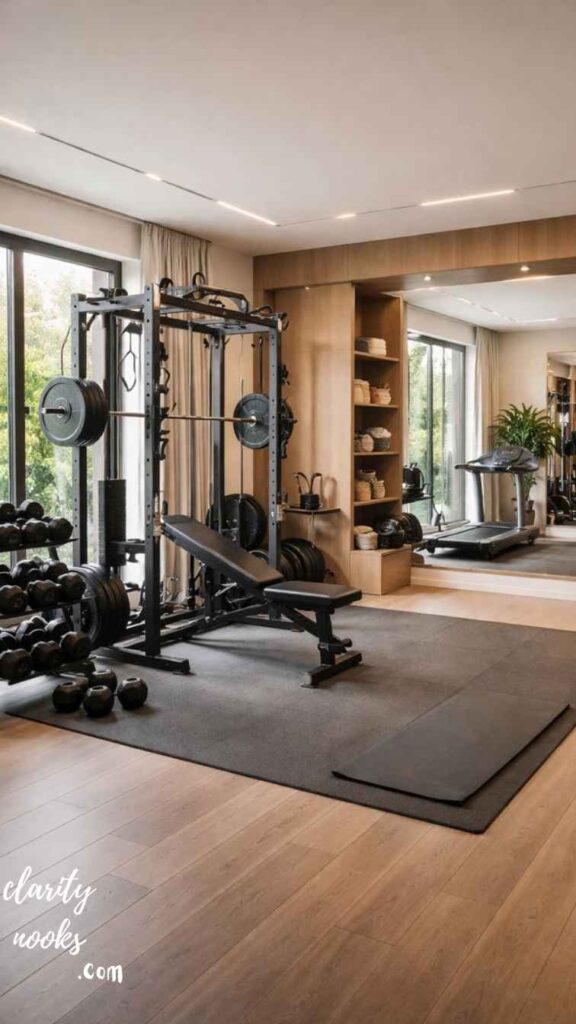
The final and most overlooked home gym idea isn’t about equipment at all. It’s about programming your environment. Commercial gyms use psychology to keep you engaged: motivational signage, visible progress boards, music systems, social energy. You can replicate all of these at home deliberately. A whiteboard on the wall for tracking workouts. A dedicated gym playlist through a Bluetooth speaker. A simple progress photo wall.
The science here is clear: environmental cues trigger behavioral patterns. When your gym space looks, sounds, and feels like a place where training happens, your brain stops negotiating. Treat your home gym setup as an ongoing design project, not a one-time purchase. Every small improvement to the environment compounds into better training habits over months and years.
How do I make my home gym feel more motivating?
Use bright lighting, a whiteboard for workout tracking, dedicated music, and clearly defined zones for different training types. The environment signals your brain what to do.
Conclusion
DIY Home Gym Ideas can help you build a workout space that fits your needs and budget. You do not need a big room or expensive tools. Simple changes can make a big difference. Use small areas wisely. Choose basic equipment. Stay consistent with your routine. Your home can become a place that supports your health and daily fitness goals.
With the right DIY Home Gym Ideas, you can stay active without leaving your house. It saves time and money. It also keeps you motivated every day. Make your space clean and comfortable. Add personal touches to enjoy workouts more. Start small and improve slowly. Your fitness journey can grow step by step at home.
Trend Analysis · 2026–2028
Where the Home Gym Industry Is Heading
The home fitness equipment market, valued at over $14 billion globally in 2025, is no longer driven by pandemic-era panic buying. It’s now driven by deliberate, long-term lifestyle design. Here’s what’s shaping the space in 2026 and through 2028.
| Trend | Status | What It Means for You |
|---|---|---|
| AI-powered personal training apps (real-time form correction via phone camera) | Rising | Apps like Kemtai and Form Coach are replacing mirror-based form checks with AI feedback. Budget: $10–$20/month. |
| Compact, multi-function rigs (wall-mounted, foldable all-in-ones) | Peak | FitRx, Bells of Steel, and REP Fitness folding racks are dominating the premium home gym market. Expect more competition and lower prices. |
| Smart connected equipment (interactive mirrors, AI resistance bikes) | Peak | After Peloton’s struggles, the market is skeptical of high-cost connected equipment. Budget alternatives (Tempo, Alo Moves) are winning. |
| Biometric tracking integration (HRV, recovery scores, sleep-to-training) | Emerging | Wearables like WHOOP and Oura Ring are changing how people program home gym sessions training based on recovery data, not fixed schedules. |
| Hybrid gym membership models (home gym + studio day passes) | Rising | People are building home gyms for daily training and using boutique studios 1–2x/week for community and variety. Reduces total fitness spend by 40–60%. |
| Sustainable and second-hand equipment markets | Rising | Facebook Marketplace, eBay, and Craigslist gym equipment searches have grown 3x since 2023. Eco-conscious buyers are building excellent gyms at 30–50% below retail. |
Expert Insights
Practical Strategies from Real Home Gym Builders
These aren’t theoretical tips. They come from documented home gym setups, strength coaches, and physical therapists who’ve built and advised on dozens of home training spaces.
Buy used plates, new bars: Cast iron and rubber plates depreciate quickly on the secondhand market you can often find 100 lbs of iron plates for $40–$80. However, never buy a used barbell without inspecting the knurling, collars, and spin. A damaged bar can cause injury during heavy lifts. Spend the money on a new bar ($100–$200) and save on plates.
The 80/20 rule of home gym equipment: 80% of your training results will come from 20% of your equipment. For most people, that 20% is: a barbell, plates, a pull-up station, and a flat bench. Build around this core before expanding. Every additional piece of equipment you add too early becomes clutter before it becomes useful.
Control the temperature year-round: A garage gym in a cold climate hits single digits in winter cast iron bars become painfully cold, motivation plummets, and injury risk rises with cold muscles. A $150 propane garage heater resolves this. In hot climates, a $200 mini-split AC/heat unit is worth every penny. Temperature control is often the difference between a home gym you use and one you don’t.
Long-Term Strategy
Building a Home Gym That Scales With You
The most common home gym mistake is building for who you are today rather than who you’ll be in three years. Someone who starts with bodyweight training will likely want free weights within 12 months. Someone doing light cardio may progress to high-intensity interval training requiring more floor space and equipment. Plan for evolution, not just the present moment.
The scalable approach: start with a platform (rubber flooring), add your core equipment (adjustable dumbbells, pull-up station, bench), then layer in heavy equipment as your training demands grow (barbell, rack, specialty cardio). This phased investment approach spreads cost, prevents buyer’s remorse, and keeps your space tidy as it grows.
Long-term ROI is genuinely compelling. A $2,000 home gym setup replaces a $50/month commercial gym in roughly 3 years and 4 months and the equipment continues to appreciate in utility as your training matures. Unlike most home renovations, a well-built home gym can also add value to your property: survey data consistently shows dedicated fitness rooms are a sought-after feature in residential real estate markets.
Future Predictions
The Home Gym in 2027–2029
Artificial intelligence is already reshaping how people train at home and this is only the beginning. Within two to three years, expect AI coaching systems that don’t just analyze your form from a smartphone camera but integrate with your wearable biometrics to dynamically adjust your workout in real time. If your HRV is down, the AI scales back intensity. If you’re peaking, it pushes you harder. The “personal trainer” concept will be fully democratized.
Spatial computing think Apple Vision Pro-style headsets will introduce immersive home gym experiences where virtual opponents, coaches, and environments overlay your physical space. This technology is currently expensive and nascent, but the trajectory mirrors smartphones: within five years, entry-level spatial workout experiences will cost less than a rowing machine.
The physical equipment itself is evolving too. Selectorized resistance systems (like Tonal and newer competitors) will drop in price as manufacturing scales. Expect functional, AI-integrated resistance machines under $1,000 by 2027. Isokinetic training where resistance automatically matches your output curve will move from elite sports rehab into mainstream home gym design.
Common Mistakes
What Most Home Gym Builders Get Wrong
- Buying too much equipment before knowing your training style: Beginners often spend $1,500 on a combination of cardio machines, weight sets, and specialty tools they don’t yet know how to use. Start small. Train for 90 days with minimal equipment and let your actual habits reveal what you truly need.
- Ignoring the ceiling height: Overhead pressing, pull-ups, and kettlebell swings require at least 8–9 feet of clearance. Many basements top out at 7 feet, making these movements dangerous or impossible. Measure before buying any overhead equipment.
- Skipping the electrical assessment: Adding a mini-split AC, a treadmill (15–20 amp draw), and bright lighting to a garage on a single circuit is a fire hazard. Have an electrician assess your circuit load before running high-draw equipment. This is a $100–$200 assessment that prevents a $10,000 insurance claim.
- Underestimating storage needs: Intermediate home gym builders hit a clutter tipping point around the 18-month mark they’ve accumulated enough equipment that floor space becomes chaotic. Plan vertical storage from day one, not as an afterthought.
- Building without a programming plan: Equipment without a structured workout program is just furniture. Before investing heavily, have a clear training plan whether that’s a paid app, a written program from a coach, or a structured free resource. The program drives results; the equipment just makes the program possible.
FAQ’S About DIY Home Gym Ideas
What is the minimum budget for a DIY home gym?
A functional beginner home gym can be built for $200–$400, covering rubber flooring tiles, a doorframe pull-up bar, a set of resistance bands, and a kettlebell or two. For a complete strength training setup with a barbell and rack, budget $800–$1,500.
How much space do I need for a home gym?
You can train effectively in as little as 50 square feet (roughly 7×7 feet). A more comfortable multi-equipment setup works well in 100–150 sq ft. A full garage gym with cardio equipment, a rack, and a recovery area benefits from 300+ sq ft.
Can I build a home gym in an apartment?
Yes. Focus on low-impact equipment: resistance bands, adjustable dumbbells, a TRX suspension trainer, and a jump rope. Use thick rubber mats to dampen noise and vibration. Avoid barbell drops, heavy jumping, and sled-push movements on hard floors.
Is buying a home gym worth it financially?
At a $50/month gym membership, a $1,500 home gym setup breaks even in 30 months and then saves you $600/year indefinitely. Higher-end setups take longer to break even but offer premium training variety and convenience that most commercial gyms can’t match.
Rameen Zara is the founder of Clarity Nooks, bringing over five years of experience in home décor and interior styling. She shares simple yet practical design ideas that suit real homes and everyday living. Her approach focuses on cozy aesthetics, soft color palettes, and natural textures that create warm, inviting spaces.